Why Your Agile Team is Better
Off Dispersed: The Case for
Location-independent Agile
Krishnan Ramanujam
President, Business and Technology Services
August 2018
Location-independence is a Must
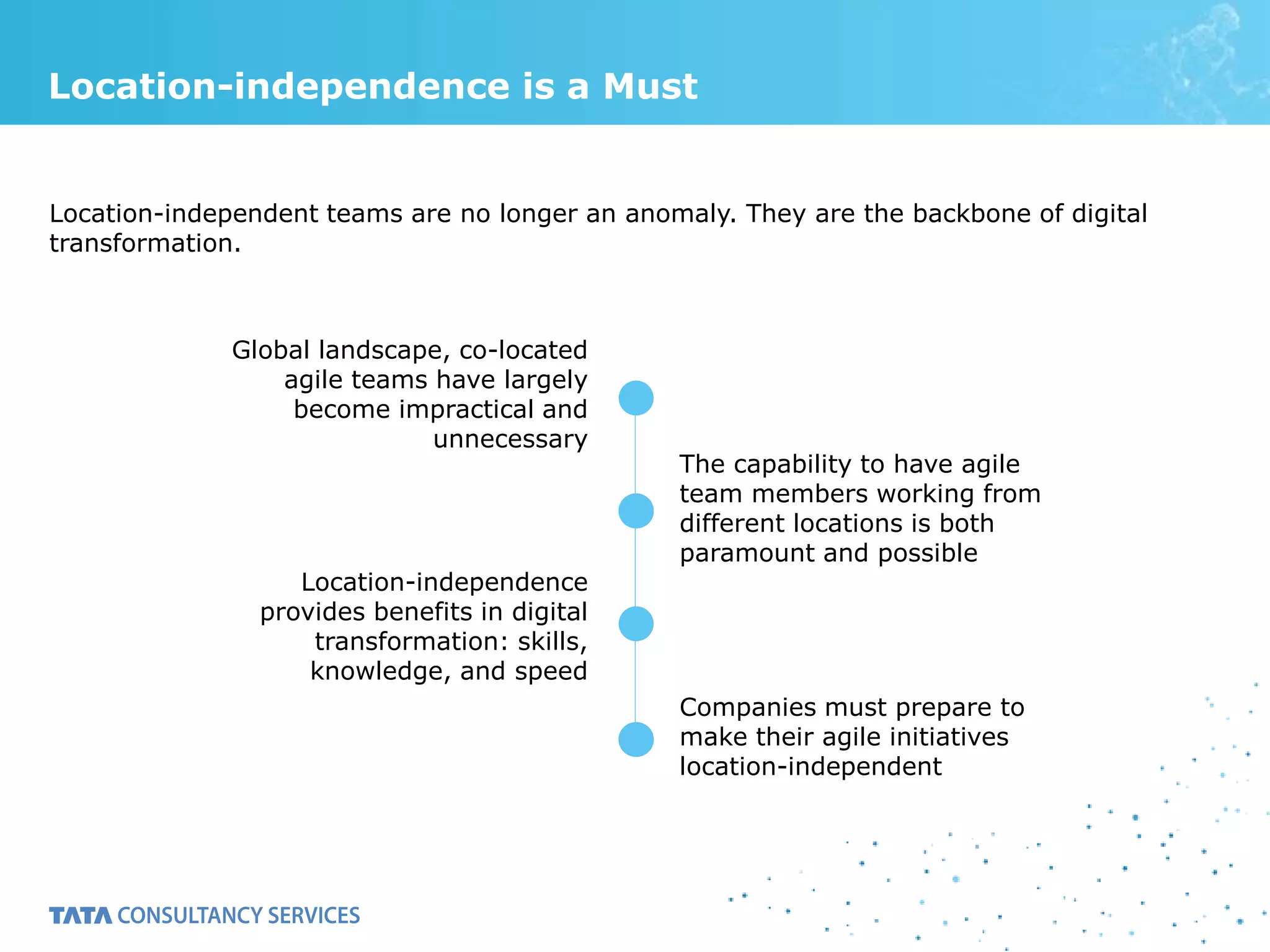
Location-independent teams are no longer an anomaly. They are the backbone of digital
transformation.
Global landscape, co-located
agile teams have largely
become impractical and
unnecessary
Location-independence
provides benefits in digital
transformation: skills,
knowledge, and speed
The capability to have agile
team members working from
different locations is both
paramount and possible
Companies must prepare to
make their agile initiatives
location-independent
Most Agile Teams are Globally Dispersed
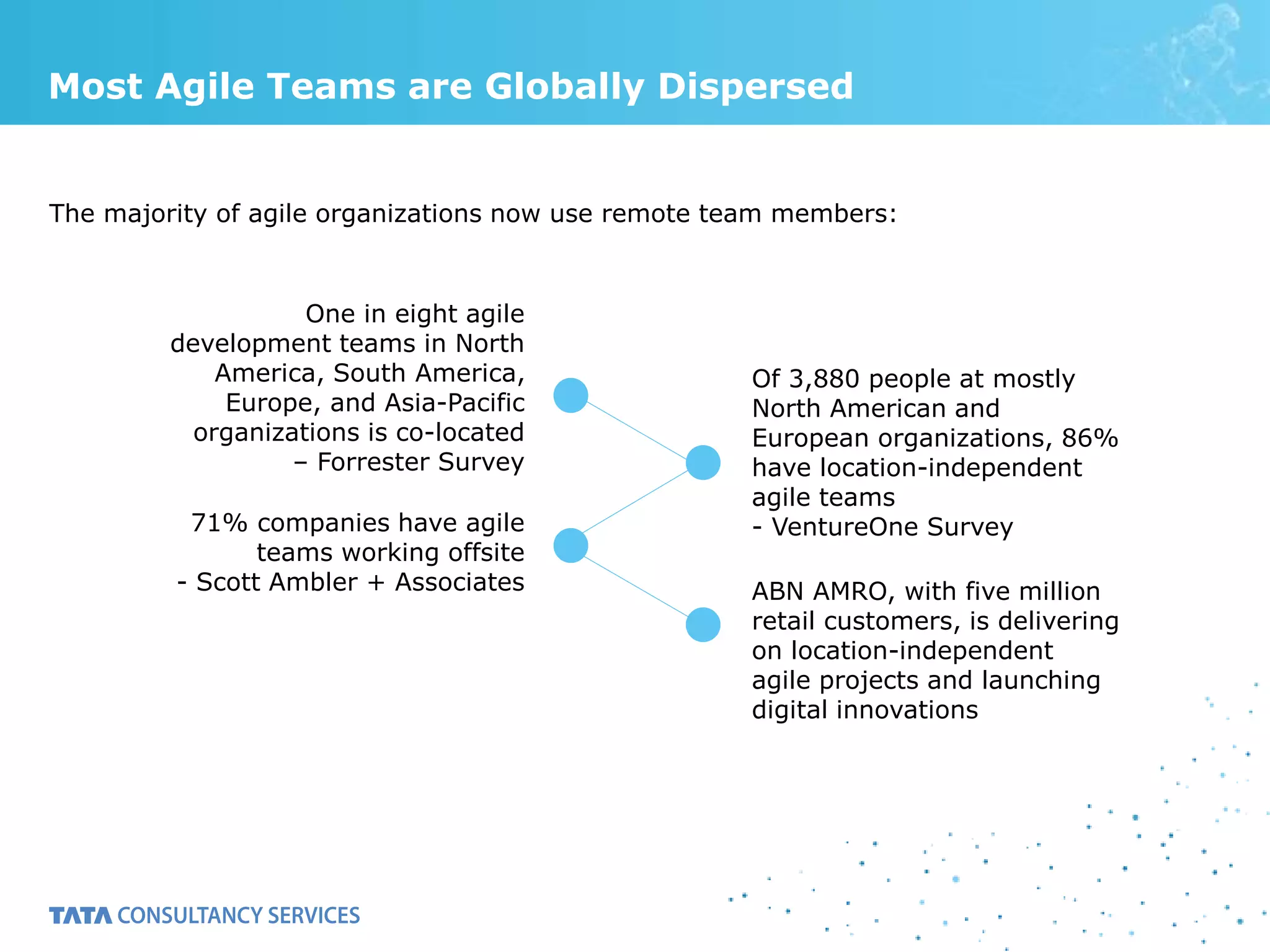
The majority of agile organizations now use remote team members:
Of 3,880 people at mostly
North American and
European organizations, 86%
have location-independent
agile teams
- VentureOne Survey
One in eight agile
development teams in North
America, South America,
Europe, and Asia-Pacific
organizations is co-located
– Forrester Survey
71% companies have agile
teams working offsite
- Scott Ambler + Associates ABN AMRO, with five million
retail customers, is delivering
on location-independent
agile projects and launching
digital innovations
Reasons for Location-Independent Agile
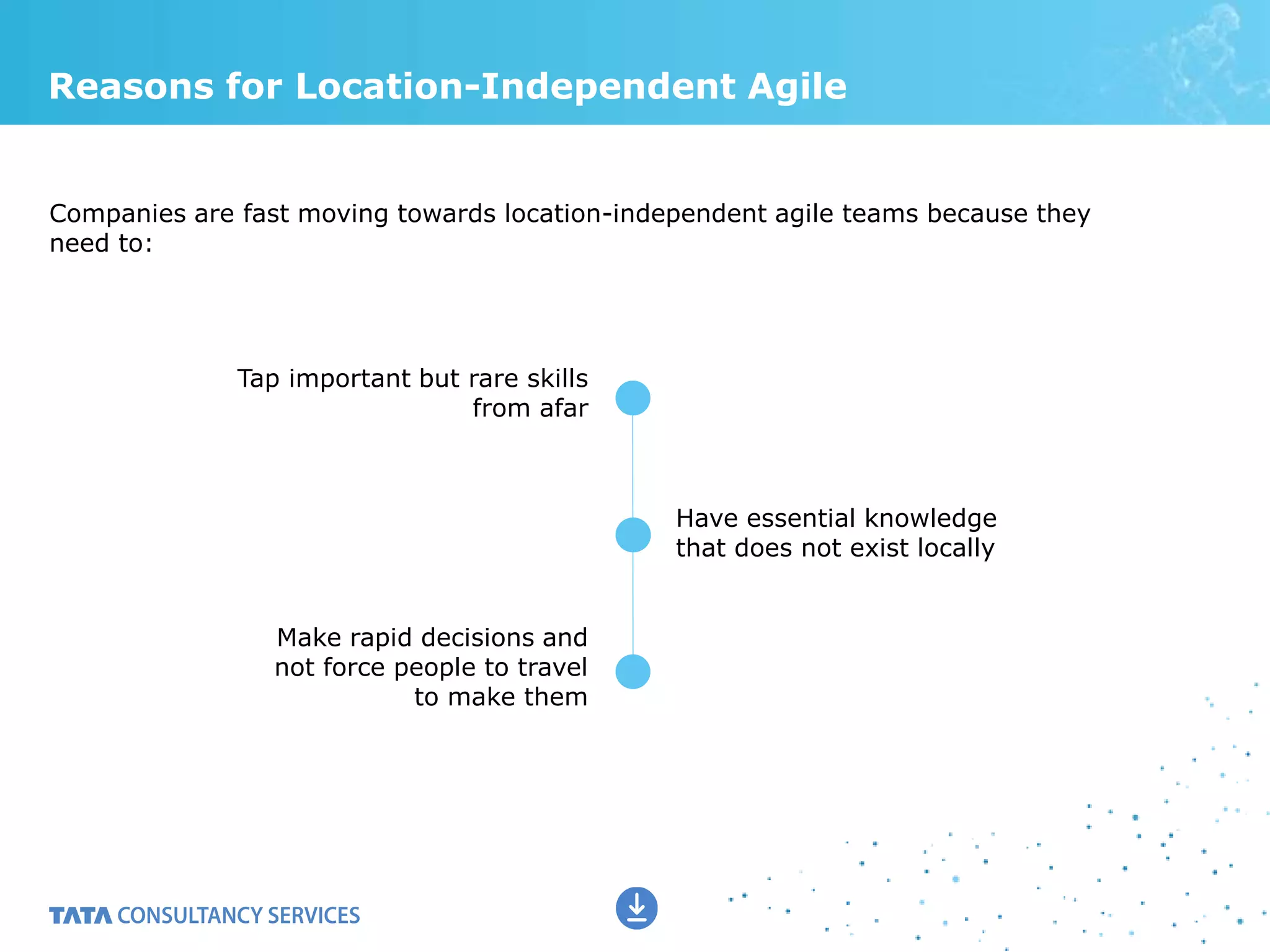
Companies are fast moving towards location-independent agile teams because they
need to:
Tap important but rare skills
from afar
Make rapid decisions and
not force people to travel
to make them
Have essential knowledge
that does not exist locally
Tap Rare Skills from Afar
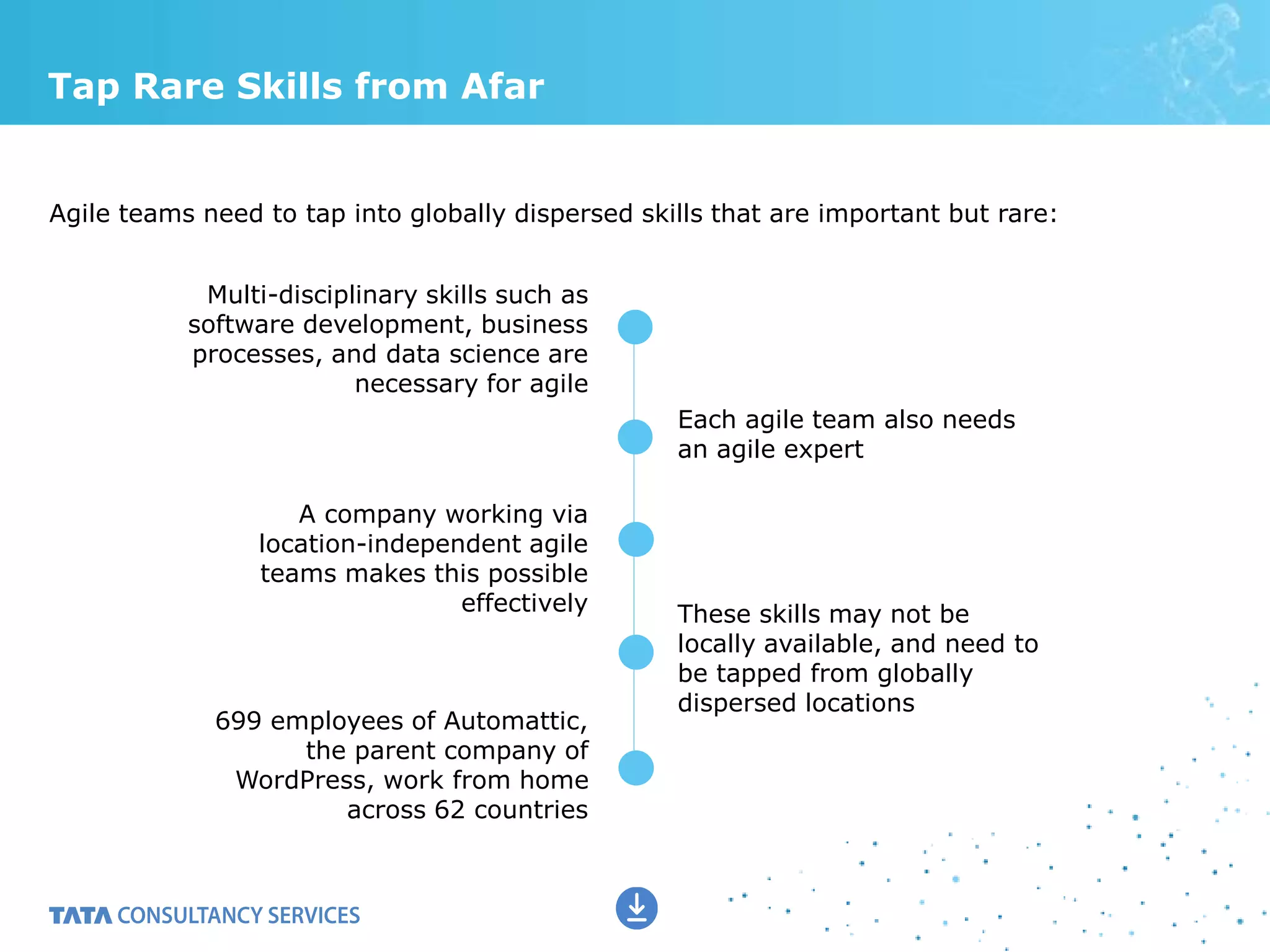
Agile teams need to tap into globally dispersed skills that are important but rare:
Multi-disciplinary skills such as
software development, business
processes, and data science are
necessary for agile
These skills may not be
locally available, and need to
be tapped from globally
dispersed locations
Each agile team also needs
an agile expert
A company working via
location-independent agile
teams makes this possible
effectively
699 employees of Automattic,
the parent company of
WordPress, work from home
across 62 countries
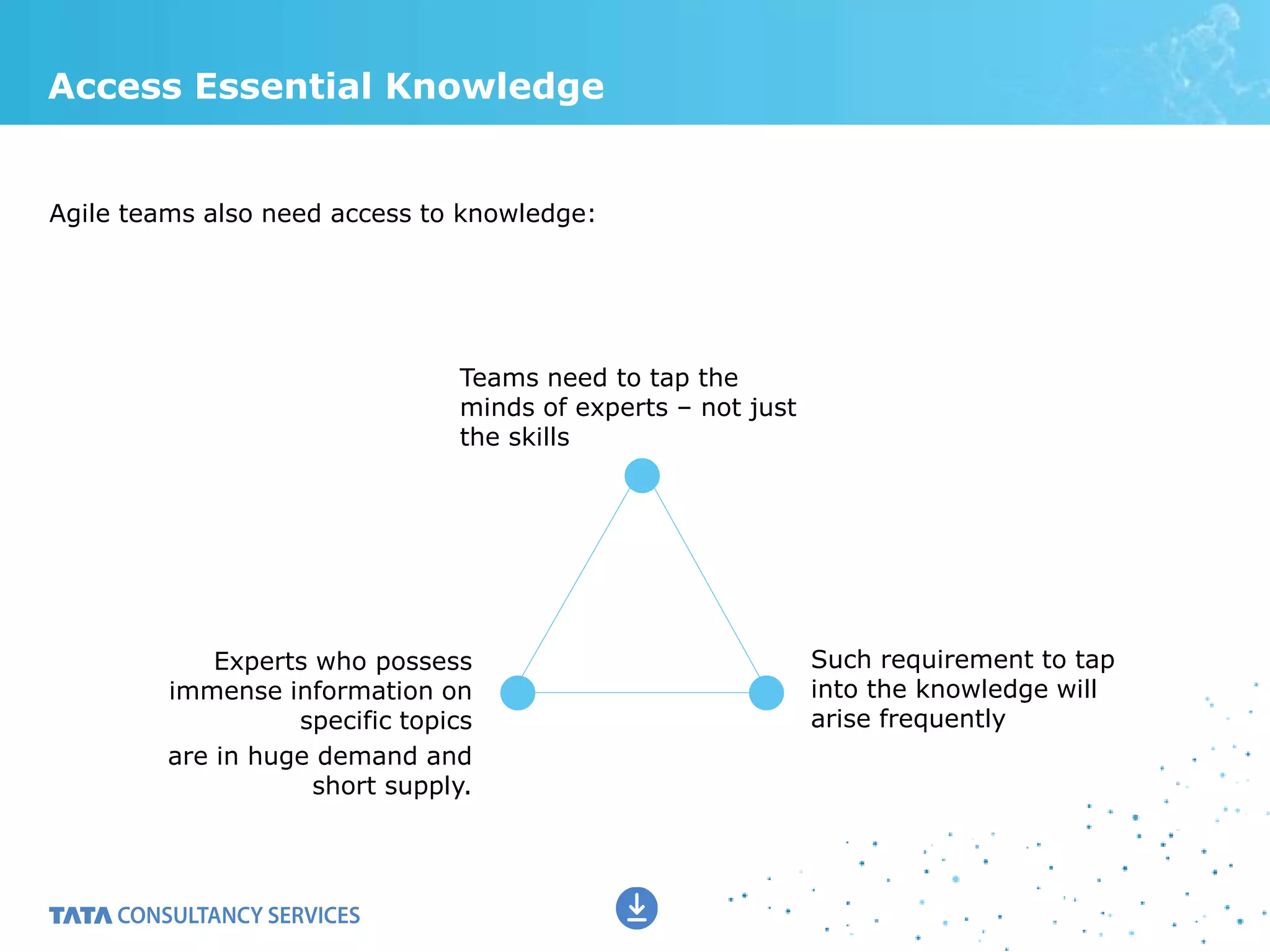
Access Essential Knowledge
Teams need to tap the
minds of experts – not just
the skills
Agile teams also need access to knowledge:
Experts who possess
immense information on
specific topics
are in huge demand and
short supply.
Such requirement to tap
into the knowledge will
arise frequently
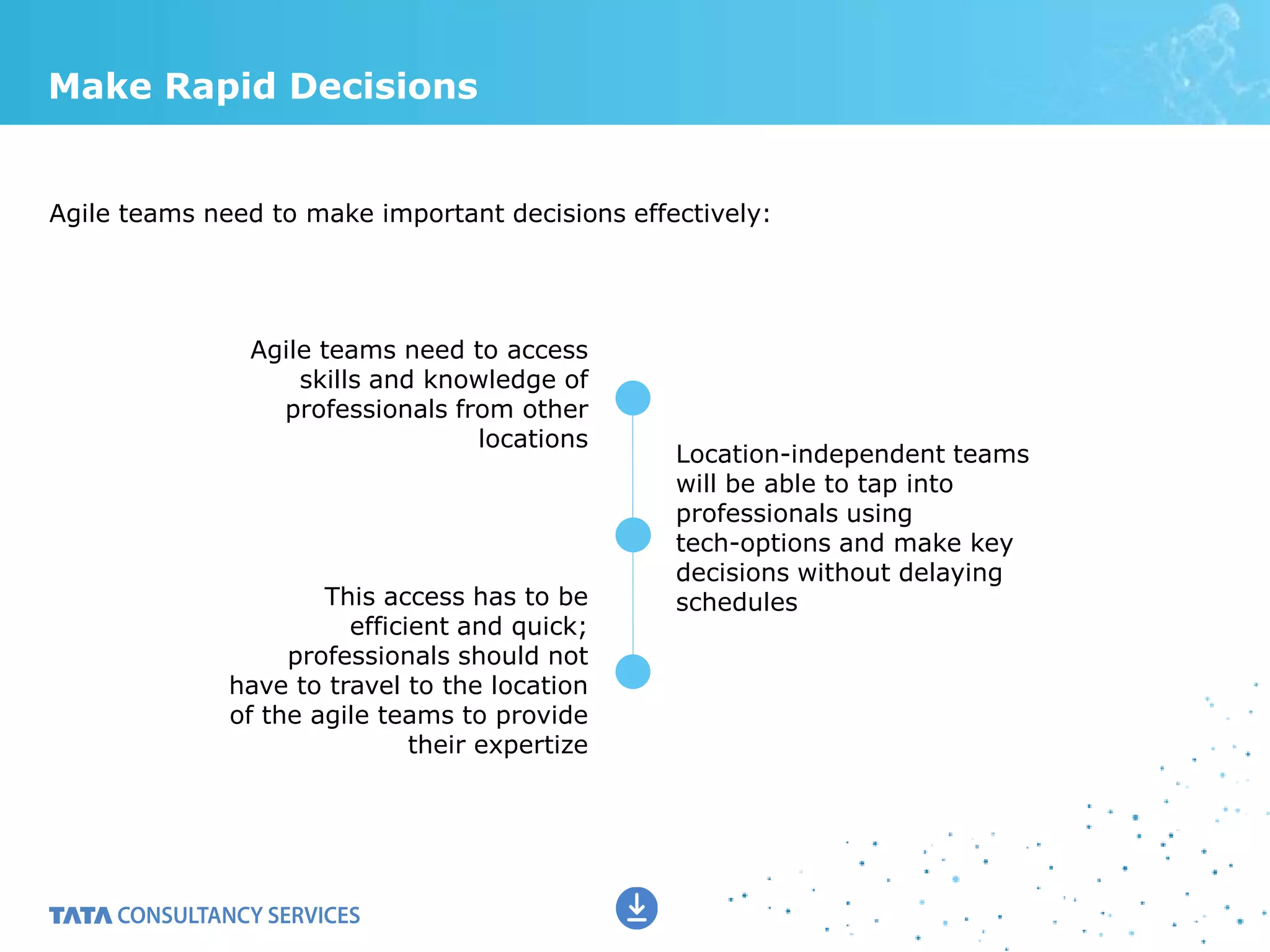
Make Rapid Decisions
Agile teams need to make important decisions effectively:
Agile teams need to access
skills and knowledge of
professionals from other
locations
This access has to be
efficient and quick;
professionals should not
have to travel to the location
of the agile teams to provide
their expertize
Location-independent teams
will be able to tap into
professionals using
tech-options and make key
decisions without delaying
schedules
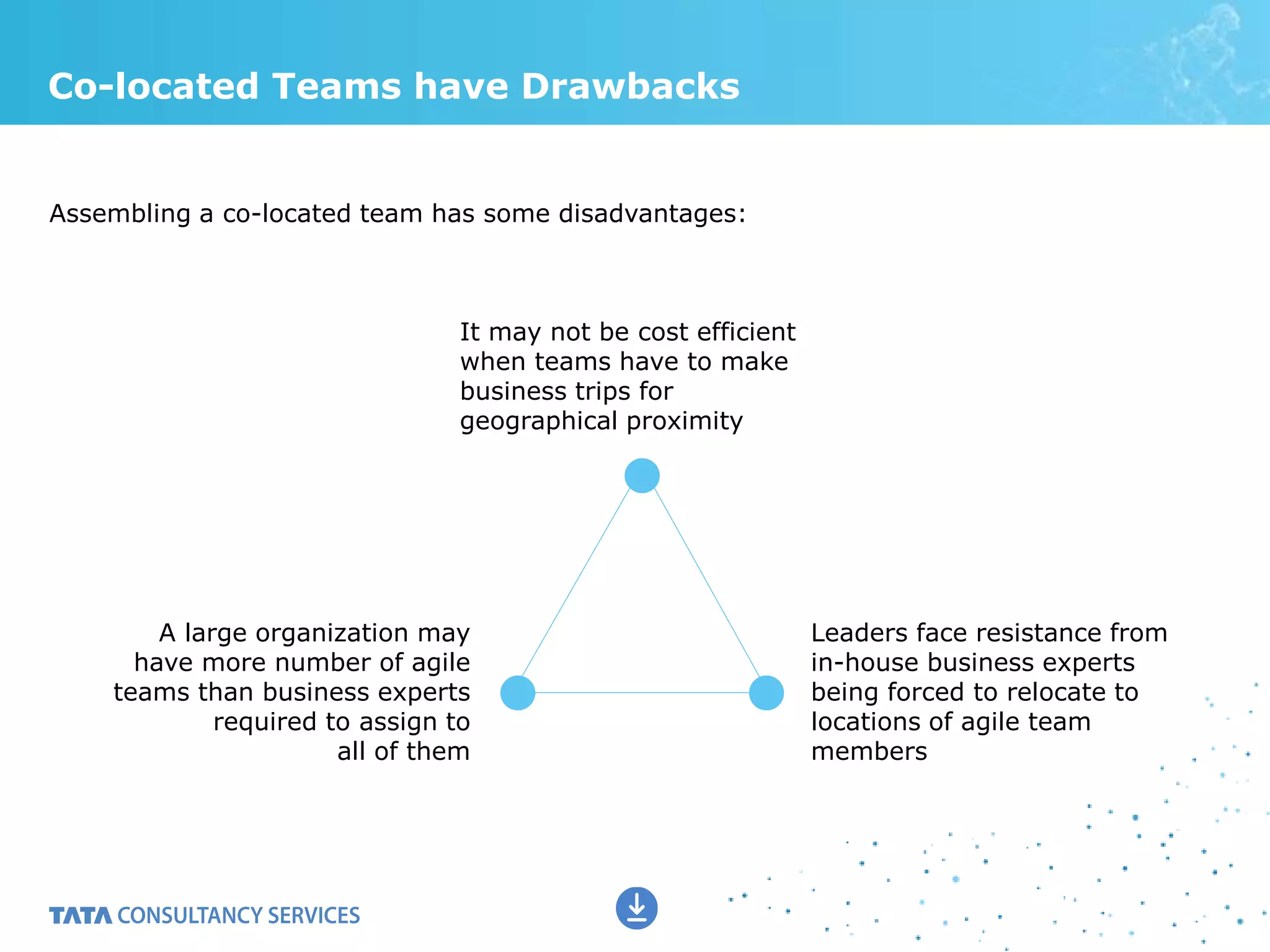
Co-located Teams have Drawbacks
It may not be cost efficient
when teams have to make
business trips for
geographical proximity
Assembling a co-located team has some disadvantages:
A large organization may
have more number of agile
teams than business experts
required to assign to
all of them
Leaders face resistance from
in-house business experts
being forced to relocate to
locations of agile team
members
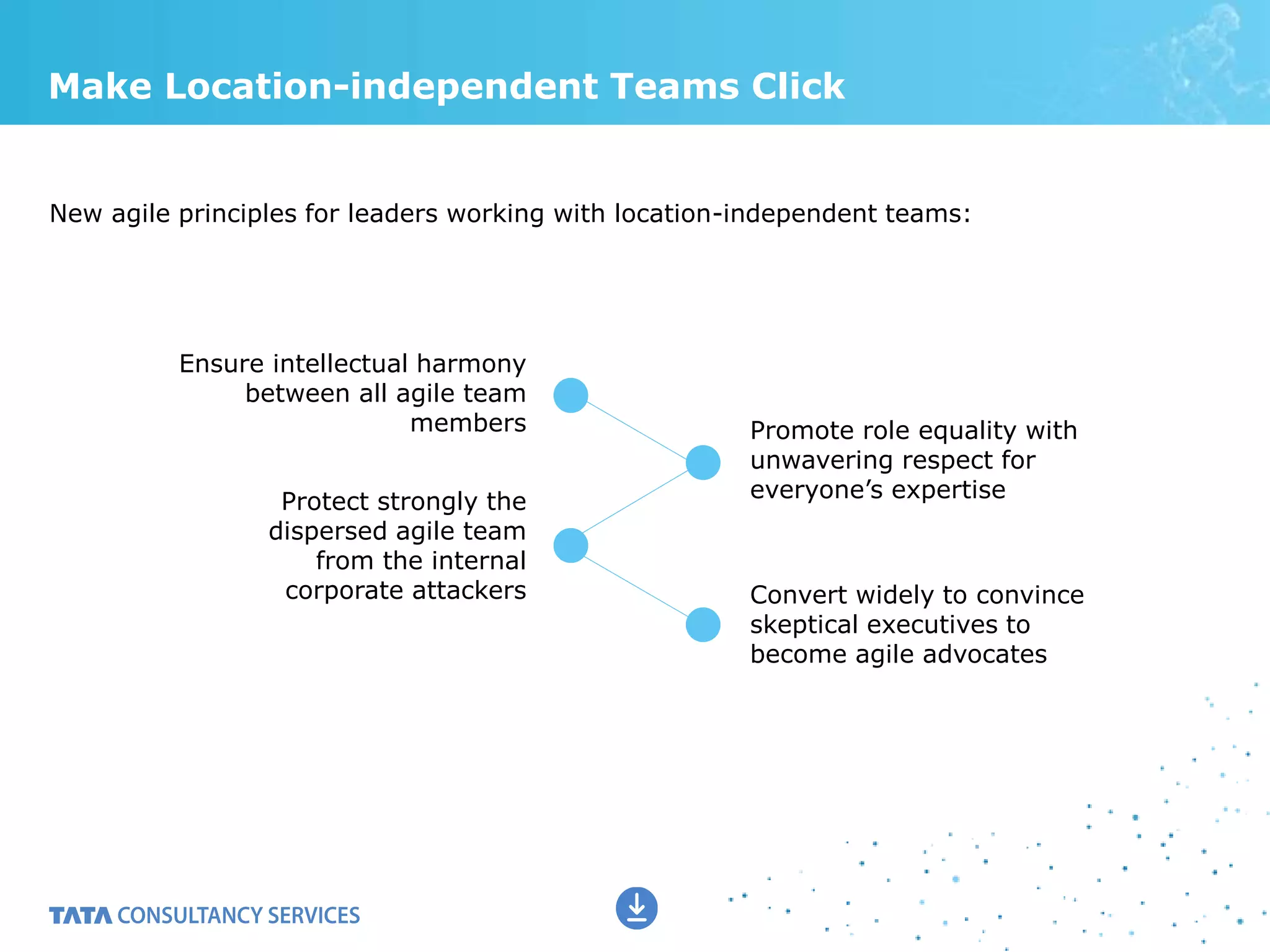
Make Location-independent Teams Click
New agile principles for leaders working with location-independent teams:
Promote role equality with
unwavering respect for
everyone’s expertise
Ensure intellectual harmony
between all agile team
members
Protect strongly the
dispersed agile team
from the internal
corporate attackers Convert widely to convince
skeptical executives to
become agile advocates
Use Location-independent Teams
Co-location, though well intended, does not make business sense any more. It is time to:
Work efficiently with
location-independent
agile teams
Convert widely to convince
skeptical executives to
become agile advocates
Tap the talent, wherever it
resides in the world, to
innovate and remain
competitive
Why Your Agile Team is Better
Off Dispersed: The Case for
Location-independent Agile
Download the Article
Contact Us

Why Your Agile Team is Better Off Dispersed: The Case for Location-independent Agile

  • 1.
    Why Your AgileTeam is Better Off Dispersed: The Case for Location-independent Agile Krishnan Ramanujam President, Business and Technology Services August 2018
  • 2.
    Location-independence is aMust Location-independent teams are no longer an anomaly. They are the backbone of digital transformation. Global landscape, co-located agile teams have largely become impractical and unnecessary Location-independence provides benefits in digital transformation: skills, knowledge, and speed The capability to have agile team members working from different locations is both paramount and possible Companies must prepare to make their agile initiatives location-independent
  • 3.
    Most Agile Teamsare Globally Dispersed The majority of agile organizations now use remote team members: Of 3,880 people at mostly North American and European organizations, 86% have location-independent agile teams - VentureOne Survey One in eight agile development teams in North America, South America, Europe, and Asia-Pacific organizations is co-located – Forrester Survey 71% companies have agile teams working offsite - Scott Ambler + Associates ABN AMRO, with five million retail customers, is delivering on location-independent agile projects and launching digital innovations
  • 4.
    Reasons for Location-IndependentAgile Companies are fast moving towards location-independent agile teams because they need to: Tap important but rare skills from afar Make rapid decisions and not force people to travel to make them Have essential knowledge that does not exist locally
  • 5.
    Tap Rare Skillsfrom Afar Agile teams need to tap into globally dispersed skills that are important but rare: Multi-disciplinary skills such as software development, business processes, and data science are necessary for agile These skills may not be locally available, and need to be tapped from globally dispersed locations Each agile team also needs an agile expert A company working via location-independent agile teams makes this possible effectively 699 employees of Automattic, the parent company of WordPress, work from home across 62 countries
  • 6.
    Access Essential Knowledge Teamsneed to tap the minds of experts – not just the skills Agile teams also need access to knowledge: Experts who possess immense information on specific topics are in huge demand and short supply. Such requirement to tap into the knowledge will arise frequently
  • 7.
    Make Rapid Decisions Agileteams need to make important decisions effectively: Agile teams need to access skills and knowledge of professionals from other locations This access has to be efficient and quick; professionals should not have to travel to the location of the agile teams to provide their expertize Location-independent teams will be able to tap into professionals using tech-options and make key decisions without delaying schedules
  • 8.
    Co-located Teams haveDrawbacks It may not be cost efficient when teams have to make business trips for geographical proximity Assembling a co-located team has some disadvantages: A large organization may have more number of agile teams than business experts required to assign to all of them Leaders face resistance from in-house business experts being forced to relocate to locations of agile team members
  • 9.
    Make Location-independent TeamsClick New agile principles for leaders working with location-independent teams: Promote role equality with unwavering respect for everyone’s expertise Ensure intellectual harmony between all agile team members Protect strongly the dispersed agile team from the internal corporate attackers Convert widely to convince skeptical executives to become agile advocates
  • 10.
    Use Location-independent Teams Co-location,though well intended, does not make business sense any more. It is time to: Work efficiently with location-independent agile teams Convert widely to convince skeptical executives to become agile advocates Tap the talent, wherever it resides in the world, to innovate and remain competitive
  • 11.
    Why Your AgileTeam is Better Off Dispersed: The Case for Location-independent Agile Download the Article Contact Us