Why Electric ?
Electric Vehicle Myths
Electric Vehicles:
- are a passing fad
- need new batteries every few years
- will bring down the power grid
- have the same net carbon emissions
- have a higher life cycle cost
- catch fire and explode
2
Electric Vehicle Advantages
- environmental benefits - no emissions
- low operating cost - typically 15% of the cost
- no oil changes
- 98 % fewer moving parts
- virtually no brake pad replacements
- expected twice the useful life of ICE vehicles
- anti “big oil”
ICE = Internal Combustion Engine
3
Electric Vehicle Operating Cost
Current Fuel Expense (at $1.35/litre)
Fuel Cost/litres X 235.215
Average miles per gallon
= $Cost/100 km
Electric “Fuel” Expense (at 0.11/kw-hr)
Nissan Leaf = $1.65 / 100 km
Tesla Model S = $2.50 / 100 km
$1.35 X 235.215
28.6 miles per gallon
= $11.10 /100 km
Example Honda Civic 2.4L
Kw-hr per 100 km X Hydro Cost
15kw-hr / 100 km X 11 cents/kw-hr
Plus oil changes
4
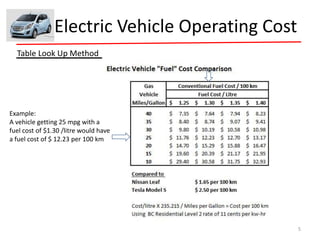
Table Look Up Method
Example:
A vehicle getting 25 mpg with a
fuel cost of $1.30 /litre would have
a fuel cost of $ 12.23 per 100 km
5
Electric Vehicle Operating Cost
Internal Combustion Engine - 20% efficient
80% of energy input is lost to heat and friction
Pistons, valves
Camshafts
Pumps for oil, water, fuel
Alternator
Belts, pulleys, gears
Exhaust, mufflers
Catalytic converter
Over 200 moving parts
6
Electric Motor - 80% efficient
Only 20% of energy input is lost to heat and friction
Brushless electric motor
Reduction gears only
No transmission
Only 3 moving parts
7
Nissan Leaf Powertrain – Generation 2 (2013+)
Motor
AC/DC
Inverter
Battery
Front
of Vehicle
8
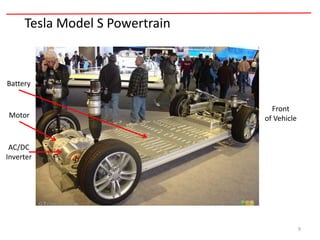
Tesla Model S Powertrain
Front
of VehicleMotor
AC/DC
Inverter
Battery
9
The Generation 2 Leaf Electric Power Assembly
Power Delivery Module (PDM)
(no moving parts)
Inverter – converts AC to DC
(no moving parts)
Electric Drive (motor)
Reduction drive (gears)
10
The Generation 2 Leaf (2013 +) Driver’s Display
11
12
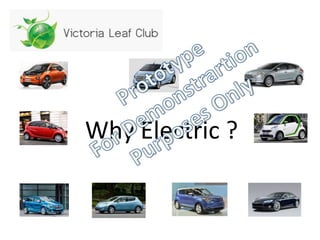
Current BEV alternatives – Canada (1Q 2015)
BMW i3
Mitsubishi i-MiEv
Chevy Spark EV Ford Focus e
Smart ForTwoNissan Leaf
Tesla Model SMercedes B Class ED Kia Soul EV
Source: WWF website
13
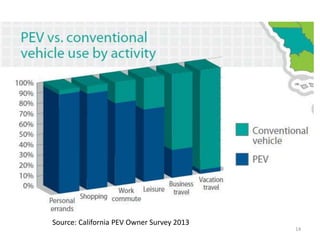
Source: California PEV Owner Survey 2013
14
Source: California PEV Owner Survey 2013 15
16
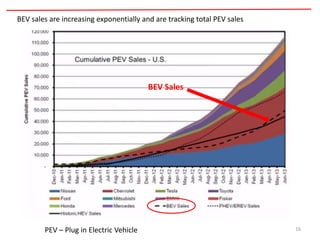
BEV sales are increasing exponentially and are tracking total PEV sales
PEV – Plug in Electric Vehicle
BEV Sales
17
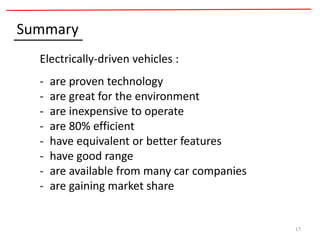
Summary
Electrically-driven vehicles :
- are proven technology
- are great for the environment
- are inexpensive to operate
- are 80% efficient
- have equivalent or better features
- have good range
- are available from many car companies
- are gaining market share

Why electric 2015

  • 1.
  • 2.
    Electric Vehicle Myths ElectricVehicles: - are a passing fad - need new batteries every few years - will bring down the power grid - have the same net carbon emissions - have a higher life cycle cost - catch fire and explode 2
  • 3.
    Electric Vehicle Advantages -environmental benefits - no emissions - low operating cost - typically 15% of the cost - no oil changes - 98 % fewer moving parts - virtually no brake pad replacements - expected twice the useful life of ICE vehicles - anti “big oil” ICE = Internal Combustion Engine 3
  • 4.
    Electric Vehicle OperatingCost Current Fuel Expense (at $1.35/litre) Fuel Cost/litres X 235.215 Average miles per gallon = $Cost/100 km Electric “Fuel” Expense (at 0.11/kw-hr) Nissan Leaf = $1.65 / 100 km Tesla Model S = $2.50 / 100 km $1.35 X 235.215 28.6 miles per gallon = $11.10 /100 km Example Honda Civic 2.4L Kw-hr per 100 km X Hydro Cost 15kw-hr / 100 km X 11 cents/kw-hr Plus oil changes 4
  • 5.
    Table Look UpMethod Example: A vehicle getting 25 mpg with a fuel cost of $1.30 /litre would have a fuel cost of $ 12.23 per 100 km 5 Electric Vehicle Operating Cost
  • 6.
    Internal Combustion Engine- 20% efficient 80% of energy input is lost to heat and friction Pistons, valves Camshafts Pumps for oil, water, fuel Alternator Belts, pulleys, gears Exhaust, mufflers Catalytic converter Over 200 moving parts 6
  • 7.
    Electric Motor -80% efficient Only 20% of energy input is lost to heat and friction Brushless electric motor Reduction gears only No transmission Only 3 moving parts 7
  • 8.
    Nissan Leaf Powertrain– Generation 2 (2013+) Motor AC/DC Inverter Battery Front of Vehicle 8
  • 9.
    Tesla Model SPowertrain Front of VehicleMotor AC/DC Inverter Battery 9
  • 10.
    The Generation 2Leaf Electric Power Assembly Power Delivery Module (PDM) (no moving parts) Inverter – converts AC to DC (no moving parts) Electric Drive (motor) Reduction drive (gears) 10
  • 11.
    The Generation 2Leaf (2013 +) Driver’s Display 11
  • 12.
    12 Current BEV alternatives– Canada (1Q 2015) BMW i3 Mitsubishi i-MiEv Chevy Spark EV Ford Focus e Smart ForTwoNissan Leaf Tesla Model SMercedes B Class ED Kia Soul EV
  • 13.
  • 14.
    Source: California PEVOwner Survey 2013 14
  • 15.
    Source: California PEVOwner Survey 2013 15
  • 16.
    16 BEV sales areincreasing exponentially and are tracking total PEV sales PEV – Plug in Electric Vehicle BEV Sales
  • 17.
    17 Summary Electrically-driven vehicles : -are proven technology - are great for the environment - are inexpensive to operate - are 80% efficient - have equivalent or better features - have good range - are available from many car companies - are gaining market share