Random ideas about
what organisations are doing
to nurture and grow
a culture of high-performance
Principal Consultant & Head of Technology Services
marcio.sete@elabor8.com.au
Marcio Sete
@marciosete
https://elabor8.com.au/careers
Gabriel Vailati
Caio Cestari Marcio Sete Amanda Varella Manoel Pimentel
Andre Volkmer
William Teizen
Paulo Furtado
Aline PaulucciEduardo BrandaoYour name here Josiane Teixeira
What does it take to adopt
new ways of thinking and acting
in social, complex and adaptive
organisms?
Technical Practices Social Dynamics
Engineering Culture
Organisation &
Culture Design
Lean ManagementLean Product Development Tribal Behaviour
Transformational Leadership
The Multidimensional Hypothesis
Ways of Working
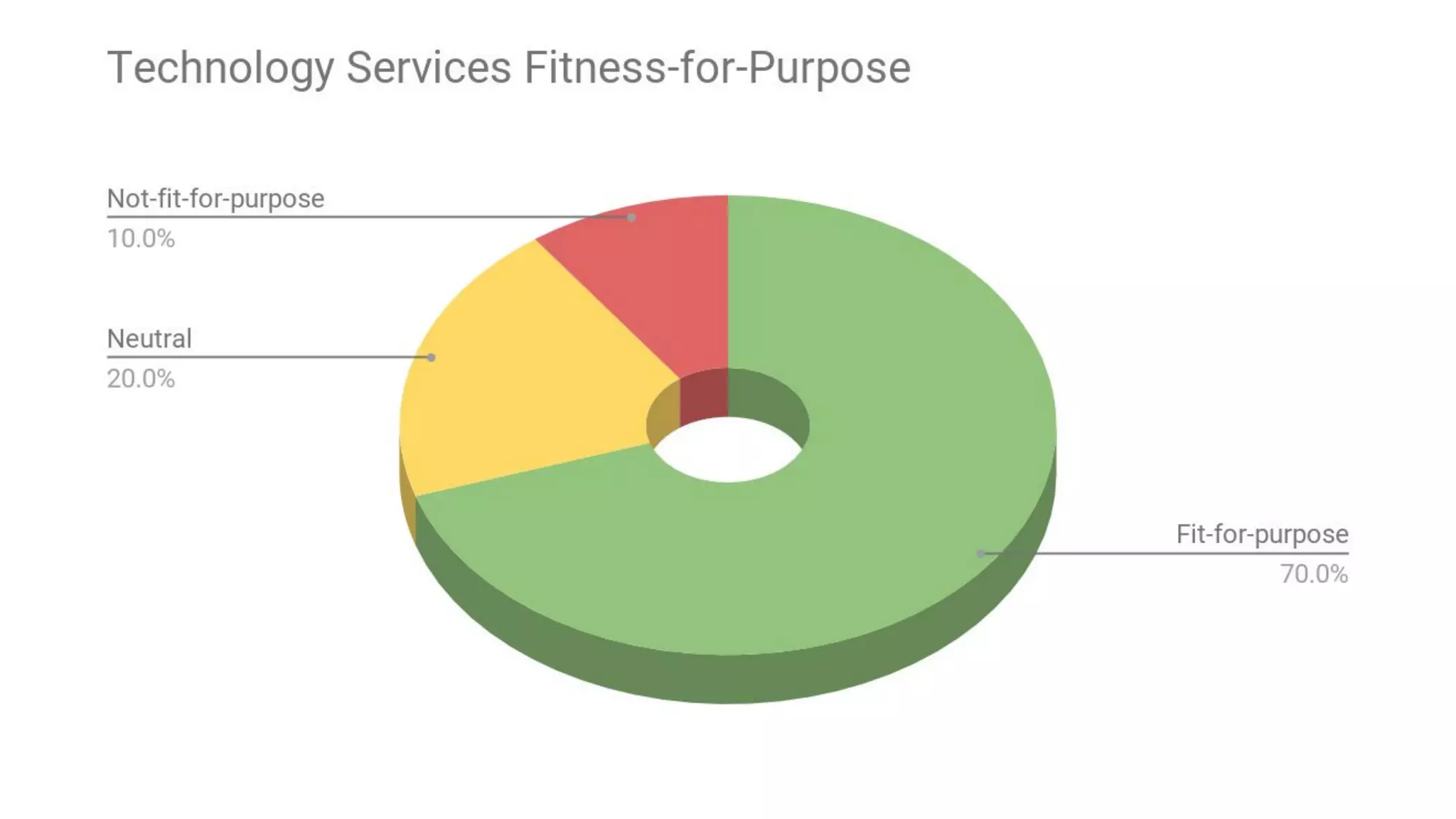
Fit-for-purpose
service delivery
Continuous learning Customer Centricity
@marciosete
#1 – Technical Practices
Technical Practices Social DynamicsWays of Working
#1 – ENGINEERING CULTURE
High performers are doing significantly better than their
lower-performing peers in terms of speed and stability
2018 State of DevOps Report | presented by DORA
Throughput of Code Stability of Systems
Code deployments
46x
more frequent
Change failure rate
7x
lower (1/7 as likely to fail)
Lead time from commit to deploy
2555x
faster
Time to recover from incidents
2604x
faster
Elite
Performers
High
Performers
Medium
Performers
Low
Performers
Deployment frequency On-demand
(multiple deploys per day)
Between once per
hour and once per
day
Between once per
week and once per
month
Between once per
week and once per
month
Lead time for changes Less than one hour
Between one day
and one week
Between one week
and one month
Between one month
and six months
Time to restore service Less than one hour Less than one day Less than one day
Between one week
and one month
Change failure rate 0-15% 0-15% 0-15% 46-60%
High performers are doing significantly better than their
lower-performing peers in terms of speed and stability
2018 State of DevOps Report | presented by DORA
It means...
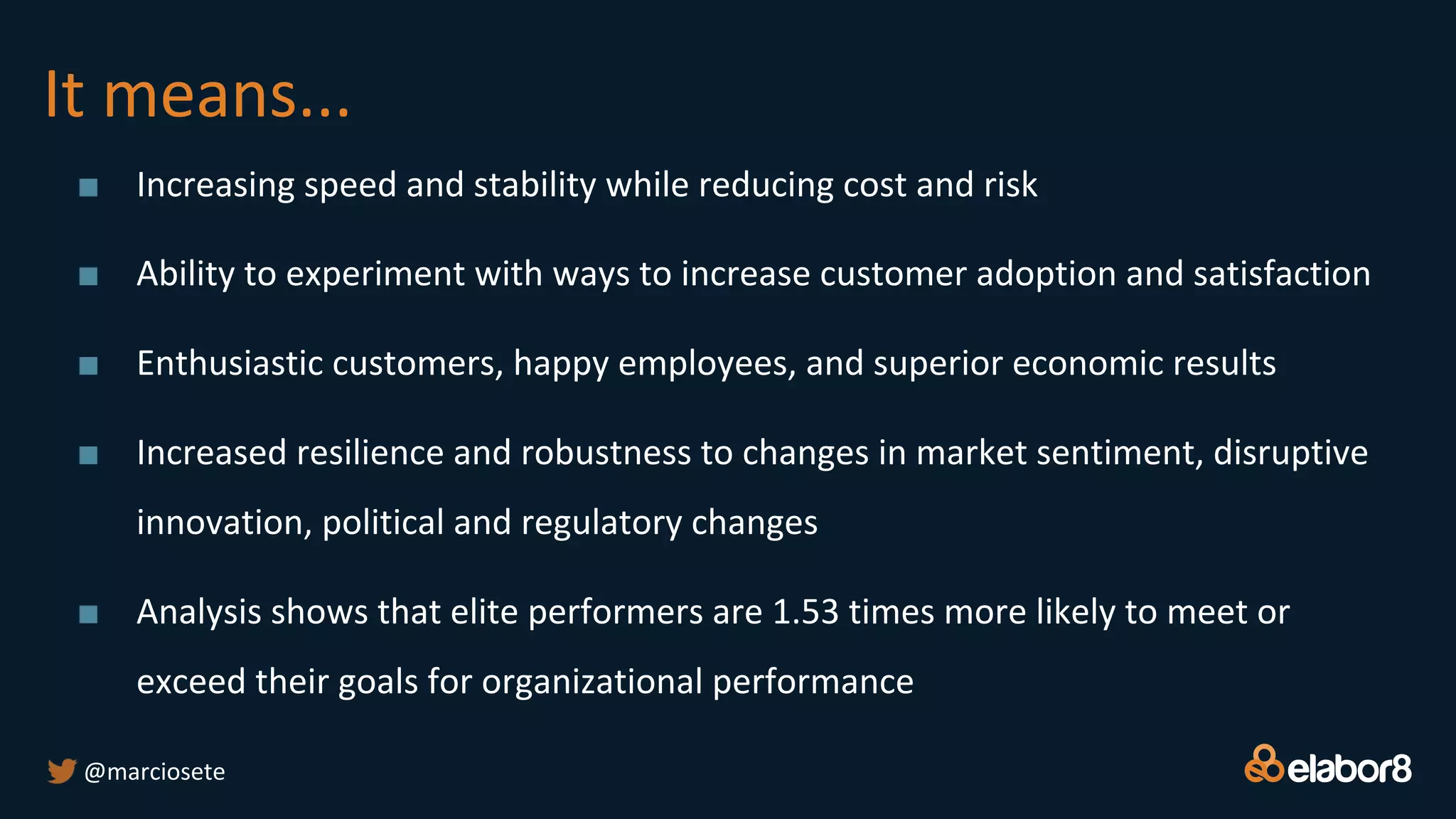
■ Increasing speed and stability while reducing cost and risk
■ Ability to experiment with ways to increase customer adoption and satisfaction
■ Enthusiastic customers, happy employees, and superior economic results
■ Increased resilience and robustness to changes in market sentiment, disruptive
innovation, political and regulatory changes
■ Analysis shows that elite performers are 1.53 times more likely to meet or
exceed their goals for organizational performance
@marciosete
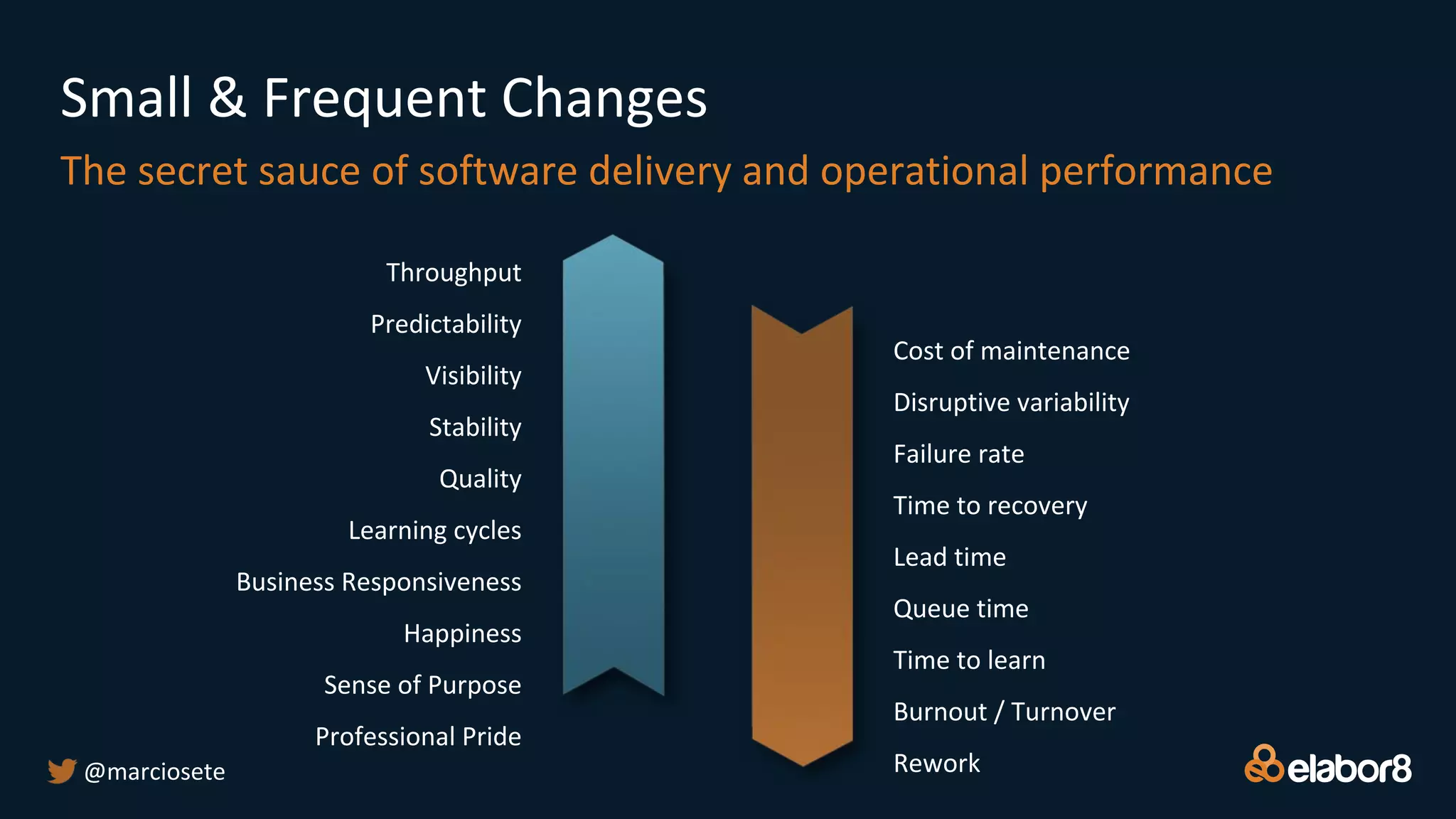
Small & Frequent Changes
The secret sauce of software delivery and operational performance
Throughput
Predictability
Visibility
Stability
Quality
Learning cycles
Business Responsiveness
Happiness
Sense of Purpose
Professional Pride
Cost of maintenance
Disruptive variability
Failure rate
Time to recovery
Lead time
Queue time
Time to learn
Burnout / Turnover
Rework@marciosete
@marciosete
Capabilities that lead to higher software delivery performance
(and better culture)
Loosely Coupled Architecture Trunk-based development
Deploy AutomationTest-Driven Development
Security integrated into SDLC
Feature toggling
Self-service
application platform
Version control for all artifacts
Dev/Prod environment parityContinuous Integration
Infrastructure as Code
Comprehensive
test automation
Resiliency Patterns
Logging, monitoring, alerting
and dashboarding
Immutable Infrastructure
@marciosete
Microservices
Data Lakes
Security
integrated into
SDLC
Short-lived
branches
Operational
Dashboards
Horizontal
scaling
Test-Driven
Development
Abiding to Test
Pyramid
Consumer-
driven contract
testing
OWASP top 10
proactive
controls
Effective test
data
management
Trunk-based
development
Logging
Feature
toggling
Quality
integrated into
SDLC
Real time
analytics
Effective IAM
Vulnerability
scanning
Deploy
Automation
Metrics and
Visualisation
Cloud
Portability
Effective cloud
cost
management
SOLID
Principles
Comprehens-
ive test
automation
Polyglot
Persistence
Continuous
Security
Testing
Version
Control for all
production
artifacts
Monitoring
and Alerting
Resiliency
Patterns
Database
versioning
Continuous
Integration
Self-service
application
platform
Multi-cloud
strategy
Infrastructure
as Code
Immutable
Infrastructure
Dev/Prod
environment
parity
Local dev
environments
High
Availability
Loosely-
Coupled
Architecture
Continuous
Testing
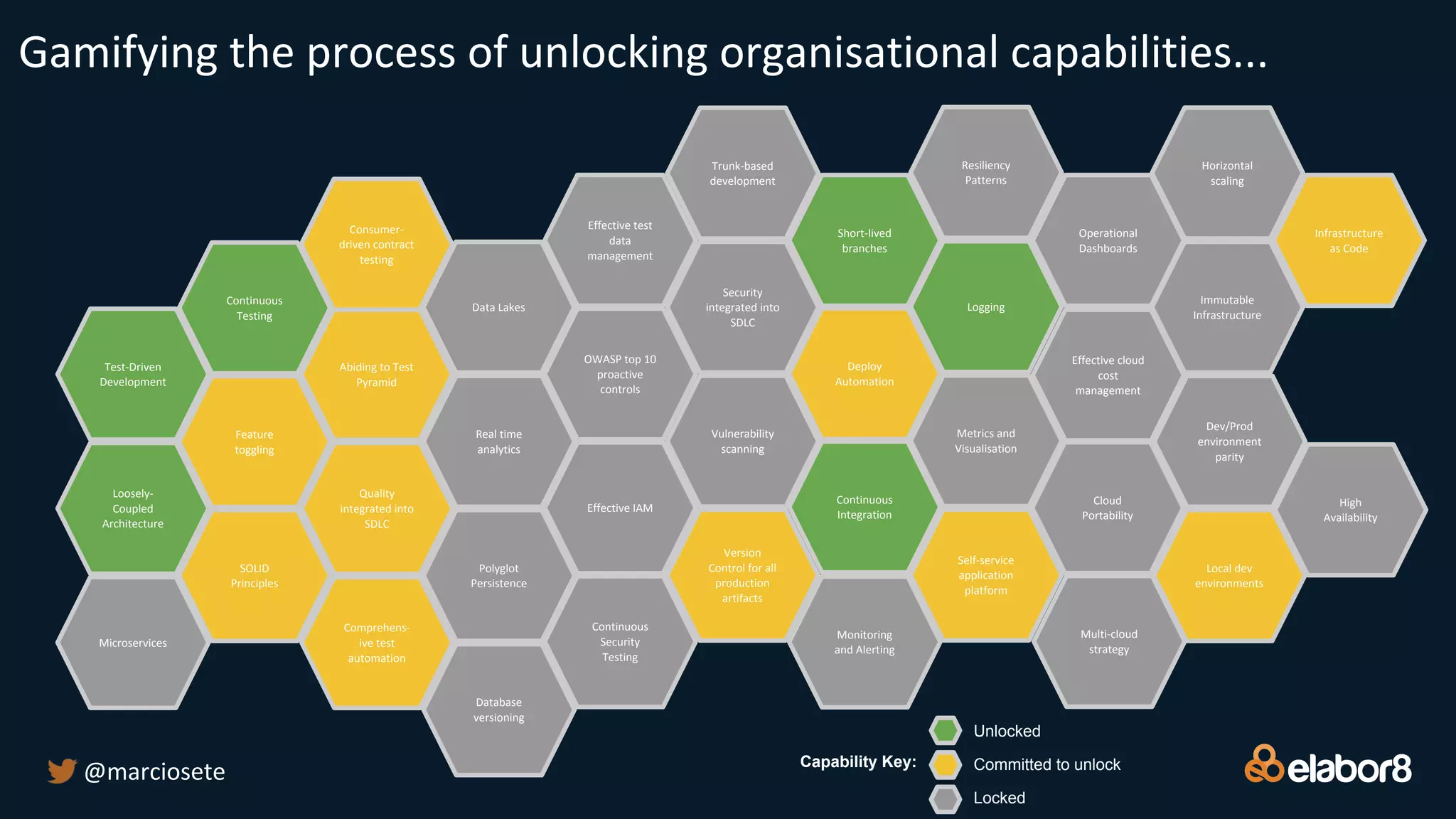
Gamifying the process of unlocking organisational capabilities...
Committed to unlock
Unlocked
Locked
Capability Key:
@marciosete
Think in terms of capabilities
and find ways
to unlock them
in your unique environment
#1 – ENGINEERING CULTURE
#2 - LEAN PRODUCT DEVELOPMENT
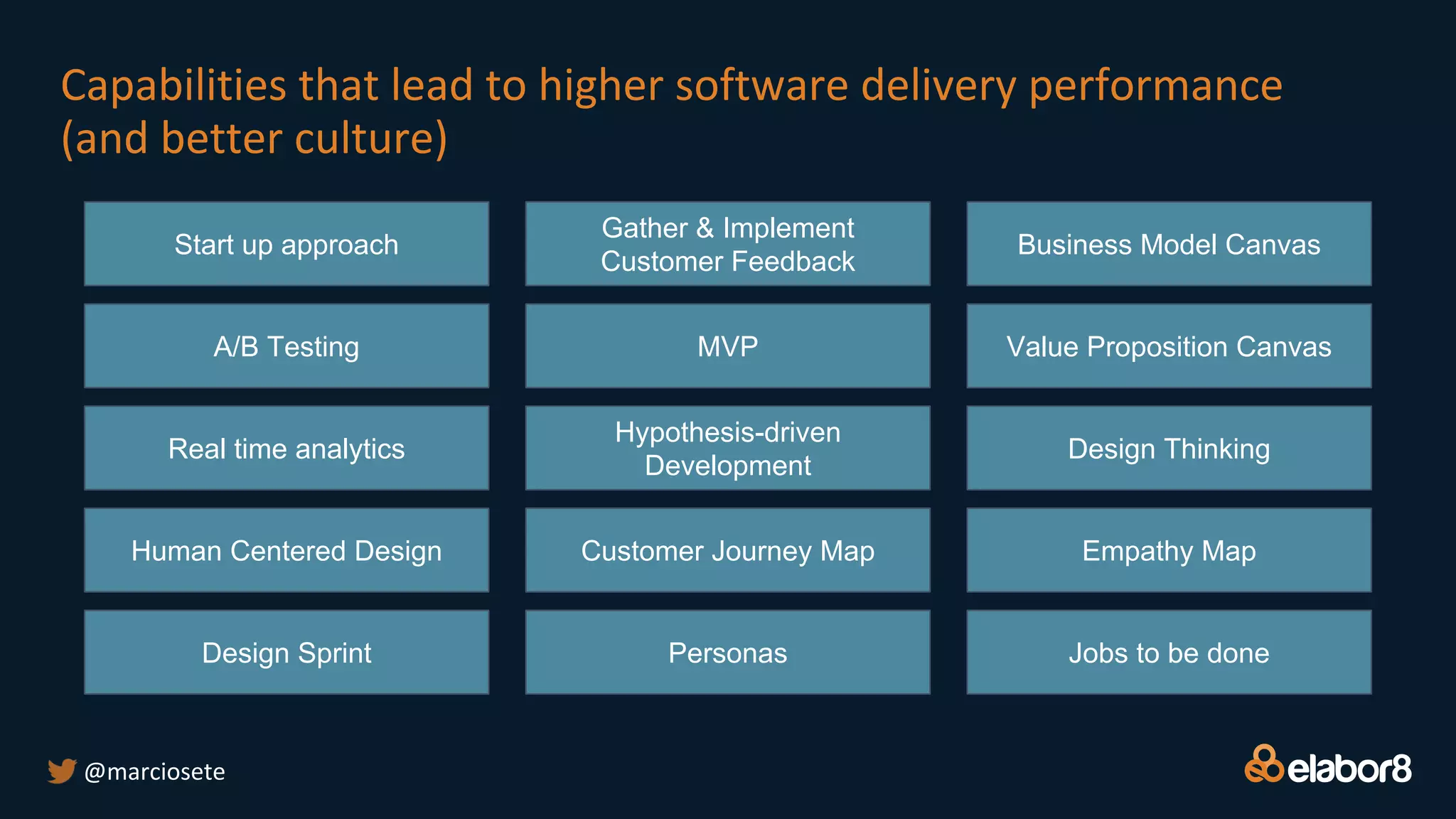
Capabilities that lead to higher software delivery performance
(and better culture)
Start up approach Business Model Canvas
Real time analytics
Value Proposition Canvas
Human Centered Design
Design Thinking
Design Sprint
Empathy Map
Personas Jobs to be done
@marciosete
Gather & Implement
Customer Feedback
A/B Testing
Hypothesis-driven
Development
MVP
Customer Journey Map
Get inside the skin of your customers
to take the guesswork out of your planning,
trade hunches for data so you can make
intent-based, context-aware decisions
and design products that customers love
#2 – LEAN PRODUCT DEVELOPMENT
#3 – CONTINUOUS LEARNING
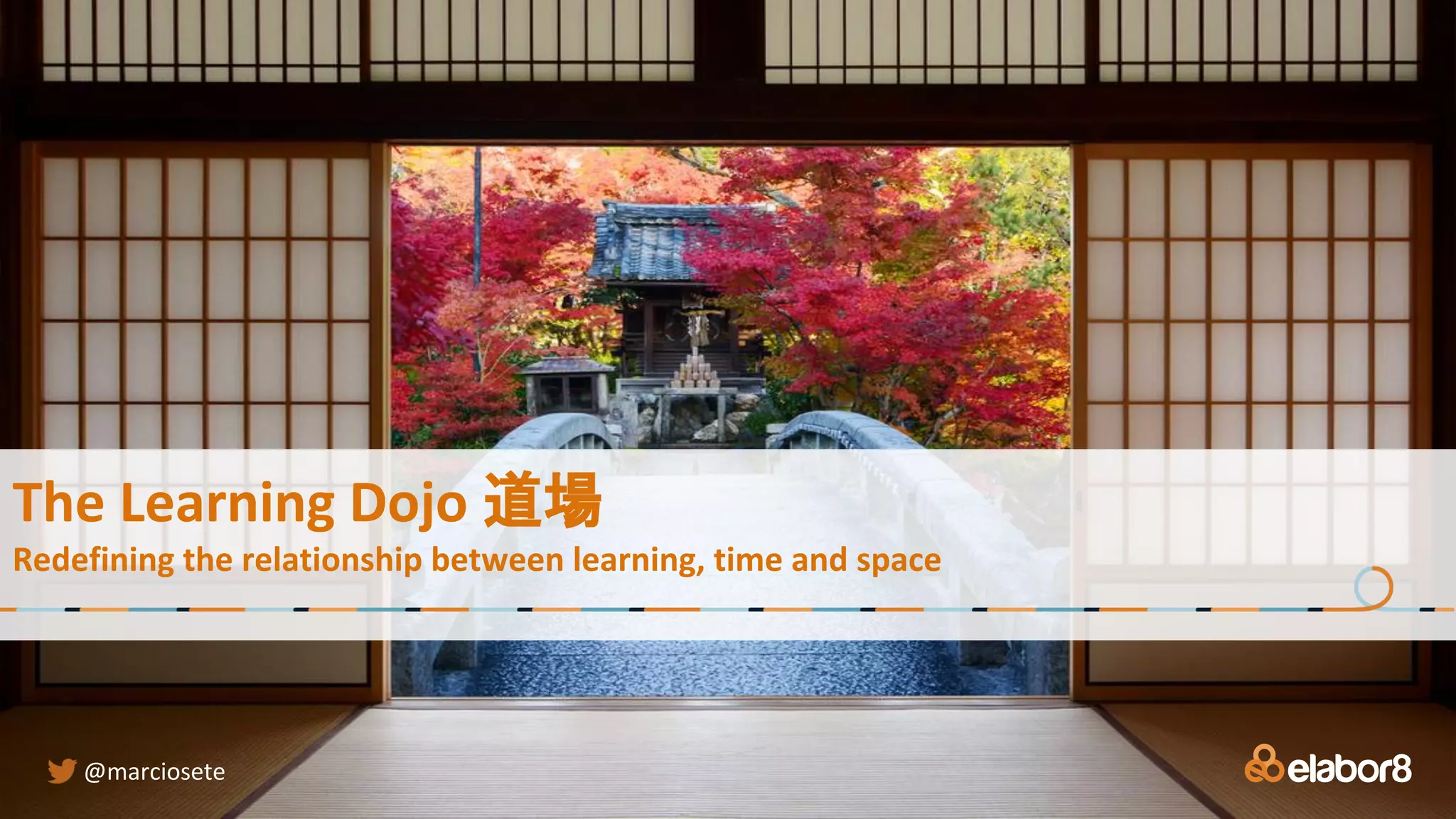
The Learning Dojo 道場
Redefining the relationship between learning, time and space
@marciosete
Caveats of the typical approach to learning
■ Focus on a specific skill area, individuals and silos
■ Approaches are usually 1-N, not very engaging, and the knowledge is constrained by
the expert
■ It doesn’t respect your pace
■ Exercises are performed in sandboxes and practitioners never have to contend with
real-world constraints, making concepts difficult to apply after the course is over
■ Unusual events and practitioners are restricted to a limited number of those per year
■ Hard for the learning to stick and lead to long-lasting change
@marciosete
The 30-day challenge
■ Six weeks being 12 iterations of 2.5 days
■ Full-stack team working together on their current project/product to unlock key
capabilities and new ways of working while delivering business value
■ Supported by cross-functional coaches with solid experience in Lean Product
Development, Lean Management, Agile, and DevOps
■ The coaches are there to pair, support, mentor, ask meaningful questions, provide
answers, pull in other specialists, and ensure skills transfer, actively introducing new
mindsets, principles, practices, and tools that are fit-for-[the team]-purpose.
@marciosete
Other deliberate practices promoted by the Dojo
■ Koans
■ Katas
■ Kumite
○ Coding Dojo
○ Testing Dojo
○ Mob Programming
@marciosete
■ Fish bowl
■ Lean Coffee
■ Internal events
○ Lunch & Learning
○ Hackathons
○ DevOps Days
○ Unconferences
Find ways
to enable your organisation
to learn how to learn
and motivate your people
to want to do so
#3 – CONTINUOUS LEARNING
#2 – Ways of Working
Technical Practices Social DynamicsWays of Working
#1 – FIT-FOR-PURPOSE SERVICE DELIVERY
Building an operating model that is fit-for-purpose
Product Development Service Delivery
Hypothesis Driven
Development
Service Level
Lean Startup
Classes of Service
Predictability
@marciosete
Project Execution
Focus on effectiveness
Cost Management
Focus on efficiency
Risk Management
Cross-functional Team
Iterative Development
Escope Management
Economy of scale
Pull System
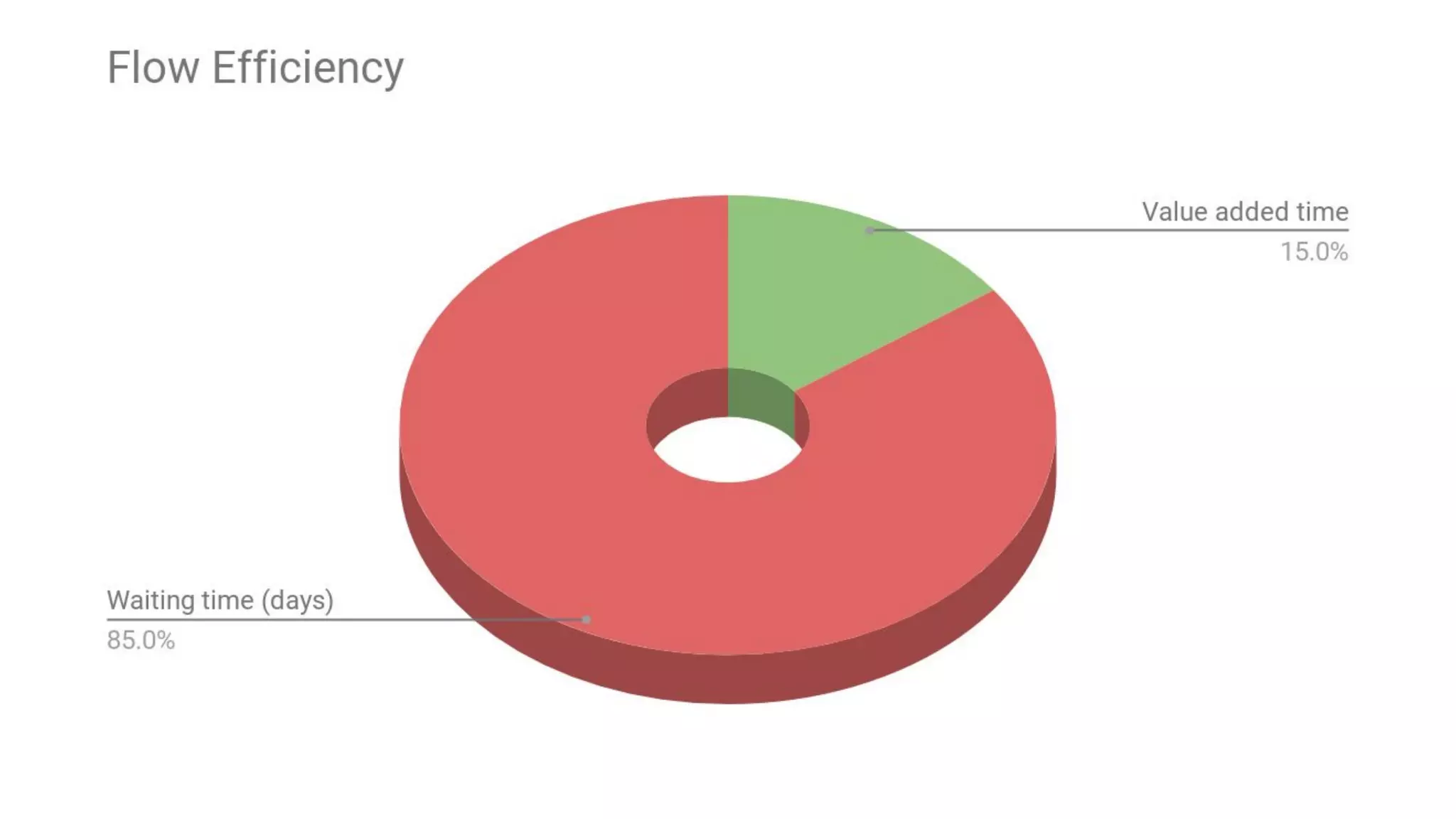
Flow Efficiency
Improve your “ways of working”
relentlessly and move away
from a ‘one-size-fits-all'
Operating Model
#1 – FIT-FOR-PURPOSE SERVICE DELIVERY
#2 - LEAN MANAGEMENT
Effectiveness
Capabilities that lead to higher software delivery performance
(and better culture)
Empowered Team Manage Flow
Limit Work in Progress
Lightweight Change
Approvals
Feedback from Production
Work in small batches
Make flow of work visible
Visual Management
Implement Feedback Loops
Make Policies Explicit
Last Responsible Moment
@marciosete
Class of Services
Cost of Delay
Work item types
Make Policies Explicit
Flow Efficiency
is the most powerful
improvement driver
#2 – LEAN MANAGEMENT
#3 – CUSTOMER CENTRICITY
By clustering micro-narratives from our frontline consultants on why their clients
would be likely to engage Elabor8 technology services, we have identified and named
the following segments:
Technology
Strategy & Advice
Software Lifecycle
Improvements
Capability Uplift
Delivery +
Coaching
Staff
Augmentation
Motivated to transform
the way of working but
they don’t quite know
what parts need
intervention and why.
They are seeking
transparency, clarity
and guidance on how
to conduct the
transformation. They
are also interested in
what their peers are
doing in the industry.
Need to improve the
effectiveness of the
overall software
lifecycle. They need
an expert to get the
job done, usually in
short engagements.
They might already
have that capability
internally, but those
resources don’t have
enough capacity or
the specific expertise.
This segment cares
about continuous
learning as a means
to promote innovation,
technical excellence
as well as a strategy
for talent attraction
and retention. They
look for ways to
continuously pollinate
new ideas, challenge
the status quo and
provoke new insights.
Recognises the need
of having a strategy in
place for upskilling the
team’s principles,
practices and tools,
but it needs to be
aligned with software
delivery because they
are pressured to keep
up with the
ever-increasing
demand coming from
the business.
They are not
specifically looking for
capability uplift.
Sometimes there is a
need to workaround
headcount limitations,
and they value the
flexibility of quickly
ramping up and down,
sometimes avoiding
the limitations and
inefficiencies of their
internal processes.
Market segmentation by customer purpose
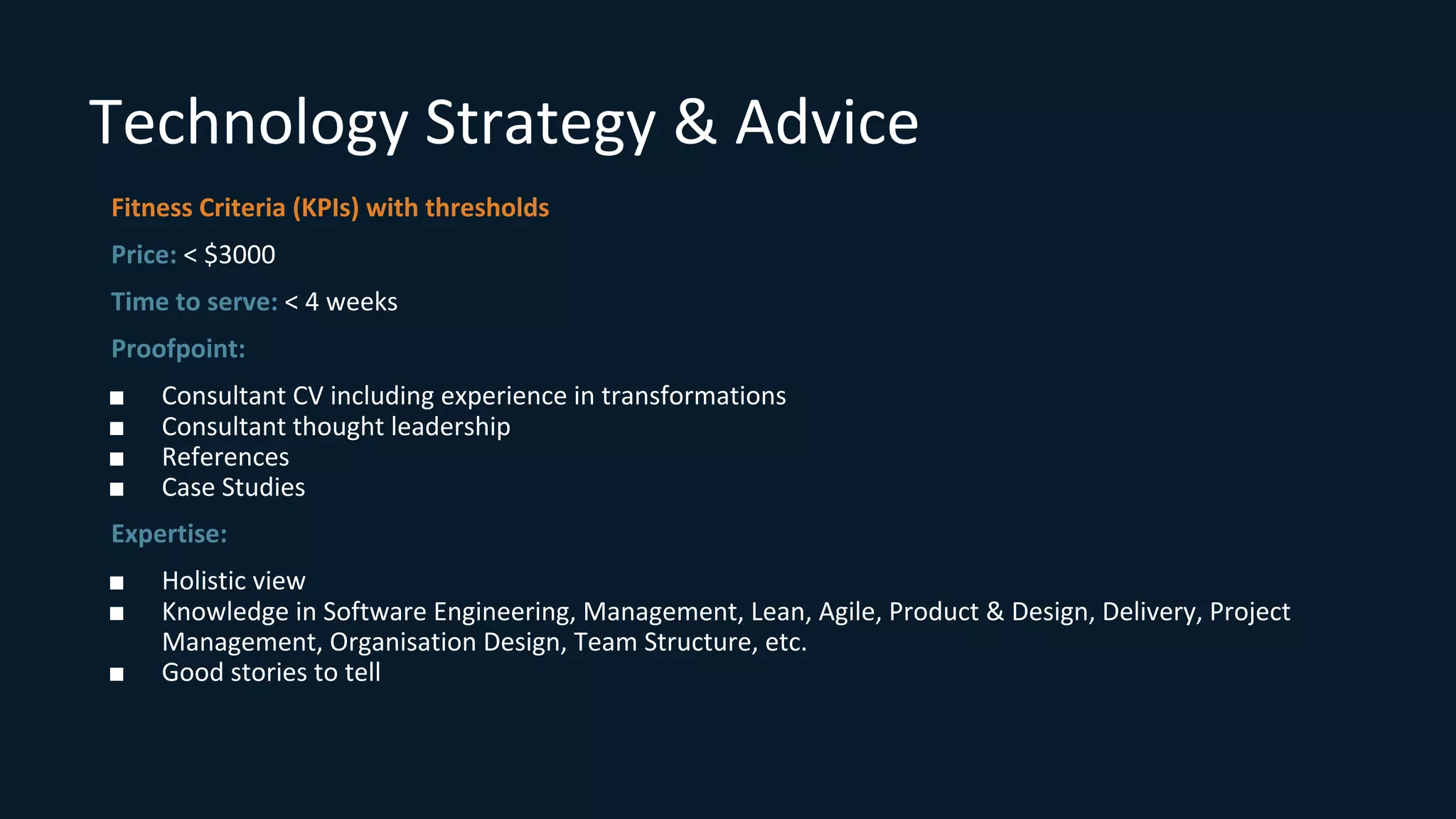
Technology Strategy & Advice
Fitness Criteria (KPIs) with thresholds
Price: < $3000
Time to serve: < 4 weeks
Proofpoint:
■ Consultant CV including experience in transformations
■ Consultant thought leadership
■ References
■ Case Studies
Expertise:
■ Holistic view
■ Knowledge in Software Engineering, Management, Lean, Agile, Product & Design, Delivery, Project
Management, Organisation Design, Team Structure, etc.
■ Good stories to tell
To understand what your customers expect
and what keeps them coming back,
you need to understand why they choose
your product or service.
You need to understand their purpose.
#3 – CUSTOMER CENTRICITY
#3 – Social Dynamics
Technical Practices Social DynamicsWays of Working
#1 – ORGANISATION & CULTURE DESIGN
These organisations are
characterised by low
cooperation across
groups and a culture of
blame. Information is
often held for personal
gain.
Pathological Bureaucratic Generative
power-oriented rule-oriented performance-oriented
These organisations are
preoccupied with rules
and positions, and
responsibilities are
compartmentalized by
department, with little
concern to the overall
mission of the
organisation.
The hallmarks here are
good information flow,
high-cooperation and
trust, bridging between
teams, and conscious
inquiry.
@marciosete The Westrum Model by Ron Westrum
The Westrum Model by Ron Westrum@marciosete
Low cooperation Modest cooperation High cooperation
Messengers “shot” Messengers neglected Messengers trained
Responsibilities shirked Narrow responsibilities Risks are shared
Bridging discouraged Bridging tolerated Bridging encouraged
Failure leads to scapegoating Failure leads to justice Failure leads to inquiry
Novelty crushed Novelty leads to problems Novelty implemented
Pathological Bureaucratic Generative
power-oriented rule-oriented performance-oriented
Vision / Missions Metrics
Organisation valuesTeam Structures
Reward System
Roles, responsibilities
& accountabilities
Making Policies Explicit
Intentional
Continuous learning
OKRs
Multiple
Feedback Loops
Personal Recognition
@marciosete
Office Design
Continuous
Improvement
Diversity
Sensemaking
Mechanism
Comms & Engagement
Mechanism to address
Organisational Tensions
Social Contracts
Customer & Employee
value proposition
Personal development
and coaching
Buddy Program
Care for the
skills and tools
Record and celebrate
significant events
Psychological Safety
Key capabilities that lead to a better culture (and higher software
delivery performance)
Chief Organisation Designer
@marciosete
The COD Hypothesis
Evolution of social, complex,
adaptive systems is slow.
Systemic interventions can
accelerate the process.
#1 – ORGANISATION & CULTURE DESIGN
#2 - TRIBAL BEHAVIOUR
Individuals are
socially, emotionally, and psychologically
defined by their tribal membership
@marciosete Immelman, Great Boss Dead Boss
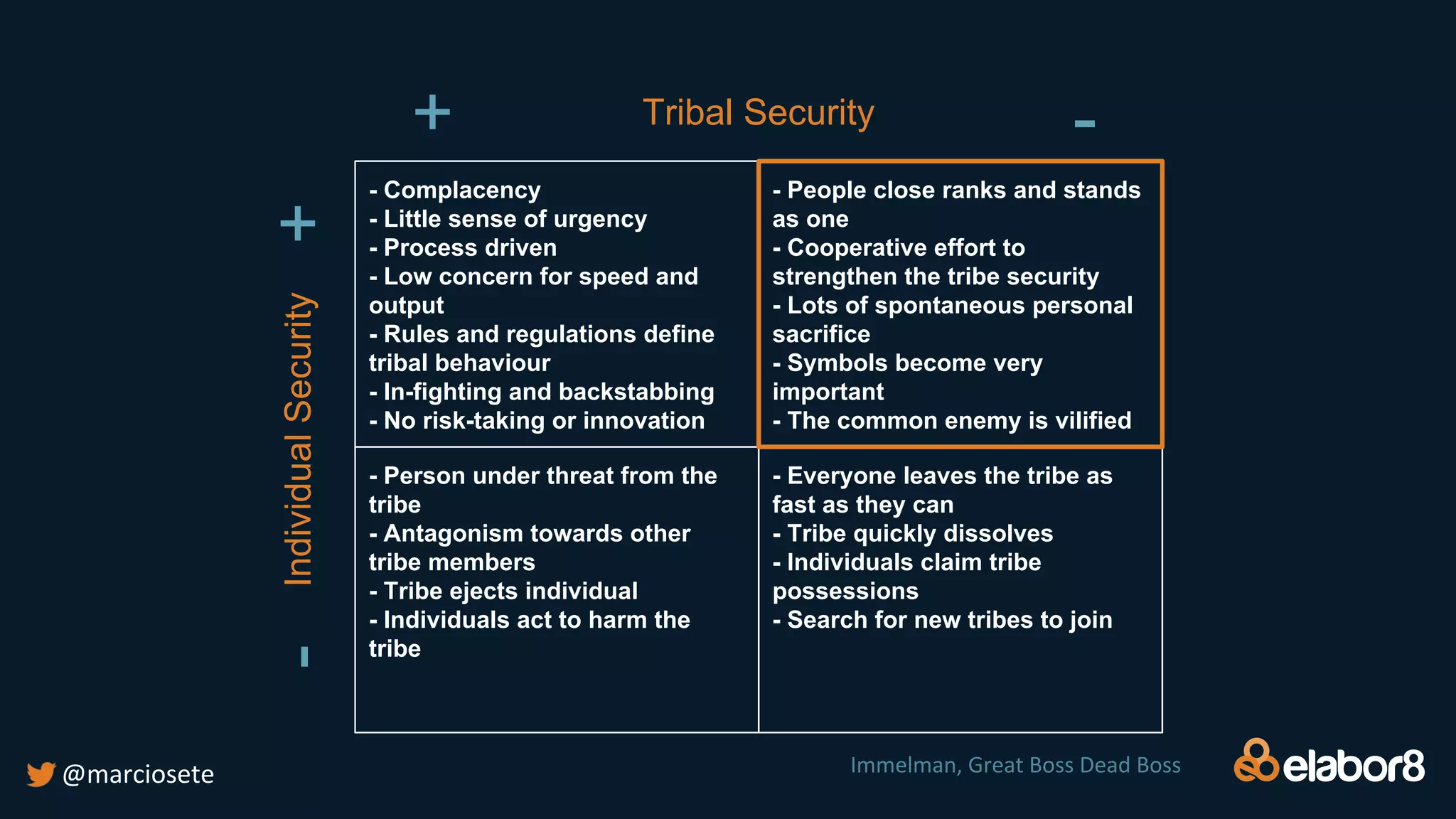
- Complacency
- Little sense of urgency
- Process driven
- Low concern for speed and
output
- Rules and regulations define
tribal behaviour
- In-fighting and backstabbing
- No risk-taking or innovation
- People close ranks and stands
as one
- Cooperative effort to
strengthen the tribe security
- Lots of spontaneous personal
sacrifice
- Symbols become very
important
- The common enemy is vilified
- Person under threat from the
tribe
- Antagonism towards other
tribe members
- Tribe ejects individual
- Individuals act to harm the
tribe
- Everyone leaves the tribe as
fast as they can
- Tribe quickly dissolves
- Individuals claim tribe
possessions
- Search for new tribes to join
Tribal Security
IndividualSecurity+-
-+
@marciosete Immelman, Great Boss Dead Boss
- Strong encouragement and
support
- Appreciation for individual
contributions, reinforcing the
commitment and effort
- Clear outcomes of tribe’s effort
- Very high motivation and
cooperation
- Extreme loyalty
- Renewed sense of urgency to
further refine skills and
capabilities
- Individuals work to make the
tribe more successful
- Tribal symbols reaffirmed
- Strategies redefined
- Relationships reviewed and
improved
- Individual feels out of sync
with the tribe
- Effort to integrate with tribe
- Individual feels rejected and
powerless against the unspoken
but complete exclusion
- Form a new tribe or the tribe’s
enemies in effort to restore IV
- Finger pointing
- Loss of focus
- Individuals wants to promote
their own view of the world
- In-fighting
- Look for new symbols of value
Tribal Value
IndividualValue+-
-+
@marciosete Immelman, Great Boss Dead Boss
If you understand this visceral social
dynamic, you can unlock the deepest and
strongest motivators that humans possess,
building an organisation that is so
motivated that is virtually unstoppable
#2 – TRIBAL BEHAVIOUR
#3 – TRANSFORMATIONAL LEADERSHIP
Characteristics of a Transformational Leader
@marciosete
Vision
Inspirational
Communication
Intellectual
Stimulation
Supportive
Leadership
Personal
Recognition
Dr. Alannah Rafferty, Dr. Mark Griffin
Curious &
Learner
Humble &
respect for
people
A strong tribe has a leader
dedicated to the tribe's success
@marciosete
People sense very quickly
whether their leader is
genuinely committed
to them and the tribe
#3 – TRANSFORMATIONAL LEADERSHIP
what I want you
to remember...
@marciosete
Technical Practices Social Dynamics
Think in terms of
capabilities and grow an
engineering culture
Making systemic
interventions can
accelerate evolution
Flow Efficiency
is the most powerful
improvement driver
Get inside the skin
of your customers
Understand Tribal Behaviour
to unlock the deepest and
strongest motivators that
humans possess
A true leader is instinctively
trusted by everyone
Ways of Working
Move away from a
‘one-size-fits-all'
Operating Model
Learn how to learn
and motivate your people to
want to do so
Understand you
customer purpose and
their selection criteria
Principal Consultant &
Head of Technology Services
https://www.linkedin.com/in/marciosete
https://twitter.com/elabor8
https://twitter.com/marciosete
https://medium.com/@Elabor8
https://medium.com/@marciosete
Thank you! Obrigado!
www.elabor8.com.au
marcio.sete@elabor8.com.au
Marcio Sete

What organisations are doing to nurture and grow a culture of high-performance

  • 1.
    Random ideas about whatorganisations are doing to nurture and grow a culture of high-performance Principal Consultant & Head of Technology Services marcio.sete@elabor8.com.au Marcio Sete @marciosete
  • 2.
    https://elabor8.com.au/careers Gabriel Vailati Caio CestariMarcio Sete Amanda Varella Manoel Pimentel Andre Volkmer William Teizen Paulo Furtado Aline PaulucciEduardo BrandaoYour name here Josiane Teixeira
  • 3.
    What does ittake to adopt new ways of thinking and acting in social, complex and adaptive organisms?
  • 4.
    Technical Practices SocialDynamics Engineering Culture Organisation & Culture Design Lean ManagementLean Product Development Tribal Behaviour Transformational Leadership The Multidimensional Hypothesis Ways of Working Fit-for-purpose service delivery Continuous learning Customer Centricity @marciosete
  • 5.
    #1 – TechnicalPractices Technical Practices Social DynamicsWays of Working
  • 6.
  • 7.
    High performers aredoing significantly better than their lower-performing peers in terms of speed and stability 2018 State of DevOps Report | presented by DORA Throughput of Code Stability of Systems Code deployments 46x more frequent Change failure rate 7x lower (1/7 as likely to fail) Lead time from commit to deploy 2555x faster Time to recover from incidents 2604x faster
  • 8.
    Elite Performers High Performers Medium Performers Low Performers Deployment frequency On-demand (multipledeploys per day) Between once per hour and once per day Between once per week and once per month Between once per week and once per month Lead time for changes Less than one hour Between one day and one week Between one week and one month Between one month and six months Time to restore service Less than one hour Less than one day Less than one day Between one week and one month Change failure rate 0-15% 0-15% 0-15% 46-60% High performers are doing significantly better than their lower-performing peers in terms of speed and stability 2018 State of DevOps Report | presented by DORA
  • 9.
    It means... ■ Increasingspeed and stability while reducing cost and risk ■ Ability to experiment with ways to increase customer adoption and satisfaction ■ Enthusiastic customers, happy employees, and superior economic results ■ Increased resilience and robustness to changes in market sentiment, disruptive innovation, political and regulatory changes ■ Analysis shows that elite performers are 1.53 times more likely to meet or exceed their goals for organizational performance @marciosete
  • 10.
    Small & FrequentChanges The secret sauce of software delivery and operational performance Throughput Predictability Visibility Stability Quality Learning cycles Business Responsiveness Happiness Sense of Purpose Professional Pride Cost of maintenance Disruptive variability Failure rate Time to recovery Lead time Queue time Time to learn Burnout / Turnover Rework@marciosete
  • 11.
  • 12.
    Capabilities that leadto higher software delivery performance (and better culture) Loosely Coupled Architecture Trunk-based development Deploy AutomationTest-Driven Development Security integrated into SDLC Feature toggling Self-service application platform Version control for all artifacts Dev/Prod environment parityContinuous Integration Infrastructure as Code Comprehensive test automation Resiliency Patterns Logging, monitoring, alerting and dashboarding Immutable Infrastructure @marciosete
  • 13.
    Microservices Data Lakes Security integrated into SDLC Short-lived branches Operational Dashboards Horizontal scaling Test-Driven Development Abidingto Test Pyramid Consumer- driven contract testing OWASP top 10 proactive controls Effective test data management Trunk-based development Logging Feature toggling Quality integrated into SDLC Real time analytics Effective IAM Vulnerability scanning Deploy Automation Metrics and Visualisation Cloud Portability Effective cloud cost management SOLID Principles Comprehens- ive test automation Polyglot Persistence Continuous Security Testing Version Control for all production artifacts Monitoring and Alerting Resiliency Patterns Database versioning Continuous Integration Self-service application platform Multi-cloud strategy Infrastructure as Code Immutable Infrastructure Dev/Prod environment parity Local dev environments High Availability Loosely- Coupled Architecture Continuous Testing Gamifying the process of unlocking organisational capabilities... Committed to unlock Unlocked Locked Capability Key: @marciosete
  • 14.
    Think in termsof capabilities and find ways to unlock them in your unique environment #1 – ENGINEERING CULTURE
  • 15.
    #2 - LEANPRODUCT DEVELOPMENT
  • 16.
    Capabilities that leadto higher software delivery performance (and better culture) Start up approach Business Model Canvas Real time analytics Value Proposition Canvas Human Centered Design Design Thinking Design Sprint Empathy Map Personas Jobs to be done @marciosete Gather & Implement Customer Feedback A/B Testing Hypothesis-driven Development MVP Customer Journey Map
  • 17.
    Get inside theskin of your customers to take the guesswork out of your planning, trade hunches for data so you can make intent-based, context-aware decisions and design products that customers love #2 – LEAN PRODUCT DEVELOPMENT
  • 18.
  • 19.
    The Learning Dojo道場 Redefining the relationship between learning, time and space @marciosete
  • 20.
    Caveats of thetypical approach to learning ■ Focus on a specific skill area, individuals and silos ■ Approaches are usually 1-N, not very engaging, and the knowledge is constrained by the expert ■ It doesn’t respect your pace ■ Exercises are performed in sandboxes and practitioners never have to contend with real-world constraints, making concepts difficult to apply after the course is over ■ Unusual events and practitioners are restricted to a limited number of those per year ■ Hard for the learning to stick and lead to long-lasting change @marciosete
  • 21.
    The 30-day challenge ■Six weeks being 12 iterations of 2.5 days ■ Full-stack team working together on their current project/product to unlock key capabilities and new ways of working while delivering business value ■ Supported by cross-functional coaches with solid experience in Lean Product Development, Lean Management, Agile, and DevOps ■ The coaches are there to pair, support, mentor, ask meaningful questions, provide answers, pull in other specialists, and ensure skills transfer, actively introducing new mindsets, principles, practices, and tools that are fit-for-[the team]-purpose. @marciosete
  • 22.
    Other deliberate practicespromoted by the Dojo ■ Koans ■ Katas ■ Kumite ○ Coding Dojo ○ Testing Dojo ○ Mob Programming @marciosete ■ Fish bowl ■ Lean Coffee ■ Internal events ○ Lunch & Learning ○ Hackathons ○ DevOps Days ○ Unconferences
  • 23.
    Find ways to enableyour organisation to learn how to learn and motivate your people to want to do so #3 – CONTINUOUS LEARNING
  • 24.
    #2 – Waysof Working Technical Practices Social DynamicsWays of Working
  • 25.
    #1 – FIT-FOR-PURPOSESERVICE DELIVERY
  • 26.
    Building an operatingmodel that is fit-for-purpose Product Development Service Delivery Hypothesis Driven Development Service Level Lean Startup Classes of Service Predictability @marciosete Project Execution Focus on effectiveness Cost Management Focus on efficiency Risk Management Cross-functional Team Iterative Development Escope Management Economy of scale Pull System Flow Efficiency
  • 27.
    Improve your “waysof working” relentlessly and move away from a ‘one-size-fits-all' Operating Model #1 – FIT-FOR-PURPOSE SERVICE DELIVERY
  • 28.
    #2 - LEANMANAGEMENT
  • 30.
  • 31.
    Capabilities that leadto higher software delivery performance (and better culture) Empowered Team Manage Flow Limit Work in Progress Lightweight Change Approvals Feedback from Production Work in small batches Make flow of work visible Visual Management Implement Feedback Loops Make Policies Explicit Last Responsible Moment @marciosete Class of Services Cost of Delay Work item types Make Policies Explicit
  • 32.
    Flow Efficiency is themost powerful improvement driver #2 – LEAN MANAGEMENT
  • 33.
    #3 – CUSTOMERCENTRICITY
  • 34.
    By clustering micro-narrativesfrom our frontline consultants on why their clients would be likely to engage Elabor8 technology services, we have identified and named the following segments: Technology Strategy & Advice Software Lifecycle Improvements Capability Uplift Delivery + Coaching Staff Augmentation Motivated to transform the way of working but they don’t quite know what parts need intervention and why. They are seeking transparency, clarity and guidance on how to conduct the transformation. They are also interested in what their peers are doing in the industry. Need to improve the effectiveness of the overall software lifecycle. They need an expert to get the job done, usually in short engagements. They might already have that capability internally, but those resources don’t have enough capacity or the specific expertise. This segment cares about continuous learning as a means to promote innovation, technical excellence as well as a strategy for talent attraction and retention. They look for ways to continuously pollinate new ideas, challenge the status quo and provoke new insights. Recognises the need of having a strategy in place for upskilling the team’s principles, practices and tools, but it needs to be aligned with software delivery because they are pressured to keep up with the ever-increasing demand coming from the business. They are not specifically looking for capability uplift. Sometimes there is a need to workaround headcount limitations, and they value the flexibility of quickly ramping up and down, sometimes avoiding the limitations and inefficiencies of their internal processes. Market segmentation by customer purpose
  • 38.
    Technology Strategy &Advice Fitness Criteria (KPIs) with thresholds Price: < $3000 Time to serve: < 4 weeks Proofpoint: ■ Consultant CV including experience in transformations ■ Consultant thought leadership ■ References ■ Case Studies Expertise: ■ Holistic view ■ Knowledge in Software Engineering, Management, Lean, Agile, Product & Design, Delivery, Project Management, Organisation Design, Team Structure, etc. ■ Good stories to tell
  • 39.
    To understand whatyour customers expect and what keeps them coming back, you need to understand why they choose your product or service. You need to understand their purpose. #3 – CUSTOMER CENTRICITY
  • 40.
    #3 – SocialDynamics Technical Practices Social DynamicsWays of Working
  • 41.
    #1 – ORGANISATION& CULTURE DESIGN
  • 42.
    These organisations are characterisedby low cooperation across groups and a culture of blame. Information is often held for personal gain. Pathological Bureaucratic Generative power-oriented rule-oriented performance-oriented These organisations are preoccupied with rules and positions, and responsibilities are compartmentalized by department, with little concern to the overall mission of the organisation. The hallmarks here are good information flow, high-cooperation and trust, bridging between teams, and conscious inquiry. @marciosete The Westrum Model by Ron Westrum
  • 43.
    The Westrum Modelby Ron Westrum@marciosete Low cooperation Modest cooperation High cooperation Messengers “shot” Messengers neglected Messengers trained Responsibilities shirked Narrow responsibilities Risks are shared Bridging discouraged Bridging tolerated Bridging encouraged Failure leads to scapegoating Failure leads to justice Failure leads to inquiry Novelty crushed Novelty leads to problems Novelty implemented Pathological Bureaucratic Generative power-oriented rule-oriented performance-oriented
  • 44.
    Vision / MissionsMetrics Organisation valuesTeam Structures Reward System Roles, responsibilities & accountabilities Making Policies Explicit Intentional Continuous learning OKRs Multiple Feedback Loops Personal Recognition @marciosete Office Design Continuous Improvement Diversity Sensemaking Mechanism Comms & Engagement Mechanism to address Organisational Tensions Social Contracts Customer & Employee value proposition Personal development and coaching Buddy Program Care for the skills and tools Record and celebrate significant events Psychological Safety Key capabilities that lead to a better culture (and higher software delivery performance)
  • 45.
  • 46.
    Evolution of social,complex, adaptive systems is slow. Systemic interventions can accelerate the process. #1 – ORGANISATION & CULTURE DESIGN
  • 47.
    #2 - TRIBALBEHAVIOUR
  • 48.
    Individuals are socially, emotionally,and psychologically defined by their tribal membership @marciosete Immelman, Great Boss Dead Boss
  • 49.
    - Complacency - Littlesense of urgency - Process driven - Low concern for speed and output - Rules and regulations define tribal behaviour - In-fighting and backstabbing - No risk-taking or innovation - People close ranks and stands as one - Cooperative effort to strengthen the tribe security - Lots of spontaneous personal sacrifice - Symbols become very important - The common enemy is vilified - Person under threat from the tribe - Antagonism towards other tribe members - Tribe ejects individual - Individuals act to harm the tribe - Everyone leaves the tribe as fast as they can - Tribe quickly dissolves - Individuals claim tribe possessions - Search for new tribes to join Tribal Security IndividualSecurity+- -+ @marciosete Immelman, Great Boss Dead Boss
  • 50.
    - Strong encouragementand support - Appreciation for individual contributions, reinforcing the commitment and effort - Clear outcomes of tribe’s effort - Very high motivation and cooperation - Extreme loyalty - Renewed sense of urgency to further refine skills and capabilities - Individuals work to make the tribe more successful - Tribal symbols reaffirmed - Strategies redefined - Relationships reviewed and improved - Individual feels out of sync with the tribe - Effort to integrate with tribe - Individual feels rejected and powerless against the unspoken but complete exclusion - Form a new tribe or the tribe’s enemies in effort to restore IV - Finger pointing - Loss of focus - Individuals wants to promote their own view of the world - In-fighting - Look for new symbols of value Tribal Value IndividualValue+- -+ @marciosete Immelman, Great Boss Dead Boss
  • 51.
    If you understandthis visceral social dynamic, you can unlock the deepest and strongest motivators that humans possess, building an organisation that is so motivated that is virtually unstoppable #2 – TRIBAL BEHAVIOUR
  • 52.
  • 53.
    Characteristics of aTransformational Leader @marciosete Vision Inspirational Communication Intellectual Stimulation Supportive Leadership Personal Recognition Dr. Alannah Rafferty, Dr. Mark Griffin Curious & Learner Humble & respect for people
  • 54.
    A strong tribehas a leader dedicated to the tribe's success @marciosete
  • 55.
    People sense veryquickly whether their leader is genuinely committed to them and the tribe #3 – TRANSFORMATIONAL LEADERSHIP
  • 56.
    what I wantyou to remember...
  • 57.
    @marciosete Technical Practices SocialDynamics Think in terms of capabilities and grow an engineering culture Making systemic interventions can accelerate evolution Flow Efficiency is the most powerful improvement driver Get inside the skin of your customers Understand Tribal Behaviour to unlock the deepest and strongest motivators that humans possess A true leader is instinctively trusted by everyone Ways of Working Move away from a ‘one-size-fits-all' Operating Model Learn how to learn and motivate your people to want to do so Understand you customer purpose and their selection criteria
  • 58.
    Principal Consultant & Headof Technology Services https://www.linkedin.com/in/marciosete https://twitter.com/elabor8 https://twitter.com/marciosete https://medium.com/@Elabor8 https://medium.com/@marciosete Thank you! Obrigado! www.elabor8.com.au marcio.sete@elabor8.com.au Marcio Sete