What Linux Is
All About
September 2024
learningtechtogetherl
What is Linux?
Linux is an open-source, Unix-like operating system
that powers millions of devices worldwide. It’s known
for its flexibility, stability, and security.
For more information about Linux, visit
https://yellowtail.tech/
The History of Linux
Origin
Open-Source Movement
Developed by Linus Torvalds in 1991.
Inspired by the GNU Project and built around the idea of free software.
What Makes Linux
Different?
• Open-Source: The source code is freely available
for anyone to view, modify, and distribute.
• Community-Driven: Maintained and improved
by a global community of developers.
• Customizable: Users can tailor the system to
their specific needs.
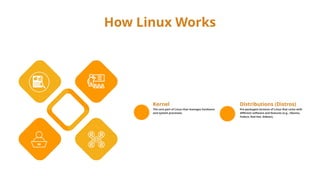
The core part of Linux that manages hardware
and system processes.
How Linux Works
Kernel Distributions (Distros)
Pre-packaged versions of Linux that come with
different software and features (e.g., Ubuntu,
Fedora, Red Hat, Debian).
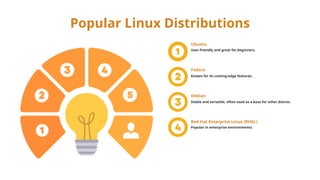
Popular Linux Distributions
User-friendly and great for beginners.
Known for its cutting-edge features.
Stable and versatile, often used as a base for other distros.
Popular in enterprise environments.
Ubuntu
Fedora
Debian
Red Hat Enterprise Linux (RHEL)
Key Features of Linux
Security
Stability
Flexibility
Cost-Effective
Built-in features like file permissions and user authentication.
Rarely crashes and handles heavy workloads well.
Can run on almost any device, from smartphones to supercomputers.
Free to use and install.
Where is Linux Used?
Servers
Supercomputers
IoT Devices
Desktops & Laptops
Powers over 90% of cloud servers worldwide.
Most of the world’s top supercomputers run on Linux.
• Used in smart devices, routers, and TVs.
Linux distributions are available for personal use.
Benefits of Using Linux
Optimized for multitasking and resource management.
Less prone to malware and tracking.
Access to a large support network through forums and communities.
Performance
Privacy
Support & Community
Tips for Linux Beginners
Start with an easy distribution.
Experiment in a virtual machine before
installing.
Leverage online resources and
communities for help.

What Linux Is All About - An Introduction to the Open-Source Operating System

  • 1.
    What Linux Is AllAbout September 2024 learningtechtogetherl
  • 2.
    What is Linux? Linuxis an open-source, Unix-like operating system that powers millions of devices worldwide. It’s known for its flexibility, stability, and security. For more information about Linux, visit https://yellowtail.tech/
  • 3.
    The History ofLinux Origin Open-Source Movement Developed by Linus Torvalds in 1991. Inspired by the GNU Project and built around the idea of free software.
  • 4.
    What Makes Linux Different? •Open-Source: The source code is freely available for anyone to view, modify, and distribute. • Community-Driven: Maintained and improved by a global community of developers. • Customizable: Users can tailor the system to their specific needs.
  • 5.
    The core partof Linux that manages hardware and system processes. How Linux Works Kernel Distributions (Distros) Pre-packaged versions of Linux that come with different software and features (e.g., Ubuntu, Fedora, Red Hat, Debian).
  • 6.
    Popular Linux Distributions User-friendlyand great for beginners. Known for its cutting-edge features. Stable and versatile, often used as a base for other distros. Popular in enterprise environments. Ubuntu Fedora Debian Red Hat Enterprise Linux (RHEL)
  • 7.
    Key Features ofLinux Security Stability Flexibility Cost-Effective Built-in features like file permissions and user authentication. Rarely crashes and handles heavy workloads well. Can run on almost any device, from smartphones to supercomputers. Free to use and install.
  • 8.
    Where is LinuxUsed? Servers Supercomputers IoT Devices Desktops & Laptops Powers over 90% of cloud servers worldwide. Most of the world’s top supercomputers run on Linux. • Used in smart devices, routers, and TVs. Linux distributions are available for personal use.
  • 9.
    Benefits of UsingLinux Optimized for multitasking and resource management. Less prone to malware and tracking. Access to a large support network through forums and communities. Performance Privacy Support & Community
  • 10.
    Tips for LinuxBeginners Start with an easy distribution. Experiment in a virtual machine before installing. Leverage online resources and communities for help.