The Origins of Linux
Linux is an open-source operating system that has its
roots in the early days of computing. Developed in 1991
by Finnish programmer Linus Torvalds, Linux was
inspired by the Unix operating system and has since
become one of the most widely used operating systems
in the world.
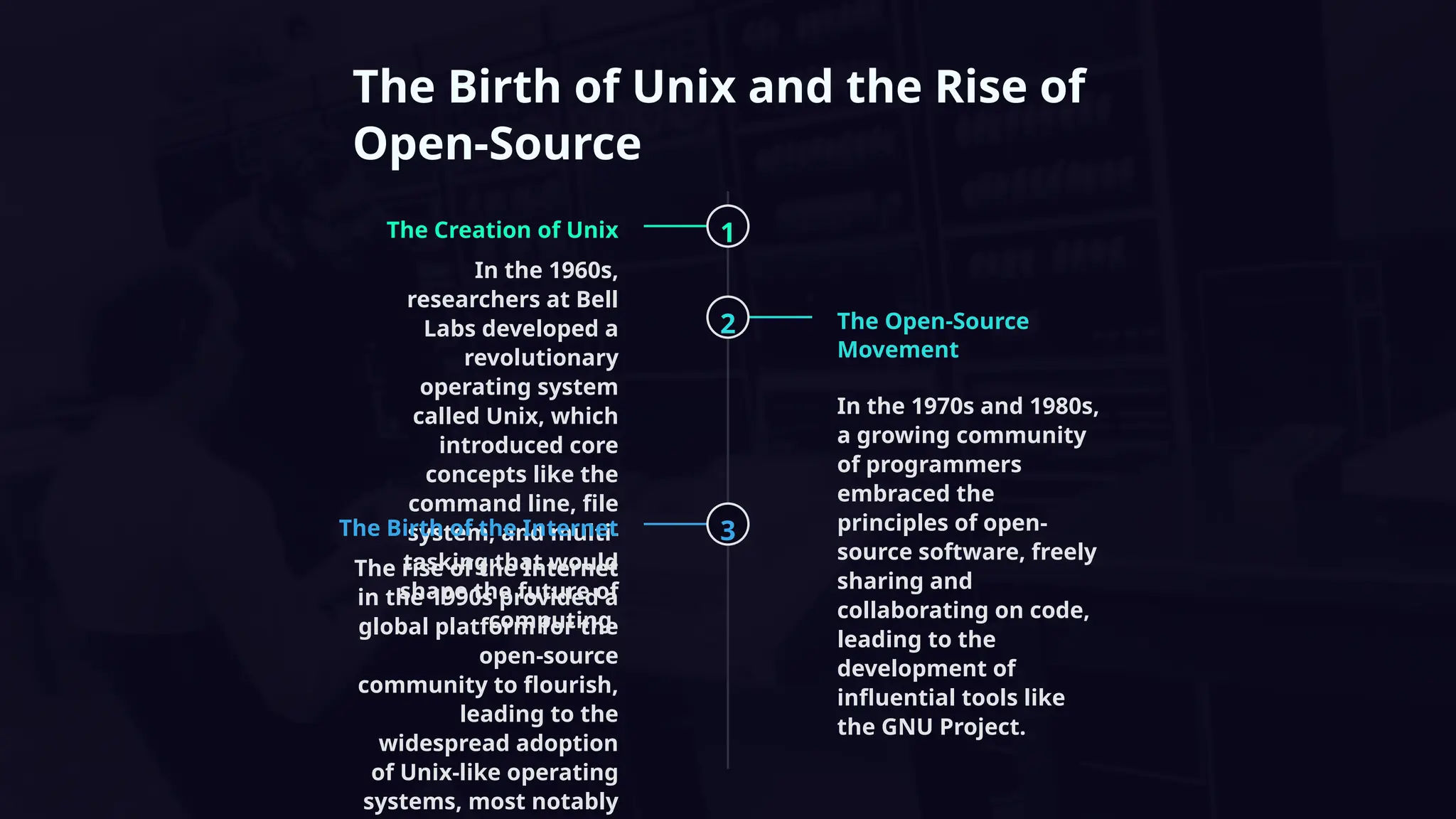
The Birth of Unix and the Rise of
Open-Source
1
The Creation of Unix
In the 1960s,
researchers at Bell
Labs developed a
revolutionary
operating system
called Unix, which
introduced core
concepts like the
command line, file
system, and multi-
tasking that would
shape the future of
computing.
2 The Open-Source
Movement
In the 1970s and 1980s,
a growing community
of programmers
embraced the
principles of open-
source software, freely
sharing and
collaborating on code,
leading to the
development of
influential tools like
the GNU Project.
3
The Birth of the Internet
The rise of the Internet
in the 1990s provided a
global platform for the
open-source
community to flourish,
leading to the
widespread adoption
of Unix-like operating
systems, most notably
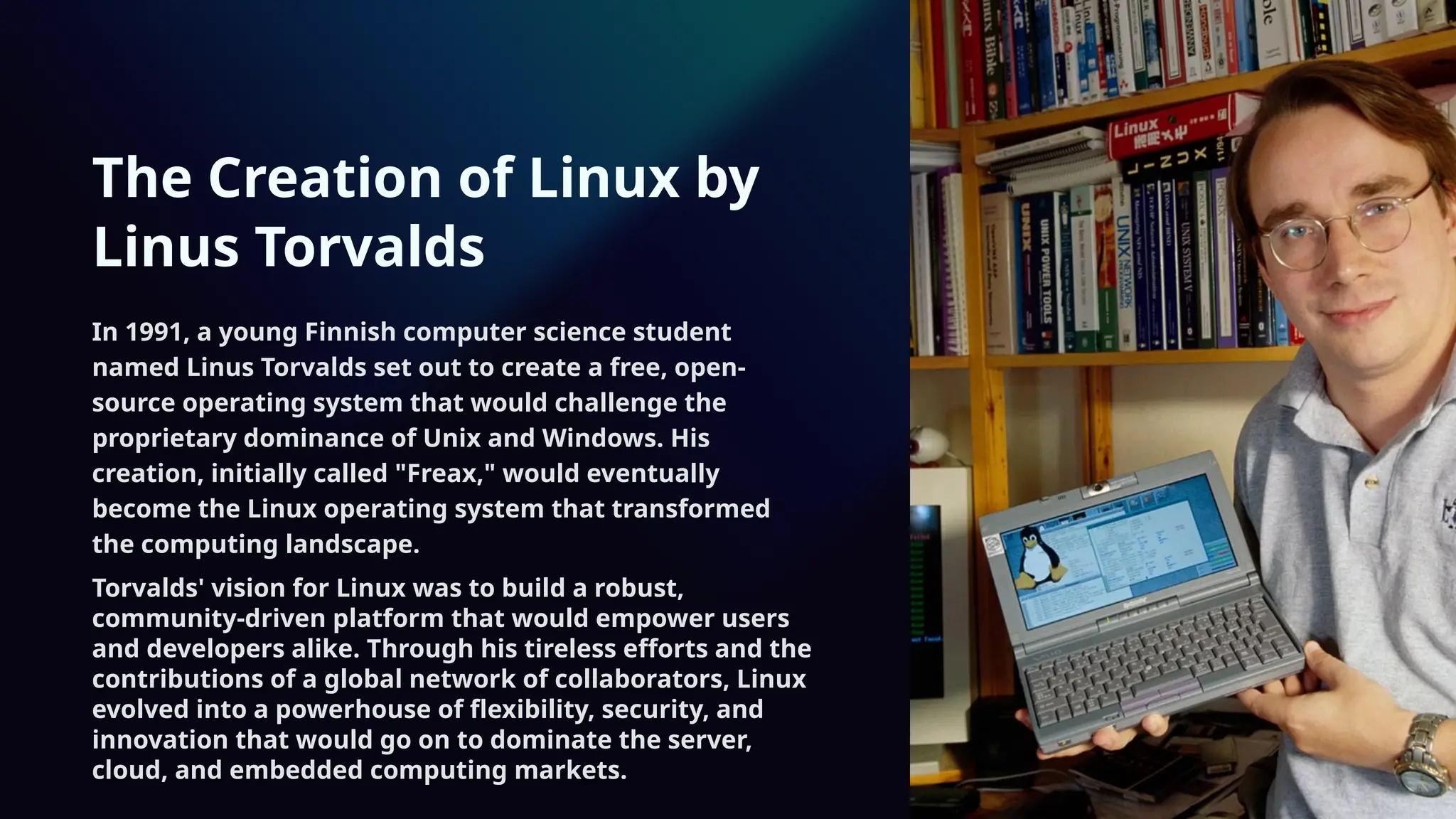
The Creation of Linux by
Linus Torvalds
In 1991, a young Finnish computer science student
named Linus Torvalds set out to create a free, open-
source operating system that would challenge the
proprietary dominance of Unix and Windows. His
creation, initially called "Freax," would eventually
become the Linux operating system that transformed
the computing landscape.
Torvalds' vision for Linux was to build a robust,
community-driven platform that would empower users
and developers alike. Through his tireless efforts and the
contributions of a global network of collaborators, Linux
evolved into a powerhouse of flexibility, security, and
innovation that would go on to dominate the server,
cloud, and embedded computing markets.
The Early Days of Linux
Development
1. In the early 1990s, a young Finnish computer science student named
Linus Torvalds began developing a free and open-source operating
system, inspired by the Unix philosophy.
2. Torvalds released the first version of the Linux kernel in 1991, which
quickly gained a dedicated following among programmers and
enthusiasts.
3. In the following years, Torvalds collaborated with a growing community
of developers to refine and expand the Linux kernel, adding new features
and improving stability.
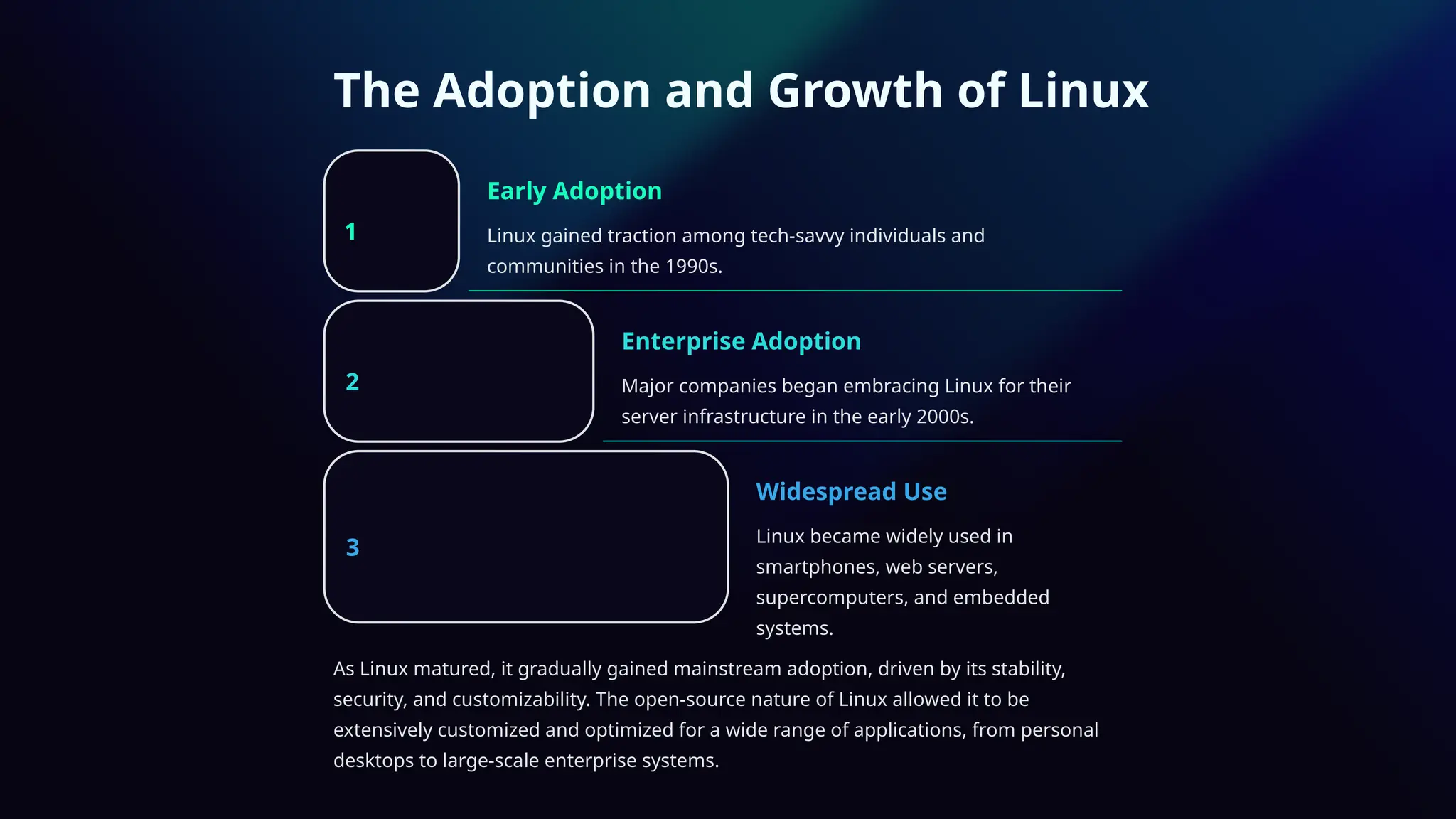
The Adoption and Growth of Linux
1
Early Adoption
Linux gained traction among tech-savvy individuals and
communities in the 1990s.
2
Enterprise Adoption
Major companies began embracing Linux for their
server infrastructure in the early 2000s.
3
Widespread Use
Linux became widely used in
smartphones, web servers,
supercomputers, and embedded
systems.
As Linux matured, it gradually gained mainstream adoption, driven by its stability,
security, and customizability. The open-source nature of Linux allowed it to be
extensively customized and optimized for a wide range of applications, from personal
desktops to large-scale enterprise systems.
The Linux Kernel and its Evolution
The Linux kernel, the core
of the Linux operating
system, has undergone
continuous evolution
since its inception in 1991.
Led by Linus Torvalds, the
kernel has grown from a
humble 10,000 lines of
code to a robust, feature-
rich codebase that powers
a vast array of devices,
from smartphones to
supercomputers.
Each major Linux kernel
release introduces new
capabilities, performance
optimizations, and support
for emerging hardware and
software technologies. The
kernel's modular design
allows for rapid innovation,
enabling the open-source
community to quickly
adapt to changing needs
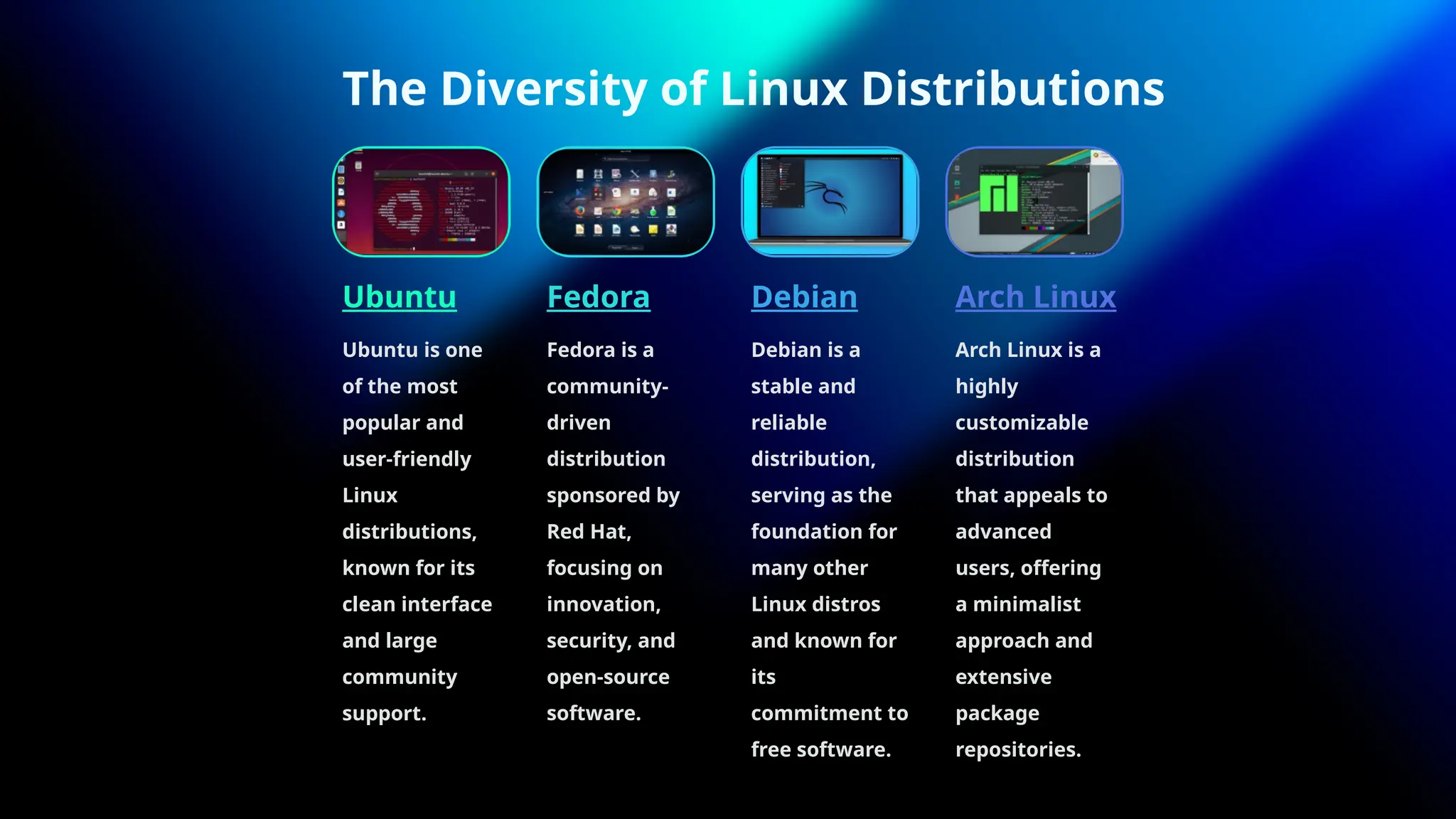
The Diversity of Linux Distributions
Ubuntu
Ubuntu is one
of the most
popular and
user-friendly
Linux
distributions,
known for its
clean interface
and large
community
support.
Fedora
Fedora is a
community-
driven
distribution
sponsored by
Red Hat,
focusing on
innovation,
security, and
open-source
software.
Debian
Debian is a
stable and
reliable
distribution,
serving as the
foundation for
many other
Linux distros
and known for
its
commitment to
free software.
Arch Linux
Arch Linux is a
highly
customizable
distribution
that appeals to
advanced
users, offering
a minimalist
approach and
extensive
package
repositories.
The Impact of Linux on the
Computing Landscape
Driving
Innovati
on
Linux has
been a major
catalyst for
innovation in
the
computing
world,
inspiring
new ideas
and driving
advancemen
ts in
software and
hardware
development
Expande
d
Accessib
ility
By providing a
free, open-
source
operating
system, Linux
has made
advanced
computing
capabilities
accessible to a
wider global
audience,
empowering
individuals and
organizations
Enterpri
se
Adoptio
n
Large
corporations
and
governments
have widely
adopted Linux
for its stability,
security, and
customizability,
leading to its
increased
presence in
mission-critical
systems and
server
Thriving
Ecosyste
m
The vibrant
Linux
community
has fostered
a rich
ecosystem of
software,
tools, and
applications,
continuously
expanding
the
capabilities
and
versatility of
the
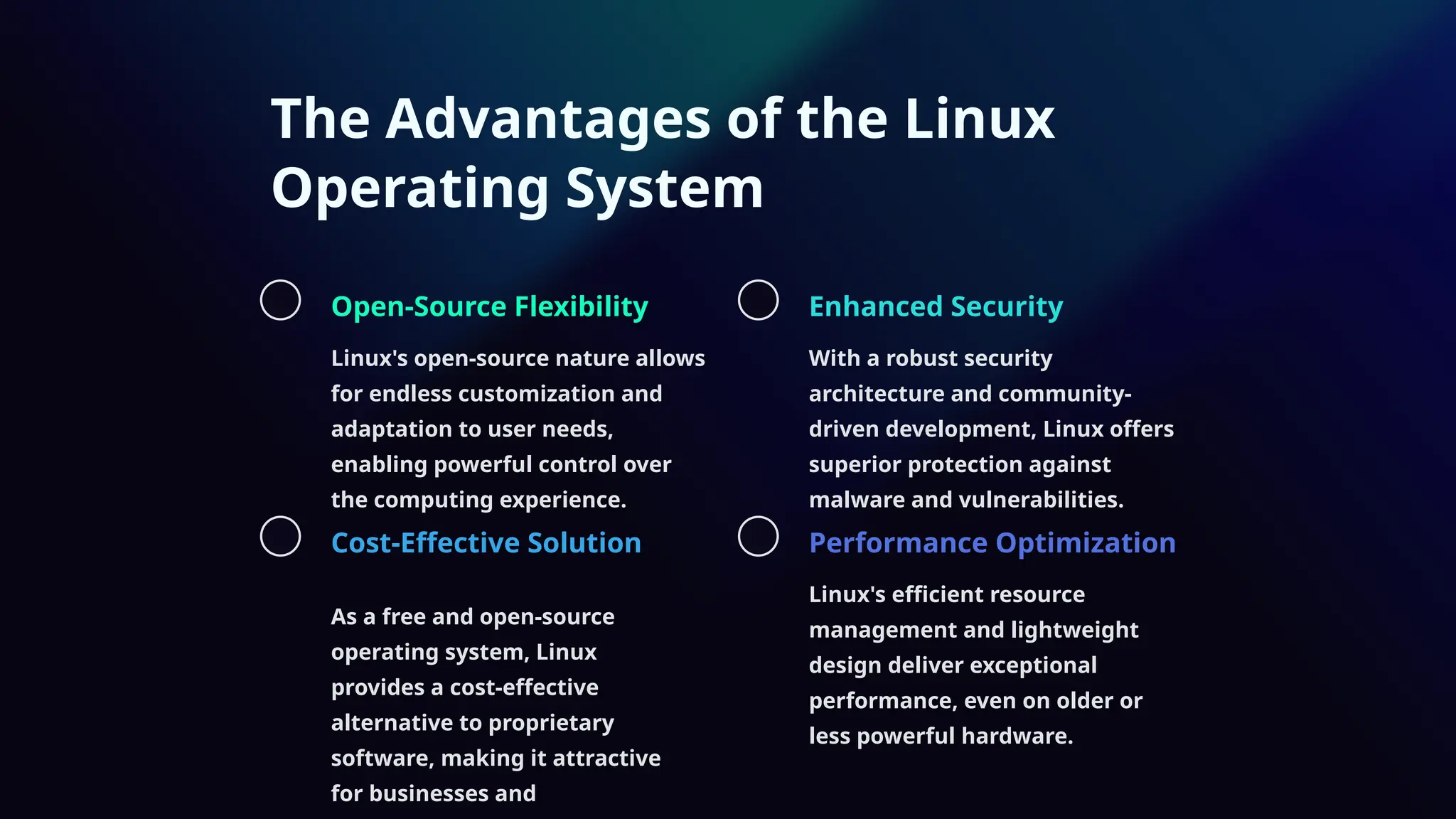
The Advantages of the Linux
Operating System
Open-Source Flexibility
Linux's open-source nature allows
for endless customization and
adaptation to user needs,
enabling powerful control over
the computing experience.
Enhanced Security
With a robust security
architecture and community-
driven development, Linux offers
superior protection against
malware and vulnerabilities.
Cost-Effective Solution
As a free and open-source
operating system, Linux
provides a cost-effective
alternative to proprietary
software, making it attractive
for businesses and
Performance Optimization
Linux's efficient resource
management and lightweight
design deliver exceptional
performance, even on older or
less powerful hardware.
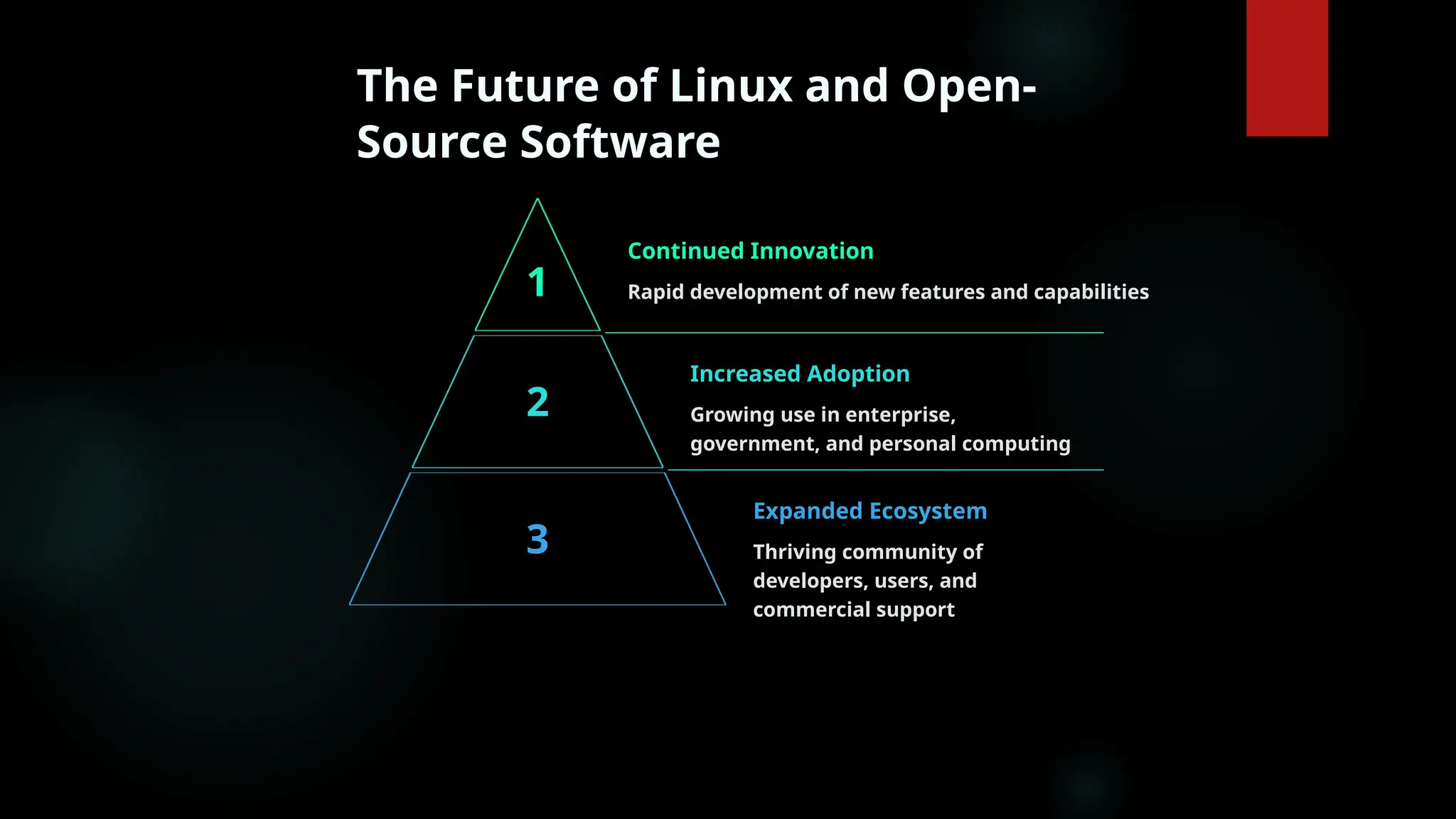
The Future of Linux and Open-
Source Software
1
Continued Innovation
Rapid development of new features and capabilities
2
Increased Adoption
Growing use in enterprise,
government, and personal computing
3
Expanded Ecosystem
Thriving community of
developers, users, and
commercial support
Thank you

The-Origins-of-Linux.pptx VVVVVVVVVVVVVVVVVV

  • 1.
    The Origins ofLinux Linux is an open-source operating system that has its roots in the early days of computing. Developed in 1991 by Finnish programmer Linus Torvalds, Linux was inspired by the Unix operating system and has since become one of the most widely used operating systems in the world.
  • 2.
    The Birth ofUnix and the Rise of Open-Source 1 The Creation of Unix In the 1960s, researchers at Bell Labs developed a revolutionary operating system called Unix, which introduced core concepts like the command line, file system, and multi- tasking that would shape the future of computing. 2 The Open-Source Movement In the 1970s and 1980s, a growing community of programmers embraced the principles of open- source software, freely sharing and collaborating on code, leading to the development of influential tools like the GNU Project. 3 The Birth of the Internet The rise of the Internet in the 1990s provided a global platform for the open-source community to flourish, leading to the widespread adoption of Unix-like operating systems, most notably
  • 3.
    The Creation ofLinux by Linus Torvalds In 1991, a young Finnish computer science student named Linus Torvalds set out to create a free, open- source operating system that would challenge the proprietary dominance of Unix and Windows. His creation, initially called "Freax," would eventually become the Linux operating system that transformed the computing landscape. Torvalds' vision for Linux was to build a robust, community-driven platform that would empower users and developers alike. Through his tireless efforts and the contributions of a global network of collaborators, Linux evolved into a powerhouse of flexibility, security, and innovation that would go on to dominate the server, cloud, and embedded computing markets.
  • 4.
    The Early Daysof Linux Development 1. In the early 1990s, a young Finnish computer science student named Linus Torvalds began developing a free and open-source operating system, inspired by the Unix philosophy. 2. Torvalds released the first version of the Linux kernel in 1991, which quickly gained a dedicated following among programmers and enthusiasts. 3. In the following years, Torvalds collaborated with a growing community of developers to refine and expand the Linux kernel, adding new features and improving stability.
  • 5.
    The Adoption andGrowth of Linux 1 Early Adoption Linux gained traction among tech-savvy individuals and communities in the 1990s. 2 Enterprise Adoption Major companies began embracing Linux for their server infrastructure in the early 2000s. 3 Widespread Use Linux became widely used in smartphones, web servers, supercomputers, and embedded systems. As Linux matured, it gradually gained mainstream adoption, driven by its stability, security, and customizability. The open-source nature of Linux allowed it to be extensively customized and optimized for a wide range of applications, from personal desktops to large-scale enterprise systems.
  • 6.
    The Linux Kerneland its Evolution The Linux kernel, the core of the Linux operating system, has undergone continuous evolution since its inception in 1991. Led by Linus Torvalds, the kernel has grown from a humble 10,000 lines of code to a robust, feature- rich codebase that powers a vast array of devices, from smartphones to supercomputers. Each major Linux kernel release introduces new capabilities, performance optimizations, and support for emerging hardware and software technologies. The kernel's modular design allows for rapid innovation, enabling the open-source community to quickly adapt to changing needs
  • 7.
    The Diversity ofLinux Distributions Ubuntu Ubuntu is one of the most popular and user-friendly Linux distributions, known for its clean interface and large community support. Fedora Fedora is a community- driven distribution sponsored by Red Hat, focusing on innovation, security, and open-source software. Debian Debian is a stable and reliable distribution, serving as the foundation for many other Linux distros and known for its commitment to free software. Arch Linux Arch Linux is a highly customizable distribution that appeals to advanced users, offering a minimalist approach and extensive package repositories.
  • 8.
    The Impact ofLinux on the Computing Landscape Driving Innovati on Linux has been a major catalyst for innovation in the computing world, inspiring new ideas and driving advancemen ts in software and hardware development Expande d Accessib ility By providing a free, open- source operating system, Linux has made advanced computing capabilities accessible to a wider global audience, empowering individuals and organizations Enterpri se Adoptio n Large corporations and governments have widely adopted Linux for its stability, security, and customizability, leading to its increased presence in mission-critical systems and server Thriving Ecosyste m The vibrant Linux community has fostered a rich ecosystem of software, tools, and applications, continuously expanding the capabilities and versatility of the
  • 9.
    The Advantages ofthe Linux Operating System Open-Source Flexibility Linux's open-source nature allows for endless customization and adaptation to user needs, enabling powerful control over the computing experience. Enhanced Security With a robust security architecture and community- driven development, Linux offers superior protection against malware and vulnerabilities. Cost-Effective Solution As a free and open-source operating system, Linux provides a cost-effective alternative to proprietary software, making it attractive for businesses and Performance Optimization Linux's efficient resource management and lightweight design deliver exceptional performance, even on older or less powerful hardware.
  • 10.
    The Future ofLinux and Open- Source Software 1 Continued Innovation Rapid development of new features and capabilities 2 Increased Adoption Growing use in enterprise, government, and personal computing 3 Expanded Ecosystem Thriving community of developers, users, and commercial support
  • 11.