We survive with language...
What is Linguistics?
Linguistics is the scientific study of
language and its structure. It
encompasses a wide range of topics
related to language, including its form,
meaning, and context. Linguistics seeks to
understand how languages work, how
they are acquired, and how they function
in communication.
Key Branches of Linguistics
Phonetics
1.
The study of the sounds of human speech, including how sounds are
produced, transmitted, and perceived.
2. Phonology
The study of how sounds function in particular languages and the rules
that govern their patterns.
3. Morphology
The analysis of the structure of words and how they are formed from
smaller units called morphemes.
4. Syntax
The study of sentence structure and the rules that dictate how words
combine to form grammatical sentences.
5. Semantics
The examination of meaning in language, including how words and
phrases convey meaning.
6. Pragmatics
The study of how context influences the interpretation of meaning in
communication.
There are 8 types of key branches:
7. Sociolinguistics
The exploration of the relationship between language and society,
including how social factors influence language use and variation.
8. Psycholinguistics
The study of how language is processed in the mind, including language
acquisition and cognitive aspects of language use.
Introduction Language is a fundamental aspect of human
interaction. It allows individuals to express thoughts, emotions,
and ideas, facilitating communication in both personal and
professional contexts. This presentation will explore the
significance of language, its components, and its impact on
society.
The Importance of Language in
Communication
What is Language? Language is a system of symbols, sounds,
and gestures used for communication. It consists of several
components, including phonetics (the sounds of speech),
vocabulary (the words used), grammar (the structure of
sentences), and semantics (the meaning of words and
phrases). Each of these elements plays a crucial role in
effective communication.
Language allows individuals to convey
their feelings and emotions. This
expressive capacity is vital for
personal relationships and social
interactions.
Functions of Language
01
Expressive Function:
Language can be used to influence the
behavior of others. Whether through
requests, commands, or persuasive
speech, language is a powerful tool for
leadership and motivation.
03
Directive Function:
It enables the transmission of
information and knowledge. Through
language, we can share facts, ideas,
and experiences, promoting
understanding among individuals.
02
Referential Function:
Facts About Language and Linguistics
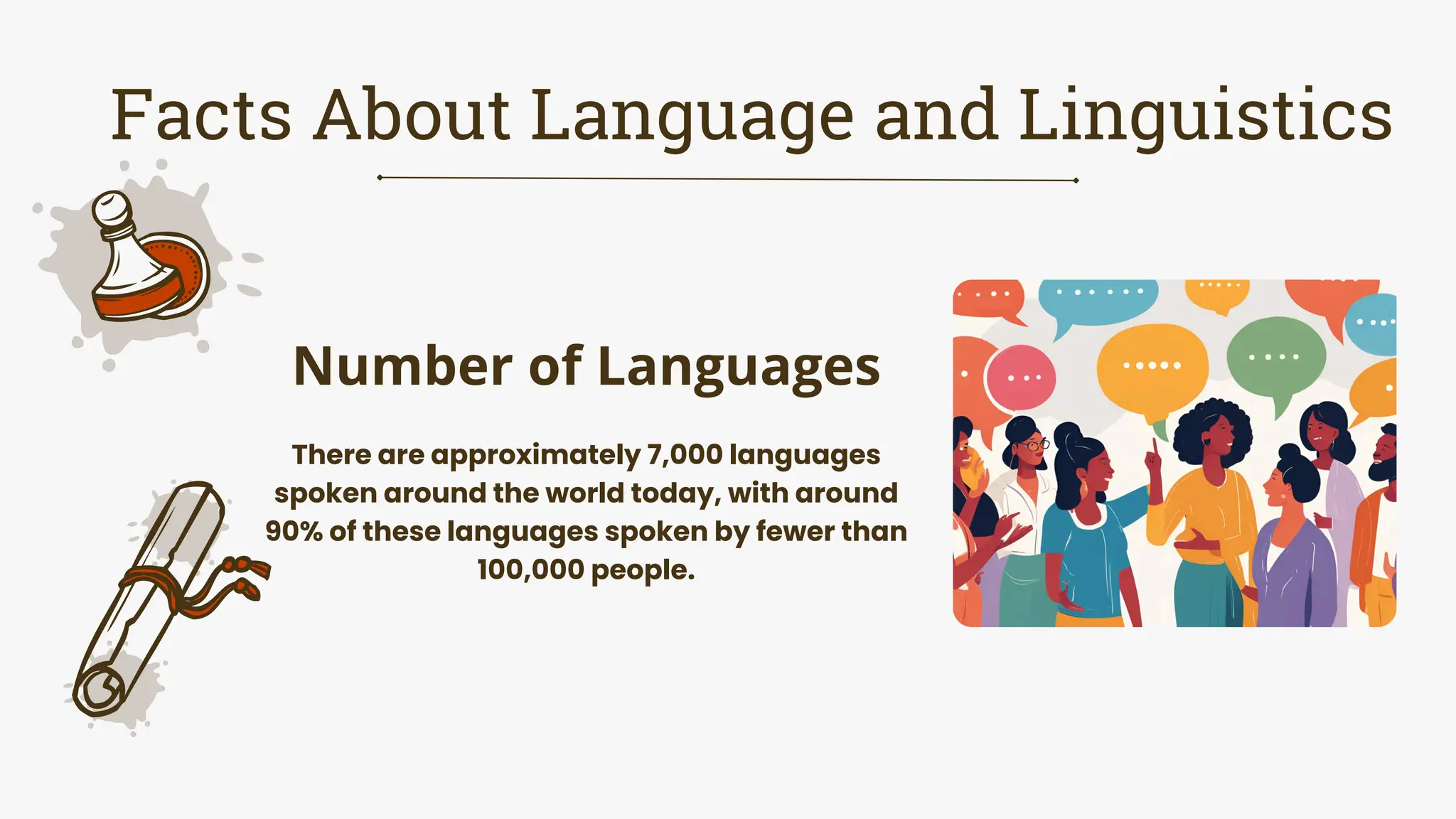
Number of Languages
There are approximately 7,000 languages
spoken around the world today, with around
90% of these languages spoken by fewer than
100,000 people.
Facts About Language and Linguistics
Most Spoken Languages
01 English: 1.5 billion
speakers (including non-
native speakers)
Mandarin
Chinese: 1.2
billion speakers
02
02
Hindi:
Approximately
600 million
speakers
Language and the Brain: Studies in neurolinguistics show that
specific areas of the brain, such as Broca's area and Wernicke's
area, are critical for language production and comprehension.
The Sapir-Whorf Hypothesis: This hypothesis suggests that the
language we speak influences how we think and perceive the world,
highlighting the connection between language and cognition.
Language Evolution: Languages are constantly evolving.
For instance, the English language has borrowed words
from over 350 languages, including Latin, French, and
German.
Facts About Language and Linguistics
"Language is not only a means of
communication; it is a vehicle for
thought and an instrument of cultural
identity."
—Noam Chomsky

What is Linguistics and its role in our world.pdf

  • 1.
    We survive withlanguage... What is Linguistics? Linguistics is the scientific study of language and its structure. It encompasses a wide range of topics related to language, including its form, meaning, and context. Linguistics seeks to understand how languages work, how they are acquired, and how they function in communication.
  • 2.
    Key Branches ofLinguistics Phonetics 1. The study of the sounds of human speech, including how sounds are produced, transmitted, and perceived. 2. Phonology The study of how sounds function in particular languages and the rules that govern their patterns. 3. Morphology The analysis of the structure of words and how they are formed from smaller units called morphemes. 4. Syntax The study of sentence structure and the rules that dictate how words combine to form grammatical sentences. 5. Semantics The examination of meaning in language, including how words and phrases convey meaning. 6. Pragmatics The study of how context influences the interpretation of meaning in communication. There are 8 types of key branches: 7. Sociolinguistics The exploration of the relationship between language and society, including how social factors influence language use and variation. 8. Psycholinguistics The study of how language is processed in the mind, including language acquisition and cognitive aspects of language use.
  • 3.
    Introduction Language isa fundamental aspect of human interaction. It allows individuals to express thoughts, emotions, and ideas, facilitating communication in both personal and professional contexts. This presentation will explore the significance of language, its components, and its impact on society. The Importance of Language in Communication What is Language? Language is a system of symbols, sounds, and gestures used for communication. It consists of several components, including phonetics (the sounds of speech), vocabulary (the words used), grammar (the structure of sentences), and semantics (the meaning of words and phrases). Each of these elements plays a crucial role in effective communication.
  • 4.
    Language allows individualsto convey their feelings and emotions. This expressive capacity is vital for personal relationships and social interactions. Functions of Language 01 Expressive Function: Language can be used to influence the behavior of others. Whether through requests, commands, or persuasive speech, language is a powerful tool for leadership and motivation. 03 Directive Function: It enables the transmission of information and knowledge. Through language, we can share facts, ideas, and experiences, promoting understanding among individuals. 02 Referential Function:
  • 5.
    Facts About Languageand Linguistics Number of Languages There are approximately 7,000 languages spoken around the world today, with around 90% of these languages spoken by fewer than 100,000 people.
  • 6.
    Facts About Languageand Linguistics Most Spoken Languages 01 English: 1.5 billion speakers (including non- native speakers) Mandarin Chinese: 1.2 billion speakers 02 02 Hindi: Approximately 600 million speakers
  • 7.
    Language and theBrain: Studies in neurolinguistics show that specific areas of the brain, such as Broca's area and Wernicke's area, are critical for language production and comprehension. The Sapir-Whorf Hypothesis: This hypothesis suggests that the language we speak influences how we think and perceive the world, highlighting the connection between language and cognition. Language Evolution: Languages are constantly evolving. For instance, the English language has borrowed words from over 350 languages, including Latin, French, and German. Facts About Language and Linguistics
  • 8.
    "Language is notonly a means of communication; it is a vehicle for thought and an instrument of cultural identity." —Noam Chomsky