LAUGHTER
 THERAPY
   •   ANA BELÉN MOYA MOYA
   •   CANDELA TONDA RUIZ
   •   Mª ANGELES FERNÁNDEZ GALLEGO
   •   VANESA MATÍAS FERNÁNDEZ
WHAT IS LAUGHTER?
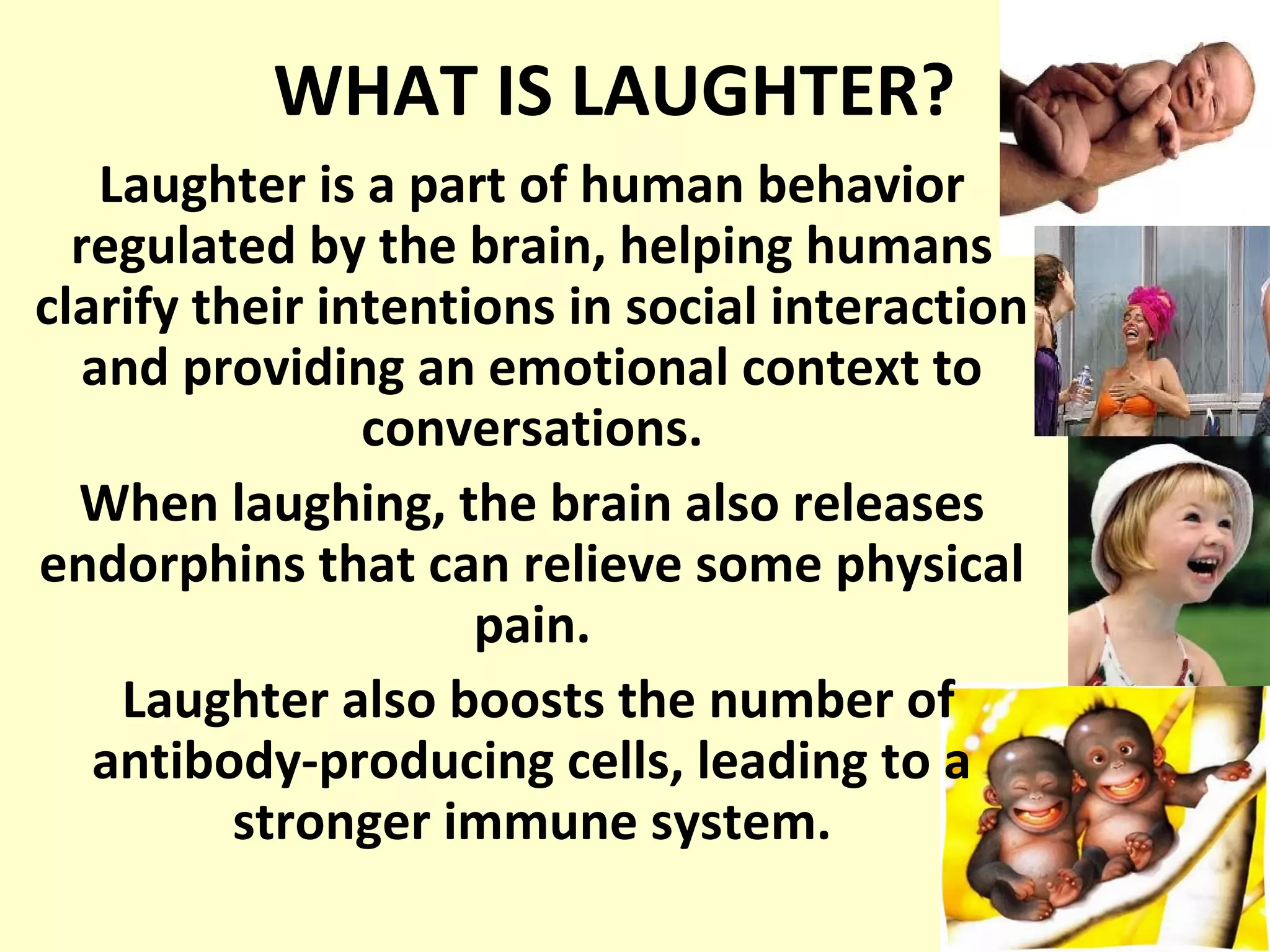
    Laughter is a part of human behavior
  regulated by the brain, helping humans
clarify their intentions in social interaction
   and providing an emotional context to
                conversations.
  When laughing, the brain also releases
endorphins that can relieve some physical
                     pain.
     Laughter also boosts the number of
   antibody-producing cells, leading to a
          stronger immune system.
WHAT IS LAUGHTER THERAPY?
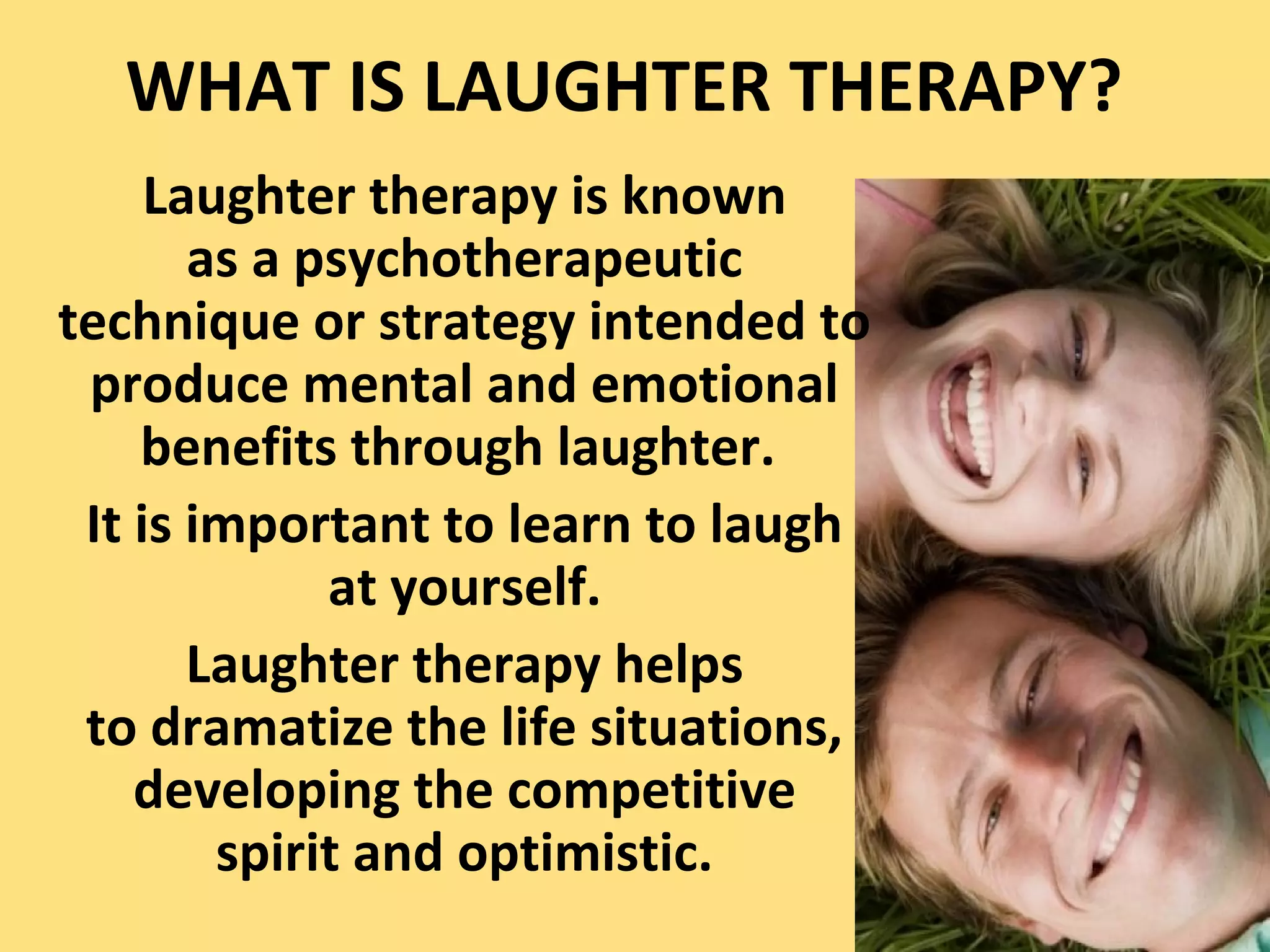
     Laughter therapy is known
       as a psychotherapeutic
technique or strategy intended to
 produce mental and emotional
    benefits through laughter.
 It is important to learn to laugh
             at yourself.
       Laughter therapy helps
 to dramatize the life situations,
    developing the competitive
        spirit and optimistic.
PRACTICE

          Our work based research
we worked for two weeks laughter therapy to
a group of 8 people and observing the effects
     of these classes in their daily lives.

The first day consisted of introducing laughter
                   therapy.
Them we did various activities and reflections
                   on these.
• The dynamics of class was to
  make 1 or 2 activities and we
  ended with a reflection
  about the class.
• During the 9 classes we
  had, we made 7 activities.
• We made activities to
  liberate all the negative
  energy, another activities of
  learning how to laugh, to
  improve the confidence and
  group games to improve the
  relationship between them.
We also made activities to improve the
            welfare of the body:

                   If you laugh with:

 JA benefits your digestive system and genitals.
 JE promotes liver and the gallbladder.
 JI stimulates the thyroid and the circulation.
 JO acts on the central nervous system and the brain
stem.
 JU effects on respiratory function and lung capacity.
VISUAL RESULTS

-The motivation was increasing, and
gradually.

-More interested in these activities.

-Happier and more relaxed than the free days

-The confidence between.
TEST RESULTS
    After completing all the
 activities we decided to pass a
   questionnaire for them to
answer some questions and so,
 we could know their points of
view about the activities we had
         done with them.
QUESTIONAIRE
• If you have to rate the Laughter Therapy
  activities, how many points do you give it?
• Was funny for you?
• Which was your favorite activity in these classes?
• Something of you changed after activities?
• Do you felt any psychological improve after
  activities?
• Do you felt change something of these
  activitiesany physical improves after activities?
• Would you like ?
• If you answer YES in the last question, which
  aspect of the classes would you like to change?
CONCLUSIONS
The laughter therapy was a good way to interact with
each other.

They could relax.

Most of them felt better after activities, physically and
psychologically.

Better relationship between them.
These activities helped them:
- to lose the shame
- to have more confidence
-to feel more comfortable working together.
THANK YOU
 FOR YOUR
ATTENTION

What is Laughter?

  • 1.
    LAUGHTER THERAPY • ANA BELÉN MOYA MOYA • CANDELA TONDA RUIZ • Mª ANGELES FERNÁNDEZ GALLEGO • VANESA MATÍAS FERNÁNDEZ
  • 2.
    WHAT IS LAUGHTER? Laughter is a part of human behavior regulated by the brain, helping humans clarify their intentions in social interaction and providing an emotional context to conversations. When laughing, the brain also releases endorphins that can relieve some physical pain. Laughter also boosts the number of antibody-producing cells, leading to a stronger immune system.
  • 3.
    WHAT IS LAUGHTERTHERAPY? Laughter therapy is known as a psychotherapeutic technique or strategy intended to produce mental and emotional benefits through laughter. It is important to learn to laugh at yourself. Laughter therapy helps to dramatize the life situations, developing the competitive spirit and optimistic.
  • 5.
    PRACTICE Our work based research we worked for two weeks laughter therapy to a group of 8 people and observing the effects of these classes in their daily lives. The first day consisted of introducing laughter therapy. Them we did various activities and reflections on these.
  • 7.
    • The dynamicsof class was to make 1 or 2 activities and we ended with a reflection about the class. • During the 9 classes we had, we made 7 activities. • We made activities to liberate all the negative energy, another activities of learning how to laugh, to improve the confidence and group games to improve the relationship between them.
  • 8.
    We also madeactivities to improve the welfare of the body: If you laugh with: JA benefits your digestive system and genitals. JE promotes liver and the gallbladder. JI stimulates the thyroid and the circulation. JO acts on the central nervous system and the brain stem. JU effects on respiratory function and lung capacity.
  • 9.
    VISUAL RESULTS -The motivationwas increasing, and gradually. -More interested in these activities. -Happier and more relaxed than the free days -The confidence between.
  • 10.
    TEST RESULTS After completing all the activities we decided to pass a questionnaire for them to answer some questions and so, we could know their points of view about the activities we had done with them.
  • 12.
    QUESTIONAIRE • If youhave to rate the Laughter Therapy activities, how many points do you give it? • Was funny for you? • Which was your favorite activity in these classes? • Something of you changed after activities? • Do you felt any psychological improve after activities? • Do you felt change something of these activitiesany physical improves after activities? • Would you like ? • If you answer YES in the last question, which aspect of the classes would you like to change?
  • 13.
    CONCLUSIONS The laughter therapywas a good way to interact with each other. They could relax. Most of them felt better after activities, physically and psychologically. Better relationship between them. These activities helped them: - to lose the shame - to have more confidence -to feel more comfortable working together.
  • 15.
    THANK YOU FORYOUR ATTENTION