What does it consist?
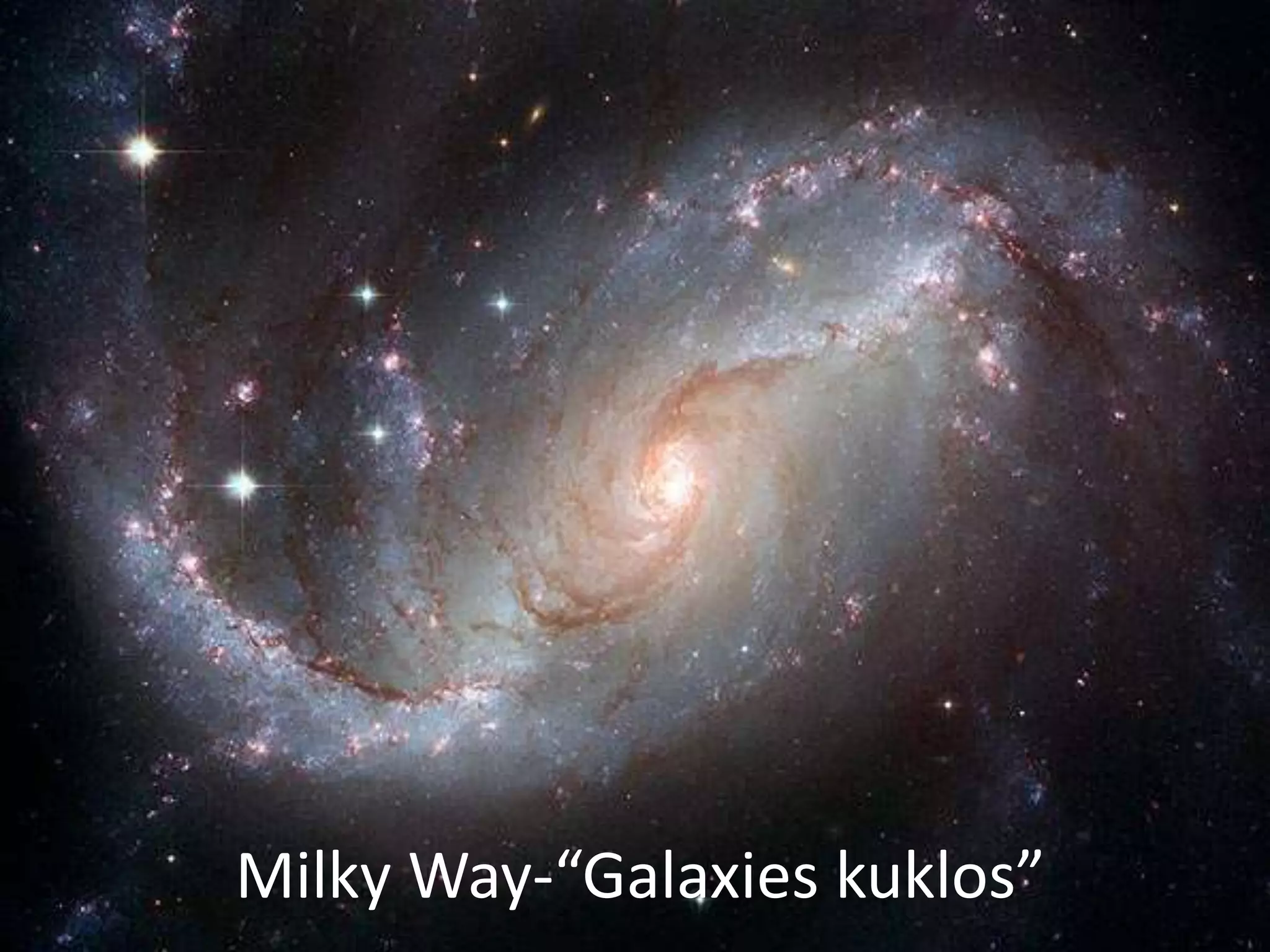
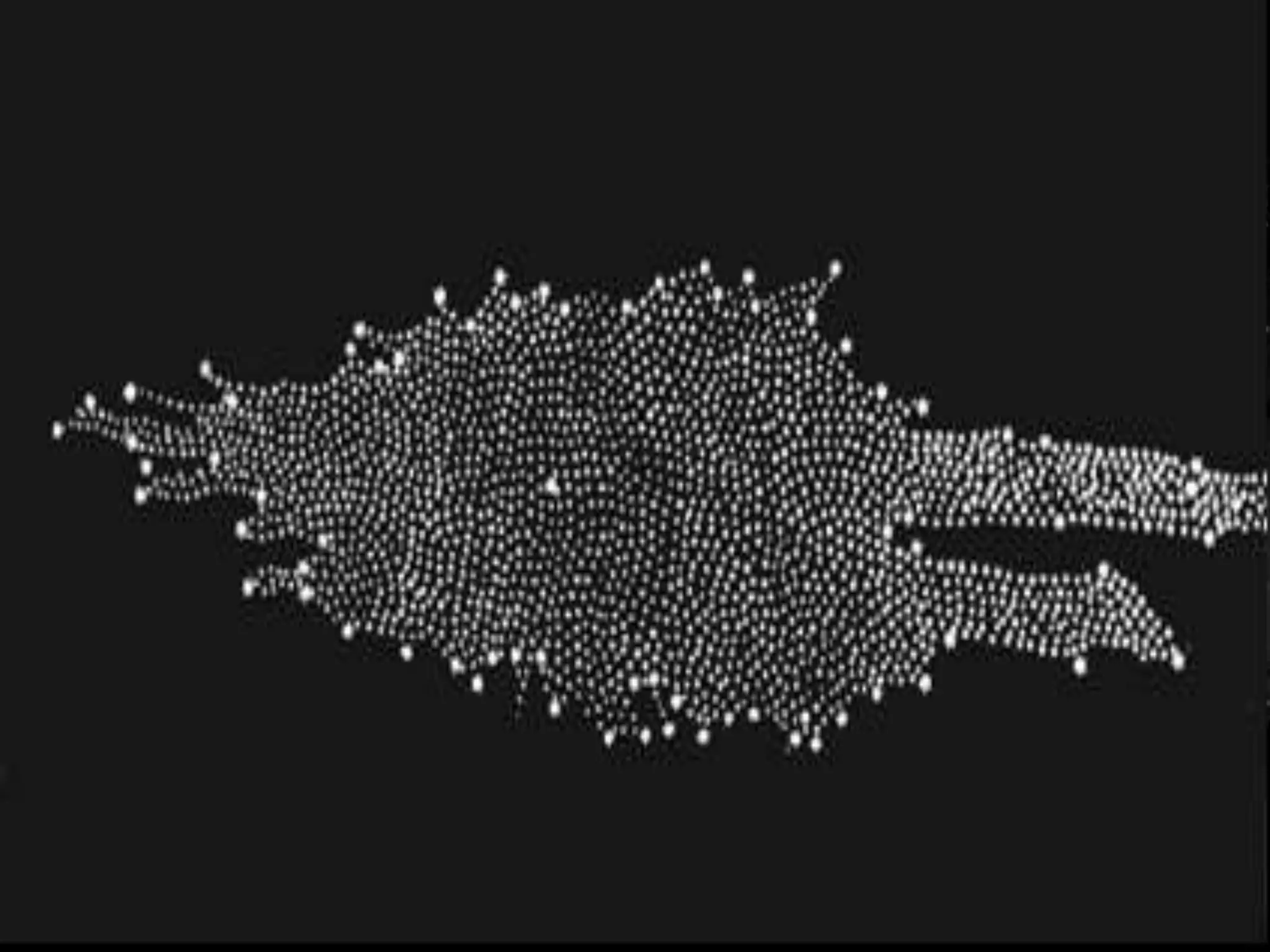
Milky Way-“Galaxies kuklos”
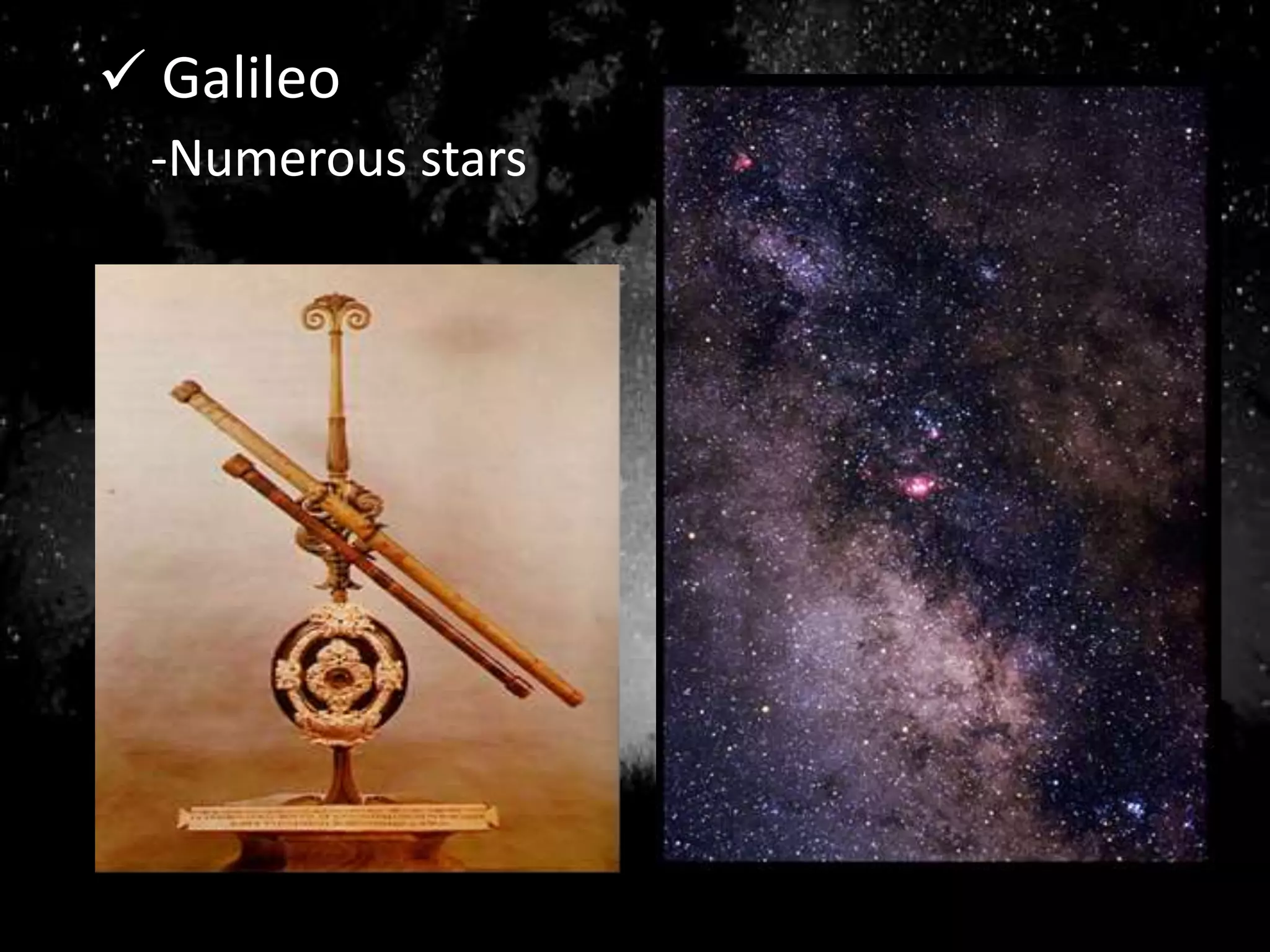
 Galileo
-Numerous stars
 18th century-
William and
Caroline Herschel
- Mapped the
distances of stars
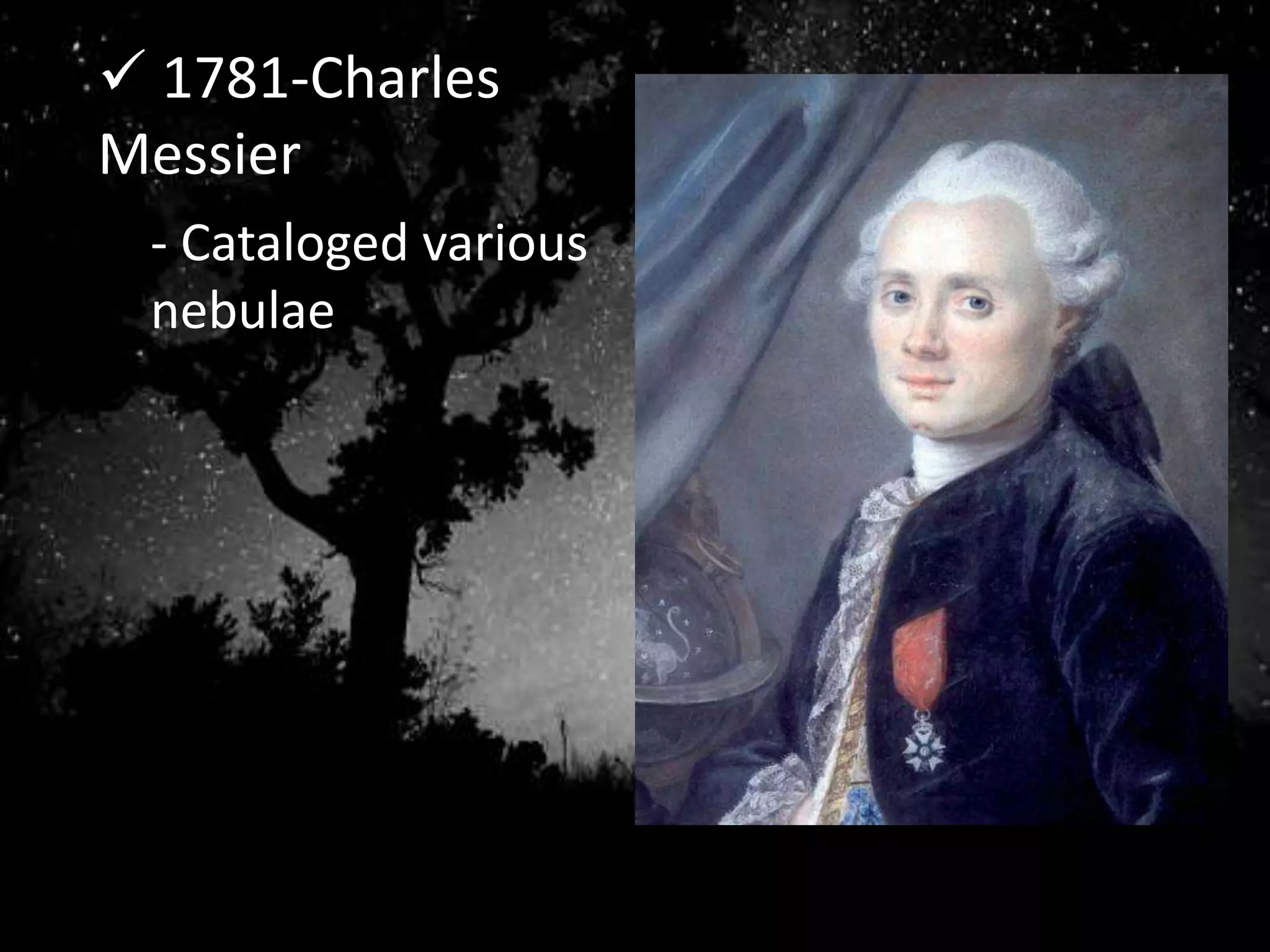
 1781-Charles
Messier
- Cataloged various
nebulae
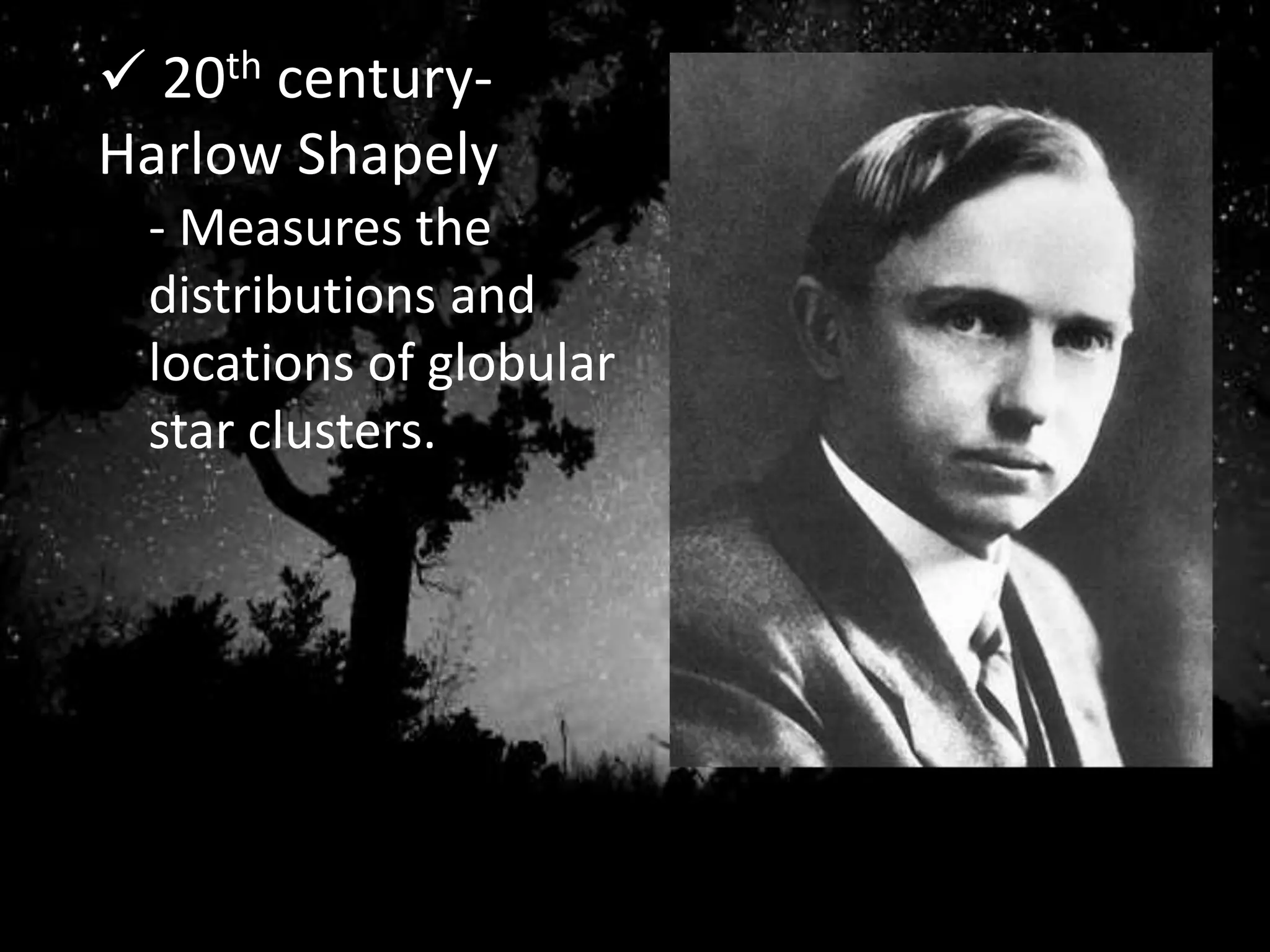
 20th century-
Harlow Shapely
- Measures the
distributions and
locations of globular
star clusters.

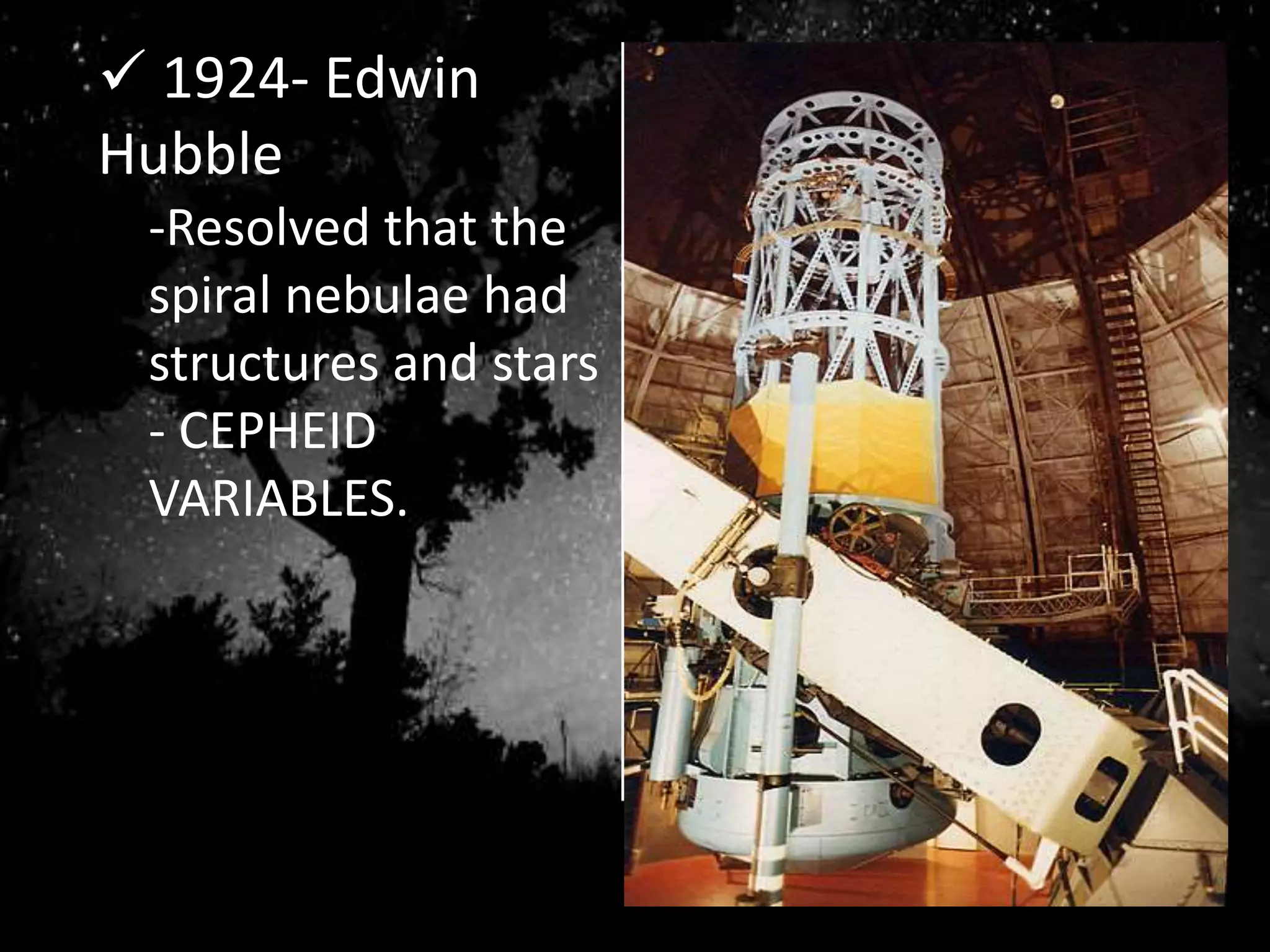
 1924- Edwin
Hubble
-Resolved that the
spiral nebulae had
structures and stars
- CEPHEID
VARIABLES.
II. FORMATION AND EVOLUTION
Ideas about the origins and
evolutions:
• collapsing dust clouds = formation
of galaxies
• collisions between galaxies
Two assumptions:
1. Filled with hydrogen and helium
2. Some areas were slightly denser
than others
EARLY UNIVERSE THEORIES
Two factors:
• Angular momentum (degree of spin)
• Cooling
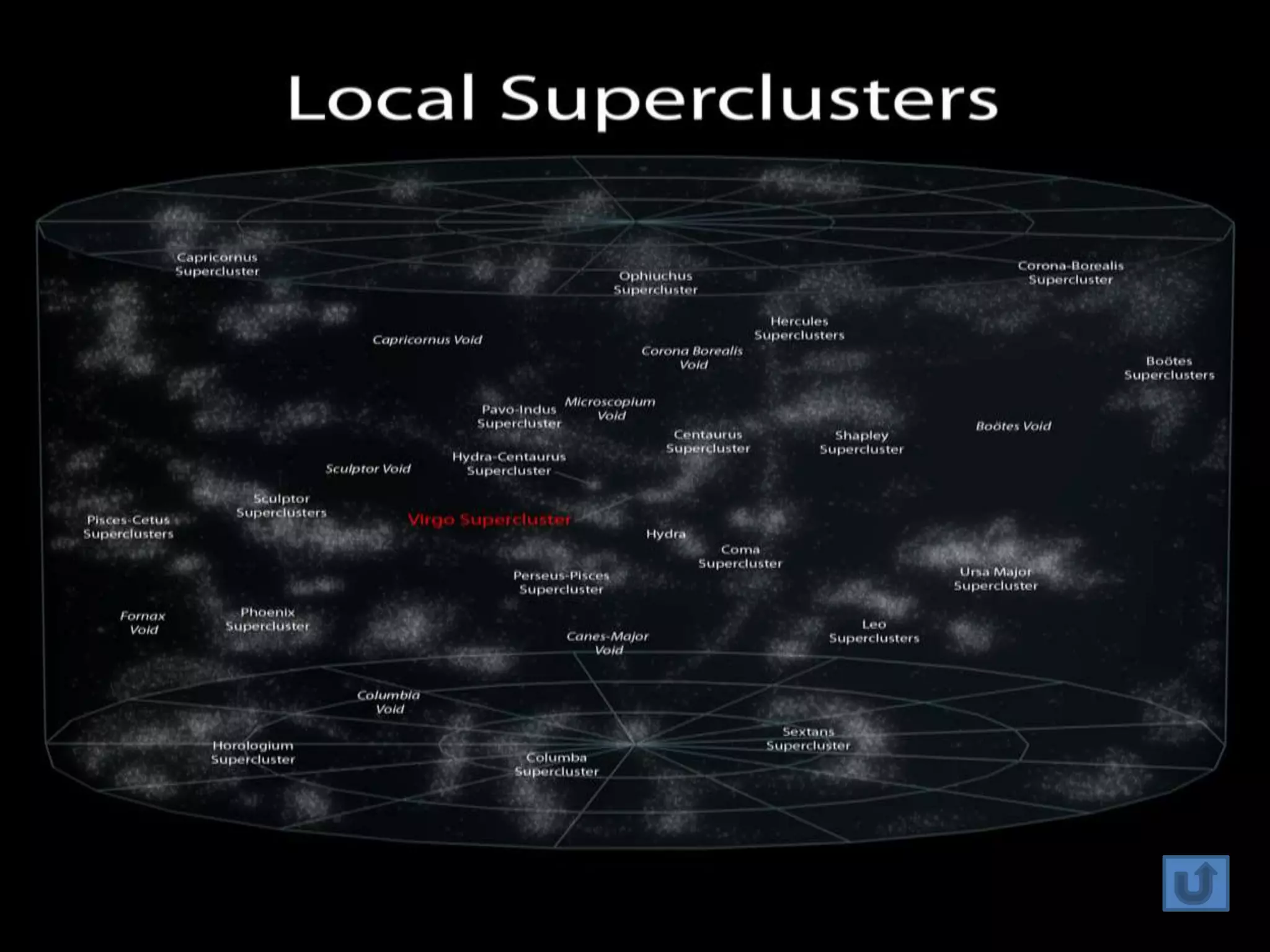
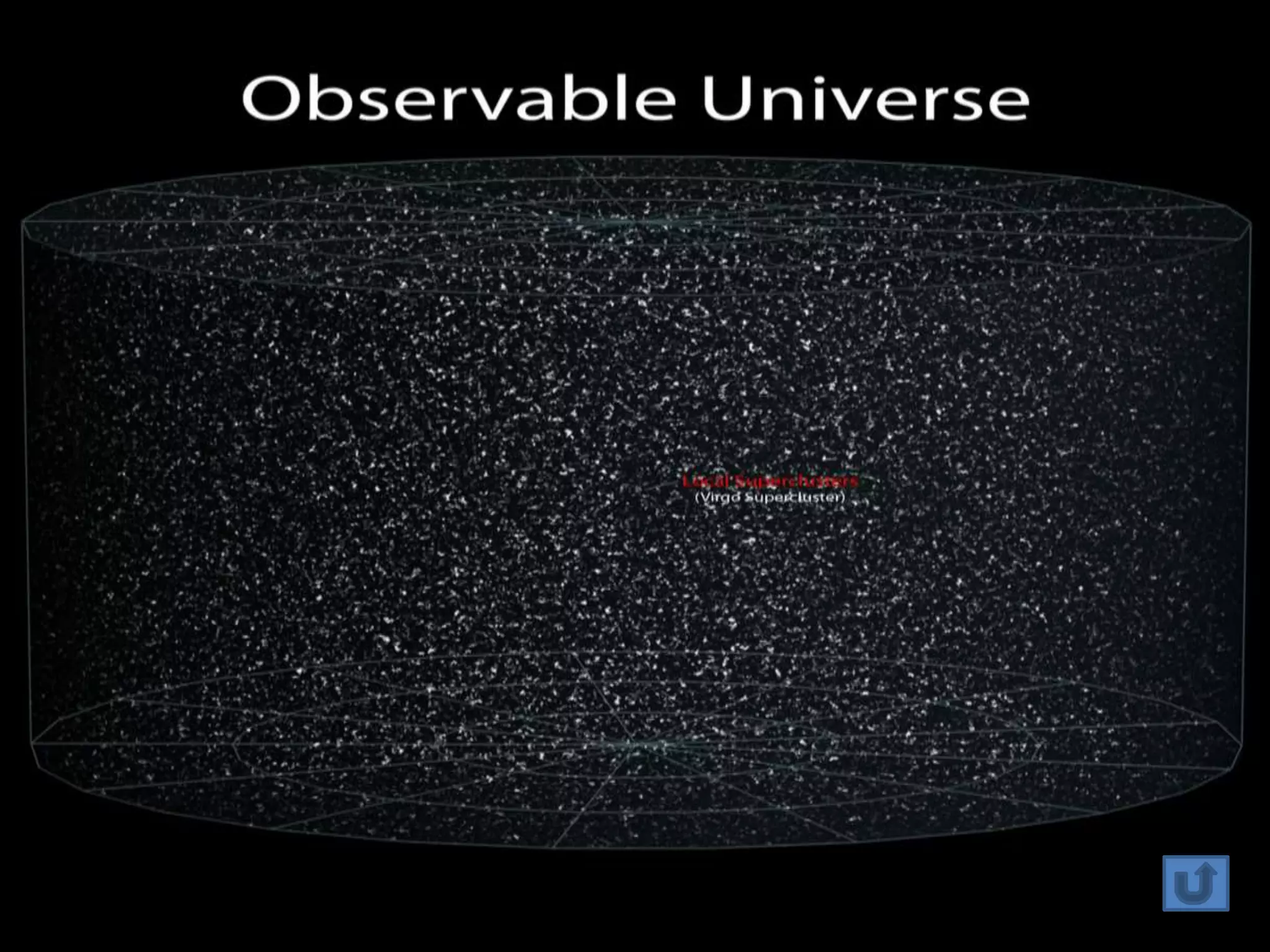
III. DISTRIBUTION OF GALAXIES
INTERGALACTIC MEDIUM
Space between galaxies and clusters of
galaxies
THE DOPPLER EFFECT
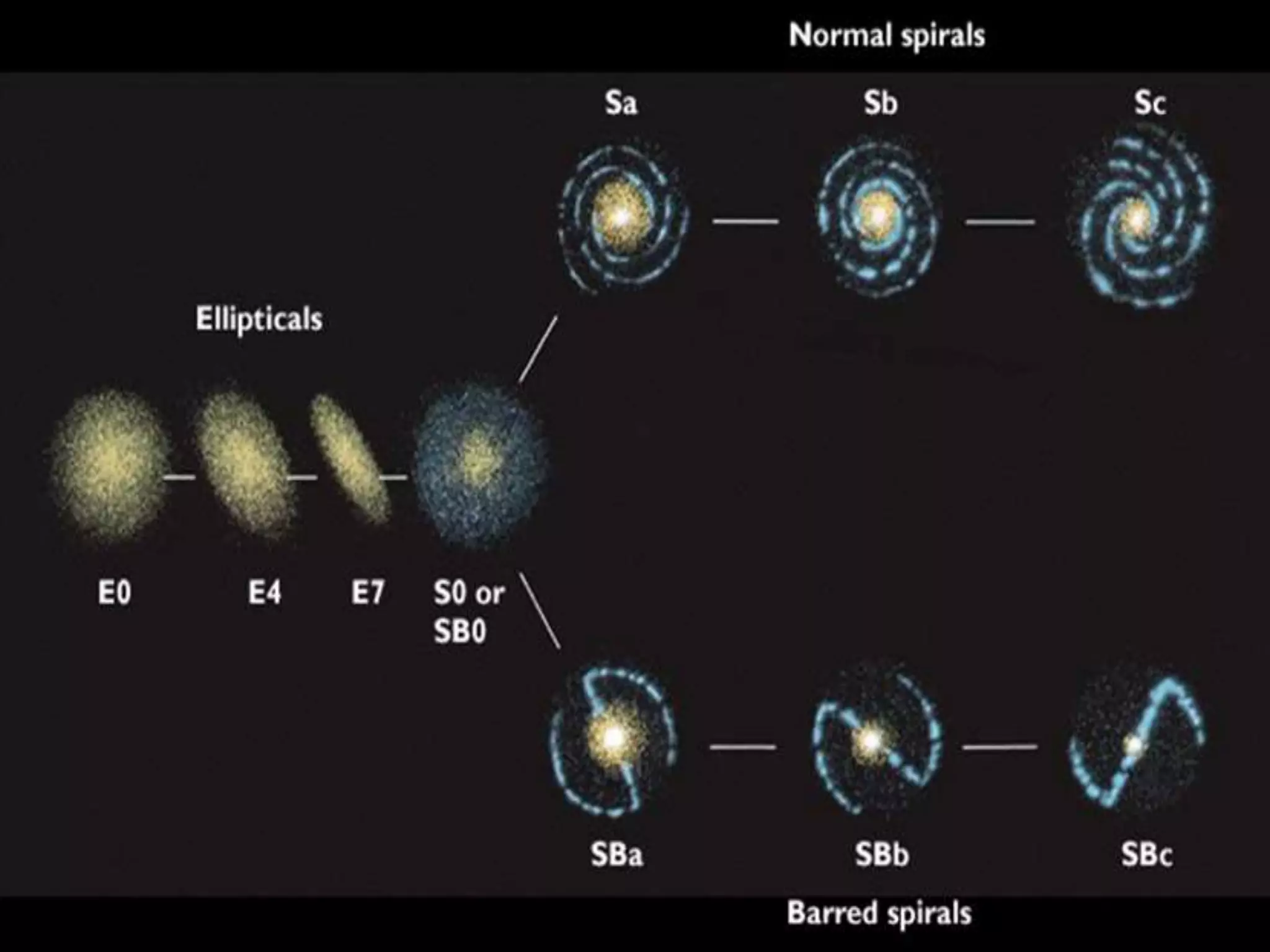
IV. GALAXY TYPES AND PARTS
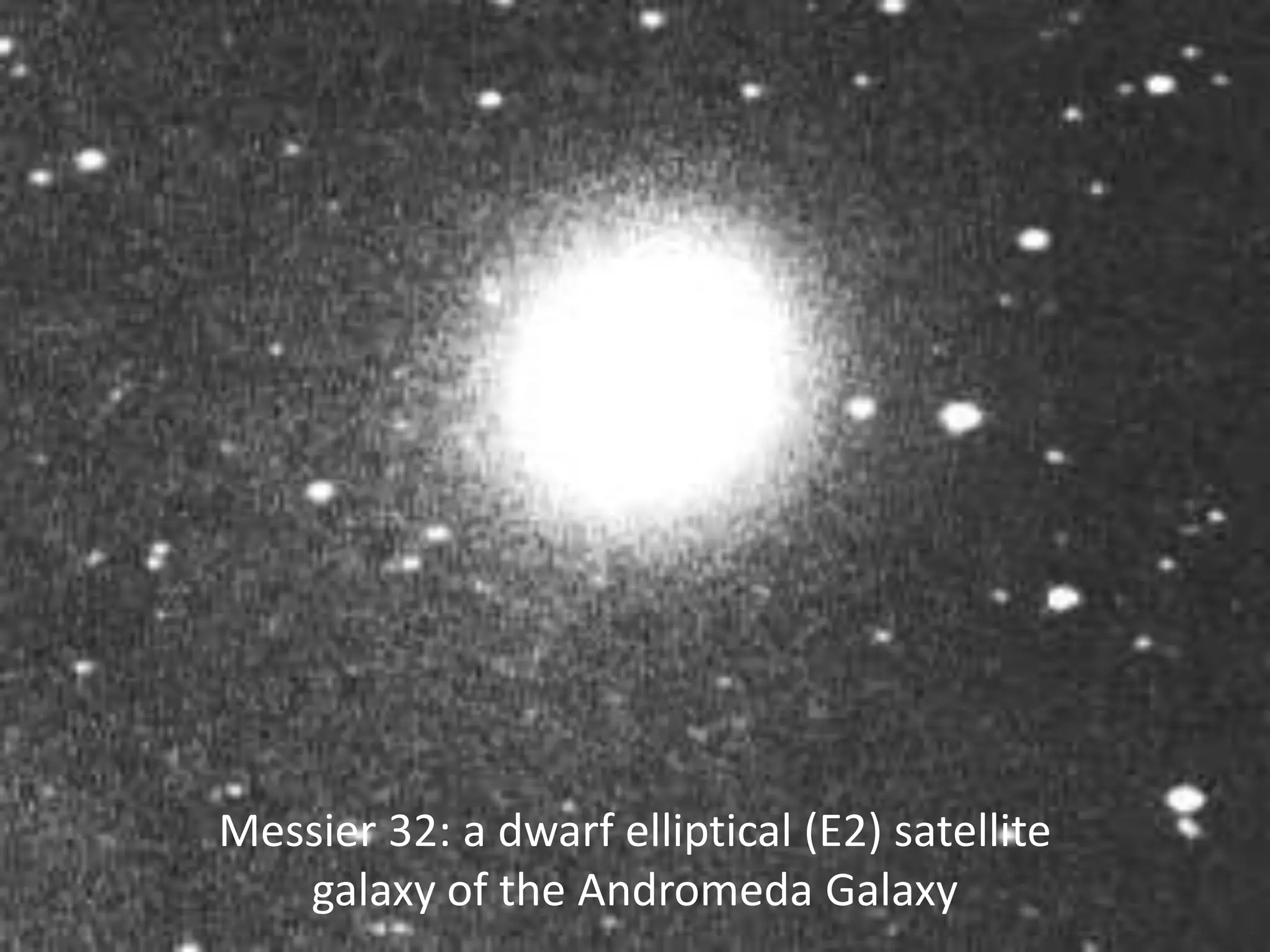
Messier 32: a dwarf elliptical (E2) satellite
galaxy of the Andromeda Galaxy
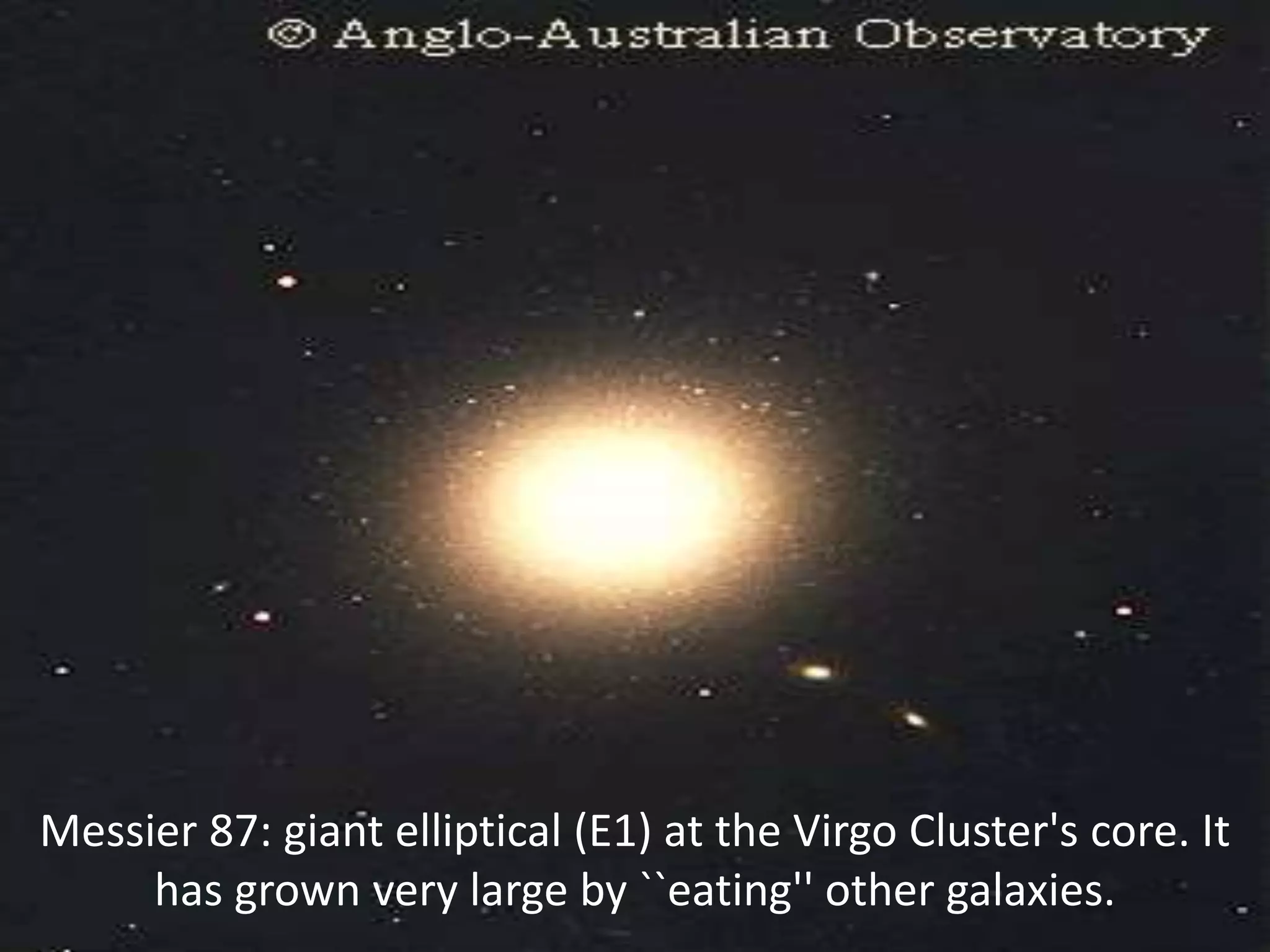
Messier 87: giant elliptical (E1) at the Virgo Cluster's core. It
has grown very large by ``eating'' other galaxies.
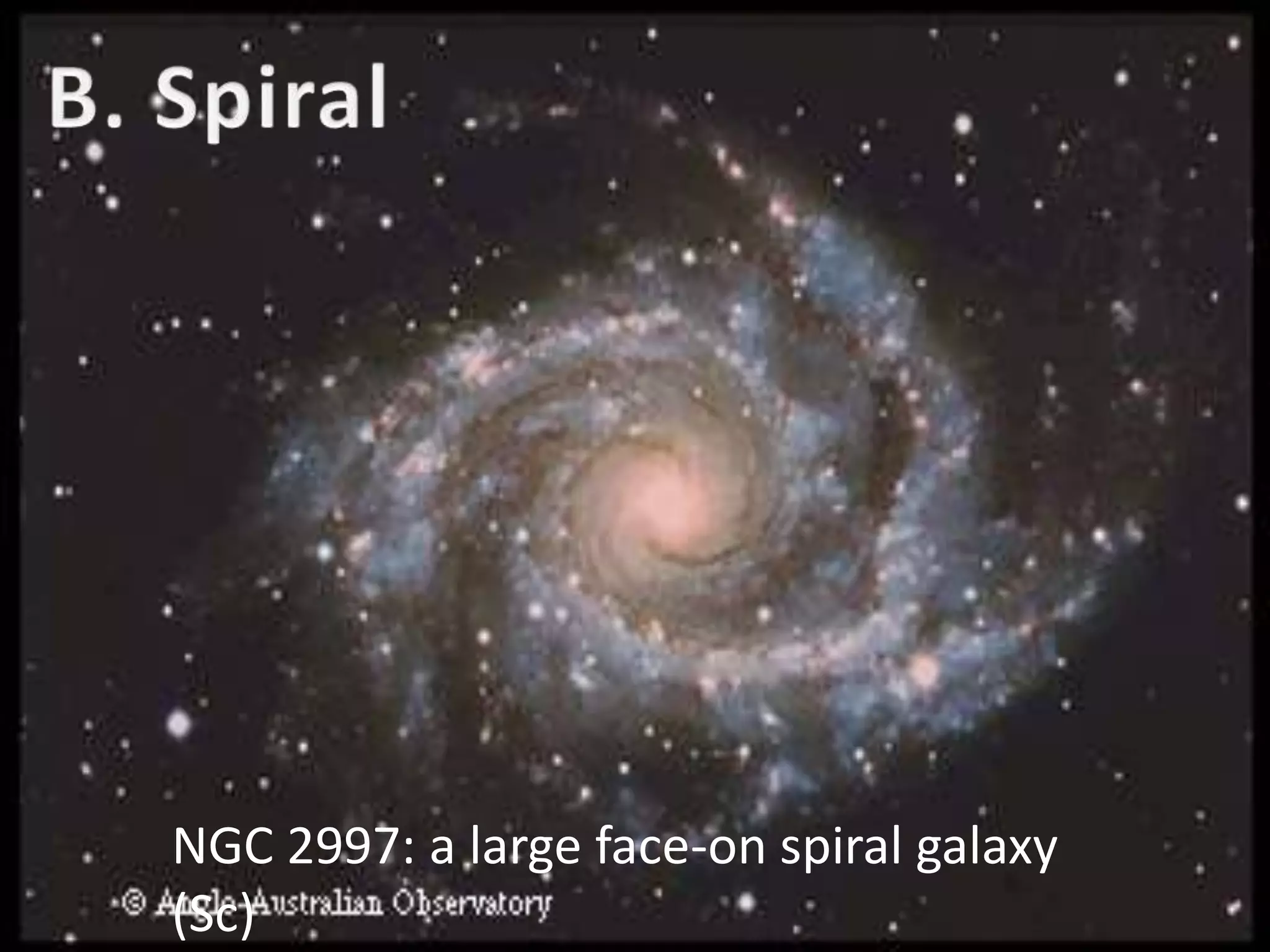
NGC 2997: a large face-on spiral galaxy
(Sc)
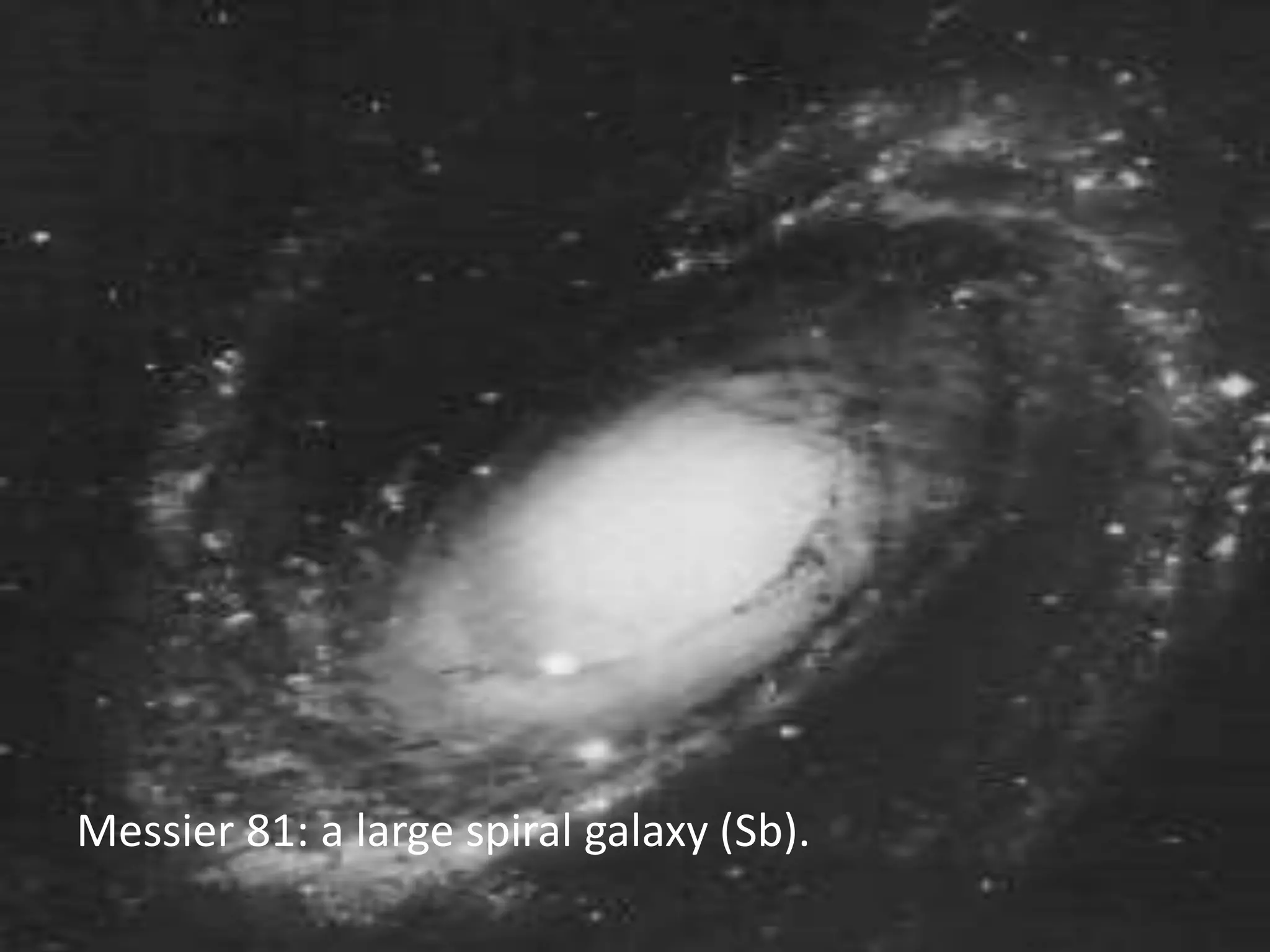
Messier 81: a large spiral galaxy (Sb).
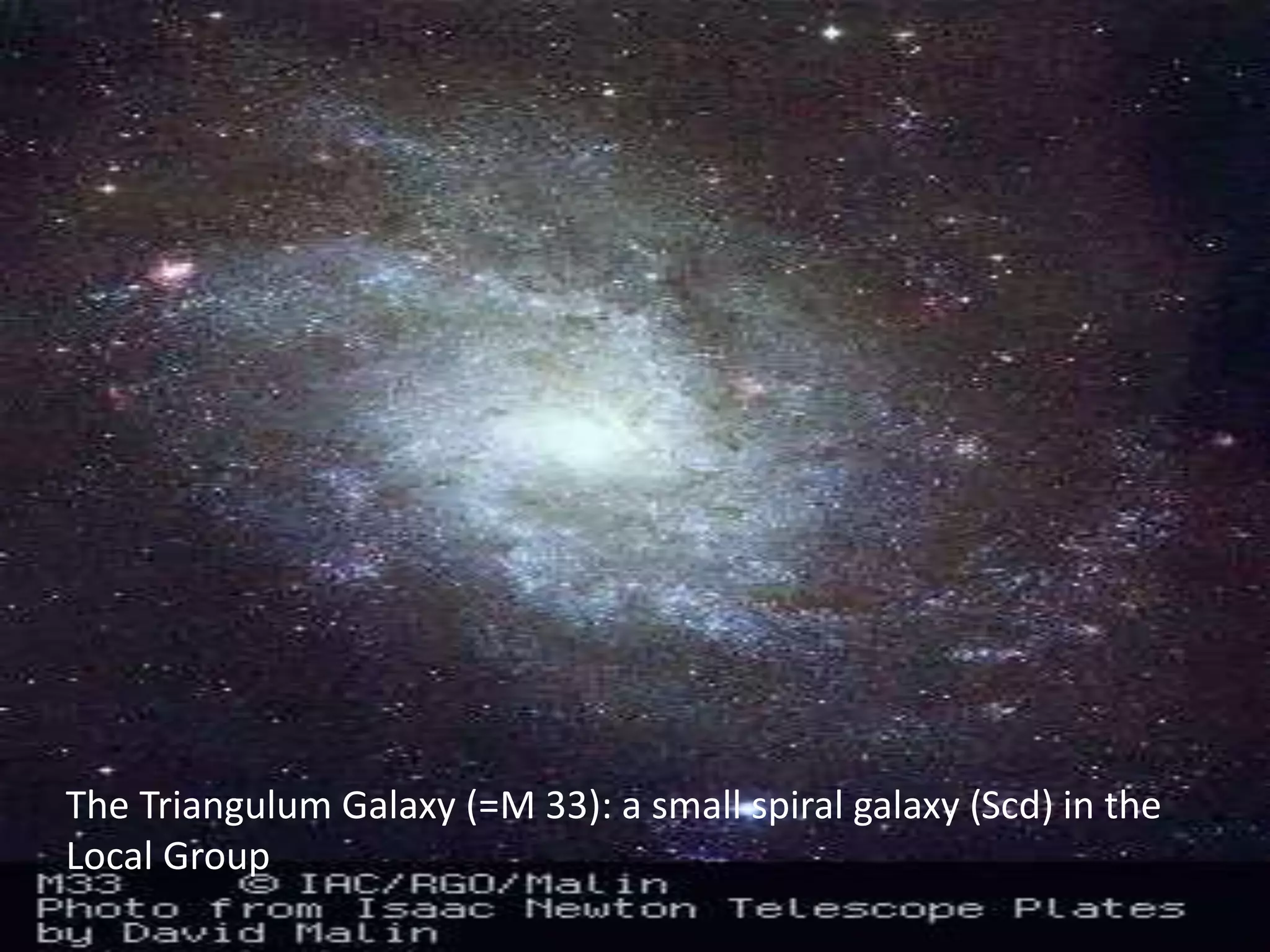
The Triangulum Galaxy (=M 33): a small spiral galaxy (Scd) in the
Local Group
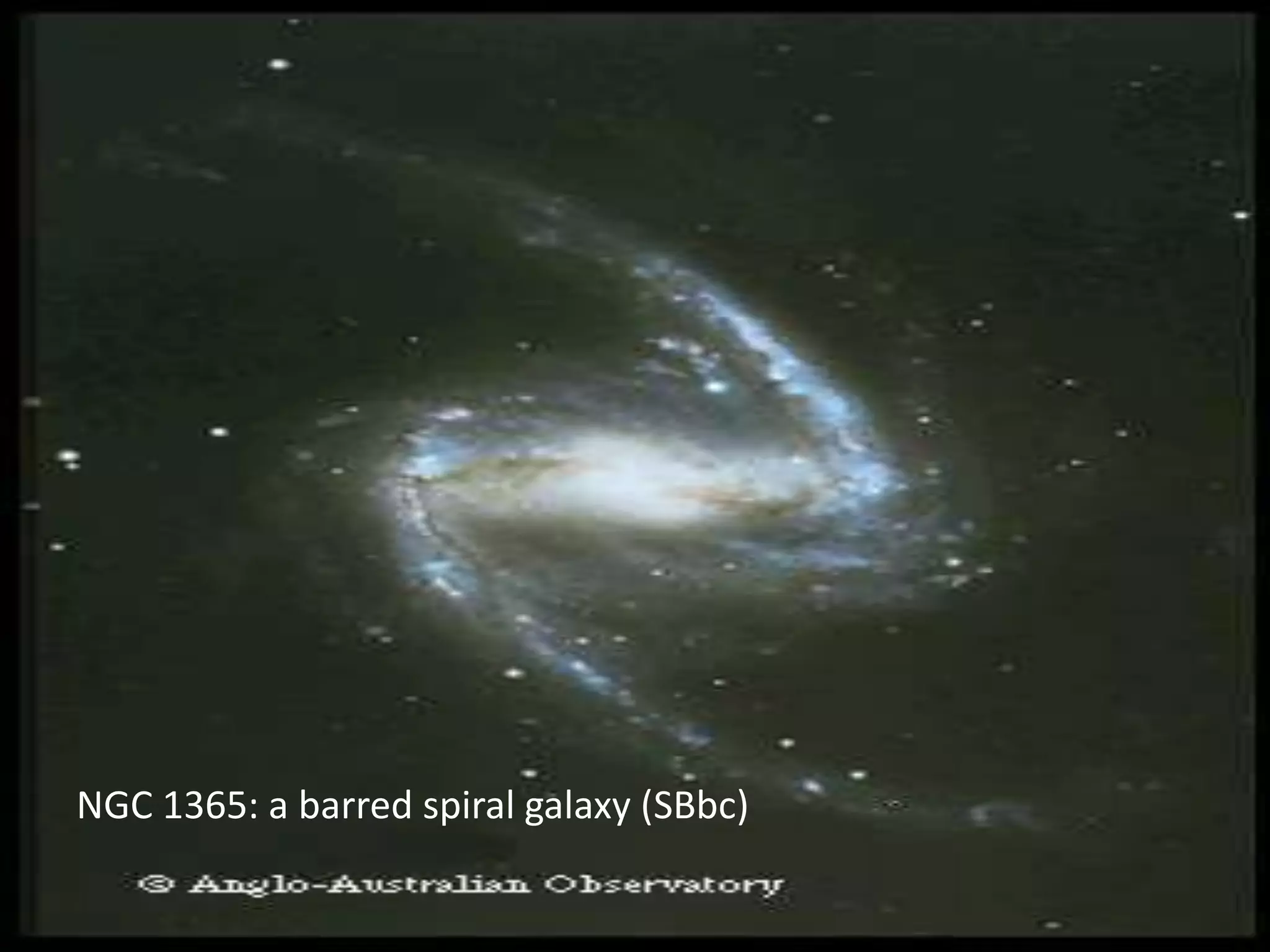
NGC 1365: a barred spiral galaxy (SBbc)
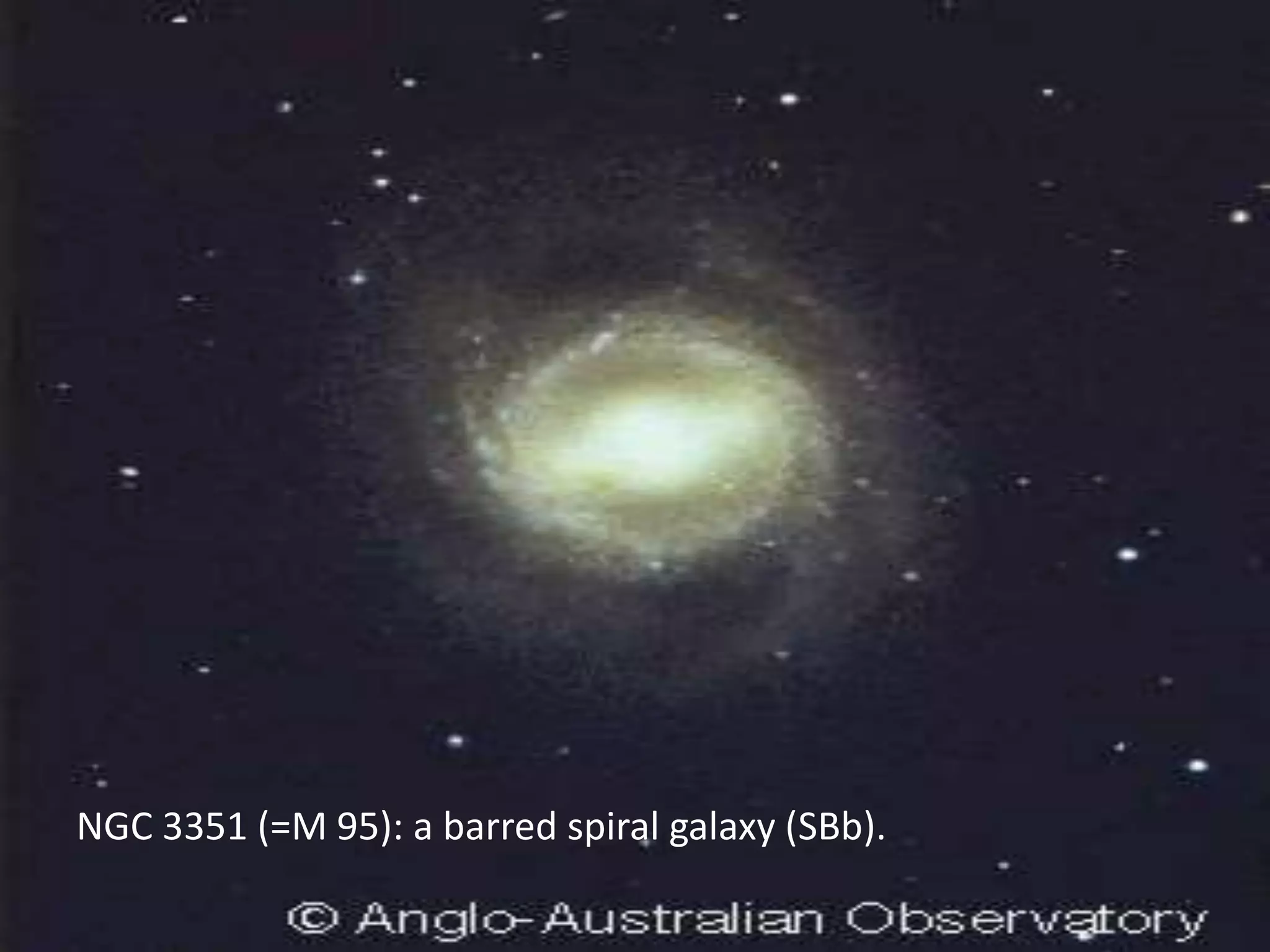
NGC 3351 (=M 95): a barred spiral galaxy (SBb).
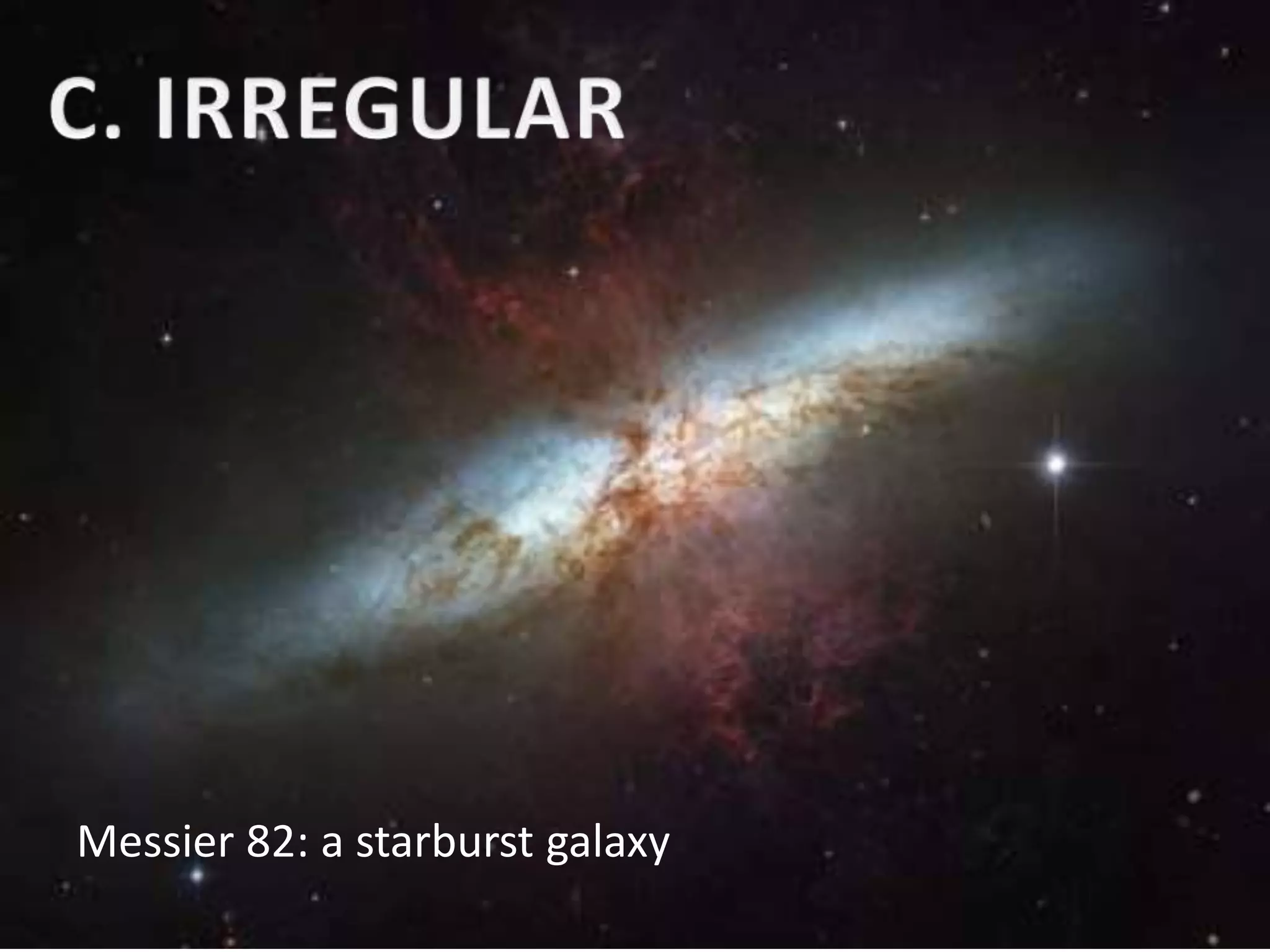
Messier 82: a starburst galaxy
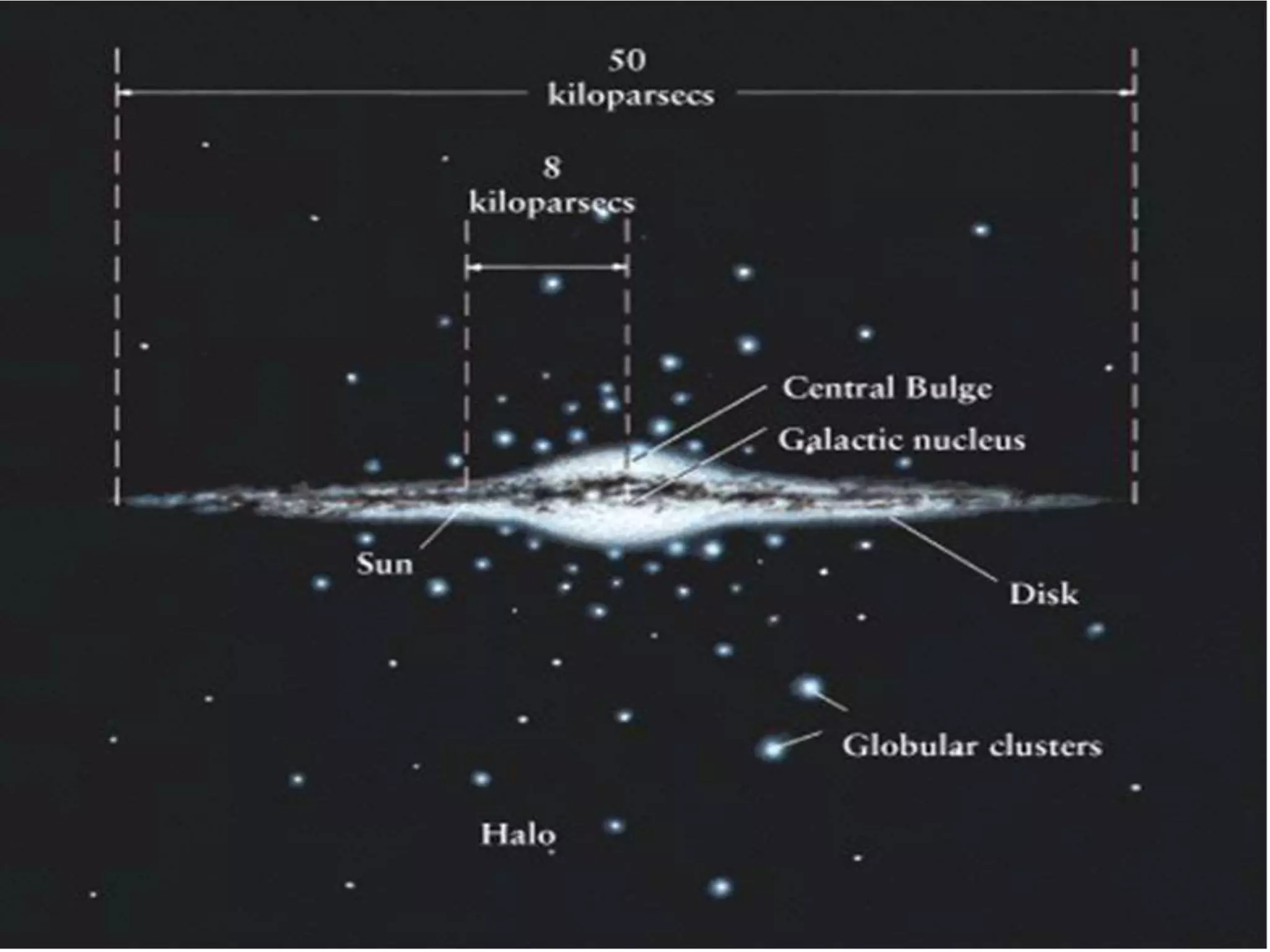
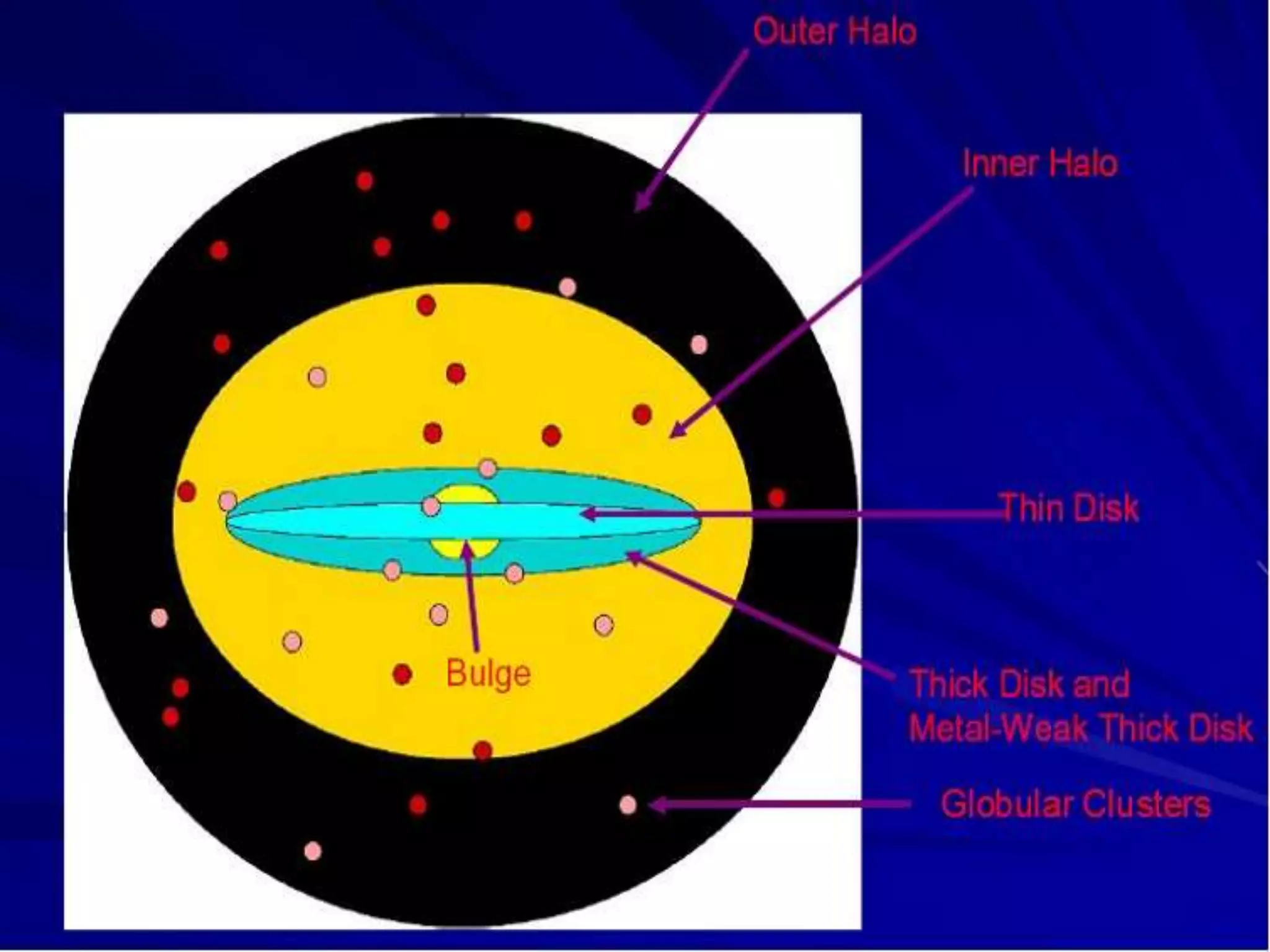
V. PARTS OF A GALAXY
What is a galaxy?
What is a galaxy?

What is a galaxy?

Editor's Notes

  • #3 Dark matter cannot be seen by telescope because it does not emit or absorb light
  • #6 In Greek mythology, Zeus places his son born by a mortal woman, the infant Heracles, on Hera's breast while she is asleep so that the baby will drink her divine milk and will thus become immortal. Hera wakes up while breastfeeding and then realizes she is nursing an unknown baby: she pushes the baby away and a jet of her milk sprays the night sky, producing the faint band of light known as the Milky Way
  • #12 The 100-inch (2.5 m) Hooker telescope at Mount Wilson Observatory that Hubble used to measure galaxy distances and a value for the rate of expansion of the universe.
  • #22 Poor clusters
  • #24 Rich clusters