What does the Holy Grail look like?
Defining Open Data in Archaeology
       and the related issues

Anthony Beck, Andrew Bevan, Stefano Costa
                   ⁂
Working Group on Open Data in Archaeology
       Open Knowledge Foundation
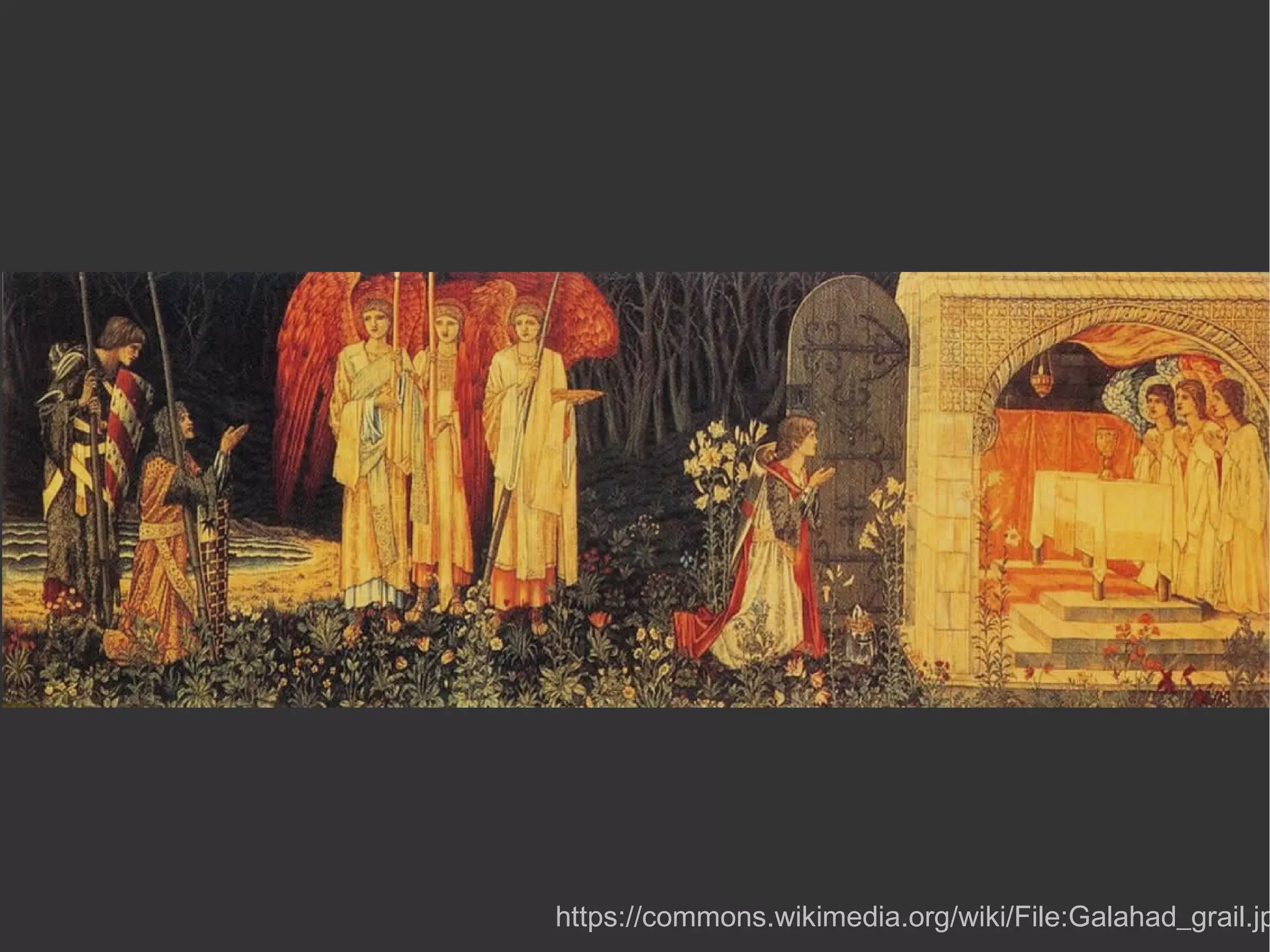
https://commons.wikimedia.org/wiki/File:Galahad_grail.jp
"A piece of content or data is open
 if anyone is free to use,  reuse,
 and redistribute it — subject only,
 at most, to the requirement  to
 attribute and share-alike"
                http:/ opendefinition.org/
                      /
Open Data has momentum
Open Government Data
Freedom of Information
(Cultural|Economic|Political) Value
Open (Research|Science)
Community-driven (WP, OSM)
Linked Open Data
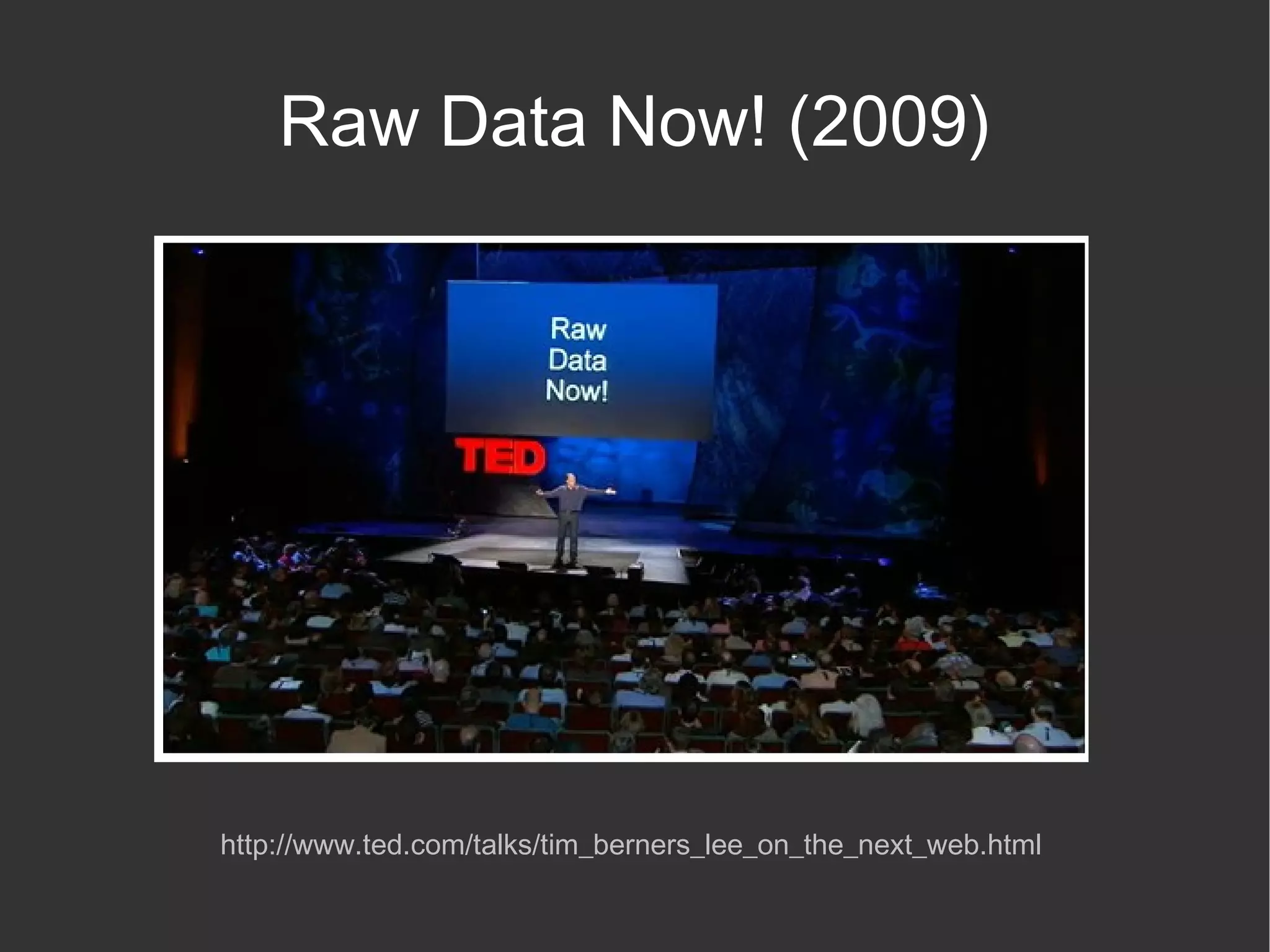
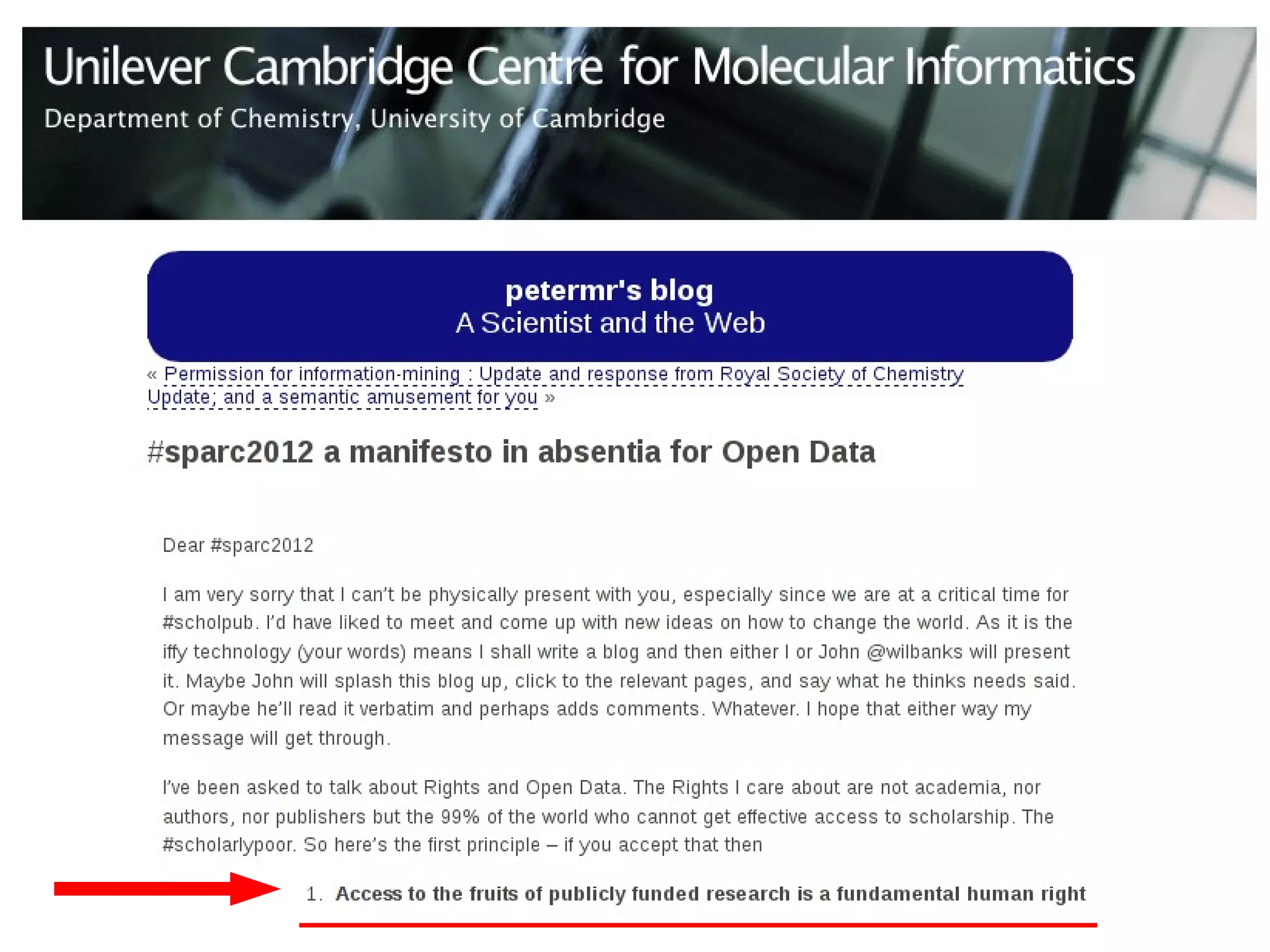
Raw Data Now! (2009)


http://www.ted.com/talks/tim_berners_lee_on_the_next_web.html
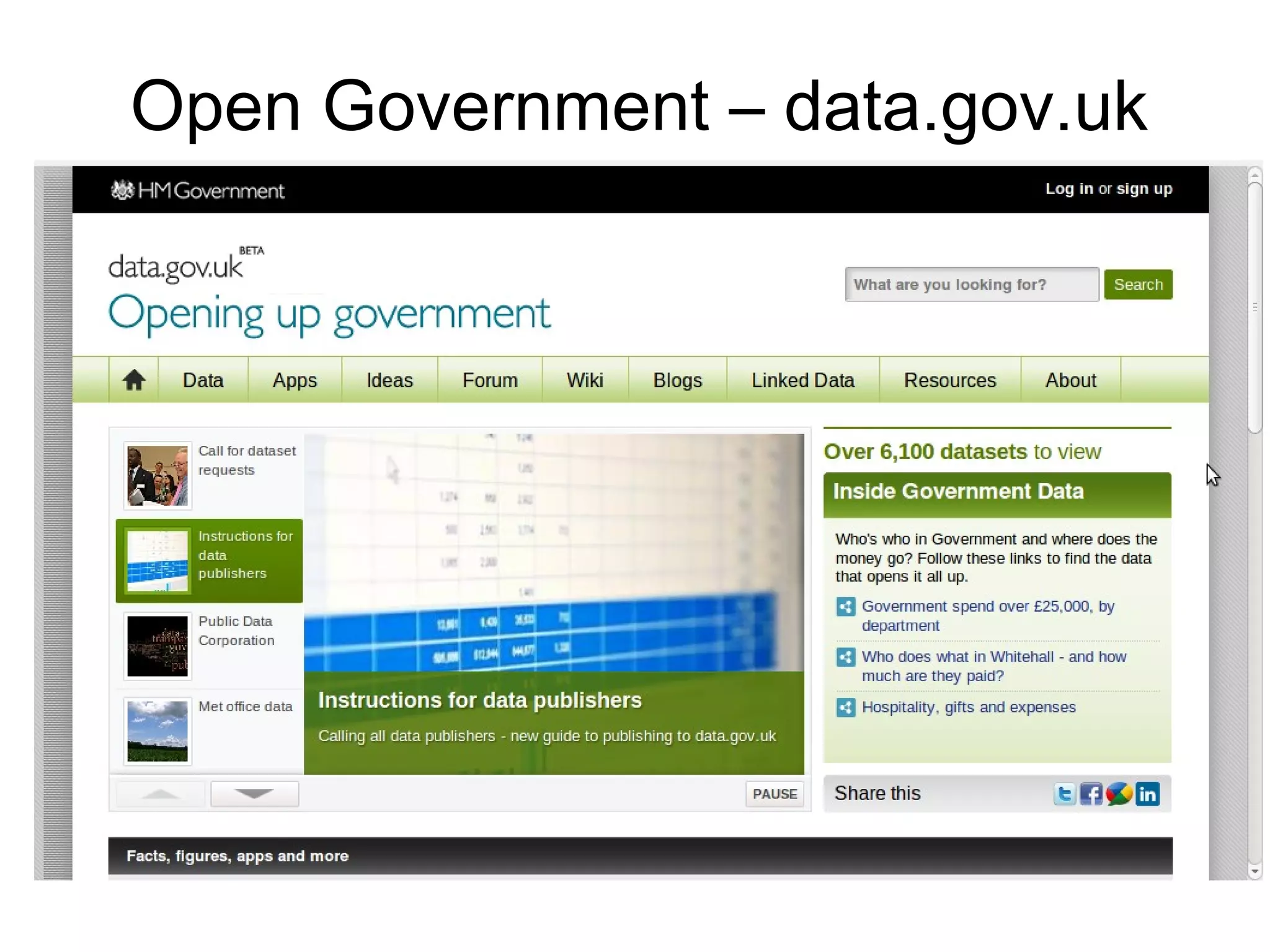
Open Government – data.gov.uk
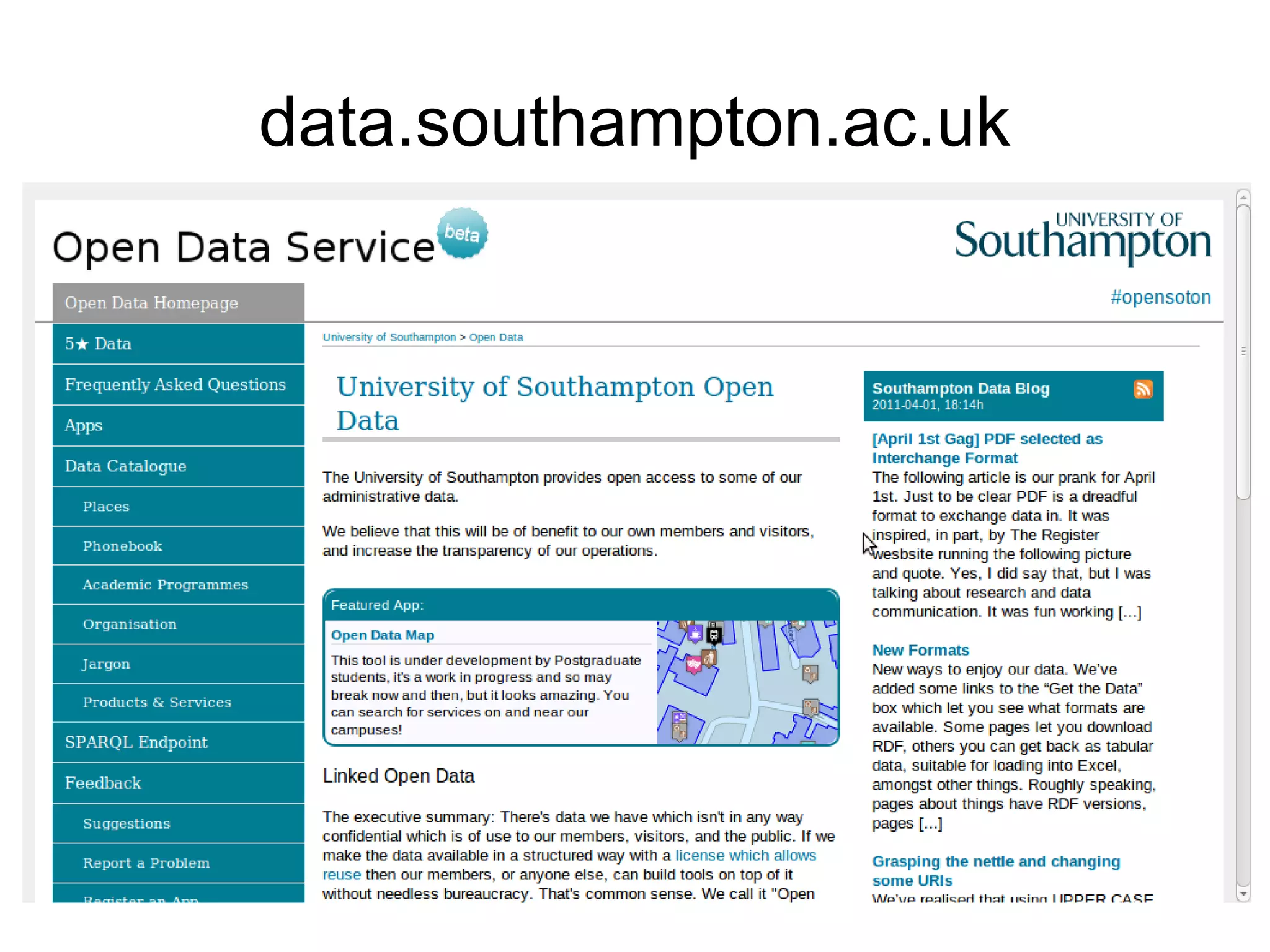
data.southampton.ac.uk
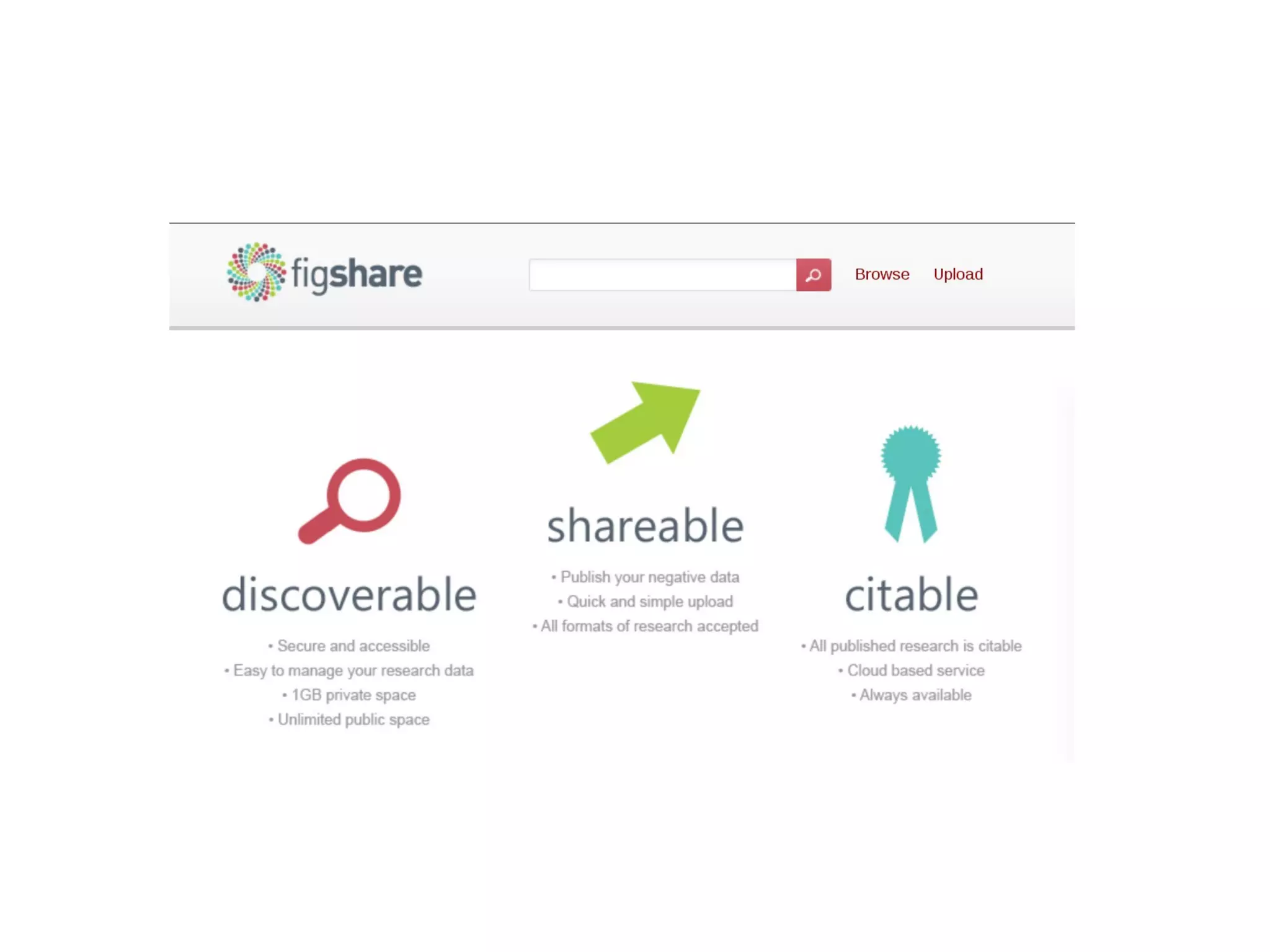
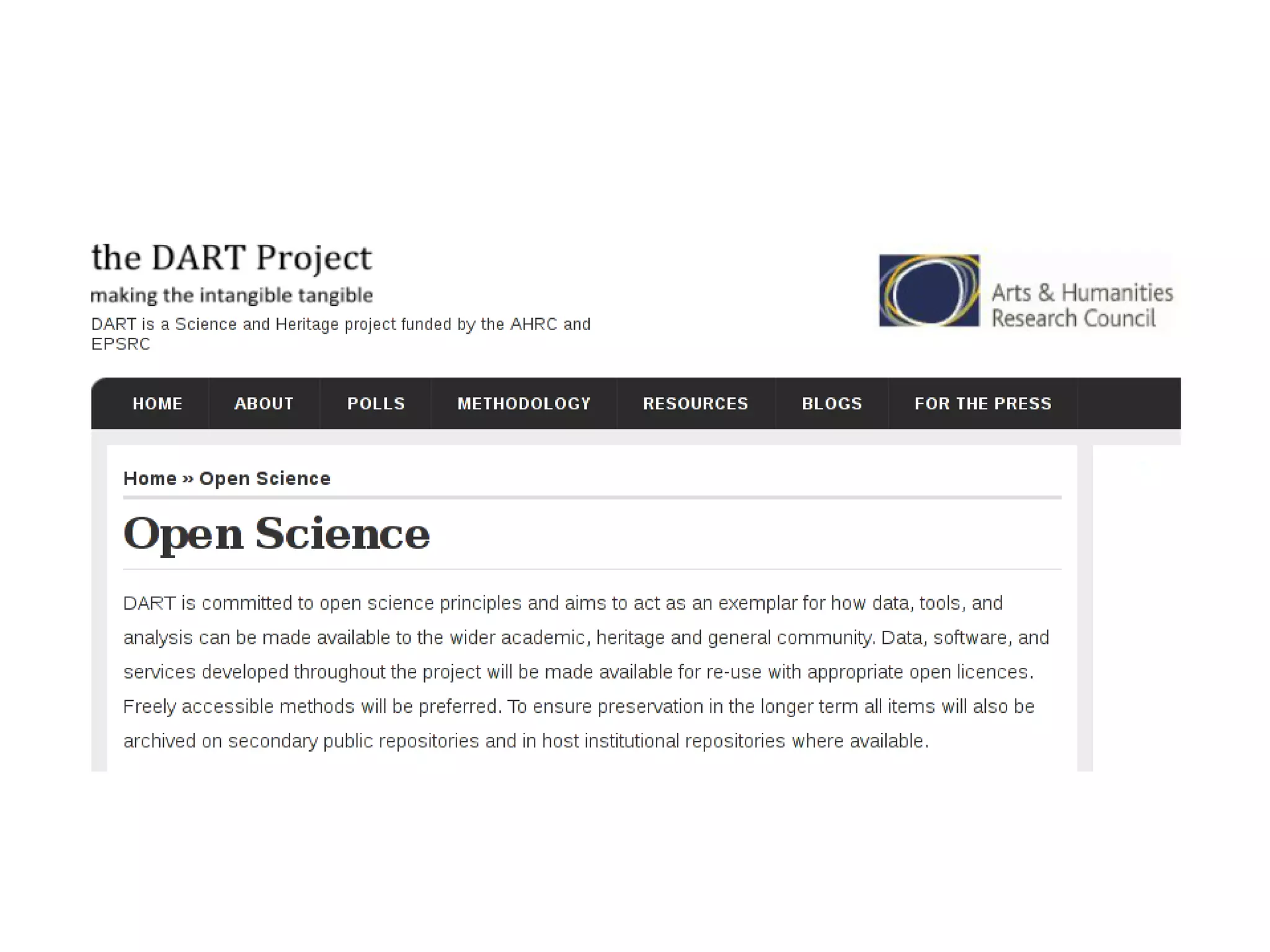
Open Science
Archaeological Data?
Open Archaeological
       Data
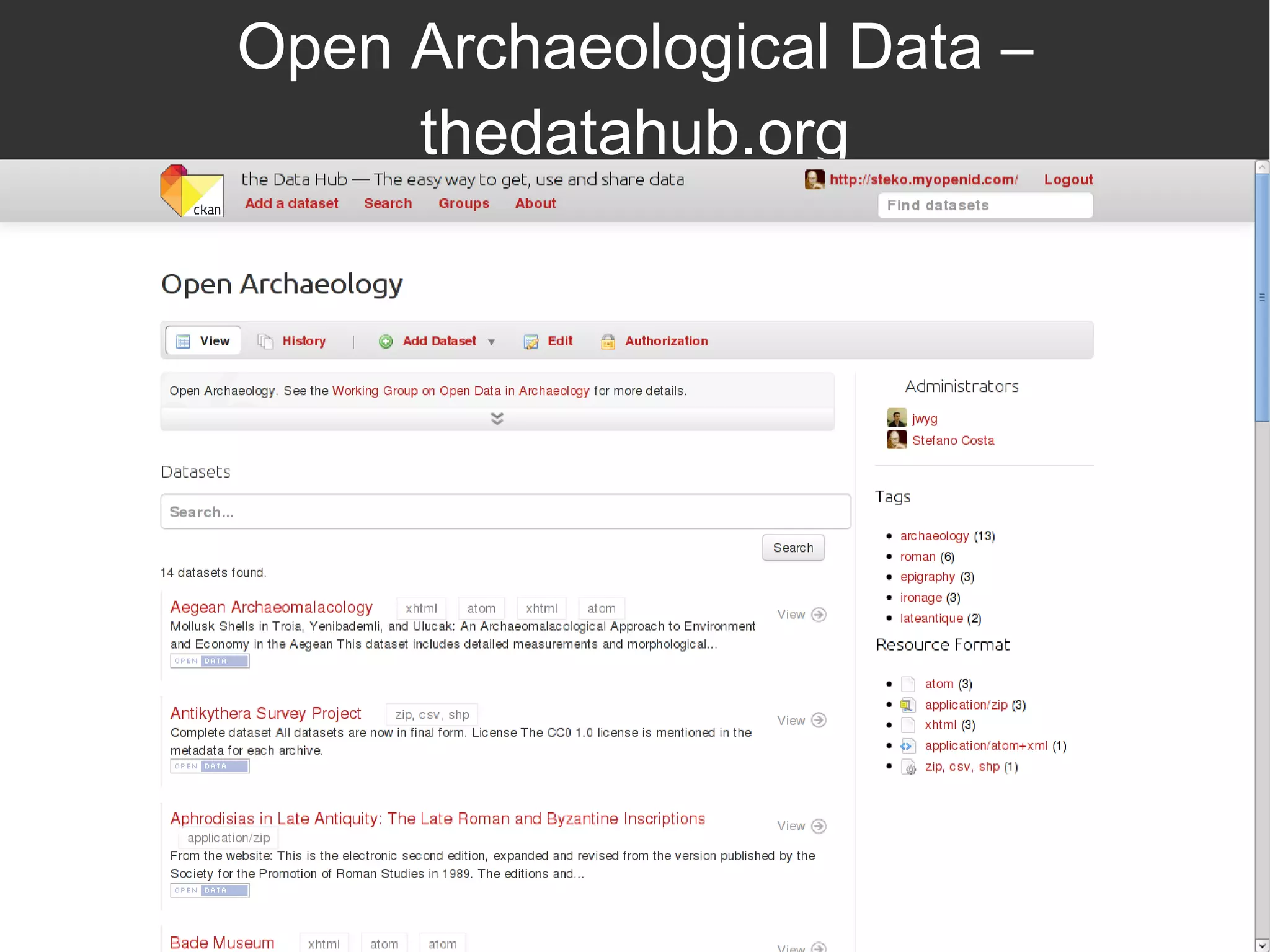
Open Archaeological Data –
     thedatahub.org
Open Archaeological Data
Episodic basis
Most (if not all) from US and UK
Slow “evangelisation” towards open licenses
Sustainability?
Long-term preservation?
Agenda
Individual and institutional advocacy
Ethics and consensus building
Knowledge transfer
Institutional advocacy
Funding
Publication
Open data as an integral part, not an after
 thought
           Individual advocacy

Higher impact ( ~ open access literature)
Peer pressure (domain specific)
Open data and interoperability
Data first, inter-project consistency later
Open licensing more important than rich
 semantics?
Let's keep computer scientists busy!
One star is a star(t) ★☆☆☆☆
  ★ Available on the web (whatever format) but with
   an open licence, to be Open Data
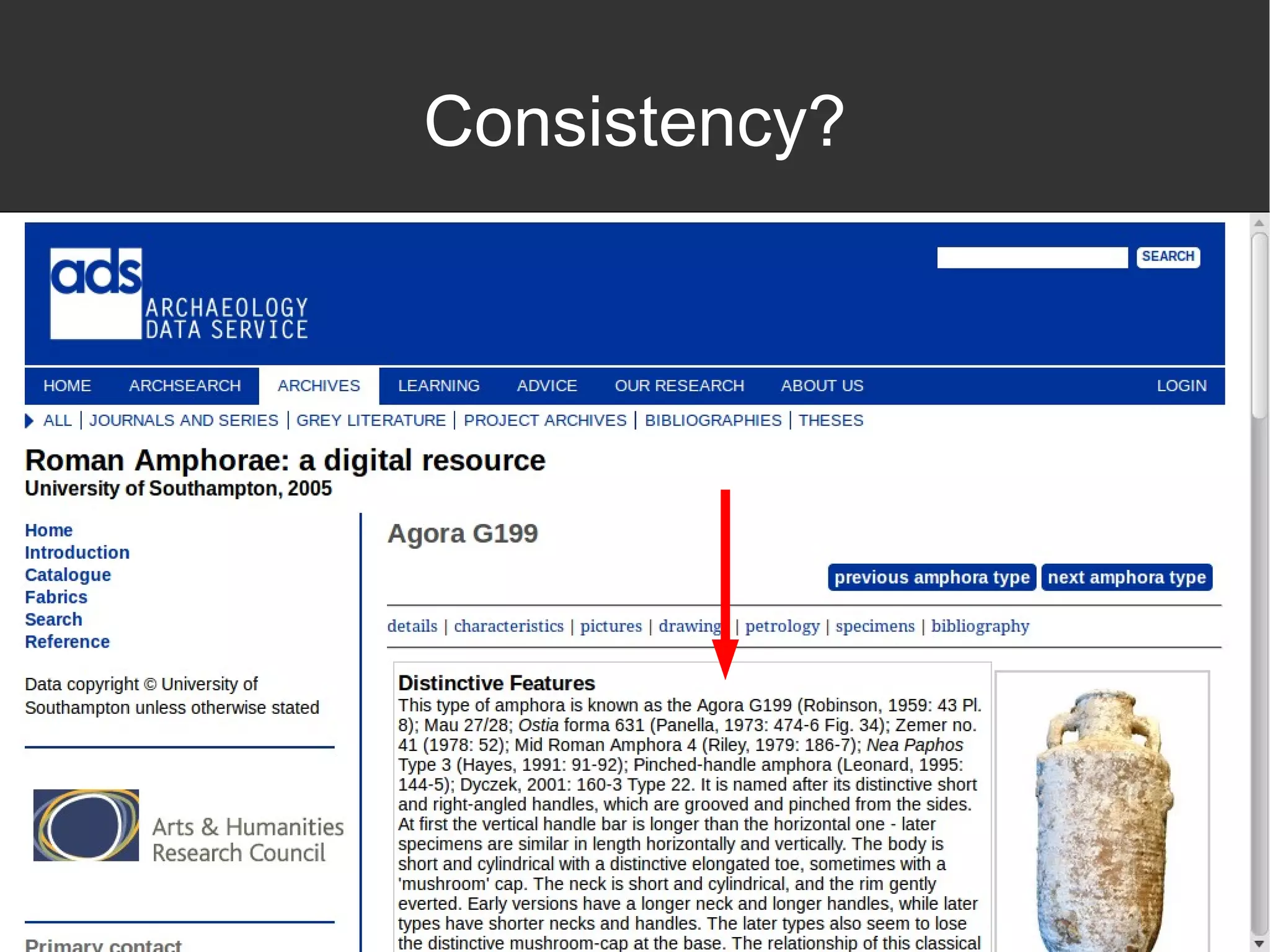
Consistency?
Open Data and archiving,
           preservation
UK has a distorted perspective (ADS)
Countless projects in other countries do not
 achieve even minimal standards of archiving
 and preservation
Open data should be done independently
Open data may be a way of preservation by
 dissemination (Archive.org, Google)
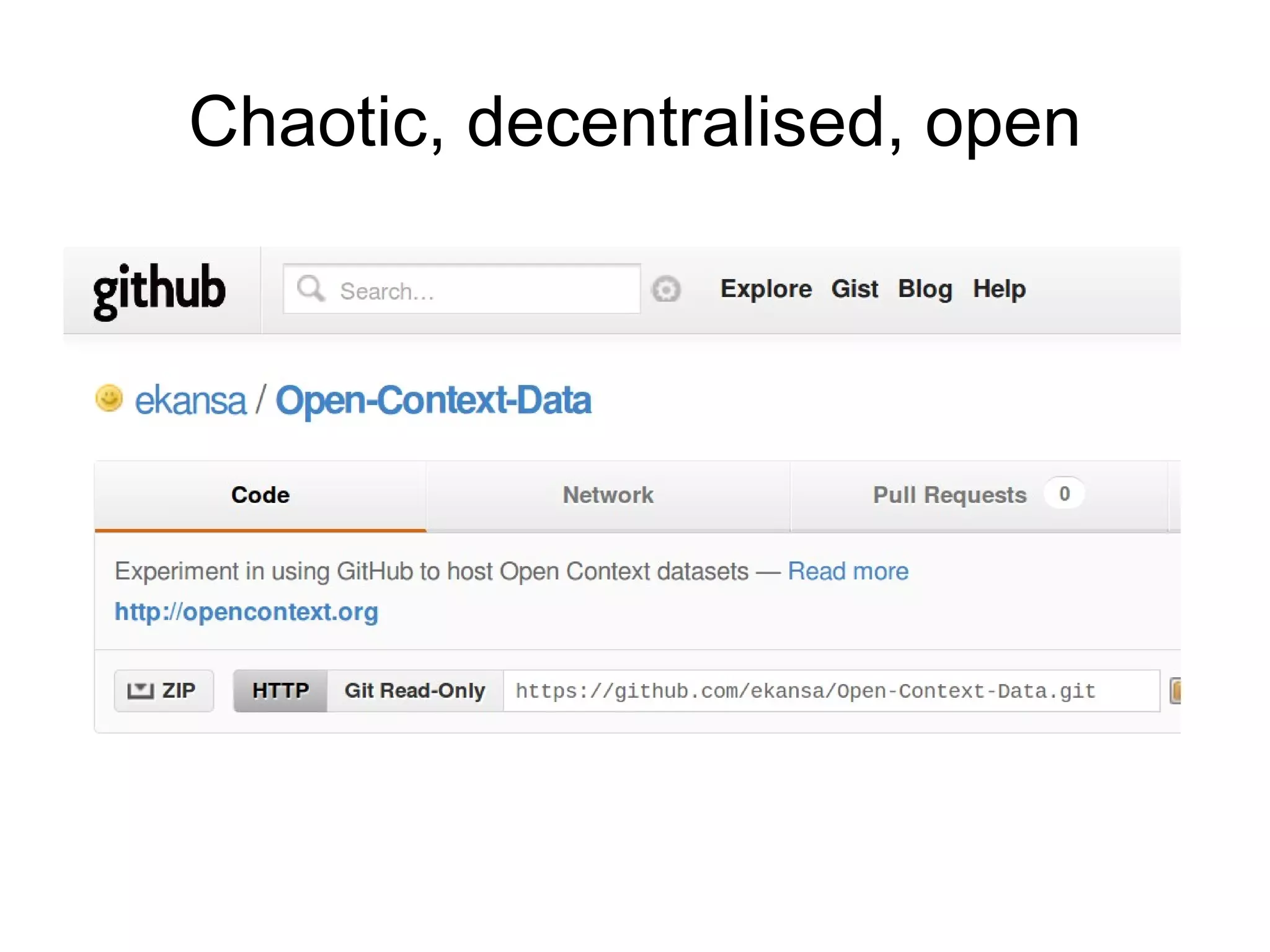
Chaotic, decentralised, open
Google Refine
Ethics - 1
Sharing data across sovereign borders
Risks of “Colonisation 2.0”
Grace periods? (EAA: 5 years)
Ethics - 2
Specialisation → Balkanisation
Archaeology → Archaeologies
Whom are we trying to convince?
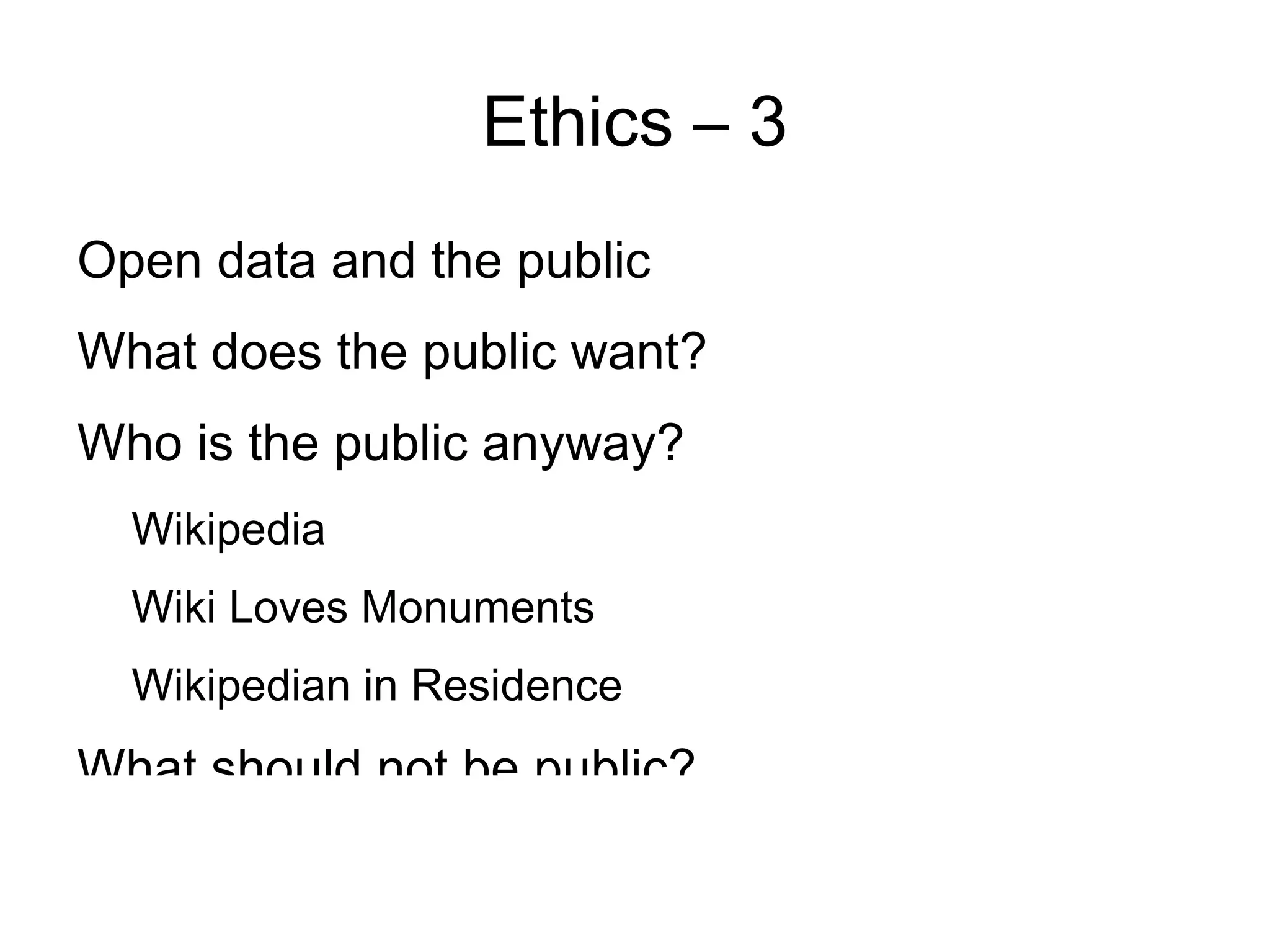
Ethics – 3
Open data and the public
What does the public want?
Who is the public anyway?
  Wikipedia
  Wiki Loves Monuments
  Wikipedian in Residence
What should not be public?
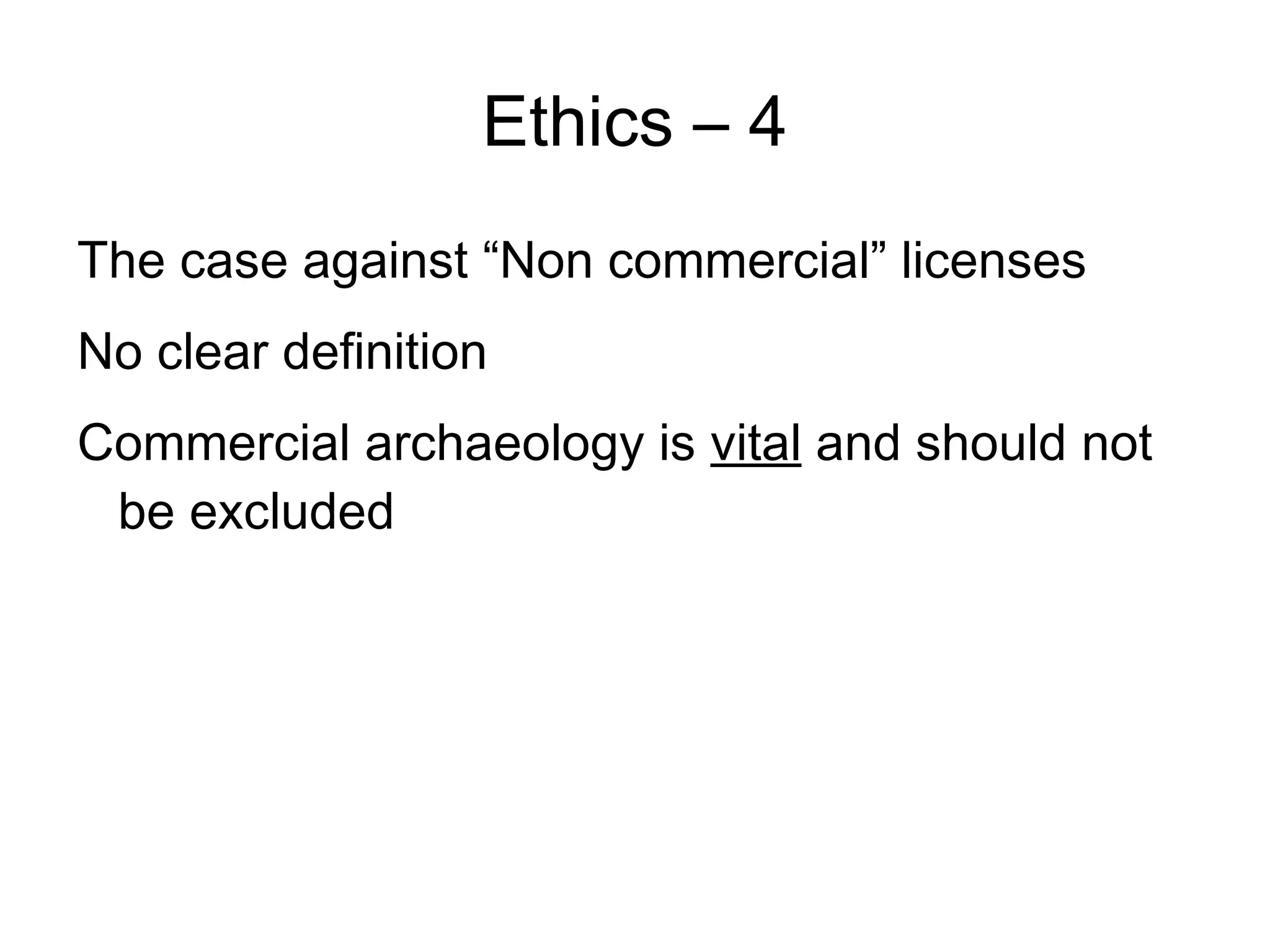
Ethics – 4
The case against “Non commercial” licenses
No clear definition
Commercial archaeology is vital and should not
 be excluded
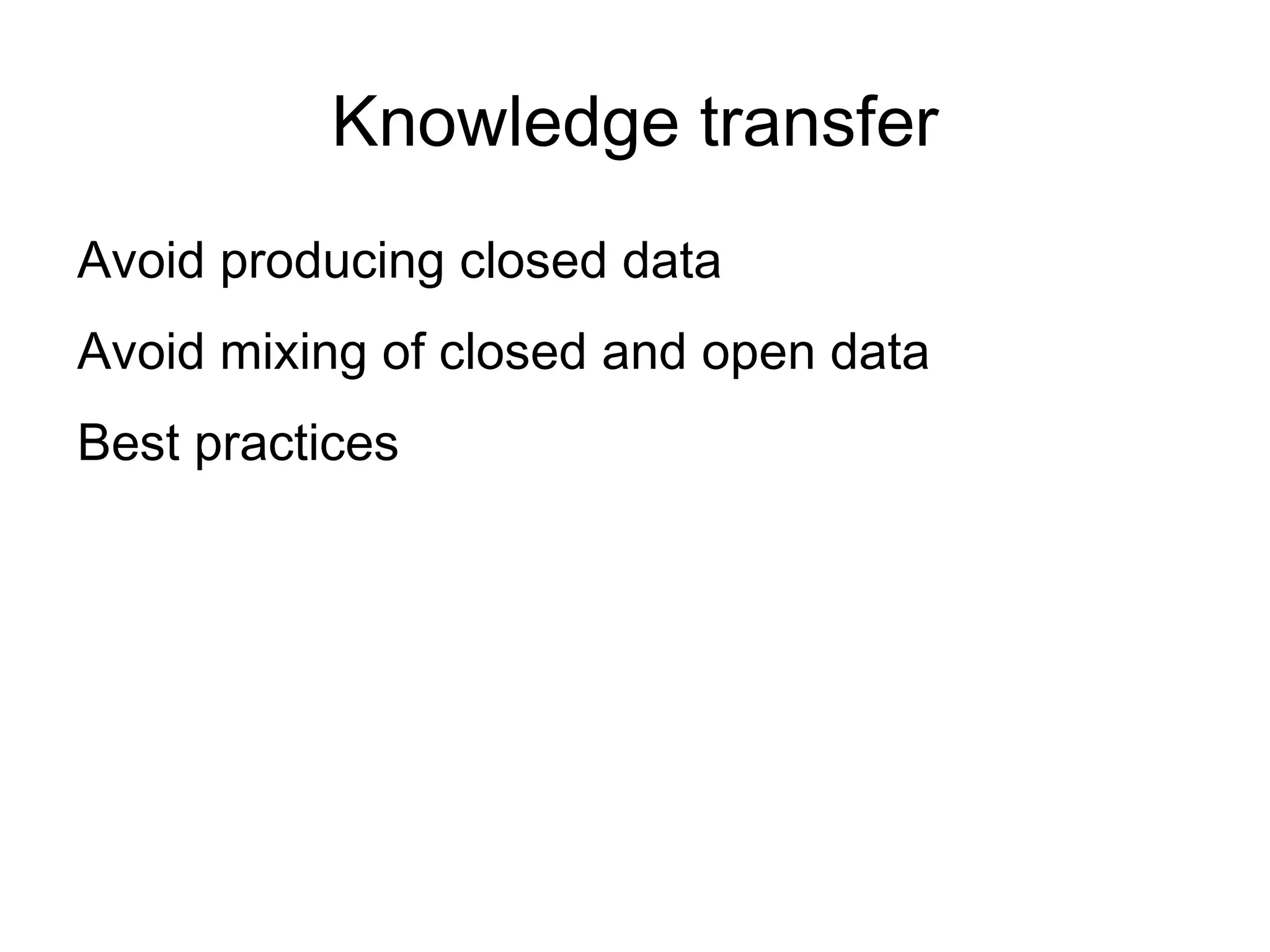
Knowledge transfer
Avoid producing closed data
Avoid mixing of closed and open data
Best practices
What does the Holy Grail look like?
Defining Open Data in Archaeology
       and the related issues


Anthony Beck, Andrew Bevan, Stefano Costa
                     ⁂
        http://archaeology.okfn.org/

What does the Holy Grail look like? Defining open data in archaeology and the related issues

  • 1.
    What does theHoly Grail look like? Defining Open Data in Archaeology and the related issues Anthony Beck, Andrew Bevan, Stefano Costa ⁂ Working Group on Open Data in Archaeology Open Knowledge Foundation
  • 2.
  • 3.
    "A piece ofcontent or data is open if anyone is free to use,  reuse, and redistribute it — subject only, at most, to the requirement  to attribute and share-alike" http:/ opendefinition.org/ /
  • 4.
    Open Data hasmomentum Open Government Data Freedom of Information (Cultural|Economic|Political) Value Open (Research|Science) Community-driven (WP, OSM) Linked Open Data
  • 5.
    Raw Data Now!(2009) http://www.ted.com/talks/tim_berners_lee_on_the_next_web.html
  • 6.
  • 7.
  • 8.
  • 12.
  • 13.
  • 14.
    Open Archaeological Data– thedatahub.org
  • 15.
    Open Archaeological Data Episodicbasis Most (if not all) from US and UK Slow “evangelisation” towards open licenses Sustainability? Long-term preservation?
  • 16.
    Agenda Individual and institutionaladvocacy Ethics and consensus building Knowledge transfer
  • 17.
    Institutional advocacy Funding Publication Open dataas an integral part, not an after thought Individual advocacy Higher impact ( ~ open access literature) Peer pressure (domain specific)
  • 18.
    Open data andinteroperability Data first, inter-project consistency later Open licensing more important than rich semantics? Let's keep computer scientists busy! One star is a star(t) ★☆☆☆☆ ★ Available on the web (whatever format) but with an open licence, to be Open Data
  • 19.
  • 20.
    Open Data andarchiving, preservation UK has a distorted perspective (ADS) Countless projects in other countries do not achieve even minimal standards of archiving and preservation Open data should be done independently Open data may be a way of preservation by dissemination (Archive.org, Google)
  • 21.
  • 22.
  • 23.
    Ethics - 1 Sharingdata across sovereign borders Risks of “Colonisation 2.0” Grace periods? (EAA: 5 years)
  • 24.
    Ethics - 2 Specialisation→ Balkanisation Archaeology → Archaeologies Whom are we trying to convince?
  • 25.
    Ethics – 3 Opendata and the public What does the public want? Who is the public anyway? Wikipedia Wiki Loves Monuments Wikipedian in Residence What should not be public?
  • 26.
    Ethics – 4 Thecase against “Non commercial” licenses No clear definition Commercial archaeology is vital and should not be excluded
  • 27.
    Knowledge transfer Avoid producingclosed data Avoid mixing of closed and open data Best practices
  • 28.
    What does theHoly Grail look like? Defining Open Data in Archaeology and the related issues Anthony Beck, Andrew Bevan, Stefano Costa ⁂ http://archaeology.okfn.org/