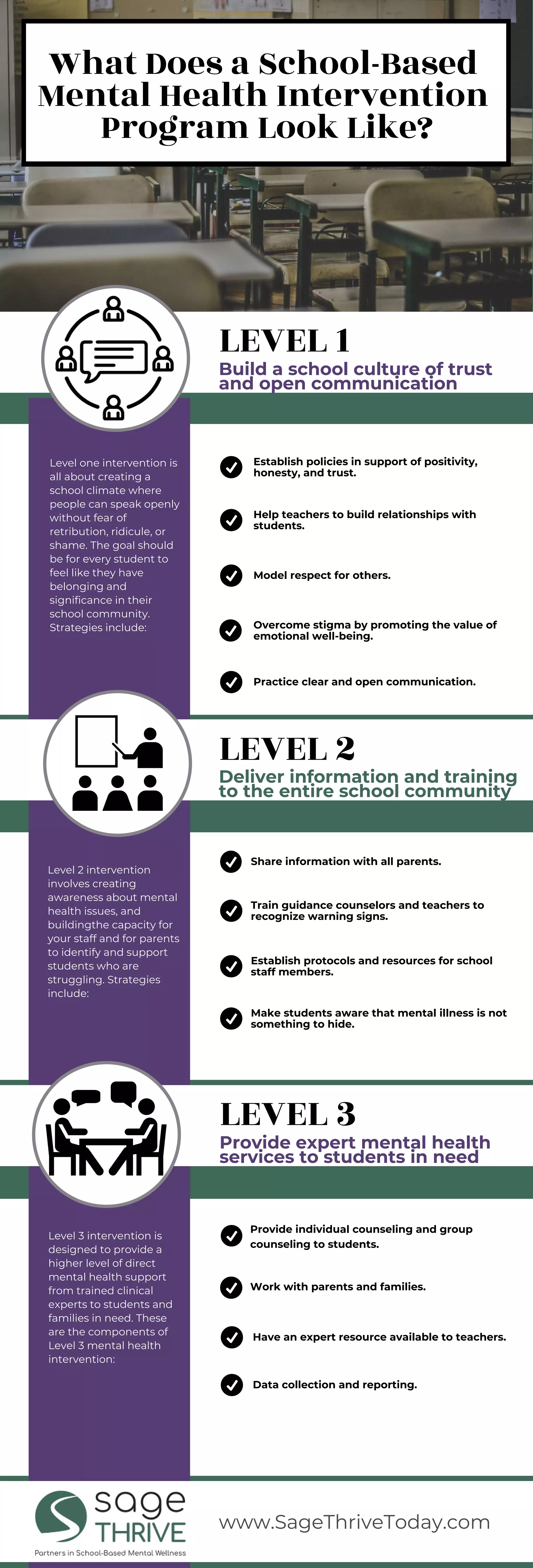
What Does a School-Based
Mental Health Intervention
Program Look Like?
Level one intervention is
all about creating a
school climate where
people can speak openly
without fear of
retribution, ridicule, or
shame. The goal should
be for every student to
feel like they have
belonging and
significance in their
school community.
Strategies include:
Build a school culture of trust
and open communication
LEVEL 1
Establish policies in support of positivity,
honesty, and trust.
Level 2 intervention
involves creating
awareness about mental
health issues, and
buildingthe capacity for
your staff and for parents
to identify and support
students who are
struggling. Strategies
include:
Deliver information and training
to the entire school community
LEVEL 2
Share information with all parents.
Level 3 intervention is
designed to provide a
higher level of direct
mental health support
from trained clinical
experts to students and
families in need. These
are the components of
Level 3 mental health
intervention:
Provide individual counseling and group
counseling to students.
Provide expert mental health
services to students in need
LEVEL 3
www.SageThriveToday.com
Help teachers to build relationships with
students.
Model respect for others.
Overcome stigma by promoting the value of
emotional well-being.
Practice clear and open communication.
Train guidance counselors and teachers to
recognize warning signs.
Establish protocols and resources for school
staff members.
Make students aware that mental illness is not
something to hide.
Work with parents and families.
Have an expert resource available to teachers.
Data collection and reporting.

What does a school based mental health intervention program look like?

  • 1.
    What Does aSchool-Based Mental Health Intervention Program Look Like? Level one intervention is all about creating a school climate where people can speak openly without fear of retribution, ridicule, or shame. The goal should be for every student to feel like they have belonging and significance in their school community. Strategies include: Build a school culture of trust and open communication LEVEL 1 Establish policies in support of positivity, honesty, and trust. Level 2 intervention involves creating awareness about mental health issues, and buildingthe capacity for your staff and for parents to identify and support students who are struggling. Strategies include: Deliver information and training to the entire school community LEVEL 2 Share information with all parents. Level 3 intervention is designed to provide a higher level of direct mental health support from trained clinical experts to students and families in need. These are the components of Level 3 mental health intervention: Provide individual counseling and group counseling to students. Provide expert mental health services to students in need LEVEL 3 www.SageThriveToday.com Help teachers to build relationships with students. Model respect for others. Overcome stigma by promoting the value of emotional well-being. Practice clear and open communication. Train guidance counselors and teachers to recognize warning signs. Establish protocols and resources for school staff members. Make students aware that mental illness is not something to hide. Work with parents and families. Have an expert resource available to teachers. Data collection and reporting.