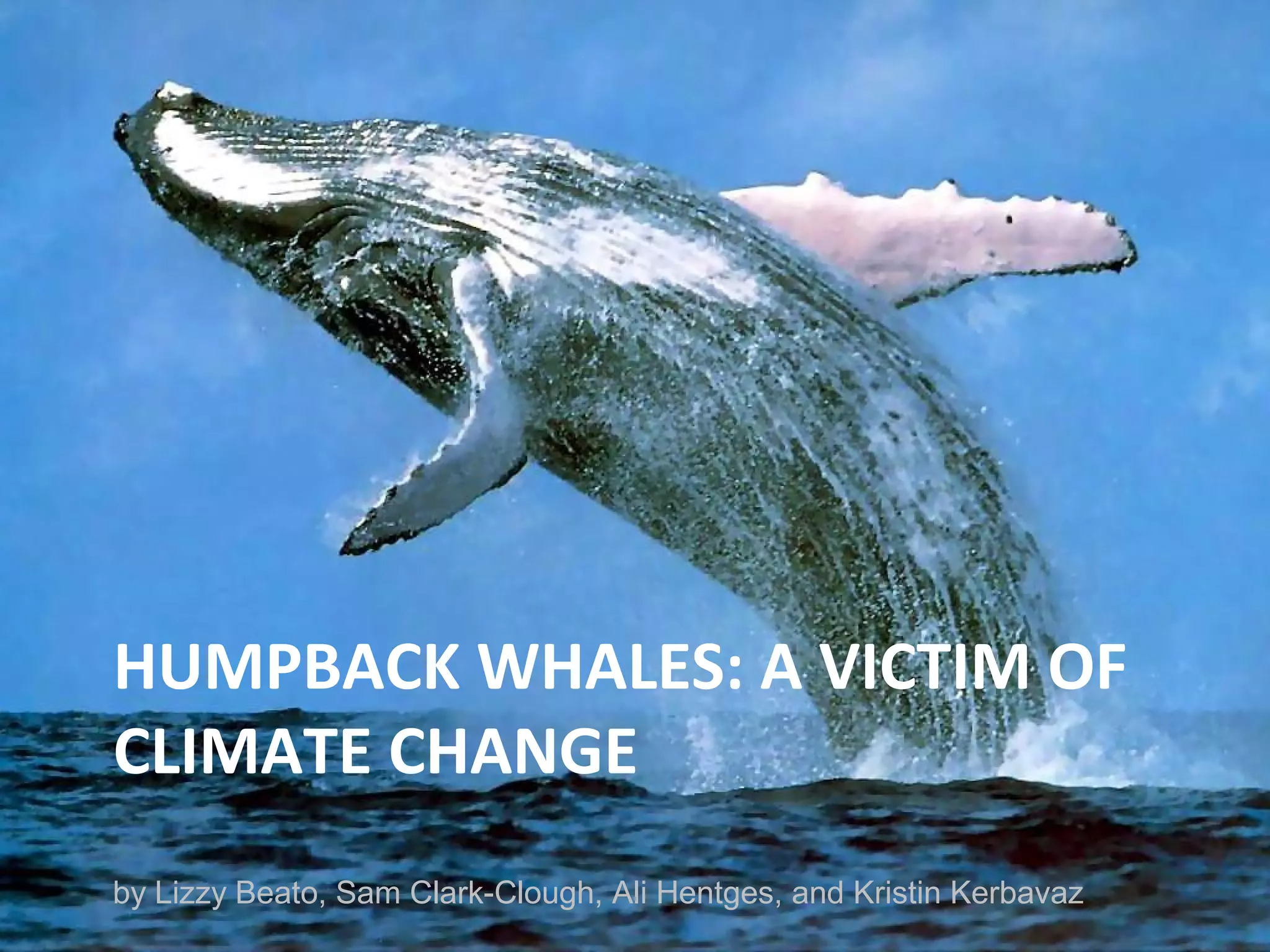
HUMPBACK WHALES: A VICTIM OF
CLIMATE CHANGE
by Lizzy Beato, Sam Clark-Clough, Ali Hentges, and Kristin Kerbavaz
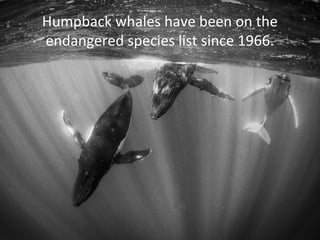
Humpback whales have been on the
endangered species list since 1966.
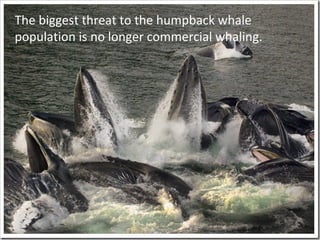
The biggest threat to the humpback whale
population is no longer commercial whaling.
Now Humpback whales are being
threatened by climate change
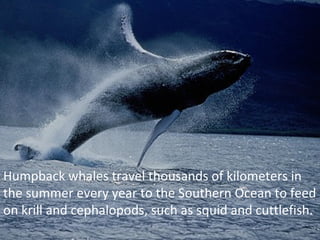
Humpback whales travel thousands of kilometers in
the summer every year to the Southern Ocean to feed
on krill and cephalopods, such as squid and cuttlefish.
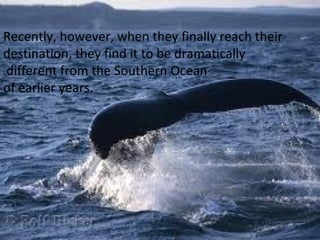
Recently, however, when they finally reach their
destination, they find it to be dramatically
different from the Southern Ocean
of earlier years.
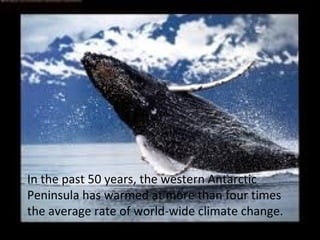
In the past 50 years, the western Antarctic
Peninsula has warmed at more than four times
the average rate of world-wide climate change.
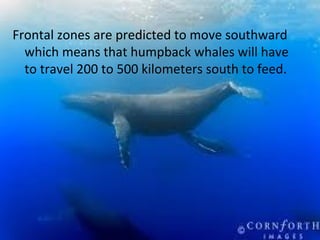
Frontal zones are predicted to move southward
which means that humpback whales will have
to travel 200 to 500 kilometers south to feed.
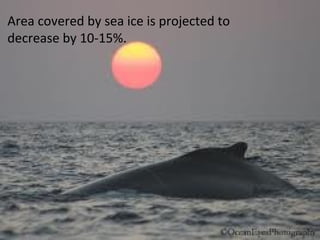
Area covered by sea ice is projected to
decrease by 10-15%.
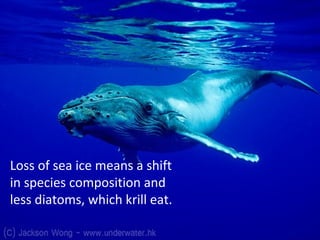
Loss of sea ice means a shift
in species composition and
less diatoms, which krill eat.
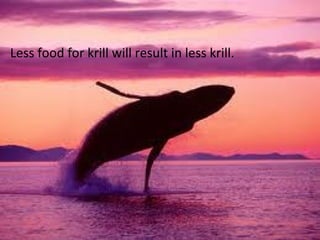
Less food for krill will result in less krill.
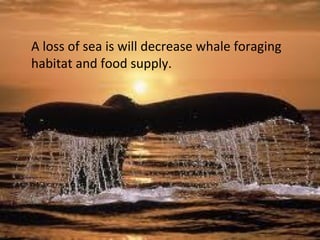
A loss of sea is will decrease whale foraging
habitat and food supply.

Whales

  • 1.
    HUMPBACK WHALES: AVICTIM OF CLIMATE CHANGE by Lizzy Beato, Sam Clark-Clough, Ali Hentges, and Kristin Kerbavaz
  • 2.
    Humpback whales havebeen on the endangered species list since 1966.
  • 3.
    The biggest threatto the humpback whale population is no longer commercial whaling.
  • 4.
    Now Humpback whalesare being threatened by climate change
  • 5.
    Humpback whales travelthousands of kilometers in the summer every year to the Southern Ocean to feed on krill and cephalopods, such as squid and cuttlefish.
  • 6.
    Recently, however, whenthey finally reach their destination, they find it to be dramatically different from the Southern Ocean of earlier years.
  • 7.
    In the past50 years, the western Antarctic Peninsula has warmed at more than four times the average rate of world-wide climate change.
  • 8.
    Frontal zones arepredicted to move southward which means that humpback whales will have to travel 200 to 500 kilometers south to feed.
  • 9.
    Area covered bysea ice is projected to decrease by 10-15%.
  • 10.
    Loss of seaice means a shift in species composition and less diatoms, which krill eat.
  • 11.
    Less food forkrill will result in less krill.
  • 12.
    A loss ofsea is will decrease whale foraging habitat and food supply.