The Significance of Transliteration in
Enhancing Accessibility and Exchange of
Arabic Research Data
Mohamed El-Zalabany M.A.
Cataloging Librarian - Library of Congress – Cairo Office
Ph.D Candidate, Information Studies- Cairo University
mh_zalabany@hotmail.com
www.linkedin.com/in/mohamedelzalabany
Research Data
on Arabic Content
Research data is: “the recorded factual
material commonly accepted in the scientific
community as necessary to validate research
findings."
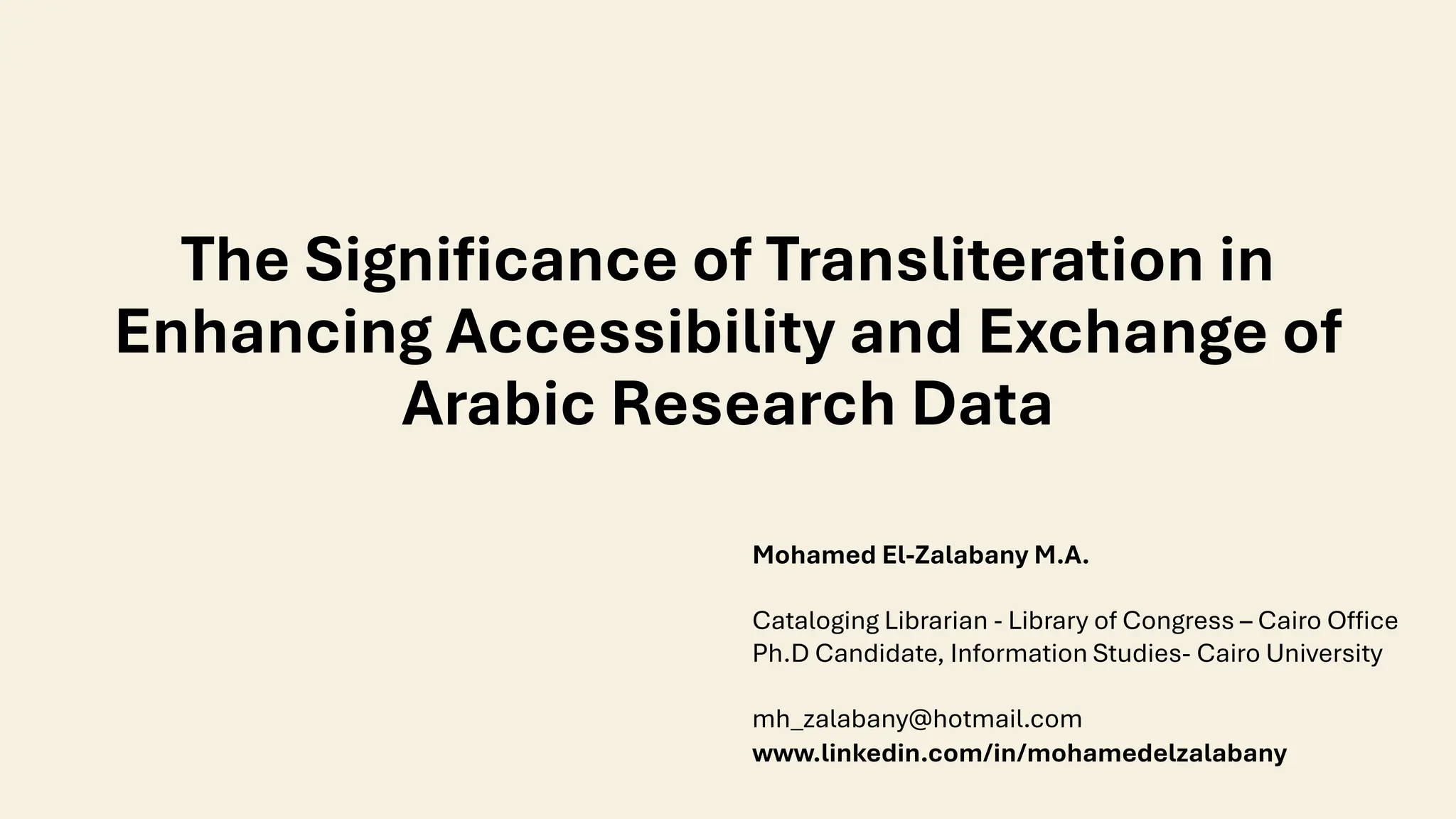
Research data on Arabic content, heritage,
and culture is essential for global research,
offering unique insights that enrich our
understanding of societal dynamics, historical
evolution, and cultural diversity, thereby
promoting international collaboration and
understanding.
Unique examples of
Arabic Research data
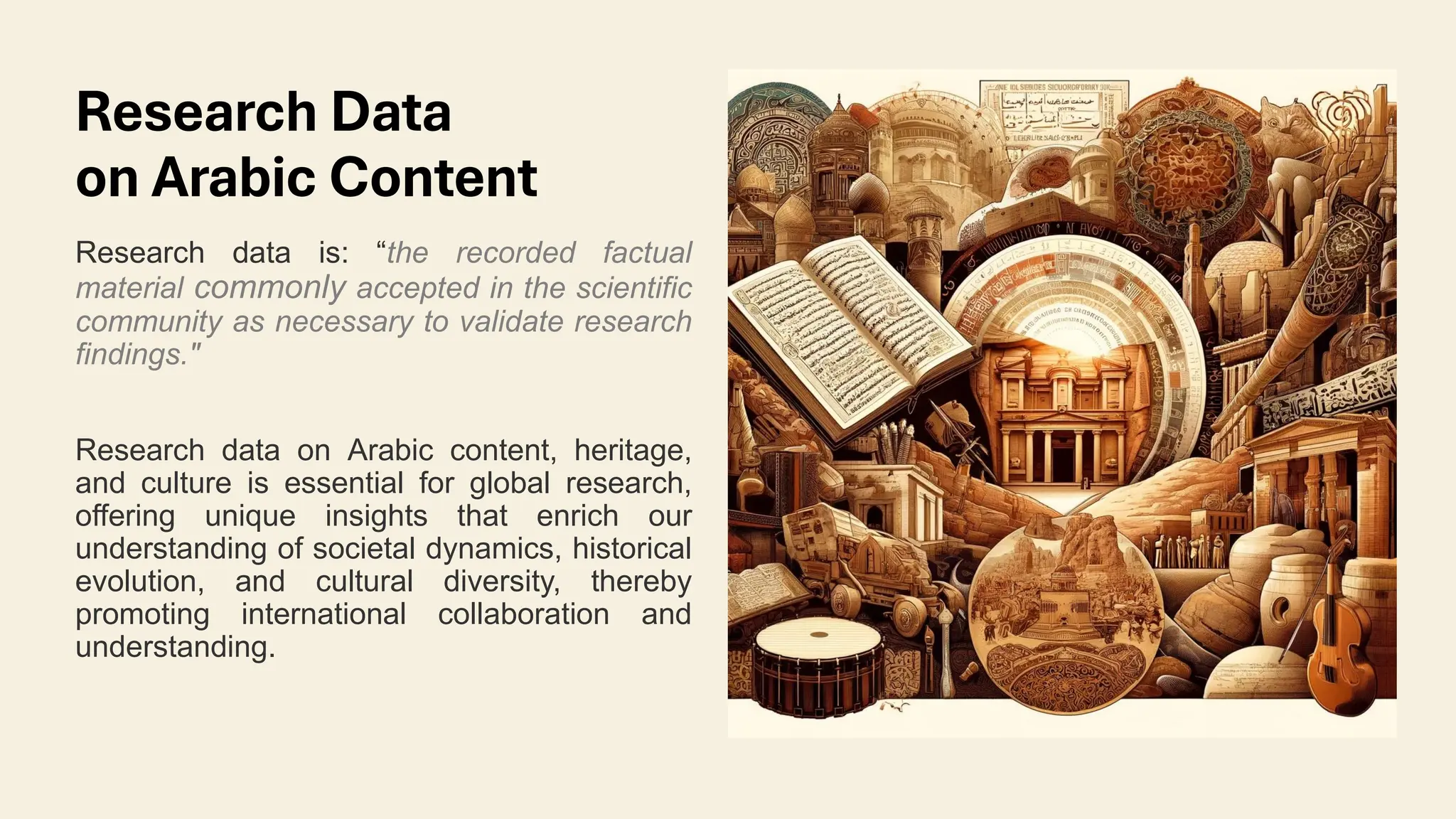
Historical Texts: Analysis of ancient manuscripts
from significant libraries.
Linguistic Data: Studies on dialects and oral
histories.
Archaeological Findings: Discoveries from
historical sites.
Cultural Practices: Data on traditional ceremonies
and rituals.
Art and Iconography: Insights from regional art
and architecture.
Folklore and Music: Collections documenting
cultural expressions.
Socio-economic Data: Research on social and
economic patterns.
Cinema Analysis: Trends and themes in Arabic
media.
Towards FAIR Arabic
Research Data
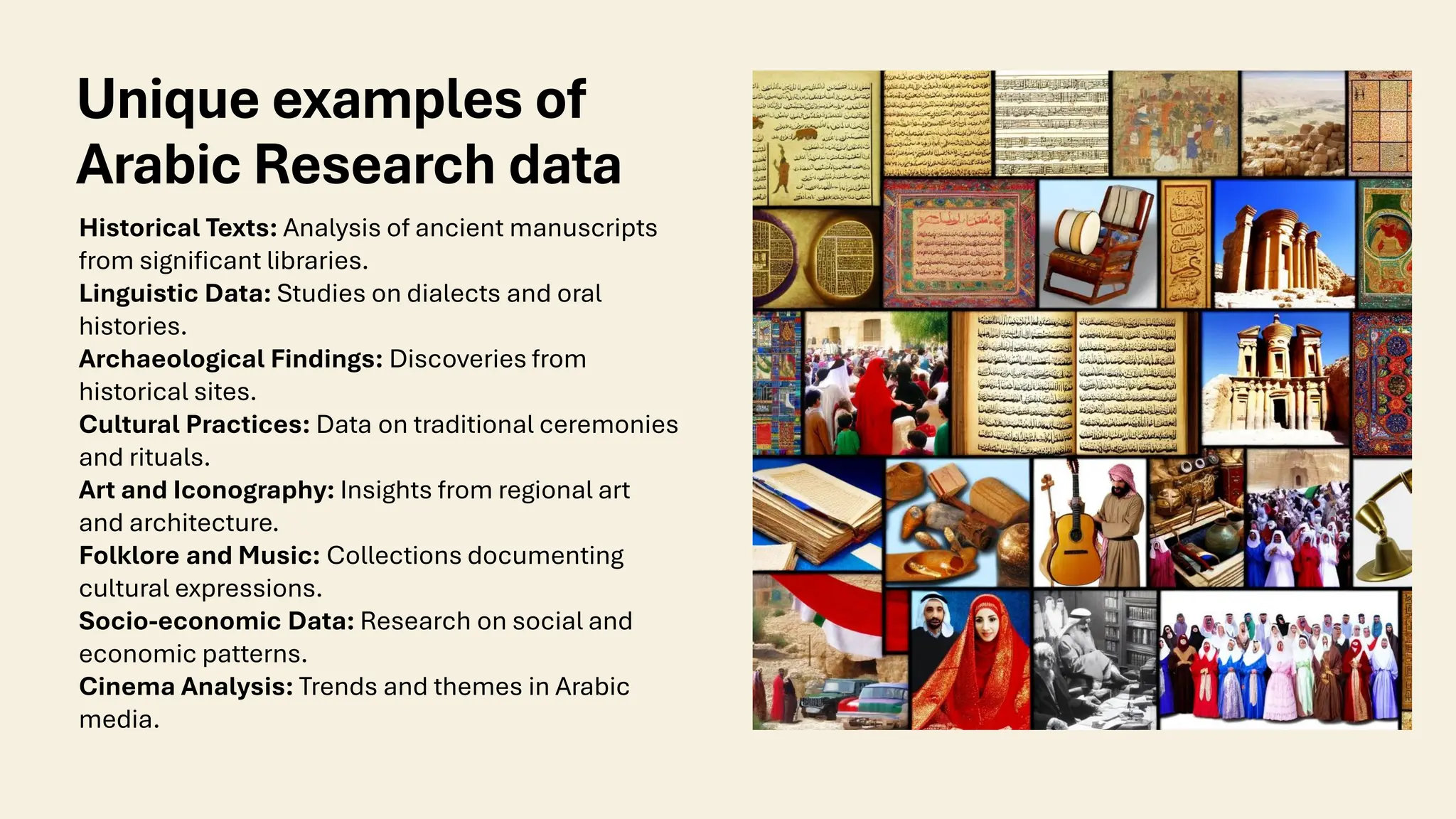
The FAIR principles ensure that data is
Findable, Accessible, Interoperable, and
Reusable, promoting open and efficient
sharing of digital research outputs.
Arabic Open Research Data has a very
important role in Digital Humanities.
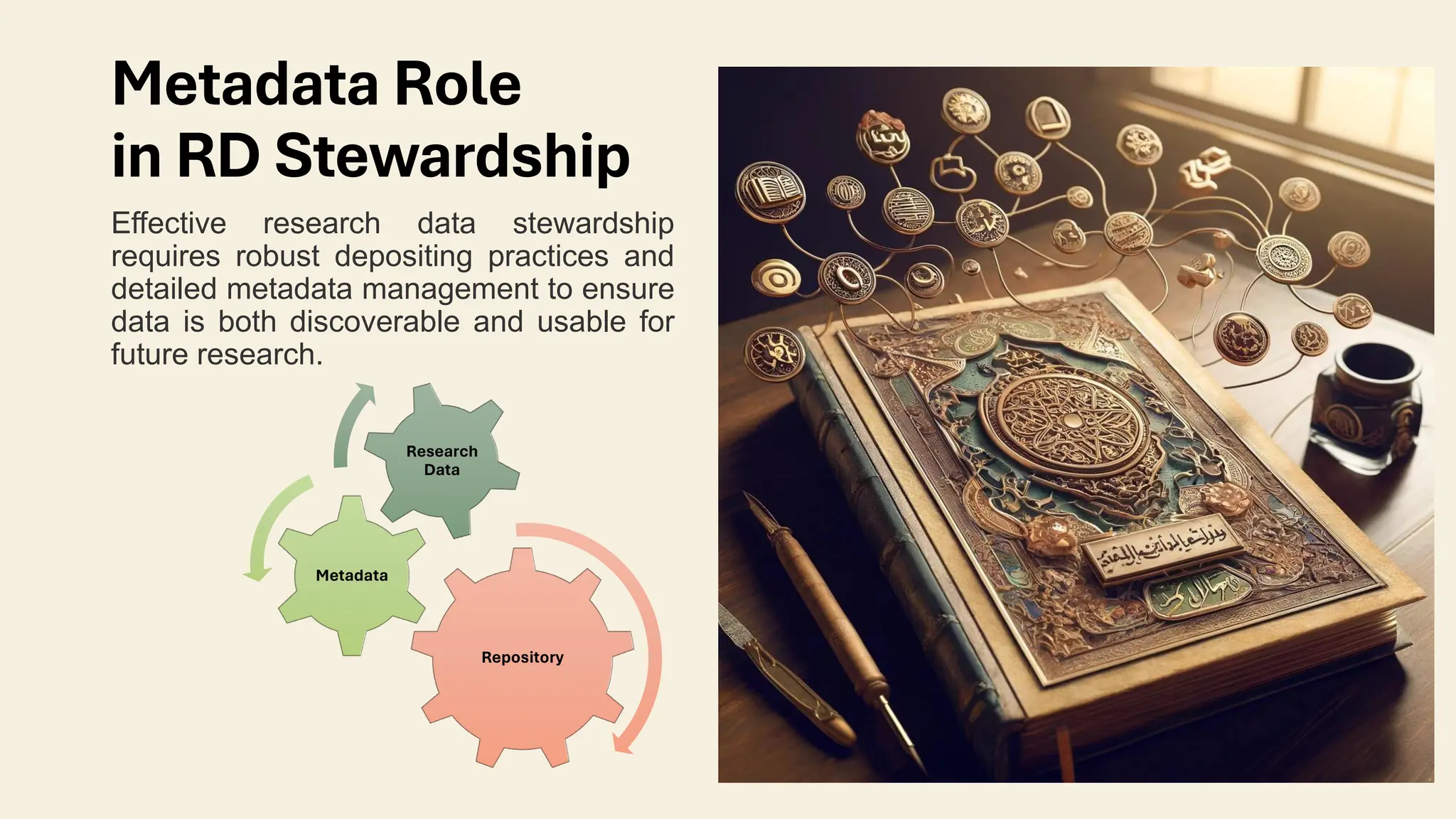
Metadata Role
in RD Stewardship
Effective research data stewardship
requires robust depositing practices and
detailed metadata management to ensure
data is both discoverable and usable for
future research.
Repository
Metadata
Research
Data
Challenges of Arabic
RD Metadata
• Original Description Preservation: It’s essential to
keep original Arabic descriptions to maintain cultural
and historical accuracy, but this can be complex due to
dialect variations and the intricacies of the script.
• Metadata Translation: Translating Arabic metadata into
other languages poses risks of misinterpretation or
oversimplification, potentially leading to critical
information loss.
• Global Accessibility: Balancing local specifics with
global understandability in metadata is challenging,
requiring adjustments to ensure clarity for an
international audience.
• Technical Integration: Incorporating Arabic metadata
into predominantly Latin-script systems involves
overcoming right-to-left text orientation and script
cursive nature.
• Metadata Standards Harmonization: Developing
standards that accommodate Arabic specifics while
aligning with international norms is complex, especially
with differing transliteration schemes and cataloging
practices.
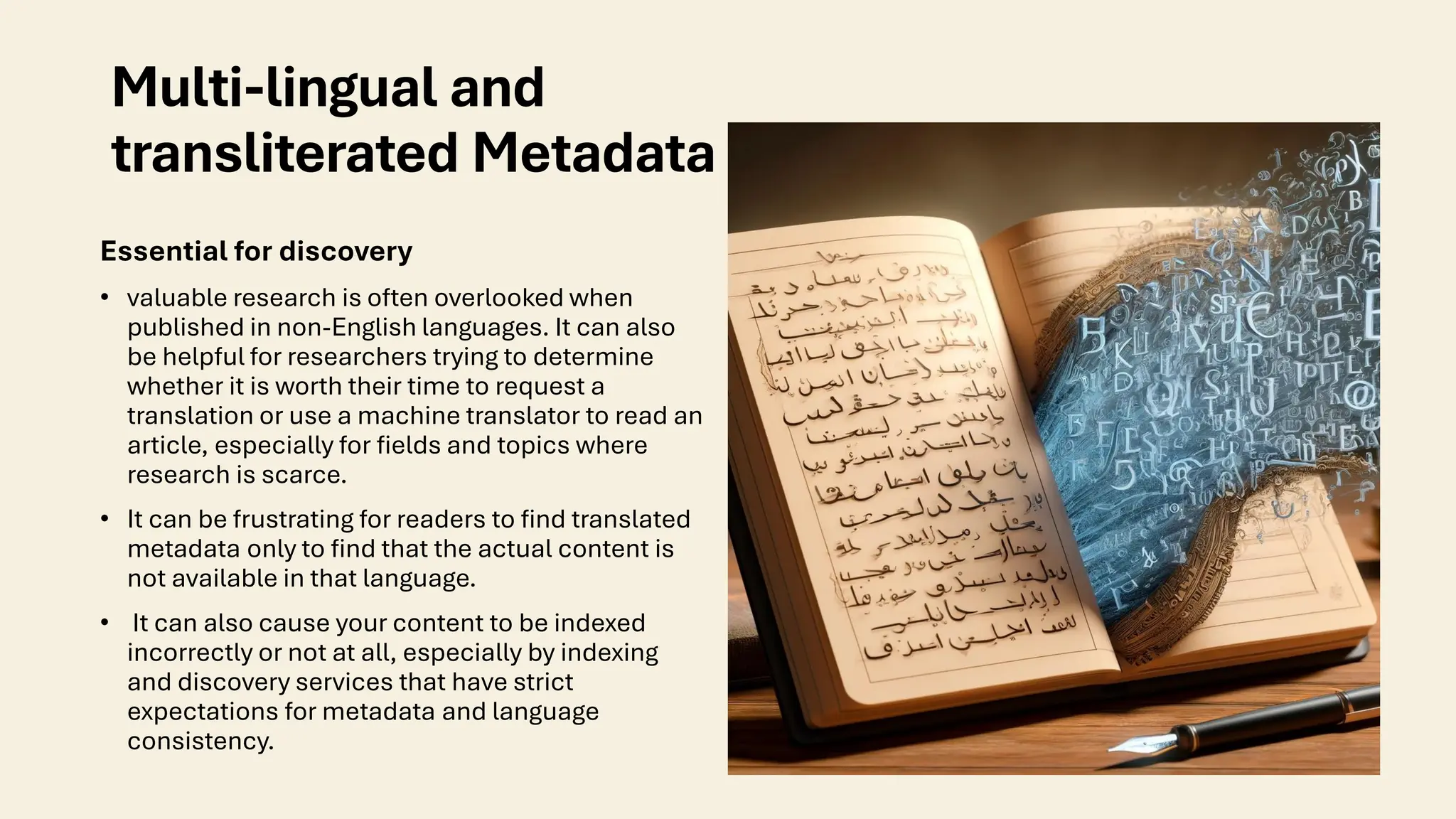
Multi-lingual and
transliterated Metadata
Essential for discovery
• valuable research is often overlooked when
published in non-English languages. It can also
be helpful for researchers trying to determine
whether it is worth their time to request a
translation or use a machine translator to read an
article, especially for fields and topics where
research is scarce.
• It can be frustrating for readers to find translated
metadata only to find that the actual content is
not available in that language.
• It can also cause your content to be indexed
incorrectly or not at all, especially by indexing
and discovery services that have strict
expectations for metadata and language
consistency.
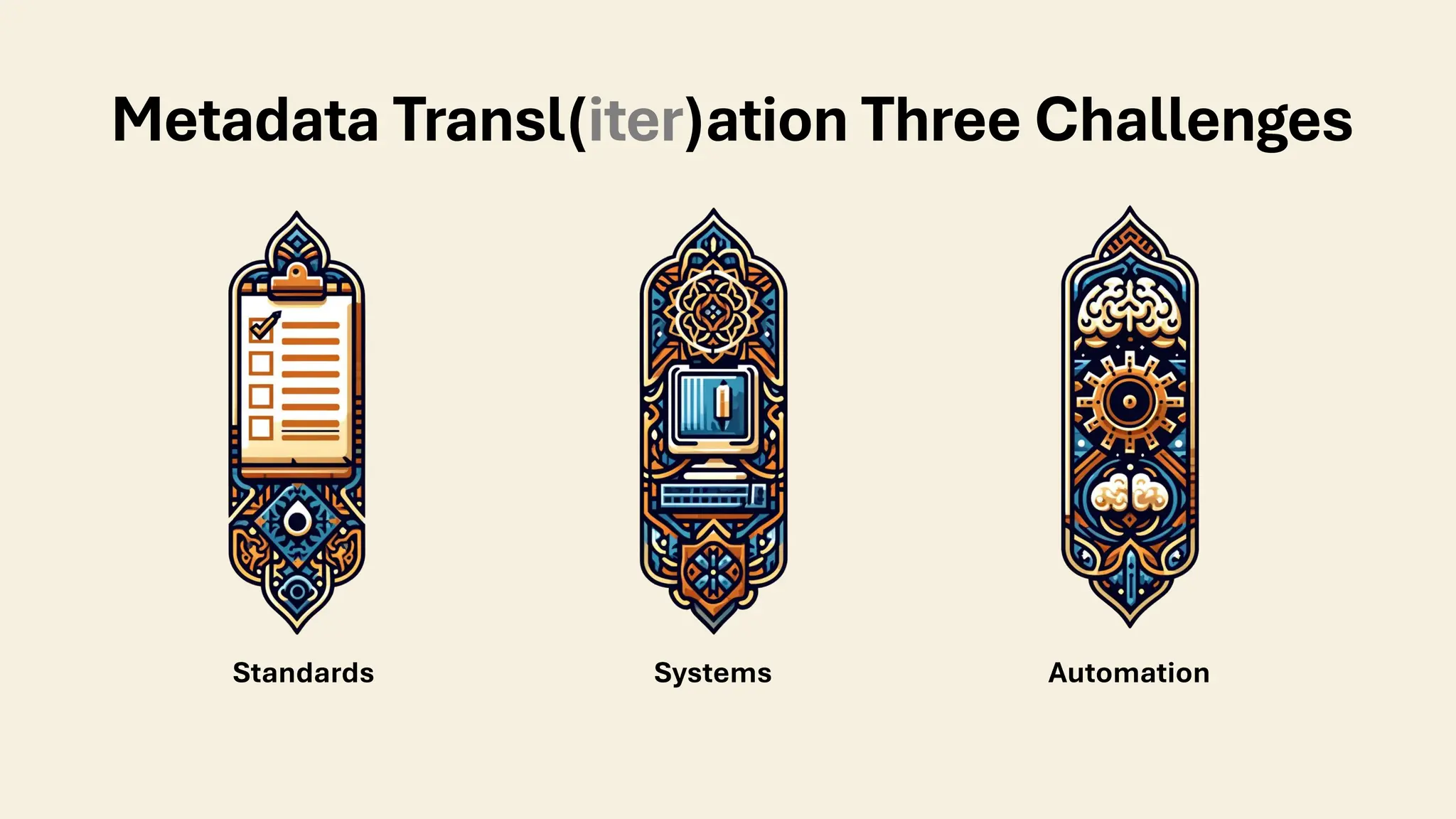
Metadata Transl(iter)ation Three Challenges
Standards Systems Automation
Research Data Metadata standards
• Metadata standards
• Practices for multi-lingual description.
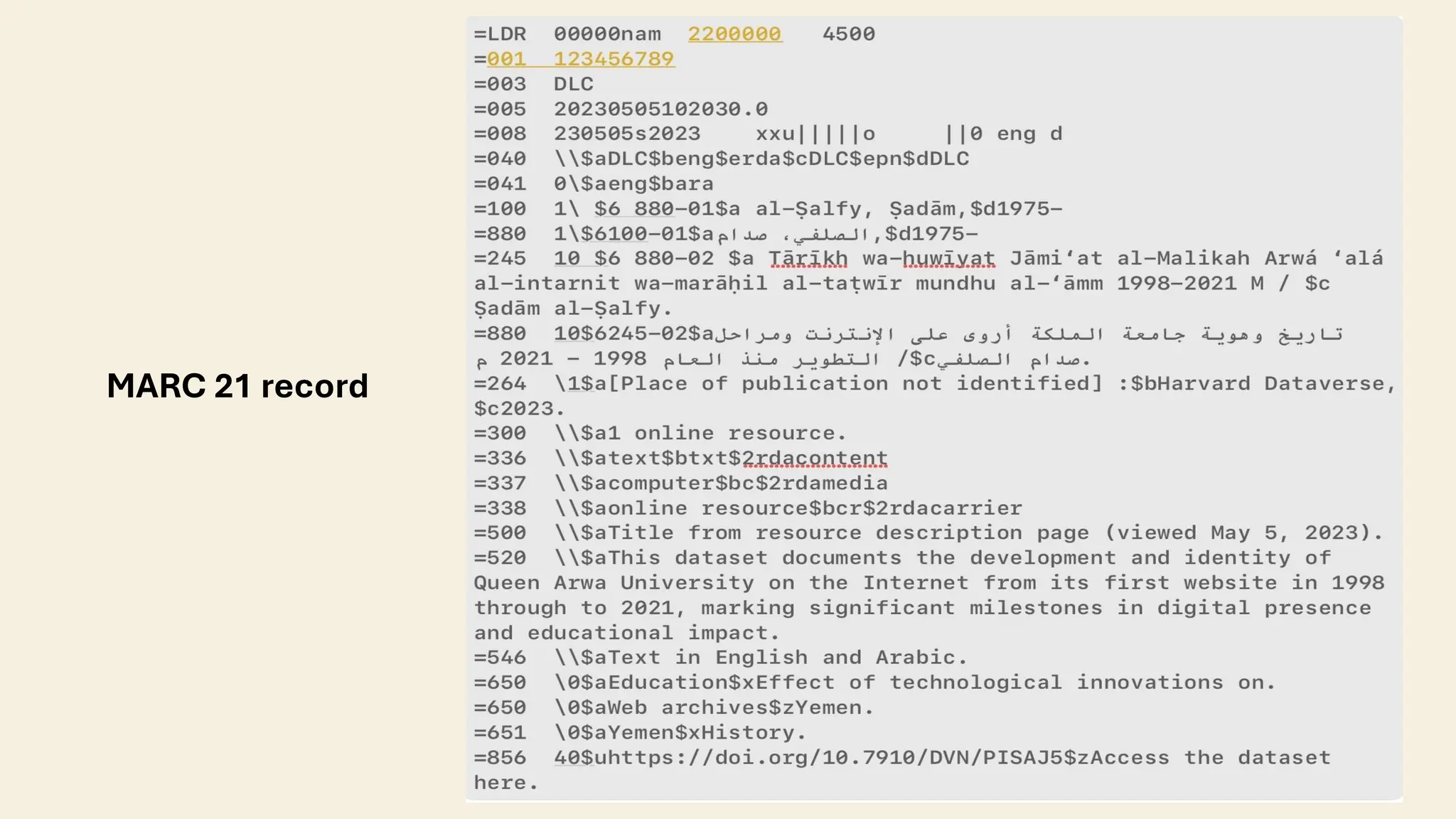
MARC 21 record
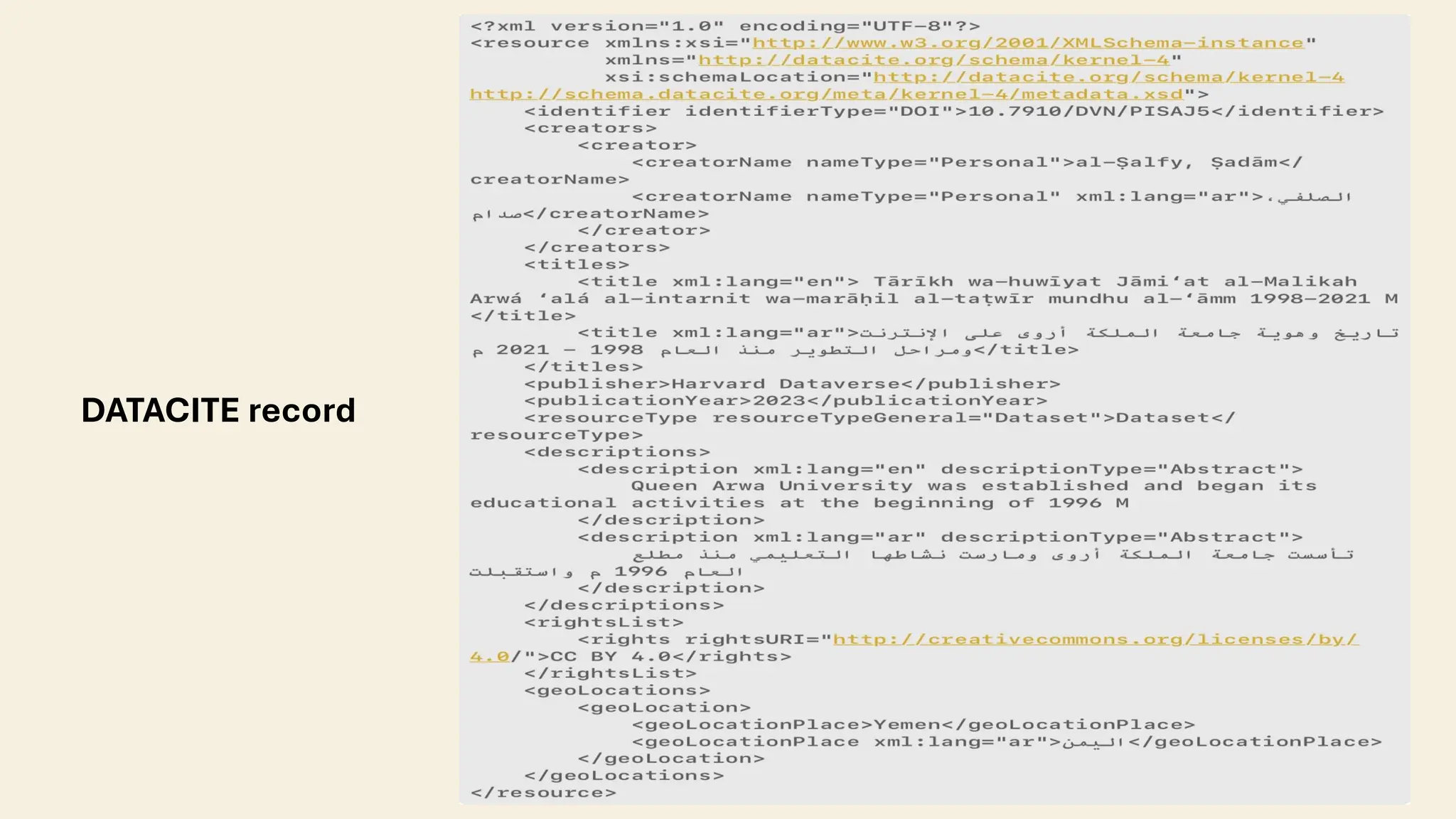
DATACITE record
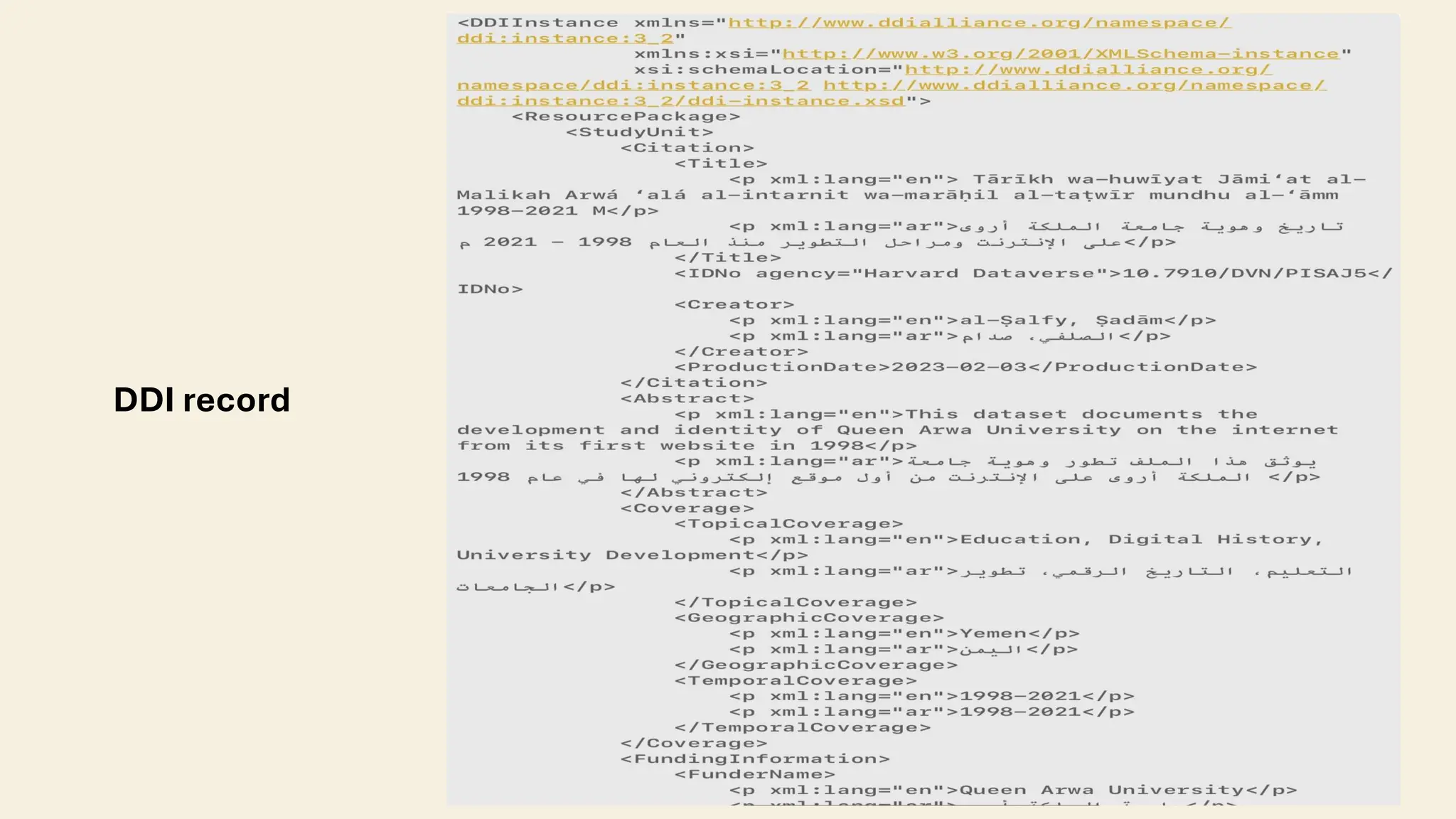
DDI record
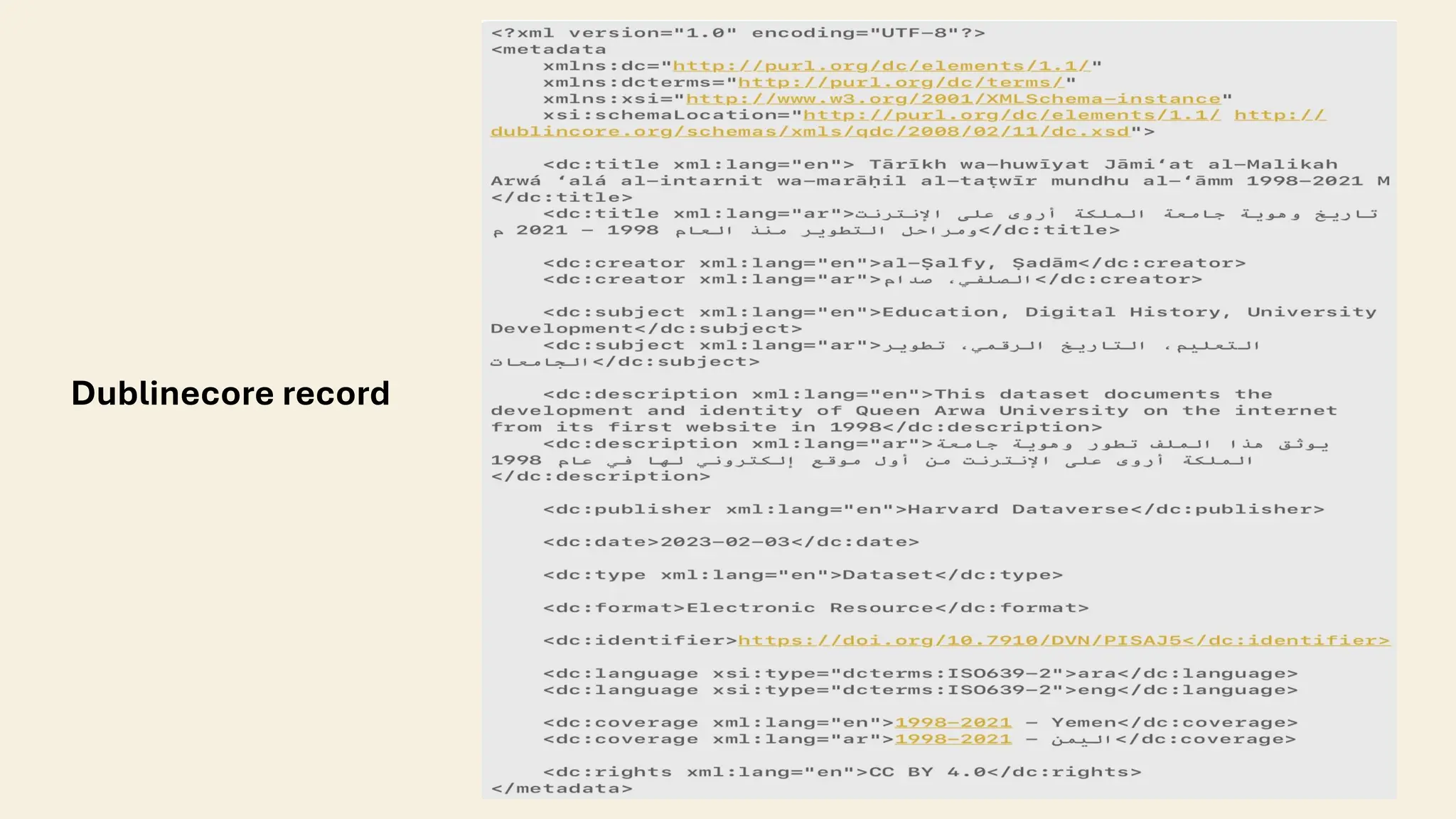
Dublinecore record
Research data Repository systems
• Current situation of software to support transliterated data
• Supporting the right-to-left
• Unicode
• Indexing and Searching
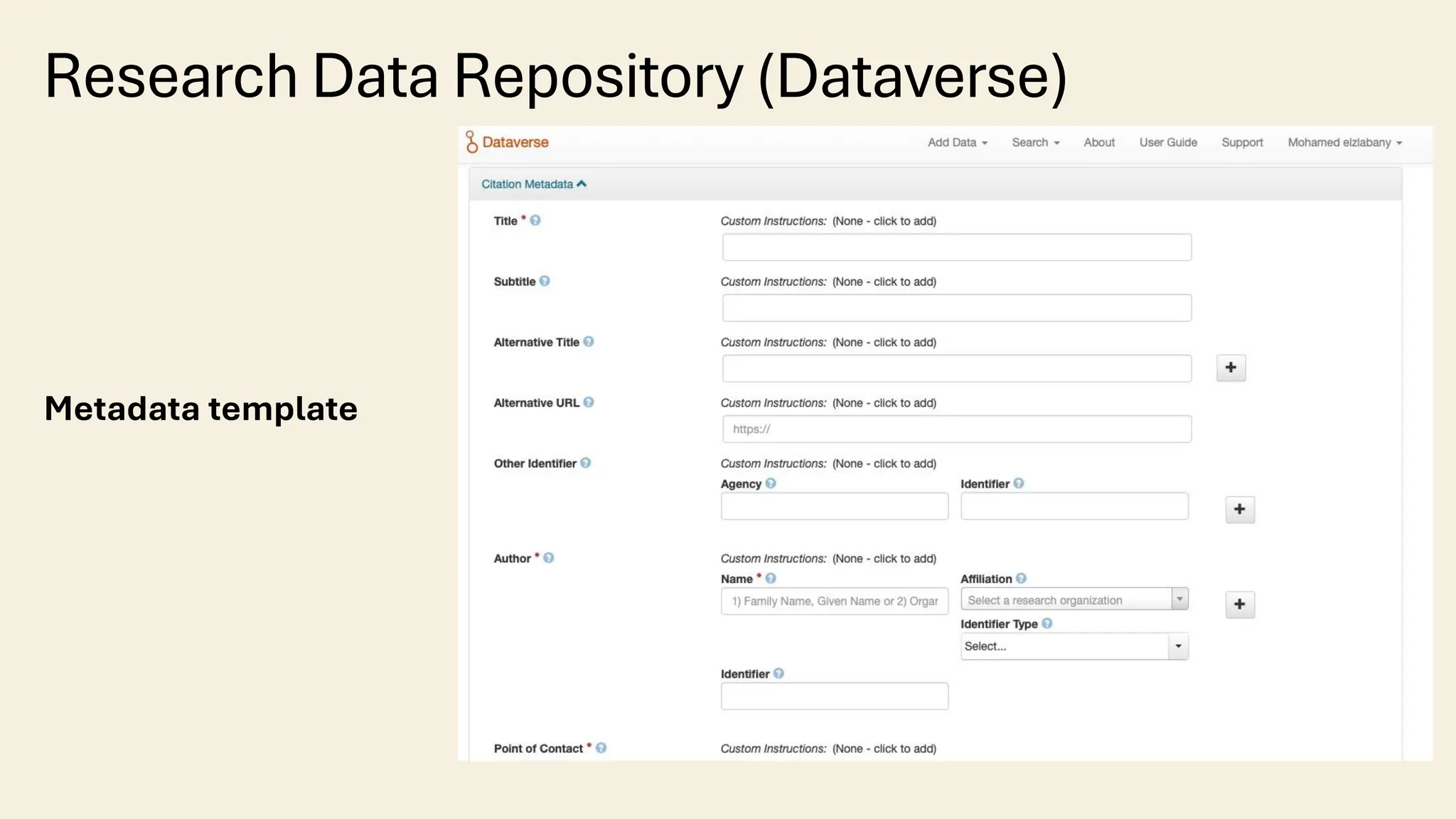
Research Data Repository (Dataverse)
Metadata template
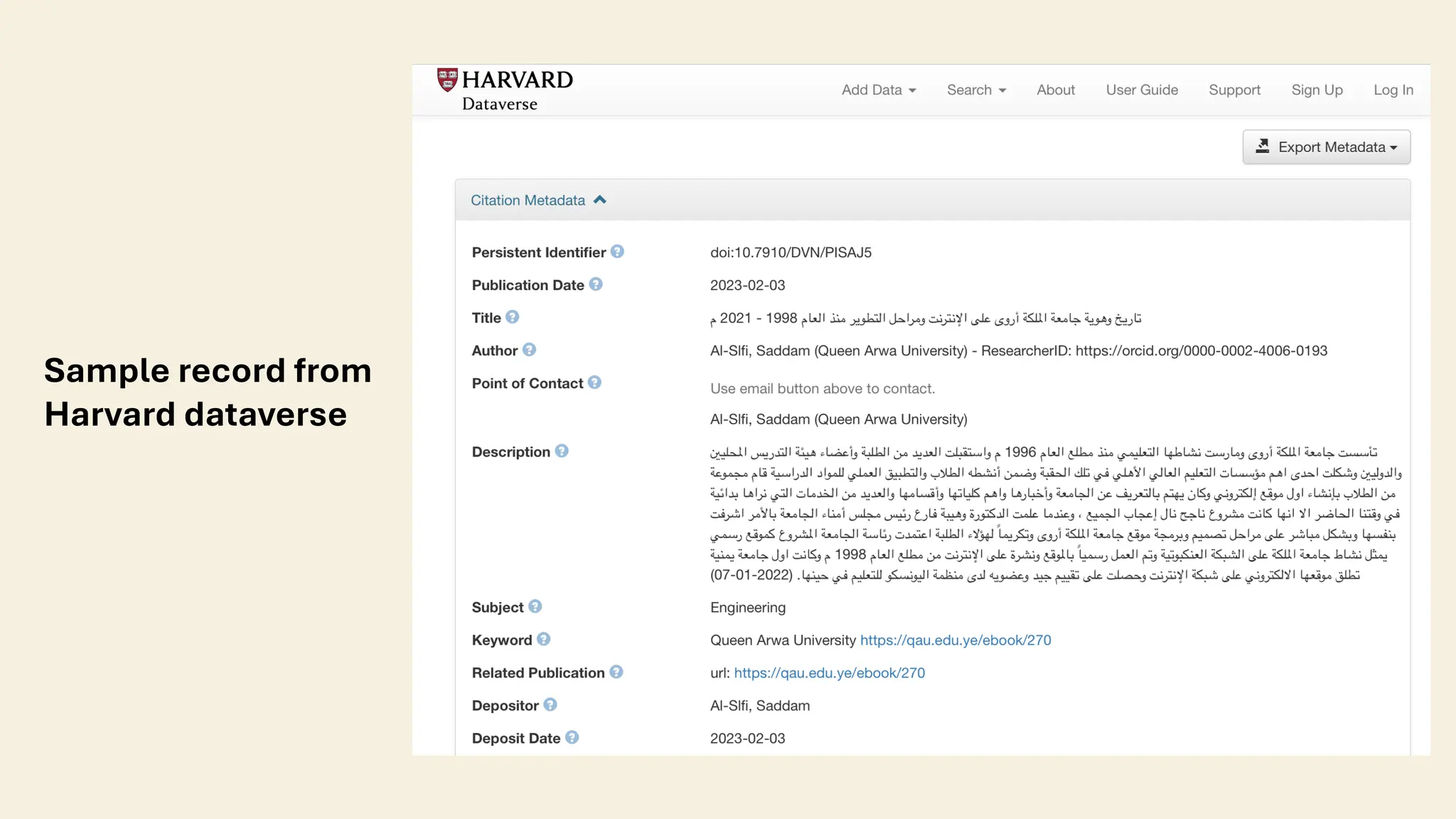
Sample record from
Harvard dataverse
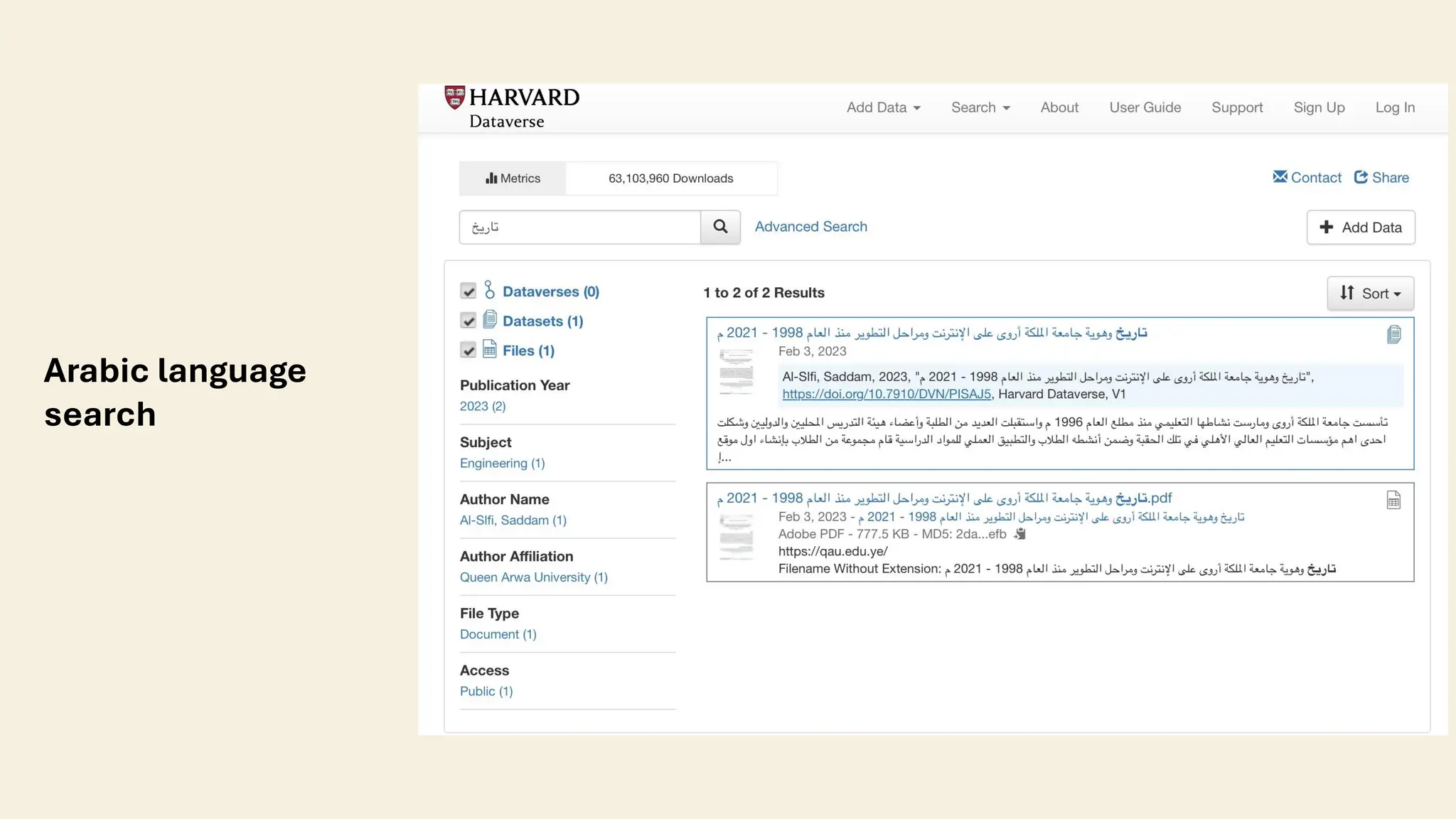
Arabic language
search
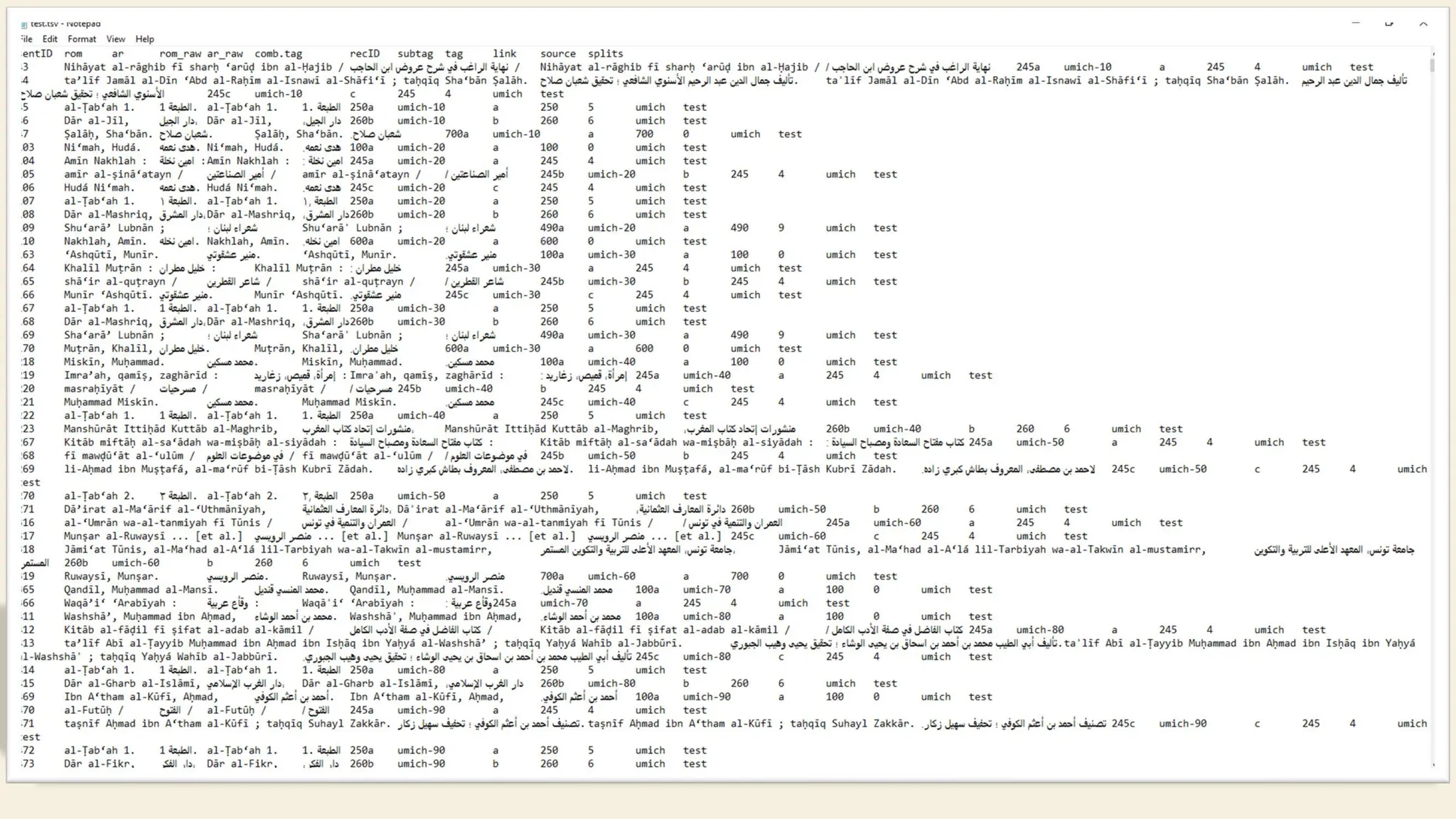
Automatic Transliteration challenge
• current practices of (ALA-DIN 31635-ISO 233)
• Transliteration from Roman to Arabic (tools)
• Transliteration from Arabic to Roman (challenges, tools)
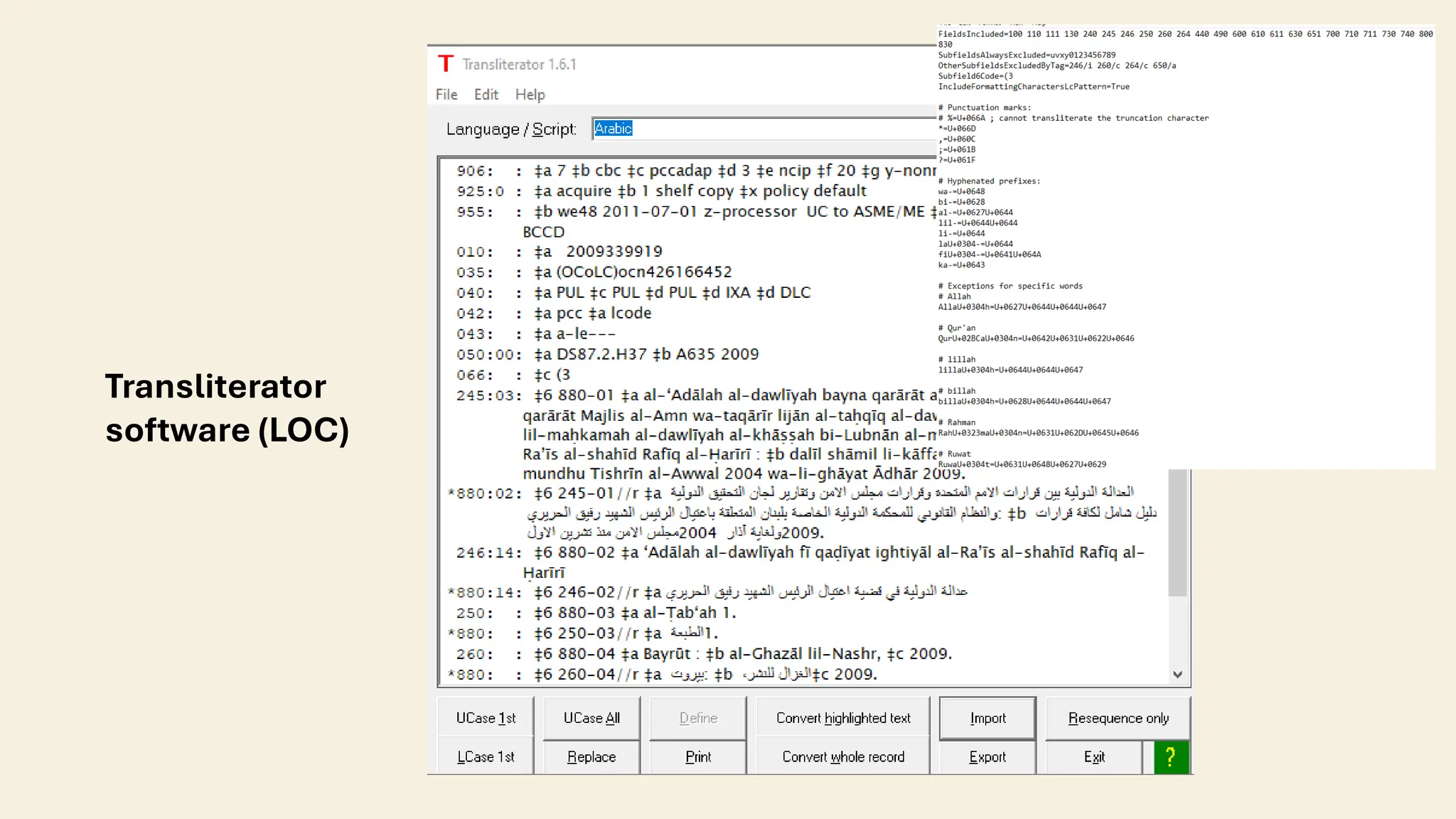
Transliterator
software (LOC)
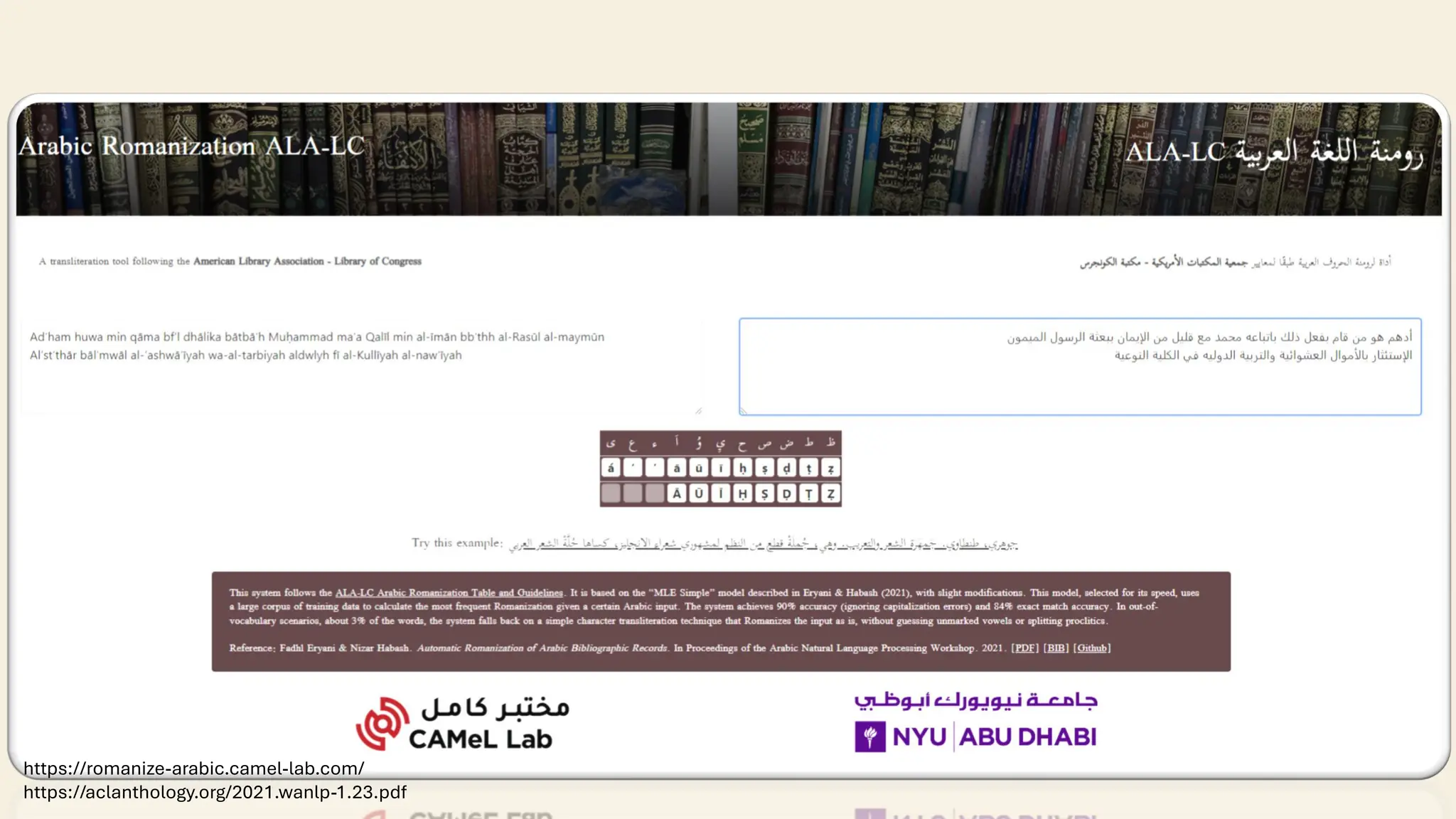
https://romanize-arabic.camel-lab.com/
https://aclanthology.org/2021.wanlp-1.23.pdf
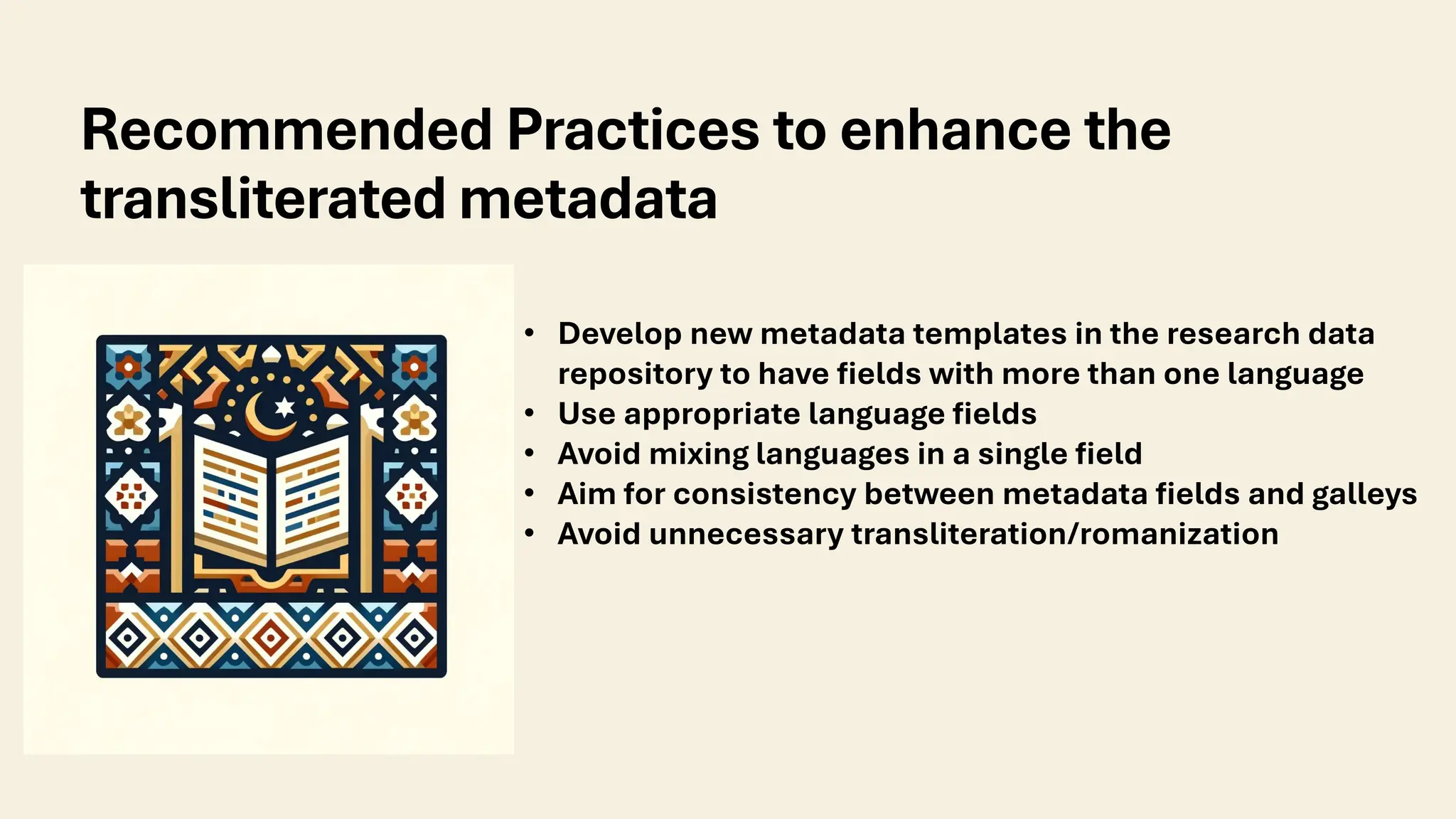
Recommended Practices to enhance the
transliterated metadata
• Develop new metadata templates in the research data
repository to have fields with more than one language
• Use appropriate language fields
• Avoid mixing languages in a single field
• Aim for consistency between metadata fields and galleys
• Avoid unnecessary transliteration/romanization
mh_zalabany@hotmail.com
www.linkedin.com/in/mohamedelzalabany

The Significance of Transliteration Enhancing

  • 1.
    The Significance ofTransliteration in Enhancing Accessibility and Exchange of Arabic Research Data Mohamed El-Zalabany M.A. Cataloging Librarian - Library of Congress – Cairo Office Ph.D Candidate, Information Studies- Cairo University mh_zalabany@hotmail.com www.linkedin.com/in/mohamedelzalabany
  • 2.
    Research Data on ArabicContent Research data is: “the recorded factual material commonly accepted in the scientific community as necessary to validate research findings." Research data on Arabic content, heritage, and culture is essential for global research, offering unique insights that enrich our understanding of societal dynamics, historical evolution, and cultural diversity, thereby promoting international collaboration and understanding.
  • 3.
    Unique examples of ArabicResearch data Historical Texts: Analysis of ancient manuscripts from significant libraries. Linguistic Data: Studies on dialects and oral histories. Archaeological Findings: Discoveries from historical sites. Cultural Practices: Data on traditional ceremonies and rituals. Art and Iconography: Insights from regional art and architecture. Folklore and Music: Collections documenting cultural expressions. Socio-economic Data: Research on social and economic patterns. Cinema Analysis: Trends and themes in Arabic media.
  • 4.
    Towards FAIR Arabic ResearchData The FAIR principles ensure that data is Findable, Accessible, Interoperable, and Reusable, promoting open and efficient sharing of digital research outputs. Arabic Open Research Data has a very important role in Digital Humanities.
  • 5.
    Metadata Role in RDStewardship Effective research data stewardship requires robust depositing practices and detailed metadata management to ensure data is both discoverable and usable for future research. Repository Metadata Research Data
  • 6.
    Challenges of Arabic RDMetadata • Original Description Preservation: It’s essential to keep original Arabic descriptions to maintain cultural and historical accuracy, but this can be complex due to dialect variations and the intricacies of the script. • Metadata Translation: Translating Arabic metadata into other languages poses risks of misinterpretation or oversimplification, potentially leading to critical information loss. • Global Accessibility: Balancing local specifics with global understandability in metadata is challenging, requiring adjustments to ensure clarity for an international audience. • Technical Integration: Incorporating Arabic metadata into predominantly Latin-script systems involves overcoming right-to-left text orientation and script cursive nature. • Metadata Standards Harmonization: Developing standards that accommodate Arabic specifics while aligning with international norms is complex, especially with differing transliteration schemes and cataloging practices.
  • 7.
    Multi-lingual and transliterated Metadata Essentialfor discovery • valuable research is often overlooked when published in non-English languages. It can also be helpful for researchers trying to determine whether it is worth their time to request a translation or use a machine translator to read an article, especially for fields and topics where research is scarce. • It can be frustrating for readers to find translated metadata only to find that the actual content is not available in that language. • It can also cause your content to be indexed incorrectly or not at all, especially by indexing and discovery services that have strict expectations for metadata and language consistency.
  • 8.
    Metadata Transl(iter)ation ThreeChallenges Standards Systems Automation
  • 9.
    Research Data Metadatastandards • Metadata standards • Practices for multi-lingual description.
  • 10.
  • 11.
  • 12.
  • 13.
  • 14.
    Research data Repositorysystems • Current situation of software to support transliterated data • Supporting the right-to-left • Unicode • Indexing and Searching
  • 15.
    Research Data Repository(Dataverse) Metadata template
  • 16.
  • 17.
  • 18.
    Automatic Transliteration challenge •current practices of (ALA-DIN 31635-ISO 233) • Transliteration from Roman to Arabic (tools) • Transliteration from Arabic to Roman (challenges, tools)
  • 19.
  • 20.
  • 22.
    Recommended Practices toenhance the transliterated metadata • Develop new metadata templates in the research data repository to have fields with more than one language • Use appropriate language fields • Avoid mixing languages in a single field • Aim for consistency between metadata fields and galleys • Avoid unnecessary transliteration/romanization
  • 23.