“RESERVOIR ENGINEERING”
MIDDLE EAST TECHNICAL UNIVERSITY
Spring 2008
Department of Petroleum and Natural Gas Engineering
Dr. Mahmut Parlaktuna
Res. Assist. Sevtaç Bülbül
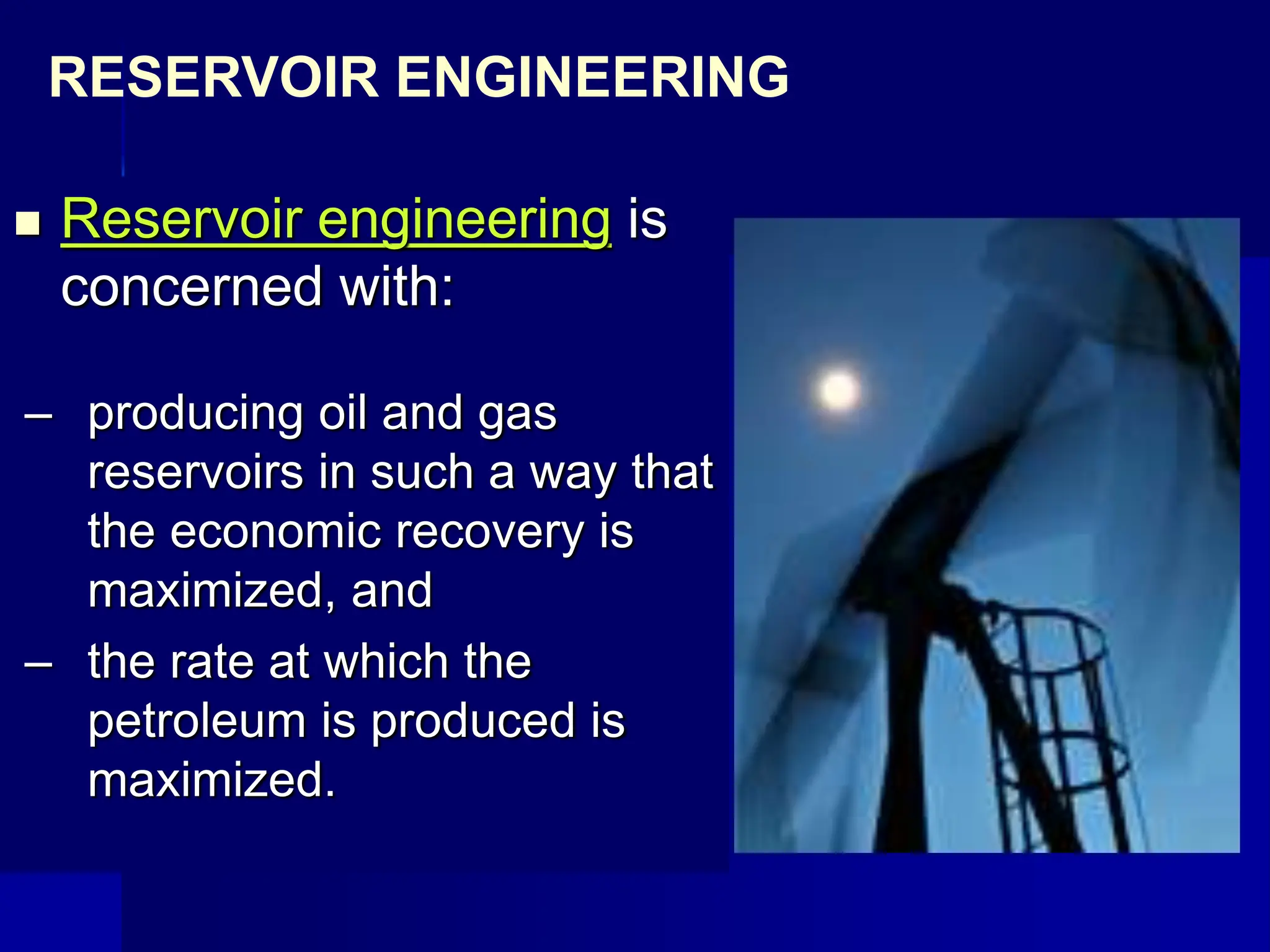
 A reservoir is formed of
one (or more) subsurface
rock formations,
containing liquid and/ or
gaseous hydrocarbons, of
sedimentary origin.
 The reservoir rock is
porous and permeable
and bounded by
impermeable barriers,
which trap hydrocarbons.
RESERVOIR ENGINEERING
A cross-section of a typical
hydrocarbon reservoir
(R. Cosse, Basics of Reservoir
Engineering, 1993)
 Reservoir engineering is
concerned with:
– producing oil and gas
reservoirs in such a way that
the economic recovery is
maximized, and
– the rate at which the
petroleum is produced is
maximized.
RESERVOIR ENGINEERING
 Reservoir engineer deals with:
– Control of amount of gas & water produced with oil
– Proper placement of wells
– Use of proper distance between wells
– Injection of water or other fluids into the reservoir
and many other means are used to help to
maximize the oil.
RESERVOIR ENGINEERING
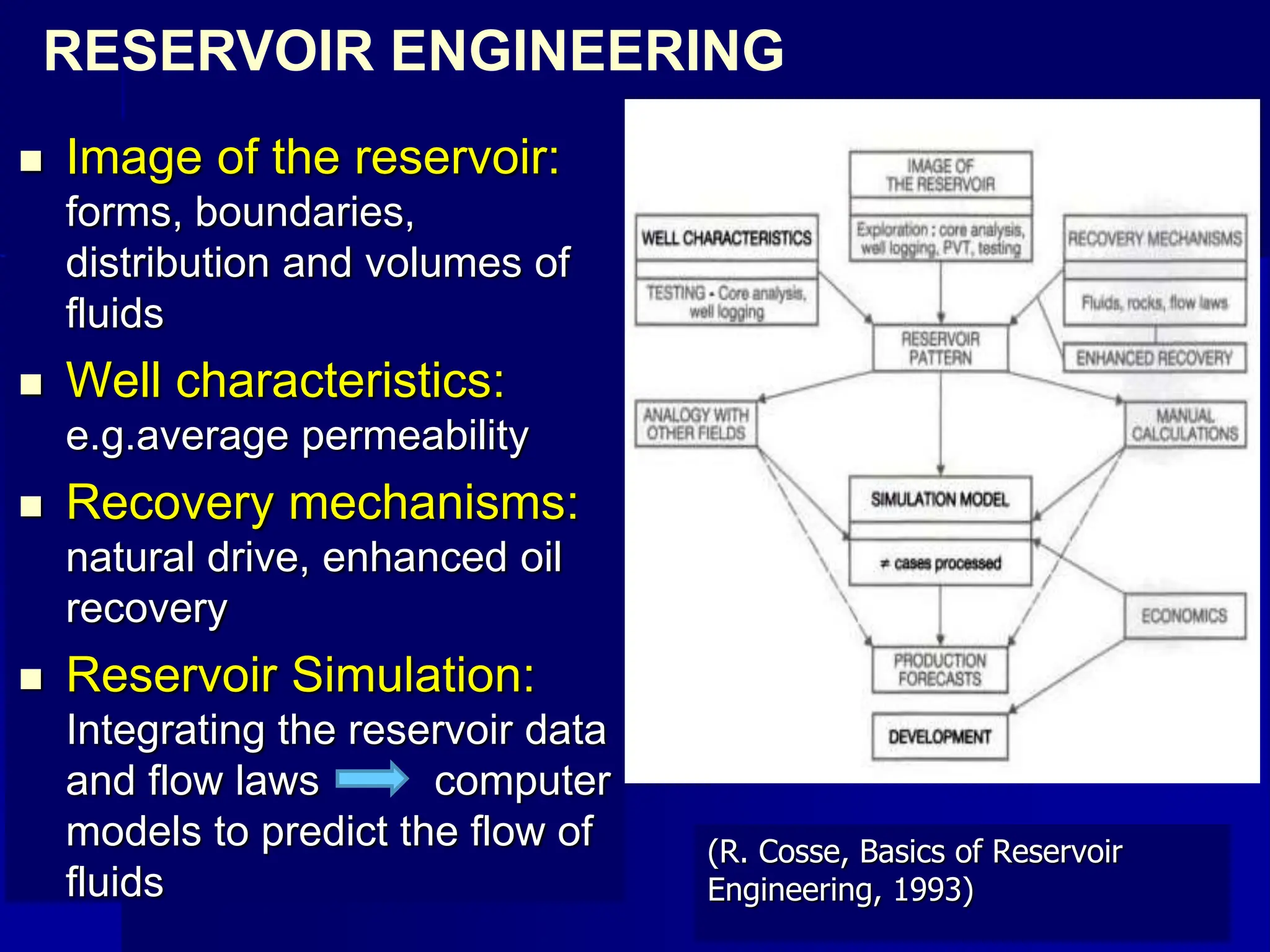
 Image of the reservoir:
forms, boundaries,
distribution and volumes of
fluids
 Well characteristics:
e.g.average permeability
 Recovery mechanisms:
natural drive, enhanced oil
recovery
 Reservoir Simulation:
Integrating the reservoir data
and flow laws computer
models to predict the flow of
fluids
RESERVOIR ENGINEERING
(R. Cosse, Basics of Reservoir
Engineering, 1993)
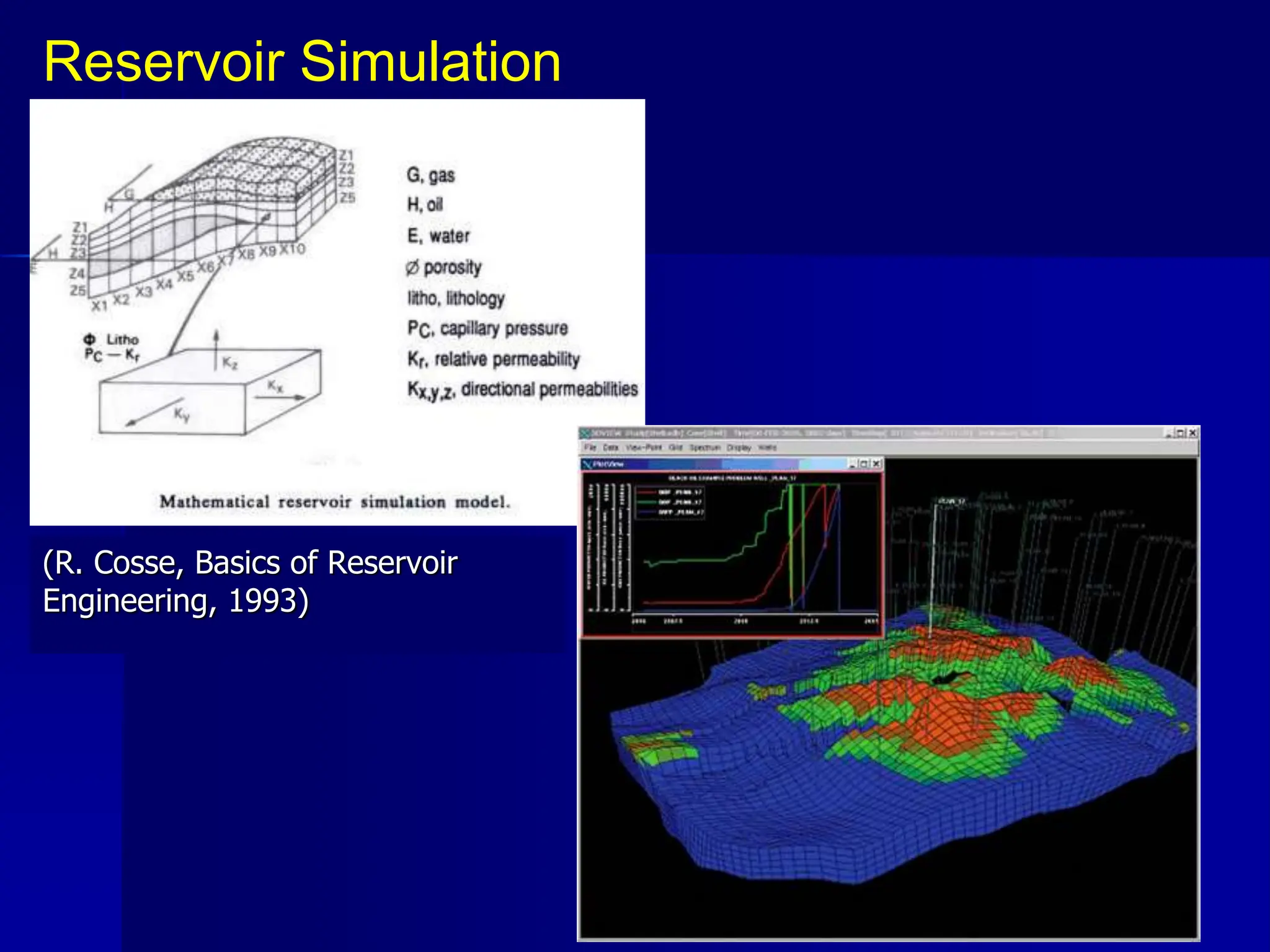
Reservoir Simulation
(R. Cosse, Basics of Reservoir
Engineering, 1993)
 After a well has used up the reservoir's natural
drives and gas lift or pumps have recovered all the
hydrocarbons possible, statistics show that 25 to
95% of the original oil in the reservoir may still be
there.
 This amount of oil can be worth recovering if
prices are high enough.
Enhanced Oil Recovery (EOR)
Enhanced Oil Recovery;
– is the recovery of oil from a reservoir using
means other than using the natural reservoir
pressure.
– generally results in increased amounts of
produced oil
– Its purpose is not only to restore formation
pressure, but also to improve oil displacement or
fluid flow in the reservoir.
Enhanced Oil Recovery (EOR)
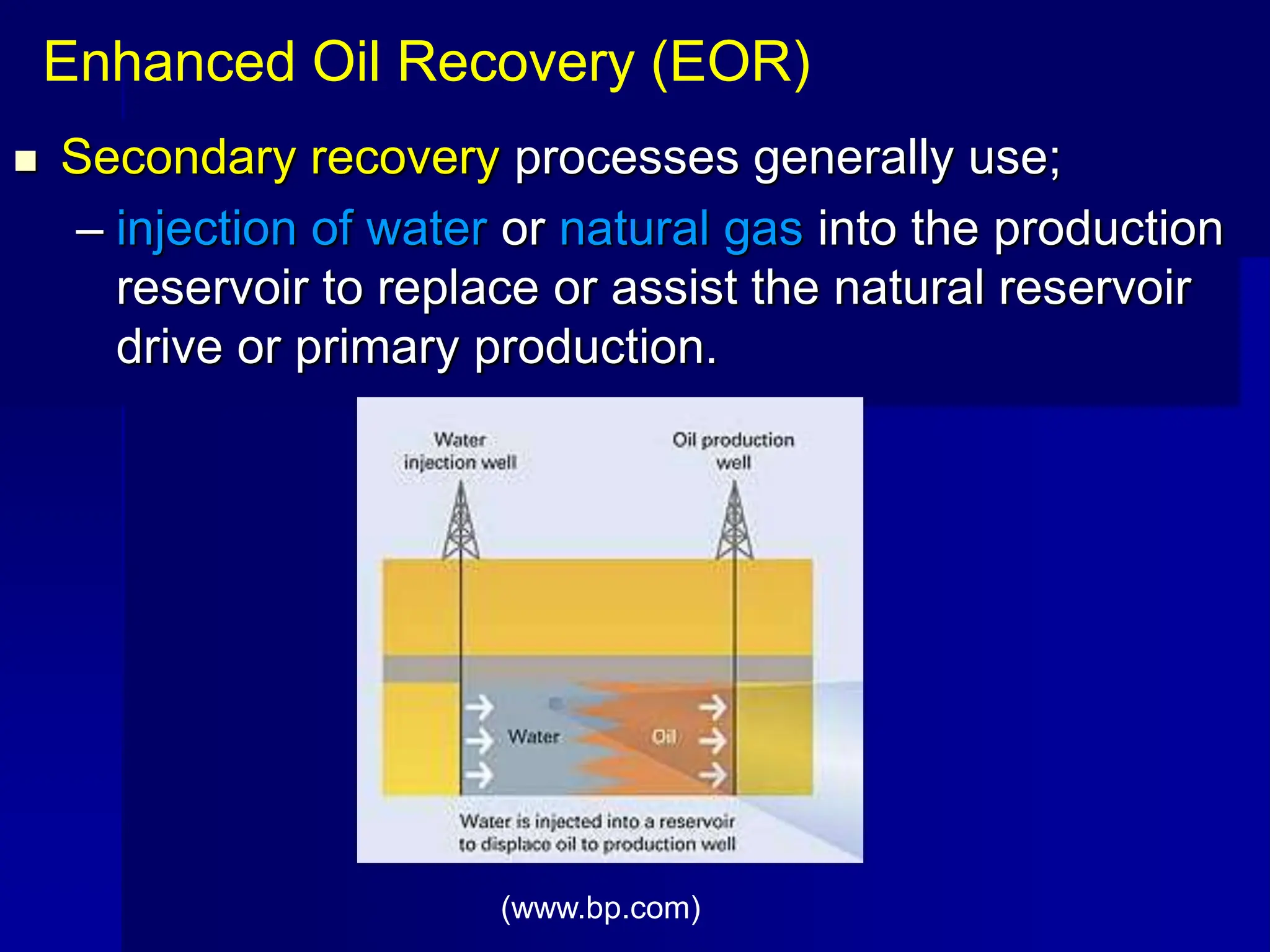
 Secondary recovery processes generally use;
– injection of water or natural gas into the production
reservoir to replace or assist the natural reservoir
drive or primary production.
Enhanced Oil Recovery (EOR)
(www.bp.com)
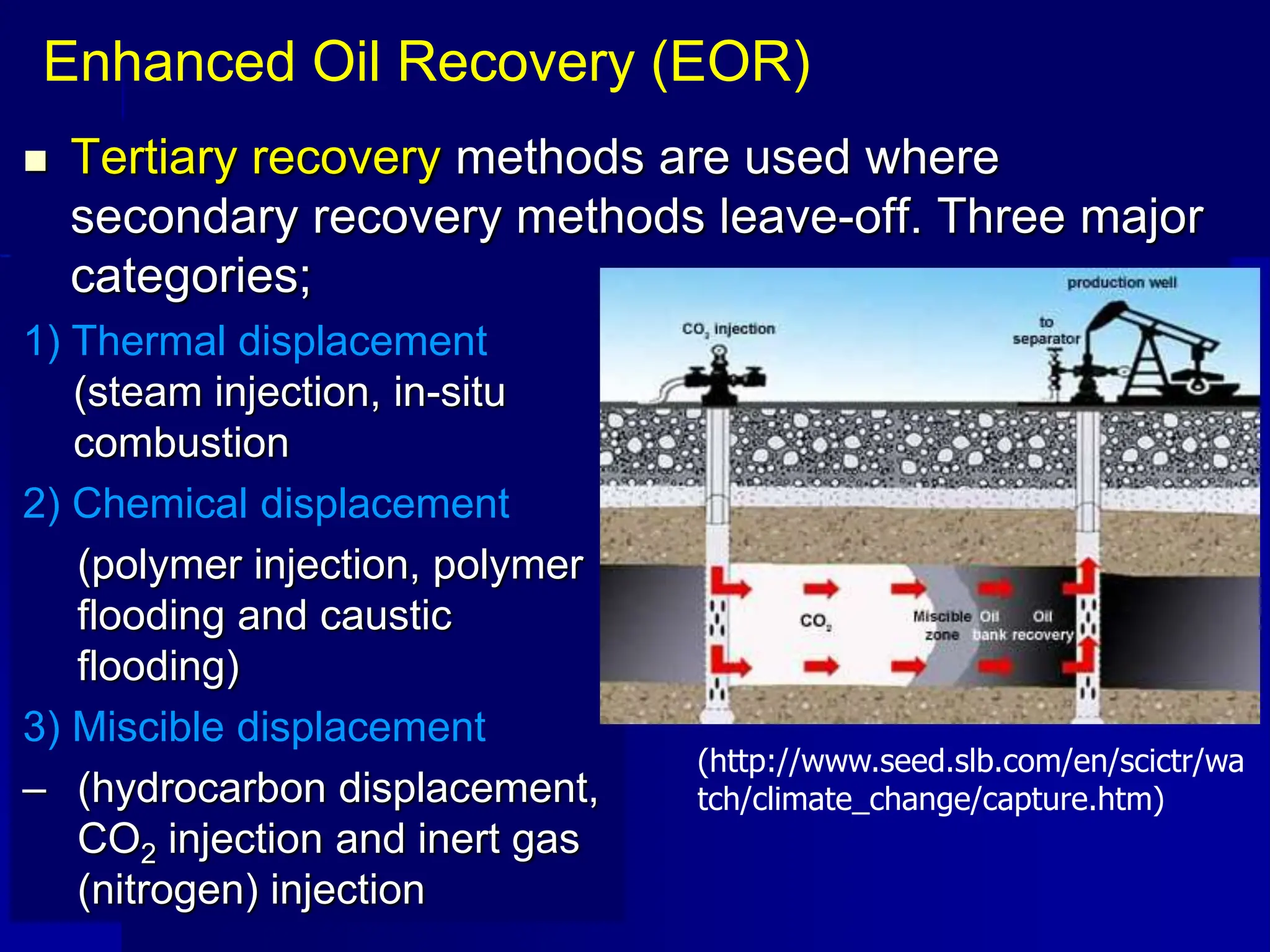
 Tertiary recovery methods are used where
secondary recovery methods leave-off. Three major
categories;
Enhanced Oil Recovery (EOR)
(http://www.seed.slb.com/en/scictr/wa
tch/climate_change/capture.htm)
1) Thermal displacement
(steam injection, in-situ
combustion
2) Chemical displacement
(polymer injection, polymer
flooding and caustic
flooding)
3) Miscible displacement
– (hydrocarbon displacement,
CO2 injection and inert gas
(nitrogen) injection
 Oil and gas are not usually salable as they come
from the wellhead.
 Typically, a well stream is a high-velocity, turbulent,
constantly expanding mixture of hydrocarbon liquids
and gases mixed with
– water and water vapor,
– solids such as sand and shale sediments,
– sometimes contaminants such as carbon dioxide and
hydrogen sulfide.
 Several steps are necessary to get oil or gas ready
to transport to its next stop
Surface Handling of Well Fluids
 The well stream is first passed through a series of
separating and treating devices;
– to remove the sediments and water
– to separate the liquids from the gases,
– to treat the emulsions for further removal of water, solids,
and undesirable contaminants.
 The oil is then stabilized, stored, and tested for
purity. The gas is tested for hydrocarbon content
and impurities, and gas pressure is adjusted to
pipeline or other transport specifications.
Surface Handling of Well Fluids
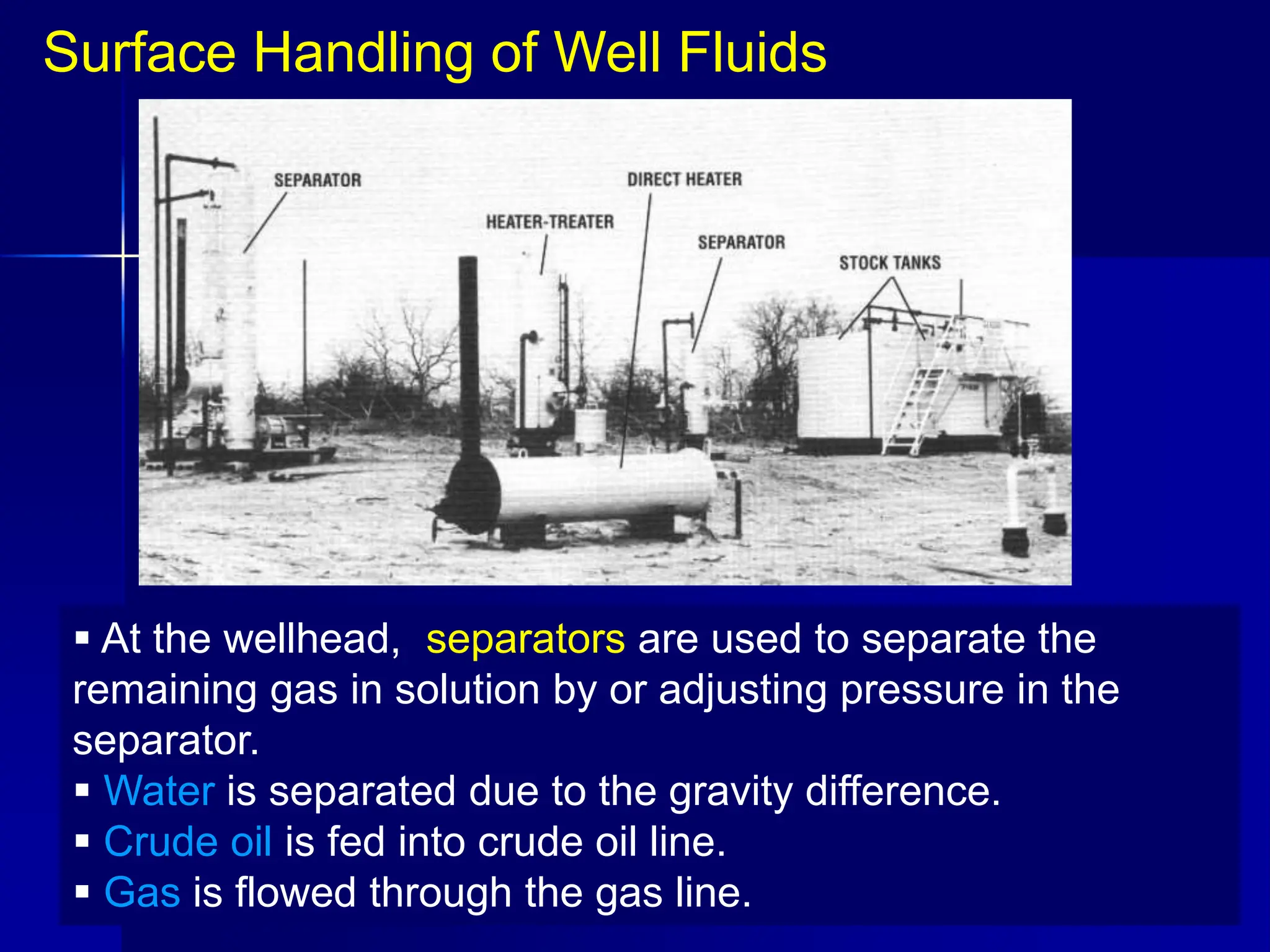
 At the wellhead, separators are used to separate the
remaining gas in solution by or adjusting pressure in the
separator.
 Water is separated due to the gravity difference.
 Crude oil is fed into crude oil line.
 Gas is flowed through the gas line.
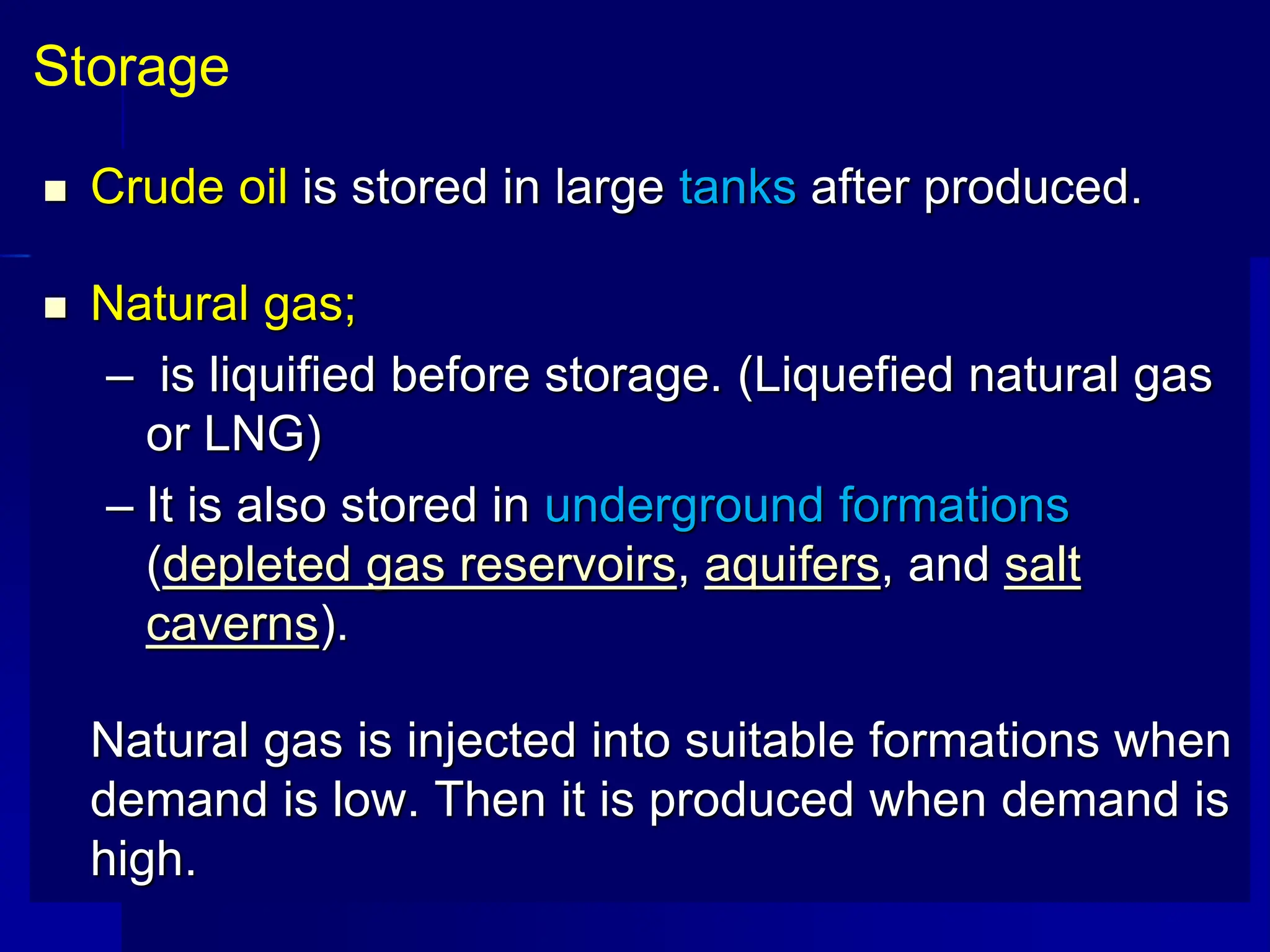
 Crude oil is stored in large tanks after produced.
 Natural gas;
– is liquified before storage. (Liquefied natural gas
or LNG)
– It is also stored in underground formations
(depleted gas reservoirs, aquifers, and salt
caverns).
Natural gas is injected into suitable formations when
demand is low. Then it is produced when demand is
high.
Storage
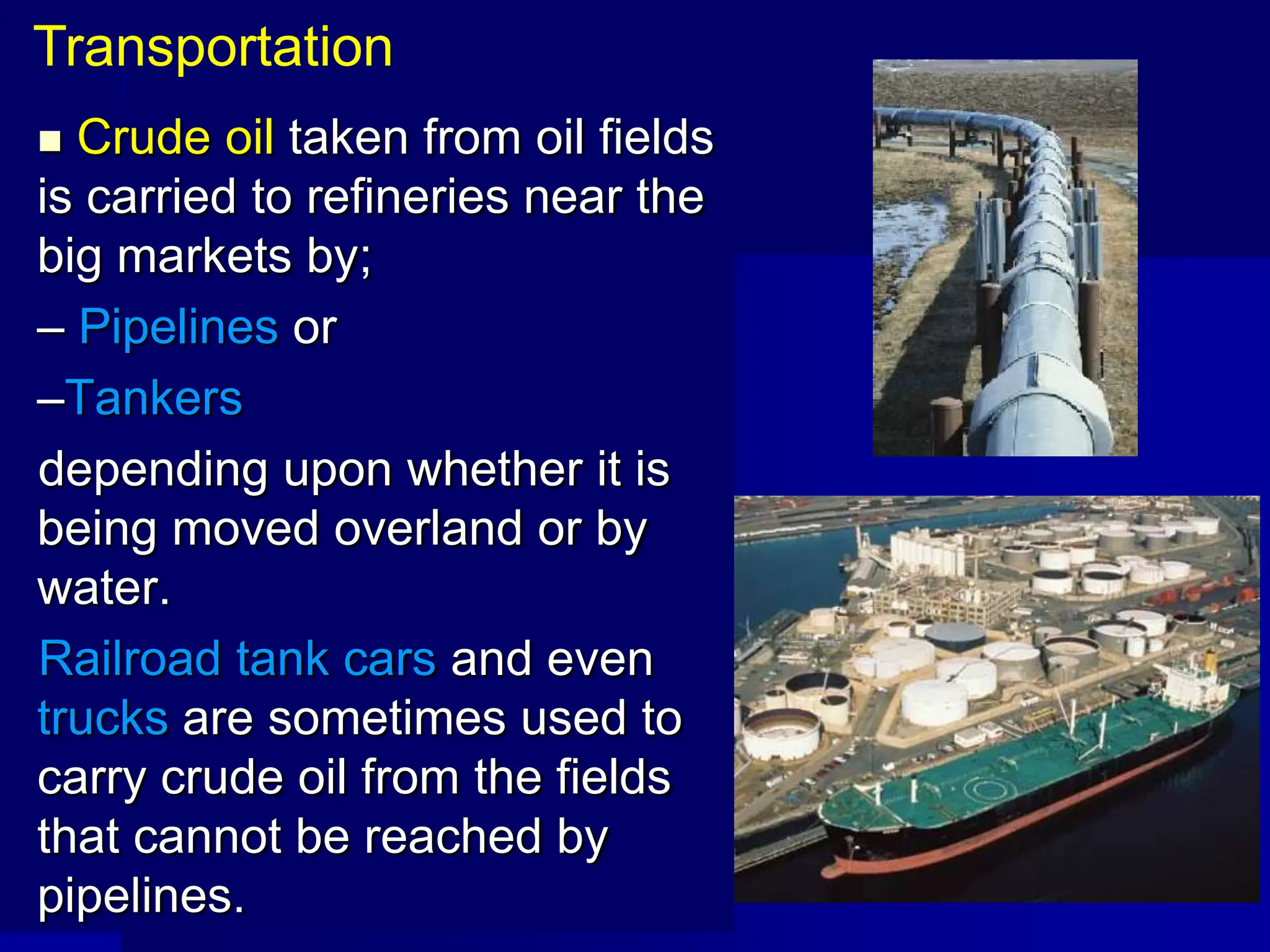
 Crude oil taken from oil fields
is carried to refineries near the
big markets by;
– Pipelines or
–Tankers
depending upon whether it is
being moved overland or by
water.
Railroad tank cars and even
trucks are sometimes used to
carry crude oil from the fields
that cannot be reached by
pipelines.
Transportation
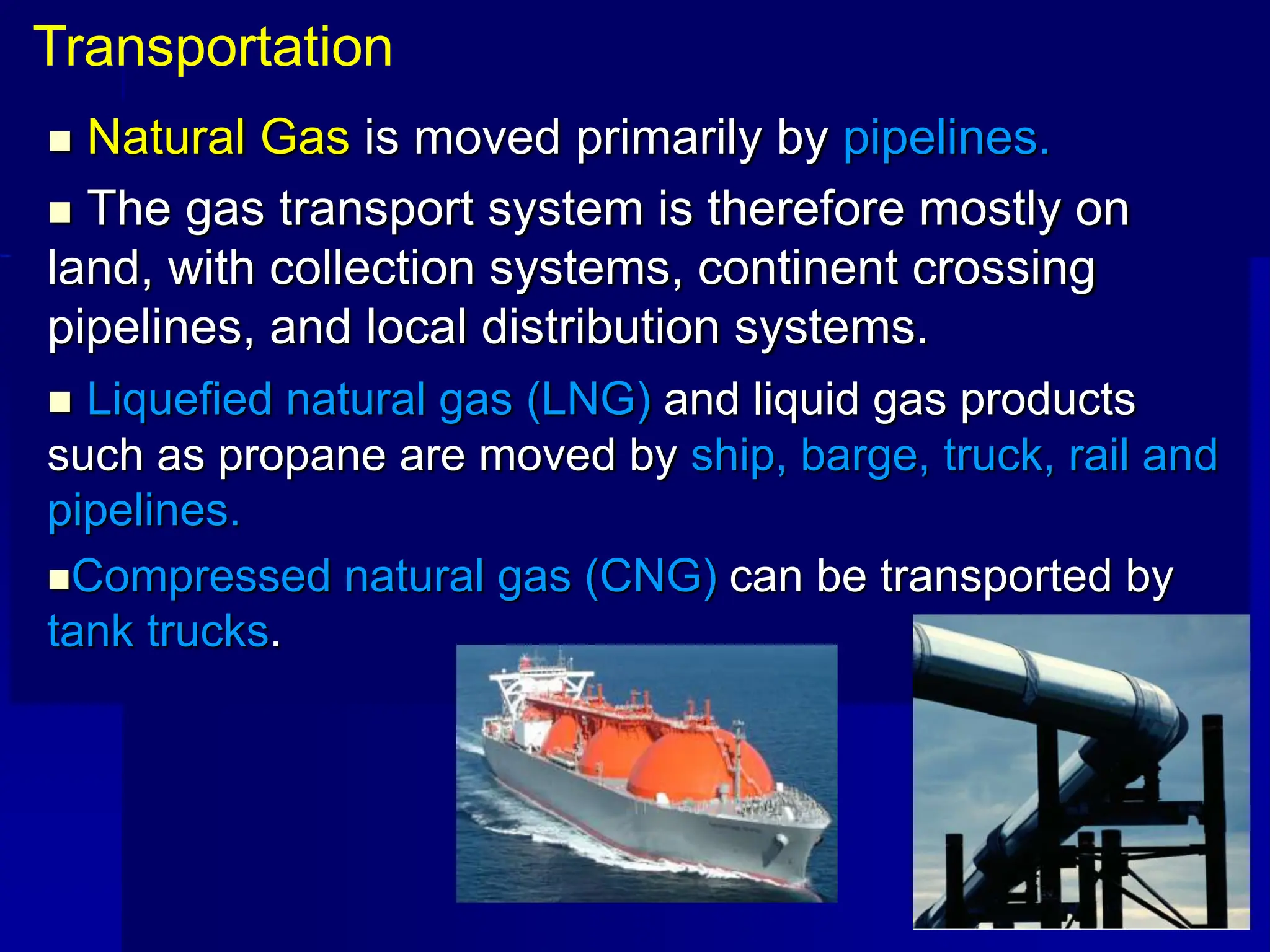
 Natural Gas is moved primarily by pipelines.
 The gas transport system is therefore mostly on
land, with collection systems, continent crossing
pipelines, and local distribution systems.
 Liquefied natural gas (LNG) and liquid gas products
such as propane are moved by ship, barge, truck, rail and
pipelines.
Compressed natural gas (CNG) can be transported by
tank trucks.
Transportation
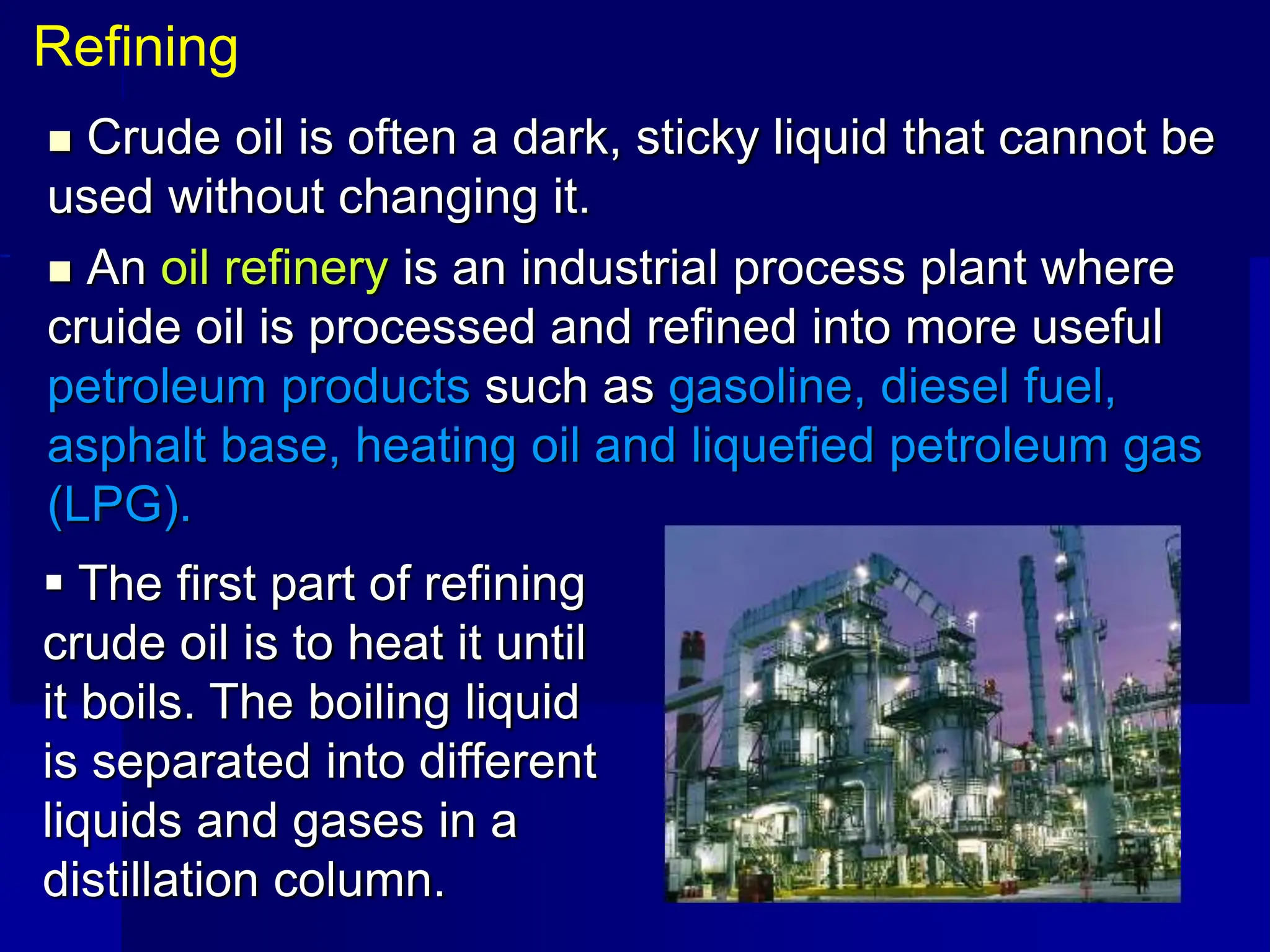
 Crude oil is often a dark, sticky liquid that cannot be
used without changing it.
 An oil refinery is an industrial process plant where
cruide oil is processed and refined into more useful
petroleum products such as gasoline, diesel fuel,
asphalt base, heating oil and liquefied petroleum gas
(LPG).
Refining
 The first part of refining
crude oil is to heat it until
it boils. The boiling liquid
is separated into different
liquids and gases in a
distillation column.
THANKS FOR LISTENING.

week5.ppt

  • 1.
    “RESERVOIR ENGINEERING” MIDDLE EASTTECHNICAL UNIVERSITY Spring 2008 Department of Petroleum and Natural Gas Engineering Dr. Mahmut Parlaktuna Res. Assist. Sevtaç Bülbül
  • 2.
     A reservoiris formed of one (or more) subsurface rock formations, containing liquid and/ or gaseous hydrocarbons, of sedimentary origin.  The reservoir rock is porous and permeable and bounded by impermeable barriers, which trap hydrocarbons. RESERVOIR ENGINEERING A cross-section of a typical hydrocarbon reservoir (R. Cosse, Basics of Reservoir Engineering, 1993)
  • 3.
     Reservoir engineeringis concerned with: – producing oil and gas reservoirs in such a way that the economic recovery is maximized, and – the rate at which the petroleum is produced is maximized. RESERVOIR ENGINEERING
  • 4.
     Reservoir engineerdeals with: – Control of amount of gas & water produced with oil – Proper placement of wells – Use of proper distance between wells – Injection of water or other fluids into the reservoir and many other means are used to help to maximize the oil. RESERVOIR ENGINEERING
  • 5.
     Image ofthe reservoir: forms, boundaries, distribution and volumes of fluids  Well characteristics: e.g.average permeability  Recovery mechanisms: natural drive, enhanced oil recovery  Reservoir Simulation: Integrating the reservoir data and flow laws computer models to predict the flow of fluids RESERVOIR ENGINEERING (R. Cosse, Basics of Reservoir Engineering, 1993)
  • 6.
    Reservoir Simulation (R. Cosse,Basics of Reservoir Engineering, 1993)
  • 7.
     After awell has used up the reservoir's natural drives and gas lift or pumps have recovered all the hydrocarbons possible, statistics show that 25 to 95% of the original oil in the reservoir may still be there.  This amount of oil can be worth recovering if prices are high enough. Enhanced Oil Recovery (EOR)
  • 8.
    Enhanced Oil Recovery; –is the recovery of oil from a reservoir using means other than using the natural reservoir pressure. – generally results in increased amounts of produced oil – Its purpose is not only to restore formation pressure, but also to improve oil displacement or fluid flow in the reservoir. Enhanced Oil Recovery (EOR)
  • 9.
     Secondary recoveryprocesses generally use; – injection of water or natural gas into the production reservoir to replace or assist the natural reservoir drive or primary production. Enhanced Oil Recovery (EOR) (www.bp.com)
  • 10.
     Tertiary recoverymethods are used where secondary recovery methods leave-off. Three major categories; Enhanced Oil Recovery (EOR) (http://www.seed.slb.com/en/scictr/wa tch/climate_change/capture.htm) 1) Thermal displacement (steam injection, in-situ combustion 2) Chemical displacement (polymer injection, polymer flooding and caustic flooding) 3) Miscible displacement – (hydrocarbon displacement, CO2 injection and inert gas (nitrogen) injection
  • 11.
     Oil andgas are not usually salable as they come from the wellhead.  Typically, a well stream is a high-velocity, turbulent, constantly expanding mixture of hydrocarbon liquids and gases mixed with – water and water vapor, – solids such as sand and shale sediments, – sometimes contaminants such as carbon dioxide and hydrogen sulfide.  Several steps are necessary to get oil or gas ready to transport to its next stop Surface Handling of Well Fluids
  • 12.
     The wellstream is first passed through a series of separating and treating devices; – to remove the sediments and water – to separate the liquids from the gases, – to treat the emulsions for further removal of water, solids, and undesirable contaminants.  The oil is then stabilized, stored, and tested for purity. The gas is tested for hydrocarbon content and impurities, and gas pressure is adjusted to pipeline or other transport specifications. Surface Handling of Well Fluids
  • 13.
    Surface Handling ofWell Fluids  At the wellhead, separators are used to separate the remaining gas in solution by or adjusting pressure in the separator.  Water is separated due to the gravity difference.  Crude oil is fed into crude oil line.  Gas is flowed through the gas line.
  • 14.
     Crude oilis stored in large tanks after produced.  Natural gas; – is liquified before storage. (Liquefied natural gas or LNG) – It is also stored in underground formations (depleted gas reservoirs, aquifers, and salt caverns). Natural gas is injected into suitable formations when demand is low. Then it is produced when demand is high. Storage
  • 15.
     Crude oiltaken from oil fields is carried to refineries near the big markets by; – Pipelines or –Tankers depending upon whether it is being moved overland or by water. Railroad tank cars and even trucks are sometimes used to carry crude oil from the fields that cannot be reached by pipelines. Transportation
  • 16.
     Natural Gasis moved primarily by pipelines.  The gas transport system is therefore mostly on land, with collection systems, continent crossing pipelines, and local distribution systems.  Liquefied natural gas (LNG) and liquid gas products such as propane are moved by ship, barge, truck, rail and pipelines. Compressed natural gas (CNG) can be transported by tank trucks. Transportation
  • 17.
     Crude oilis often a dark, sticky liquid that cannot be used without changing it.  An oil refinery is an industrial process plant where cruide oil is processed and refined into more useful petroleum products such as gasoline, diesel fuel, asphalt base, heating oil and liquefied petroleum gas (LPG). Refining  The first part of refining crude oil is to heat it until it boils. The boiling liquid is separated into different liquids and gases in a distillation column.
  • 18.