COMEX 102 – NSTP 2
What is Social Mobilization?
 Mobilization a Military terminology
 To Mobilize = prepare forces for action
Social Mobilization
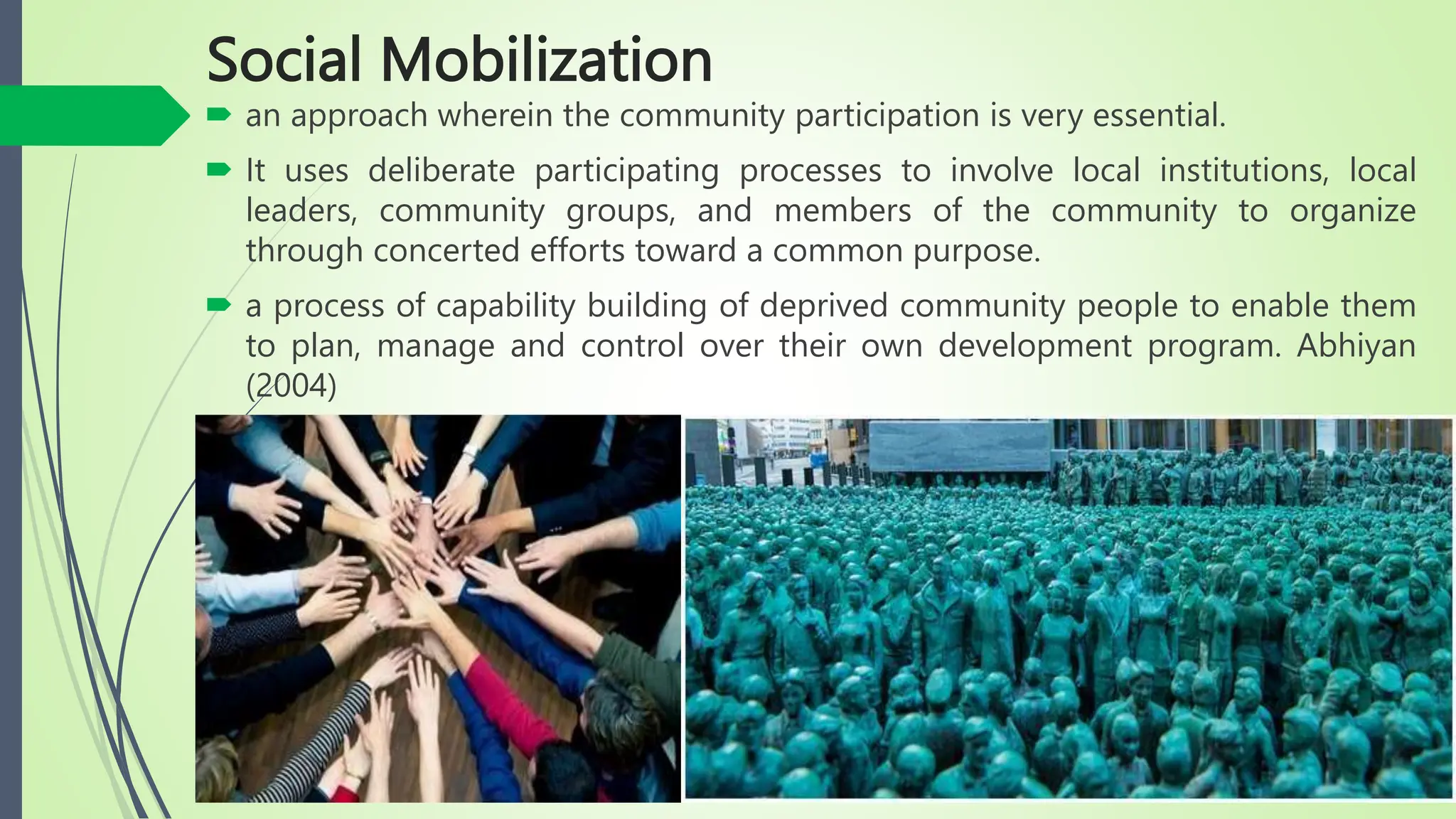
 an approach wherein the community participation is very essential.
 It uses deliberate participating processes to involve local institutions, local
leaders, community groups, and members of the community to organize
through concerted efforts toward a common purpose.
 a process of capability building of deprived community people to enable them
to plan, manage and control over their own development program. Abhiyan
(2004)
Components of Social Mobilization
Growth
Empowerment
Transformation of the Social Institutions
Enhancement of the Ecological Resource
Dynamic Cultural Innovation
The self-help organizations which can be initiated by the students in the
National Service Training Program (NSTP) can help the deprived
community to be able to lead their self-development process in the
following self-propelled manner.
1. help in providing local mechanism for mobilizing savings of the
community and provide credit to meet their financial need;
2. assist in creating people’s institutions to initiate/support local
communities and groups to identify and mobilize local resources and
properly utilize external resources;
3. help in building confidence and enhancing the capacity of
community people in promoting self-reliance; and
4. assist in establishing a network of community financial institutions
owned and democratically operated by the community.
• The process is concerned with mobilizing human and financial
resources through five main approaches:
1. Political Mobilization
2. Community Mobilization
3. Government Mobilization
4. Corporate Mobilization
5. Beneficiary Mobilization
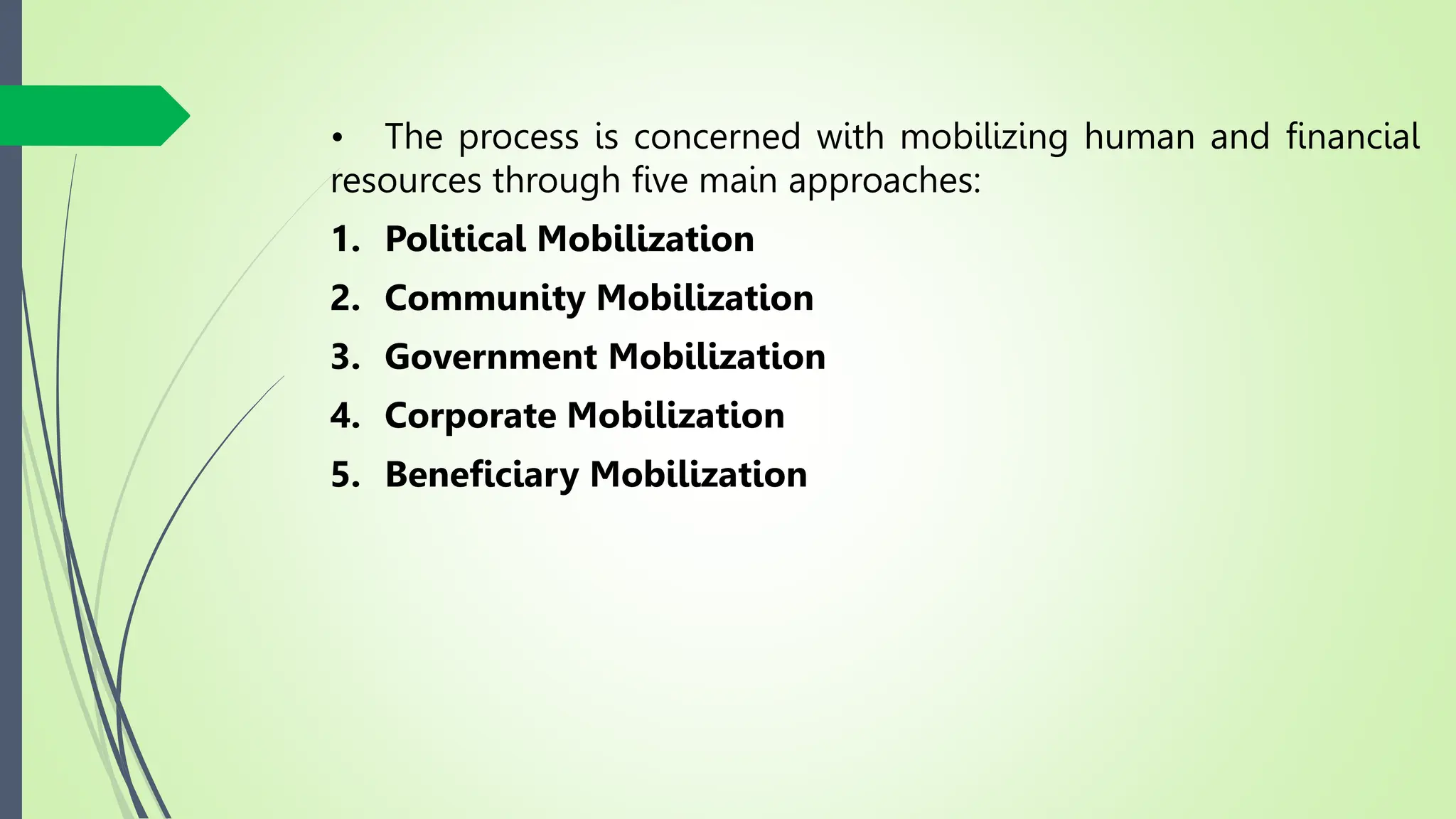
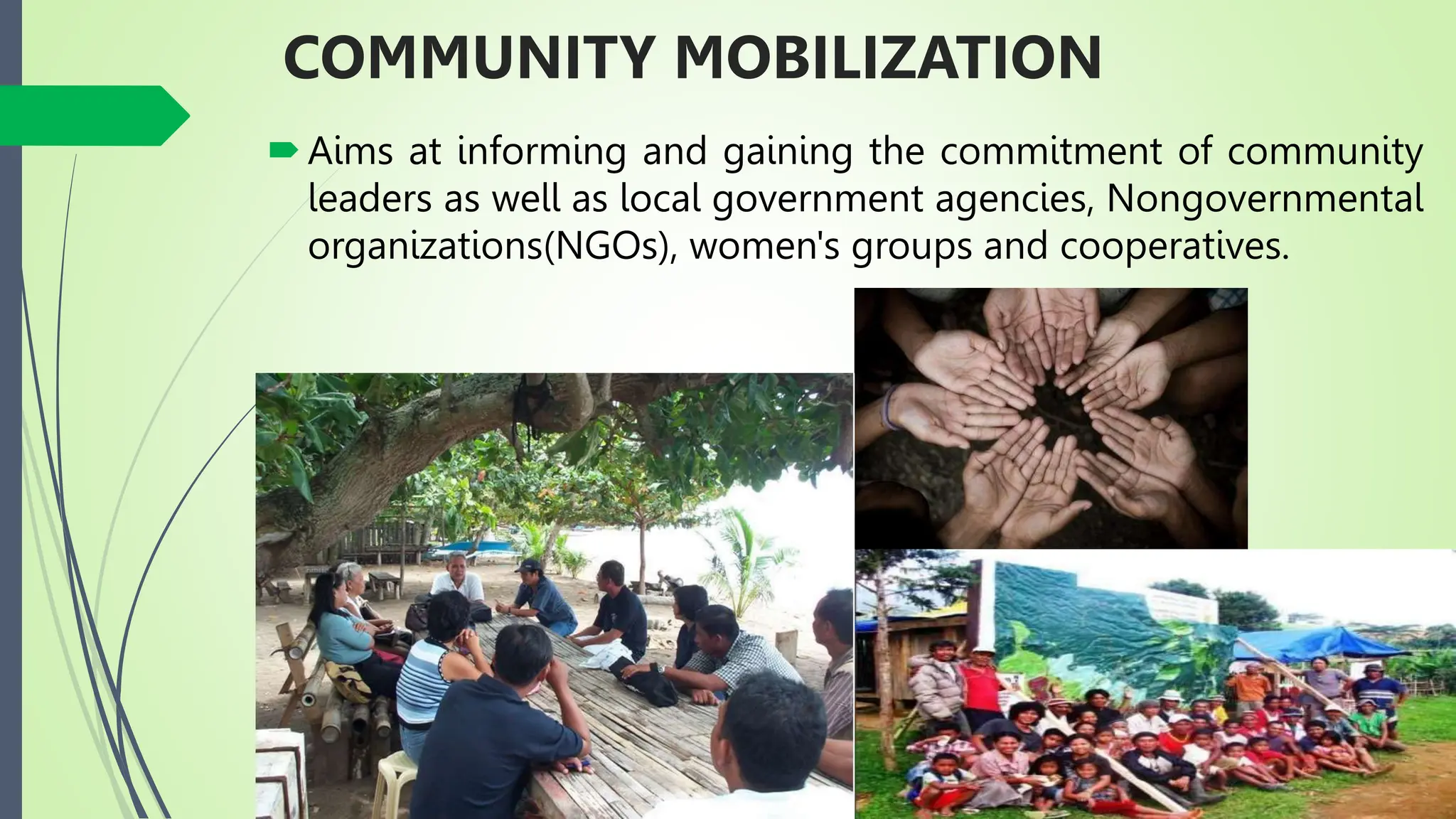
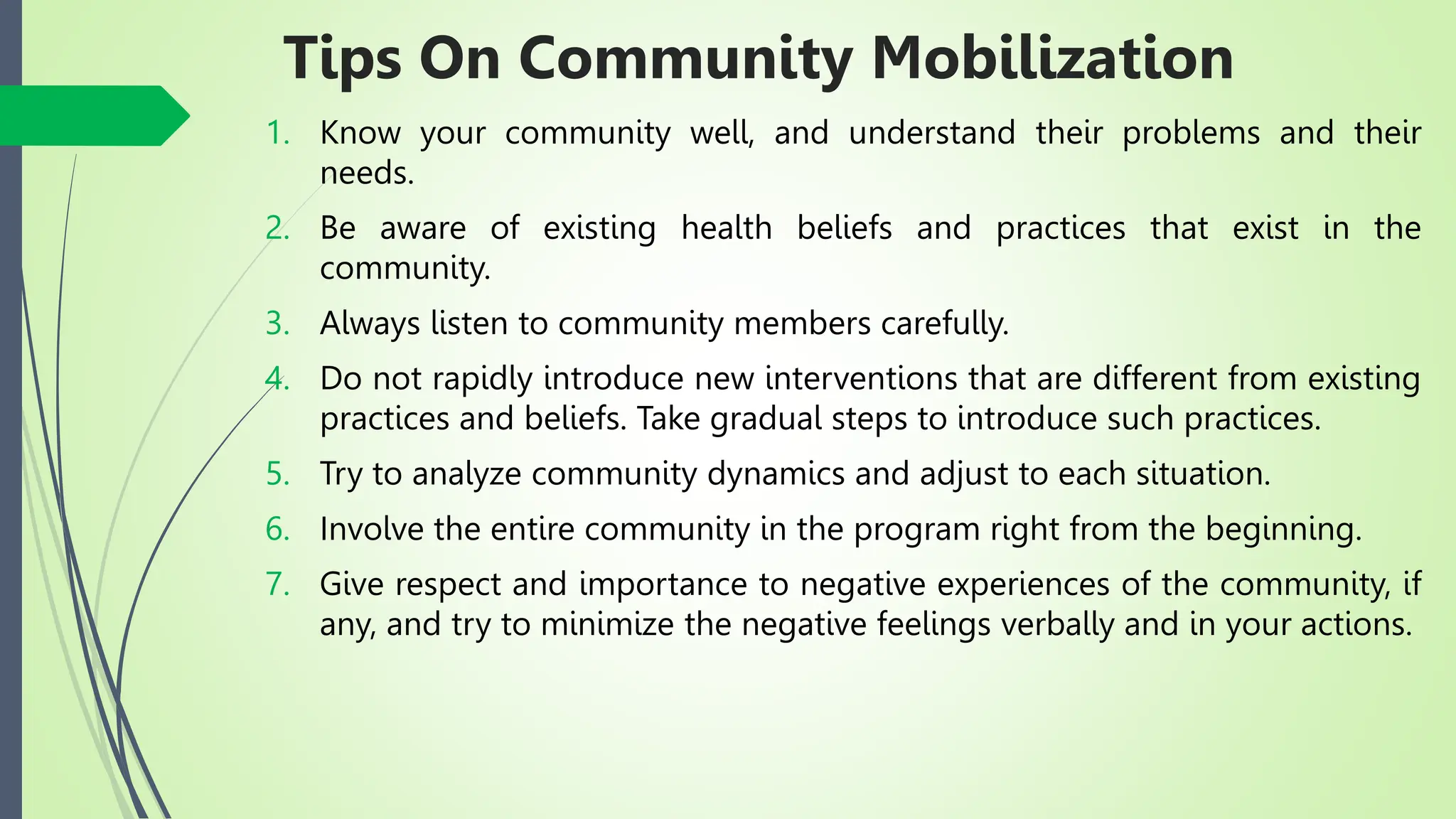
COMMUNITY MOBILIZATION
Aims at informing and gaining the commitment of community
leaders as well as local government agencies, Nongovernmental
organizations(NGOs), women's groups and cooperatives.
Tips On Community Mobilization
1. Know your community well, and understand their problems and their
needs.
2. Be aware of existing health beliefs and practices that exist in the
community.
3. Always listen to community members carefully.
4. Do not rapidly introduce new interventions that are different from existing
practices and beliefs. Take gradual steps to introduce such practices.
5. Try to analyze community dynamics and adjust to each situation.
6. Involve the entire community in the program right from the beginning.
7. Give respect and importance to negative experiences of the community, if
any, and try to minimize the negative feelings verbally and in your actions.
The Role of the External Agency
The role of the external agency is to:
 help people to organize themselves, clarify ideas on needs,
objectives, means of achieving them etc. - in other words the role
of catalyst;
 help to facilitate representative leadership and democratic
structures;
 provide knowledge and information;
 provide/advocate for resources to support the community's own
endeavors and to supplement (but not replace) their own
resources. These might include training
Some Problems with the Community
Mobilization Approach
 time-consuming activity and does not necessarily produce quick or
visible outputs.
 requires the workers involved to be sensitively aware of the
concerns and feelings of the refugees and to respond to these with
respect and patience.
 much subtler and more sensitive approach than the more
traditional one
 requires the agencies involved to hand back power and
responsibility to the refugees themselves.
 can be difficult when the needs expressed by refugees cannot be
matched with available external resources
 requires a community to be open and available to dialogue
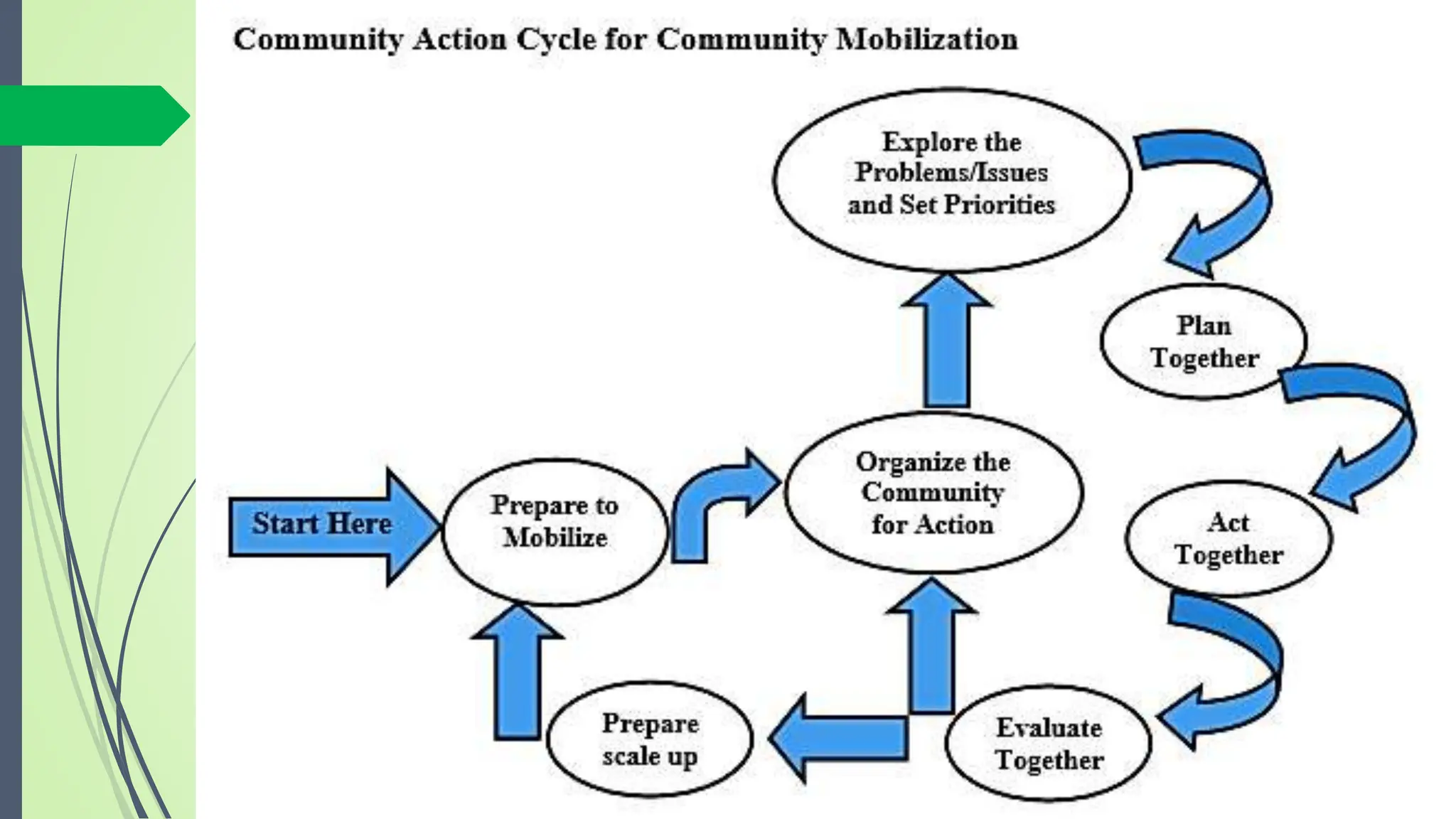
 Prepare to Mobilize
1. Select/identify issues and problems and define the community;
2. Put together a community mobilization;
3. Gather information about the issues/problems;
4. Identify resources and constrains;
5. Develop a community mobilization plan; and
6. Organize your team.
 Organize the Community for Action
1. Orient the community;
2. Build harmonious relationship;
3. Invite community participation; and
4. Develop a “core group” from the community.
 Explore the Problems/issues and set priorities
1. Decide the objectives of the planning preparation;
2. Explore the problems/issues;
3. Analyze the problem; and
4. Set priorities for action.
 Plan Together
1. Decide the objectives of the planning preparation;
2. Determine who will be involved in planning and their roles;
3. Conduct and facilitate the planning session; and
4. Create community action plan.
 Act Together
1. Define your team’s role in accompanying community action;
2. Strengthen the community’s capacity to carry out the action plan;
3. Monitor community programs; and
4. Problems – solve, trouble shoot, advise and mediate.
 Evaluate Together
1. Conduct participatory evaluation;
2. Provide feedback to the community;
3. Document and share lessons learned and recommendation for future use; and
4. Prepare to reorganize.
 Prepare to Scale Up
Establish and maintain a monitoring and evaluation system.
Benefits of Social Mobilization
Social Mobilization is very essential in the development of the
community through peoples own concerted efforts. The benefits are
the following:
1. Poverty Alleviation.
2. Promoting Democratic Governance.
3. Environment.
4. Conflict Prevention.
Questions
Explain the following 7 steps in the Community Action
Cycle for Community Mobilization.
Week-1SOCIAL-MOBILIZATION pptx (NSTP-LTS)

Week-1SOCIAL-MOBILIZATION pptx (NSTP-LTS)

  • 1.
  • 2.
    What is SocialMobilization?  Mobilization a Military terminology  To Mobilize = prepare forces for action
  • 3.
    Social Mobilization  anapproach wherein the community participation is very essential.  It uses deliberate participating processes to involve local institutions, local leaders, community groups, and members of the community to organize through concerted efforts toward a common purpose.  a process of capability building of deprived community people to enable them to plan, manage and control over their own development program. Abhiyan (2004)
  • 4.
    Components of SocialMobilization Growth Empowerment Transformation of the Social Institutions Enhancement of the Ecological Resource Dynamic Cultural Innovation
  • 5.
    The self-help organizationswhich can be initiated by the students in the National Service Training Program (NSTP) can help the deprived community to be able to lead their self-development process in the following self-propelled manner. 1. help in providing local mechanism for mobilizing savings of the community and provide credit to meet their financial need; 2. assist in creating people’s institutions to initiate/support local communities and groups to identify and mobilize local resources and properly utilize external resources; 3. help in building confidence and enhancing the capacity of community people in promoting self-reliance; and 4. assist in establishing a network of community financial institutions owned and democratically operated by the community.
  • 6.
    • The processis concerned with mobilizing human and financial resources through five main approaches: 1. Political Mobilization 2. Community Mobilization 3. Government Mobilization 4. Corporate Mobilization 5. Beneficiary Mobilization
  • 7.
    COMMUNITY MOBILIZATION Aims atinforming and gaining the commitment of community leaders as well as local government agencies, Nongovernmental organizations(NGOs), women's groups and cooperatives.
  • 8.
    Tips On CommunityMobilization 1. Know your community well, and understand their problems and their needs. 2. Be aware of existing health beliefs and practices that exist in the community. 3. Always listen to community members carefully. 4. Do not rapidly introduce new interventions that are different from existing practices and beliefs. Take gradual steps to introduce such practices. 5. Try to analyze community dynamics and adjust to each situation. 6. Involve the entire community in the program right from the beginning. 7. Give respect and importance to negative experiences of the community, if any, and try to minimize the negative feelings verbally and in your actions.
  • 9.
    The Role ofthe External Agency The role of the external agency is to:  help people to organize themselves, clarify ideas on needs, objectives, means of achieving them etc. - in other words the role of catalyst;  help to facilitate representative leadership and democratic structures;  provide knowledge and information;  provide/advocate for resources to support the community's own endeavors and to supplement (but not replace) their own resources. These might include training
  • 10.
    Some Problems withthe Community Mobilization Approach  time-consuming activity and does not necessarily produce quick or visible outputs.  requires the workers involved to be sensitively aware of the concerns and feelings of the refugees and to respond to these with respect and patience.  much subtler and more sensitive approach than the more traditional one  requires the agencies involved to hand back power and responsibility to the refugees themselves.  can be difficult when the needs expressed by refugees cannot be matched with available external resources  requires a community to be open and available to dialogue
  • 12.
     Prepare toMobilize 1. Select/identify issues and problems and define the community; 2. Put together a community mobilization; 3. Gather information about the issues/problems; 4. Identify resources and constrains; 5. Develop a community mobilization plan; and 6. Organize your team.  Organize the Community for Action 1. Orient the community; 2. Build harmonious relationship; 3. Invite community participation; and 4. Develop a “core group” from the community.
  • 13.
     Explore theProblems/issues and set priorities 1. Decide the objectives of the planning preparation; 2. Explore the problems/issues; 3. Analyze the problem; and 4. Set priorities for action.  Plan Together 1. Decide the objectives of the planning preparation; 2. Determine who will be involved in planning and their roles; 3. Conduct and facilitate the planning session; and 4. Create community action plan.
  • 14.
     Act Together 1.Define your team’s role in accompanying community action; 2. Strengthen the community’s capacity to carry out the action plan; 3. Monitor community programs; and 4. Problems – solve, trouble shoot, advise and mediate.  Evaluate Together 1. Conduct participatory evaluation; 2. Provide feedback to the community; 3. Document and share lessons learned and recommendation for future use; and 4. Prepare to reorganize.  Prepare to Scale Up Establish and maintain a monitoring and evaluation system.
  • 15.
    Benefits of SocialMobilization Social Mobilization is very essential in the development of the community through peoples own concerted efforts. The benefits are the following: 1. Poverty Alleviation. 2. Promoting Democratic Governance. 3. Environment. 4. Conflict Prevention.
  • 16.
    Questions Explain the following7 steps in the Community Action Cycle for Community Mobilization.