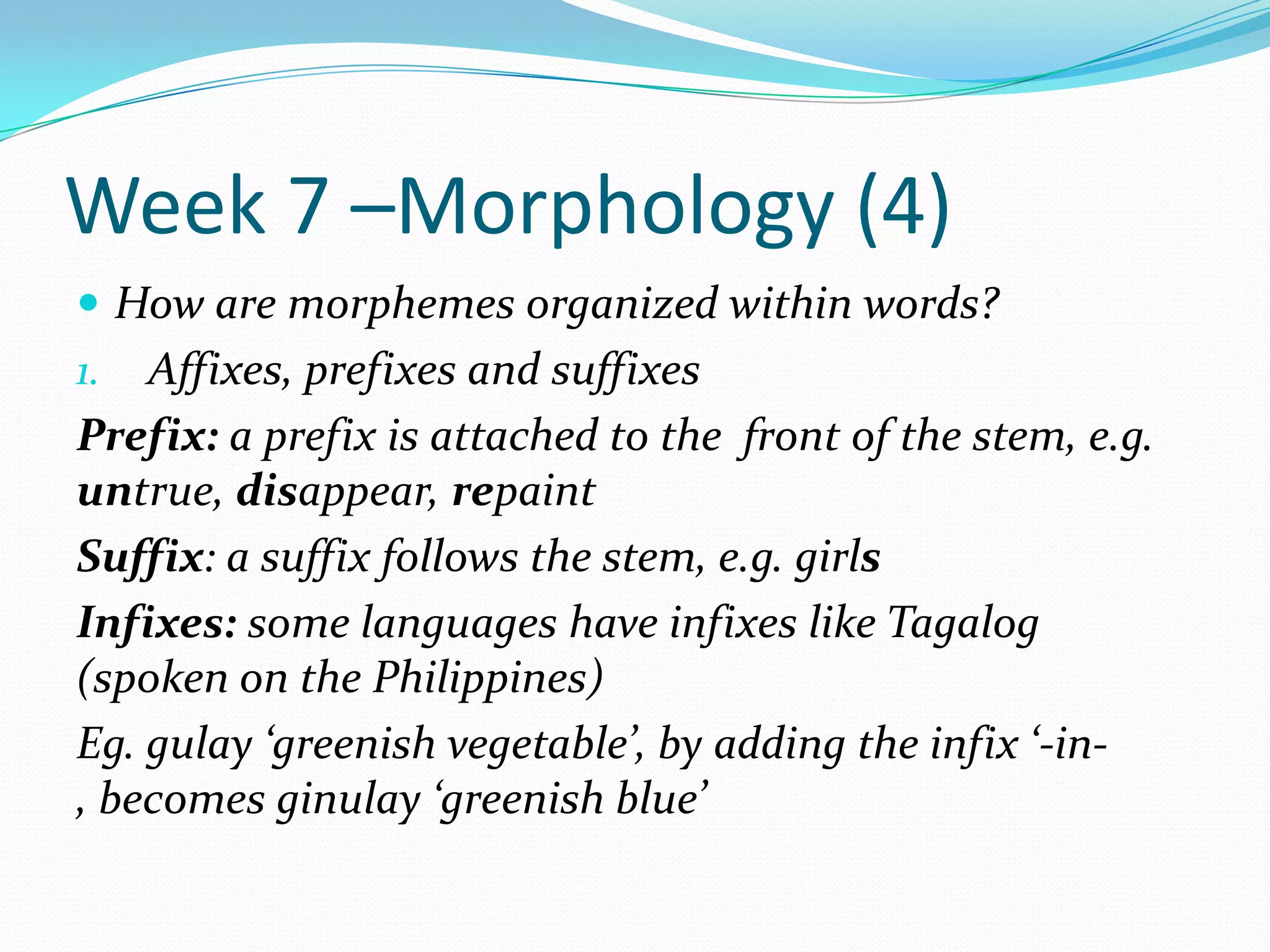
Week 7 –Morphology (4)How are morphemes organized within words?Affixes, prefixes and suffixesPrefix: a prefix is attached to the  front of the stem, e.g. untrue, disappear, repaintSuffix: a suffix follows the stem, e.g. girlsInfixes: some languages have infixes like Tagalog (spoken on the Philippines)Eg. gulay ‘greenish vegetable’, by adding the infix ‘-in-, becomes ginulay ‘greenish blue’
ExerciceHow many morphemes are there in the word uncontrolably? Design a chart showing the different parts.
How does a language increase its vocabulary?
1. new words can be formed from existing words and word parts2. words can be borrowed from another language3. new words can be made up, created from scratch
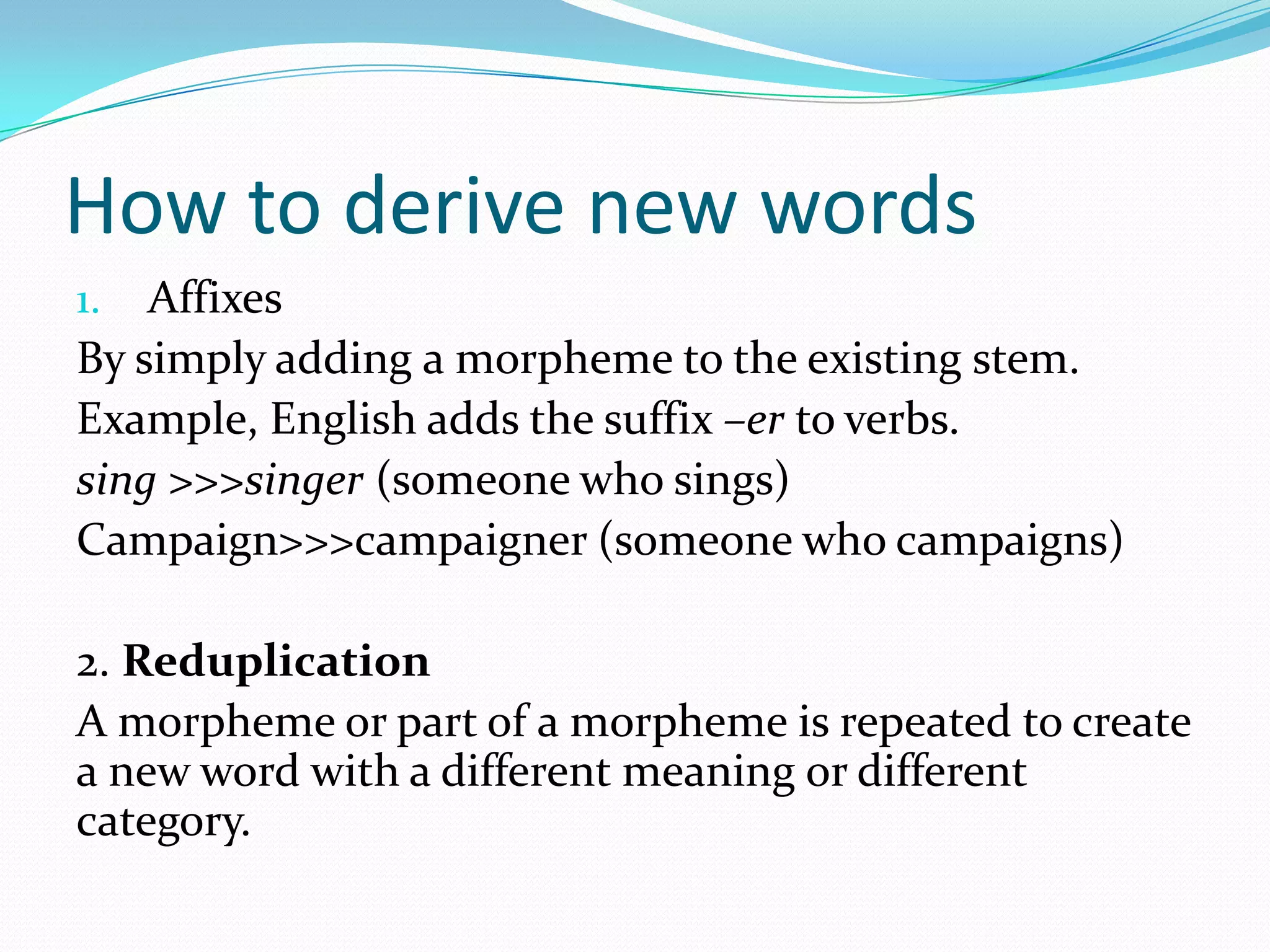
How to derive new wordsAffixesBy simply adding a morpheme to the existing stem.Example, English adds the suffix –erto verbs.sing >>>singer (someone who sings)Campaign>>>campaigner (someone who campaigns)2. ReduplicationA morpheme or part of a morpheme is repeated to create a new word with a different meaning or different category.
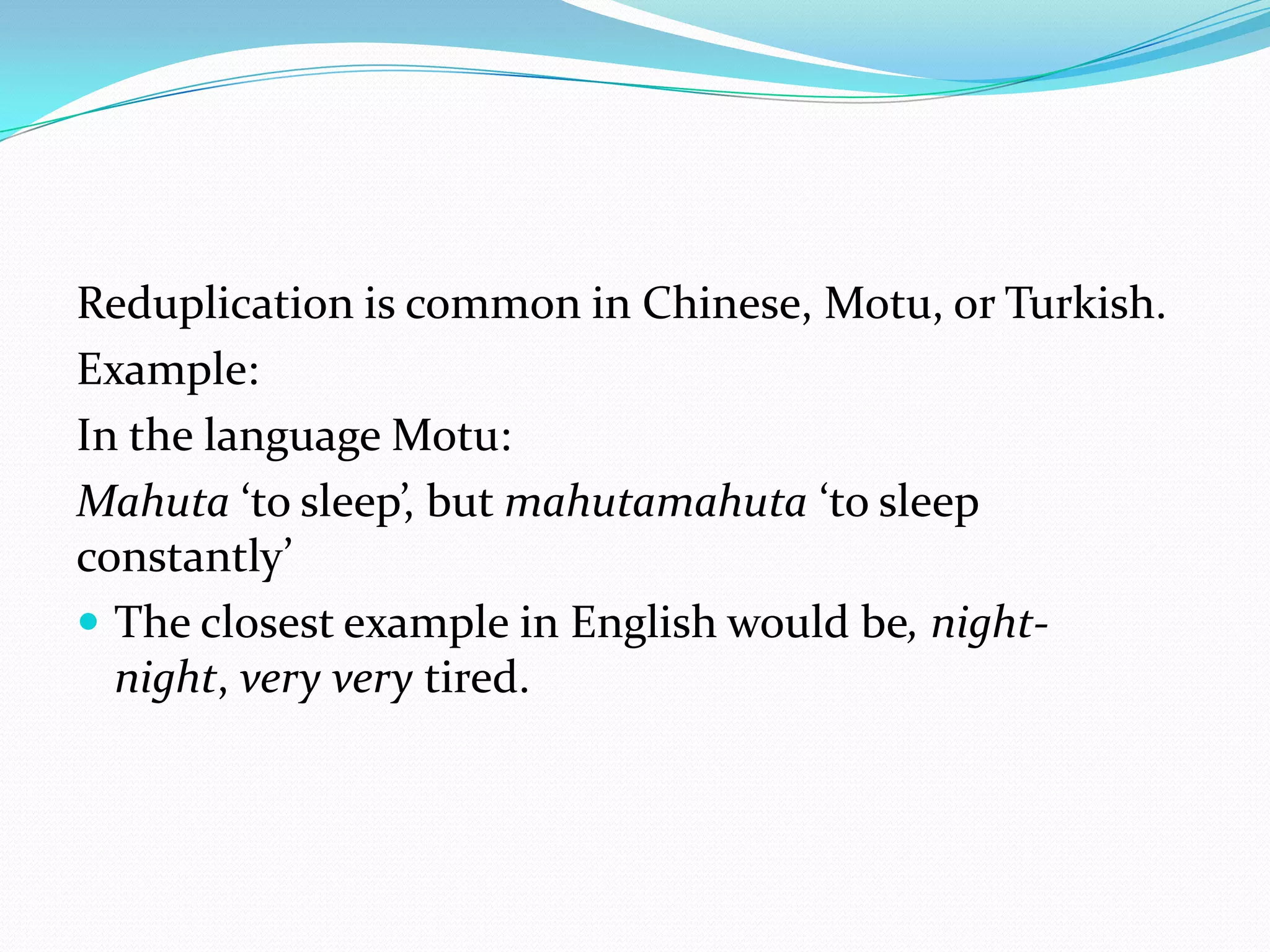
Reduplication is common in Chinese, Motu, or Turkish.Example:In the language Motu:Mahuta ‘to sleep’, but mahutamahuta ‘to sleep constantly’ The closest example in English would be, night-night, very verytired.
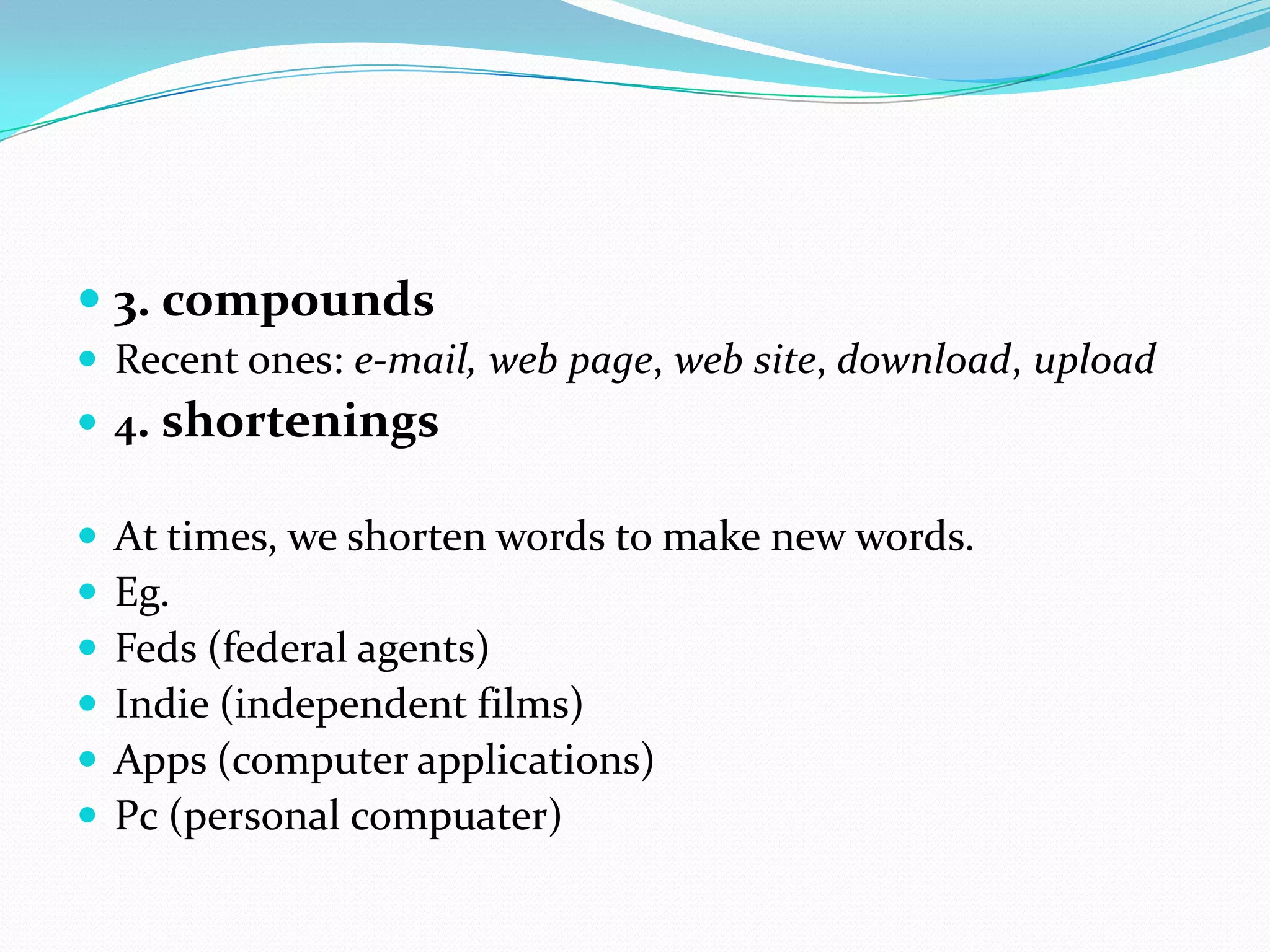
3. compoundsRecent ones: e-mail,web page, web site, download, upload4. shorteningsAt times, we shorten words to make new words. Eg.Feds (federal agents)Indie (independent films)Apps (computer applications)Pc (personal compuater)
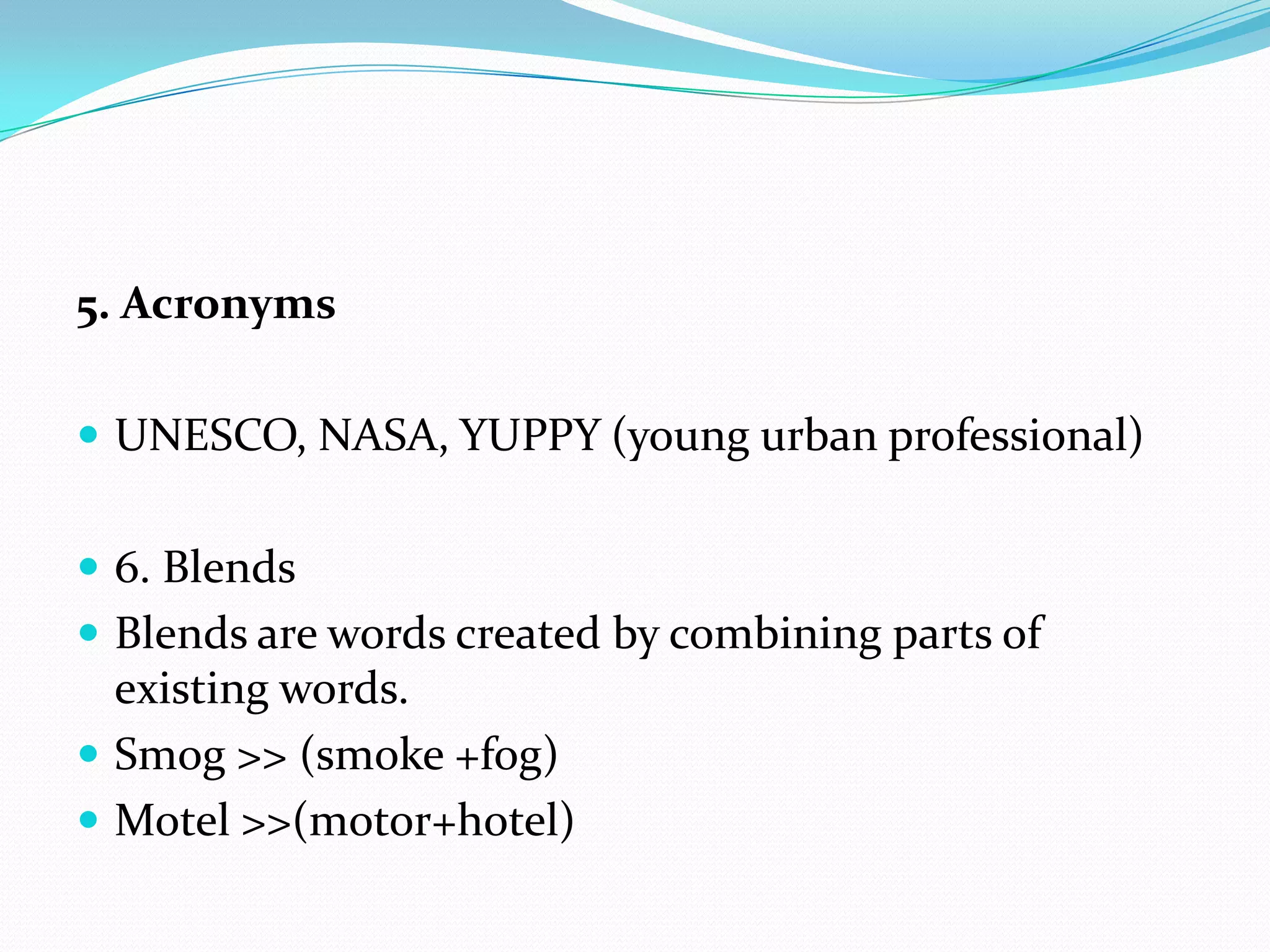
5. AcronymsUNESCO, NASA, YUPPY (young urban professional)6. BlendsBlends are words created by combining parts of existing words.Smog >> (smoke +fog)Motel >>(motor+hotel)
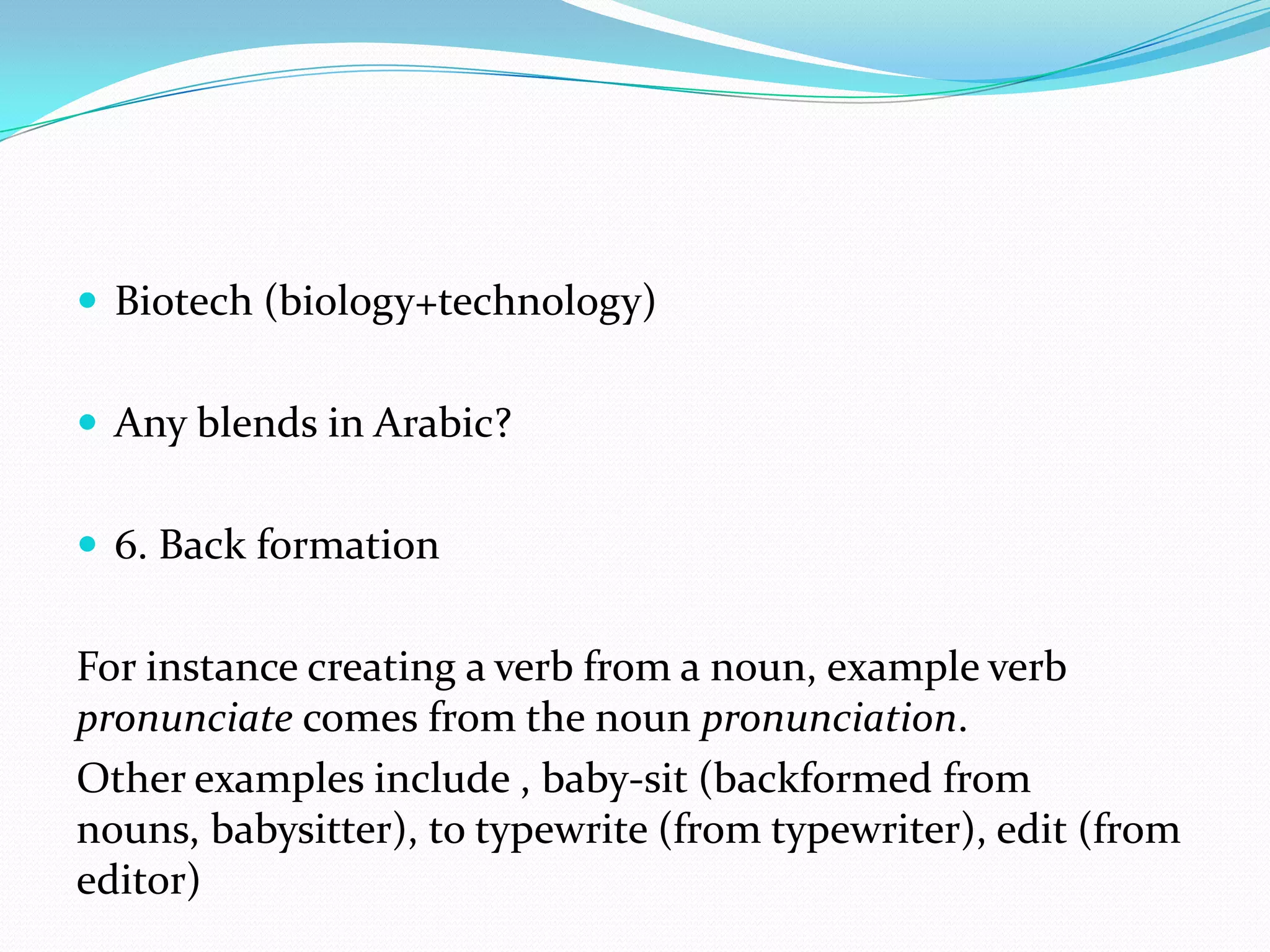
Biotech (biology+technology)Any blends in Arabic?6. Back formationFor instance creating a verb from a noun, example verb pronunciate comes from the noun pronunciation.Other examples include , baby-sit (backformed from nouns, babysitter), to typewrite (from typewriter), edit (from editor)

Week 7 –morphology (part 4)

  • 1.
    Week 7 –Morphology(4)How are morphemes organized within words?Affixes, prefixes and suffixesPrefix: a prefix is attached to the front of the stem, e.g. untrue, disappear, repaintSuffix: a suffix follows the stem, e.g. girlsInfixes: some languages have infixes like Tagalog (spoken on the Philippines)Eg. gulay ‘greenish vegetable’, by adding the infix ‘-in-, becomes ginulay ‘greenish blue’
  • 2.
    ExerciceHow many morphemesare there in the word uncontrolably? Design a chart showing the different parts.
  • 3.
    How does alanguage increase its vocabulary?
  • 4.
    1. new wordscan be formed from existing words and word parts2. words can be borrowed from another language3. new words can be made up, created from scratch
  • 5.
    How to derivenew wordsAffixesBy simply adding a morpheme to the existing stem.Example, English adds the suffix –erto verbs.sing >>>singer (someone who sings)Campaign>>>campaigner (someone who campaigns)2. ReduplicationA morpheme or part of a morpheme is repeated to create a new word with a different meaning or different category.
  • 6.
    Reduplication is commonin Chinese, Motu, or Turkish.Example:In the language Motu:Mahuta ‘to sleep’, but mahutamahuta ‘to sleep constantly’ The closest example in English would be, night-night, very verytired.
  • 7.
    3. compoundsRecent ones:e-mail,web page, web site, download, upload4. shorteningsAt times, we shorten words to make new words. Eg.Feds (federal agents)Indie (independent films)Apps (computer applications)Pc (personal compuater)
  • 8.
    5. AcronymsUNESCO, NASA,YUPPY (young urban professional)6. BlendsBlends are words created by combining parts of existing words.Smog >> (smoke +fog)Motel >>(motor+hotel)
  • 9.
    Biotech (biology+technology)Any blendsin Arabic?6. Back formationFor instance creating a verb from a noun, example verb pronunciate comes from the noun pronunciation.Other examples include , baby-sit (backformed from nouns, babysitter), to typewrite (from typewriter), edit (from editor)