Issues and Challenges in
EHR Implementation
Roy Dahildahil, RMT
Electronic Health Record
• The electronic health record includes all information contained in a
traditional health record including a patient’s health profile, behavioural and
environmental information. As well as content the EHR also includes the
dimension of time, which allows for the inclusion of information across
multiple episodes and providers, which will ultimately evolve into a lifetime
record (Mon, 2004, Amatayakul, 2004).
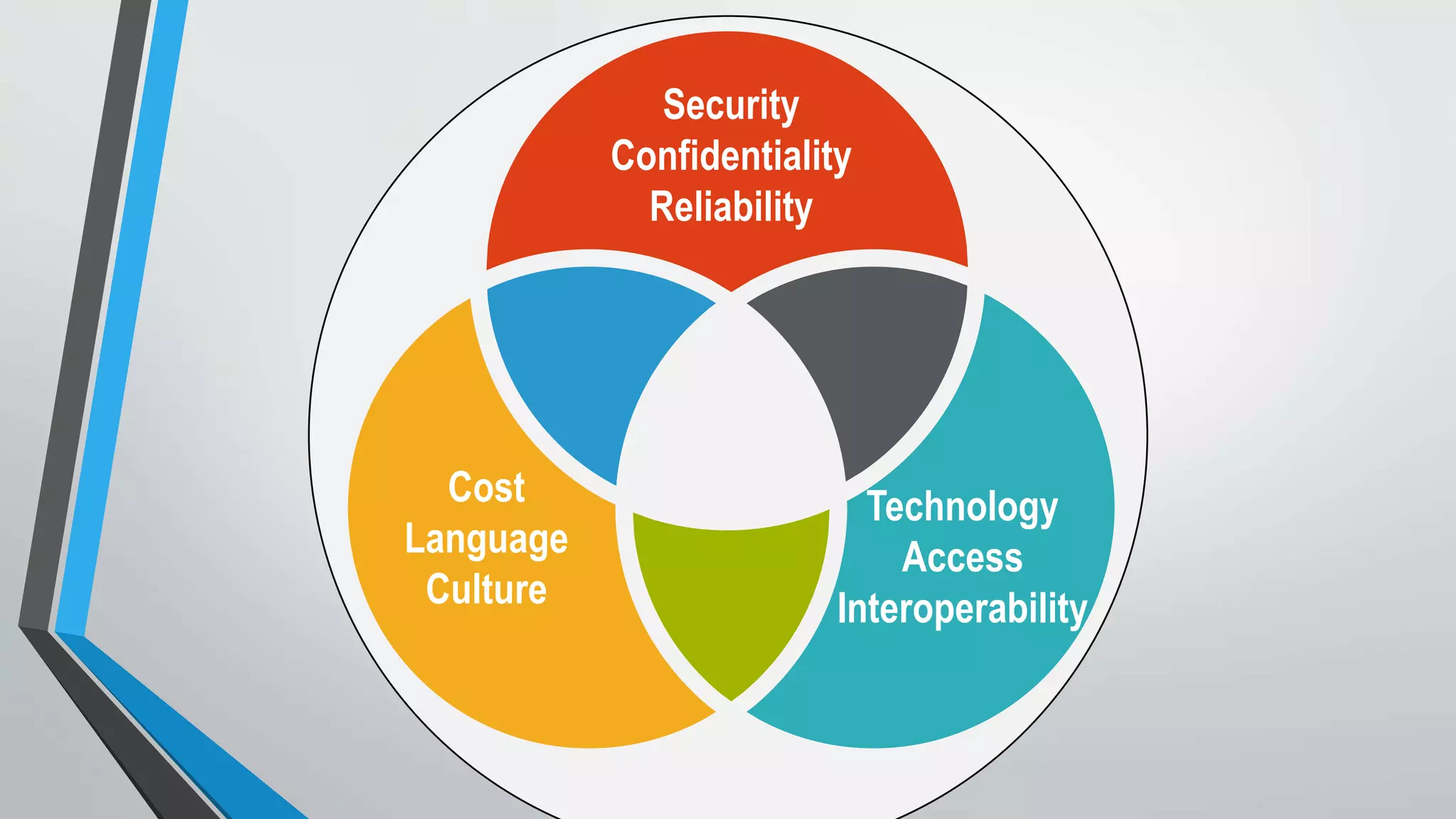
Security
Confidentiality
Reliability
Technology
Access
Interoperability
Cost
Language
Culture
• Security measures to prevent breach of
information
• Privacy, confidentiality and quality of
information generated
• Quality of electronic healthcare information
and accuracy of data entries
• Accuracy and validity of the original source data
• Reliability – data is consistent and information
generated is understandable;
• Completeness – all required data is present;
• Legibility – data is readable;
• Currency and timeliness – data is recorded at the
point of care; and
• Accessibility – data is available to authorized
persons when and where needed. (WHO)
Security,
Confidentiality
Reliability
Technology
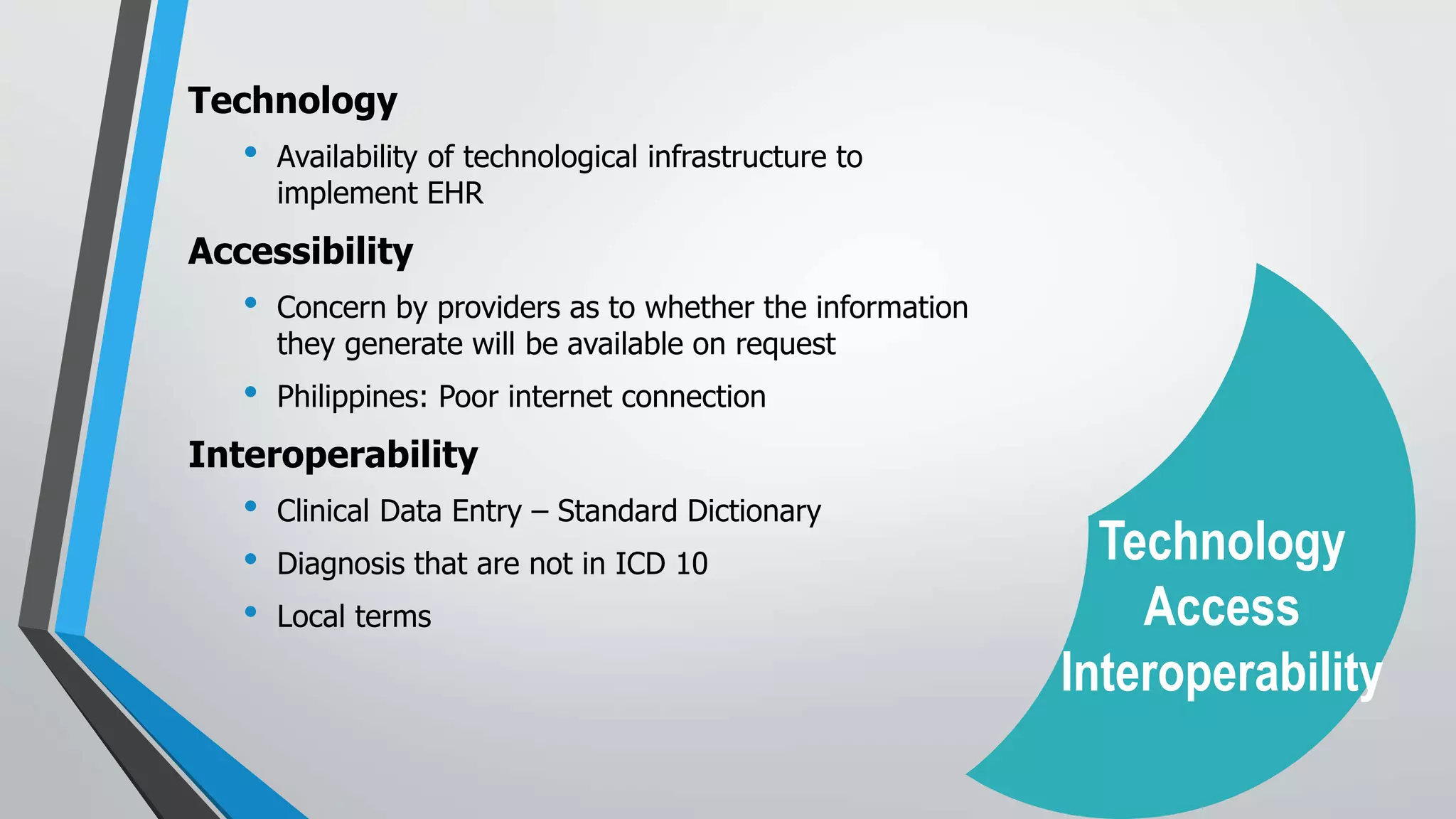
• Availability of technological infrastructure to
implement EHR
Accessibility
• Concern by providers as to whether the information
they generate will be available on request
• Philippines: Poor internet connection
Interoperability
• Clinical Data Entry – Standard Dictionary
• Diagnosis that are not in ICD 10
• Local terms
Technology
Access
Interoperability
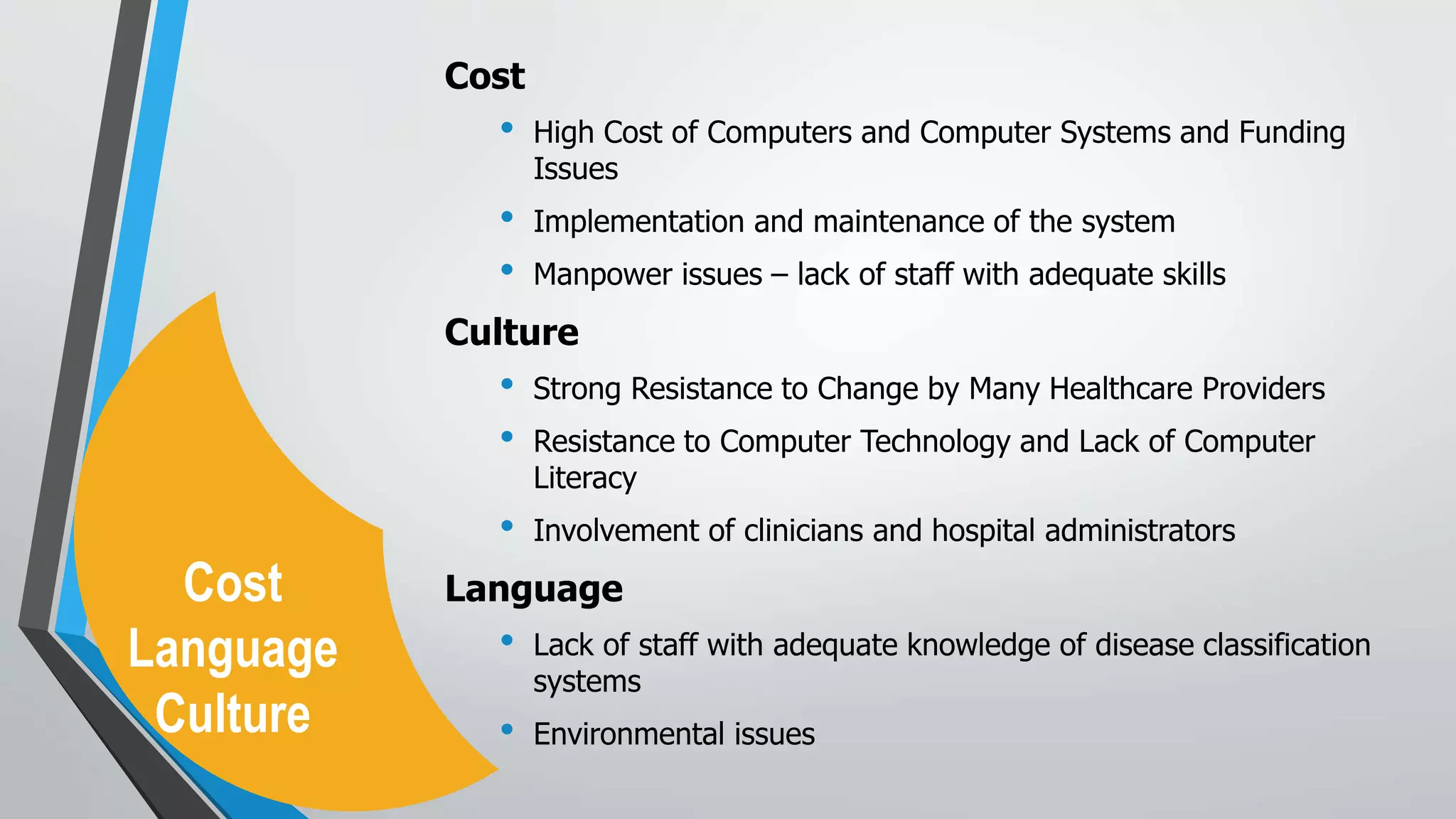
Cost
• High Cost of Computers and Computer Systems and Funding
Issues
• Implementation and maintenance of the system
• Manpower issues – lack of staff with adequate skills
Culture
• Strong Resistance to Change by Many Healthcare Providers
• Resistance to Computer Technology and Lack of Computer
Literacy
• Involvement of clinicians and hospital administrators
Language
• Lack of staff with adequate knowledge of disease classification
systems
• Environmental issues
Cost
Language
Culture
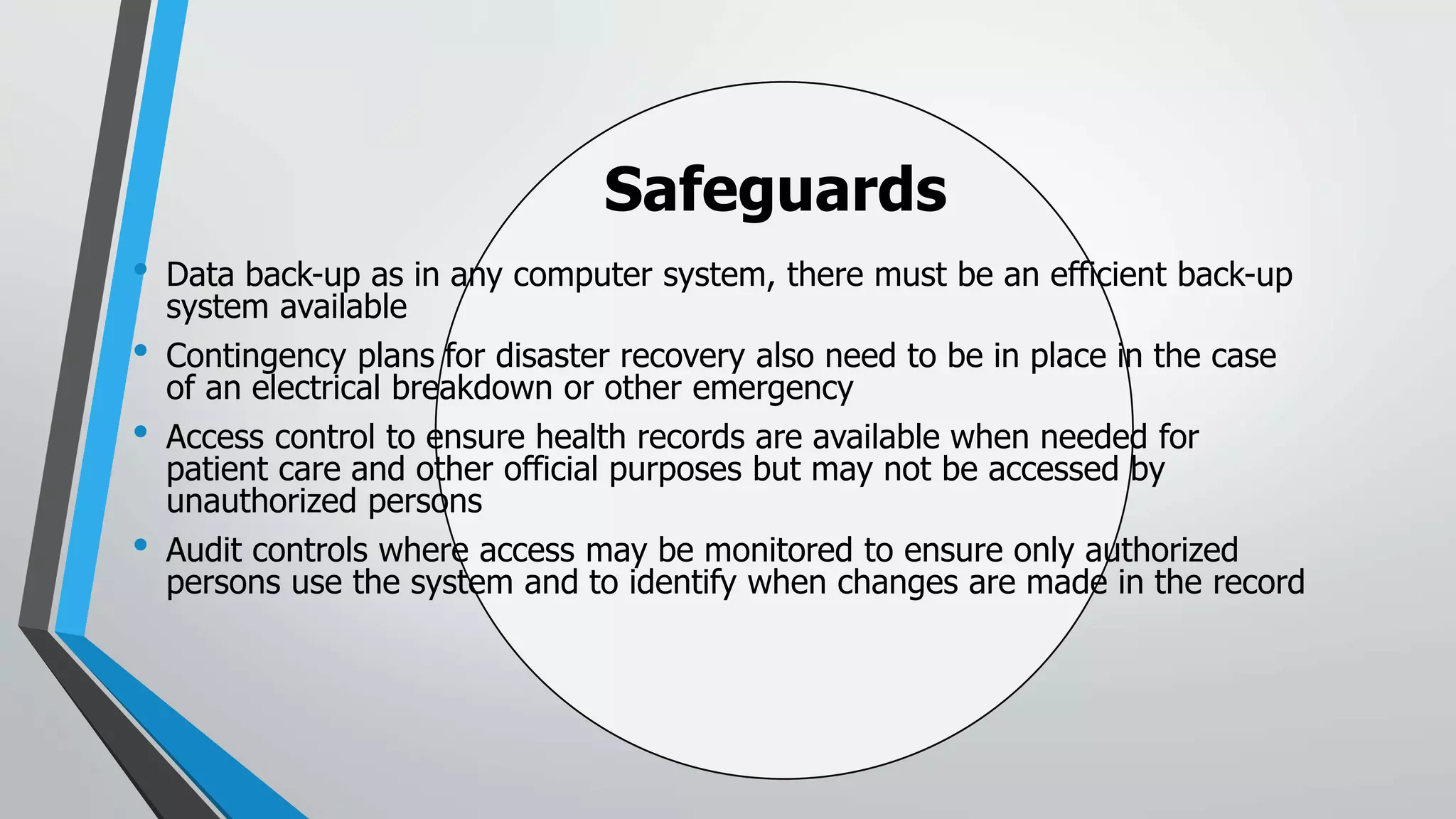
Safeguards
• Data back-up as in any computer system, there must be an efficient back-up
system available
• Contingency plans for disaster recovery also need to be in place in the case
of an electrical breakdown or other emergency
• Access control to ensure health records are available when needed for
patient care and other official purposes but may not be accessed by
unauthorized persons
• Audit controls where access may be monitored to ensure only authorized
persons use the system and to identify when changes are made in the record

Week 7 issues and challenges

  • 1.
    Issues and Challengesin EHR Implementation Roy Dahildahil, RMT
  • 2.
    Electronic Health Record •The electronic health record includes all information contained in a traditional health record including a patient’s health profile, behavioural and environmental information. As well as content the EHR also includes the dimension of time, which allows for the inclusion of information across multiple episodes and providers, which will ultimately evolve into a lifetime record (Mon, 2004, Amatayakul, 2004).
  • 3.
  • 4.
    • Security measuresto prevent breach of information • Privacy, confidentiality and quality of information generated • Quality of electronic healthcare information and accuracy of data entries • Accuracy and validity of the original source data • Reliability – data is consistent and information generated is understandable; • Completeness – all required data is present; • Legibility – data is readable; • Currency and timeliness – data is recorded at the point of care; and • Accessibility – data is available to authorized persons when and where needed. (WHO) Security, Confidentiality Reliability
  • 5.
    Technology • Availability oftechnological infrastructure to implement EHR Accessibility • Concern by providers as to whether the information they generate will be available on request • Philippines: Poor internet connection Interoperability • Clinical Data Entry – Standard Dictionary • Diagnosis that are not in ICD 10 • Local terms Technology Access Interoperability
  • 6.
    Cost • High Costof Computers and Computer Systems and Funding Issues • Implementation and maintenance of the system • Manpower issues – lack of staff with adequate skills Culture • Strong Resistance to Change by Many Healthcare Providers • Resistance to Computer Technology and Lack of Computer Literacy • Involvement of clinicians and hospital administrators Language • Lack of staff with adequate knowledge of disease classification systems • Environmental issues Cost Language Culture
  • 7.
    Safeguards • Data back-upas in any computer system, there must be an efficient back-up system available • Contingency plans for disaster recovery also need to be in place in the case of an electrical breakdown or other emergency • Access control to ensure health records are available when needed for patient care and other official purposes but may not be accessed by unauthorized persons • Audit controls where access may be monitored to ensure only authorized persons use the system and to identify when changes are made in the record