Coping with Complexity: Addressing the
10 Key Challenges of EHR Implementation
By Shailendra Sinhasane In Blog Posted February 24, 2023
The digital boom has disrupted the healthcare industry in multiple ways in the last
decade. Storing patient information in folders manually has been slowly and
creatively replaced with EHR implementation in the healthcare industry. The
widespread transition from the document-based storage system to EHR is one of
the remarkable transformations in the healthcare sector. EHR implementation has
not only uplifted the healthcare sector and provided on hands solutions, but it has
also had some challenging areas that need solutions to tackle the problems.
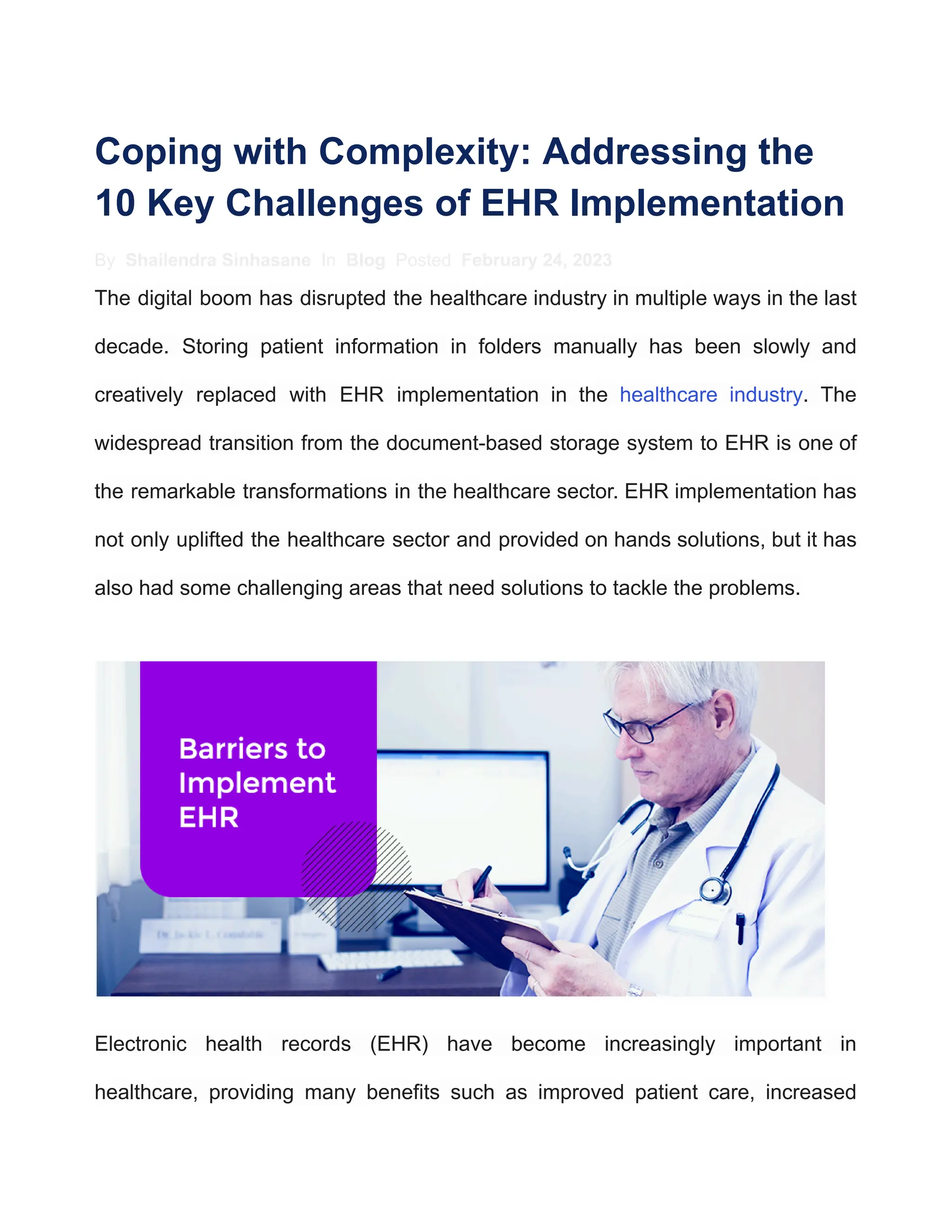
Electronic health records (EHR) have become increasingly important in
healthcare, providing many benefits such as improved patient care, increased
efficiency, and reduced costs. However, implementing EHR software can be a
complex and challenging process for healthcare organizations. The
implementation process requires careful planning, preparation, and execution to
overcome the various challenges that organizations may encounter. These
challenges can range from technical issues to user adoption to compliance with
regulations. Understanding the challenges of EHR implementation is crucial for
organizations to develop a comprehensive plan that can successfully integrate
EHR software into their operations.
In this article, the challenges of electronic health records will be discussed along
with the solutions to tackle and resolve these challenges.
Why is EHR Important?
An Electronic Health Record commonly referred to as an EHR in the healthcare
industry, refers to the storage and safekeeping of a patient’s information in a
digital format. These patient-centered records are available anytime for authorized
providers thus easing the clinical workflow. The EHR implementation has become
a vital segment in aggregating the patient’s medical history by providing real-time
access to the diagnosis details, treatment plans, aftercare, allergies to
medications, lab test results, and more. This implementation of EHR offers
access to digital health tools necessary for decision-making processes. The
effectiveness of EHRs helps to automate and properly streamline the process for
providers and makes the healthcare workflow more efficient toward care-driven
goals.
Owing to the numerous benefits it offers, EHR has become an inevitable tool for
hospitals as well as private health practitioners across the world. It fosters better
health outcomes while reducing costs for both the healthcare provider and the
patient. It negates medical errors leading to improved diagnostics and patient
safety. Moreover, it contributes to higher patient engagement and facilitates
enhanced care coordination.
Top 10 EHR Implementation Challenges
Implementation of EHR in a healthcare system is not as easy as it sounds. There
are numerous potential challenges in implementing an electronic health records
system. Being aware of the EHR challenges in advance will help the providers to
avoid unnecessary data sharing and make the transition from traditional to digital
storage of the health data process smoother. Here goes a list of major hurdles
that providers should be aware of while implementing EHR.
1 Cost of Implementation
It is no surprise that EHR implementation is an expensive affair. The selection,
implementation, and optimization of EHR will take away the lion’s share of the
planned capital budget investment. On a general note, the implementation
process can be classified into five components viz. setting up the hardware,
software costs, implementation assistance, training for the staff, ongoing network
fees, and maintenance. There could be unplanned expenses with the EHR
technology during the implementation. Finding financial resources for EHR
implementation is one of the major hurdles, especially for smaller healthcare
establishments.
2 Staff Resistance
There continues to be resistance amongst staff members regarding the idea of
EHR implementation in the establishment. In addition, there are health
practitioners who are doubtful about the efficacy of electronic health records and
privacy protocols. They may show reluctance to give up the documentation
process due to the lack of digital integration. In some cases, the staff lacks
awareness of the current technological advancements and the comprehensive
benefits of EHR implementation. It leads to the delayed implementation of EHR.
3 Training is time-consuming
Before the implementation of EHR systems, the staff needs to be given thorough
training about the new workflow. The providers and the medical team have to
spend extra time and put in extra effort to understand the new system to adjust
their work accordingly. It is a time-consuming process and a hassle for both the
staff and the management. Small and mid-sized organizations fear the loss of
business during the training phase causing barriers to implementing EHR systems
in their organizations. Also, the staff may, at times, consider it an unnecessary
effort.
4 Lack of usability
If the EHR system is inadequate to fit into the existing workflow, providers find it
difficult to adapt to it. The one-size-fits-all rule does not suit the EHR system as
the workflow of a therapist compared to that of a cardiologist and likewise. The
flaws in the design or the inadequacy of training decrease the ease of using the
EHR software. Compromised health care data can have fatal consequences on
patient health outcomes.
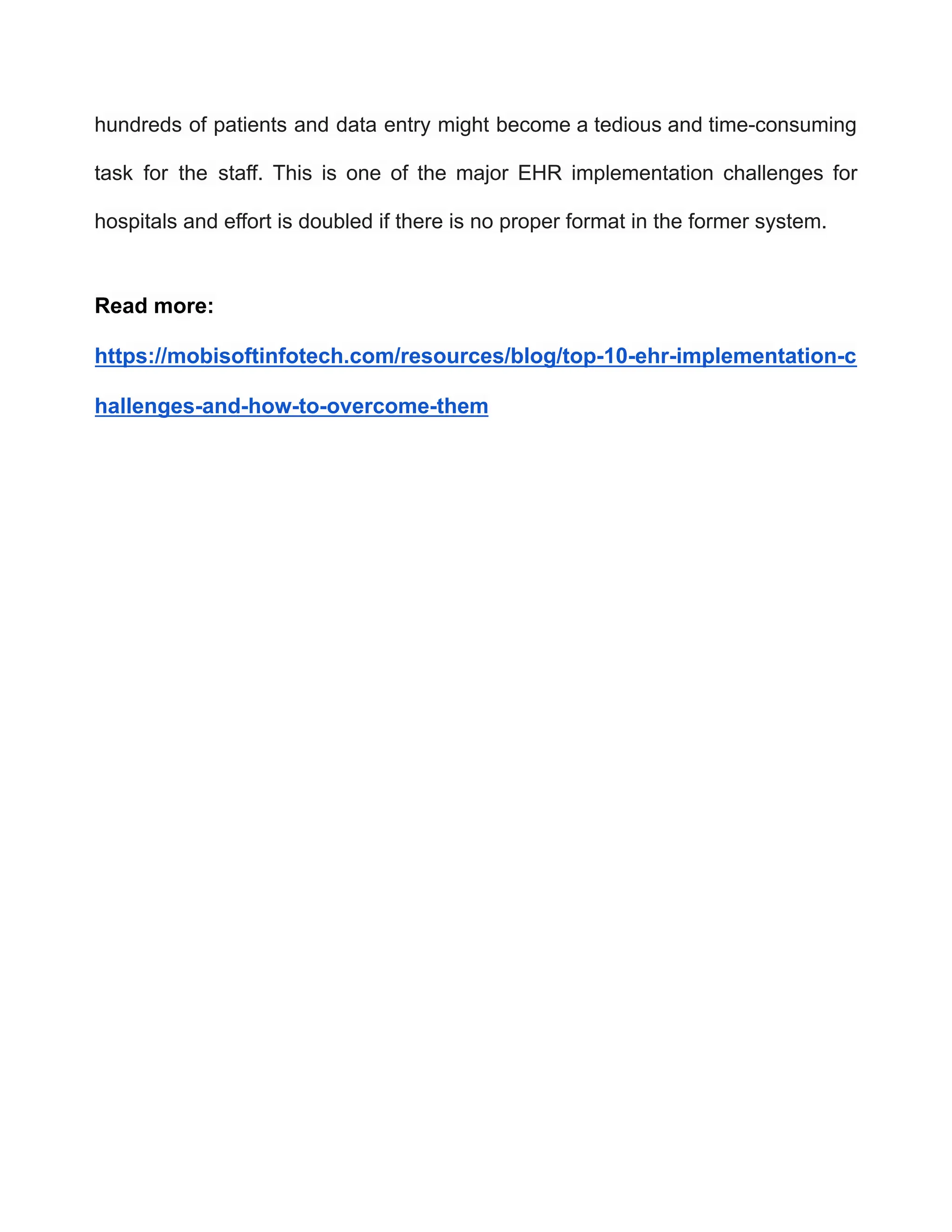
5 Data Privacy
Another major challenge of EHR is the data privacy concerns of the patient and
provider community. The stakeholders often voice concerns over the risk of data
leakage due to a natural disaster or a cyber attack. The federal rule has imposed
a national policy to protect the confidentiality of personal health data. In case of a
security breach, the organization may get into a legal hassle and have to spend
millions of dollars to settle the dispute. Hence, it becomes a major responsibility of
the provider to ensure the data security of the EHR systems.
6 Data Migration
It is a logistical nightmare for the staff to export paper-based documents to digital
records. There will be large chunks of documents about the medical history of
hundreds of patients and data entry might become a tedious and time-consuming
task for the staff. This is one of the major EHR implementation challenges for
hospitals and effort is doubled if there is no proper format in the former system.
Read more:
https://mobisoftinfotech.com/resources/blog/top-10-ehr-implementation-c
hallenges-and-how-to-overcome-them

Top 10 EHR Implementation Challenges and Proven Solutions

  • 1.
    Coping with Complexity:Addressing the 10 Key Challenges of EHR Implementation By Shailendra Sinhasane In Blog Posted February 24, 2023 The digital boom has disrupted the healthcare industry in multiple ways in the last decade. Storing patient information in folders manually has been slowly and creatively replaced with EHR implementation in the healthcare industry. The widespread transition from the document-based storage system to EHR is one of the remarkable transformations in the healthcare sector. EHR implementation has not only uplifted the healthcare sector and provided on hands solutions, but it has also had some challenging areas that need solutions to tackle the problems. Electronic health records (EHR) have become increasingly important in healthcare, providing many benefits such as improved patient care, increased
  • 2.
    efficiency, and reducedcosts. However, implementing EHR software can be a complex and challenging process for healthcare organizations. The implementation process requires careful planning, preparation, and execution to overcome the various challenges that organizations may encounter. These challenges can range from technical issues to user adoption to compliance with regulations. Understanding the challenges of EHR implementation is crucial for organizations to develop a comprehensive plan that can successfully integrate EHR software into their operations. In this article, the challenges of electronic health records will be discussed along with the solutions to tackle and resolve these challenges. Why is EHR Important? An Electronic Health Record commonly referred to as an EHR in the healthcare industry, refers to the storage and safekeeping of a patient’s information in a digital format. These patient-centered records are available anytime for authorized providers thus easing the clinical workflow. The EHR implementation has become a vital segment in aggregating the patient’s medical history by providing real-time access to the diagnosis details, treatment plans, aftercare, allergies to medications, lab test results, and more. This implementation of EHR offers access to digital health tools necessary for decision-making processes. The
  • 3.
    effectiveness of EHRshelps to automate and properly streamline the process for providers and makes the healthcare workflow more efficient toward care-driven goals. Owing to the numerous benefits it offers, EHR has become an inevitable tool for hospitals as well as private health practitioners across the world. It fosters better health outcomes while reducing costs for both the healthcare provider and the patient. It negates medical errors leading to improved diagnostics and patient safety. Moreover, it contributes to higher patient engagement and facilitates enhanced care coordination. Top 10 EHR Implementation Challenges Implementation of EHR in a healthcare system is not as easy as it sounds. There are numerous potential challenges in implementing an electronic health records system. Being aware of the EHR challenges in advance will help the providers to avoid unnecessary data sharing and make the transition from traditional to digital storage of the health data process smoother. Here goes a list of major hurdles that providers should be aware of while implementing EHR.
  • 4.
    1 Cost ofImplementation It is no surprise that EHR implementation is an expensive affair. The selection, implementation, and optimization of EHR will take away the lion’s share of the planned capital budget investment. On a general note, the implementation process can be classified into five components viz. setting up the hardware, software costs, implementation assistance, training for the staff, ongoing network fees, and maintenance. There could be unplanned expenses with the EHR technology during the implementation. Finding financial resources for EHR implementation is one of the major hurdles, especially for smaller healthcare establishments. 2 Staff Resistance There continues to be resistance amongst staff members regarding the idea of EHR implementation in the establishment. In addition, there are health practitioners who are doubtful about the efficacy of electronic health records and privacy protocols. They may show reluctance to give up the documentation process due to the lack of digital integration. In some cases, the staff lacks awareness of the current technological advancements and the comprehensive benefits of EHR implementation. It leads to the delayed implementation of EHR.
  • 5.
    3 Training istime-consuming Before the implementation of EHR systems, the staff needs to be given thorough training about the new workflow. The providers and the medical team have to spend extra time and put in extra effort to understand the new system to adjust their work accordingly. It is a time-consuming process and a hassle for both the staff and the management. Small and mid-sized organizations fear the loss of business during the training phase causing barriers to implementing EHR systems in their organizations. Also, the staff may, at times, consider it an unnecessary effort. 4 Lack of usability If the EHR system is inadequate to fit into the existing workflow, providers find it difficult to adapt to it. The one-size-fits-all rule does not suit the EHR system as the workflow of a therapist compared to that of a cardiologist and likewise. The flaws in the design or the inadequacy of training decrease the ease of using the EHR software. Compromised health care data can have fatal consequences on patient health outcomes.
  • 6.
    5 Data Privacy Anothermajor challenge of EHR is the data privacy concerns of the patient and provider community. The stakeholders often voice concerns over the risk of data leakage due to a natural disaster or a cyber attack. The federal rule has imposed a national policy to protect the confidentiality of personal health data. In case of a security breach, the organization may get into a legal hassle and have to spend millions of dollars to settle the dispute. Hence, it becomes a major responsibility of the provider to ensure the data security of the EHR systems. 6 Data Migration It is a logistical nightmare for the staff to export paper-based documents to digital records. There will be large chunks of documents about the medical history of
  • 7.
    hundreds of patientsand data entry might become a tedious and time-consuming task for the staff. This is one of the major EHR implementation challenges for hospitals and effort is doubled if there is no proper format in the former system. Read more: https://mobisoftinfotech.com/resources/blog/top-10-ehr-implementation-c hallenges-and-how-to-overcome-them