Health Information System Security
Kristin Clark
MHA 616
Prince Ordu
April 16, 2012
Introduction
 Health management information systems (HMIS) are the
accumulation of paper and electronic patient data
 As more data is stored electronically the need for
security and confidentiality of patient information is
increased
 Use of electronic health records is increasing
 Provide a complete patient history

 “Ensuring the privacy and security of electronic health
information is a key challenge for organizations that
collect, store, and exchange such information.”
(Dimitropoulos and Rinzk, 2009, p. 428)
Electronic Health Records
 EHR are “a system that
will allow doctors and
nurses to access data,
and give clarifications to
clinicians performing
follow up care, to whom
a patient’s previous
treatment or medical
information is often
needed.” (Tan, 2010, p.
120)
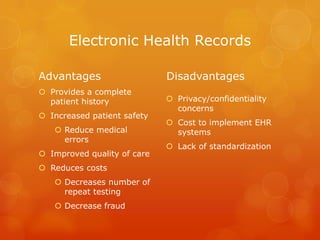
Electronic Health Records
Advantages
 Provides a complete
patient history
 Increased patient safety
 Reduce medical
errors
 Improved quality of care
 Reduces costs
 Decreases number of
repeat testing
 Decrease fraud

Disadvantages
 Privacy/confidentiality
concerns
 Cost to implement EHR
systems
 Lack of standardization
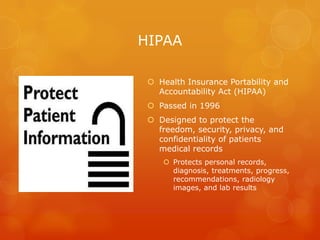
HIPAA
 Health Insurance Portability and
Accountability Act (HIPAA)
 Passed in 1996
 Designed to protect the
freedom, security, privacy, and
confidentiality of patients
medical records
 Protects personal records,
diagnosis, treatments, progress,
recommendations, radiology
images, and lab results
Patient Privacy/Confidentiality
Concerns
 EHRs use of wireless networks require increased security
 Anti-virus software
 Firewalls
 Passwords
 Security codes

 Intrusion detections systems
 Intrusion prevention systems
 Requires a back up system for power outages or disaster
recovery
Ways To Increase Security
 Educate those with access to HMIS about HIPAA
 Only use patient data for healthcare purposes
 Keep from those with malicious intent
 Privacy Rule

 Consumer control- have the right to release information
 Setting boundaries- ensure health information is used
for healthcare purposes only
 Accountability- Responsible for actions
 Public responsibility- only release information for
emergency circumstances
 Security- release information for public and national
health
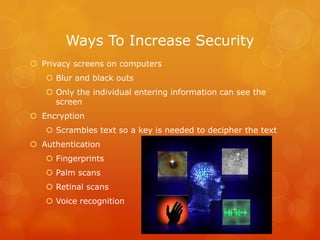
Ways To Increase Security
 Privacy screens on computers
 Blur and black outs
 Only the individual entering information can see the
screen
 Encryption
 Scrambles text so a key is needed to decipher the text
 Authentication
 Fingerprints
 Palm scans
 Retinal scans
 Voice recognition
HMIS Security Systems In Place
 Duke University Medical Center and
Health System
 Implementation of single sign on
system
 Allows access to multiple
systems simultaneously
 St. Vincent’s Hospital and Healthcare
Center
 Implemented biometric
authentication
 Implemented a single sign on
system
Issues With Security Methods
 Authentication Issues
 Protective clothing such as gloves, masks, and
goggles are often used which can hinder access to
scanning
 Dirt and blood can decrease biometric scanner
reliability
 It is not fail proof
 Smart cards/Passwords
 Cards can be lost
 Passwords can be forgotten or hacked
Conclusion
 Electronic health records are on the rise
 Has both advantages and disadvantages
 Compliance with HIPAA is necessary for HMIS to protect
patient confidentiality
 Many ways to increase security
 Educations
 Anti-virus, firewalls, passwords
 Authentication
References
 Dimitropoulos.L, Rizk. S. (2009). A state-based approach to privacy
and security for interoperable health information exchange. Health
Affairs. 28(2). 428-434. Retrieved from proQuest database.
 Harrisoin, P. J., Samanujan. S. (2011). Electronic medical records:
great idea or great threat to privacy? The Review of Business
Information Systems. 15(1). 1-7. Retrieved from proQuest
database.
 Hewitt, B., McLeod, A. (2011). Modeling security in acceptance of
electronic health record systems. Journal Of Information Privacy &
Security. 7(3). 23-45. Retrieved from proQuest database.
 Nataraj. S. (2011). Security concerns in e-prescribing. The Review
of Business Information Systems. 15(1). 15-18. Retrieved from
proQuest database.
 Tan, J. K. H. (2010). Adaptive Health Management Information
Systems (3rd ed.). Sudbury: Jones and Bartlett.

Health information system security

  • 1.
    Health Information SystemSecurity Kristin Clark MHA 616 Prince Ordu April 16, 2012
  • 2.
    Introduction  Health managementinformation systems (HMIS) are the accumulation of paper and electronic patient data  As more data is stored electronically the need for security and confidentiality of patient information is increased  Use of electronic health records is increasing  Provide a complete patient history  “Ensuring the privacy and security of electronic health information is a key challenge for organizations that collect, store, and exchange such information.” (Dimitropoulos and Rinzk, 2009, p. 428)
  • 3.
    Electronic Health Records EHR are “a system that will allow doctors and nurses to access data, and give clarifications to clinicians performing follow up care, to whom a patient’s previous treatment or medical information is often needed.” (Tan, 2010, p. 120)
  • 4.
    Electronic Health Records Advantages Provides a complete patient history  Increased patient safety  Reduce medical errors  Improved quality of care  Reduces costs  Decreases number of repeat testing  Decrease fraud Disadvantages  Privacy/confidentiality concerns  Cost to implement EHR systems  Lack of standardization
  • 5.
    HIPAA  Health InsurancePortability and Accountability Act (HIPAA)  Passed in 1996  Designed to protect the freedom, security, privacy, and confidentiality of patients medical records  Protects personal records, diagnosis, treatments, progress, recommendations, radiology images, and lab results
  • 6.
    Patient Privacy/Confidentiality Concerns  EHRsuse of wireless networks require increased security  Anti-virus software  Firewalls  Passwords  Security codes  Intrusion detections systems  Intrusion prevention systems  Requires a back up system for power outages or disaster recovery
  • 7.
    Ways To IncreaseSecurity  Educate those with access to HMIS about HIPAA  Only use patient data for healthcare purposes  Keep from those with malicious intent  Privacy Rule  Consumer control- have the right to release information  Setting boundaries- ensure health information is used for healthcare purposes only  Accountability- Responsible for actions  Public responsibility- only release information for emergency circumstances  Security- release information for public and national health
  • 8.
    Ways To IncreaseSecurity  Privacy screens on computers  Blur and black outs  Only the individual entering information can see the screen  Encryption  Scrambles text so a key is needed to decipher the text  Authentication  Fingerprints  Palm scans  Retinal scans  Voice recognition
  • 9.
    HMIS Security SystemsIn Place  Duke University Medical Center and Health System  Implementation of single sign on system  Allows access to multiple systems simultaneously  St. Vincent’s Hospital and Healthcare Center  Implemented biometric authentication  Implemented a single sign on system
  • 10.
    Issues With SecurityMethods  Authentication Issues  Protective clothing such as gloves, masks, and goggles are often used which can hinder access to scanning  Dirt and blood can decrease biometric scanner reliability  It is not fail proof  Smart cards/Passwords  Cards can be lost  Passwords can be forgotten or hacked
  • 11.
    Conclusion  Electronic healthrecords are on the rise  Has both advantages and disadvantages  Compliance with HIPAA is necessary for HMIS to protect patient confidentiality  Many ways to increase security  Educations  Anti-virus, firewalls, passwords  Authentication
  • 12.
    References  Dimitropoulos.L, Rizk.S. (2009). A state-based approach to privacy and security for interoperable health information exchange. Health Affairs. 28(2). 428-434. Retrieved from proQuest database.  Harrisoin, P. J., Samanujan. S. (2011). Electronic medical records: great idea or great threat to privacy? The Review of Business Information Systems. 15(1). 1-7. Retrieved from proQuest database.  Hewitt, B., McLeod, A. (2011). Modeling security in acceptance of electronic health record systems. Journal Of Information Privacy & Security. 7(3). 23-45. Retrieved from proQuest database.  Nataraj. S. (2011). Security concerns in e-prescribing. The Review of Business Information Systems. 15(1). 15-18. Retrieved from proQuest database.  Tan, J. K. H. (2010). Adaptive Health Management Information Systems (3rd ed.). Sudbury: Jones and Bartlett.