WELCOME TOCYCLE 1
           CLUSTER
            WEEK 4, YEAR 2
       EFFECTIVE LESSON PACING
BELL RINGER

 On your post it, write the two best reasons for getting
  to know your students.
 Discuss the question, “If the real world does not care
  what a person is interested in, or how or why a
  person learns, why should we care?”
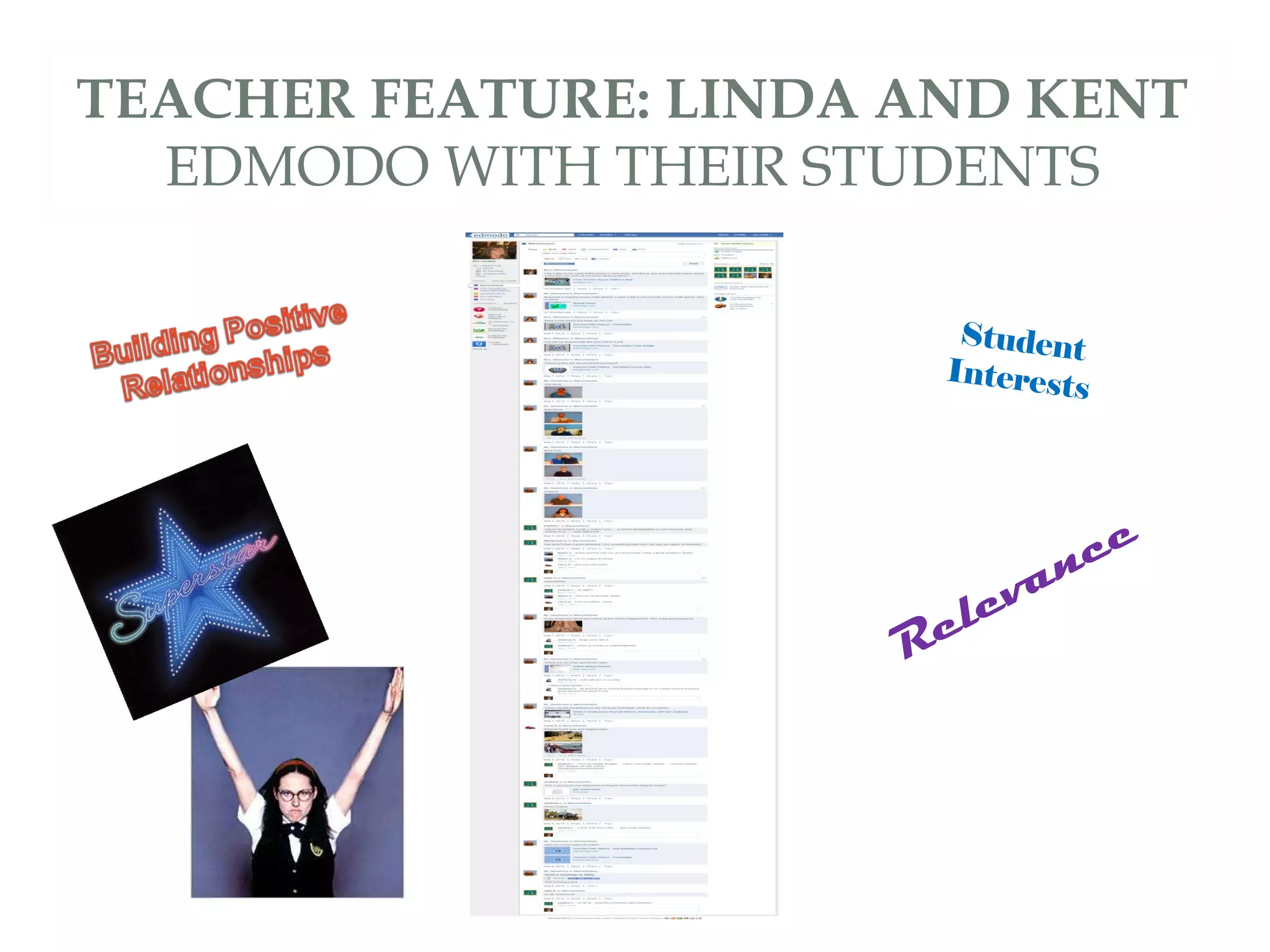
TEACHER FEATURE: LINDA AND KENT
  EDMODO WITH THEIR STUDENTS

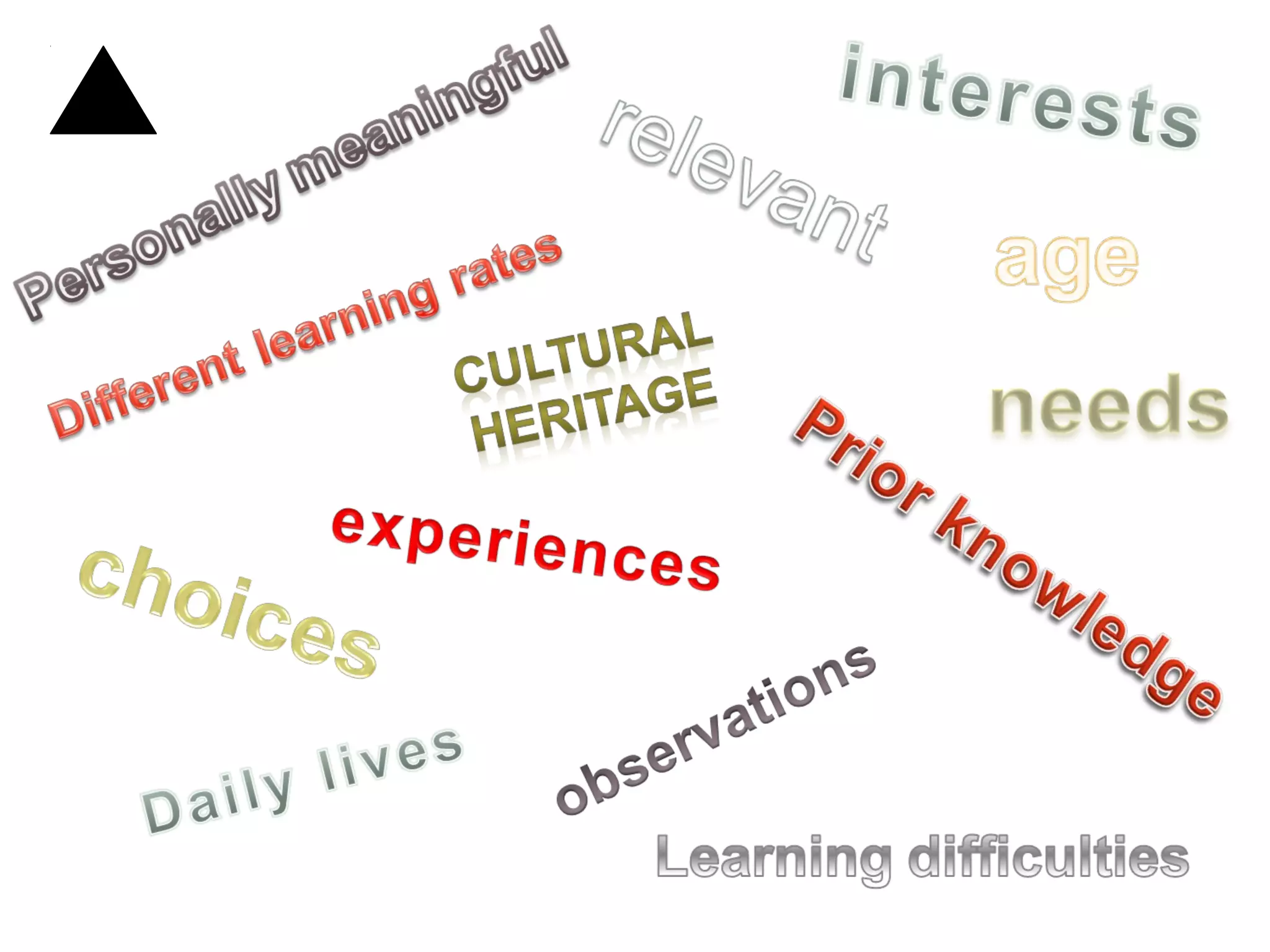
                         Student
                        Interest
                                s


                               n ce
                           a
                       elev
                      R
SCHOOL-WIDE GOAL 2012-13

• By May 2013, student achievement will increase on
  the English 10 ECA as follows:
 • Pass from 73% - 76%
 • Pass + from 3.3% to 6%
 • Progress will be monitored by periodic STI formative
   assessments.
YEARLY CLUSTER GOAL

• By May, 2013, all students will
  improve performance on the
  English 10 ECA state test by at
  least 5% on reading
  comprehension.
CLUSTER CYCLE GOAL

• By the end of Cluster Cycle 1, teachers will improve
  on specific indicators which were identified as "less
  than proficient" on the TAP Rubric during the 2011-
  12 school year and will make connections among
  the domains measured by observation, IGP's, and
  the teacher's instructional plan.
IDENTIFY

Knowing your students may be the most
important part of differentiated instruction...if you
don't know the important aspects of their learning
needs and abilities, then determining effective
instructional strategies is nearly impossible.
Teachers should take into account characteristics
of their students when determining strategies to
use, such a various learning styles; ways in which
students process information; and use of multiple
intelligence theory
                                     Howard Gardner
IDENTIFY

• Gardner’s research has shown that human
  cognitive ability is pluralistic rather than unitary
  and that learners of any subject will make greater
  progress if they have the opportunity to use their
  areas of strength to master the necessary
  material.
• There are a multitude of ways to determine your
  students “learning style” or “type of intelligence”
• Here are some examples….
LEARN/OBTAIN               I DO

There are many ways to address differentiation.
Let’s focus on two:
 1. Within the lesson itself, addressing:
• Learning Styles: Visual, Auditory, and
  Kinesthetic
• Multiple Intelligences, MI

 2. Through the things that I ask the students
    to do:
   ANCHOR ACTIVITIES
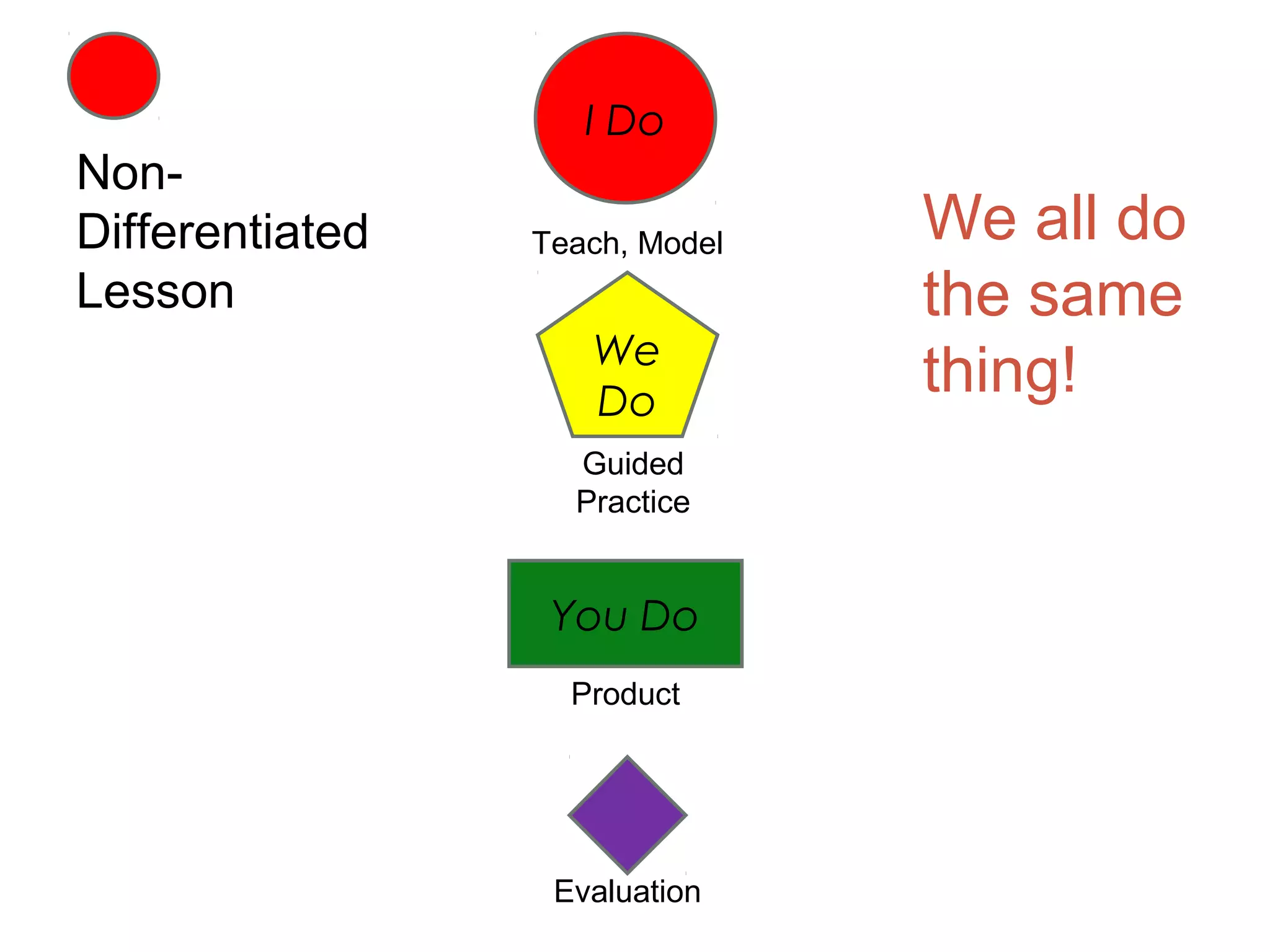
I Do
Non-
Differentiated   Teach, Model   We all do
Lesson                          the same
                    We
                    Do
                                thing!
                   Guided
                   Practice


                  You Do
                   Product


                  Evaluation
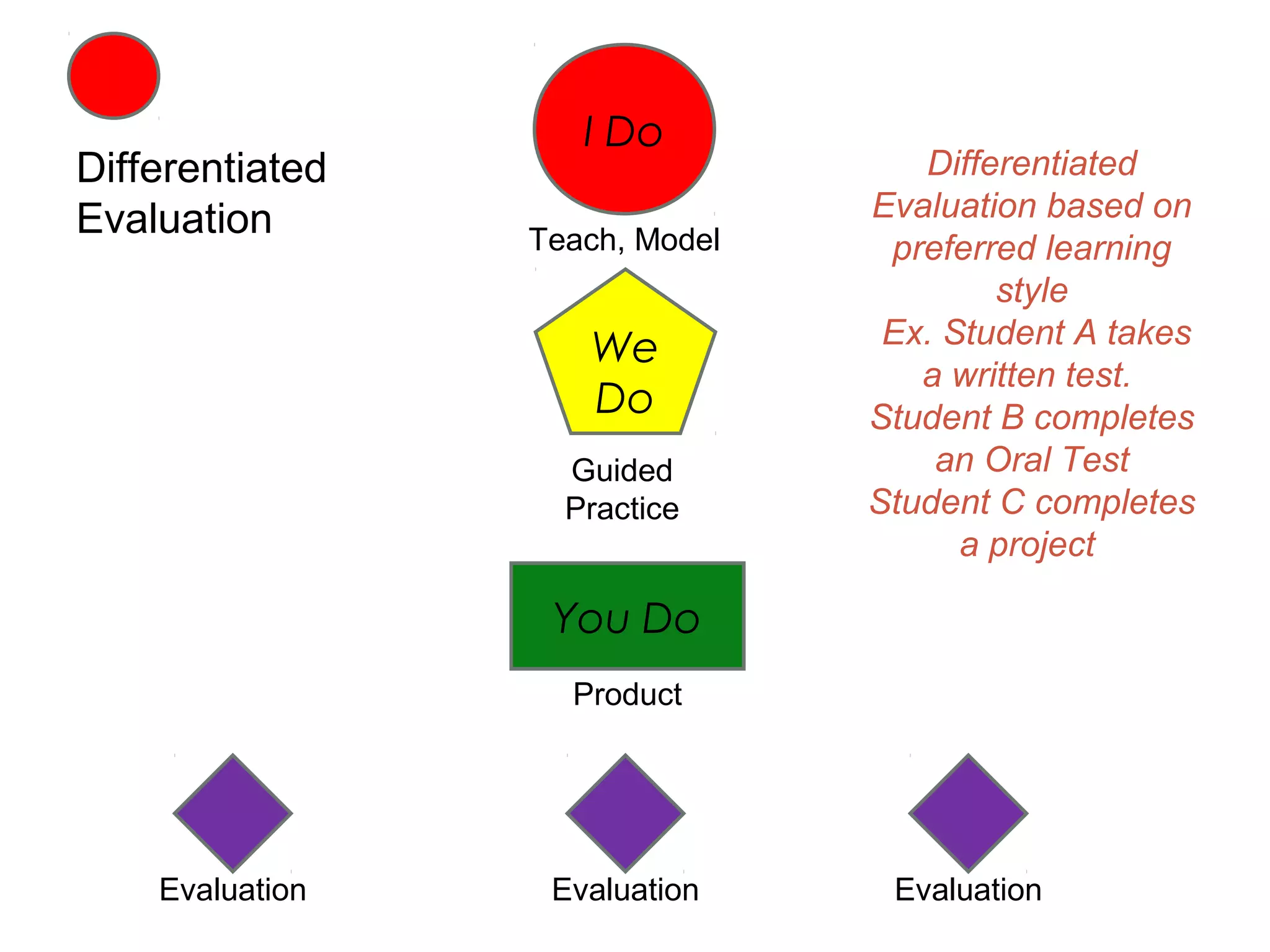
I Do
Differentiated                     Differentiated
Evaluation                      Evaluation based on
                 Teach, Model    preferred learning
                                        style
                                 Ex. Student A takes
                    We
                                   a written test.
                    Do          Student B completes
                   Guided           an Oral Test
                   Practice     Student C completes
                                      a project

                  You Do
                   Product


    Evaluation    Evaluation     Evaluation
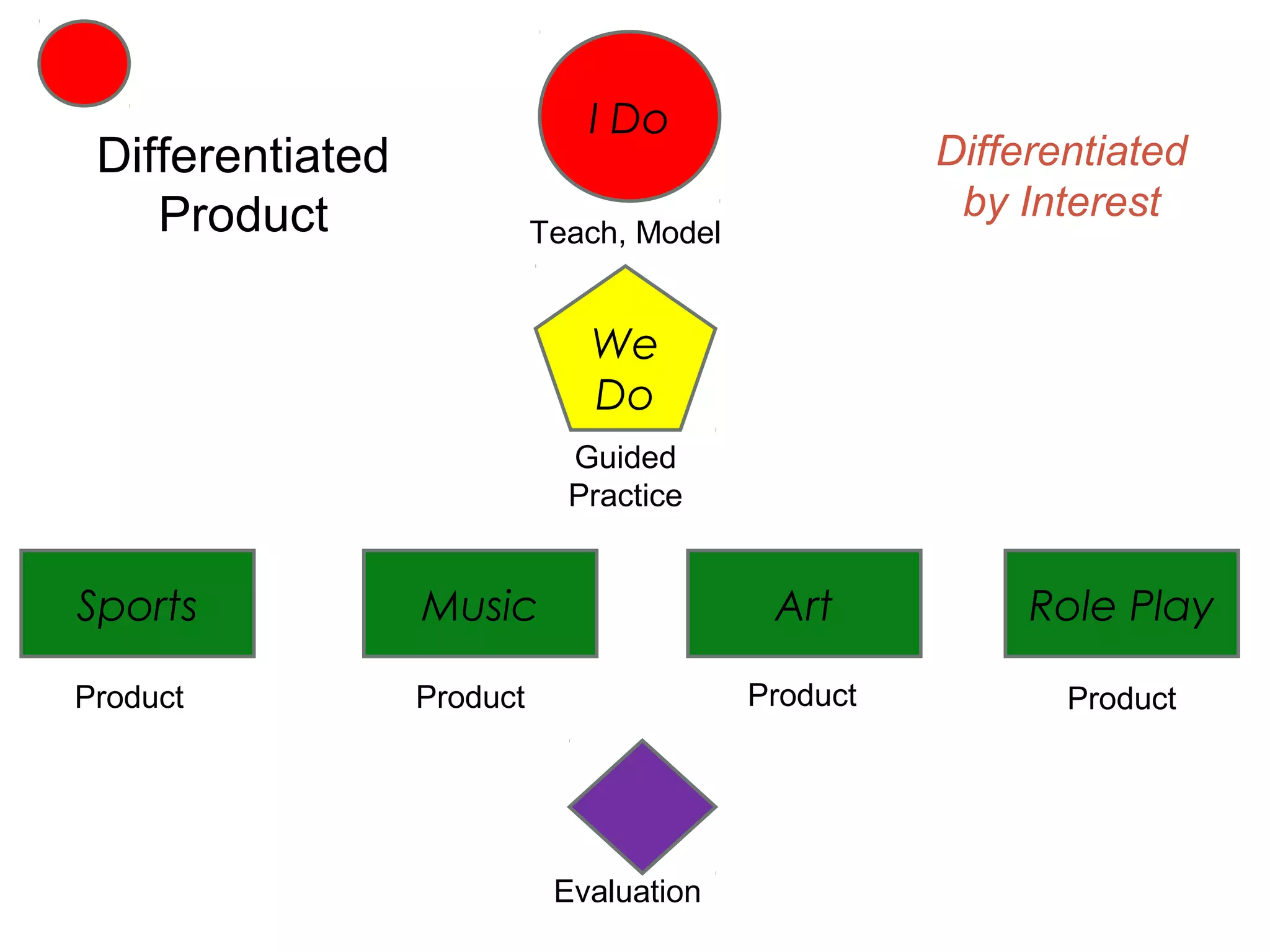
I Do
 Differentiated                                      Differentiated
    Product                                           by Interest
                            Teach, Model


                               We
                               Do
                              Guided
                              Practice


Sports            Music                     Art           Role Play

Product           Product                  Product          Product


                             Evaluation
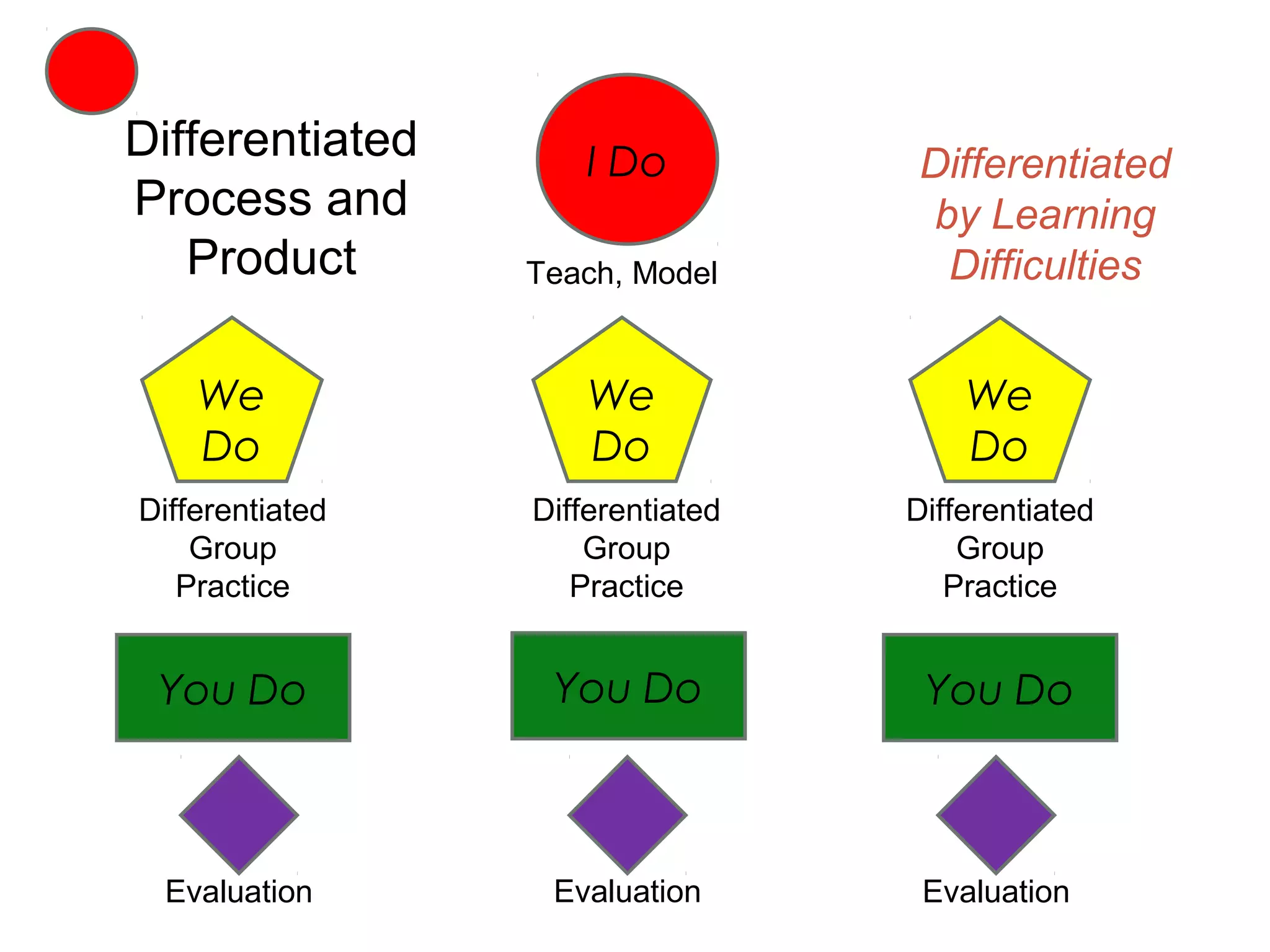
Differentiated       I Do         Differentiated
Process and                        by Learning
   Product       Teach, Model       Difficulties


    We               We               We
    Do               Do               Do
Differentiated   Differentiated   Differentiated
    Group            Group            Group
   Practice         Practice         Practice


 You Do           You Do           You Do


 Evaluation       Evaluation       Evaluation
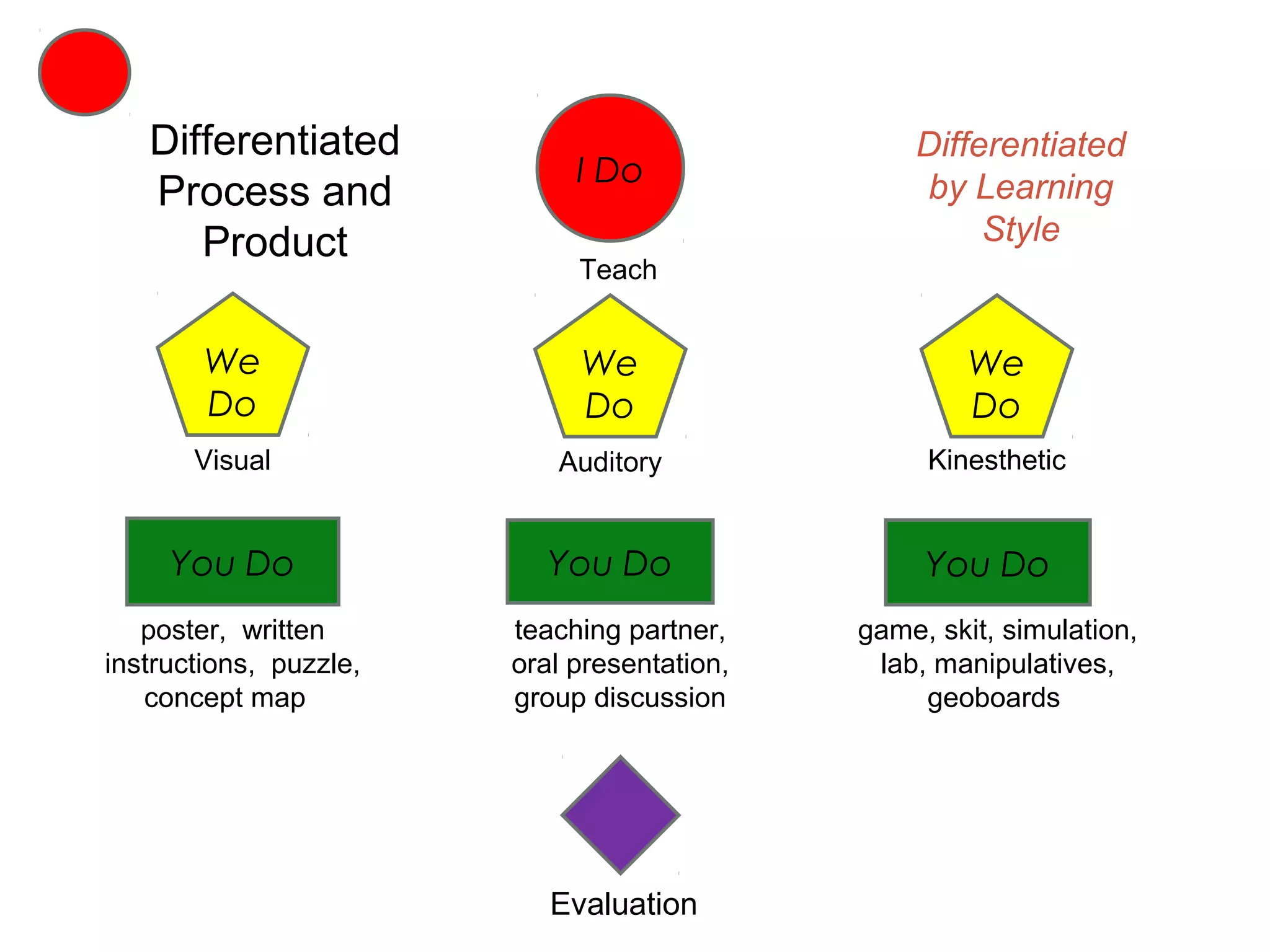
Differentiated                                Differentiated
                             I Do                by Learning
   Process and
      Product                                         Style
                             Teach


        We                   We                       We
        Do                   Do                       Do
       Visual              Auditory               Kinesthetic


     You Do                You Do                 You Do
   poster, written      teaching partner,    game, skit, simulation,
instructions, puzzle,   oral presentation,    lab, manipulatives,
   concept map          group discussion          geoboards


                           Evaluation
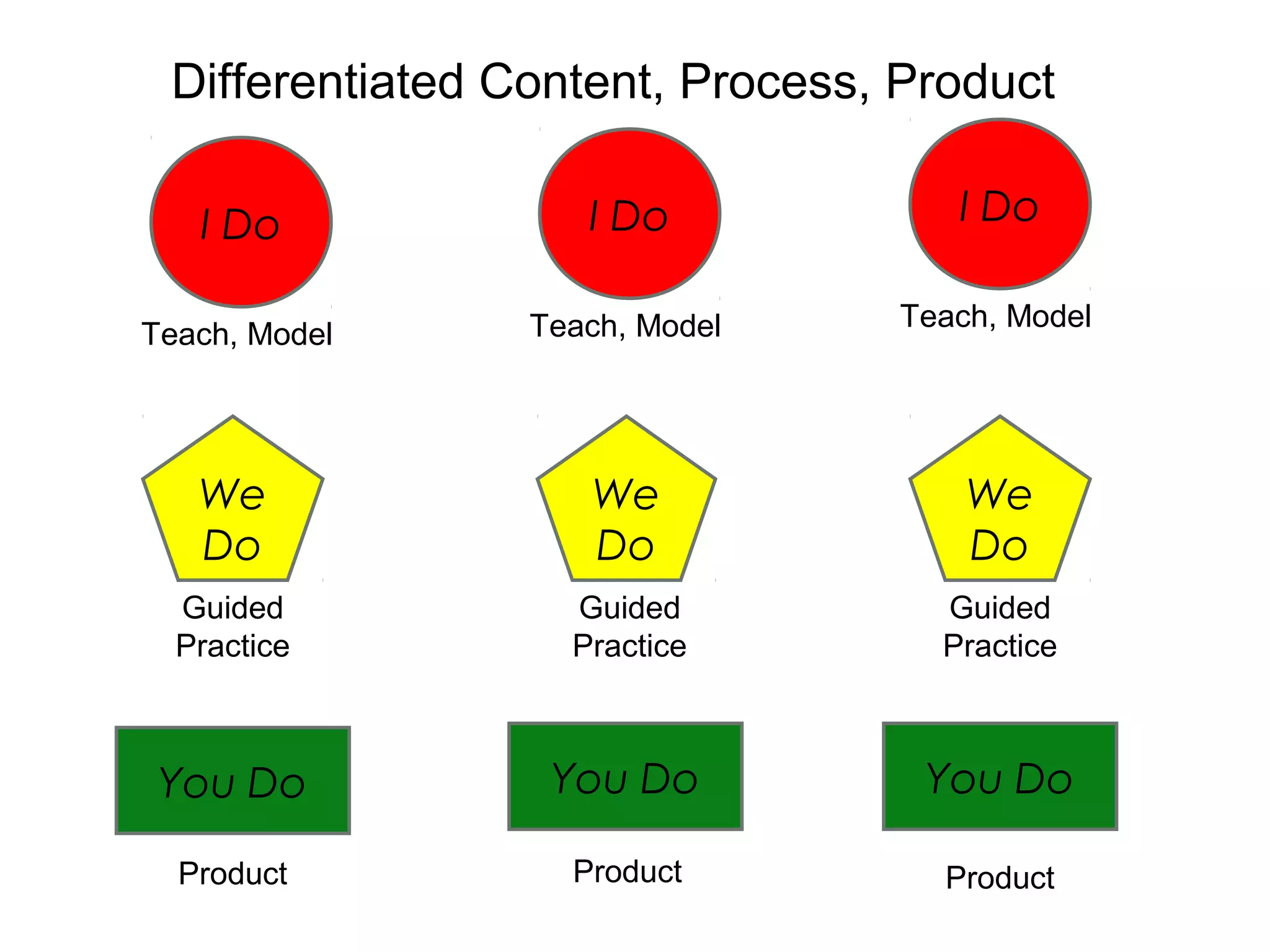
Differentiated Content, Process, Product

   I Do             I Do            I Do

                 Teach, Model    Teach, Model
Teach, Model


   We               We               We
   Do               Do               Do
  Guided           Guided          Guided
  Practice         Practice        Practice


 You Do           You Do           You Do

  Product          Product          Product
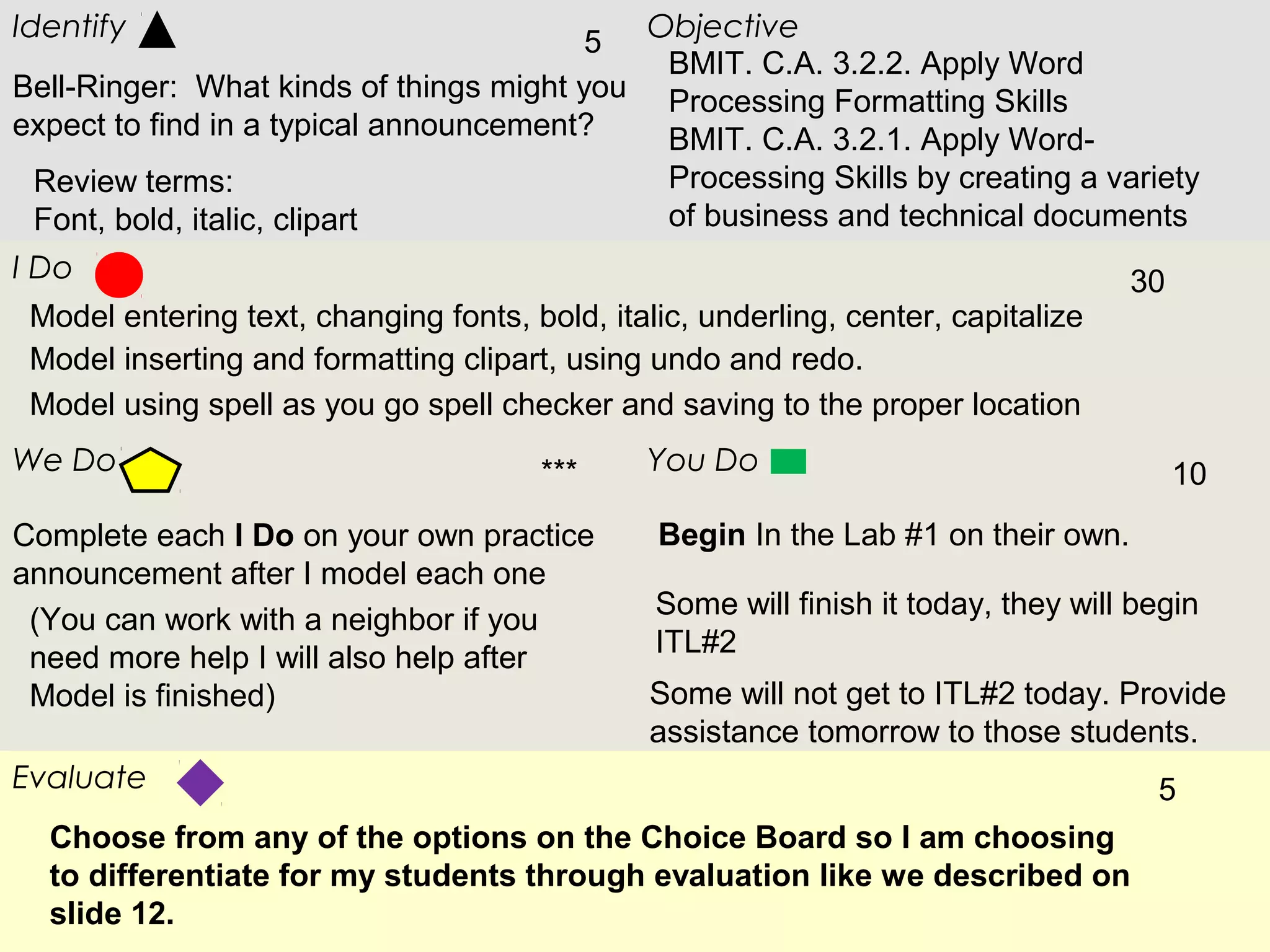
Identify                                 5 Objective
                                            BMIT. C.A. 3.2.2. Apply Word
Bell-Ringer: What kinds of things might you Processing Formatting Skills
expect to find in a typical announcement?   BMIT. C.A. 3.2.1. Apply Word-
 Review terms:                              Processing Skills by creating a variety
 Font, bold, italic, clipart                of business and technical documents
I Do                                                                                30
 Model entering text, changing fonts, bold, italic, underling, center, capitalize
 Model inserting and formatting clipart, using undo and redo.
 Model using spell as you go spell checker and saving to the proper location
We Do                                  ***     You Do                                    10
Complete each I Do on your own practice         Begin In the Lab #1 on their own.
announcement after I model each one
 (You can work with a neighbor if you           Some will finish it today, they will begin
 need more help I will also help after          ITL#2
 Model is finished)                             Some will not get to ITL#2 today. Provide
                                                assistance tomorrow to those students.
Evaluate                                                                              5
  Choose from any of the options on the Choice Board so I am choosing
  to differentiate for my students through evaluation like we described on
  slide 12.
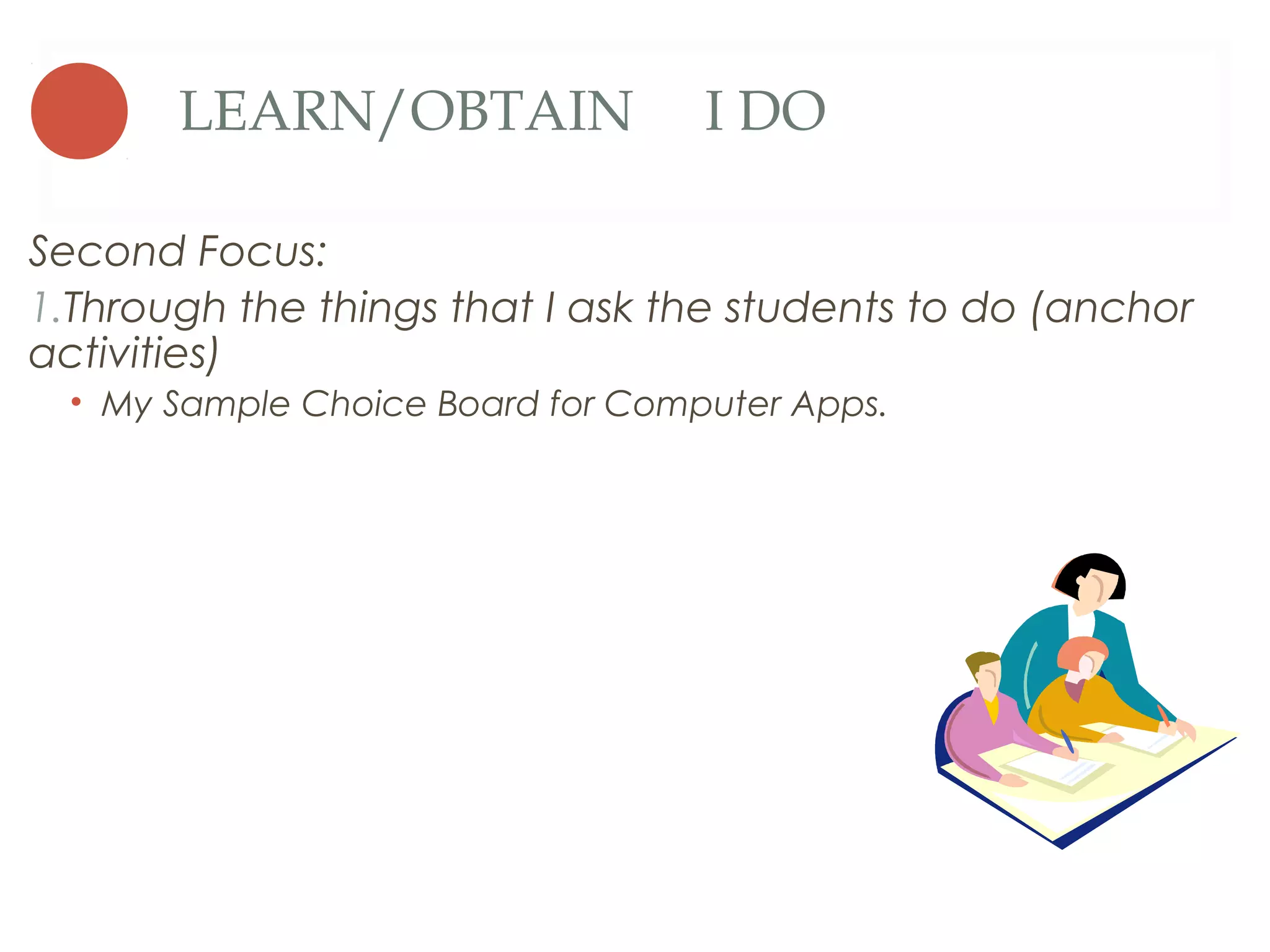
LEARN/OBTAIN                I DO

Second Focus:
1.Through the things that I ask the students to do (anchor
activities)
  • My Sample Choice Board for Computer Apps.
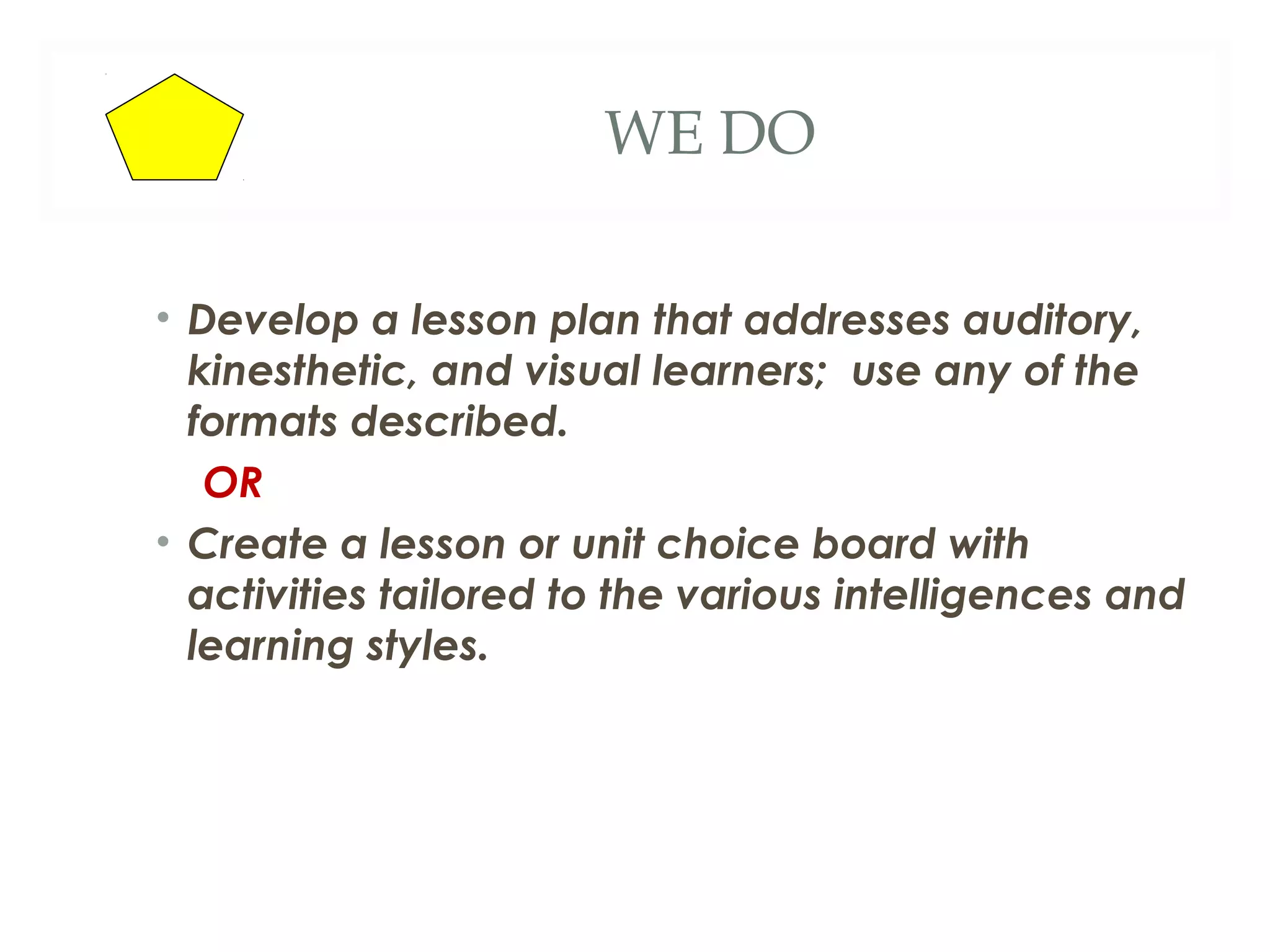
WE DO

• Develop a lesson plan that addresses auditory,
  kinesthetic, and visual learners; use any of the
  formats described.
   OR
• Create a lesson or unit choice board with
  activities tailored to the various intelligences and
  learning styles.
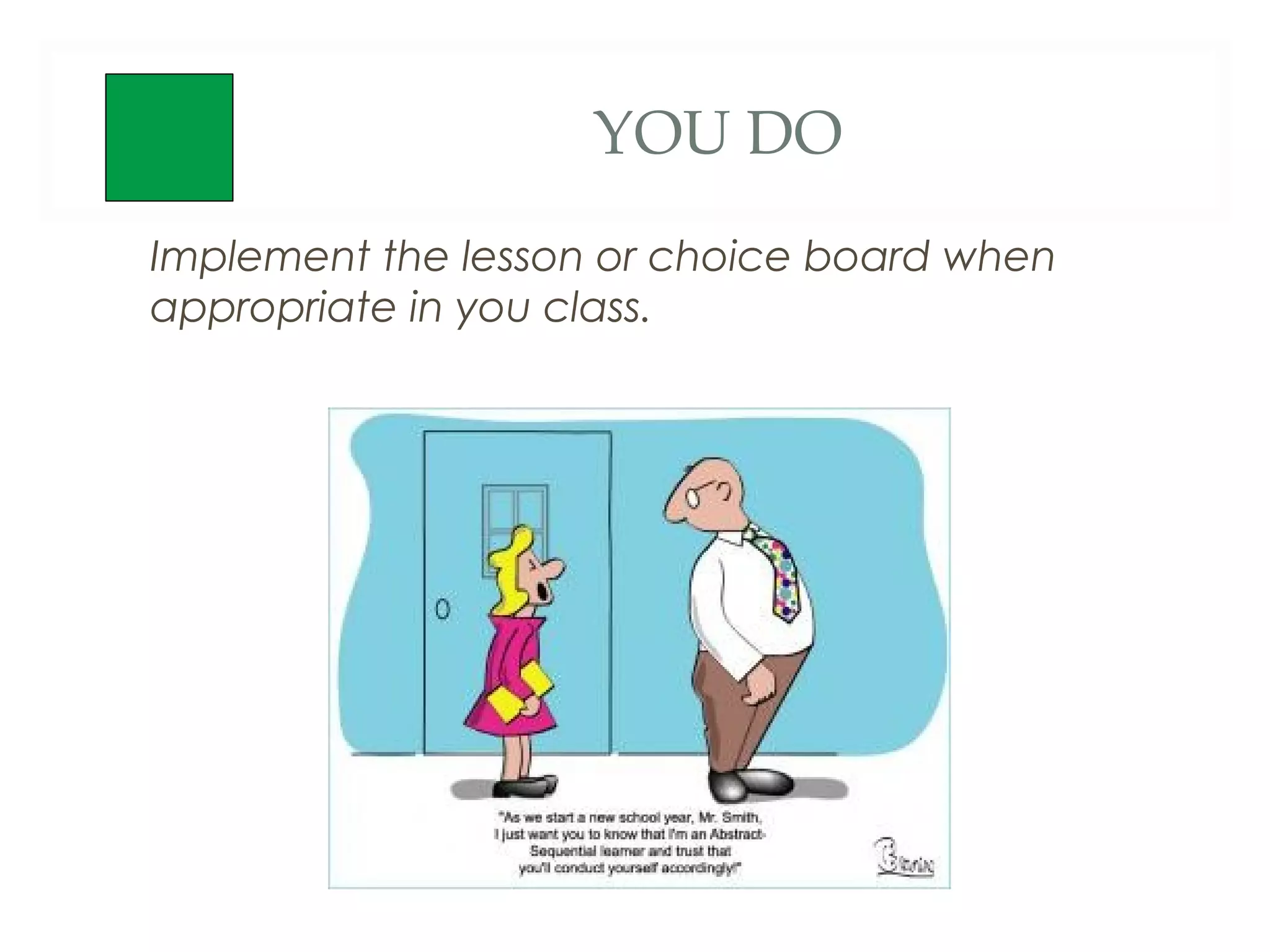
YOU DO
Implement the lesson or choice board when
appropriate in you class.
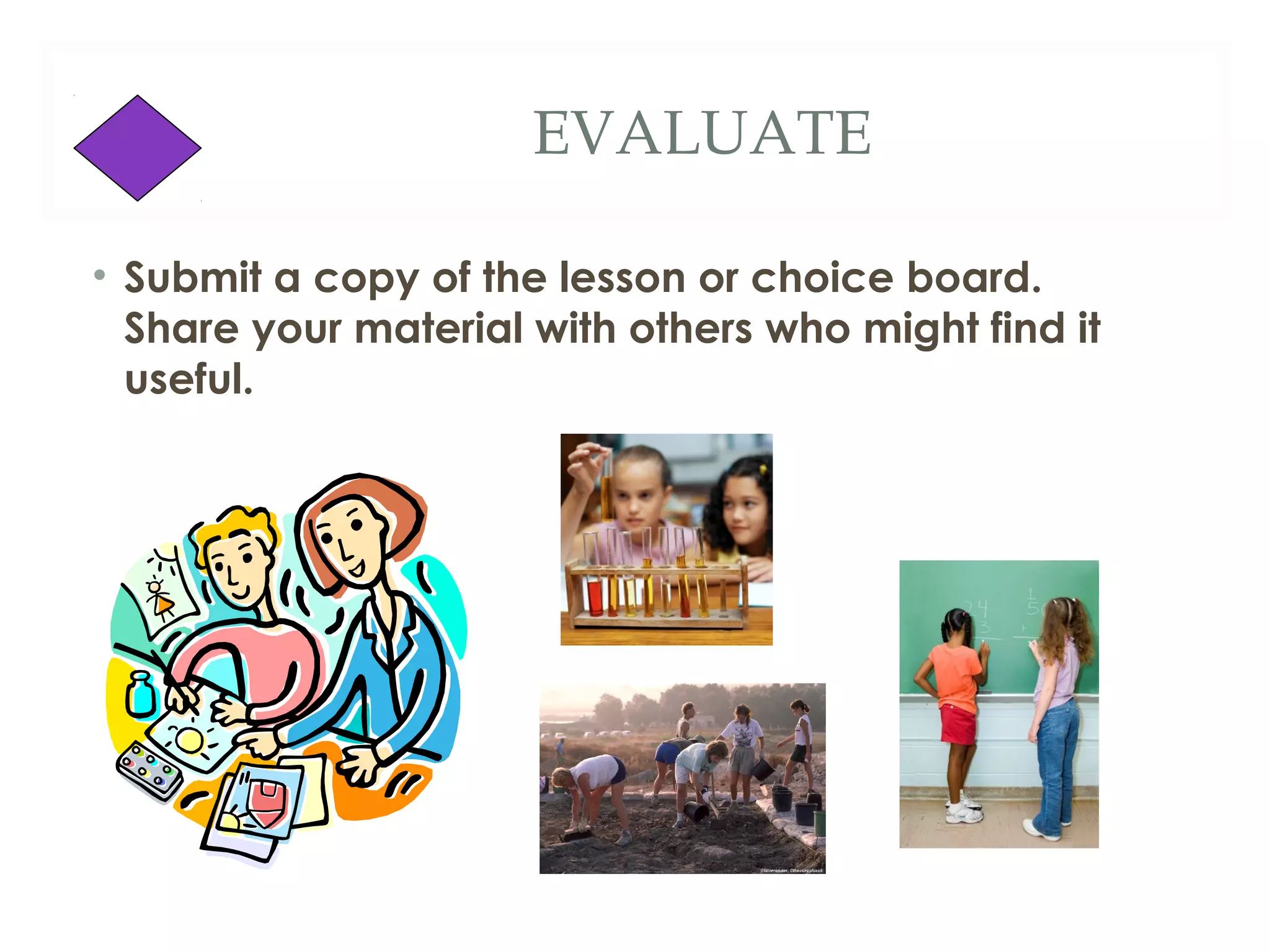
EVALUATE

• Submit a copy of the lesson or choice board.
  Share your material with others who might find it
  useful.

Week 4 lesson pacing (final)

  • 1.
    WELCOME TOCYCLE 1 CLUSTER WEEK 4, YEAR 2 EFFECTIVE LESSON PACING
  • 2.
    BELL RINGER  Onyour post it, write the two best reasons for getting to know your students.  Discuss the question, “If the real world does not care what a person is interested in, or how or why a person learns, why should we care?”
  • 3.
    TEACHER FEATURE: LINDAAND KENT EDMODO WITH THEIR STUDENTS Student Interest s n ce a elev R
  • 4.
    SCHOOL-WIDE GOAL 2012-13 •By May 2013, student achievement will increase on the English 10 ECA as follows: • Pass from 73% - 76% • Pass + from 3.3% to 6% • Progress will be monitored by periodic STI formative assessments.
  • 5.
    YEARLY CLUSTER GOAL •By May, 2013, all students will improve performance on the English 10 ECA state test by at least 5% on reading comprehension.
  • 6.
    CLUSTER CYCLE GOAL •By the end of Cluster Cycle 1, teachers will improve on specific indicators which were identified as "less than proficient" on the TAP Rubric during the 2011- 12 school year and will make connections among the domains measured by observation, IGP's, and the teacher's instructional plan.
  • 8.
    IDENTIFY Knowing your studentsmay be the most important part of differentiated instruction...if you don't know the important aspects of their learning needs and abilities, then determining effective instructional strategies is nearly impossible. Teachers should take into account characteristics of their students when determining strategies to use, such a various learning styles; ways in which students process information; and use of multiple intelligence theory Howard Gardner
  • 9.
    IDENTIFY • Gardner’s researchhas shown that human cognitive ability is pluralistic rather than unitary and that learners of any subject will make greater progress if they have the opportunity to use their areas of strength to master the necessary material. • There are a multitude of ways to determine your students “learning style” or “type of intelligence” • Here are some examples….
  • 10.
    LEARN/OBTAIN I DO There are many ways to address differentiation. Let’s focus on two: 1. Within the lesson itself, addressing: • Learning Styles: Visual, Auditory, and Kinesthetic • Multiple Intelligences, MI 2. Through the things that I ask the students to do: ANCHOR ACTIVITIES
  • 11.
    I Do Non- Differentiated Teach, Model We all do Lesson the same We Do thing! Guided Practice You Do Product Evaluation
  • 12.
    I Do Differentiated Differentiated Evaluation Evaluation based on Teach, Model preferred learning style Ex. Student A takes We a written test. Do Student B completes Guided an Oral Test Practice Student C completes a project You Do Product Evaluation Evaluation Evaluation
  • 13.
    I Do Differentiated Differentiated Product by Interest Teach, Model We Do Guided Practice Sports Music Art Role Play Product Product Product Product Evaluation
  • 14.
    Differentiated I Do Differentiated Process and by Learning Product Teach, Model Difficulties We We We Do Do Do Differentiated Differentiated Differentiated Group Group Group Practice Practice Practice You Do You Do You Do Evaluation Evaluation Evaluation
  • 15.
    Differentiated Differentiated I Do by Learning Process and Product Style Teach We We We Do Do Do Visual Auditory Kinesthetic You Do You Do You Do poster, written teaching partner, game, skit, simulation, instructions, puzzle, oral presentation, lab, manipulatives, concept map group discussion geoboards Evaluation
  • 16.
    Differentiated Content, Process,Product I Do I Do I Do Teach, Model Teach, Model Teach, Model We We We Do Do Do Guided Guided Guided Practice Practice Practice You Do You Do You Do Product Product Product
  • 17.
    Identify 5 Objective BMIT. C.A. 3.2.2. Apply Word Bell-Ringer: What kinds of things might you Processing Formatting Skills expect to find in a typical announcement? BMIT. C.A. 3.2.1. Apply Word- Review terms: Processing Skills by creating a variety Font, bold, italic, clipart of business and technical documents I Do 30 Model entering text, changing fonts, bold, italic, underling, center, capitalize Model inserting and formatting clipart, using undo and redo. Model using spell as you go spell checker and saving to the proper location We Do *** You Do 10 Complete each I Do on your own practice Begin In the Lab #1 on their own. announcement after I model each one (You can work with a neighbor if you Some will finish it today, they will begin need more help I will also help after ITL#2 Model is finished) Some will not get to ITL#2 today. Provide assistance tomorrow to those students. Evaluate 5 Choose from any of the options on the Choice Board so I am choosing to differentiate for my students through evaluation like we described on slide 12.
  • 18.
    LEARN/OBTAIN I DO Second Focus: 1.Through the things that I ask the students to do (anchor activities) • My Sample Choice Board for Computer Apps.
  • 19.
    WE DO • Developa lesson plan that addresses auditory, kinesthetic, and visual learners; use any of the formats described. OR • Create a lesson or unit choice board with activities tailored to the various intelligences and learning styles.
  • 20.
    YOU DO Implement thelesson or choice board when appropriate in you class.
  • 21.
    EVALUATE • Submit acopy of the lesson or choice board. Share your material with others who might find it useful.

Editor's Notes

  • #8 These terms all come from the Exemplary category of the rubric.
  • #20 Might mention that practice will help with buy-in. Explain that this is important. KNOW how to pronounce the words. Kids are talking and saying that not all attributes were said in certain classes.