US Health Care
NICOLE ANDERSON
11/7/2016
MSN 603
DR TARRANT
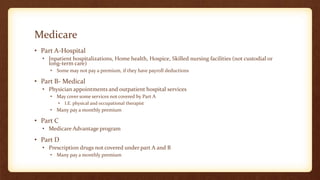
Medicare
• Part A-Hospital
• Inpatient hospitalizations, Home health, Hospice, Skilled nursing facilities (not custodial or
long-term care)
• Some may not pay a premium, if they have payroll deductions
• Part B- Medical
• Physician appointments and outpatient hospital services
• May cover some services not covered by Part A
• I.E. physical and occupational therapist
• Many pay a monthly premium
• Part C
• Medicare Advantage program
• Part D
• Prescription drugs not covered under part A and B
• Many pay a monthly premium
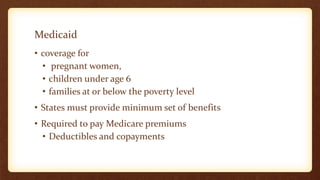
Medicaid
• coverage for
• pregnant women,
• children under age 6
• families at or below the poverty level
• States must provide minimum set of benefits
• Required to pay Medicare premiums
• Deductibles and copayments
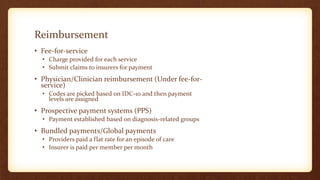
Reimbursement
• Fee-for-service
• Charge provided for each service
• Submit claims to insurers for payment
• Physician/Clinician reimbursement (Under fee-for-
service)
• Codes are picked based on IDC-10 and then payment
levels are assigned
• Prospective payment systems (PPS)
• Payment established based on diagnosis-related groups
• Bundled payments/Global payments
• Providers paid a flat rate for an episode of care
• Insurer is paid per member per month
Affordable Care Act
ACA
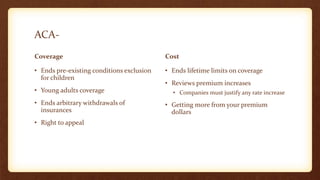
ACA-
Coverage
• Ends pre-existing conditions exclusion
for children
• Young adults coverage
• Ends arbitrary withdrawals of
insurances
• Right to appeal
Cost
• Ends lifetime limits on coverage
• Reviews premium increases
• Companies must justify any rate increase
• Getting more from your premium
dollars
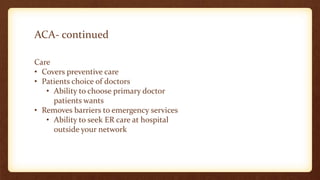
ACA- continued
Care
• Covers preventive care
• Patients choice of doctors
• Ability to choose primary doctor
patients wants
• Removes barriers to emergency services
• Ability to seek ER care at hospital
outside your network
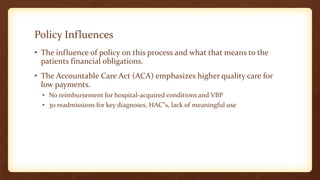
Policy Influences
• The influence of policy on this process and what that means to the
patients financial obligations.
• The Accountable Care Act (ACA) emphasizes higher quality care for
low payments.
• No reimbursement for hospital-acquired conditions and VBP
• 30 readmissions for key diagnoses, HAC”s, lack of meaningful use
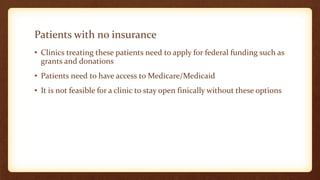
Patients with no insurance
• Clinics treating these patients need to apply for federal funding such as
grants and donations
• Patients need to have access to Medicare/Medicaid
• It is not feasible for a clinic to stay open finically without these options
References
• @. (n.d.). Healthcare Costs: What Are HSAs, FSAs, HRAs, and HDHPs?
Retrieved November 01, 2016, from
http://www.healthline.com/health/medicare-information/my-guide-to-
medicare/hsa-fsa-hdhp
• Mason, D. J., Gardner, D. B., Outlaw, F. H., & O'Grady, E. T. (2016). Policy
& politics in nursing and health care. St. Louis, MO: Elsevier.
• Pedulla, D. M. (n.d.). Medicare: Finding your way through the maze.
PsycEXTRA Dataset. doi:10.1037/e504582016-001
• Secretary, H. O. (2015). State By State. Retrieved November 01, 2016, from
http://www.hhs.gov/healthcare/facts-and-features/state-by-
state/index.html
“ We keep moving forward,
opening new doors, and doing
things because we’re curious and
curiosity keeps leading to new
paths.”
Walt Disney

Week 2 msn 603

  • 1.
    US Health Care NICOLEANDERSON 11/7/2016 MSN 603 DR TARRANT
  • 2.
    Medicare • Part A-Hospital •Inpatient hospitalizations, Home health, Hospice, Skilled nursing facilities (not custodial or long-term care) • Some may not pay a premium, if they have payroll deductions • Part B- Medical • Physician appointments and outpatient hospital services • May cover some services not covered by Part A • I.E. physical and occupational therapist • Many pay a monthly premium • Part C • Medicare Advantage program • Part D • Prescription drugs not covered under part A and B • Many pay a monthly premium
  • 3.
    Medicaid • coverage for •pregnant women, • children under age 6 • families at or below the poverty level • States must provide minimum set of benefits • Required to pay Medicare premiums • Deductibles and copayments
  • 4.
    Reimbursement • Fee-for-service • Chargeprovided for each service • Submit claims to insurers for payment • Physician/Clinician reimbursement (Under fee-for- service) • Codes are picked based on IDC-10 and then payment levels are assigned • Prospective payment systems (PPS) • Payment established based on diagnosis-related groups • Bundled payments/Global payments • Providers paid a flat rate for an episode of care • Insurer is paid per member per month
  • 5.
  • 6.
    ACA- Coverage • Ends pre-existingconditions exclusion for children • Young adults coverage • Ends arbitrary withdrawals of insurances • Right to appeal Cost • Ends lifetime limits on coverage • Reviews premium increases • Companies must justify any rate increase • Getting more from your premium dollars
  • 7.
    ACA- continued Care • Coverspreventive care • Patients choice of doctors • Ability to choose primary doctor patients wants • Removes barriers to emergency services • Ability to seek ER care at hospital outside your network
  • 8.
    Policy Influences • Theinfluence of policy on this process and what that means to the patients financial obligations. • The Accountable Care Act (ACA) emphasizes higher quality care for low payments. • No reimbursement for hospital-acquired conditions and VBP • 30 readmissions for key diagnoses, HAC”s, lack of meaningful use
  • 9.
    Patients with noinsurance • Clinics treating these patients need to apply for federal funding such as grants and donations • Patients need to have access to Medicare/Medicaid • It is not feasible for a clinic to stay open finically without these options
  • 10.
    References • @. (n.d.).Healthcare Costs: What Are HSAs, FSAs, HRAs, and HDHPs? Retrieved November 01, 2016, from http://www.healthline.com/health/medicare-information/my-guide-to- medicare/hsa-fsa-hdhp • Mason, D. J., Gardner, D. B., Outlaw, F. H., & O'Grady, E. T. (2016). Policy & politics in nursing and health care. St. Louis, MO: Elsevier. • Pedulla, D. M. (n.d.). Medicare: Finding your way through the maze. PsycEXTRA Dataset. doi:10.1037/e504582016-001 • Secretary, H. O. (2015). State By State. Retrieved November 01, 2016, from http://www.hhs.gov/healthcare/facts-and-features/state-by- state/index.html
  • 11.
    “ We keepmoving forward, opening new doors, and doing things because we’re curious and curiosity keeps leading to new paths.” Walt Disney