By Sattvik Chakravarthy Microsoft Student Partner
Web 2.0
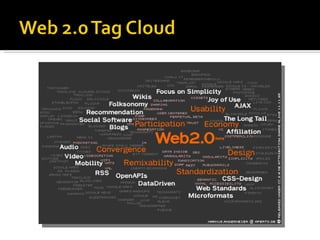
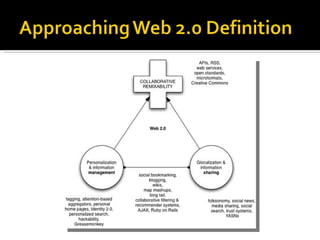
Compact Definition Web 2.0 is the  network as platform , spanning all connected devices; Web 2.0 applications are those that make the most of the intrinsic advantages of that platform: delivering software as a  continually-updated service  that gets better the more people use it,  consuming and remixing data  from multiple sources, including individual users, while providing their own data and services in a form that allows remixing by others, creating network effects through an  "architecture of participation,"  and going beyond the page metaphor of Web 1.0 to deliver  rich user experiences. – Tim O’Reilly
 
 
Web 1.0 was Commerce Web 2.0 is People - Ross Mayfield The introduction of tools like blogs, wikis, tags, widgets and RSS have made it so that anyone can write to the web
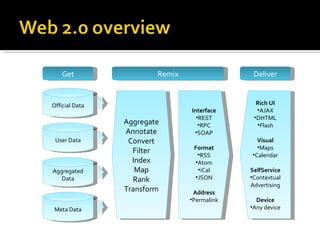
Official Data User Data Aggregated Data Meta Data Aggregate Annotate Convert Filter Index Map Rank Transform Interface REST RPC SOAP Format RSS Atom iCal JSON Address Permalink Rich UI AJAX DHTML Flash Visual Maps Calendar SelfService Contextual Advertising Device Any device Get Remix Deliver
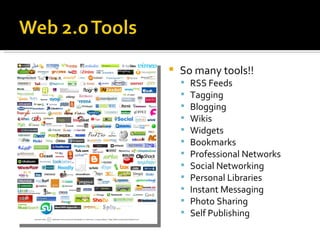
So many tools!! RSS Feeds Tagging Blogging Wikis Widgets Bookmarks Professional Networks Social Networking Personal Libraries Instant Messaging Photo Sharing Self Publishing


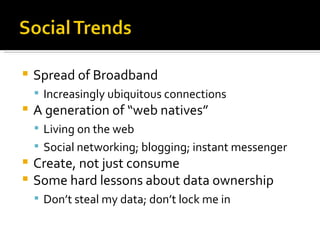
Spread of Broadband Increasingly ubiquitous connections A generation of “web natives” Living on the web  Social networking; blogging; instant messenger  Create, not just consume Some hard lessons about data ownership Don’t steal my data; don’t lock me in
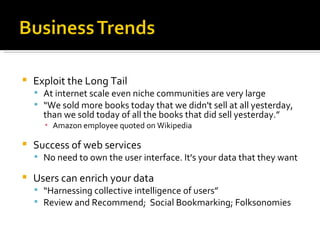
Exploit the Long Tail At internet scale even niche communities are very large “ We sold more books today that we didn't sell at all yesterday, than we sold today of all the books that did sell yesterday.” Amazon employee quoted on Wikipedia Success of web services  No need to own the user interface. It's your data that they want Users can enrich your data “ Harnessing collective intelligence of users” Review and Recommend;  Social Bookmarking; Folksonomies
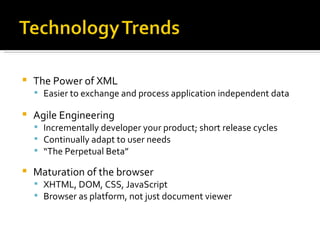
The Power of XML Easier to exchange and process application independent data Agile Engineering Incrementally developer your product; short release cycles Continually adapt to user needs “ The Perpetual Beta” Maturation of the browser XHTML, DOM, CSS, JavaScript Browser as platform, not just document viewer
 
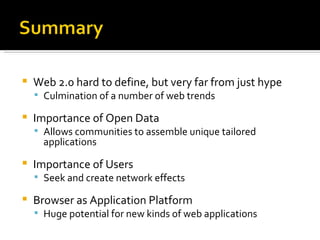
Web 2.0 hard to define, but very far from just hype Culmination of a number of web trends Importance of Open Data Allows communities to assemble unique tailored applications Importance of Users Seek and create network effects Browser as Application Platform Huge potential for new kinds of web applications
There is nothing to fear! Spend 15 minutes everyday to learn something new Delete the stuff you don’t like Work in groups, its more fun  [Learning 2.0]
Website:  http://www.sattvik.info Email:  [email_address]

Web 2.0

  • 1.
    By Sattvik ChakravarthyMicrosoft Student Partner
  • 2.
  • 3.
    Compact Definition Web2.0 is the network as platform , spanning all connected devices; Web 2.0 applications are those that make the most of the intrinsic advantages of that platform: delivering software as a continually-updated service that gets better the more people use it, consuming and remixing data from multiple sources, including individual users, while providing their own data and services in a form that allows remixing by others, creating network effects through an "architecture of participation," and going beyond the page metaphor of Web 1.0 to deliver rich user experiences. – Tim O’Reilly
  • 4.
  • 5.
  • 6.
    Web 1.0 wasCommerce Web 2.0 is People - Ross Mayfield The introduction of tools like blogs, wikis, tags, widgets and RSS have made it so that anyone can write to the web
  • 7.
    Official Data UserData Aggregated Data Meta Data Aggregate Annotate Convert Filter Index Map Rank Transform Interface REST RPC SOAP Format RSS Atom iCal JSON Address Permalink Rich UI AJAX DHTML Flash Visual Maps Calendar SelfService Contextual Advertising Device Any device Get Remix Deliver
  • 8.
    So many tools!!RSS Feeds Tagging Blogging Wikis Widgets Bookmarks Professional Networks Social Networking Personal Libraries Instant Messaging Photo Sharing Self Publishing
  • 9.
  • 10.
  • 11.
  • 12.
  • 13.
  • 14.
    Spread of BroadbandIncreasingly ubiquitous connections A generation of “web natives” Living on the web Social networking; blogging; instant messenger Create, not just consume Some hard lessons about data ownership Don’t steal my data; don’t lock me in
  • 15.
    Exploit the LongTail At internet scale even niche communities are very large “ We sold more books today that we didn't sell at all yesterday, than we sold today of all the books that did sell yesterday.” Amazon employee quoted on Wikipedia Success of web services No need to own the user interface. It's your data that they want Users can enrich your data “ Harnessing collective intelligence of users” Review and Recommend; Social Bookmarking; Folksonomies
  • 16.
    The Power ofXML Easier to exchange and process application independent data Agile Engineering Incrementally developer your product; short release cycles Continually adapt to user needs “ The Perpetual Beta” Maturation of the browser XHTML, DOM, CSS, JavaScript Browser as platform, not just document viewer
  • 17.
  • 18.
    Web 2.0 hardto define, but very far from just hype Culmination of a number of web trends Importance of Open Data Allows communities to assemble unique tailored applications Importance of Users Seek and create network effects Browser as Application Platform Huge potential for new kinds of web applications
  • 19.
    There is nothingto fear! Spend 15 minutes everyday to learn something new Delete the stuff you don’t like Work in groups, its more fun [Learning 2.0]
  • 20.
    Website: http://www.sattvik.infoEmail: [email_address]