


WebSocket
Methods for Real-Time Data Streaming
Bui Minh Hieu
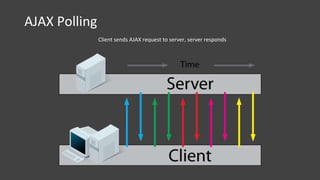
AJAX Polling
Client sends AJAX request to server, server responds
AJAX Polling
Pros:
• Simple. Don’t need complicated setups.
Cons:
• Too many requests to server.
• Data is not up-to-date in real-time.
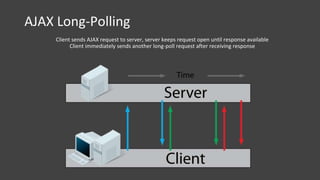
AJAX Long-Polling
Client sends AJAX request to server, server keeps request open until response available
Client immediately sends another long-poll request after receiving response
AJAX Long-Polling
Pros:
• Data is updated in real-time.
• Don’t need to request to server many times.
Cons:
• Hard to setup.
• Consume a lot of resources.
• Not ideal if data is updated too often.
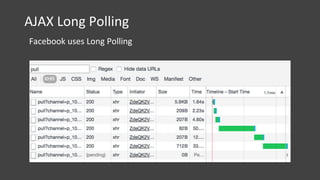
AJAX Long Polling
Facebook uses Long Polling
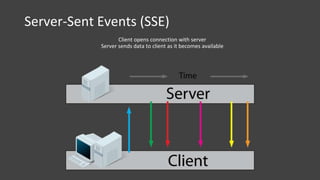
Server-Sent Events (SSE)
Client opens connection with server
Server sends data to client as it becomes available
Server-Sent Events (SSE)
Pros:
• Data is updated in real-time.
• Work when data is updated too often.
Cons:
• Client can’t send data to server.
WebSocket
Protocol
allows for a persistent, full-duplex communication between a
client and remote host.
HTML5
defines a JavaScript API for the WebSocket protocol within the
browser, allowing bi-directional communication between the
browser and server.
WebSocket
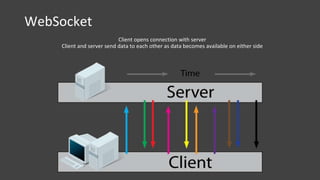
Client opens connection with server
Client and server send data to each other as data becomes available on either side
WebSocket
Pros:
• Client/server can send data to each other often.
• No polling overhead
Cons:
• Not supported by old browsers.
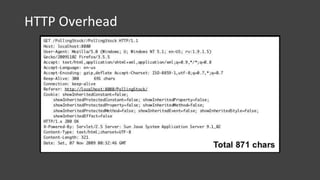
HTTP Overhead
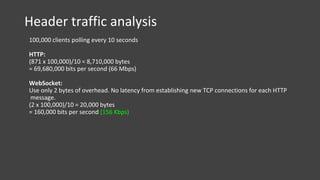
Header traffic analysis
100,000 clients polling every 10 seconds
HTTP:
(871 x 100,000)/10 = 8,710,000 bytes
= 69,680,000 bits per second (66 Mbps)
WebSocket:
Use only 2 bytes of overhead. No latency from establishing new TCP connections for each HTTP
message.
(2 x 100,000)/10 = 20,000 bytes
= 160,000 bits per second (156 Kbps)
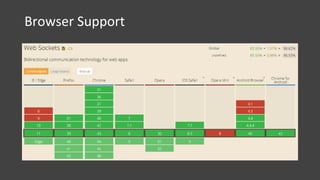
Browser Support
WebSocket spec
• W3C/IETF Standard
• Uses the WebSocket protocol instead of HTTP
• Initial handshake via HTTP => Upgrade to WebSocket Connection
• True full-duplex communication channel
• Runs via port 80/443 => Proxy/Firewall friendly
• URI for WebSockets and Secure WebSockets:
• ws://
• wss://
Demo
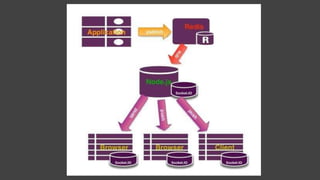
WebSockets in Laravel
Demo
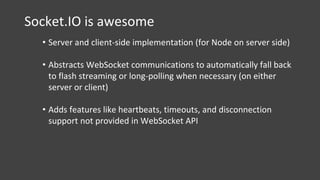
Socket.IO is awesome
• Server and client-side implementation (for Node on server side)
• Abstracts WebSocket communications to automatically fall back
to flash streaming or long-polling when necessary (on either
server or client)
• Adds features like heartbeats, timeouts, and disconnection
support not provided in WebSocket API
WebSockets in Rails with Action Cable
Demo
Thank you

Web Socket

  • 1.
    WebSocket Methods for Real-TimeData Streaming Bui Minh Hieu
  • 2.
    AJAX Polling Client sendsAJAX request to server, server responds
  • 3.
    AJAX Polling Pros: • Simple.Don’t need complicated setups. Cons: • Too many requests to server. • Data is not up-to-date in real-time.
  • 4.
    AJAX Long-Polling Client sendsAJAX request to server, server keeps request open until response available Client immediately sends another long-poll request after receiving response
  • 5.
    AJAX Long-Polling Pros: • Datais updated in real-time. • Don’t need to request to server many times. Cons: • Hard to setup. • Consume a lot of resources. • Not ideal if data is updated too often.
  • 6.
    AJAX Long Polling Facebookuses Long Polling
  • 7.
    Server-Sent Events (SSE) Clientopens connection with server Server sends data to client as it becomes available
  • 8.
    Server-Sent Events (SSE) Pros: •Data is updated in real-time. • Work when data is updated too often. Cons: • Client can’t send data to server.
  • 9.
    WebSocket Protocol allows for apersistent, full-duplex communication between a client and remote host. HTML5 defines a JavaScript API for the WebSocket protocol within the browser, allowing bi-directional communication between the browser and server.
  • 10.
    WebSocket Client opens connectionwith server Client and server send data to each other as data becomes available on either side
  • 11.
    WebSocket Pros: • Client/server cansend data to each other often. • No polling overhead Cons: • Not supported by old browsers.
  • 12.
  • 13.
    Header traffic analysis 100,000clients polling every 10 seconds HTTP: (871 x 100,000)/10 = 8,710,000 bytes = 69,680,000 bits per second (66 Mbps) WebSocket: Use only 2 bytes of overhead. No latency from establishing new TCP connections for each HTTP message. (2 x 100,000)/10 = 20,000 bytes = 160,000 bits per second (156 Kbps)
  • 14.
  • 15.
    WebSocket spec • W3C/IETFStandard • Uses the WebSocket protocol instead of HTTP • Initial handshake via HTTP => Upgrade to WebSocket Connection • True full-duplex communication channel • Runs via port 80/443 => Proxy/Firewall friendly • URI for WebSockets and Secure WebSockets: • ws:// • wss://
  • 16.
  • 17.
  • 19.
    Socket.IO is awesome •Server and client-side implementation (for Node on server side) • Abstracts WebSocket communications to automatically fall back to flash streaming or long-polling when necessary (on either server or client) • Adds features like heartbeats, timeouts, and disconnection support not provided in WebSocket API
  • 20.
    WebSockets in Railswith Action Cable Demo
  • 21.