Web Semantics. Cutting Edge and Future Directions in Healthcare Sarika Jain
Web Semantics. Cutting Edge and Future Directions in Healthcare Sarika Jain
Web Semantics. Cutting Edge and Future Directions in Healthcare Sarika Jain
Web Semantics. Cutting Edge and Future Directions in Healthcare Sarika Jain
Web Semantics. Cutting Edge and Future Directions in Healthcare Sarika Jain
1.
Web Semantics. CuttingEdge and Future Directions in
Healthcare Sarika Jain download pdf
https://ebookmass.com/product/web-semantics-cutting-edge-and-future-
directions-in-healthcare-sarika-jain/
Visit ebookmass.com today to download the complete set of
ebook or textbook!
2.
We believe theseproducts will be a great fit for you. Click
the link to download now, or visit ebookmass.com
to discover even more!
Cutting Edge. Starter Student's Book Sarah Cunningham
https://ebookmass.com/product/cutting-edge-starter-students-book-
sarah-cunningham/
Semantic Web for Effective Healthcare Systems Vishal Jain
https://ebookmass.com/product/semantic-web-for-effective-healthcare-
systems-vishal-jain/
Power-Sharing in Europe: Past Practice, Present Cases, and
Future Directions Soeren Keil
https://ebookmass.com/product/power-sharing-in-europe-past-practice-
present-cases-and-future-directions-soeren-keil/
Cutting Edge Intermediate Students' Book with DVD and
MyEnglishLab Pack 3rd Revised edition Edition Peter Moor
https://ebookmass.com/product/cutting-edge-intermediate-students-book-
with-dvd-and-myenglishlab-pack-3rd-revised-edition-edition-peter-moor/
3.
Human Resource InformationSystems: Basics, Applications,
and Future Directions 4th Edition, (Ebook PDF)
https://ebookmass.com/product/human-resource-information-systems-
basics-applications-and-future-directions-4th-edition-ebook-pdf/
Sports, exercise, and nutritional genomics: Current status
and future directions 1st Edition Ildus I. Ahmetov
https://ebookmass.com/product/sports-exercise-and-nutritional-
genomics-current-status-and-future-directions-1st-edition-ildus-i-
ahmetov/
Breast MRI: State of the Art and Future Directions 1st
Edition Katja Pinker (Editor)
https://ebookmass.com/product/breast-mri-state-of-the-art-and-future-
directions-1st-edition-katja-pinker-editor/
Beyond Semantics and Pragmatics Gerhard Preyer
https://ebookmass.com/product/beyond-semantics-and-pragmatics-gerhard-
preyer/
Cutting Teeth: A Novel Chandler Baker
https://ebookmass.com/product/cutting-teeth-a-novel-chandler-baker/
WEB
SEMANTICS
Cutting Edge andFuture Directions
in Healthcare
Edited by
SARIKA JAIN
Department of Computer Applications, National Institute of Technology Kurukshetra, Haryana, India
VISHAL JAIN
Department of Computer Science and Engineering, School of Engineering and Technology, Sharda University,
Greater Noida, Uttar Pradesh, India
VALENTINA EMILIA BALAS
Faculty of Engineering, Aurel Vlaicu University of Arad, Romania
Contents
List of contributorsix
Preface xi
1. Semantic intelligence - An overview
Sarika Jain
1.1 Overview 1
Section I
Representation
2. Convology: an ontology
for conversational agents in
digital health
Mauro Dragoni, Giuseppe Rizzo and Matteo A. Senese
2.1 Introduction 7
2.2 Background 9
2.3 The construction of convology 10
2.4 Inside convology 12
2.5 Availability and reusability 16
2.6 Convology in action 17
2.7 Resource sustainability and maintenance 19
2.8 Conclusions and future work 20
References 21
3. Conversion between semantic
data models: the story so far, and the
road ahead
Shripriya Dubey, Archana Patel and Sarika Jain
3.1 Introduction 23
3.2 Resource Description Framework as a semantic
data model 24
3.3 Related work 25
3.4 Conceptual evaluation 27
3.5 Findings 28
3.6 Concluding remarks 29
References 30
4. Semantic interoperability: the future of
healthcare
Rashmi Burse, Michela Bertolotto, Dympna O’Sullivan
and Gavin McArdle
4.1 Introduction 31
4.2 Semantic web technologies 32
4.3 Syntactic interoperability 37
4.4 Semantic interoperability 40
4.5 Contribution of semantic web
technology to aid healthcare
interoperability 46
4.6 Discussion and future work 49
4.7 Conclusion 51
References 51
5. A knowledge graph of medical
institutions in Korea
Haklae Kim
5.1 Introduction 55
5.2 Related work 56
5.3 Medical institutions in Korea 57
5.4 Knowledge graph of medical institutions 60
5.5 Conclusion 66
References 67
6. Resource description framework based
semantic knowledge graph for clinical
decision support systems
Ravi Lourdusamy and Xavierlal J. Mattam
6.1 Introduction 69
6.2 Knowledge representation using RDF 71
6.3 Simple knowledge organization system 75
6.4 Semantic knowledge graph 77
6.5 Semantic knowledge graph for clinical
decision support systems 81
6.6 Discussion and future possibilities 83
6.7 Conclusion 84
References 84
v
9.
7. Probabilistic, syntactic,and semantic
reasoning using MEBN, OWL, and PCFG
in healthcare
Shrinivasan Patnaikuni and Sachin R. Gengaje
7.1 Introduction 87
7.2 Multientity Bayesian networks 89
7.3 Semantic web and uncertainty 90
7.4 MEBN and ontology web language 91
7.5 MEBN and probabilistic context-free
grammar 92
7.6 Summary 93
References 93
Section II
Reasoning
8. The connected electronic health record:
a semantic-enabled, flexible, and unified
electronic health record
Salma Sassi and Richard Chbeir
8.1 Introduction 97
8.2 Motivating scenario: smart health unit 99
8.3 Literature review 100
8.4 Our connected electronic health record system
approach 105
8.5 Implementation 110
8.6 Experimental results 111
8.7 Conclusion and future works 113
References 114
9. Ontology-supported rule-based
reasoning for emergency management
Sarika Jain, Sonia Mehla and Jan Wagner
9.1 Introduction 117
9.2 Literature review 119
9.3 System framework 120
9.4 Inference of knowledge 122
9.5 Conclusion and future work 127
References 127
10. Health care cube integrator for health
care databases
Shivani A Trivedi, Monika Patel and Sikandar Patel
10.1 Introduction: state-of-the-art health care
system 129
10.2 Research methods and literature findings of
research publications 131
10.3 HCI conceptual framework and designing
framework 136
10.4 Implementation framework and experimental
setup 140
10.5 Result analysis, conclusion, and future
enhancement of work 148
Acknowledgment 149
References 149
11. Smart mental healthcare systems
Sumit Dalal and Sarika Jain
11.1 Introduction 153
11.2 Classification of mental healthcare 154
11.3 Challenges of a healthcare environment 155
11.4 Benefits of smart mental healthcare 158
11.5 Architecture 159
11.6 Conclusion 161
References 162
12. A meaning-aware information
search and retrieval framework for
healthcare
V.S. Anoop, Nikhil V. Chandran and S. Asharaf
12.1 Introduction 165
12.2 Related work 167
12.3 Semantic search and information retrieval in
healthcare 170
12.4 A framework for meaning-aware healthcare
information extraction from unstructured
text data 170
12.5 Future research dimensions 174
12.6 Conclusion 174
Key terms and definitions 174
References 175
vi Contents
10.
13. Ontology-based intelligent
decisionsupport systems:
A systematic approach
Ramesh Saha, Sayani Sen, Jayita Saha, Asmita Nandy,
Suparna Biswas and Chandreyee Chowdhury
13.1 Introduction 177
13.2 Enabling technologies to implement decision
support system 178
13.3 Role of ontology in DSS for knowledge
modeling 182
13.4 QoS and QoE parameters in decision
support systems for healthcare 187
13.5 Conclusion 190
References 191
14. Ontology-based decision-making
Mark Douglas de Azevedo Jacyntho and Matheus D. Morais
14.1 Introduction 195
14.2 Issue-Procedure Ontology 198
14.3 Issue-Procedure Ontology for Medicine 203
14.4 Conclusion 208
References 208
15. A new method for profile
identification using ontology-based
semantic similarity
Abdelhadi Daoui, Noreddine Gherabi and Abderrahim Marzouk
15.1 Introduction 211
15.2 Proposed method 212
15.3 Conclusion 218
References 218
16. Semantic similarity based descriptive
answer evaluation
Mohammad Shaharyar Shaukat, Mohammed Tanzeem,
Tameem Ahmad and Nesar Ahmad
16.1 Introduction 221
16.2 Literature survey 222
16.3 Proposed system 223
16.4 Algorithm 227
16.5 Data set 227
16.6 Results 228
16.7 Conclusion and discussion 229
Acknowledgments 230
References 230
17. Classification of genetic mutations
using ontologies from clinical documents
and deep learning
Punam Bedi, Shivani, Neha Gupta,
Priti Jagwani and Veenu Bhasin
17.1 Introduction 233
17.2 Clinical Natural Language Processing 234
17.3 Clinical Natural Language Processing
(Clinical NLP) techniques 235
17.4 Clinical Natural Language Processing and
Semantic Web 242
17.5 Case study: Classification of Genetic
Mutation using Deep Learning and Clinical
Natural Language Processing 245
17.6 Conclusion 249
References 249
Section III
Security
18. Security issues for the Semantic Web
Prashant Pranav, Sandip Dutta and Soubhik Chakraborty
18.1 Introduction 253
18.2 Related work 258
18.3 Security standards for the Semantic
Web 259
18.4 Different attacks on the Semantic Web 262
18.5 Drawbacks of the existing privacy and
security protocols in W3C social web
standards 263
18.6 Semantic attackers 264
18.7 Privacy and Semantic Web 264
18.8 Directions for future security protocols
for the Semantic Web 265
18.9 Conclusion 266
References 266
Index 269
vii
Contents
11.
List of contributors
NesarAhmad Department of Computer
Engineering, Zakir Husain College of
Engineering and Technology, Aligarh
Muslim University, Aligarh, India
Tameem Ahmad Department of Computer
Engineering, Zakir Husain College of
Engineering and Technology, Aligarh
Muslim University, Aligarh, India
V.S. Anoop Kerala Blockchain Academy,
Indian Institute of Information Technology
and Management Kerala (IIITM-K),
Thiruvananthapuram, India
S. Asharaf Indian Institute of Information
Technology and Management - Kerala
(IIITM-K), Thiruvananthapuram, India
Punam Bedi Department of Computer Science,
University of Delhi, Delhi, India
Michela Bertolotto School of Computer Science,
University College Dublin, Dublin, Ireland
Veenu Bhasin P.G.D.A.V. College, University
of Delhi, Delhi, India
Suparna Biswas Department of Computer
Science & Engineering, Maulana Abul Kalam
Azad University of Technology, Kolkata, India
Rashmi Burse School of Computer Science,
University College Dublin, Dublin, Ireland
Soubhik Chakraborty Department of
Mathematics, Birla Institute of Technology,
Mesra, Ranchi, India
Nikhil V. Chandran Data Engineering Lab,
Indian Institute of Information Technology
and Management - Kerala (IIITM-K),
Thiruvananthapuram, India
Richard Chbeir Univ Pau & Pays Adour, E2S/
UPPA, LIUPPA, EA3000, Anglet, France
Chandreyee Chowdhury Department of
Computer Science & Engineering, Jadavpur
University, Kolkata, India
Sumit Dalal National Institute of Technology
Kurukshetra, Haryana, India
Abdelhadi Daoui Department of Mathematics
and Computer Science, Hassan 1st
University, FST, Settat, Morocco
Matheus D. Morais Coordination of
Informatics, Fluminense Federal Institute,
Campos dos Goytacazes, Rio de Janeiro,
Brazil
Mark Douglas de Azevedo Jacyntho
Coordination of Informatics, Fluminense
Federal Institute, Campos dos Goytacazes,
Rio de Janeiro, Brazil
Mauro Dragoni Fondazione Bruno Kessler,
Trento, Italy
Shripriya Dubey Department of Computer
Applications, National Institute of
Technology Kurukshetra, Haryana, India
Sandip Dutta Department of Computer
Science and Engineering, Birla Institute of
Technology, Mesra, Ranchi, India
Sachin R. Gengaje Department of Computer
Science and Engineering, Walchand Institute
of Technology, Solapur, Maharashtra, India
Noreddine Gherabi Sultan Moulay Slimane
University, ENSAK, LASTI Laboratory,
Khouribga, Morocco
Neha Gupta Department of Computer Science,
University of Delhi, Delhi, India
Priti Jagwani Aryabhatta College, University
of Delhi, Delhi, India
Sarika Jain Department of Computer
Applications, National Institute of
Technology Kurukshetra, Haryana, India
Haklae Kim Chung-Ang University, Seoul,
South Korea
Ravi Lourdusamy Sacred Heart College
(Autonomous), Tirupattur, India
ix
12.
Abderrahim Marzouk Departmentof
Mathematics and Computer Science,
Hassan 1st University, FST, Settat, Morocco
Xavierlal J. Mattam Sacred Heart College
(Autonomous), Tirupattur, India
Gavin McArdle School of Computer Science,
University College Dublin, Dublin, Ireland
Sonia Mehla National Institute of Technology
Kurukshetra, Haryana, India
Asmita Nandy Department of Computer
Science & Engineering, Jadavpur University,
Kolkata, India
Dympna O’Sullivan School of Computer
Science, Technological University Dublin,
Dublin, Ireland
Archana Patel Institute of Computer Science,
Freie Universität, Berlin, Germany
Monika Patel S.K. Patel Institute of Management
and Computer Studies-MCA, Kadi Sarva
Vishwavidyalaya, India
Sikandar Patel National Forensic Sciences
University, Gandhinagar, India
Shrinivasan Patnaikuni Department of
Computer Science and Engineering,
Walchand Institute of Technology, Solapur,
Maharashtra, India
Prashant Pranav Department of Computer
Science and Engineering, Birla Institute of
Technology, Mesra, Ranchi, India
Giuseppe Rizzo LINKS Foundation, Torino,
Italy
Jayita Saha Department of Artificial Intelligence
and Data Science, Koneru Lakshmaiah
Education Foundation Deemed to be
University, Hyderabad, India
Ramesh Saha Department of Information
Technology, Gauhati University, Guwahati,
Assam, India
Salma Sassi VPNC Lab., FSJEGJ, University of
Jendouba, Jendouba, Tunisia
Sayani Sen Department of Computer
Application, Sarojini Naidu College for
Women, Kolkata, India
Matteo A. Senese LINKS Foundation, Torino,
Italy
Mohammad Shaharyar Shaukat Technical
University of Munich, Germany
Shivani Department of Computer Science,
University of Delhi, Delhi, India
Mohammed Tanzeem Adobe, India
Shivani A Trivedi S.K. Patel Institute of
Management and Computer Studies-MCA,
Kadi Sarva Vishwavidyalaya, India
Jan Wagner RheinMain University of Applied
Sciences, Germany
x List of contributors
13.
Preface
Over the lastdecade, we have witnessed
an increasing use of Web Semantics as a
vital and ever-growing field. It incorporates
various subject areas contributing to the
development of a knowledge-intensive data
web. In parallel to the movement of con-
cept from data to knowledge, we are now
also experiencing the movement of web
from document model to data model where
the main focus is on data compared to the
process. The underlying idea is making the
data machine understandable and process-
able. In light of these trends, conciliation of
Semantic and the Web is of paramount
importance for further progress in the area.
The 17 chapters in this volume, authored
by key scientists in the field are preceded
by an introduction written by one of the
volume editors, making a total of 18 chap-
ters. Chapter 1, Introduction, by Sarika Jain
provides an overview of technological
trends and perspectives in Web Semantics,
defines Semantic Intelligence, and discusses
the technologies encompassing the same in
view of their application within enterprises
as well as in web. In all, 76 chapter propo-
sals were submitted for this volume mak-
ing a 22% acceptance rate. The chapters
have been divided into three sections as
Representation, Reasoning, and Security.
• Representation: The semantics have to be
encoded with data by virtue of
technologies that formally represent
metadata. When semantics are
embedded in data, it offers significant
advantages for reasoning and
interoperability.
• Reasoning: When “Semantic Web” will
finally happen, machine will be able to
talk to machines materializing the so-
called “intelligent agents.” The services
offered will be useful for web as well as
for the management of knowledge
within an organization.
• Security: In this new setting, traditional
security measures will not be
suitable anymore; and the focus will
move to trust and provenance. The
semantic security issues are required to
be addressed by the security
professionals and the semantic
technologists.
This book will help the instructors and
students taking courses of Semantic Web
getting abreast of cutting edge and future
directions of semantic web, hence provid-
ing a synergy between healthcare processes
and semantic web technologies. Many
books are available in this field with two
major problems. Either they are very
advanced and lack providing a sufficiently
detailed explanation of the approaches, or
they are based on a specific theme with
limited scope, hence not providing details
on crosscutting areas applied in the web
semantic. This book covers the research
and practical issues and challenges, and
Semantic Web applications in specific con-
texts (in this case, healthcare). This book
has varied audience and spans industrial
professionals, researchers, and academi-
cians working in the field of Web
Semantics. Researchers and academicians
will find a comprehensive study of the state
xi
14.
of the artand an outlook into research chal-
lenges and future perspectives. The industry
professionals and software developers will
find available tools and technologies to use,
algorithms, pseudocodes, and implementa-
tion solutions. The administrators will find a
comprehensive spectrum of the latest view-
point in different areas of Web Semantics.
Finally, lecturers and students require all of
the above, so they will gain an interesting
insight into the field. They can benefit in
preparing their problem statements and
finding ways to tackle them.
The book is structured into three sections
that group chapters into three otherwise
related disections:
Representation
The first section on Representation com-
prises six chapters that specifically focus on
the problem of choosing a data model for
representing and storage of data for the Web.
Chapter 2, Convology: an ontology for con-
versational agents in digital health by
Dragoni et al. propose an ontology, namely,
Convology, aiming to describe conversational
scenarios with the scope of providing a tool
that, once deployed into a real-world applica-
tion, allows to ease the management and
understanding of the entire dialog workflow
between users, physicians, and systems. The
authors have integrated Convology into a liv-
ing lab concerning the adoption of conversa-
tional agents for supporting the self-
management of patients affected by asthma.
Dubey et al. in Chapter 3, Conversion
between semantic data models: the story so
far, and the road ahead, provide the trends in
converting between various semantic data
models and reviews the state of the art of the
same. In Chapter 4, Semantic interoperability:
the future of healthcare Burse et al. have
beautifully elaborated the syntactic and
semantic interoperability issues in healthcare.
They have reviewed the various healthcare
standards in an attempt to solve the interop-
erability problem at a syntactic level and then
moves on to examine medical ontologies
developed to solve the problem at a semantic
level. The chapter explains the features of
semantic web technology that can be lever-
aged at each level. A literature survey is car-
ried out to gage the current contribution of
semantic web technologies in this area along
with an analysis of how semantic web tech-
nologies can be improved to better suit the
health-informatics domain and solve the
healthcare interoperability challenge. Haklae
Kim in his Chapter 5, A knowledge graph of
medical institutions in Korea, has proposed a
knowledge model for representing medical
institutions and their characteristics based on
related laws. The author also constructs a
knowledge graph that includes all medical
institutions in Korea with an aim to enable
users to identify appropriate hospitals or
other institutions according to their require-
ments. Chapter 6, Resource description
framework based semantic knowledge graph
for clinical decision support systems, by
Lourdusamy and Mattam advocates the use
of Semantic Knowledge Graphs as the repre-
sentation structure for Clinical Decision
Support Systems. Patnaikuni and Gengaje in
Chapter 7, Probabilistic, syntactic, and seman-
tic reasoning using MEBN, OWL, and PCFG
in healthcare, exploit the key concepts and
terminologies used for representing and rea-
soning uncertainties structurally and semanti-
cally with a case study of COVID-19 Corona
Virus. The key technologies are Bayesian net-
works, Multi-Entity Bayesian Networks,
Probabilistic Ontology Web Language, and
probabilistic context-free grammars.
xii Preface
15.
Visit https://ebookmass.com todayto explore
a vast collection of ebooks across various
genres, available in popular formats like
PDF, EPUB, and MOBI, fully compatible with
all devices. Enjoy a seamless reading
experience and effortlessly download high-
quality materials in just a few simple steps.
Plus, don’t miss out on exciting offers that
let you access a wealth of knowledge at the
best prices!
16.
Reasoning
At the scaleof www, logic-based reason-
ing is not appropriate and poses numerous
challenges. As already stated in different
chapters of Section 1, RDF provides a
machine-processable syntax to the data on
the web. Reasoning on Semantic Web
involves deriving facts and relationships
that are not explicit in the knowledge base.
This section groups 10 contributions based
on reasoning within the knowledge bases.
There is an absence of a reference model
for describing the health data and their
sources and linking these data with their
contexts. Chapter 8, The connected elec-
tronic health record: a semantic-enabled,
flexible, and unified electronic health
record, by Sassi and Chbeir addresses this
problem and introduces a semantic-
enabled, flexible, and unified electronic
health record (EHR) for patient monitoring
and diagnosis with Medical Devices. The
approach exploits semantic web technolo-
gies and the HL7 FHIR standard to provide
semantic connected EHR that will facilitate
data interoperability, integration, informa-
tion search and retrieval, and automatic
inference and adaptation in real-time. Jain
et al. in Chapter 9, Ontology-supported
rule-based reasoning for emergency man-
agement, have proposed an ontology-
supported rule-based reasoning approach
to automate the process of decision support
and recommending actions faster than a
human being and at any time. Chapter 10,
Healthcare-Cube Integrator for Healthcare
Databases by Trivedi et al. proposes the
Healthcare-cube integrator as a knowledge
base that is storing health records collected
from various healthcare databases. They
also propose a processing tool to extract
data from assorted databases. Chapter 11,
Smart mental healthcare systems, by Dalal
and Jain provides an architecture for a
smart mental healthcare system along with
the challenges and benefits incurred.
Chapter 12, A meaning-aware information
search and retrieval framework for health-
care, by Anoop et al. discusses a frame-
work for building a meaning-aware
information extraction from unstructured
EHRs. The proposed framework uses medi-
cal ontologies, a medical catalog-based ter-
minology extractor and a semantic
reasoner to build the medical knowledge
base that is used for enabling a semantic
information search and retrieval experience
in the healthcare domain. In Chapter 13,
Ontology-based intelligent decision sup-
port systems: a systematic approach, Saha
et al. emphasize several machine learning
algorithms and semantic technologies to
design and implement intelligent decision
support system for effective healthcare
support satisfying quality of service and
quality of experience requirements.
Jacyntho and Morais in Chapter 14,
Ontology-based decision-making, have
described the architecture and strengths of
knowledge-based decision support sys-
tems. They have defined a method for the
creation of ontology-based knowledge
bases and a corresponding fictitious health
care case study but with real-world chal-
lenges. As the data are exploding over the
web, Daoui et al. in Chapter 15, A new
method for profile identification using
ontology-based semantic similarity, aim to
treat and cover a new system in the
domain of tourism in order to offer users
of the system a set of interesting places
and tourist sites according to their prefer-
ences. The authors focus on the design of a
new profile identification method by defin-
ing a semantic correspondence between
xiii
Preface
17.
keywords and theconcepts of an ontology
using an external resource WordNet.
Compared to the objective type assessment,
the descriptive assessment has been found
to be more uniform and at a higher level of
Bloom’s taxonomy. In Chapter 16, Semantic
similarity-based descriptive answer evalua-
tion, Shaukat et al. have put in efforts to
deal with the problem of automated com-
puter assessment in the descriptive exami-
nation. Lastly in this section, Chapter 17,
Classification of genetic mutations using
ontologies from clinical documents and
deep learning, by Bedi et al. have pre-
sented a framework for classifying cancer-
ous genetic mutation reported in EHRs.
They have utilized clinical NLP, Ontologies
and Deep Learning for the same over
Catalog of Somatic Mutations in Cancer
Mutation data and Kaggle’s cancer-
diagnosis dataset.
Security
Though posed as the future of web, is
semantic web secure? In the semantic web set-
ting, traditional security measures are no
more suitable. This section closes the book by
providing Chapter 18, Security issues for the
semantic web, by Pranav et al. providing the
security issues in the semantic web. This chap-
ter also suggested ways of potentially aligning
the protocols so as to make them more robust
to be used for semantic web services.
As the above summary shows, this book
summarizes the trends and current research
advances in web semantics, emphasizing
the existing tools and techniques, methodol-
ogies, and research solutions.
Sarika Jain (India)
Vishal Jain (India)
Valentina Emilia Balas (Romania)
xiv Preface
important ingredient inbuilding artificially intelligent knowledge-based systems as they
aid machines in integrating and processing resources contextually and intelligently.
This book describes the three major compartments of the study of Web Semantics, namely
representation, reasoning, and security. It also covers the issues related to the successful deploy-
ment of semantic web. This chapter addresses the key knowledge and information needs of the
audience of this book. It provides easily comprehensible information on Web Semantics includ-
ing semantics for data and semantics for services. Further, an effort has been made to cover the
innovative application areas semantic web goes hand in hand with a focus on Health Care.
1.2 Semantic Intelligence
Semantic Intelligence refers to filling the semantic gap between the understanding of
humans and machines by making a machine look at everything in terms of object-oriented
concepts as a human look at it. Semantic Intelligence helps us make sense of the most vital
resource, that is, data; by virtue of making it interpretable and meaningful. The focus is on
information as compared to the process. To whatever application, the data will be put to; it is
to be represented in a manner that is machine-understandable and hence human-usable. All
the important relationships (including who, what, when, where, how, and why) in the
required data from any heterogeneous data source are required to be made explicit.
The primary technology standards of the SITs are RDF (Resource Description
Framework) and SPARQL (SPARQL Protocol and RDF Query Language). RDF is the data
model/format/serialization used to store data. SPARQL is the query language designed to
query, retrieve, and process data stored as RDF across various systems and databases.
Both of these technologies are open-ended making them a natural fit for iterative, flexible,
and adaptable software development in a dynamic environment; hence suitable for a myr-
iad of open-ended problems majorly including unstructured information. It is even benefi-
cial to wrap up the existing relational data stores with the SPARQL end points to integrate
them with any intelligent application. This all is possible because semantic web operates
on the principle of Open World Assumption; wherein all the facts are not anticipated in
the beginning; and in the absence of some fact, it cannot be assumed false.
Semantics is no more than discovering “relationships between things.” These relation-
ships when discovered and represented explicitly help manage the data more efficiently
by making sense of it. In addition to storing and retrieving information, semantic intelli-
gence provides a flexible model by acting as an enabler for machines to infer new facts
and derive new information from existing facts and data. In all such systems with a large
amount of unstructured and unpredictable data, SITs prove to be less cost-intensive and
maintainable. By virtue of being able to interpret all the data, machines are able to perform
sophisticated tasks for the mankind. In today’s world SITs are serving a very broad range
of applications, across multiple domains, within enterprises, and on the web. A full-
fledged industry in its own sense has emerged in the last 20 years when these technologies
were merely drafts. In addition to publishing and consuming data on the web, SITs are
being used in enterprises for various purposes.
2 1. Semantic intelligence: An overview
Web Semantics
20.
1.2.1 Publishing andconsuming data on the web
Publishing data on the web involves deciding upon the format and the schema to use.
Best practices exist to publish, disseminate, use, and perform reasoning on high-quality
data over the web. RDF data can be published in different ways including the linked data
(DBPedia), SPARQL endpoint, metadata in HTML (SlideShare, LinkedIn, YouTube,
Facebook), feeds, GRDDL, and more. Semantic interlinked data is being published on the
web in all the domains including e-commerce, social data, and scientific data. People are
consuming this data through search engines and specific applications. Publishing semantic
web data about the web pages, an organization ensures that the search results now also
include related information like reviews, ratings, and pricing for the products. This added
information in search results does not increase ranking of a web page but significantly
increases the number of clicks this web page can get. Here are some popular domains
where data is published and consumed on the semantic web.
• E-commerce: The Schema.org and the GoodRelations vocabulary are global schema for
commerce data on the web. They are industry-neutral, syntax-neutral, and valid across
different stages of value chain.
• Health care and life sciences: HealthCare is a novel application domain of semantic web
that is of prime importance to human civilization as a whole. It has been predicted as
the next big thing in personal health monitoring by the government. Big pharma
companies and various scientific projects have published a significant amount of life
sciences and health care data on the web.
• Media and publishing: The BBC, The FT, SpringerNature, and many other media and
publishing sector companies are benefitting their customers by providing an ecosystem
of connected content to provide more meaningful navigation paths across the web.
• Social data: A social network is a two-way social structure made up of individuals
(persons, products, or anything) and their relationships. The Facebook’s “social graph”
represents connections between people. Social networking data using friend-of-a-friend
as vocabulary make up a significant portion of all data on the web.
• Linked Open Data: A powerful data integration technology is the practical side of
semantic web. DBPedia is a very large-linked dataset making the content of Wikipedia
available to the public as RDF. It incorporates links to various other datasets as
Geonames; thus allowing applications to exploit the extra and more precise knowledge
from other datasets. In this manner, applications can provide a high user experience by
integrating data from multiple linked datasets.
• Government data: For the overall development of the society, the governments around
the world have taken initiatives for publishing nonpersonal data on the web making the
government services transparent to the public.
1.2.2 Semantic Intelligence technologies applied within enterprises
Enterprise information systems comprise complex, distributed, heterogeneous, and
voluminous data sources. Enterprises are leveraging SITs to achieve interoperability and
implement solutions and applications. All documents are required to be semantically
tagged with the associated metadata.
3
1.1 Overview
Web Semantics
21.
• Information classification:The knowledge bases as are used by the giants Facebook,
Google, and Amazon today are said to shape up and classify data and information in
the same manner as the human brain does. Along with data, a knowledge base also
contains expert knowledge in the form of rules transforming this data and information
into knowledge. Various organizations represent their information by combining the
expressivity of ontologies with the inference support.
• Content management and situation awareness: The organizations reuse the available
taxonomic structures to leverage their expressiveness to enable more scalable
approaches to achieve interoperability of content.
• Efficient data integration and knowledge discovery: The data is scaling up in size
giving rise to heterogeneous datasets as data silos. The semantic data integration allows
the data silos to be represented, stored, and accessed using the same data model; hence
all speaking the same universal language, that is, SITs. The value of data explodes
when it is linked with other data providing more flexibility compared to the traditional
data integration approaches.
1.3 About the book
This book contains the latest cutting-edge advances and future directions in the field of
Web Semantics, addressing both original algorithm development and new applications of
semantic web. It presents a comprehensive up-to-date research employing semantic web
and its health care applications, providing a critical analysis of the relative merit, and
potential pitfalls of the technique as well as its future outlook.
This book focuses on a core area of growing interest, which is not specifically or com-
prehensively covered by other books. This book describes the three major compartments
of the study of Web Semantics, namely Representation, Reasoning, and security. It covers
the issues related to the successful deployment of semantic web. Further, an effort has
been made to cover the innovative application areas semantic web goes hand in hand with
focus on HealthCare by providing a separate section in every chapter for the case study of
health care, if not explicitly mentioned. The book will help the instructors and students
taking courses of semantic web getting abreast of cutting edge and future directions of
semantic web, hence providing a synergy between health care processes and semantic
web technologies.
4 1. Semantic intelligence: An overview
Web Semantics
While this istrue for most of the current conversational agents, the one made by
Google seems to be more aware of the possibility of multiturn conversation. In fact, in
some particular situations, it is capable of carry a context between one user question
and the following ones. An example could be asking “Who is the current US president?”
and then “Where he lives?;” in this particular case, the agent resolves the “he” pronoun
carrying the context of the previous step. Anyway this behavior is not general and is
exploited only in some common situations and for a limited amount of steps. An
evidence of this is the limit of the DialogFlow platform (a rapid prototyping platform for
creating conversational agents based on the Google Assistant intelligence) to maintain
context from one step to another (the maximum number of context it can carry is 5).
While this mechanism could appear among sentences belonging to the same conversa-
tion, it is not true among different conversations, what we noticed is that each conversa-
tion is for sure independent from the previous ones. Hence, the agent does not own a
story of the entire dialog. Additionally, the assistant does not seem to be conscious
about the actual status of the conversation; this marks the impossibility for it to be
an effective tool to achieve a complex goal (differently from single interactions like
“turning on the light”).
This situation strongly limits the capability of these systems of being employed into more
complex scenarios where it is necessary to address the following challenges: (1) to manage
long conversations possibly having a high number of interactions, (2) to keep track of users’
status in order to send proper requests or feedback based on the whole context, (3) to exploit
background knowledge in order to have at any time all information about the domain in
which the conversational agent has been deployed, and (4) to plan dialogs able to dynami-
cally evolve based on the information that have been already acquired and on the long-term
goals associated with users. To address these challenges it is necessary to sustain NLU strat-
egies with knowledge-based solutions able to reason over the information provided by users
in order to understand her status at any time and to interact with her properly.
Conversational agents integrating this knowledge-based paradigm go one step beyond
state-of-the-art systems that limit their interactions with users to a single-turn mode.
In this chapter, we present Convology (CONVersational ontOLOGY), a top-level
ontology aiming to model the conversation scenario for supporting the development of
conversational knowledge-based systems. Convology defines concepts enabling the
description of dialog flows, users’ information, dialogs and users events, and the real-time
statuses of both dialogs and users. Hence, systems integrating Convology are able to man-
age multiturn conversations. We present the TBox, and we show how it can be instantiated
into a real-world scenario.
The chapter is structured as follows. In Section 2.2, we discuss the main types of
conversation tools by highlighting how none of them is equipped with facilities for man-
aging multiturn conversations. Then, in Sections 2.3 and 2.4, we present the methodology
used for creating Convology and we explain the meaning of the concepts defined.
Section 2.5 shows how to get and to reuse the ontology, whereas Section 2.6 presents an
application integrating Convology together with examples of future projects that will inte-
grate it. Section 2.7 discusses the sustainability and maintenance aspects, and, finally,
Section 2.8 concludes the chapter.
8 2. Convology: an ontology for conversational agents in digital health
I. Representation
24.
2.2 Background
Conversational agents,in their larger definition, are software agents with which it is
possible to carry a conversation. Researchers discussed largely on structuring the terminol-
ogy around conversational agents. In this chapter, we decide to adhere to Franklin and
Graesser (1997) that segments conversational agents according to both learned and
indexed content and approaches for understanding and establishing a dialog. The evolu-
tion of conversational agents proposed three different software types: generic chit-chat
(i.e., tools for maintaining a general conversation with the user), goal-oriented tools that
usually rely on a large amount of prebuilt answers (i.e., tools that provide language inter-
faces for digging into a specific domain), and the recently investigated knowledge-based
agents that aim to reason over a semantic representation of a dataset to extend the intent
classification capabilities of goal-oriented agents.
The first chit-chat tool, named ELIZA (Weizenbaum, 1966), was built in 1966. It was cre-
ated mainly to demonstrate the superficiality of communications and the illusion to be
understood by a system that is simply applying a set of pattern-matching rules and a substi-
tution methodology. ELIZA simulates a psychotherapist and, thanks to the trick of present-
ing again to the interlocutor some contents that have been previously mentioned, it keeps
the conversation without having an understanding of what really is said. At the time when
ELIZA came out, some people even attributed human-like feelings to the agent. A lot of
other computer programs have been inspired by ELIZA and AIML—markup language for
artificial intelligence—has been created to express the rules that drive the conversation. So
far, this was an attempt to encode knowledge for handling a full conversation in a set of
predefined linguistic rules.
Domain-specific tools were designed to allow an individual to search conversationally
into a restricted domain, for instance simulating the interaction with a customer service of
a given company. A further generalization of this typology was introduced by knowledge-
based tools able to index a generic (wider) knowledge base and provides answers pertain-
ing a given topic. These two are the largest utilized types of conversational agents
(Ramesh et al., 2017). The understanding of the interactions is usually performed using
machine learning, in fact recent approaches have abandoned handcrafted rules utilized in
ELIZA toward an automatic learning from a dialog corpus. In other words, the under-
standing task is related to turning natural language sentences into something that can be
understood by a machine: its output is translated into an intent and a set of entities. The
response generation can be fully governed by handcrafted rules (e.g., if a set of conditions
apply, say that) or decide the template response from a finite set using statistical
approaches [using some distance measures like TF-IDF, Word2Vec, Skip-Thoughts (Kiros
et al., 2015)]. In this chapter, we focus on the understanding part of the conversation.
While machine learning offers statistical support to infer the relationship between sen-
tences and classes, one pillar of these approaches is the knowledge about the classes of
these requests. In fact, popular devices such as Amazon Echo and Google Home require,
whether configured, to list the intents of the discussion. However, those devices hardly
cope with a full dialog, multiturn, as the intents are either considered in isolation or con-
textualized within strict boundaries. Previous research attempts investigated the
I. Representation
9
2.2 Background
25.
multiturn aspect withneural networks (Mensio et al., 2018). The conversation was fully
understood statistically, that is, through statistical inference of intents sequentially, with-
out a proper reasoning about the topics and actors of the conversation. Other research
attempts exploited the concept of ontology for modeling a dialog stating that a semantic
ontology for dialog needs to provide the following: first, a theory of events/situations;
second, a theory of abstract entities, including an explication of what propositions and
questions are; and third, an account of Grounding/Clarification (Ginzburg, 2012). An
ontology is thus utilized to also order questions maximizing coherence (Milward, 2004).
Despite the research findings on this theme and the trajectory that shows a neat interac-
tion between statistical inference approaches and ontologies for modeling the entire dia-
log (Flycht-Eriksson and Jönsson, 2003), there is a lack of a shared ontology. In this
chapter, we aim to fill this gap by presenting Convology.
2.3 The construction of convology
The development of Convology followed the need of providing a metamodel able
not only to provide a representation of the conversational domain but also to support
the development of smart applications enabling the access to knowledge bases
through a conversational paradigm. Such applications aim to reduce users’ effort
in obtaining required information. For this reason, the proposed ontology has
been modeled by taking into account how it can be extended for being integrated into
real-world applications.
The process for building Convology followed the METHONTOLOGY (Fernández-
López et al., 1997) methodology. This approach is composed by seven stages:
Specification, Knowledge Acquisition, Conceptualization, Integration, Implementation,
Evaluation, and Documentation. For brevity, we report only the first five steps since
they are the most relevant ones concerning the design and development of the ontol-
ogy. The overall process involved four knowledge engineers and two domain experts
from the Trentino Healthcare Department. More precisely, three knowledge engineers
and one domain experts participated to the ontology modeling stages (hereafter, the
modeling team). While, the remaining knowledge engineer and domain expert were in
charge of evaluating the ontology (hereafter, the evaluators). The role of the domain
experts was to supervise the psychological perspective of the ontology concerning the
definition of proper concepts and relationships supporting the definition of empathetic
dialogs.
The choice of METHONTOLOGY was driven by the necessity of adopting a life-cycle
split in well-defined steps. The development of Convology requires the involvement of
the experts in situ. Thus the adoption of a methodology having a clear definition of the
tasks to perform was preferred. Other methodologies, like DILIGENT (Pinto et al., 2004)
and NeOn (Suárez-Figueroa, 2012), were considered before starting the construction of
the Convology ontology. However, the characteristics of such methodologies, like the
emphasis on the decentralized engineering, did not fit our scenario well.
10 2. Convology: an ontology for conversational agents in digital health
I. Representation
26.
Visit https://ebookmass.com todayto explore
a vast collection of ebooks across various
genres, available in popular formats like
PDF, EPUB, and MOBI, fully compatible with
all devices. Enjoy a seamless reading
experience and effortlessly download high-
quality materials in just a few simple steps.
Plus, don’t miss out on exciting offers that
let you access a wealth of knowledge at the
best prices!
Then they boundme hands and feet, laid me on a mule, and carried
me back again to [Palma] the city of Majorca; delivering me to the
Inquisitor: who, when he had sent me to prison, commanded a pair
of bolts to be put on my legs, and an iron clasp about my neck, with
a chain of five fathoms [30 feet] long hanging thereat; which was
done accordingly.
And on the morrow [? 13th May 1588], I was brought forth to the
accustomed place, and in the same manner: where the Inquisitor
sitting, asked first, Why I had broken prison, and run away?
I said, "To save my life."
"Yea," said he, "but now thou hast offended the law more than
before; and therefore shall the law be now executed upon thee."
Then I was carried away again. And immediately there was called an
assembly of citizens, and such as were seen in the Law, to counsel,
and to take advice, What punishment they might inflict upon me?
Which being deliberated, I was brought forth again; and carried to
the Place of Torment: which was in a cell or vault underground.
There were present but four persons, that is to say,
The Inquisitor,
The Solicitor, or Broker, who is to see the law executed.
A Dutch woman that dwelt in the city; who was commanded
thither to tell them what I spake;
because I spake many times in the Dutch tongue.
And lastly, the Tormentor.
The rack now standing ready before them; with seven flaxen ropes
lying thereon, new[ly] bought from the market.
Then the Inquisitor charged me, as at all other times he used to do,
That I should speak what I had to say, and to speak the truth;
otherwise I should be even now tormented to death.
29.
I, seeing myselfin the hands of such cruel tyrants as always thirst
after the blood of the innocent; even as Cain (who being wroth with
his brother Abel, and carrying a heavy countenance) could be no way
eased but with his brother's blood: so I, past hope of life, turned my
back towards them, and seeing my torments present before me, I
fell down on my knees, and besought the Lord to forgive my sins,
and to strengthen my faith, and to grant me patience to endure to
the end.
Then they took me into a void room, and stripped me out of my
ornaments of sheepskins which I repeated [spoke of] before; and
put a pair of strong canvas breeches upon me.
Then bringing me to the rack again, he commanded me to lie down.
The bars of the rack under me were as sharp as the back of a knife.
Now I, willingly yielding myself, lay down. Then the Tormentor
bound my hands over my breast crosswise; and my legs clasped up
together, were fast tied the one foot to the other knee. Then he
fastened to either arm a cord, about the brawn of the arm; and
likewise to either thigh another; which were all made fast again
under the rack to the bars: and with another cord he bound down
my head; and [he] put a hollow cane into my mouth. Then he put
four cudgels into the ropes which were fastened to my arms and
thighs.
Now the woman which was present, being interpreter, began to
persuade me to yield, and confess the faith of the Church of Rome.
I answered, "If it were the will of GOD that I should end my life
under their cruel hands, I must be content: but, if it please him, he
is able to deliver me, if there were ten thousands against me."
Then the Tormentor, as he was commanded, began to wrest the
ropes; which he did by little and little, to augment my pains, and to
have them endure the longer: but, in the end, he drew them with
such violence as though he would have plucked my four quarters in
sunder; and there stayed a good space.
30.
Yet to declaretheir tyrannical malice, thinking my torment not
sufficient, he added more: pouring water through a cane which was
in my mouth, by little and little, which I was constrained either to let
down, or to have my breath stopped until they had tunned in such
[a] quantity as was not tolerable to endure; which pained me
extremely.
Yet not satisfied, they took and wet a linen cloth, and laid it over my
mouth till I was almost strangled; when my body, being thus
overcharged with such abundance of water, after they had thus
stopped my breath with the wet cloth, suddenly with the force of my
breath and that my stomach was so much overcharged, the water
gushed out, and bare away the cloth as if had been the force of a
conduit spout.
When the Inquisitor saw that all this would not make me yield, he
commanded the Tormentor for to wind the cord on my left arm more
strait[ly]; which put me to horrible pains. And immediately the rope
burst in sunder.
Then said the Inquisitor, "Yea, is he so strong? I will make him
yield!": and commanded the Tormentor to put a new rope.
Then the woman again bade me yield; saying, It were better to yield
than to die so miserable a death.
But I, beseeching Almighty GOD to ease me of my pains, and to
forgive my sins, answered her, That though they had power over my
body: yet there was no torment should compel me to yield to their
idolatry, whereby I might bring my soul in danger of hell fire.
Then the Inquisitor asked her, What I said?
She answered, That I had said I would never submit myself to the
Church of Rome.
Then did he most vehemently charge me to yield and submit myself
to the Romish Church: otherwise he would pluck off one of my arms.
Whereupon I denying still, the Tormentor, in most cruel manner,
wrested the ropes as if he would have rent my body in sunder. I
31.
(being now inintollerable pains; and looking for nothing but present
[instant] death) cried out, in the extremity of my anguish, "Now,
farewell wife and children! and farewell England!": and so, not able
to utter one word more, lay even senseless.
The Inquisitor asked the woman again, What I said?
She laid her hand upon my head, and perceiving that I was
speechless, told him, I was dead.
Wherefore the Tormentor loosed the ropes, unbound my hands and
feet, and carried me into a chamber which they termed St. Walter's
Chamber. Where I came to myself, and received some sense and
reason; but could have no feeling of any limb or joint. Thus I lay in a
most lamentable and pitiful manner for five days [? 14th-18th May
1588], having a continual issue of blood and water forth of my
mouth all that space, and being so feeble and weak, by reason of
my torments, that I could take no sustenance.
Till the sixth day [? 19th May 1588] a little recovering my strength,
they gave me a little quantity of bread and wine sod[den] together:
and presently, the very same day, they carried me forth into the city,
and set me upon an ass's back, and whipped me throughout every
street of [Palma] the city of Majorca; giving me to the number of
five hundred lashes, which made the blood to run down my
miserable carcase in such abundance that it dropped at the belly of
the ass to the ground. Now there were carried with me about the
city very many harlots and whores and other malefactors which had
offended the law; but none punished like me.
After this, they carried me to the chamber [St. Walter's Chamber]
from whence I came: where I lay without all worldly comfort.
Can any man, which understandeth the absurd blindness and wilful
ignorance of these Spanish tyrants or Romish monsters, think them
to be of the true Church? which defend their faith with fire, sword,
and hellish torments, without remorse or pity; as you may perceive
32.
by a manifesttrial here set down to the open view of the World. For
when these hell-hounds had tormented this miserable creature, as
you have heard, with a monstrous and most unchristian kind of
torment: which he endured for the space of three hours, till [he] was
at the very point of death and ready to yield up the ghost: they (not
yet satisfied with these torments, which he had suffered already)
reserved his life, minding to increase his pains; which they were
nothing slack to perform so long as he remained in their power.
Now the second night after they had whipped me about the city as
aforesaid [? the night of the 20th May 1588], about midnight, I
recounting to myself in what misery I both did and had remained; I
thought to put in practice once again to get my liberty, craving of the
Lord, with hearty prayer, to assist me with his mighty hand.
And immediately searching about, I found an old iron stub; with the
which I brake a hole through the chamber wall: and crept through
into another chamber; where I felt in the dark many pieces of plate,
which I little regarded. After, I found many towels and table napkins.
Then, seeking further, I found a long cane whereon there hung
many puddings and sausages. I plucked down the cane, but had
little mind on the victual. Then I found certain knives.
Then I espied some light at a great window in a garret or loft over
me. Wherefore I tied a crooked knife to the cane, and thrust up a
long towel: and with the knife at the end of the cane, I drew the
towel about a bar of the window, and drew it to me: and with that
towel I did climb up into the window. But then I could not get forth
between the bars, wherefore I digged forth one of the bars; and tied
my towels and napkins together end to end, and fastened one end
to a bar of the window: and then did slide down by them till I came
within three or four fathoms [18 or 24 feet] of the ground: when the
towels brake in sunder, and I fell down into a well which was
direct[ly] under me, where I was almost drowned. Yet it pleased
GOD to deliver me.
33.
And being thenin the city, without the Castle walls; I, knowing no
other way to get out, went again to the town ditch: where I got
through the Water Gate with less peril than before, by reason there
was less water than [there] was the other time.
Then went I, with all speed into the woods; lying all days in [the]
woods as close as I could, and travelled by nights through woods
and mountains.
And upon the third night [i.e. after his escape, say the night of the
23rd May 1588], about midnight, I happened into an olive garden,
not above half a bow shot from the sea-side; in which garden I
found a little skiff or boat lying under a pomgranate tree: and there
lay in the boat a hatchet. All which served happily for my delivery.
Now I, being unable to carry the boat to the water-side, did cut
small truncheons of wood; and upon them did slide it down to the
water-side. Then I cut an arm [a branch] of an olive tree, to make
my boat a mast; and, having no other shift, made a sail-cloth with
my breeches and a piece of [a] mantle which I had about me. And
for [because] my oars were very mean, yet durst I stay to look for
no better, but presently set sail; and, yielding myself to the good
pleasure of Almighty GOD, betook myself to the sea: willing rather to
abide what the Lord would lay on me, than to die among these most
cruel tyrants.
And by the providence of GOD, upon the second day [? 25th May
1588], in the forenoon, I descried the Coast of Barbary: for the wind
stood north-east [or rather north-west], which served me most
happily.
Understand that this cut is, from shore to shore [that is, from some
point in Majorca to the east side of the Bay of Bougiah] 150 [or
rather 70] leagues, which is 450 [or, at most, say 210] English miles;
and at that time [there was] a very rough sea; insomuch if it had not
34.
been by thegreat and wonderful power of GOD, my vessel and I
had both been overwhelmed.
But I fell in with the country of Cabyles [i.e., the Little Kabylia, in the
present Province of Constantine], commonly called the King of
Cookooe's land, near a town called Gigeley [the present Djidjelli]:
where I went on shore, leaving my boat to swim which way the wind
and weather would conduct it; thinking it had done me sufficient
service.
But see now, when I had escaped through the surges of the sea
from the cruelty of the Spaniard, I was no sooner landed and
entered the mountains but I was espied by the Moors which inhabit
the country; who pursued very earnestly to take me; supposing me
to be come from the Christian shore to rob in their coast.
For, many times, the Spaniards will pass over in some small vessel,
and go on shore; and if they can catch any men of the country, they
will carry them away to make galley slaves: wherefore the Moors are
very diligent to pursue them at their landing; and if it chance they
take any Christian, they use him in like sort.
Wherefore I, being very unwilling to fall into their hands, was
constrained to go into a river, which ran between two mountains;
and there to stand in water up to the chin, where the bushes and
trees did grow most thick over me: where I stood certain hours, until
they had left searching for me.
Now when I perceived they were departed, I went out of the water,
being very feeble; for I ate nothing all that time but the bark of the
trees, which I cut with my hatchet. I went forth as secretly as I
could, minding to pass to Argire [Algiers].
35.
The charitable mindof
a simple old man.
The old man still pitied
him and did what lay
in him to deliver him.
I had not gone above three miles, when I espied a Moor, a very well
favoured old man, who was weeding a field of wheat.
I spake to him in the tongue of Franke [The Lingua Franca of the
Mediterranean shore], and called him to me. I, having my hatchet in
my hand, cast it from me.
He came unto me; and, taking me by the hand, demanded very
gently, What I would have?
I, perceiving that he did, even at the first sight, pity my poor and
miserable estate, told him all things that had happened unto me:
how I was an Englishman; how I had been captive in Argire; how I
chanced to come to Genoa; their sending me to Majorca; and all the
torment which I had suffered there; and finally my escape from
thence, with all the rest that followed.
This good aged father, when he had heard of my
lamentable discourse, shewing himself rather a
Christian than a man brought up among the
Turkish Mahometists, greatly pitied my misery; and forthwith led me
home to his house, and caused such victuals as the country yieldeth
to be set before me, which was dried wheat and honey: and baked a
cake upon the fire hearth, and fried it with butter; which I thought
very good meat, for I had not been at the like banquet in six years
before [1582-1588]; the good father shewing me what comfort he
could.
There I remained four and twenty hours. In the
meantime the Moors which dwelt in the villages
by, understanding of my being there, came; and,
calling me forth, inquired of me, What I was? From whence I came?
and Whither I would?: and, with great vehemency, charged their
weapons against my breast; insomuch that I thought they would
verily have slain me. But mine host, that good old man, came forth
and answered for me; and so dissuaded them from doing me any
harm: and took me back again into his house.
36.
This being past,I requested him to help me to a guide to conduct
me to Argire: and he presently provided two, whereof the one was
his son; to whom I promised to give four crowns for their pains.
So taking my leave of my good host, we took our way towards
Argire.
When we had not passed above 24 miles on the way, we chanced to
meet a Gentleman of that country who was, as it were, Purveyor to
the King; and went about the country to take up corn and grain for
the King's provision. He, meeting us upon the way, asked Whither
we were travelling?
My guides answered, That we were going to Argire.
He asked, What had we to do there?
They said to deliver me there.
Then he demanded, What I was?
They told him, I was an Englishman that came from the Christian
shore, and was bound towards Argire.
Then did this Gentleman take me from them, sending them back
from whence they came; but compelled me to go with him to village
by, and very earnestly persuaded me to turn Moor: promising, if I
would, he would be a mean[s] to prefer me greatly; which I still
denied.
Then, upon the next day, he carried me further, to a town called
Tamgote [? Tamgout], and delivered me to a Nobleman of great
authority with the King: which was Lieutenant-General for the wars.
For this King of Cookooe holdeth continual war with the King of
Argire; although they be both subject to the Great Turk.
I was no sooner brought before this Nobleman, but he demanded,
Whether I would turn Moor?
I answered, That I would not.
37.
Gunners are ingreat
estimation with them.
Wherefore immediately he commanded a pair of shackles to be put
on my heels; and a clasp of iron about my neck, with a chain
thereat.
Then was I set on a mule, and conveyed to Cookooe, [also spelt, in
maps later than this narrative, Couco or Cocou. It was not far from
the left bank of the river Sahel, that falls into the Bay of Bougiah,?
the present Akbou], where the King lay.
When I was come thither, I was presently brought before the King:
who inquired, What I was? and, From whence I came? and What my
pretence was?
I answered, That I was an Englishman; and that I came from the
Christian shore, intending to pass to Argire.
Then he asked me, What I could do?
I told him I could do nothing.
Then he demanded, Whether I were a Gunner?
I said, "No."
Then he persuaded me very instantly to yield to
their religion, offering to prefer me.
Wherefore I desired him to give me liberty to depart: "for my desire
is to be in England, with my wife and children."
"Yea," said he, "but how wilt thou come there?"
For they minded to keep me still: and evermore the King assayed to
seduce me with promises of great preferment, saying, If I would
serve him and turn Moor: I should want nothing.
But on the contrary, I besought him to give me liberty to go to
Argire; where I was in hope to be delivered, and sent home to mine
own country.
38.
These men are
nothingexpert in
Artillery.
Very many offers of
preferment to draw
me from the Word of
GOD.
Now he, seeing he could win me by no gentle means, commanded
me to prison; saying, That he would either make me yield and turn
Moor: or else I should die in captivity.
In this while that I remained in prison; divers of the King's House
came to me, persuading me to yield to the King's demand: alleging
how hardly the King might use me, being now in his power, unable
to escape; and again how bountifully the King would deal with me, if
I would submit myself.
Within a little time after, it happened there was great preparation to
receive the King of Abbesse [? the present tribe of the Beni-Abbas,
or Beni-Abbès], whose country adjoineth to the King of Cookooe's
land: and [they] are in league together, and join their armies in one
against the King of Argire.
Now, at his coming, I was fetched forth of
prison, and commanded to charge certain pieces
of ordinance, which were three Sacres and two
Minions of Brass [See Vol. IV., pp. 250-251]; which I refused not to
do, trusting thereby to get some liberty. Wherefore, at the coming of
the King of Abbesse into the town, I discharged the ordnance as
liked them very well: for they are not very expert in that exercise.
For which I had some more liberty than before.
This King of Abbesse tarrying some certain time there, in consulting
with the King of Cookooe for matters touching the Wars with Argire;
and understanding of me, sent for me, being very desirous to talk
with me: where, after certain questions he desired of the other King,
that he might buy me; which he would not grant.
Then the King of the Cabyles [Kabyles] or
Cookooe persuaded me very seriously to serve
him wil[ling]ly, and to turn Moor: and offered to
give me 700 Doubles [? the Double Pistoles, or
Doubloons] by the year, which amounteth to the sum of £50 [=
39.
£200 now] ofEnglish money; and moreover to give me by the day,
30 Aspers, which are worth twelve pence English, to find me meat;
and likewise to give me a house, and land sufficient to sow a
hundred bushels of grain yearly, and two Plow of oxen furnished, to
till the same; also to furnish me with horse, musket, sword, and
other necessaries, such as they of that country use. And lastly he
offered to give me a wife, which they esteemed the greatest matter;
for all buy their wives at a great price. Yea, if there were any in his
Court could content me, I should make my choice: but if there were
not; he would provide one to my contentment, whatsoever it should
cost him.
But when he perceived all he said was in vain, he sent the Queen
and her gentlewomen to talk with me. When she came, she very
courteously entreated me to turn and serve the King, and to
consider well what a large offer the king had made; saying, That I
was much unlike to come to any like preferment in my country. And
many times she would shew me her gentlewomen, and ask me, If
none of them could please me?
But I told her, I had a wife in mine own country, to whom I had
vowed my faith before GOD and the World: "which vow," I said, "I
would never break while we both lived."
Then she said, She could but marvel what she should be whom I
esteemed so much as to refuse such offers of preferment, for her
sake; being now where I must remain in captivity and slavery all the
days of my life. But when she could prevail no way with me; when
she had uttered these foresaid speeches, and many others which
were frivolous to rehearse, she left me. Yet, by her means, I had
more liberty than before.
After this, I was set to saw boards and planks; and was commanded
to make a carriage for a piece of ordnance. Thus they compelled me
to labour daily: which I did the more willingly, because I hoped still
to get my liberty thereby in the end.
40.
I was madeMaster of
work, wherein I had
small skill.
Then they willed me to shew the fashion of our edge tools, after the
English [manner]: which when they saw the fashion; their smiths
wrought them very artificially, and gave them very good temper. For
these things I was had in more estimation; insomuch that they took
off my irons, and let me walk abroad with a Keeper.
Then was I commanded by the King to teach the
Carpenters to frame a house after the manner of
English building: and for that purpose there
were sent forth Carpenters and workmen with me to the woods, to
fall timber; all which were to do what I appointed, upon the King's
commandment. Now I, being Chief Master of the work, appointed
out the trees which were very special good timber. In small time, we
had finished our frame; which liked the King very well. By this
means I had more liberty than before; and was very well intreated.
Yet I was greatly grieved in mind that I could not procure any means
for my liberty; although at that time, I wanted few necessaries. Yet
was I daily devising how I might escape away, for three special
causes:
One was for the special care I had of my salvation: because, as you have
heard, there were many temptations laid before me
to draw me from a Christian to be an abominable idolater.
The second cause was for the love and dutiful allegiance which I owe to
my Prince [Sovereign] and natural country.
The third was the regard of the vow which I vowed in matrimony; and the
care of my poore wife and children.
Which causes moved me so much that whereas, by reason of my
diligence in these foresaid matters, I [was] walking abroad with my
Keeper who, not suspecting me, was not so attentive as before he
had been: so soon as our frame was finished, I took opportunity;
and, shewing them a clean pair of heels, took my way over the
41.
I was nowmade a
Water-bearer.
mountains intending to go for Argire [which was in a north-westerly
direction].
But presently there was a great store of men, both on horseback
and on foot: who, being more perfect in the way than I was, quickly
overtook me; and carried me back again to Cookooe.
I was presently brought before the King; who asked me Why I ran
away?
I told him, To have liberty.
Then he called certain of his servants to him; and commanded them
to lay me down at his feet, which four of them did: and laying me
flat upon the belly, one of them gave me 75 stripes with a great
cudgel, till I was not able to remove out of the place.
Then the King commanded to carry me to prison again: whither two
of them carried me and put me in irons, and there left me. Where I
remained for the space of two months.
Then was I brought forth of prison, and sent
daily to a fountain or well, about half a league
from the town, to fetch water with a couple of
asses, for the use of the King's House.
Now, in this time, many artificers (as Smiths, Joiners, and
Carpenters, and many others) came to me to understand the fashion
of many English tools (as plane irons, gouges, chisels and such like);
for which they shewed me some favour, and gave me some money.
And when I had gotten a little money, I bestowed it upon apparel,
and caused it to be made like to theirs: which I carried secretly,
42.
when I wentto fetch water, and did hide it in a dry cave under the
side of a rock. I bought me likewise a sword and a lance, such as
they use to travel with. I also provided a file. All which I laid up with
my apparel.
It happened that the King of Abbesse came again to visit the King,
and to take counsel about warlike affairs; as usually they did.
Wherefore when they heard of his coming, making great preparation
for him; it fell out so that there wanted water in the Offices
[Kitchens &c.], where, in an evening, there was exceeding thunder
and rain and lightning; so that there was no man would go for water,
but everyone [was] calling for the Englishman.
Then I, which durst say no "Nay!", took the vessels and hung them
upon the asses; and so went, through rain and wind and thunder
and all, till I came to the well: where I left my asses to wander
whither they would, and went to my apparel and with my file cut off
my irons, and made me ready in my suit of Moors' clothing, and,
with my sword by my side and my lance on my shoulder, took my
way once again towards Argire.
And that night I went about 20 miles over rocks and mountains,
keeping myself out of beaten ways, casting [directing] my way by
the moon and stars. When the day began to be light, I lay me down
in a brake of thick bushes; and there I slept the most part of the
day: and in the evening I began to travel forth on my way.
Now, on the third night, I was to pass a bridge where was continual
watch and ward, both day and night; where I must of necessity
pass, by reason the river [? the river Isser] ran betwixt two
mountains: which were so steep that no man can neither go down
to enter [the] water, nor yet being in can by any possible means get
up on the other side; which river is a great defence to the country.
Where I used no delay, but entered the bridge in the beginning of
the night, about nine of the clock, being in great doubt [fear] of the
43.
Many dangerous wild
beastsin that country.
Watch. But at the first end of the bridge, I saw no man, until I was
happily passed over. Then there came one after me, and asked, Who
goes there?
It being somewhat dark, and I in apparel and with my weapons like
a Moor; [I] answered boldly, That I was a friend, and told him, I was
coming to the Governor to deliver letters from the King. For near the
river's side there is a village where dwelleth he who hath charge of
the keeping of this passage. Whereby I went onward through the
village.
But before I was far passed, I heard horsemen upon the bridge;
which asked, Whether any man had passed that night?
The watermen told them, There was one gone, even now, which
said, He went to deliver the King's letters to the Officer.
But I thought [it] no time now to hear any more of their talk; but
betook me to my heels: and so soon as I was without the town, I
went out of the Port way [the road to Algiers] into [the] woods; and
kept desert ways that night and day following.
And the next night, I came within the liberties of the King of Argire;
where I knew the Cabyles [Kabyles] could not fetch me back again.
In this order I escaped their hands, by the
mighty power of GOD. For understand, in these
desert mountains there are all manner of wild
beasts, in great number; as lions, bears, wolves of marvellous
bigness, apes, wild swine; and also wild horses and asses, with
many other hurtful beasts: yet was I never in danger of any of them.
In this country of Cabyles, there are divers kinds of very pure
metals, as gold, silver, and lead; and good iron and steel: but they,
for want of knowledge and skill, make no use of any metal except
iron and steel. Although at such times I have been present, while
the Smiths have tried their iron, I have seen, among the dross of the
44.
iron, very perfectgold. Which they, perceiving me to behold, were
very inquisitive to understand, Whether it were gold, or any other
metal of substance?
But I told them, It was but a kind of dross whereof we made colours
for painting in England.
They carried me out to the mountains, and shewed me the rocks
where they gathered their iron; which rocks had veins of very pure
gold. Which I would not reveal to them, but answered as before:
because I doubted [feared] if the King once knew me to have
experience in such mysteries, he would keep me the more
straight[ly]; whereby I might have remained in bondage during my
life.
Now when I was within the country of Argire, I was out of dangers
from the pursuers; and then did I walk by day and kept the common
ways.
Where, coming within the view of Argire, upon the way I met a Turk
who knew me at the first sight; and demanded, If I had not been
captive with such a man?
I said, "Yes."
He then inquired, Whether I went to the city?
I said, "Yes."
Then turned he back, and did accompany me to the city.
When I came there, I would have gone to the English House; but he
led me violently to my old Master [p. 372], where I rested me a day
and night: my Master not being very earnest, for because, in this
time that I was absent [1587-1588], all the English captives were
redeemed and sent home.
Wherefore I went to the English Consul, hoping to be presently
[instantly] delivered: who gave me very good words, but did not
45.
shew me thatfavour which he professed.
I could make some discourse of his unkind dealing with me and
others of our countrymen; which I will leave till [a] more fit
occasion.
For, understand, that while I was with him, there came a messenger
from my old Master, with whom I was before I went to Genoa [in the
previous year, 1587]; who would have carried me away by force: but
I would not go, requesting the Consul to take order for my delivery.
But he persuaded me to go with him, saying, that he would, in time,
provide for my liberty.
But by means I would not yield to go to my Master, nor yet the
Consul would not take order for me: I was taken by the King's
Officers, and put in chains in the King's prison, among other
captives.
And at the next setting out of the gallies, I was put to my old
occupation; where I remained a galley slave for three years and
above after [1588-1592.] In which time, I was eight voyages at sea:
and at such times as the gallies lay in harbour, I was imprisoned with
the rest of the captives, where our ordinary food was bread and
water; and, at some times, as once or twice in a week, a small
quantity of sodden wheat.
To conclude, I passed my time in sickness and extreme slavery until,
by the help of an honest Merchant [? Master Richard Stapar, see page
369; or rather Stapers, see Vol. III., page 169] of this city of London,
and having a very fit opportunity by means of certain [of] our
English ships which were ready to set sail, bound homeward, upon
Christmas Even, being the 24th of December 1592, I came aboard
[at Algiers] the Cherubim of London; which, weighing anchor, and
having a happy gale, arrived in England towards the end of February
[1593] following.
46.
Thus have youheard how it hath pleased the Almighty GOD, after
many and great miseries, to bring me to the port which I longed
greatly to see: beseeching GOD, of his mercy, to prolong the days of
our most gracious and renowned Queen; whose fame reacheth far,
and whose most happy government is in admiration with foreign
Princes.
So wishing all to the glory of GOD, and
[the] furtherance of the Gospel,
I end.
F I N I S .
48.
[Ancient Ballads, etc.
inthe Library of
Henry Huth, 1867.]
The Merchant's Daughter of
Bristow [Bristol].
The First Part.
49.
Ehold the Touchstoneof True Love!
Maudlin, the Merchant's daughter of Bristow town,
Whose firm affection nothing could move
Such favour bears the Lovely Brown.
A gallant Youth was dwelling by.
Which many years had borne this Maiden great goodwill.
She lovèd him as faithfully:
But all her friends withstood it still.
The young man now, perceiving well
He could not get nor win the favour of her friends;
The force of sorrows to expell,
To view strange countries he intends.
And now to take his last Farewell
Of his True Love, his fair and constant Maudlin;
With music sweet, that did excell,
He plays under her window fine.
"Farewell," quoth he, "my own True Love!
Farewell, my dear; and chiefest treasure of my heart!
Through Fortune's spite, that false did prove,
I am inforced from thee to part.
"Into the land of Italy:
There will I waste and weary out my days in woe.
Seeing my True Love is kept from me,
I hold my life a mortal foe."
"Fair Bristow town, therefore adieu!
For Padua must be my habitation now:
Although my Love doth lodge in thee,
To whom alone my heart I vow."
50.
With trickling tearsthus did he sing,
With sighs and sobs descending from his heart full sore.
He saith, when he his hands did wring,
"Farewell, sweet Love, for evermore!"
Fair Maudlin, from a window high,
Beholds her True Love with his music where he stood;
But not a word she durst reply,
Fearing her parents' angry mood.
In tears she spends the doleful night,
Wishing herself (though naked) with her faithful friend:
She blames her friends, and Fortune's spite;
That wrought their loves such luckless end.
And in her heart she makes a vow
Clean to forsake her country and her kinsfolk all;
And for to follow her True Love now,
To bide all chances that might fall.
The night is gone, and the day is come;
And in the morning very early doth she arise.
She gets her down to the lower room,
Where sundry seamen she espies.
A gallant Master among them all:
The Master of a fair and goodly ship was he;
Which there stood waiting in the hall,
To speak with her father, if it might be.
She kindly takes him by the hand;
"Good Sir," she said, "and would you speak with any here?"
Quoth he, "Fair Maid, therefore I stand."
"Then, gentle Sir, I pray you come near."
Into a pleasant parlour by,
51.
With hand inhand she brings this seaman all alone;
Sighing to him most piteously,
She thus to him did make her moan:
She falls upon her tender knee,
"Good Sir," she said, "now pity you a Maiden's woe!
And prove a faithful friend to me,
That I to you my grief may show."
"Sith you repose such trust," he said,
"To me that am unknown, and eke a stranger here;
Be you assured, proper Maid,
Most faithful still I will appear!"
"I have a brother, Sir," quoth she,
"Whom, as my life, I love and favour tenderly.
In Padua, alas, is he
Full sick, GOD wot; and like to die.
"And fain I would my brother see;
But that my father will not yield to let me go.
Wherefore, good Sir, be good to me,
And unto me this favour show.
"Some shipboy's garments bring to me,
That I disguised may get away from hence unknown:
And unto sea I'll go with thee,
If thus much friendship may be shown."
"Fair Maid," quoth he, "take here my hand!
I will fulfil each thing that now you desire,
And set you safe in that same land;
And in the place where you require."
Then gives she him a tender kiss;
And saith, "Your servant, gallant Master, I will be!
52.
And prove yourfaithful friend, for this.
Sweet Master, then forget not me!"
This done, as they had both decreed,
Soon after, early, even before the break of day,
He brings her garments then with speed;
Wherein she doth herself array.
And ere her father did arise,
She meets her Master as he walkèd in the Hall;
She did attend on him likewise,
Even till her father did him call.
But ere the Merchant made an end
Of all those matters to the Master he could say;
His wife came weeping in with speed
Saying, "Our daughter is gone away!"
The Merchant, much amazed in mind,
"Yonder vile wretch enticed away my child," quoth he,
"But well I wot, I shall him find
At Padua in Italy."
With that bespake the Master brave,
"Worshipful Merchant, thither goes this pretty Youth!
And anything that you would have,
He will perform it, and write the truth."
"Sweet Youth," quoth he, "if it be so,
Bear me a letter to the English Merchants there;
And gold on thee I will bestow.
My daughter's welfare I do fear!"
Her mother takes her by the hand,
"Fair Youth," quoth she, "if there thou dost my daughter
see,
53.
Let me thereofsoon understand:
And there are twenty crowns for thee!"
Thus, through the daughter's strange disguise,
The mother knew not when she spake unto her child.
And after her Master straight she hies,
Taking her leave with countenance mild.
Thus to the sea fair Maudlin is gone,
With her gentle Master. GOD send them a merry wind!
Where we awhile must leave them alone,
Till you the Second Part do find.
F I N I S .
Elcome, sweet Maudlin,from the sea!
Where bitter storms and cruel tempests did arise:
The pleasant banks of Italy,
We may behold with joyful eyes."
"Thanks, gentle Master," then quoth she,
"A faithful friend in all my sorrows thou hast been.
If fortune once doth smile on me,
My thankful heart shall well be seen!
"Blest be the land that feeds my Love!
Blest be that place whereas he doth abide!
No travail will I stick to prove,
Whereby my goodwill may be tried.
"Now will I walk with joyful heart
To view the town whereas my darling doth remain;
And seek him out in every part,
Until I do his sight attain."
"And I," quoth he, "will not forsake
Sweet M. in all her journeys up and down;
In wealth and woe thy part I'll take,
And bring thee safe to Padua town."
And, after many weary steps,
In Padua they safe arrived at the last.
For very joy, her heart it leaps:
She thinks not on her perils past.
But now, alas, behold the luck!
Her own True Love in woeful prison doth she find:
Which did her heart in pieces pluck,
And grieved her gentle mind.
57.
Condemned he wasto die, alas,
Except he would his faith and his religion turn:
But rather than he would go to Mass,
In fiery flames he vowed to burn.
How doth fair Maudlin weep and wail:
Her joy is changed to weeping, sorrow, grief, and care.
But nothing can her plaints prevail,
For death alone must be his share.
She walks under the prison walls,
Where her True Love doth lie and languish in distress.
Most woefully for food he calls,
When hunger did his heart oppress.
He sighs, and sobs, and makes great moan.
"Farewell," said he, "sweet England now for ever!
And all my friends that have me known
In Bristow town with wealth and store!
"But most of all, farewell," quoth he,
"My own True Love, sweet M! whom I left behind:
For never more I shall thee see!
Woe to thy father most unkind!
"How well were I, if thou wast here,
With thy fair hands to close up both these wretched eyes!
My torments easy would appear:
My soul with joy should scale the skies."
When M. heard her Lover's moan;
Her eyes with tears, her heart with sorrow filled was.
To speak with him no means was known,
Such grievous doom on him did pass.
Then cast she off her lad's attire;
58.
A Maiden's weedupon her back she seemly set:
To the Judge's house she did enquire,
And there she did a service get.
She did her duty there so well,
And eke so prudently herself she did behave;
With her in love her Master fell.
His servant's favour he doth crave.
"Maudlin," quoth he, "my heart's delight!
To whom my heart in firm affection's tied,
Breed not my death through thy despite!
A faithful friend I will be tried.
"Grant me thy love, fair Maid!" quoth he,
"And at my hands desire what thou canst devise,
And I will grant it unto thee,
Whereby thy credit may arise."
"O Sir," she said, "how blest am I,
With such a kind and gentle Master for to meet;
I will not your request deny,
So you will grant what I do seek."
"I have a brother, Sir," she said,
"For his religion is now condemned to die.
In loathsome prison he is laid,
Oppressed with care and misery.
"Grant me my brother's life!" she said,
"And to you my love and liking I will give!"
"That may not be," quoth he, "fair Maid!
Except he turn, he may not live!"
"An English Friar there is," she said,
Of learning great, and of a passing pure life:
59.
Let him beto my brother sent,
And he will finish soon the strife."
Her Master granted this request.
The Mariner in Friar's weeds she doth array:
And to her Love that lay distresst,
She doth a letter straightway convey.
When he had read her gentle lines,
His heavy heart was ravished with inward joy:
Where now she was, full well he finds.
The Friar likewise was not coy;
But did declare to him at large
The enterprise his Love for him had taken in hand.
The young Man did the Friar charge
His Love should straight depart the land.
"Here is no place for her," he said,
"But woeful death and danger of her harmless life.
Professing truth, I was betrayed;
And fearful flames must end our strife.
"For ere I will my faith deny,
And swear myself to follow damnèd Antichrist:
I'll yield my body for to die,
To live in heaven with the Highest."
"O Sir," the gentle Friar said,
"For your sweet Love, recant and save your wishèd life!"
"A woeful match," quoth he, "is made,
Where Christ is lost to win a Wife."
When she had wrought all means she might
To save her Friend, and that she saw it would not be:
Then of the Judge, she claimed her right
60.
Welcome to ourwebsite – the perfect destination for book lovers and
knowledge seekers. We believe that every book holds a new world,
offering opportunities for learning, discovery, and personal growth.
That’s why we are dedicated to bringing you a diverse collection of
books, ranging from classic literature and specialized publications to
self-development guides and children's books.
More than just a book-buying platform, we strive to be a bridge
connecting you with timeless cultural and intellectual values. With an
elegant, user-friendly interface and a smart search system, you can
quickly find the books that best suit your interests. Additionally,
our special promotions and home delivery services help you save time
and fully enjoy the joy of reading.
Join us on a journey of knowledge exploration, passion nurturing, and
personal growth every day!
ebookmasss.com



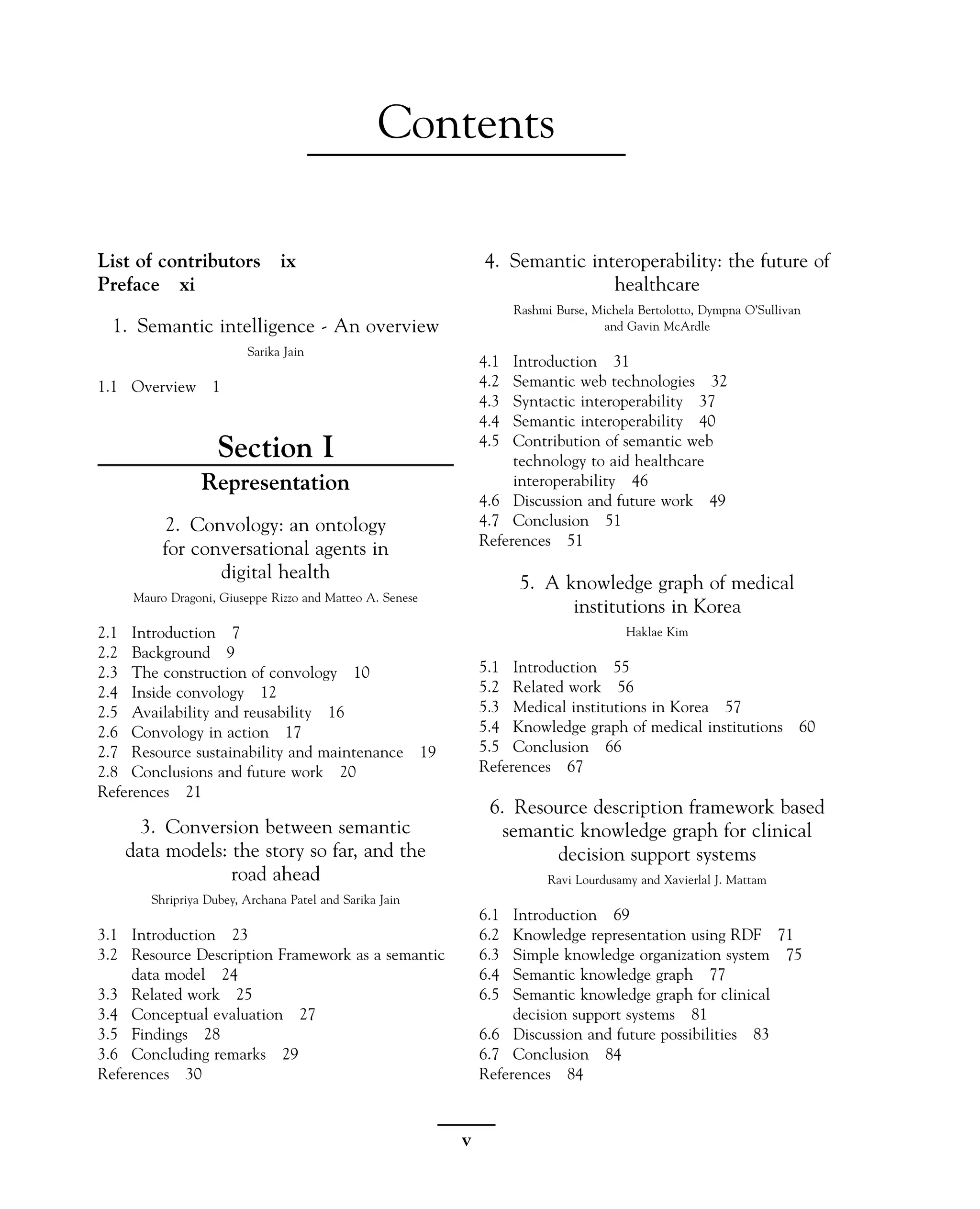
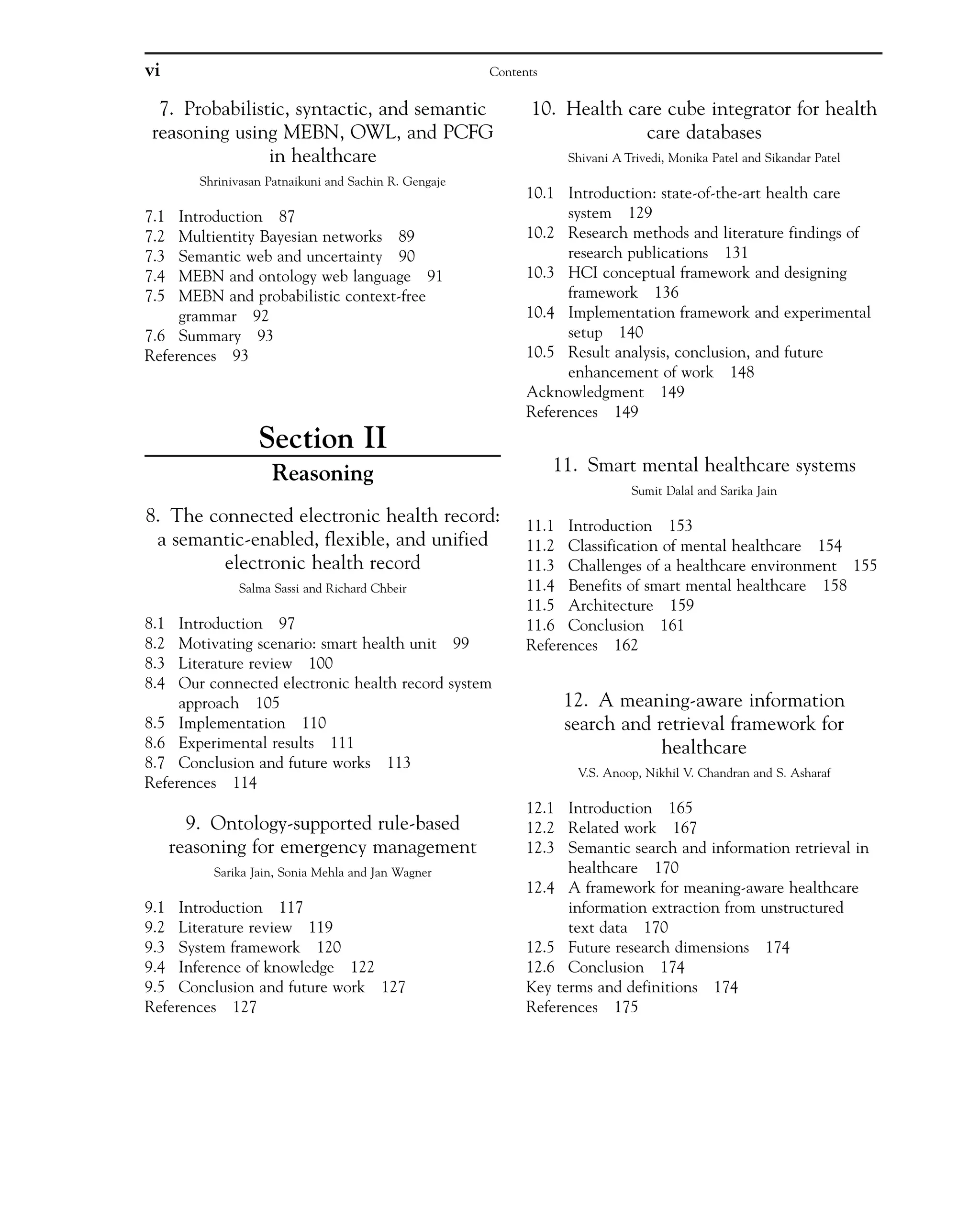
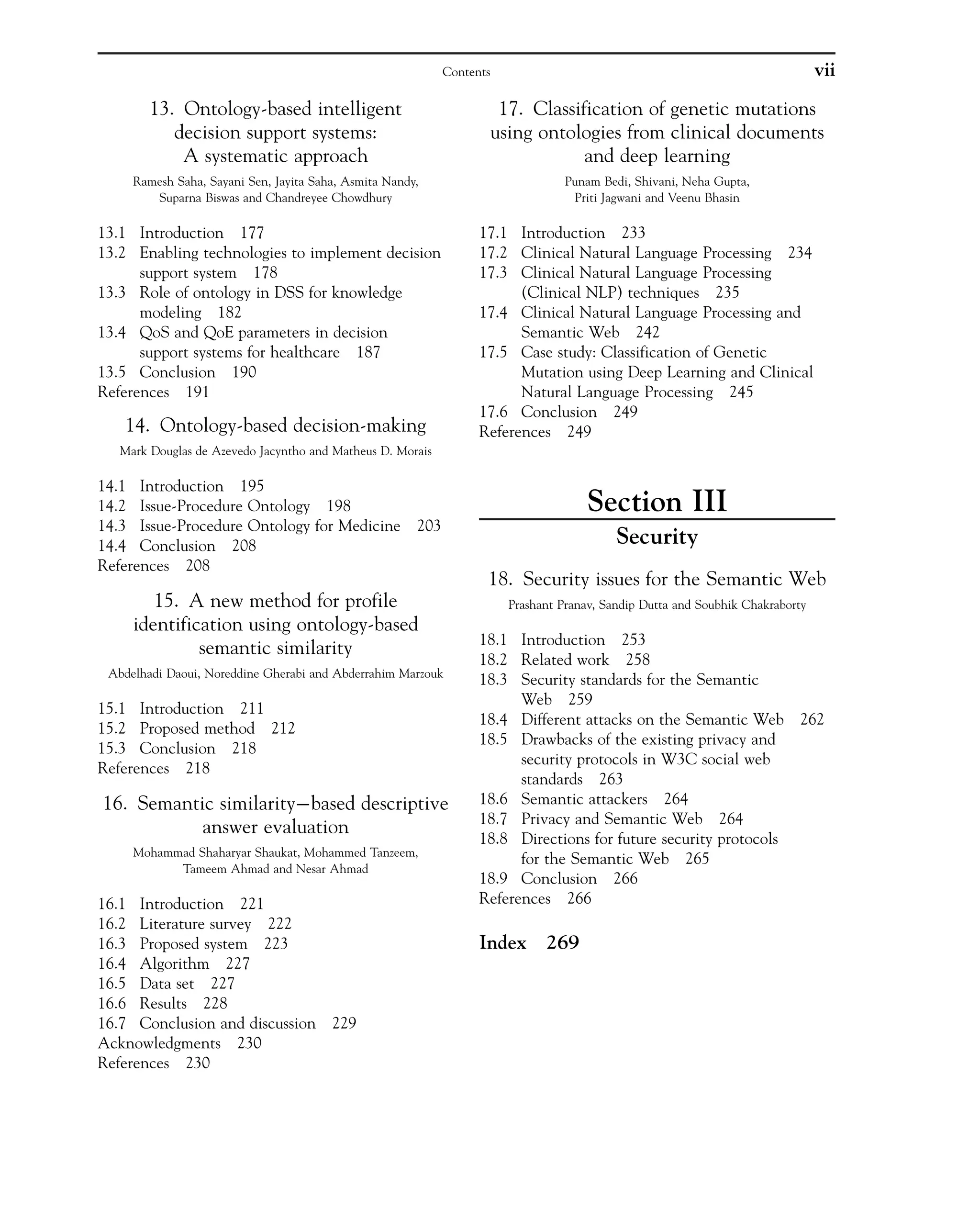
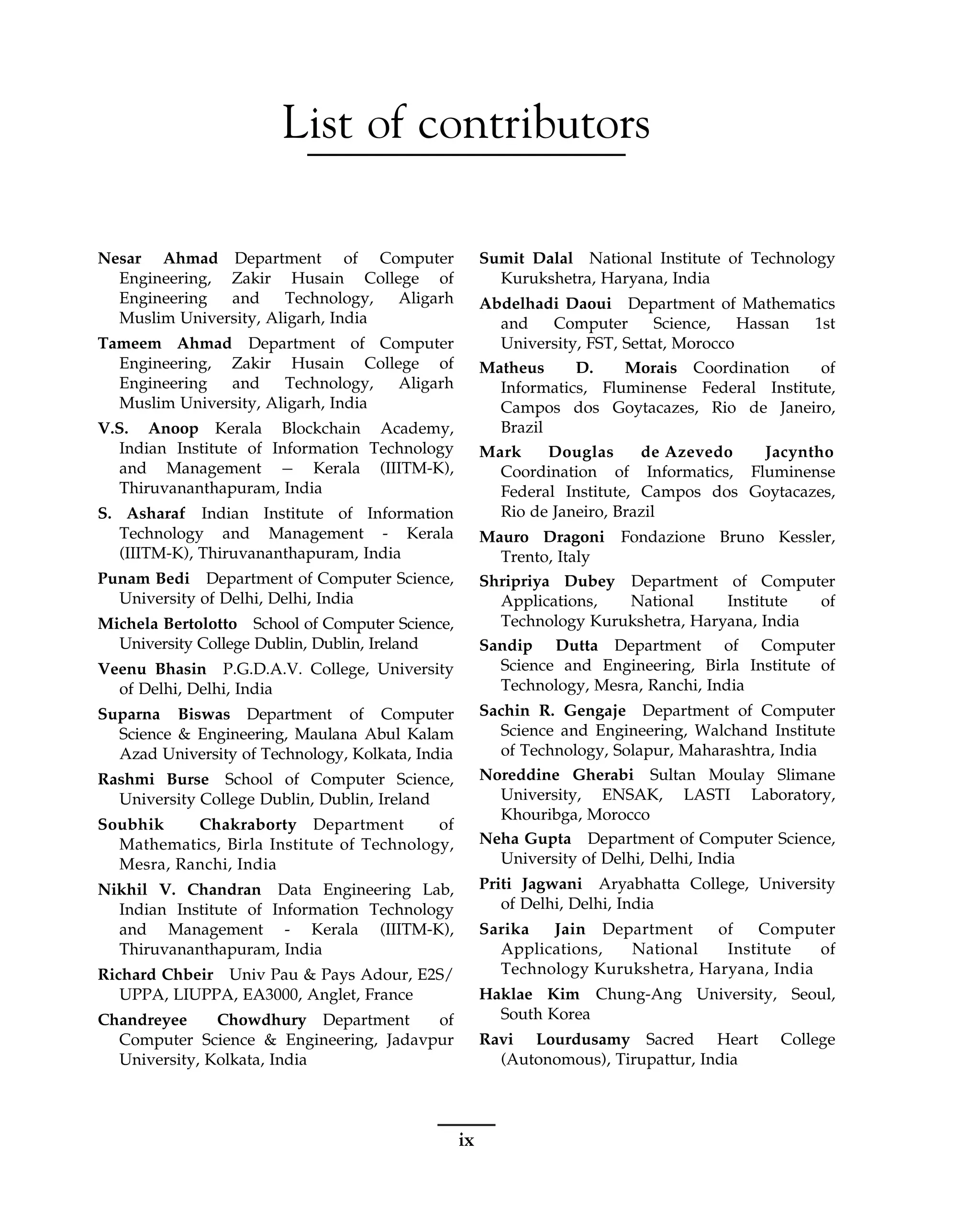

![2.2 Background
Conversational agents, in their larger definition, are software agents with which it is
possible to carry a conversation. Researchers discussed largely on structuring the terminol-
ogy around conversational agents. In this chapter, we decide to adhere to Franklin and
Graesser (1997) that segments conversational agents according to both learned and
indexed content and approaches for understanding and establishing a dialog. The evolu-
tion of conversational agents proposed three different software types: generic chit-chat
(i.e., tools for maintaining a general conversation with the user), goal-oriented tools that
usually rely on a large amount of prebuilt answers (i.e., tools that provide language inter-
faces for digging into a specific domain), and the recently investigated knowledge-based
agents that aim to reason over a semantic representation of a dataset to extend the intent
classification capabilities of goal-oriented agents.
The first chit-chat tool, named ELIZA (Weizenbaum, 1966), was built in 1966. It was cre-
ated mainly to demonstrate the superficiality of communications and the illusion to be
understood by a system that is simply applying a set of pattern-matching rules and a substi-
tution methodology. ELIZA simulates a psychotherapist and, thanks to the trick of present-
ing again to the interlocutor some contents that have been previously mentioned, it keeps
the conversation without having an understanding of what really is said. At the time when
ELIZA came out, some people even attributed human-like feelings to the agent. A lot of
other computer programs have been inspired by ELIZA and AIML—markup language for
artificial intelligence—has been created to express the rules that drive the conversation. So
far, this was an attempt to encode knowledge for handling a full conversation in a set of
predefined linguistic rules.
Domain-specific tools were designed to allow an individual to search conversationally
into a restricted domain, for instance simulating the interaction with a customer service of
a given company. A further generalization of this typology was introduced by knowledge-
based tools able to index a generic (wider) knowledge base and provides answers pertain-
ing a given topic. These two are the largest utilized types of conversational agents
(Ramesh et al., 2017). The understanding of the interactions is usually performed using
machine learning, in fact recent approaches have abandoned handcrafted rules utilized in
ELIZA toward an automatic learning from a dialog corpus. In other words, the under-
standing task is related to turning natural language sentences into something that can be
understood by a machine: its output is translated into an intent and a set of entities. The
response generation can be fully governed by handcrafted rules (e.g., if a set of conditions
apply, say that) or decide the template response from a finite set using statistical
approaches [using some distance measures like TF-IDF, Word2Vec, Skip-Thoughts (Kiros
et al., 2015)]. In this chapter, we focus on the understanding part of the conversation.
While machine learning offers statistical support to infer the relationship between sen-
tences and classes, one pillar of these approaches is the knowledge about the classes of
these requests. In fact, popular devices such as Amazon Echo and Google Home require,
whether configured, to list the intents of the discussion. However, those devices hardly
cope with a full dialog, multiturn, as the intents are either considered in isolation or con-
textualized within strict boundaries. Previous research attempts investigated the
I. Representation
9
2.2 Background](https://image.slidesharecdn.com/32049-250614214522-c20b1ed5/75/Web-Semantics-Cutting-Edge-and-Future-Directions-in-Healthcare-Sarika-Jain-24-2048.jpg)


![Then they bound me hands and feet, laid me on a mule, and carried
me back again to [Palma] the city of Majorca; delivering me to the
Inquisitor: who, when he had sent me to prison, commanded a pair
of bolts to be put on my legs, and an iron clasp about my neck, with
a chain of five fathoms [30 feet] long hanging thereat; which was
done accordingly.
And on the morrow [? 13th May 1588], I was brought forth to the
accustomed place, and in the same manner: where the Inquisitor
sitting, asked first, Why I had broken prison, and run away?
I said, "To save my life."
"Yea," said he, "but now thou hast offended the law more than
before; and therefore shall the law be now executed upon thee."
Then I was carried away again. And immediately there was called an
assembly of citizens, and such as were seen in the Law, to counsel,
and to take advice, What punishment they might inflict upon me?
Which being deliberated, I was brought forth again; and carried to
the Place of Torment: which was in a cell or vault underground.
There were present but four persons, that is to say,
The Inquisitor,
The Solicitor, or Broker, who is to see the law executed.
A Dutch woman that dwelt in the city; who was commanded
thither to tell them what I spake;
because I spake many times in the Dutch tongue.
And lastly, the Tormentor.
The rack now standing ready before them; with seven flaxen ropes
lying thereon, new[ly] bought from the market.
Then the Inquisitor charged me, as at all other times he used to do,
That I should speak what I had to say, and to speak the truth;
otherwise I should be even now tormented to death.](https://image.slidesharecdn.com/32049-250614214522-c20b1ed5/75/Web-Semantics-Cutting-Edge-and-Future-Directions-in-Healthcare-Sarika-Jain-28-2048.jpg)
![I, seeing myself in the hands of such cruel tyrants as always thirst
after the blood of the innocent; even as Cain (who being wroth with
his brother Abel, and carrying a heavy countenance) could be no way
eased but with his brother's blood: so I, past hope of life, turned my
back towards them, and seeing my torments present before me, I
fell down on my knees, and besought the Lord to forgive my sins,
and to strengthen my faith, and to grant me patience to endure to
the end.
Then they took me into a void room, and stripped me out of my
ornaments of sheepskins which I repeated [spoke of] before; and
put a pair of strong canvas breeches upon me.
Then bringing me to the rack again, he commanded me to lie down.
The bars of the rack under me were as sharp as the back of a knife.
Now I, willingly yielding myself, lay down. Then the Tormentor
bound my hands over my breast crosswise; and my legs clasped up
together, were fast tied the one foot to the other knee. Then he
fastened to either arm a cord, about the brawn of the arm; and
likewise to either thigh another; which were all made fast again
under the rack to the bars: and with another cord he bound down
my head; and [he] put a hollow cane into my mouth. Then he put
four cudgels into the ropes which were fastened to my arms and
thighs.
Now the woman which was present, being interpreter, began to
persuade me to yield, and confess the faith of the Church of Rome.
I answered, "If it were the will of GOD that I should end my life
under their cruel hands, I must be content: but, if it please him, he
is able to deliver me, if there were ten thousands against me."
Then the Tormentor, as he was commanded, began to wrest the
ropes; which he did by little and little, to augment my pains, and to
have them endure the longer: but, in the end, he drew them with
such violence as though he would have plucked my four quarters in
sunder; and there stayed a good space.](https://image.slidesharecdn.com/32049-250614214522-c20b1ed5/75/Web-Semantics-Cutting-Edge-and-Future-Directions-in-Healthcare-Sarika-Jain-29-2048.jpg)
![Yet to declare their tyrannical malice, thinking my torment not
sufficient, he added more: pouring water through a cane which was
in my mouth, by little and little, which I was constrained either to let
down, or to have my breath stopped until they had tunned in such
[a] quantity as was not tolerable to endure; which pained me
extremely.
Yet not satisfied, they took and wet a linen cloth, and laid it over my
mouth till I was almost strangled; when my body, being thus
overcharged with such abundance of water, after they had thus
stopped my breath with the wet cloth, suddenly with the force of my
breath and that my stomach was so much overcharged, the water
gushed out, and bare away the cloth as if had been the force of a
conduit spout.
When the Inquisitor saw that all this would not make me yield, he
commanded the Tormentor for to wind the cord on my left arm more
strait[ly]; which put me to horrible pains. And immediately the rope
burst in sunder.
Then said the Inquisitor, "Yea, is he so strong? I will make him
yield!": and commanded the Tormentor to put a new rope.
Then the woman again bade me yield; saying, It were better to yield
than to die so miserable a death.
But I, beseeching Almighty GOD to ease me of my pains, and to
forgive my sins, answered her, That though they had power over my
body: yet there was no torment should compel me to yield to their
idolatry, whereby I might bring my soul in danger of hell fire.
Then the Inquisitor asked her, What I said?
She answered, That I had said I would never submit myself to the
Church of Rome.
Then did he most vehemently charge me to yield and submit myself
to the Romish Church: otherwise he would pluck off one of my arms.
Whereupon I denying still, the Tormentor, in most cruel manner,
wrested the ropes as if he would have rent my body in sunder. I](https://image.slidesharecdn.com/32049-250614214522-c20b1ed5/75/Web-Semantics-Cutting-Edge-and-Future-Directions-in-Healthcare-Sarika-Jain-30-2048.jpg)
![(being now in intollerable pains; and looking for nothing but present
[instant] death) cried out, in the extremity of my anguish, "Now,
farewell wife and children! and farewell England!": and so, not able
to utter one word more, lay even senseless.
The Inquisitor asked the woman again, What I said?
She laid her hand upon my head, and perceiving that I was
speechless, told him, I was dead.
Wherefore the Tormentor loosed the ropes, unbound my hands and
feet, and carried me into a chamber which they termed St. Walter's
Chamber. Where I came to myself, and received some sense and
reason; but could have no feeling of any limb or joint. Thus I lay in a
most lamentable and pitiful manner for five days [? 14th-18th May
1588], having a continual issue of blood and water forth of my
mouth all that space, and being so feeble and weak, by reason of
my torments, that I could take no sustenance.
Till the sixth day [? 19th May 1588] a little recovering my strength,
they gave me a little quantity of bread and wine sod[den] together:
and presently, the very same day, they carried me forth into the city,
and set me upon an ass's back, and whipped me throughout every
street of [Palma] the city of Majorca; giving me to the number of
five hundred lashes, which made the blood to run down my
miserable carcase in such abundance that it dropped at the belly of
the ass to the ground. Now there were carried with me about the
city very many harlots and whores and other malefactors which had
offended the law; but none punished like me.
After this, they carried me to the chamber [St. Walter's Chamber]
from whence I came: where I lay without all worldly comfort.
Can any man, which understandeth the absurd blindness and wilful
ignorance of these Spanish tyrants or Romish monsters, think them
to be of the true Church? which defend their faith with fire, sword,
and hellish torments, without remorse or pity; as you may perceive](https://image.slidesharecdn.com/32049-250614214522-c20b1ed5/75/Web-Semantics-Cutting-Edge-and-Future-Directions-in-Healthcare-Sarika-Jain-31-2048.jpg)
![by a manifest trial here set down to the open view of the World. For
when these hell-hounds had tormented this miserable creature, as
you have heard, with a monstrous and most unchristian kind of
torment: which he endured for the space of three hours, till [he] was
at the very point of death and ready to yield up the ghost: they (not
yet satisfied with these torments, which he had suffered already)
reserved his life, minding to increase his pains; which they were
nothing slack to perform so long as he remained in their power.
Now the second night after they had whipped me about the city as
aforesaid [? the night of the 20th May 1588], about midnight, I
recounting to myself in what misery I both did and had remained; I
thought to put in practice once again to get my liberty, craving of the
Lord, with hearty prayer, to assist me with his mighty hand.
And immediately searching about, I found an old iron stub; with the
which I brake a hole through the chamber wall: and crept through
into another chamber; where I felt in the dark many pieces of plate,
which I little regarded. After, I found many towels and table napkins.
Then, seeking further, I found a long cane whereon there hung
many puddings and sausages. I plucked down the cane, but had
little mind on the victual. Then I found certain knives.
Then I espied some light at a great window in a garret or loft over
me. Wherefore I tied a crooked knife to the cane, and thrust up a
long towel: and with the knife at the end of the cane, I drew the
towel about a bar of the window, and drew it to me: and with that
towel I did climb up into the window. But then I could not get forth
between the bars, wherefore I digged forth one of the bars; and tied
my towels and napkins together end to end, and fastened one end
to a bar of the window: and then did slide down by them till I came
within three or four fathoms [18 or 24 feet] of the ground: when the
towels brake in sunder, and I fell down into a well which was
direct[ly] under me, where I was almost drowned. Yet it pleased
GOD to deliver me.](https://image.slidesharecdn.com/32049-250614214522-c20b1ed5/75/Web-Semantics-Cutting-Edge-and-Future-Directions-in-Healthcare-Sarika-Jain-32-2048.jpg)
![And being then in the city, without the Castle walls; I, knowing no
other way to get out, went again to the town ditch: where I got
through the Water Gate with less peril than before, by reason there
was less water than [there] was the other time.
Then went I, with all speed into the woods; lying all days in [the]
woods as close as I could, and travelled by nights through woods
and mountains.
And upon the third night [i.e. after his escape, say the night of the
23rd May 1588], about midnight, I happened into an olive garden,
not above half a bow shot from the sea-side; in which garden I
found a little skiff or boat lying under a pomgranate tree: and there
lay in the boat a hatchet. All which served happily for my delivery.
Now I, being unable to carry the boat to the water-side, did cut
small truncheons of wood; and upon them did slide it down to the
water-side. Then I cut an arm [a branch] of an olive tree, to make
my boat a mast; and, having no other shift, made a sail-cloth with
my breeches and a piece of [a] mantle which I had about me. And
for [because] my oars were very mean, yet durst I stay to look for
no better, but presently set sail; and, yielding myself to the good
pleasure of Almighty GOD, betook myself to the sea: willing rather to
abide what the Lord would lay on me, than to die among these most
cruel tyrants.
And by the providence of GOD, upon the second day [? 25th May
1588], in the forenoon, I descried the Coast of Barbary: for the wind
stood north-east [or rather north-west], which served me most
happily.
Understand that this cut is, from shore to shore [that is, from some
point in Majorca to the east side of the Bay of Bougiah] 150 [or
rather 70] leagues, which is 450 [or, at most, say 210] English miles;
and at that time [there was] a very rough sea; insomuch if it had not](https://image.slidesharecdn.com/32049-250614214522-c20b1ed5/75/Web-Semantics-Cutting-Edge-and-Future-Directions-in-Healthcare-Sarika-Jain-33-2048.jpg)
![been by the great and wonderful power of GOD, my vessel and I
had both been overwhelmed.
But I fell in with the country of Cabyles [i.e., the Little Kabylia, in the
present Province of Constantine], commonly called the King of
Cookooe's land, near a town called Gigeley [the present Djidjelli]:
where I went on shore, leaving my boat to swim which way the wind
and weather would conduct it; thinking it had done me sufficient
service.
But see now, when I had escaped through the surges of the sea
from the cruelty of the Spaniard, I was no sooner landed and
entered the mountains but I was espied by the Moors which inhabit
the country; who pursued very earnestly to take me; supposing me
to be come from the Christian shore to rob in their coast.
For, many times, the Spaniards will pass over in some small vessel,
and go on shore; and if they can catch any men of the country, they
will carry them away to make galley slaves: wherefore the Moors are
very diligent to pursue them at their landing; and if it chance they
take any Christian, they use him in like sort.
Wherefore I, being very unwilling to fall into their hands, was
constrained to go into a river, which ran between two mountains;
and there to stand in water up to the chin, where the bushes and
trees did grow most thick over me: where I stood certain hours, until
they had left searching for me.
Now when I perceived they were departed, I went out of the water,
being very feeble; for I ate nothing all that time but the bark of the
trees, which I cut with my hatchet. I went forth as secretly as I
could, minding to pass to Argire [Algiers].](https://image.slidesharecdn.com/32049-250614214522-c20b1ed5/75/Web-Semantics-Cutting-Edge-and-Future-Directions-in-Healthcare-Sarika-Jain-34-2048.jpg)
![The charitable mind of
a simple old man.
The old man still pitied
him and did what lay
in him to deliver him.
I had not gone above three miles, when I espied a Moor, a very well
favoured old man, who was weeding a field of wheat.
I spake to him in the tongue of Franke [The Lingua Franca of the
Mediterranean shore], and called him to me. I, having my hatchet in
my hand, cast it from me.
He came unto me; and, taking me by the hand, demanded very
gently, What I would have?
I, perceiving that he did, even at the first sight, pity my poor and
miserable estate, told him all things that had happened unto me:
how I was an Englishman; how I had been captive in Argire; how I
chanced to come to Genoa; their sending me to Majorca; and all the
torment which I had suffered there; and finally my escape from
thence, with all the rest that followed.
This good aged father, when he had heard of my
lamentable discourse, shewing himself rather a
Christian than a man brought up among the
Turkish Mahometists, greatly pitied my misery; and forthwith led me
home to his house, and caused such victuals as the country yieldeth
to be set before me, which was dried wheat and honey: and baked a
cake upon the fire hearth, and fried it with butter; which I thought
very good meat, for I had not been at the like banquet in six years
before [1582-1588]; the good father shewing me what comfort he
could.
There I remained four and twenty hours. In the
meantime the Moors which dwelt in the villages
by, understanding of my being there, came; and,
calling me forth, inquired of me, What I was? From whence I came?
and Whither I would?: and, with great vehemency, charged their
weapons against my breast; insomuch that I thought they would
verily have slain me. But mine host, that good old man, came forth
and answered for me; and so dissuaded them from doing me any
harm: and took me back again into his house.](https://image.slidesharecdn.com/32049-250614214522-c20b1ed5/75/Web-Semantics-Cutting-Edge-and-Future-Directions-in-Healthcare-Sarika-Jain-35-2048.jpg)
![This being past, I requested him to help me to a guide to conduct
me to Argire: and he presently provided two, whereof the one was
his son; to whom I promised to give four crowns for their pains.
So taking my leave of my good host, we took our way towards
Argire.
When we had not passed above 24 miles on the way, we chanced to
meet a Gentleman of that country who was, as it were, Purveyor to
the King; and went about the country to take up corn and grain for
the King's provision. He, meeting us upon the way, asked Whither
we were travelling?
My guides answered, That we were going to Argire.
He asked, What had we to do there?
They said to deliver me there.
Then he demanded, What I was?
They told him, I was an Englishman that came from the Christian
shore, and was bound towards Argire.
Then did this Gentleman take me from them, sending them back
from whence they came; but compelled me to go with him to village
by, and very earnestly persuaded me to turn Moor: promising, if I
would, he would be a mean[s] to prefer me greatly; which I still
denied.
Then, upon the next day, he carried me further, to a town called
Tamgote [? Tamgout], and delivered me to a Nobleman of great
authority with the King: which was Lieutenant-General for the wars.
For this King of Cookooe holdeth continual war with the King of
Argire; although they be both subject to the Great Turk.
I was no sooner brought before this Nobleman, but he demanded,
Whether I would turn Moor?
I answered, That I would not.](https://image.slidesharecdn.com/32049-250614214522-c20b1ed5/75/Web-Semantics-Cutting-Edge-and-Future-Directions-in-Healthcare-Sarika-Jain-36-2048.jpg)
![Gunners are in great
estimation with them.
Wherefore immediately he commanded a pair of shackles to be put
on my heels; and a clasp of iron about my neck, with a chain
thereat.
Then was I set on a mule, and conveyed to Cookooe, [also spelt, in
maps later than this narrative, Couco or Cocou. It was not far from
the left bank of the river Sahel, that falls into the Bay of Bougiah,?
the present Akbou], where the King lay.
When I was come thither, I was presently brought before the King:
who inquired, What I was? and, From whence I came? and What my
pretence was?
I answered, That I was an Englishman; and that I came from the
Christian shore, intending to pass to Argire.
Then he asked me, What I could do?
I told him I could do nothing.
Then he demanded, Whether I were a Gunner?
I said, "No."
Then he persuaded me very instantly to yield to
their religion, offering to prefer me.
Wherefore I desired him to give me liberty to depart: "for my desire
is to be in England, with my wife and children."
"Yea," said he, "but how wilt thou come there?"
For they minded to keep me still: and evermore the King assayed to
seduce me with promises of great preferment, saying, If I would
serve him and turn Moor: I should want nothing.
But on the contrary, I besought him to give me liberty to go to
Argire; where I was in hope to be delivered, and sent home to mine
own country.](https://image.slidesharecdn.com/32049-250614214522-c20b1ed5/75/Web-Semantics-Cutting-Edge-and-Future-Directions-in-Healthcare-Sarika-Jain-37-2048.jpg)
![These men are
nothing expert in
Artillery.
Very many offers of
preferment to draw
me from the Word of
GOD.
Now he, seeing he could win me by no gentle means, commanded
me to prison; saying, That he would either make me yield and turn
Moor: or else I should die in captivity.
In this while that I remained in prison; divers of the King's House
came to me, persuading me to yield to the King's demand: alleging
how hardly the King might use me, being now in his power, unable
to escape; and again how bountifully the King would deal with me, if
I would submit myself.
Within a little time after, it happened there was great preparation to
receive the King of Abbesse [? the present tribe of the Beni-Abbas,
or Beni-Abbès], whose country adjoineth to the King of Cookooe's
land: and [they] are in league together, and join their armies in one
against the King of Argire.
Now, at his coming, I was fetched forth of
prison, and commanded to charge certain pieces
of ordinance, which were three Sacres and two
Minions of Brass [See Vol. IV., pp. 250-251]; which I refused not to
do, trusting thereby to get some liberty. Wherefore, at the coming of
the King of Abbesse into the town, I discharged the ordnance as
liked them very well: for they are not very expert in that exercise.
For which I had some more liberty than before.
This King of Abbesse tarrying some certain time there, in consulting
with the King of Cookooe for matters touching the Wars with Argire;
and understanding of me, sent for me, being very desirous to talk
with me: where, after certain questions he desired of the other King,
that he might buy me; which he would not grant.
Then the King of the Cabyles [Kabyles] or
Cookooe persuaded me very seriously to serve
him wil[ling]ly, and to turn Moor: and offered to
give me 700 Doubles [? the Double Pistoles, or
Doubloons] by the year, which amounteth to the sum of £50 [=](https://image.slidesharecdn.com/32049-250614214522-c20b1ed5/75/Web-Semantics-Cutting-Edge-and-Future-Directions-in-Healthcare-Sarika-Jain-38-2048.jpg)
![£200 now] of English money; and moreover to give me by the day,
30 Aspers, which are worth twelve pence English, to find me meat;
and likewise to give me a house, and land sufficient to sow a
hundred bushels of grain yearly, and two Plow of oxen furnished, to
till the same; also to furnish me with horse, musket, sword, and
other necessaries, such as they of that country use. And lastly he
offered to give me a wife, which they esteemed the greatest matter;
for all buy their wives at a great price. Yea, if there were any in his
Court could content me, I should make my choice: but if there were
not; he would provide one to my contentment, whatsoever it should
cost him.
But when he perceived all he said was in vain, he sent the Queen
and her gentlewomen to talk with me. When she came, she very
courteously entreated me to turn and serve the King, and to
consider well what a large offer the king had made; saying, That I
was much unlike to come to any like preferment in my country. And
many times she would shew me her gentlewomen, and ask me, If
none of them could please me?
But I told her, I had a wife in mine own country, to whom I had
vowed my faith before GOD and the World: "which vow," I said, "I
would never break while we both lived."
Then she said, She could but marvel what she should be whom I
esteemed so much as to refuse such offers of preferment, for her
sake; being now where I must remain in captivity and slavery all the
days of my life. But when she could prevail no way with me; when
she had uttered these foresaid speeches, and many others which
were frivolous to rehearse, she left me. Yet, by her means, I had
more liberty than before.
After this, I was set to saw boards and planks; and was commanded
to make a carriage for a piece of ordnance. Thus they compelled me
to labour daily: which I did the more willingly, because I hoped still
to get my liberty thereby in the end.](https://image.slidesharecdn.com/32049-250614214522-c20b1ed5/75/Web-Semantics-Cutting-Edge-and-Future-Directions-in-Healthcare-Sarika-Jain-39-2048.jpg)
![I was made Master of
work, wherein I had
small skill.
Then they willed me to shew the fashion of our edge tools, after the
English [manner]: which when they saw the fashion; their smiths
wrought them very artificially, and gave them very good temper. For
these things I was had in more estimation; insomuch that they took
off my irons, and let me walk abroad with a Keeper.
Then was I commanded by the King to teach the
Carpenters to frame a house after the manner of
English building: and for that purpose there
were sent forth Carpenters and workmen with me to the woods, to
fall timber; all which were to do what I appointed, upon the King's
commandment. Now I, being Chief Master of the work, appointed
out the trees which were very special good timber. In small time, we
had finished our frame; which liked the King very well. By this
means I had more liberty than before; and was very well intreated.
Yet I was greatly grieved in mind that I could not procure any means
for my liberty; although at that time, I wanted few necessaries. Yet
was I daily devising how I might escape away, for three special
causes:
One was for the special care I had of my salvation: because, as you have
heard, there were many temptations laid before me
to draw me from a Christian to be an abominable idolater.
The second cause was for the love and dutiful allegiance which I owe to
my Prince [Sovereign] and natural country.
The third was the regard of the vow which I vowed in matrimony; and the
care of my poore wife and children.
Which causes moved me so much that whereas, by reason of my
diligence in these foresaid matters, I [was] walking abroad with my
Keeper who, not suspecting me, was not so attentive as before he
had been: so soon as our frame was finished, I took opportunity;
and, shewing them a clean pair of heels, took my way over the](https://image.slidesharecdn.com/32049-250614214522-c20b1ed5/75/Web-Semantics-Cutting-Edge-and-Future-Directions-in-Healthcare-Sarika-Jain-40-2048.jpg)
![I was now made a
Water-bearer.
mountains intending to go for Argire [which was in a north-westerly
direction].
But presently there was a great store of men, both on horseback
and on foot: who, being more perfect in the way than I was, quickly
overtook me; and carried me back again to Cookooe.
I was presently brought before the King; who asked me Why I ran
away?
I told him, To have liberty.
Then he called certain of his servants to him; and commanded them
to lay me down at his feet, which four of them did: and laying me
flat upon the belly, one of them gave me 75 stripes with a great
cudgel, till I was not able to remove out of the place.
Then the King commanded to carry me to prison again: whither two
of them carried me and put me in irons, and there left me. Where I
remained for the space of two months.
Then was I brought forth of prison, and sent
daily to a fountain or well, about half a league
from the town, to fetch water with a couple of
asses, for the use of the King's House.
Now, in this time, many artificers (as Smiths, Joiners, and
Carpenters, and many others) came to me to understand the fashion
of many English tools (as plane irons, gouges, chisels and such like);
for which they shewed me some favour, and gave me some money.
And when I had gotten a little money, I bestowed it upon apparel,
and caused it to be made like to theirs: which I carried secretly,](https://image.slidesharecdn.com/32049-250614214522-c20b1ed5/75/Web-Semantics-Cutting-Edge-and-Future-Directions-in-Healthcare-Sarika-Jain-41-2048.jpg)
![when I went to fetch water, and did hide it in a dry cave under the
side of a rock. I bought me likewise a sword and a lance, such as
they use to travel with. I also provided a file. All which I laid up with
my apparel.
It happened that the King of Abbesse came again to visit the King,
and to take counsel about warlike affairs; as usually they did.
Wherefore when they heard of his coming, making great preparation
for him; it fell out so that there wanted water in the Offices
[Kitchens &c.], where, in an evening, there was exceeding thunder
and rain and lightning; so that there was no man would go for water,
but everyone [was] calling for the Englishman.
Then I, which durst say no "Nay!", took the vessels and hung them
upon the asses; and so went, through rain and wind and thunder
and all, till I came to the well: where I left my asses to wander
whither they would, and went to my apparel and with my file cut off
my irons, and made me ready in my suit of Moors' clothing, and,
with my sword by my side and my lance on my shoulder, took my
way once again towards Argire.
And that night I went about 20 miles over rocks and mountains,
keeping myself out of beaten ways, casting [directing] my way by
the moon and stars. When the day began to be light, I lay me down
in a brake of thick bushes; and there I slept the most part of the
day: and in the evening I began to travel forth on my way.
Now, on the third night, I was to pass a bridge where was continual
watch and ward, both day and night; where I must of necessity
pass, by reason the river [? the river Isser] ran betwixt two
mountains: which were so steep that no man can neither go down
to enter [the] water, nor yet being in can by any possible means get
up on the other side; which river is a great defence to the country.
Where I used no delay, but entered the bridge in the beginning of
the night, about nine of the clock, being in great doubt [fear] of the](https://image.slidesharecdn.com/32049-250614214522-c20b1ed5/75/Web-Semantics-Cutting-Edge-and-Future-Directions-in-Healthcare-Sarika-Jain-42-2048.jpg)
![Many dangerous wild
beasts in that country.
Watch. But at the first end of the bridge, I saw no man, until I was
happily passed over. Then there came one after me, and asked, Who
goes there?
It being somewhat dark, and I in apparel and with my weapons like
a Moor; [I] answered boldly, That I was a friend, and told him, I was
coming to the Governor to deliver letters from the King. For near the
river's side there is a village where dwelleth he who hath charge of
the keeping of this passage. Whereby I went onward through the
village.
But before I was far passed, I heard horsemen upon the bridge;
which asked, Whether any man had passed that night?
The watermen told them, There was one gone, even now, which
said, He went to deliver the King's letters to the Officer.
But I thought [it] no time now to hear any more of their talk; but
betook me to my heels: and so soon as I was without the town, I
went out of the Port way [the road to Algiers] into [the] woods; and
kept desert ways that night and day following.
And the next night, I came within the liberties of the King of Argire;
where I knew the Cabyles [Kabyles] could not fetch me back again.
In this order I escaped their hands, by the
mighty power of GOD. For understand, in these
desert mountains there are all manner of wild
beasts, in great number; as lions, bears, wolves of marvellous
bigness, apes, wild swine; and also wild horses and asses, with
many other hurtful beasts: yet was I never in danger of any of them.
In this country of Cabyles, there are divers kinds of very pure
metals, as gold, silver, and lead; and good iron and steel: but they,
for want of knowledge and skill, make no use of any metal except
iron and steel. Although at such times I have been present, while
the Smiths have tried their iron, I have seen, among the dross of the](https://image.slidesharecdn.com/32049-250614214522-c20b1ed5/75/Web-Semantics-Cutting-Edge-and-Future-Directions-in-Healthcare-Sarika-Jain-43-2048.jpg)
![iron, very perfect gold. Which they, perceiving me to behold, were
very inquisitive to understand, Whether it were gold, or any other
metal of substance?
But I told them, It was but a kind of dross whereof we made colours
for painting in England.
They carried me out to the mountains, and shewed me the rocks
where they gathered their iron; which rocks had veins of very pure
gold. Which I would not reveal to them, but answered as before:
because I doubted [feared] if the King once knew me to have
experience in such mysteries, he would keep me the more
straight[ly]; whereby I might have remained in bondage during my
life.
Now when I was within the country of Argire, I was out of dangers
from the pursuers; and then did I walk by day and kept the common
ways.
Where, coming within the view of Argire, upon the way I met a Turk
who knew me at the first sight; and demanded, If I had not been
captive with such a man?
I said, "Yes."
He then inquired, Whether I went to the city?
I said, "Yes."
Then turned he back, and did accompany me to the city.
When I came there, I would have gone to the English House; but he
led me violently to my old Master [p. 372], where I rested me a day
and night: my Master not being very earnest, for because, in this
time that I was absent [1587-1588], all the English captives were
redeemed and sent home.
Wherefore I went to the English Consul, hoping to be presently
[instantly] delivered: who gave me very good words, but did not](https://image.slidesharecdn.com/32049-250614214522-c20b1ed5/75/Web-Semantics-Cutting-Edge-and-Future-Directions-in-Healthcare-Sarika-Jain-44-2048.jpg)
![shew me that favour which he professed.
I could make some discourse of his unkind dealing with me and
others of our countrymen; which I will leave till [a] more fit
occasion.
For, understand, that while I was with him, there came a messenger
from my old Master, with whom I was before I went to Genoa [in the
previous year, 1587]; who would have carried me away by force: but
I would not go, requesting the Consul to take order for my delivery.
But he persuaded me to go with him, saying, that he would, in time,
provide for my liberty.
But by means I would not yield to go to my Master, nor yet the
Consul would not take order for me: I was taken by the King's
Officers, and put in chains in the King's prison, among other
captives.
And at the next setting out of the gallies, I was put to my old
occupation; where I remained a galley slave for three years and
above after [1588-1592.] In which time, I was eight voyages at sea:
and at such times as the gallies lay in harbour, I was imprisoned with
the rest of the captives, where our ordinary food was bread and
water; and, at some times, as once or twice in a week, a small
quantity of sodden wheat.
To conclude, I passed my time in sickness and extreme slavery until,
by the help of an honest Merchant [? Master Richard Stapar, see page
369; or rather Stapers, see Vol. III., page 169] of this city of London,
and having a very fit opportunity by means of certain [of] our
English ships which were ready to set sail, bound homeward, upon
Christmas Even, being the 24th of December 1592, I came aboard
[at Algiers] the Cherubim of London; which, weighing anchor, and
having a happy gale, arrived in England towards the end of February
[1593] following.](https://image.slidesharecdn.com/32049-250614214522-c20b1ed5/75/Web-Semantics-Cutting-Edge-and-Future-Directions-in-Healthcare-Sarika-Jain-45-2048.jpg)
![Thus have you heard how it hath pleased the Almighty GOD, after
many and great miseries, to bring me to the port which I longed
greatly to see: beseeching GOD, of his mercy, to prolong the days of
our most gracious and renowned Queen; whose fame reacheth far,
and whose most happy government is in admiration with foreign
Princes.
So wishing all to the glory of GOD, and
[the] furtherance of the Gospel,
I end.
F I N I S .](https://image.slidesharecdn.com/32049-250614214522-c20b1ed5/75/Web-Semantics-Cutting-Edge-and-Future-Directions-in-Healthcare-Sarika-Jain-46-2048.jpg)

![[Ancient Ballads, etc.
in the Library of
Henry Huth, 1867.]
The Merchant's Daughter of
Bristow [Bristol].
The First Part.](https://image.slidesharecdn.com/32049-250614214522-c20b1ed5/75/Web-Semantics-Cutting-Edge-and-Future-Directions-in-Healthcare-Sarika-Jain-48-2048.jpg)


![The Merchant's Daughter of
Bristow [Bristol].
The Second Part.](https://image.slidesharecdn.com/32049-250614214522-c20b1ed5/75/Web-Semantics-Cutting-Edge-and-Future-Directions-in-Healthcare-Sarika-Jain-55-2048.jpg)



![[PDF Download] Web Semantics: Cutting Edge and Future Directions in Healthcar...](https://cdn.slidesharecdn.com/ss_thumbnails/107043-240805203721-c4d1d052-thumbnail.jpg?width=640&height=640&fit=bounds)


