Visit https://ebookfinal.com todownload the full version and
explore more ebooks
Web Security Field Guide 1st Edition Steve
Kalman
_____ Click the link below to download _____
https://ebookfinal.com/download/web-security-field-
guide-1st-edition-steve-kalman/
Explore and download more ebooks at ebookfinal.com
2.
Here are somesuggested products you might be interested in.
Click the link to download
The Manager s Guide to Web Application Security A Concise
Guide to the Weaker Side of the Web 1st Edition Ron
Lepofsky
https://ebookfinal.com/download/the-manager-s-guide-to-web-
application-security-a-concise-guide-to-the-weaker-side-of-the-
web-1st-edition-ron-lepofsky/
Security on the Web 1st Edition Marvin Zelkowitz
https://ebookfinal.com/download/security-on-the-web-1st-edition-
marvin-zelkowitz/
Grokking Web Application Security 1st Edition Malcolm
Mcdonald
https://ebookfinal.com/download/grokking-web-application-security-1st-
edition-malcolm-mcdonald/
Hacking Web Apps Detecting and Preventing Web Application
Security Problems 1st Edition Mike Shema
https://ebookfinal.com/download/hacking-web-apps-detecting-and-
preventing-web-application-security-problems-1st-edition-mike-shema/
3.
Microsoft Expression Web2 On Demand 2nd Edition Steve
Johnson
https://ebookfinal.com/download/microsoft-expression-web-2-on-
demand-2nd-edition-steve-johnson/
Web Security Privacy Commerce 2nd edition Edition Simson
Garfinkel
https://ebookfinal.com/download/web-security-privacy-commerce-2nd-
edition-edition-simson-garfinkel/
The Web s Awake An Introduction to the Field of Web
Science and the Concept of Web Life 1st Edition Philip D.
Tetlow
https://ebookfinal.com/download/the-web-s-awake-an-introduction-to-
the-field-of-web-science-and-the-concept-of-web-life-1st-edition-
philip-d-tetlow/
Field Guide to Binoculars and Scopes SPIE Field Guide Vol
FG19 Paul R. Yoder Jr.
https://ebookfinal.com/download/field-guide-to-binoculars-and-scopes-
spie-field-guide-vol-fg19-paul-r-yoder-jr/
Geometry A Self Teaching Guide 1st Edition Steve Slavin
https://ebookfinal.com/download/geometry-a-self-teaching-guide-1st-
edition-steve-slavin/
5.
Web Security FieldGuide 1st Edition Steve Kalman
Digital Instant Download
Author(s): Steve Kalman
ISBN(s): 9781587050923, 1587050927
Edition: 1st
File Details: PDF, 21.73 MB
Year: 2003
Language: english
6.
• Table ofContents
• Index
Web Security Field Guide
BySteve Kalman
Publisher: Cisco Press
Pub Date: November 08, 2002
ISBN: 1-58705-092-7
Pages: 608
Hands-on techniques for securing Windows(r) servers, browsers, and network communications.
Create effective security policies and establish rules for operating in and maintaining a
security- conscious environment
Learn how to harden Windows multi-user platforms, including NT, 2000, and XP
Understand secure installation options for Windows web servers and how to enhance
security on existing web and FTP server installations
Improve security at the end user's workstation, including web browsers, desktops, and
laptops
Evaluate the pros and cons of installing a certificate server and becoming your own
Certification Authority
Learn the Cisco PIX Firewall and Cisco IOS Firewall architecture and how to apply Cisco
standard and extended access lists
Discover ways to test the current state of security and keep it up to date
Learn to engage end users as part of the overall network security solution
While the Internet has transformed and improved the way we do business, this vast network and
its associated technologies have opened the door to an increasing number of security threats.
The challenge for successful, public web sites is to encourage access to the site while eliminating
undesirable or malicious traffic and to provide sufficient levels of security without constraining
performance or scalability. The more reliant organizations become on the Internet to perform
daily jobs or conduct transactions, the greater the impact a breach of network security has. Just
as Cisco Systems has been an innovator in using the Internet to conduct business, so too is it a
market leader in the development and sale of products and technologies that protect data
traveling across the Internet. Yet a network security solution is only as strong as its weakest
link. Network attacks can occur at any point, including the network connection, the firewall, the
web server, or the client. Hardening the defenses at all these points is key to creating an
effective, all-encompassing network security solution.
7.
• Table ofContents
• Index
Web Security Field Guide
BySteve Kalman
Publisher: Cisco Press
Pub Date: November 08, 2002
ISBN: 1-58705-092-7
Pages: 608
Hands-on techniques for securing Windows(r) servers, browsers, and network communications.
Create effective security policies and establish rules for operating in and maintaining a
security- conscious environment
Learn how to harden Windows multi-user platforms, including NT, 2000, and XP
Understand secure installation options for Windows web servers and how to enhance
security on existing web and FTP server installations
Improve security at the end user's workstation, including web browsers, desktops, and
laptops
Evaluate the pros and cons of installing a certificate server and becoming your own
Certification Authority
Learn the Cisco PIX Firewall and Cisco IOS Firewall architecture and how to apply Cisco
standard and extended access lists
Discover ways to test the current state of security and keep it up to date
Learn to engage end users as part of the overall network security solution
While the Internet has transformed and improved the way we do business, this vast network and
its associated technologies have opened the door to an increasing number of security threats.
The challenge for successful, public web sites is to encourage access to the site while eliminating
undesirable or malicious traffic and to provide sufficient levels of security without constraining
performance or scalability. The more reliant organizations become on the Internet to perform
daily jobs or conduct transactions, the greater the impact a breach of network security has. Just
as Cisco Systems has been an innovator in using the Internet to conduct business, so too is it a
market leader in the development and sale of products and technologies that protect data
traveling across the Internet. Yet a network security solution is only as strong as its weakest
link. Network attacks can occur at any point, including the network connection, the firewall, the
web server, or the client. Hardening the defenses at all these points is key to creating an
effective, all-encompassing network security solution.
Web Security Field Guide provides you with hands-on, proven solutions to help patch the most
common vulnerabilities of Windows(r) web servers and browsers within the context of an end-to-
end network security architecture. Avoiding conceptual discussions of underlying technologies,
the book spends little time discussing how each application works. Using plain language and lots
of step-by-step examples, the book instead focuses on helping you secure your web servers and
prevent the majority of network attacks. Divided into five parts, the book opens with an
overview of essential background information and helps you establish working network security
rules and policies. Parts II through IV teach you the techniques for hardening the operating
system, the web server, and the browser. Part V of the book addresses overall network security,
focusing on preventing and controlling access. Topics such as becoming a Certification Authority,
Cisco PIX(r) Firewall, Cisco IOS(r) Firewall, access lists, ongoing security maintenance, and
testing are all examined in-depth, providing an overall network security plan that can drastically
reduce the risk to your business systems and data.
Full of diagrams, screen captures, and step-by-step instructions for performing simple tasks that
can radically improve the security of your Internet business solutions, Web Security Field Guide
is a practical tool that can help ensure the integrity and security of your business-critical
applications.
8.
• Table ofContents
• Index
Web Security Field Guide
BySteve Kalman
Publisher: Cisco Press
Pub Date: November 08, 2002
ISBN: 1-58705-092-7
Pages: 608
Hands-on techniques for securing Windows(r) servers, browsers, and network communications.
Create effective security policies and establish rules for operating in and maintaining a
security- conscious environment
Learn how to harden Windows multi-user platforms, including NT, 2000, and XP
Understand secure installation options for Windows web servers and how to enhance
security on existing web and FTP server installations
Improve security at the end user's workstation, including web browsers, desktops, and
laptops
Evaluate the pros and cons of installing a certificate server and becoming your own
Certification Authority
Learn the Cisco PIX Firewall and Cisco IOS Firewall architecture and how to apply Cisco
standard and extended access lists
Discover ways to test the current state of security and keep it up to date
Learn to engage end users as part of the overall network security solution
While the Internet has transformed and improved the way we do business, this vast network and
its associated technologies have opened the door to an increasing number of security threats.
The challenge for successful, public web sites is to encourage access to the site while eliminating
undesirable or malicious traffic and to provide sufficient levels of security without constraining
performance or scalability. The more reliant organizations become on the Internet to perform
daily jobs or conduct transactions, the greater the impact a breach of network security has. Just
as Cisco Systems has been an innovator in using the Internet to conduct business, so too is it a
market leader in the development and sale of products and technologies that protect data
traveling across the Internet. Yet a network security solution is only as strong as its weakest
link. Network attacks can occur at any point, including the network connection, the firewall, the
web server, or the client. Hardening the defenses at all these points is key to creating an
effective, all-encompassing network security solution.
• Table of Contents
• Index
Web Security Field Guide
BySteve Kalman
Publisher: Cisco Press
Pub Date: November 08, 2002
ISBN: 1-58705-092-7
Pages: 608
Copyright
About the Author
About the Technical Reviewers
Acknowledgments
Introduction
Focus of the Book
Audience
Command Syntax Conventions
Icons Used in This Book
Part I: The Fundamentals of Web Security
Chapter 1. Essential Information for Web Security Administrators
Two Internetworking Models
Headers
Shims
Above the Transport Layer
Summary
Chapter 2. Security Policies
Justifying Security
Security Policies
Summary
Part II: Hardening the Server
Chapter 3. Windows System Security
NT 4 Security
Windows 2000/XP Security
One Final Task
Summary
Part III: Installing and Protecting IIS
Chapter 4. IIS Installation
Installing IIS4
Installing IIS5
Summary
9.
• Table ofContents
• Index
Web Security Field Guide
BySteve Kalman
Publisher: Cisco Press
Pub Date: November 08, 2002
ISBN: 1-58705-092-7
Pages: 608
Hands-on techniques for securing Windows(r) servers, browsers, and network communications.
Create effective security policies and establish rules for operating in and maintaining a
security- conscious environment
Learn how to harden Windows multi-user platforms, including NT, 2000, and XP
Understand secure installation options for Windows web servers and how to enhance
security on existing web and FTP server installations
Improve security at the end user's workstation, including web browsers, desktops, and
laptops
Evaluate the pros and cons of installing a certificate server and becoming your own
Certification Authority
Learn the Cisco PIX Firewall and Cisco IOS Firewall architecture and how to apply Cisco
standard and extended access lists
Discover ways to test the current state of security and keep it up to date
Learn to engage end users as part of the overall network security solution
While the Internet has transformed and improved the way we do business, this vast network and
its associated technologies have opened the door to an increasing number of security threats.
The challenge for successful, public web sites is to encourage access to the site while eliminating
undesirable or malicious traffic and to provide sufficient levels of security without constraining
performance or scalability. The more reliant organizations become on the Internet to perform
daily jobs or conduct transactions, the greater the impact a breach of network security has. Just
as Cisco Systems has been an innovator in using the Internet to conduct business, so too is it a
market leader in the development and sale of products and technologies that protect data
traveling across the Internet. Yet a network security solution is only as strong as its weakest
link. Network attacks can occur at any point, including the network connection, the firewall, the
web server, or the client. Hardening the defenses at all these points is key to creating an
effective, all-encompassing network security solution.
Chapter 5. Enhancing Web Server Security
Web Servers Versus Development Servers
Locating Document Root
Logging
Limiting Access to Your Web Server
Miscellaneous Security Enhancements
Hosting Multiple Web Servers
Summary
Chapter 6. Enhancing the FTP Server
Inner Workings of FTP
Secure FTP
Example of Secure FTP Product
Summary
Part IV: Protecting the User
Chapter 7. Browser Security
Dangerous Content
Four Zones
Cookies
Summary
Chapter 8. Desktop/Laptop Security
Acquiring IEAK6
Configuring the IEAK
Building a Desktop
IEAK Profile Manager
Managing Multiple INS Files
Summary
Part V: Protecting the Network
Chapter 9. Becoming a Certification Authority (CA)
Encryption Schemes
CA Responsibilities
Establishing Your Own CA
Requesting a Server Certificate
Installing a Certificate on Your Web Server
Browser Certificates
Summary
Chapter 10. Firewalls
Firewall-Protected Network Components
Firewall Design
Access Lists
Using Access Lists
Firewall Feature Set
Cisco PIX Firewall
Summary
Chapter 11. Maintaining Ongoing Security
Patches and Fixes
Miscellaneous Risks
Antivirus
Personal Firewalls
Summary
Chapter 12. The Weakest Link
10.
• Table ofContents
• Index
Web Security Field Guide
BySteve Kalman
Publisher: Cisco Press
Pub Date: November 08, 2002
ISBN: 1-58705-092-7
Pages: 608
Hands-on techniques for securing Windows(r) servers, browsers, and network communications.
Create effective security policies and establish rules for operating in and maintaining a
security- conscious environment
Learn how to harden Windows multi-user platforms, including NT, 2000, and XP
Understand secure installation options for Windows web servers and how to enhance
security on existing web and FTP server installations
Improve security at the end user's workstation, including web browsers, desktops, and
laptops
Evaluate the pros and cons of installing a certificate server and becoming your own
Certification Authority
Learn the Cisco PIX Firewall and Cisco IOS Firewall architecture and how to apply Cisco
standard and extended access lists
Discover ways to test the current state of security and keep it up to date
Learn to engage end users as part of the overall network security solution
While the Internet has transformed and improved the way we do business, this vast network and
its associated technologies have opened the door to an increasing number of security threats.
The challenge for successful, public web sites is to encourage access to the site while eliminating
undesirable or malicious traffic and to provide sufficient levels of security without constraining
performance or scalability. The more reliant organizations become on the Internet to perform
daily jobs or conduct transactions, the greater the impact a breach of network security has. Just
as Cisco Systems has been an innovator in using the Internet to conduct business, so too is it a
market leader in the development and sale of products and technologies that protect data
traveling across the Internet. Yet a network security solution is only as strong as its weakest
link. Network attacks can occur at any point, including the network connection, the firewall, the
web server, or the client. Hardening the defenses at all these points is key to creating an
effective, all-encompassing network security solution.
Why Worry?
What You Can Do
Summary
Closing Remarks
Part VI: Appendixes
Appendix A. Customizing Internet Explorer Error Messages
Customizing Messages
Appendix B. Decoding Base64
Capturing the Data
Translating from Base64
Appendix C. Contents of the WSFG Web Site
Home Page
Referenced Pages
Index
• Table ofContents
• Index
Web Security Field Guide
BySteve Kalman
Publisher: Cisco Press
Pub Date: November 08, 2002
ISBN: 1-58705-092-7
Pages: 608
Hands-on techniques for securing Windows(r) servers, browsers, and network communications.
Create effective security policies and establish rules for operating in and maintaining a
security- conscious environment
Learn how to harden Windows multi-user platforms, including NT, 2000, and XP
Understand secure installation options for Windows web servers and how to enhance
security on existing web and FTP server installations
Improve security at the end user's workstation, including web browsers, desktops, and
laptops
Evaluate the pros and cons of installing a certificate server and becoming your own
Certification Authority
Learn the Cisco PIX Firewall and Cisco IOS Firewall architecture and how to apply Cisco
standard and extended access lists
Discover ways to test the current state of security and keep it up to date
Learn to engage end users as part of the overall network security solution
While the Internet has transformed and improved the way we do business, this vast network and
its associated technologies have opened the door to an increasing number of security threats.
The challenge for successful, public web sites is to encourage access to the site while eliminating
undesirable or malicious traffic and to provide sufficient levels of security without constraining
performance or scalability. The more reliant organizations become on the Internet to perform
daily jobs or conduct transactions, the greater the impact a breach of network security has. Just
as Cisco Systems has been an innovator in using the Internet to conduct business, so too is it a
market leader in the development and sale of products and technologies that protect data
traveling across the Internet. Yet a network security solution is only as strong as its weakest
link. Network attacks can occur at any point, including the network connection, the firewall, the
web server, or the client. Hardening the defenses at all these points is key to creating an
effective, all-encompassing network security solution.
We greatly appreciate your assistance.
Publisher John Wait
Editor-In-Chief John Kane
Cisco Representative Anthony Wolfenden
Cisco Press Program Manager Sonia Torres Chavez
Cisco Marketing Communications Manager Tom Geitner
Cisco Marketing Program Manager Edie Quiroz
Executive Editor Brett Bartow
Production Manager Patrick Kanouse
Development Editor Christopher Cleveland
Project Editor San Dee Phillips
Copy Editor Marcia Ellett
Technical Editors Hank Mauldin
Carl Smigielski
Boleslav Sykora
Team Coordinator Tammi Ross
Book Designer Gina Rexrode
Cover Designer Louisa Adair
Compositor Mark Shirar
Indexer Tim Wright
Corporate Headquarters
Cisco Systems, Inc.
170 West Tasman Drive
San Jose, CA 95134-1706
USA
http://www.cisco.com
Tel: 408 526-4000
800 553-NETS (6387)
Fax: 408 526-4100
European Headquarters
Cisco Systems Europe
11 Rue Camille Desmoulins
92782 Issy-les-Moulineaux
• Table ofContents
• Index
Web Security Field Guide
BySteve Kalman
Publisher: Cisco Press
Pub Date: November 08, 2002
ISBN: 1-58705-092-7
Pages: 608
Hands-on techniques for securing Windows(r) servers, browsers, and network communications.
Create effective security policies and establish rules for operating in and maintaining a
security- conscious environment
Learn how to harden Windows multi-user platforms, including NT, 2000, and XP
Understand secure installation options for Windows web servers and how to enhance
security on existing web and FTP server installations
Improve security at the end user's workstation, including web browsers, desktops, and
laptops
Evaluate the pros and cons of installing a certificate server and becoming your own
Certification Authority
Learn the Cisco PIX Firewall and Cisco IOS Firewall architecture and how to apply Cisco
standard and extended access lists
Discover ways to test the current state of security and keep it up to date
Learn to engage end users as part of the overall network security solution
While the Internet has transformed and improved the way we do business, this vast network and
its associated technologies have opened the door to an increasing number of security threats.
The challenge for successful, public web sites is to encourage access to the site while eliminating
undesirable or malicious traffic and to provide sufficient levels of security without constraining
performance or scalability. The more reliant organizations become on the Internet to perform
daily jobs or conduct transactions, the greater the impact a breach of network security has. Just
as Cisco Systems has been an innovator in using the Internet to conduct business, so too is it a
market leader in the development and sale of products and technologies that protect data
traveling across the Internet. Yet a network security solution is only as strong as its weakest
link. Network attacks can occur at any point, including the network connection, the firewall, the
web server, or the client. Hardening the defenses at all these points is key to creating an
effective, all-encompassing network security solution.
of their respective owners. The use of the word partner does not imply a partnership relationship
between Cisco and any other company. (0010R)
Dedications
This book is dedicated to two people who have spent their working lives in public service.
The first is my wife, Gail. She is a special education teacher with responsibilities for physically
and emotionally handicapped children. She has, over more than 35 years, brightened the lives of
hundreds of students and their parents.
The other is former New York City Mayor, Rudolph Guiliani. During the worst crisis in our time,
he emerged as a national leader of the caliber of Kennedy, Roosevelt, and Churchill. He taught
us all lessons in faith, trust, love, and support. After being at risk himself, he led the nation out
of the darkness. He became America's Mayor.
Steve Kalman
Lords Valley, Pennsylvania
June 2002
15.
• Table ofContents
• Index
Web Security Field Guide
BySteve Kalman
Publisher: Cisco Press
Pub Date: November 08, 2002
ISBN: 1-58705-092-7
Pages: 608
Hands-on techniques for securing Windows(r) servers, browsers, and network communications.
Create effective security policies and establish rules for operating in and maintaining a
security- conscious environment
Learn how to harden Windows multi-user platforms, including NT, 2000, and XP
Understand secure installation options for Windows web servers and how to enhance
security on existing web and FTP server installations
Improve security at the end user's workstation, including web browsers, desktops, and
laptops
Evaluate the pros and cons of installing a certificate server and becoming your own
Certification Authority
Learn the Cisco PIX Firewall and Cisco IOS Firewall architecture and how to apply Cisco
standard and extended access lists
Discover ways to test the current state of security and keep it up to date
Learn to engage end users as part of the overall network security solution
While the Internet has transformed and improved the way we do business, this vast network and
its associated technologies have opened the door to an increasing number of security threats.
The challenge for successful, public web sites is to encourage access to the site while eliminating
undesirable or malicious traffic and to provide sufficient levels of security without constraining
performance or scalability. The more reliant organizations become on the Internet to perform
daily jobs or conduct transactions, the greater the impact a breach of network security has. Just
as Cisco Systems has been an innovator in using the Internet to conduct business, so too is it a
market leader in the development and sale of products and technologies that protect data
traveling across the Internet. Yet a network security solution is only as strong as its weakest
link. Network attacks can occur at any point, including the network connection, the firewall, the
web server, or the client. Hardening the defenses at all these points is key to creating an
effective, all-encompassing network security solution.
About the Author
Steve Kalman is the principal officer at Esquire Micro Consultants, which offers lecturing,
writing, and consulting services. He has more than 30 years of experience in data processing,
with strengths in network design and implementation. Steve is an instructor and author for
Learning Tree International and has written and reviewed many networking-related titles. He
holds CISSP, CCNA, and CCDA certifications.
16.
• Table ofContents
• Index
Web Security Field Guide
BySteve Kalman
Publisher: Cisco Press
Pub Date: November 08, 2002
ISBN: 1-58705-092-7
Pages: 608
Hands-on techniques for securing Windows(r) servers, browsers, and network communications.
Create effective security policies and establish rules for operating in and maintaining a
security- conscious environment
Learn how to harden Windows multi-user platforms, including NT, 2000, and XP
Understand secure installation options for Windows web servers and how to enhance
security on existing web and FTP server installations
Improve security at the end user's workstation, including web browsers, desktops, and
laptops
Evaluate the pros and cons of installing a certificate server and becoming your own
Certification Authority
Learn the Cisco PIX Firewall and Cisco IOS Firewall architecture and how to apply Cisco
standard and extended access lists
Discover ways to test the current state of security and keep it up to date
Learn to engage end users as part of the overall network security solution
While the Internet has transformed and improved the way we do business, this vast network and
its associated technologies have opened the door to an increasing number of security threats.
The challenge for successful, public web sites is to encourage access to the site while eliminating
undesirable or malicious traffic and to provide sufficient levels of security without constraining
performance or scalability. The more reliant organizations become on the Internet to perform
daily jobs or conduct transactions, the greater the impact a breach of network security has. Just
as Cisco Systems has been an innovator in using the Internet to conduct business, so too is it a
market leader in the development and sale of products and technologies that protect data
traveling across the Internet. Yet a network security solution is only as strong as its weakest
link. Network attacks can occur at any point, including the network connection, the firewall, the
web server, or the client. Hardening the defenses at all these points is key to creating an
effective, all-encompassing network security solution.
About the Technical Reviewers
Hank Mauldin is a consulting engineer for Cisco Systems, Inc., working for the Office of the
CTO. He has worked with Cisco for several years, evaluating and designing data networks. His
areas of expertise include IP routing protocols, quality of service, and network security. Hank is
currently the program manager for Cisco Network Designer, which is a network design tool. Prior
to joining Cisco, he worked for several different system integrators. He has more than 15 years
of data networking experience. Hank resides in San Diego, California. He holds a master's
degree in information system technology from George Washington University.
Carl Smigielski is a senior network engineer at Aquidneck Management Associates in Newport,
Rhode Island. Carl develops IT security solutions for military clients, including the Naval
Undersea Warfare Center. He has written award-winning security analysis tools used daily by the
Naval Criminal Investigative Service and other investigative organizations. Carl teaches courses
on network security technologies, including Intrusion Detection, Cryptography, PKI, Web
Security, Virtual Private Networks, and Firewalls.
Boleslav Sykora is a recognized security expert. He consults on network and system security
issues, dealing with intrusion detection, vulnerability assessment, penetration testing, firewalls,
VPNs, web servers, and PKI. He also instructs on these subjects at Learning Tree International,
for whom he wrote courses on intrusion detection and Cisco OSPF/BGP routing. Boles is an
electrical engineer and holds the CISSP certification.
17.
• Table ofContents
• Index
Web Security Field Guide
BySteve Kalman
Publisher: Cisco Press
Pub Date: November 08, 2002
ISBN: 1-58705-092-7
Pages: 608
Hands-on techniques for securing Windows(r) servers, browsers, and network communications.
Create effective security policies and establish rules for operating in and maintaining a
security- conscious environment
Learn how to harden Windows multi-user platforms, including NT, 2000, and XP
Understand secure installation options for Windows web servers and how to enhance
security on existing web and FTP server installations
Improve security at the end user's workstation, including web browsers, desktops, and
laptops
Evaluate the pros and cons of installing a certificate server and becoming your own
Certification Authority
Learn the Cisco PIX Firewall and Cisco IOS Firewall architecture and how to apply Cisco
standard and extended access lists
Discover ways to test the current state of security and keep it up to date
Learn to engage end users as part of the overall network security solution
While the Internet has transformed and improved the way we do business, this vast network and
its associated technologies have opened the door to an increasing number of security threats.
The challenge for successful, public web sites is to encourage access to the site while eliminating
undesirable or malicious traffic and to provide sufficient levels of security without constraining
performance or scalability. The more reliant organizations become on the Internet to perform
daily jobs or conduct transactions, the greater the impact a breach of network security has. Just
as Cisco Systems has been an innovator in using the Internet to conduct business, so too is it a
market leader in the development and sale of products and technologies that protect data
traveling across the Internet. Yet a network security solution is only as strong as its weakest
link. Network attacks can occur at any point, including the network connection, the firewall, the
web server, or the client. Hardening the defenses at all these points is key to creating an
effective, all-encompassing network security solution.
Acknowledgments
When I decided that I wanted to write this book, I sent a short e-mail to Cisco Press Executive
Editor, Brett Bartow. We've worked together for years; I've had the privilege of being a technical
editor for several Cisco Press books. In that note, I asked him if he could recommend a
publishing house for a book on web security, never thinking that Cisco Press would be
interested. Brett immediately came back and said that we could do it together; so we began
working on the outline. I am delighted to have had the opportunity to write for Cisco Press. It is
always a pleasant experience when you get to work with the best. Thanks, Brett.
One of the first things I asked Brett to do was to assign Chris Cleveland as development editor. I
knew Chris from the TE work I've done, and I had the highest respect for his skills and
dedication. Now, as an author, I've seen how much work he did to the raw material I sent him.
Consistency is essential in technical writing, and Chris did (and does) a tremendous amount of
work behind the scenes to make it happen.
No author stands alone. Several people and companies played key roles in making this project
happen. Among them are
Adrian Bryan. He is the author of a course on web security given by Learning Tree. That course,
which I teach from time to time, was the source of the idea for this book. Adrian also graciously
provided the material for Appendix B, "Decoding Base64."
Addie Sheridan. She was a student in a class I taught as I was still thinking about whether to
take on this project. When I mentioned it to her, she said, "Finally, a book that we can actually
use." That was the proverbial straw. Hopefully, I've produced something that meets that
definition.
Peter Vogel. As author of the Learning Tree course on technical writing, Peter put together four
intensive days of training on the skills needed to produce everything from a white paper to a
book like this. Many of the lessons he taught me have improved the readability of this book.
Grant Moyle and Mike Covington, who helped with the original outline.
I teach courses on routing, telecommunications, and security for Learning Tree. This has given
me the opportunity to learn from the students which areas are more or less difficult for them to
understand, and which skills are more important than others. Many thanks go to the founders,
Eric Garen and David Collins, who created a company that has given me the opportunity to meet
and work with scores of the industry's best and brightest professionals.
Internet Security Systems for permission to use its product as an example of a security scanner.
Sanctum, Inc. for permission to use its AppShield product to demonstrate web content
insecurity.
Rhinosoft for permission to use its secure FTP server and client.
The U.S. National Security Agency (NSA) who have created an excellent web site chock-full of
best practices statements. I've shamelessly adapted, edited, and repurposed several of them for
this book's audience.
The technical editors, Carl, Hank, and Boles, whose comments made all the difference. They
dedicated computers for several months to the sole task of editing this book—running through all
the steps, making suggestions, and correcting errors. The remaining errors are mine, but the
18.
• Table ofContents
• Index
Web Security Field Guide
BySteve Kalman
Publisher: Cisco Press
Pub Date: November 08, 2002
ISBN: 1-58705-092-7
Pages: 608
Hands-on techniques for securing Windows(r) servers, browsers, and network communications.
Create effective security policies and establish rules for operating in and maintaining a
security- conscious environment
Learn how to harden Windows multi-user platforms, including NT, 2000, and XP
Understand secure installation options for Windows web servers and how to enhance
security on existing web and FTP server installations
Improve security at the end user's workstation, including web browsers, desktops, and
laptops
Evaluate the pros and cons of installing a certificate server and becoming your own
Certification Authority
Learn the Cisco PIX Firewall and Cisco IOS Firewall architecture and how to apply Cisco
standard and extended access lists
Discover ways to test the current state of security and keep it up to date
Learn to engage end users as part of the overall network security solution
While the Internet has transformed and improved the way we do business, this vast network and
its associated technologies have opened the door to an increasing number of security threats.
The challenge for successful, public web sites is to encourage access to the site while eliminating
undesirable or malicious traffic and to provide sufficient levels of security without constraining
performance or scalability. The more reliant organizations become on the Internet to perform
daily jobs or conduct transactions, the greater the impact a breach of network security has. Just
as Cisco Systems has been an innovator in using the Internet to conduct business, so too is it a
market leader in the development and sale of products and technologies that protect data
traveling across the Internet. Yet a network security solution is only as strong as its weakest
link. Network attacks can occur at any point, including the network connection, the firewall, the
web server, or the client. Hardening the defenses at all these points is key to creating an
effective, all-encompassing network security solution.
credit for all the corrections goes to them with my gratitude for a job well done.
Last, but undoubtedly most important, is my wonderful wife of 25 years, Gail. As I get close to
deadlines, I get focused on the task at hand to the exclusion of nearly everything else. When,
during a conversation, my mind drifted off to something I should have written or could have
written better, she was understanding and supportive. (She calls it "Programmer Mode" — just
slide the pizzas under the door and wait for him to come out.) Without her unwavering support,
my achievements would not only have been impossible, but also pointless. Thanks.
19.
• Table ofContents
• Index
Web Security Field Guide
BySteve Kalman
Publisher: Cisco Press
Pub Date: November 08, 2002
ISBN: 1-58705-092-7
Pages: 608
Hands-on techniques for securing Windows(r) servers, browsers, and network communications.
Create effective security policies and establish rules for operating in and maintaining a
security- conscious environment
Learn how to harden Windows multi-user platforms, including NT, 2000, and XP
Understand secure installation options for Windows web servers and how to enhance
security on existing web and FTP server installations
Improve security at the end user's workstation, including web browsers, desktops, and
laptops
Evaluate the pros and cons of installing a certificate server and becoming your own
Certification Authority
Learn the Cisco PIX Firewall and Cisco IOS Firewall architecture and how to apply Cisco
standard and extended access lists
Discover ways to test the current state of security and keep it up to date
Learn to engage end users as part of the overall network security solution
While the Internet has transformed and improved the way we do business, this vast network and
its associated technologies have opened the door to an increasing number of security threats.
The challenge for successful, public web sites is to encourage access to the site while eliminating
undesirable or malicious traffic and to provide sufficient levels of security without constraining
performance or scalability. The more reliant organizations become on the Internet to perform
daily jobs or conduct transactions, the greater the impact a breach of network security has. Just
as Cisco Systems has been an innovator in using the Internet to conduct business, so too is it a
market leader in the development and sale of products and technologies that protect data
traveling across the Internet. Yet a network security solution is only as strong as its weakest
link. Network attacks can occur at any point, including the network connection, the firewall, the
web server, or the client. Hardening the defenses at all these points is key to creating an
effective, all-encompassing network security solution.
Introduction
It seems that every day or two brings a report on some new vulnerability or security hole.
Administrators are advised on what patch to apply or what workaround to employ. With so many
security alerts, we've become complacent in the same way that the daily litany of felonies
reported in the newspapers and on TV has immunized us against the reported news. The KLEZ
virus, which made the top-ten lists for three months running in the spring of 2002 could have
been prevented with a patch issued fourteen months earlier.
Most network administrators are doing the equivalent of driving without insurance. It isn't that
they're incompetent or that they don't care, but that the demand on them is to show positive
results today—to put out the fires that are burning now. They don't have the luxury of time to
create fire prevention plans.
This book is written for them. In plain language, with lots of examples, it shows how to secure a
web server and protect a network from most attacks.
20.
• Table ofContents
• Index
Web Security Field Guide
BySteve Kalman
Publisher: Cisco Press
Pub Date: November 08, 2002
ISBN: 1-58705-092-7
Pages: 608
Hands-on techniques for securing Windows(r) servers, browsers, and network communications.
Create effective security policies and establish rules for operating in and maintaining a
security- conscious environment
Learn how to harden Windows multi-user platforms, including NT, 2000, and XP
Understand secure installation options for Windows web servers and how to enhance
security on existing web and FTP server installations
Improve security at the end user's workstation, including web browsers, desktops, and
laptops
Evaluate the pros and cons of installing a certificate server and becoming your own
Certification Authority
Learn the Cisco PIX Firewall and Cisco IOS Firewall architecture and how to apply Cisco
standard and extended access lists
Discover ways to test the current state of security and keep it up to date
Learn to engage end users as part of the overall network security solution
While the Internet has transformed and improved the way we do business, this vast network and
its associated technologies have opened the door to an increasing number of security threats.
The challenge for successful, public web sites is to encourage access to the site while eliminating
undesirable or malicious traffic and to provide sufficient levels of security without constraining
performance or scalability. The more reliant organizations become on the Internet to perform
daily jobs or conduct transactions, the greater the impact a breach of network security has. Just
as Cisco Systems has been an innovator in using the Internet to conduct business, so too is it a
market leader in the development and sale of products and technologies that protect data
traveling across the Internet. Yet a network security solution is only as strong as its weakest
link. Network attacks can occur at any point, including the network connection, the firewall, the
web server, or the client. Hardening the defenses at all these points is key to creating an
effective, all-encompassing network security solution.
Focus of the Book
The focus is on what to do and how to do it, rather than on how it works. Readers of this book
will be administrators who have security responsibility without enough dedicated time and
training to do the job properly. These readers need solutions rather than theory. This book
supplies them.
Under the assumption that readers will look only at parts that are pertinent to them, some
material is necessarily duplicated. Occasionally, that duplication is in the same chapter. (The
IIS4/IIS5 installation chapter is a good example.) Other times, the material is spread across
several chapters. (Certificates are described and defined in three places, albeit in different
contexts.)
21.
• Table ofContents
• Index
Web Security Field Guide
BySteve Kalman
Publisher: Cisco Press
Pub Date: November 08, 2002
ISBN: 1-58705-092-7
Pages: 608
Hands-on techniques for securing Windows(r) servers, browsers, and network communications.
Create effective security policies and establish rules for operating in and maintaining a
security- conscious environment
Learn how to harden Windows multi-user platforms, including NT, 2000, and XP
Understand secure installation options for Windows web servers and how to enhance
security on existing web and FTP server installations
Improve security at the end user's workstation, including web browsers, desktops, and
laptops
Evaluate the pros and cons of installing a certificate server and becoming your own
Certification Authority
Learn the Cisco PIX Firewall and Cisco IOS Firewall architecture and how to apply Cisco
standard and extended access lists
Discover ways to test the current state of security and keep it up to date
Learn to engage end users as part of the overall network security solution
While the Internet has transformed and improved the way we do business, this vast network and
its associated technologies have opened the door to an increasing number of security threats.
The challenge for successful, public web sites is to encourage access to the site while eliminating
undesirable or malicious traffic and to provide sufficient levels of security without constraining
performance or scalability. The more reliant organizations become on the Internet to perform
daily jobs or conduct transactions, the greater the impact a breach of network security has. Just
as Cisco Systems has been an innovator in using the Internet to conduct business, so too is it a
market leader in the development and sale of products and technologies that protect data
traveling across the Internet. Yet a network security solution is only as strong as its weakest
link. Network attacks can occur at any point, including the network connection, the firewall, the
web server, or the client. Hardening the defenses at all these points is key to creating an
effective, all-encompassing network security solution.
Audience
The main audience for this book is the network administrator who has responsibility for many
separate aspects of a company's network—the kind of job that might be held by several people
at a larger company. It was written assuming that the audience members would rather learn
how than why. Many of the technical topics are treated with just enough information to make the
tutorial parts make sense.
22.
• Table ofContents
• Index
Web Security Field Guide
BySteve Kalman
Publisher: Cisco Press
Pub Date: November 08, 2002
ISBN: 1-58705-092-7
Pages: 608
Hands-on techniques for securing Windows(r) servers, browsers, and network communications.
Create effective security policies and establish rules for operating in and maintaining a
security- conscious environment
Learn how to harden Windows multi-user platforms, including NT, 2000, and XP
Understand secure installation options for Windows web servers and how to enhance
security on existing web and FTP server installations
Improve security at the end user's workstation, including web browsers, desktops, and
laptops
Evaluate the pros and cons of installing a certificate server and becoming your own
Certification Authority
Learn the Cisco PIX Firewall and Cisco IOS Firewall architecture and how to apply Cisco
standard and extended access lists
Discover ways to test the current state of security and keep it up to date
Learn to engage end users as part of the overall network security solution
While the Internet has transformed and improved the way we do business, this vast network and
its associated technologies have opened the door to an increasing number of security threats.
The challenge for successful, public web sites is to encourage access to the site while eliminating
undesirable or malicious traffic and to provide sufficient levels of security without constraining
performance or scalability. The more reliant organizations become on the Internet to perform
daily jobs or conduct transactions, the greater the impact a breach of network security has. Just
as Cisco Systems has been an innovator in using the Internet to conduct business, so too is it a
market leader in the development and sale of products and technologies that protect data
traveling across the Internet. Yet a network security solution is only as strong as its weakest
link. Network attacks can occur at any point, including the network connection, the firewall, the
web server, or the client. Hardening the defenses at all these points is key to creating an
effective, all-encompassing network security solution.
Command Syntax Conventions
The conventions used to present command syntax in this book are the same conventions used in
theIOS Command Reference. The IOS Command Reference describes these conventions as
follows:
Vertical bars (|) separate alternative, mutually exclusive elements.
Square brackets [ ] indicate optional elements.
Braces { } indicate a required choice.
Braces within brackets [{ }] indicate a required choice within an optional element.
Boldface indicates commands and keywords that are entered literally as shown. In actual
configuration examples and output (not general command syntax), boldface indicates
commands that are manually input by the user (such as a show command).
Italics indicate arguments for which you supply actual values.
23.
• Table ofContents
• Index
Web Security Field Guide
BySteve Kalman
Publisher: Cisco Press
Pub Date: November 08, 2002
ISBN: 1-58705-092-7
Pages: 608
Hands-on techniques for securing Windows(r) servers, browsers, and network communications.
Create effective security policies and establish rules for operating in and maintaining a
security- conscious environment
Learn how to harden Windows multi-user platforms, including NT, 2000, and XP
Understand secure installation options for Windows web servers and how to enhance
security on existing web and FTP server installations
Improve security at the end user's workstation, including web browsers, desktops, and
laptops
Evaluate the pros and cons of installing a certificate server and becoming your own
Certification Authority
Learn the Cisco PIX Firewall and Cisco IOS Firewall architecture and how to apply Cisco
standard and extended access lists
Discover ways to test the current state of security and keep it up to date
Learn to engage end users as part of the overall network security solution
While the Internet has transformed and improved the way we do business, this vast network and
its associated technologies have opened the door to an increasing number of security threats.
The challenge for successful, public web sites is to encourage access to the site while eliminating
undesirable or malicious traffic and to provide sufficient levels of security without constraining
performance or scalability. The more reliant organizations become on the Internet to perform
daily jobs or conduct transactions, the greater the impact a breach of network security has. Just
as Cisco Systems has been an innovator in using the Internet to conduct business, so too is it a
market leader in the development and sale of products and technologies that protect data
traveling across the Internet. Yet a network security solution is only as strong as its weakest
link. Network attacks can occur at any point, including the network connection, the firewall, the
web server, or the client. Hardening the defenses at all these points is key to creating an
effective, all-encompassing network security solution.
Icons Used in This Book
Throughout this book, you will see a number of icons used to designate Cisco and general
networking devices, peripherals, and other items. The icon legend that follows explains what
these icons represent.
24.
• Table ofContents
• Index
Web Security Field Guide
BySteve Kalman
Publisher: Cisco Press
Pub Date: November 08, 2002
ISBN: 1-58705-092-7
Pages: 608
Hands-on techniques for securing Windows(r) servers, browsers, and network communications.
Create effective security policies and establish rules for operating in and maintaining a
security- conscious environment
Learn how to harden Windows multi-user platforms, including NT, 2000, and XP
Understand secure installation options for Windows web servers and how to enhance
security on existing web and FTP server installations
Improve security at the end user's workstation, including web browsers, desktops, and
laptops
Evaluate the pros and cons of installing a certificate server and becoming your own
Certification Authority
Learn the Cisco PIX Firewall and Cisco IOS Firewall architecture and how to apply Cisco
standard and extended access lists
Discover ways to test the current state of security and keep it up to date
Learn to engage end users as part of the overall network security solution
While the Internet has transformed and improved the way we do business, this vast network and
its associated technologies have opened the door to an increasing number of security threats.
The challenge for successful, public web sites is to encourage access to the site while eliminating
undesirable or malicious traffic and to provide sufficient levels of security without constraining
performance or scalability. The more reliant organizations become on the Internet to perform
daily jobs or conduct transactions, the greater the impact a breach of network security has. Just
as Cisco Systems has been an innovator in using the Internet to conduct business, so too is it a
market leader in the development and sale of products and technologies that protect data
traveling across the Internet. Yet a network security solution is only as strong as its weakest
link. Network attacks can occur at any point, including the network connection, the firewall, the
web server, or the client. Hardening the defenses at all these points is key to creating an
effective, all-encompassing network security solution.
Part I: The Fundamentals of Web Security
The most secure computer in the world would be one that is fully configured, then
unplugged, encased in plastic, and placed in a bank vault. It would also be the most
useless computer in the world. As someone responsible for keeping that computer secure,
you need to keep two things in mind:
First—Everything you do to increase the usability of that computer lowers its security.
Second—That trade off is not one-for-one. Some actions lower security a little but
raise usability a lot. Others lower security a lot but raise usability only a little. Your
job is to willingly do the former and adamantly resist the latter. In this part, you fill in
some blanks that you might have with regard to data communication functions, and
you learn about security policies.
Chapter 1 Essential Information for Web Security Administrators
Chapter 2 Security Policies
25.
• Table ofContents
• Index
Web Security Field Guide
BySteve Kalman
Publisher: Cisco Press
Pub Date: November 08, 2002
ISBN: 1-58705-092-7
Pages: 608
Hands-on techniques for securing Windows(r) servers, browsers, and network communications.
Create effective security policies and establish rules for operating in and maintaining a
security- conscious environment
Learn how to harden Windows multi-user platforms, including NT, 2000, and XP
Understand secure installation options for Windows web servers and how to enhance
security on existing web and FTP server installations
Improve security at the end user's workstation, including web browsers, desktops, and
laptops
Evaluate the pros and cons of installing a certificate server and becoming your own
Certification Authority
Learn the Cisco PIX Firewall and Cisco IOS Firewall architecture and how to apply Cisco
standard and extended access lists
Discover ways to test the current state of security and keep it up to date
Learn to engage end users as part of the overall network security solution
While the Internet has transformed and improved the way we do business, this vast network and
its associated technologies have opened the door to an increasing number of security threats.
The challenge for successful, public web sites is to encourage access to the site while eliminating
undesirable or malicious traffic and to provide sufficient levels of security without constraining
performance or scalability. The more reliant organizations become on the Internet to perform
daily jobs or conduct transactions, the greater the impact a breach of network security has. Just
as Cisco Systems has been an innovator in using the Internet to conduct business, so too is it a
market leader in the development and sale of products and technologies that protect data
traveling across the Internet. Yet a network security solution is only as strong as its weakest
link. Network attacks can occur at any point, including the network connection, the firewall, the
web server, or the client. Hardening the defenses at all these points is key to creating an
effective, all-encompassing network security solution.
Chapter 1. Essential Information for Web
Security Administrators
This chapter covers the following topics:
Two Internetworking Models
Headers
Shims
Above the Transport Layer
Two things are almost certainly true about the vast majority of readers of this book:
You know most of the information in this chapter.
You need to brush up on a few things or, possibly, learn about them for the first time.
You will most likely either skip or skim most of the material here.
Other chapters, however, assume that you know these fundamentals. If you find that a section
assumes knowledge that you don't have, such as how Secure Sockets Layer (SSL) works
(Chapter 9, "Becoming a Certification Authority [CA]") or what a SYN-Flood is (Chapter 10,
"Firewalls"), this is the place to get the details.
26.
• Table ofContents
• Index
Web Security Field Guide
BySteve Kalman
Publisher: Cisco Press
Pub Date: November 08, 2002
ISBN: 1-58705-092-7
Pages: 608
Hands-on techniques for securing Windows(r) servers, browsers, and network communications.
Create effective security policies and establish rules for operating in and maintaining a
security- conscious environment
Learn how to harden Windows multi-user platforms, including NT, 2000, and XP
Understand secure installation options for Windows web servers and how to enhance
security on existing web and FTP server installations
Improve security at the end user's workstation, including web browsers, desktops, and
laptops
Evaluate the pros and cons of installing a certificate server and becoming your own
Certification Authority
Learn the Cisco PIX Firewall and Cisco IOS Firewall architecture and how to apply Cisco
standard and extended access lists
Discover ways to test the current state of security and keep it up to date
Learn to engage end users as part of the overall network security solution
While the Internet has transformed and improved the way we do business, this vast network and
its associated technologies have opened the door to an increasing number of security threats.
The challenge for successful, public web sites is to encourage access to the site while eliminating
undesirable or malicious traffic and to provide sufficient levels of security without constraining
performance or scalability. The more reliant organizations become on the Internet to perform
daily jobs or conduct transactions, the greater the impact a breach of network security has. Just
as Cisco Systems has been an innovator in using the Internet to conduct business, so too is it a
market leader in the development and sale of products and technologies that protect data
traveling across the Internet. Yet a network security solution is only as strong as its weakest
link. Network attacks can occur at any point, including the network connection, the firewall, the
web server, or the client. Hardening the defenses at all these points is key to creating an
effective, all-encompassing network security solution.
Two Internetworking Models
Someone once said, "The only thing worse than no standards is two standards." As you've
undoubtedly observed, the world of data communications has an overabundance of cases where
two (or three, or more) standards apply to the same process. Sometimes, it makes sense:
Ethernet and Token Ring are two standards for passing data on a medium, and each has
advantages and disadvantages when compared to the other. Sometimes, multiple standards
don't make sense: Frame Relay has three slightly different Link Management Interface (LMI)
types—the correct one to use depends on which company made the switch (and wrote its
software).
Even the terminology used to describe data communication processes and functions is made
more difficult by the presence of two different models. For example, the OSI reference model has
seven layers, and the TCP/IP model has four levels. Because their terminology is used so
pervasively, both are described here.
NOTE
Almost all technical books and courses discuss (or at least refer to) the OSI reference
model and its layers. In the industry, even though the TCP/IP model is predominant, it
has become acceptable to refer to the TCP/IP model as having layers, rather than using
the more correct term, levels. This book follows the industry practice.
OSI Reference Model
The International Organization for Standardization (ISO) developed and promulgated the Open
Standards for Interconnection (OSI) reference model. The OSI reference model has seven layers,
as listed and described in Table 1-1.
Table 1-1. OSI Reference Model Layers
27.
• Table ofContents
• Index
Web Security Field Guide
BySteve Kalman
Publisher: Cisco Press
Pub Date: November 08, 2002
ISBN: 1-58705-092-7
Pages: 608
Hands-on techniques for securing Windows(r) servers, browsers, and network communications.
Create effective security policies and establish rules for operating in and maintaining a
security- conscious environment
Learn how to harden Windows multi-user platforms, including NT, 2000, and XP
Understand secure installation options for Windows web servers and how to enhance
security on existing web and FTP server installations
Improve security at the end user's workstation, including web browsers, desktops, and
laptops
Evaluate the pros and cons of installing a certificate server and becoming your own
Certification Authority
Learn the Cisco PIX Firewall and Cisco IOS Firewall architecture and how to apply Cisco
standard and extended access lists
Discover ways to test the current state of security and keep it up to date
Learn to engage end users as part of the overall network security solution
While the Internet has transformed and improved the way we do business, this vast network and
its associated technologies have opened the door to an increasing number of security threats.
The challenge for successful, public web sites is to encourage access to the site while eliminating
undesirable or malicious traffic and to provide sufficient levels of security without constraining
performance or scalability. The more reliant organizations become on the Internet to perform
daily jobs or conduct transactions, the greater the impact a breach of network security has. Just
as Cisco Systems has been an innovator in using the Internet to conduct business, so too is it a
market leader in the development and sale of products and technologies that protect data
traveling across the Internet. Yet a network security solution is only as strong as its weakest
link. Network attacks can occur at any point, including the network connection, the firewall, the
web server, or the client. Hardening the defenses at all these points is key to creating an
effective, all-encompassing network security solution.
Number Name Description
7 Application Communications programs operate here. Some, such as FTP and DHCP,
are part of the TCP/IP protocol suite.
6 Presentation Controls the format of the message. For example, conversions from
ASCII to EBCDIC would occur here. So, too, would encryption and
decryption and compression and expansion.
5 Session Manages the overall communications process and logging in. An
example is a TCP session, including everything from the first SYN, to
the data in between, to the final FIN. Early days of remote terminal
access also included checkpoint and restart.
4 Transport End-to-end integrity is this layer's responsibility. The idea here was to
provide host-to-host integrity checking at this layer. (Lower layers
check hop-to-hop integrity.)
3 Network Addressing and routing operate at this layer.
2 Data link The bits are organized into frames and error mechanisms (such as CRC)
occur here. Communication protocols, such as Ethernet, Token Ring,
HDLC, PPP, and DSL, operate at this layer.
1 Physical This layer allows the bits to get to the other end by defining the
signaling speed, voltage levels, modem frequency, and connector pins.
A powerful advantage that comes from the layered OSI reference model is the inter-
changeability of parts. A computer that uses TCP/IP for its transport and network layers can be
changed from Token Ring to Ethernet by merely removing one network card and adding another
(plus its drivers). The IP address need not change. Similarly, the same Layer 2 Ethernet network
can deliver IP, IPX, and AppleTalk packets at Layer 3.
TCP/IP Model
The TCP/IP model is quite a bit simpler. Because it is composed of only four layers, some of the
OSI layer functions have to be combined. Table 1-2 lists the layers and their responsibilities,
along with a comparison to the OSI model.
Table 1-2. TCP/IP Model Layers and Functions
Layer Name Function
Application Same as in the OSI model, but includes OSI presentation and session layer
responsibilities
Transport End-to-end communications, like OSI's transport layer; adds the capability to
address different applications and processes with port numbers
Internet Corresponds to the OSI network layer; uses IP addresses to identify nodes
Network
Interface
Same as OSI's data link layer
Unlike the OSI model, the Internet model has no definition of the physical layer.
28.
• Table ofContents
• Index
Web Security Field Guide
BySteve Kalman
Publisher: Cisco Press
Pub Date: November 08, 2002
ISBN: 1-58705-092-7
Pages: 608
Hands-on techniques for securing Windows(r) servers, browsers, and network communications.
Create effective security policies and establish rules for operating in and maintaining a
security- conscious environment
Learn how to harden Windows multi-user platforms, including NT, 2000, and XP
Understand secure installation options for Windows web servers and how to enhance
security on existing web and FTP server installations
Improve security at the end user's workstation, including web browsers, desktops, and
laptops
Evaluate the pros and cons of installing a certificate server and becoming your own
Certification Authority
Learn the Cisco PIX Firewall and Cisco IOS Firewall architecture and how to apply Cisco
standard and extended access lists
Discover ways to test the current state of security and keep it up to date
Learn to engage end users as part of the overall network security solution
While the Internet has transformed and improved the way we do business, this vast network and
its associated technologies have opened the door to an increasing number of security threats.
The challenge for successful, public web sites is to encourage access to the site while eliminating
undesirable or malicious traffic and to provide sufficient levels of security without constraining
performance or scalability. The more reliant organizations become on the Internet to perform
daily jobs or conduct transactions, the greater the impact a breach of network security has. Just
as Cisco Systems has been an innovator in using the Internet to conduct business, so too is it a
market leader in the development and sale of products and technologies that protect data
traveling across the Internet. Yet a network security solution is only as strong as its weakest
link. Network attacks can occur at any point, including the network connection, the firewall, the
web server, or the client. Hardening the defenses at all these points is key to creating an
effective, all-encompassing network security solution.
This model also defines the objects passed between the layers. Figure 1-1 presents the
definitions in context.
Figure 1-1. Definition of Data Content During Layer-to-Layer
Transitions
Although these terms are not officially defined by the OSI, they are commonly used along with
both the OSI reference model and the TCP/IP model layer names. To use OSI terminology, the
data link layer receives frames from the physical layer and passes datagrams to the network
layer. The network layer, in turn, gives packets to the transport layer, and the term message is
used at Layers 5, 6, and 7.
In keeping with industry conventions, all reference to layers in the book are based on the OSI
reference model.
29.
• Table ofContents
• Index
Web Security Field Guide
BySteve Kalman
Publisher: Cisco Press
Pub Date: November 08, 2002
ISBN: 1-58705-092-7
Pages: 608
Hands-on techniques for securing Windows(r) servers, browsers, and network communications.
Create effective security policies and establish rules for operating in and maintaining a
security- conscious environment
Learn how to harden Windows multi-user platforms, including NT, 2000, and XP
Understand secure installation options for Windows web servers and how to enhance
security on existing web and FTP server installations
Improve security at the end user's workstation, including web browsers, desktops, and
laptops
Evaluate the pros and cons of installing a certificate server and becoming your own
Certification Authority
Learn the Cisco PIX Firewall and Cisco IOS Firewall architecture and how to apply Cisco
standard and extended access lists
Discover ways to test the current state of security and keep it up to date
Learn to engage end users as part of the overall network security solution
While the Internet has transformed and improved the way we do business, this vast network and
its associated technologies have opened the door to an increasing number of security threats.
The challenge for successful, public web sites is to encourage access to the site while eliminating
undesirable or malicious traffic and to provide sufficient levels of security without constraining
performance or scalability. The more reliant organizations become on the Internet to perform
daily jobs or conduct transactions, the greater the impact a breach of network security has. Just
as Cisco Systems has been an innovator in using the Internet to conduct business, so too is it a
market leader in the development and sale of products and technologies that protect data
traveling across the Internet. Yet a network security solution is only as strong as its weakest
link. Network attacks can occur at any point, including the network connection, the firewall, the
web server, or the client. Hardening the defenses at all these points is key to creating an
effective, all-encompassing network security solution.
Headers
As data passes down the stack from one layer to the next, a header with a format specific to that
layer is added until the frame with all its headers and the data is transmitted. Each layer
examines and removes its header as the packet works its way up the stack. Eventually, the data
reaches its application. The next several sections look at headers in detail.
Data Link Headers
As defined by the OSI reference model, the data link layer is responsible for receiving the frame
from the physical layer and handing it off, as a datagram, to the correct network layer protocol.
The IEEE made a modification to this layer, splitting it into two halves. The lower half, known as
the Media Access Control (MAC) sublayer, looks at every frame captured by the physical layer
and discards most of them. It retains only those frames addressed to the specific machine on
which it is running, to multicasts for which it is a group member, or broadcasts. The MAC layer
then hands it off to the Logical Link Control (LLC) layer for further processing, including
eventually handing off the datagram to the appropriate network layer protocol.
Ethernet II and the Type Field
Three companies defined Ethernet: Digital, Intel, and Xerox. (The original name for the cable
connector was the DIX connector, the acronym coming from companies' names.) It was later
revised to become Ethernet II, but the header was not changed during the revision. Table 1-3
shows the three fields in the header.
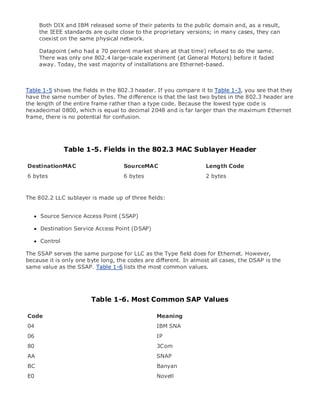
Table 1-3. Fields in the Ethernet II Data Link Header
DestinationMAC SourceMAC Type Code
6 bytes 6 bytes 2 bytes
For many years, the type codes, protocol codes, port numbers, and many other codes and
number assignments were defined in "the assigned numbers' RFC," which was periodically
updated and renumbered. The last of them was RFC 1700. When that process became
unmanageable, it was transferred to a database that you can reach online at
www.iana.org/assignments. The Ethernet type codes are listed there. Three that are used in the
examples that follow are hexadecimal values 0x0800, 0x0806, and 0x8136, which mean IP, ARP,
and IPX, respectively.
NOTE
Using the prefix 0x is common practice when presenting hexadecimal numbers in print.
30.
• Table ofContents
• Index
Web Security Field Guide
BySteve Kalman
Publisher: Cisco Press
Pub Date: November 08, 2002
ISBN: 1-58705-092-7
Pages: 608
Hands-on techniques for securing Windows(r) servers, browsers, and network communications.
Create effective security policies and establish rules for operating in and maintaining a
security- conscious environment
Learn how to harden Windows multi-user platforms, including NT, 2000, and XP
Understand secure installation options for Windows web servers and how to enhance
security on existing web and FTP server installations
Improve security at the end user's workstation, including web browsers, desktops, and
laptops
Evaluate the pros and cons of installing a certificate server and becoming your own
Certification Authority
Learn the Cisco PIX Firewall and Cisco IOS Firewall architecture and how to apply Cisco
standard and extended access lists
Discover ways to test the current state of security and keep it up to date
Learn to engage end users as part of the overall network security solution
While the Internet has transformed and improved the way we do business, this vast network and
its associated technologies have opened the door to an increasing number of security threats.
The challenge for successful, public web sites is to encourage access to the site while eliminating
undesirable or malicious traffic and to provide sufficient levels of security without constraining
performance or scalability. The more reliant organizations become on the Internet to perform
daily jobs or conduct transactions, the greater the impact a breach of network security has. Just
as Cisco Systems has been an innovator in using the Internet to conduct business, so too is it a
market leader in the development and sale of products and technologies that protect data
traveling across the Internet. Yet a network security solution is only as strong as its weakest
link. Network attacks can occur at any point, including the network connection, the firewall, the
web server, or the client. Hardening the defenses at all these points is key to creating an
effective, all-encompassing network security solution.
When a frame arrives, the data link header is examined and removed, and the resulting
datagram is handed off to the proper network layer process. If, for example, the type code were
0x0800, IP would get it. Similarly, type 0x0806 frames would go to ARP, and type 0x8136
frames would go to IPX. Scores of defined numbers exist, but most of them are assigned to
companies that no longer exist and are unused.
NOTE
Other protocols, such as IBM Token Ring and Datapoint Arcnet, had their own ways of
passing data higher up the stack. Neither protocol had numbers listed in the assigned
numbers' RFCs.
IEEE 802 Working Group
The IEEE 802 working group (formed in February 1980) took on the task of standardizing
network communications. To that end, they subdivided into several subgroups, each with a
specific responsibility. Table 1-4 lists the original subgroups.
Table 1-4. Initial 802 Working Groups
IEEE Number Responsibility
802.1 Administration
802.2[1] Logical Link Control
802.3[2] CSMA/CD access (Ethernet)
802.4 Token Passing Bus
802.5 Token Passing Ring
[1] ANSI developed the standard for FDDI. It is also a MAC sublayer definition, expecting an 802.2 LLC to
support it.
[2] Modern Ethernet cards are capable of handling Ethernet II and 802.3 Ethernet concurrently. Windows
systems default to sending Ethernet II and listening for either, but can be configured to use one or the other
exclusively. The only trick is that both sender and receiver must agree.
IEEE 802.3, .4, and .5 all define the MAC portion of the data link header. Both the format and
size vary based on the particular access method. However, all versions feed into a standard
802.2 LLC header.
NOTE
31.
• Table ofContents
• Index
Web Security Field Guide
BySteve Kalman
Publisher: Cisco Press
Pub Date: November 08, 2002
ISBN: 1-58705-092-7
Pages: 608
Hands-on techniques for securing Windows(r) servers, browsers, and network communications.
Create effective security policies and establish rules for operating in and maintaining a
security- conscious environment
Learn how to harden Windows multi-user platforms, including NT, 2000, and XP
Understand secure installation options for Windows web servers and how to enhance
security on existing web and FTP server installations
Improve security at the end user's workstation, including web browsers, desktops, and
laptops
Evaluate the pros and cons of installing a certificate server and becoming your own
Certification Authority
Learn the Cisco PIX Firewall and Cisco IOS Firewall architecture and how to apply Cisco
standard and extended access lists
Discover ways to test the current state of security and keep it up to date
Learn to engage end users as part of the overall network security solution
While the Internet has transformed and improved the way we do business, this vast network and
its associated technologies have opened the door to an increasing number of security threats.
The challenge for successful, public web sites is to encourage access to the site while eliminating
undesirable or malicious traffic and to provide sufficient levels of security without constraining
performance or scalability. The more reliant organizations become on the Internet to perform
daily jobs or conduct transactions, the greater the impact a breach of network security has. Just
as Cisco Systems has been an innovator in using the Internet to conduct business, so too is it a
market leader in the development and sale of products and technologies that protect data
traveling across the Internet. Yet a network security solution is only as strong as its weakest
link. Network attacks can occur at any point, including the network connection, the firewall, the
web server, or the client. Hardening the defenses at all these points is key to creating an
effective, all-encompassing network security solution.
Both DIX and IBM released some of their patents to the public domain and, as a result,
the IEEE standards are quite close to the proprietary versions; in many cases, they can
coexist on the same physical network.
Datapoint (who had a 70 percent market share at that time) refused to do the same.
There was only one 802.4 large-scale experiment (at General Motors) before it faded
away. Today, the vast majority of installations are Ethernet-based.
Table 1-5 shows the fields in the 802.3 header. If you compare it to Table 1-3, you see that they
have the same number of bytes. The difference is that the last two bytes in the 802.3 header are
the length of the entire frame rather than a type code. Because the lowest type code is
hexadecimal 0800, which is equal to decimal 2048 and is far larger than the maximum Ethernet
frame, there is no potential for confusion.
Table 1-5. Fields in the 802.3 MAC Sublayer Header
DestinationMAC SourceMAC Length Code
6 bytes 6 bytes 2 bytes
The 802.2 LLC sublayer is made up of three fields:
Source Service Access Point (SSAP)
Destination Service Access Point (DSAP)
Control
The SSAP serves the same purpose for LLC as the Type field does for Ethernet. However,
because it is only one byte long, the codes are different. In almost all cases, the DSAP is the
same value as the SSAP. Table 1-6 lists the most common values.
Table 1-6. Most Common SAP Values
Code Meaning
04 IBM SNA
06 IP
80 3Com
AA SNAP
BC Banyan
E0 Novell
32.
• Table ofContents
• Index
Web Security Field Guide
BySteve Kalman
Publisher: Cisco Press
Pub Date: November 08, 2002
ISBN: 1-58705-092-7
Pages: 608
Hands-on techniques for securing Windows(r) servers, browsers, and network communications.
Create effective security policies and establish rules for operating in and maintaining a
security- conscious environment
Learn how to harden Windows multi-user platforms, including NT, 2000, and XP
Understand secure installation options for Windows web servers and how to enhance
security on existing web and FTP server installations
Improve security at the end user's workstation, including web browsers, desktops, and
laptops
Evaluate the pros and cons of installing a certificate server and becoming your own
Certification Authority
Learn the Cisco PIX Firewall and Cisco IOS Firewall architecture and how to apply Cisco
standard and extended access lists
Discover ways to test the current state of security and keep it up to date
Learn to engage end users as part of the overall network security solution
While the Internet has transformed and improved the way we do business, this vast network and
its associated technologies have opened the door to an increasing number of security threats.
The challenge for successful, public web sites is to encourage access to the site while eliminating
undesirable or malicious traffic and to provide sufficient levels of security without constraining
performance or scalability. The more reliant organizations become on the Internet to perform
daily jobs or conduct transactions, the greater the impact a breach of network security has. Just
as Cisco Systems has been an innovator in using the Internet to conduct business, so too is it a
market leader in the development and sale of products and technologies that protect data
traveling across the Internet. Yet a network security solution is only as strong as its weakest
link. Network attacks can occur at any point, including the network connection, the firewall, the
web server, or the client. Hardening the defenses at all these points is key to creating an
effective, all-encompassing network security solution.
Figure 1-2 shows the relationship between 802.2 and the separate MAC sublayers and compares
it to Ethernet II. Both the 802.2 and Ethernet II layers deliver datagrams to the network layer.
Figure 1-2. Data Link Alternatives
NOTE
The LLC Control field can be used to establish either of two classes of service. The first,
called Type I, is connectionless service. It works on a best efforts basis. The other,
called Type II, is connection-oriented. It is based on SDLC (as developed by IBM in the
1960s) and requires acknowledgment of frames sent and received. Because TCP also
provides connection-oriented service, most IP implementations rely on Type I.
However, some of the non-TCP/IP suites do not have a TCP equivalent and need Type
II services.
Network Layer Headers
It might come as a surprise, but nearly everyone runs multiple network layer protocols. The
obvious one is IP. Less obvious, but still part of the TCP/IP suite, is ARP. In addition, it is
certainly possible and very common to run other networking protocols, such as Novell's IPX or
IBM's SNA. Because the Internet runs on IP, those other networking protocols aren't discussed
any further here.
The data link layer uses the Ethertype or DSAP fields to determine which of the network layer
protocols should get the datagram. Note that for TCP/IP on non-DIX networks, DSAP would have
0xAA and the Sub Network Access Protocol (SNAP) header would have the SAP value.
IP
IP provides connectionless, best efforts service, routing and fragmentation, and reassembly.
Table 1-7 shows the fields in the IP header.
33.
• Table ofContents
• Index
Web Security Field Guide
BySteve Kalman
Publisher: Cisco Press
Pub Date: November 08, 2002
ISBN: 1-58705-092-7
Pages: 608
Hands-on techniques for securing Windows(r) servers, browsers, and network communications.
Create effective security policies and establish rules for operating in and maintaining a
security- conscious environment
Learn how to harden Windows multi-user platforms, including NT, 2000, and XP
Understand secure installation options for Windows web servers and how to enhance
security on existing web and FTP server installations
Improve security at the end user's workstation, including web browsers, desktops, and
laptops
Evaluate the pros and cons of installing a certificate server and becoming your own
Certification Authority
Learn the Cisco PIX Firewall and Cisco IOS Firewall architecture and how to apply Cisco
standard and extended access lists
Discover ways to test the current state of security and keep it up to date
Learn to engage end users as part of the overall network security solution
While the Internet has transformed and improved the way we do business, this vast network and
its associated technologies have opened the door to an increasing number of security threats.
The challenge for successful, public web sites is to encourage access to the site while eliminating
undesirable or malicious traffic and to provide sufficient levels of security without constraining
performance or scalability. The more reliant organizations become on the Internet to perform
daily jobs or conduct transactions, the greater the impact a breach of network security has. Just
as Cisco Systems has been an innovator in using the Internet to conduct business, so too is it a
market leader in the development and sale of products and technologies that protect data
traveling across the Internet. Yet a network security solution is only as strong as its weakest
link. Network attacks can occur at any point, including the network connection, the firewall, the
web server, or the client. Hardening the defenses at all these points is key to creating an
effective, all-encompassing network security solution.
Table 1-7. Fields in the IP Header
Field Name Purpose
Version Always four.
IP Header Len Length of this header in 4-byte words.
Type of Service or
Differentiated Services
Originally intended to prioritize traffic based on delay, throughput,
reliability, and cost. Widely ignored for years, it has been repurposed
to indicate network congestion.
Total Length Length of the entire datagram; maximum value is 65,535 bytes.
Identification A unique number assigned to each datagram. (All fragments of a
single datagram have the same ID.)
Flags The flag can be marked as either: DF=Don't Fragment or MF=More
Fragments.
Fragment Offset Gives this fragment's starting point in the reassembly buffer.
Time to Live (TTL) Originally intended as a timer, now the TTL is decremented at each
router. When zero, the packet is discarded. The TTL prevents endless
circulation in the event of routing loops.
Protocol Says which transport layer service to deliver the packet to.
Header Checksum For error recognition.
Source Address IP address of the interface on the sending machine used to transmit
the datagram.
Destination Address IP address of the interface on the receiving machine to which the
datagram was sent
Options Optional, maximum size is 40 bytes. This field is used to implement IP
source routing.
IP packets do, of course, traverse the Internet. As a result, there are a few security
considerations:
Oversized packets— The maximum packet size is 65535 (216)-1. A packet that exceeds
that size can crash a computer. The Ping-of-Death was a famous hack that caused many
computers running IP (not just Windows machines) to hang, reboot, or produce unexpected
results. Most modern operating systems are now immune to this problem, but old
(unpatched) Windows 95 and NT 4 systems could still be vulnerable.
Source routing— Before routers were invented, datagrams were sent across the Internet
with the addresses of the gateways (traversal points) listed in the IP header Options field.
Although it hasn't been used (legitimately) for many years, the feature is still available. On
Cisco routers, you should disable this option by using the no ip source-route command.
34.
• Table ofContents
• Index
Web Security Field Guide
BySteve Kalman
Publisher: Cisco Press
Pub Date: November 08, 2002
ISBN: 1-58705-092-7
Pages: 608
Hands-on techniques for securing Windows(r) servers, browsers, and network communications.
Create effective security policies and establish rules for operating in and maintaining a
security- conscious environment
Learn how to harden Windows multi-user platforms, including NT, 2000, and XP
Understand secure installation options for Windows web servers and how to enhance
security on existing web and FTP server installations
Improve security at the end user's workstation, including web browsers, desktops, and
laptops
Evaluate the pros and cons of installing a certificate server and becoming your own
Certification Authority
Learn the Cisco PIX Firewall and Cisco IOS Firewall architecture and how to apply Cisco
standard and extended access lists
Discover ways to test the current state of security and keep it up to date
Learn to engage end users as part of the overall network security solution
While the Internet has transformed and improved the way we do business, this vast network and
its associated technologies have opened the door to an increasing number of security threats.
The challenge for successful, public web sites is to encourage access to the site while eliminating
undesirable or malicious traffic and to provide sufficient levels of security without constraining
performance or scalability. The more reliant organizations become on the Internet to perform
daily jobs or conduct transactions, the greater the impact a breach of network security has. Just
as Cisco Systems has been an innovator in using the Internet to conduct business, so too is it a
market leader in the development and sale of products and technologies that protect data
traveling across the Internet. Yet a network security solution is only as strong as its weakest
link. Network attacks can occur at any point, including the network connection, the firewall, the
web server, or the client. Hardening the defenses at all these points is key to creating an
effective, all-encompassing network security solution.
Ping of Death
RFC 791 says that IP packets can be no longer than 65,535 bytes including the IP
header length (20 octets if no options are present). All the data link protocols have
maximum frame sizes (1500 octets is common), so larger packets must be
fragmented. That's the network layer's job, and IP will do this. Packets have to be
reassembled at the destination and, again, IP can handle it. Fragmentation is
normally done by routers along the path but can also be handled by the sending
host.
IP uses the Identification, Fragment Offset, Flags, and Length fields to do the
reassembly.
The ping program uses ICMP messages. The ICMP header is 8 octets. A quick
calculation (65,535 less 20 less 8 = 65,507) gives the maximum number of octets
that can be sent via the ping program for the destination to return. Attempting to
send more might overflow the destination's buffers. This works because the last
fragment might have a valid offset and a size such that (offset + size) > 65,535. A
simple command that generates this invalid packet by sending more than 65,507
octets of data follows:
ping –l 65510 your.test.IP.Address
You can try this on your test machine if you want. Just be prepared for a crash. You
need a Windows 95 or NT 4 PC with no service packs applied to get an unpatched
Ping.exe. The ping program that comes with Windows 2000, for example, issues an
error message if the data size is more than 65,500.
ARP
To communicate from one host to another across a network, the sending station needs to know
the destination's MAC address. Although the Data Link headers for all of the Broadcast Multiple
Access (BMA) LANs (Ethernet, Token Ring, and FDDI) differ, they all have at least one thing in
common—the destination station's MAC address is at or near the start of the frame and precedes
the source address.
The protocol used to resolve MAC addresses when you know only the destination's IP address is
called the Address Resolution Protocol (ARP). Table 1-8 lists the fields in the ARP request.
Table 1-8. Fields in the ARP Header
35.
• Table ofContents
• Index
Web Security Field Guide
BySteve Kalman
Publisher: Cisco Press
Pub Date: November 08, 2002
ISBN: 1-58705-092-7
Pages: 608
Hands-on techniques for securing Windows(r) servers, browsers, and network communications.
Create effective security policies and establish rules for operating in and maintaining a
security- conscious environment
Learn how to harden Windows multi-user platforms, including NT, 2000, and XP
Understand secure installation options for Windows web servers and how to enhance
security on existing web and FTP server installations
Improve security at the end user's workstation, including web browsers, desktops, and
laptops
Evaluate the pros and cons of installing a certificate server and becoming your own
Certification Authority
Learn the Cisco PIX Firewall and Cisco IOS Firewall architecture and how to apply Cisco
standard and extended access lists
Discover ways to test the current state of security and keep it up to date
Learn to engage end users as part of the overall network security solution
While the Internet has transformed and improved the way we do business, this vast network and
its associated technologies have opened the door to an increasing number of security threats.
The challenge for successful, public web sites is to encourage access to the site while eliminating
undesirable or malicious traffic and to provide sufficient levels of security without constraining
performance or scalability. The more reliant organizations become on the Internet to perform
daily jobs or conduct transactions, the greater the impact a breach of network security has. Just
as Cisco Systems has been an innovator in using the Internet to conduct business, so too is it a
market leader in the development and sale of products and technologies that protect data
traveling across the Internet. Yet a network security solution is only as strong as its weakest
link. Network attacks can occur at any point, including the network connection, the firewall, the
web server, or the client. Hardening the defenses at all these points is key to creating an
effective, all-encompassing network security solution.
Field Name Purpose
Hardware Address Type 1 = Ethernet II, 6 = 802.2
Protocol Address Type Always = 0x0806
Hardware Length Length of the MAC address = 6
Protocol Length Length of the IP address = 4
Operation 1 = Request, 2 = Reply
Source MAC MAC address of sending station
Source IP Address Sending station's IP address
Destination MAC Unknown address, typically all 1s, occasionally all 0s
Destination IP Address Destination station's IP address
ARP has its own Ethernet type code (0x0806), so when the data link layer is ready to hand off
the datagram to the network layer, it goes to ARP rather than to IP.
When a station needs to determine the MAC address of another station (assuming it already
knows the IP address), it constructs an ARP Request using the destination MAC broadcast
address. When it transmits that frame, every station receives and processes it, but only the
station whose IP address matches the destination IP address in the ARP header constructs an
ARP reply. It places the MAC address it found in the request's Source MAC address field into the
Destination MAC field and puts its own MAC address into the source MAC field.
Both stations cache the IP address/MAC address pair to facilitate continued communications.
After a time (it varies with different operating systems), the address will be flushed.
Because the MAC address is used only on local networks (ARPs don't cross routers), there is little
security risk. The small risk that does exist comes from the capability to enter a static
(permanent) MAC address into a Windows Registry. Should a bogus address get entered
(perhaps the MAC address for the default gateway's IP address), data would be misdirected. This
is unlikely and requires access to the user's PC with administrative privileges. Programs such as
ISS Internet Scanner (described in Chapter 3, "Windows System Security") can alert you to this
risk.
Transport Layer Headers
When IP is finished with a datagram, it strips off its header and delivers the packet to the
transport layer header indicated by its Protocol field. The most common protocols are TCP and
UDP, but other protocols also run just above IP. The IGRP, EIGRP, IS-IS, and OSPF routing
protocols do not use TCP or the standard transport layer header. Neither does ICMP, on which
ping is based.
NOTE
The other two main routing protocols are RIP and BGP. RIP runs over UDP on port 520.
BGP runs over TCP on port 179.
36.
• Table ofContents
• Index
Web Security Field Guide
BySteve Kalman
Publisher: Cisco Press
Pub Date: November 08, 2002
ISBN: 1-58705-092-7
Pages: 608
Hands-on techniques for securing Windows(r) servers, browsers, and network communications.
Create effective security policies and establish rules for operating in and maintaining a
security- conscious environment
Learn how to harden Windows multi-user platforms, including NT, 2000, and XP
Understand secure installation options for Windows web servers and how to enhance
security on existing web and FTP server installations
Improve security at the end user's workstation, including web browsers, desktops, and
laptops
Evaluate the pros and cons of installing a certificate server and becoming your own
Certification Authority
Learn the Cisco PIX Firewall and Cisco IOS Firewall architecture and how to apply Cisco
standard and extended access lists
Discover ways to test the current state of security and keep it up to date
Learn to engage end users as part of the overall network security solution
While the Internet has transformed and improved the way we do business, this vast network and
its associated technologies have opened the door to an increasing number of security threats.
The challenge for successful, public web sites is to encourage access to the site while eliminating
undesirable or malicious traffic and to provide sufficient levels of security without constraining
performance or scalability. The more reliant organizations become on the Internet to perform
daily jobs or conduct transactions, the greater the impact a breach of network security has. Just
as Cisco Systems has been an innovator in using the Internet to conduct business, so too is it a
market leader in the development and sale of products and technologies that protect data
traveling across the Internet. Yet a network security solution is only as strong as its weakest
link. Network attacks can occur at any point, including the network connection, the firewall, the
web server, or the client. Hardening the defenses at all these points is key to creating an
effective, all-encompassing network security solution.
TCP
Transmission Control Protocol (TCP) is a robust, feature-laden transport protocol. Through it,
hosts can provide error-checked, guaranteed delivery of messages to application layer protocols.
Table 1-9 lists and describes the fields in the TCP header. Two of those fields are Source Port and
Destination Port number, and some of the most common ones are described in Table 1-10.
Table 1-9. Fields in the TCP Header
Field Name Purpose
Source Port The port number used by the application layer protocol that generated the
packet.
Destination Port The port number used by the application layer protocol that is intended to
receive the message. Some common TCP port numbers are listed in Table
1-11.
Sequence Number A 32-bit field that is incremented for each byte that is successfully
transmitted. Through it, the receiving host can recognize the occurrence
of a missing packet.
Acknowledgment
Number
A 32-bit field that is incremented for each byte that is successfully
received. Through it, the sending host can recognize that transmitted data
was not received.
Offset Number of 4-byte words in the TCP Header (minimum = 5).
Reserved Four bits set to zero unless Congestion Notification is enabled, in which
case the bits indicate that the receiver has cut the window size in half.
Flags Six bits whose settings control the flow of data. They are described in
more detail in Table 1-12.
Window A number representing the number of bytes that the receiver is willing to
accept at the current time. TCP lowers this size when data is threatening
to overwhelm the input buffers.
Checksum Used to validate the entire packet.
Urgent Pointer Offset into the data pointing to the byte following the urgent data. Only
valid when the Urgent flag is set to 1.
Options Generally used in the beginning of conversations to negotiate maximum
message and window sizes (optional).
Table 1-10. Common TCP Port Numbers
37.
• Table ofContents
• Index
Web Security Field Guide
BySteve Kalman
Publisher: Cisco Press
Pub Date: November 08, 2002
ISBN: 1-58705-092-7
Pages: 608
Hands-on techniques for securing Windows(r) servers, browsers, and network communications.
Create effective security policies and establish rules for operating in and maintaining a
security- conscious environment
Learn how to harden Windows multi-user platforms, including NT, 2000, and XP
Understand secure installation options for Windows web servers and how to enhance
security on existing web and FTP server installations
Improve security at the end user's workstation, including web browsers, desktops, and
laptops
Evaluate the pros and cons of installing a certificate server and becoming your own
Certification Authority
Learn the Cisco PIX Firewall and Cisco IOS Firewall architecture and how to apply Cisco
standard and extended access lists
Discover ways to test the current state of security and keep it up to date
Learn to engage end users as part of the overall network security solution
While the Internet has transformed and improved the way we do business, this vast network and
its associated technologies have opened the door to an increasing number of security threats.
The challenge for successful, public web sites is to encourage access to the site while eliminating
undesirable or malicious traffic and to provide sufficient levels of security without constraining
performance or scalability. The more reliant organizations become on the Internet to perform
daily jobs or conduct transactions, the greater the impact a breach of network security has. Just
as Cisco Systems has been an innovator in using the Internet to conduct business, so too is it a
market leader in the development and sale of products and technologies that protect data
traveling across the Internet. Yet a network security solution is only as strong as its weakest
link. Network attacks can occur at any point, including the network connection, the firewall, the
web server, or the client. Hardening the defenses at all these points is key to creating an
effective, all-encompassing network security solution.
TCPPort Number Corresponding Application Protocol
7 Echo
13 Date and Time
17 QOTD (Quote of the day)
19 Chargen (Character generator)
20 ftp-data
21 ftp
23 Telnet
25 Smtp
37 Time
53 Domain (updates)
80 http
139 netbios-ssn
179 BGP
443 HTTPS (SSL)
The first four items in Table 1-10 are known as the TCP Small Services. They can typically be
found in both hosts and routers. Although useful at one time (mostly for testing), they are no
longer appropriate in a modern environment. Even worse, they are well-known homes of severe
security holes that have not been patched, mostly because they are typically not used. Uninstall
them at your first opportunity. Chapter 3 tells you how.
Port numbers are divided into two groups. Those under 1024 are reserved and are assigned only
by the Internet Assigned Numbers Authority (IANA, cited in the Ethernet Header subsection).
They are known as well-known ports. Numbers above 1024 are known as ephemeral. When
connecting to a server, the client uses the server's well-known port as the destination port and
picks an ephemeral port for the server to use for return traffic. It places that ephemeral port
number in the Source Port field. One of the jobs of both firewalls and access lists is to permit or
deny traffic based on examination of the port numbers.
NOTE
Because of the time delay between applying for a reserved number and actually getting
it from IANA, many vendors simply use an arbitrary number from the ephemeral
range. This can work when the vendor is the exclusive supplier of both the server and
client application software. RealAudio is an example.
Another essential-to-understand field in the TCP header contains the six flag bits. Table 1-11
lists and describes them.
38.
• Table ofContents
• Index
Web Security Field Guide
BySteve Kalman
Publisher: Cisco Press
Pub Date: November 08, 2002
ISBN: 1-58705-092-7
Pages: 608
Hands-on techniques for securing Windows(r) servers, browsers, and network communications.
Create effective security policies and establish rules for operating in and maintaining a
security- conscious environment
Learn how to harden Windows multi-user platforms, including NT, 2000, and XP
Understand secure installation options for Windows web servers and how to enhance
security on existing web and FTP server installations
Improve security at the end user's workstation, including web browsers, desktops, and
laptops
Evaluate the pros and cons of installing a certificate server and becoming your own
Certification Authority
Learn the Cisco PIX Firewall and Cisco IOS Firewall architecture and how to apply Cisco
standard and extended access lists
Discover ways to test the current state of security and keep it up to date
Learn to engage end users as part of the overall network security solution
While the Internet has transformed and improved the way we do business, this vast network and
its associated technologies have opened the door to an increasing number of security threats.
The challenge for successful, public web sites is to encourage access to the site while eliminating
undesirable or malicious traffic and to provide sufficient levels of security without constraining
performance or scalability. The more reliant organizations become on the Internet to perform
daily jobs or conduct transactions, the greater the impact a breach of network security has. Just
as Cisco Systems has been an innovator in using the Internet to conduct business, so too is it a
market leader in the development and sale of products and technologies that protect data
traveling across the Internet. Yet a network security solution is only as strong as its weakest
link. Network attacks can occur at any point, including the network connection, the firewall, the
web server, or the client. Hardening the defenses at all these points is key to creating an
effective, all-encompassing network security solution.
Table 1-11. Flags and Meanings
Flag Name Interpretation (when = 1)
Urgent (URG) Urgent Pointer is Valid (rarely used)
Acknowledgment
(ACK)
Acknowledgment Number is Valid
Push (PSH) Flush send queue on network or flush receive queue to the process
Reset (RST) Tear down the connection
Synchronize (SYN) Request to establish a connection or part of a positive response to that
request
Finish (FIN) Done with transmission
TCP uses the flags to set up, confirm, use, complete, and tear down a connection. Table 1-12
shows some of the key fields and flags used during the life of a connection. A simple Telnet
session is used as an example. (The presence of the first letter of a flag's name means it is set to
one. If absent, the flag is set to 0.)
Table 1-12. Using Flags to Manage a Connection
Frame
Source
Port
Destination
Port Flags Comment
1 2000 23 S Request to start a connection. Client arbitrarily
picks an ephemeral port. First leg of three-way
handshake.
2 23 2000 S A Server acknowledges client's packet and requests
to open a connection to client: second leg of a
three-way handshake. Server places the sequence
number from client (adds 1 in some cases) in the
acknowledgment number field and selects its own
arbitrary sequence.
3 2000 23 A Client acknowledges server's packet: third and
final leg of a three-way handshake. Client places
the sequence number from the server (adds 1 in
some cases) in the acknowledgment number field.
The TCP connection is now open for data flow.
4 23 2000 A Servers often send the application's banner.
Because of the security vulnerability, this packet
may not be sent.
5 2000 23 A Client sends data or data request.
6 23 2000 A Server responds. Steps 5 and 6 repeat as often as
necessary.
7 23 2000 A F P Either side can terminate the connection.
39.
• Table ofContents
• Index
Web Security Field Guide
BySteve Kalman
Publisher: Cisco Press
Pub Date: November 08, 2002
ISBN: 1-58705-092-7
Pages: 608
Hands-on techniques for securing Windows(r) servers, browsers, and network communications.
Create effective security policies and establish rules for operating in and maintaining a
security- conscious environment
Learn how to harden Windows multi-user platforms, including NT, 2000, and XP
Understand secure installation options for Windows web servers and how to enhance
security on existing web and FTP server installations
Improve security at the end user's workstation, including web browsers, desktops, and
laptops
Evaluate the pros and cons of installing a certificate server and becoming your own
Certification Authority
Learn the Cisco PIX Firewall and Cisco IOS Firewall architecture and how to apply Cisco
standard and extended access lists
Discover ways to test the current state of security and keep it up to date
Learn to engage end users as part of the overall network security solution
While the Internet has transformed and improved the way we do business, this vast network and
its associated technologies have opened the door to an increasing number of security threats.
The challenge for successful, public web sites is to encourage access to the site while eliminating
undesirable or malicious traffic and to provide sufficient levels of security without constraining
performance or scalability. The more reliant organizations become on the Internet to perform
daily jobs or conduct transactions, the greater the impact a breach of network security has. Just
as Cisco Systems has been an innovator in using the Internet to conduct business, so too is it a
market leader in the development and sale of products and technologies that protect data
traveling across the Internet. Yet a network security solution is only as strong as its weakest
link. Network attacks can occur at any point, including the network connection, the firewall, the
web server, or the client. Hardening the defenses at all these points is key to creating an
effective, all-encompassing network security solution.
8 2000 23 A Acknowledgment of connection termination. The
other end may still have data to send, so it may
not send FIN. This is called graceful close in TCP.
9 2000 23 A F Connection termination from this (can be either,
but usually client's) end.
10 23 2000 R This is for recovering from errors and is not used
in normal operation. Connection is forcibly reset.
Although using a flag to manage a connection works flawlessly in normal situations, would-be
intruders have figured out how to subvert it for their own use. They construct a frame like the
first one shown in Table 1-13, send another frame just like it but with a different source port,
then another, and so on. To hide their tracks, they forge someone else's IP address in the
Network Layer header, making it nearly impossible to trace the intruder's actual source address.
Every time one of those frames arrives, the server sets aside memory and other resources to
prepare to satisfy the expected upcoming request. If enough of these half-connections arrive in
too short a time, the server runs out of space in the listening queue, preventing legitimate
connections to that port on the server. This is known generically as a Denial of Service (DoS)
attack. Its formal name is a SYNflood attack.
Web servers are often far more powerful and have much faster Internet connectivity than a
single hacker's resources. This makes the large-scale server more impervious to attack. As a
result, the stakes escalated. Hackers first distribute a Trojan (see Chapter 11, "Maintaining
Security," for definition, details, prevention, and detection discussions) to hundreds or thousands
of machines. The Trojan does nothing but monitors the connection, waiting for a command to tell
it to go active. At that moment, all the infected computers begin a DoS attack. Collectively, this
is known as a Distributed Denial of Service (DDoS) attack, and it can be very effective. One of
the best-known DDoS events was the simultaneous crippling of eBay, Amazon, and Yahoo in
February 2001. Chapter 10 shows how to protect your systems against this misuse of TCP.
UDP
User Datagram Protocol (UDP) is far, far simpler than TCP. It does its work with a mere four
fields.Table 1-13 lists them.
Table 1-13. Fields in the UDP Header
Field Name Purpose
Source Port The port number used by the application layer protocol that generated the
packet.
Destination
Port
The port number used by the application layer protocol that is intended to
receive the message. Some common UDP port numbers are listed in Table 1-14.
Length Length of the packet, including the transport header.
Checksum For validation.
40.
• Table ofContents
• Index
Web Security Field Guide
BySteve Kalman
Publisher: Cisco Press
Pub Date: November 08, 2002
ISBN: 1-58705-092-7
Pages: 608
Hands-on techniques for securing Windows(r) servers, browsers, and network communications.
Create effective security policies and establish rules for operating in and maintaining a
security- conscious environment
Learn how to harden Windows multi-user platforms, including NT, 2000, and XP
Understand secure installation options for Windows web servers and how to enhance
security on existing web and FTP server installations
Improve security at the end user's workstation, including web browsers, desktops, and
laptops
Evaluate the pros and cons of installing a certificate server and becoming your own
Certification Authority
Learn the Cisco PIX Firewall and Cisco IOS Firewall architecture and how to apply Cisco
standard and extended access lists
Discover ways to test the current state of security and keep it up to date
Learn to engage end users as part of the overall network security solution
While the Internet has transformed and improved the way we do business, this vast network and
its associated technologies have opened the door to an increasing number of security threats.
The challenge for successful, public web sites is to encourage access to the site while eliminating
undesirable or malicious traffic and to provide sufficient levels of security without constraining
performance or scalability. The more reliant organizations become on the Internet to perform
daily jobs or conduct transactions, the greater the impact a breach of network security has. Just
as Cisco Systems has been an innovator in using the Internet to conduct business, so too is it a
market leader in the development and sale of products and technologies that protect data
traveling across the Internet. Yet a network security solution is only as strong as its weakest
link. Network attacks can occur at any point, including the network connection, the firewall, the
web server, or the client. Hardening the defenses at all these points is key to creating an
effective, all-encompassing network security solution.
Table 1-14. Common UDP Port Numbers
UDPPort Number Corresponding Application Protocol
53 DNS (Inquiry)
67 BOOTP (Used by DHCP)
69 Trivial File Transport Protocol (TFTP)
123 Network Time Protocol (NTP)
161, 162 Simple Network Management Protocol (SNMP)
Application designers, when deciding to use TCP or UDP, check whether or not TCP and its
attendant overhead are required. The three general circumstances where that will be the case
follow:
When packet loss is acceptable— For example, a DNS inquiry needs no
acknowledgment. Should a reply not be forthcoming, the requesting station merely asks
again.
When the data recovery would be useless— For example, a network time request
handled by TCP would recover a lost packet and have it retransmitted. The result would be
the time server's reply to the original request, but received after the delays imposed by the
error recovery functions. Issuing a new request is far more accurate.
When the application has its own data recovery and acknowledgment process—
For example, TFTP has both acknowledgment and request for retransmission built in.
TIP
It is often said that the voice over IP (VoIP) protocol has built-in error transmission
above the application layer. If either caller doesn't understand the other, error
recovery is initiated by sending a "What?" message.
ICMP
As its name implies, the Internet Control Message Protocol (ICMP), is used to manage the IP
network.
The most common use of ICMP is via the ping (Packet Internet Groper) program, which uses two
of the ICMP control messages, echo request and echo reply. The former is used to ask another IP
machine to generate the latter. In more detail, a host that wants to test IP connectivity sends an
ICMP echo request to another host. The receiving host constructs an ICMP echo reply and sends
it to the host that started the process.
Because ICMP uses IP as its network protocol, it is a routable protocol.
Table 1-15 lists the fields in the ICMP header and Table 1-16 expands on two of them, the Type
41.
• Table ofContents
• Index
Web Security Field Guide
BySteve Kalman
Publisher: Cisco Press
Pub Date: November 08, 2002
ISBN: 1-58705-092-7
Pages: 608
Hands-on techniques for securing Windows(r) servers, browsers, and network communications.
Create effective security policies and establish rules for operating in and maintaining a
security- conscious environment
Learn how to harden Windows multi-user platforms, including NT, 2000, and XP
Understand secure installation options for Windows web servers and how to enhance
security on existing web and FTP server installations
Improve security at the end user's workstation, including web browsers, desktops, and
laptops
Evaluate the pros and cons of installing a certificate server and becoming your own
Certification Authority
Learn the Cisco PIX Firewall and Cisco IOS Firewall architecture and how to apply Cisco
standard and extended access lists
Discover ways to test the current state of security and keep it up to date
Learn to engage end users as part of the overall network security solution
While the Internet has transformed and improved the way we do business, this vast network and
its associated technologies have opened the door to an increasing number of security threats.
The challenge for successful, public web sites is to encourage access to the site while eliminating
undesirable or malicious traffic and to provide sufficient levels of security without constraining
performance or scalability. The more reliant organizations become on the Internet to perform
daily jobs or conduct transactions, the greater the impact a breach of network security has. Just
as Cisco Systems has been an innovator in using the Internet to conduct business, so too is it a
market leader in the development and sale of products and technologies that protect data
traveling across the Internet. Yet a network security solution is only as strong as its weakest
link. Network attacks can occur at any point, including the network connection, the firewall, the
web server, or the client. Hardening the defenses at all these points is key to creating an
effective, all-encompassing network security solution.
and Code fields.
Table 1-15. Components of the ICMP Header
Field Name Purpose
Type Defines the meaning of the message or the category of the message type
Code For some types, further defines the message
Checksum Validates the whole ICMP packet
Message Data that assists in dealing with the type and code
Table 1-16. ICMP Header Type and Code Fields
Type Code Meaning
0 0 Echo Reply
3 0 Network Unreachable
3 1 Host Unreachable
3 2 Protocol Unreachable
3 3 Port Unreachable
3 4 Fragmentation Needed and DF Bit Set
3 5 Source Route Failed
3 6 Destination Network Unknown
3 7 Destination Host Unknown
3 8 Source Host Isolated
3 9 Network Administratively Prohibited
3 10 Host Administratively Prohibited
3 11 Network Unreachable for TOS
3 12 Host Unreachable for TOS
3 13 Communication Administratively Prohibited
4 0 Source Quench
5 0 Redirect Datagram for Network
5 1 Redirect Datagram for Host
5 2 Redirect Datagram for TOS and Network
5 3 Redirect Datagram for TOS and Host
8 0 Echo Request
9 0 Router Advertisement
42.
• Table ofContents
• Index
Web Security Field Guide
BySteve Kalman
Publisher: Cisco Press
Pub Date: November 08, 2002
ISBN: 1-58705-092-7
Pages: 608
Hands-on techniques for securing Windows(r) servers, browsers, and network communications.
Create effective security policies and establish rules for operating in and maintaining a
security- conscious environment
Learn how to harden Windows multi-user platforms, including NT, 2000, and XP
Understand secure installation options for Windows web servers and how to enhance
security on existing web and FTP server installations
Improve security at the end user's workstation, including web browsers, desktops, and
laptops
Evaluate the pros and cons of installing a certificate server and becoming your own
Certification Authority
Learn the Cisco PIX Firewall and Cisco IOS Firewall architecture and how to apply Cisco
standard and extended access lists
Discover ways to test the current state of security and keep it up to date
Learn to engage end users as part of the overall network security solution
While the Internet has transformed and improved the way we do business, this vast network and
its associated technologies have opened the door to an increasing number of security threats.
The challenge for successful, public web sites is to encourage access to the site while eliminating
undesirable or malicious traffic and to provide sufficient levels of security without constraining
performance or scalability. The more reliant organizations become on the Internet to perform
daily jobs or conduct transactions, the greater the impact a breach of network security has. Just
as Cisco Systems has been an innovator in using the Internet to conduct business, so too is it a
market leader in the development and sale of products and technologies that protect data
traveling across the Internet. Yet a network security solution is only as strong as its weakest
link. Network attacks can occur at any point, including the network connection, the firewall, the
web server, or the client. Hardening the defenses at all these points is key to creating an
effective, all-encompassing network security solution.
10 0 Router Selection
11 0 Time to Live Exceeded in Transit
11 1 Fragment Reassembly Time Exceeded
12 0 Parameter Problem
12 0 Missing a Required Option
12 2 Bad Length
13 0 Timestamp Request
14 0 Timestamp Reply
15 0 Information Request
16 0 Information Reply
17 0 Address Mask Request
18 0 Address Mask Reply
30 0 Traceroute
Most sites prohibit ICMP messages to and from the Internet as a security precaution. ICMP Echo
Requests can use and even overwhelm border router resources, causing a Denial of Service.
ICMP Redirects can corrupt host routing tables; Traceroutes can divulge internal network
configuration, which can be used to plan other attacks.
43.
• Table ofContents
• Index
Web Security Field Guide
BySteve Kalman
Publisher: Cisco Press
Pub Date: November 08, 2002
ISBN: 1-58705-092-7
Pages: 608
Hands-on techniques for securing Windows(r) servers, browsers, and network communications.
Create effective security policies and establish rules for operating in and maintaining a
security- conscious environment
Learn how to harden Windows multi-user platforms, including NT, 2000, and XP
Understand secure installation options for Windows web servers and how to enhance
security on existing web and FTP server installations
Improve security at the end user's workstation, including web browsers, desktops, and
laptops
Evaluate the pros and cons of installing a certificate server and becoming your own
Certification Authority
Learn the Cisco PIX Firewall and Cisco IOS Firewall architecture and how to apply Cisco
standard and extended access lists
Discover ways to test the current state of security and keep it up to date
Learn to engage end users as part of the overall network security solution
While the Internet has transformed and improved the way we do business, this vast network and
its associated technologies have opened the door to an increasing number of security threats.
The challenge for successful, public web sites is to encourage access to the site while eliminating
undesirable or malicious traffic and to provide sufficient levels of security without constraining
performance or scalability. The more reliant organizations become on the Internet to perform
daily jobs or conduct transactions, the greater the impact a breach of network security has. Just
as Cisco Systems has been an innovator in using the Internet to conduct business, so too is it a
market leader in the development and sale of products and technologies that protect data
traveling across the Internet. Yet a network security solution is only as strong as its weakest
link. Network attacks can occur at any point, including the network connection, the firewall, the
web server, or the client. Hardening the defenses at all these points is key to creating an
effective, all-encompassing network security solution.
Shims
Carpenters use shims. They're small pieces of wood that are shoved between doorjambs or
windows and the wall or floor into which the doors are being installed to ensure a perfectly
square and level installation.
In the area of computer technology, shims are pieces of code inserted between two other
programs to make sure that the output of one matches the expected inputs to the other.
IP Security (IPSec) is a shim. It fits between the network and transport layers and provides
confidentiality, integrity, and authenticity by defining a Security Association (SA). The SA defines
the encryption algorithm and the keys to be used by running the Internet Key Exchange (IKE)
protocol, or by referring to a shared key (that is, one already known by both sender and
receiver).Figure 1-3 shows the modification to the headers and is called the IPSec transport
mode. The original header structure for a TCP transport is shown in line 1. In line 2, the TCP
header and data can be encrypted based on information held in the Encapsulating Security
Payload (ESP) header. The entire packet can additionally be integrity-checked and authenticated
based on information held in the Authentication Header (AH) or in the ESPv2 authentication
field. Encryption and authentication can be used together or separately. AH and ESP headers
provide sequence numbering that protects against replay attacks. The details of how they work
are beyond the scope of this book, but if you are interested, start with RFCs 2401, 2402, and
2406. Together, they define IP security.
Figure 1-3. Providing Integrity and Confidentiality with IPSec
Because of the addition of several bytes of header and trailer, many data frames might need to
be fragmented. This adds to the already additional overhead involved in encrypting and
decrypting payloads.
TIP
IPSec is used another way, known as IPSec Tunnel mode. It adds a new IP header to
the original datagram. ESP then encrypts the entire original frame, including the
44.
• Table ofContents
• Index
Web Security Field Guide
BySteve Kalman
Publisher: Cisco Press
Pub Date: November 08, 2002
ISBN: 1-58705-092-7
Pages: 608
Hands-on techniques for securing Windows(r) servers, browsers, and network communications.
Create effective security policies and establish rules for operating in and maintaining a
security- conscious environment
Learn how to harden Windows multi-user platforms, including NT, 2000, and XP
Understand secure installation options for Windows web servers and how to enhance
security on existing web and FTP server installations
Improve security at the end user's workstation, including web browsers, desktops, and
laptops
Evaluate the pros and cons of installing a certificate server and becoming your own
Certification Authority
Learn the Cisco PIX Firewall and Cisco IOS Firewall architecture and how to apply Cisco
standard and extended access lists
Discover ways to test the current state of security and keep it up to date
Learn to engage end users as part of the overall network security solution
While the Internet has transformed and improved the way we do business, this vast network and
its associated technologies have opened the door to an increasing number of security threats.
The challenge for successful, public web sites is to encourage access to the site while eliminating
undesirable or malicious traffic and to provide sufficient levels of security without constraining
performance or scalability. The more reliant organizations become on the Internet to perform
daily jobs or conduct transactions, the greater the impact a breach of network security has. Just
as Cisco Systems has been an innovator in using the Internet to conduct business, so too is it a
market leader in the development and sale of products and technologies that protect data
traveling across the Internet. Yet a network security solution is only as strong as its weakest
link. Network attacks can occur at any point, including the network connection, the firewall, the
web server, or the client. Hardening the defenses at all these points is key to creating an
effective, all-encompassing network security solution.
original IP header. This is useful in two cases:
A device, such as a router or firewall, is providing the IPSec functionality. This is
most often used for network-to-network virtual private networks (VPNs).
It is impossible to add software to a device that would cause the IPSec header to
be inserted. This is common when dealing with older, legacy devices.
45.
• Table ofContents
• Index
Web Security Field Guide
BySteve Kalman
Publisher: Cisco Press
Pub Date: November 08, 2002
ISBN: 1-58705-092-7
Pages: 608
Hands-on techniques for securing Windows(r) servers, browsers, and network communications.
Create effective security policies and establish rules for operating in and maintaining a
security- conscious environment
Learn how to harden Windows multi-user platforms, including NT, 2000, and XP
Understand secure installation options for Windows web servers and how to enhance
security on existing web and FTP server installations
Improve security at the end user's workstation, including web browsers, desktops, and
laptops
Evaluate the pros and cons of installing a certificate server and becoming your own
Certification Authority
Learn the Cisco PIX Firewall and Cisco IOS Firewall architecture and how to apply Cisco
standard and extended access lists
Discover ways to test the current state of security and keep it up to date
Learn to engage end users as part of the overall network security solution
While the Internet has transformed and improved the way we do business, this vast network and
its associated technologies have opened the door to an increasing number of security threats.
The challenge for successful, public web sites is to encourage access to the site while eliminating
undesirable or malicious traffic and to provide sufficient levels of security without constraining
performance or scalability. The more reliant organizations become on the Internet to perform
daily jobs or conduct transactions, the greater the impact a breach of network security has. Just
as Cisco Systems has been an innovator in using the Internet to conduct business, so too is it a
market leader in the development and sale of products and technologies that protect data
traveling across the Internet. Yet a network security solution is only as strong as its weakest
link. Network attacks can occur at any point, including the network connection, the firewall, the
web server, or the client. Hardening the defenses at all these points is key to creating an
effective, all-encompassing network security solution.
Above the Transport Layer
Many of the protocols that run above the transport layer have built-in security weaknesses. This
section examines enhancements or alternatives to those protocols that shore up the problems.
NOTE
Some protocols that might have been discussed in this section, such as FTP and TFTP,
are covered in detail in later chapters. To avoid excessive overlap, they have been
omitted here.
Telnet
Telnet is a simple remote terminal protocol that is included with the TCP/IP suite.
In the early days of mainframe and minicomputer technology, it was common to use dumb
terminals (essentially, a keyboard and screen connected by dedicated cable) as user
workstations. With the advent of the ARPANET (the Internet's predecessor) and the proliferation
of microcomputers, it became necessary to provide software that mimicked a dumb terminal.
That software is Telnet.
Telnet survives today in many forms. Every operating system vendor supplies a Telnet client,
and most supply Telnet servers. Remote connections to Cisco routers and switches, for example,
can be made using Telnet.
Telnet has no built-in security. Everything (including authentication) is transmitted in the clear.
This was appropriate when the connections were made with special-purpose cables and wiring
systems that did not allow sharing of the media. In today's networked environment, this is a
significant risk.
Figure 1-4 shows an Ethereal capture of a Telnet session between a host and a router. The
screen also shows an Ethereal option that causes the data to be reconstructed and presented in a
separate window. Figure 1-5 depicts that reconstruction. The important thing to notice is that
both the user access and privileged passwords are sent and displayed in the clear.
Figure 1-4. Ethereal Program Requesting TCP Stream Recovery
sowohl körperlich wieseelisch kolossalen Anstrengung sehr ermüdet
waren.
Am Morgen des 24. September hatten wir nur noch ein
Stückchen Brot zum Frühstück. Bei gutem Wetter ruderten wir
westwärts über den See weiter, der bald schmäler wurde und ein
Ende nahm. Wir fuhren in eine trompetenförmige Flußmündung
hinein, und nach knapp einem Kilometer befanden wir uns wieder
auf einem gewaltigen See. Die Gesandten hatten ihn A d d a n - t s o
genannt, aber die Nomaden, die wir am Ufer trafen, sagten N a g m a -
t s o . Fern im Norden zeigten sich einige Reiter. Wir hofften, daß es
unsere Späher sein würden, aber sie verschwanden bald wieder und
hatten das Boot augenscheinlich nicht gesehen. Wir beabsichtigten
jedoch, schräg über den See nach dem ziemlich naheliegenden
Nordufer zu fahren.
Ich habe soviel von unseren abenteuerlichen Seefahrten
gesprochen, daß ich nur noch hinzufügen will, daß der dritte Sturm
uns auf dem Addan-tso überfiel und uns buchstäblich gegen das
nächste Land schleuderte, wobei sich das Boot mit Wasser füllte, so
daß wir ins Wasser springen und retten mußten, was sich retten ließ.
Glücklicherweise regnete es nicht. Wir breiteten unsere Sachen in
dem starken Wind auf der Erde zum Trocknen aus, zogen die
Kleider aus und hielten sie in den Wind, nachdem wir sie erst tüchtig
ausgerungen hatten, dann lagen wir dort mehrere Stunden still.
Schließlich wurde ich so hungrig, daß ich nach dem nächsten
schwarzen Nomadenzelte ging; ich war aber noch nicht weit
gekommen, als Kutschuk mich zurückrief und auf den kurzen
Flußarm, den wir heraufgefahren waren, zeigte. Dort erschienen
zwei Reiter mit drei Packpferden. Sie hatten uns gesehen und ritten
gerade auf uns zu. Es waren Tscherdon und Ördek, die uns seit zwei
Tagen längs des Ufers des Addan-tso suchten und gleich den
anderen in größter Unruhe geschwebt hatten. Nach einer Weile
kamen Tschernoff und der Lama, die uns an den Ufern des
Tschargut-tso hatten suchen wollen. Sirkin war schon gestern dort
gewesen und hatte in dem alten Lager am Ostufer des Sees
Umschau gehalten. Sie hatten das Schlimmste befürchtet und
bereits überlegt, was sie tun sollten, wenn ich nicht wiederkäme.
48.
Einige Bootstrümmer undunsere Sachen wollten sie jedoch erst
finden, ehe sie die Gegend ohne ihren Chef verließen.
Tscherdon hatte mehrere Abenteuer gehabt. Mehreremal
schienen uns Reiterpatrouillen zu suchen, und an einer Stelle
standen 8 Soldatenzelte, um den Weg nach Lhasa zu sperren.
Wir ritten über einen Paß nach dem großen Lager; mehrere
Reiterhaufen begegneten mir und geleiteten mich dorthin, artig
grüßend, indem sie die Zunge herausstreckten. Das Lager lag in
einem Längentale, durch welches wahrscheinlich auch Littledale
gezogen war; ich wollte künftig seine Route nach Möglichkeit
vermeiden. Alles war ruhig, aber dem alten Muhammed Tokta ging
es schlechter. Ein Kamel war tot. Einer der Tibeter war gestorben.
Wir ritten an der Leiche vorbei, die auf die Erde geworfen worden
und von Geiern und Raben entsetzlich zugerichtet war; viel mehr als
das Gerippe war nicht mehr davon übrig. Hladsche Tsering lud mich
in sein Zelt ein und empfing mich wie einen Sieger. Unter der blauen
Decke glänzten die Götterbilder matt durch einen Weihrauchschleier,
und wieder gab es ein üppiges Gastmahl.
Diese Seefahrt war die letzte, die ich in Tibet machte, und das
Boot sollte nachher nur noch auf einigen Flüssen benutzt werden.
Ich bewahre den Tagen, die ich auf dem Selling-tso, Nakktsong-tso,
Tschargut-tso und Addan-tso verlebte, ein ganz besonderes
Andenken, denn sie waren für mich eine unvergeßliche
Unterbrechung der langen, einförmigen Karawanenmärsche. Die
Untersuchungen können nur als vorläufig betrachtet werden, aber
sie gaben mir doch einen sehr wertvollen Überblick über die
Hydrographie dieser wunderbar schönen Seeregion. Wenn die
Wasserspiegel hier um etwa 50 Meter gehoben würden, so würde
eine echte, an Norwegens und Schottlands Küsten erinnernde
Fjordlandschaft entstehen. Wahrscheinlich ist auch dieses Land
einst mit Eis bedeckt gewesen, obgleich man vergebens nach
Gletscherspuren, Schrammen, Moränen oder erratischen Blöcken
sucht. Die Gesteine sind verwittert, und alle Spuren fortgetragen,
vernichtet. Der Addan-tso ist der höchste und größte See dieses
Gebietes. Mehrere Flüsse von den angrenzenden Gebirgen,
besonders von den hohen Schneeketten, die im Süden sichtbar sind,
49.
ergießen sich inihn. Der Addan-tso entleert sein überflüssiges
Wasser in den Tschargut-tso, und dieser hat in dem Jaggju-rappga-
Flusse einen Abfluß nach dem Selling-tso. Weiter kommt das
Wasser nicht; es bleibt im Selling-tso, wo es verdunstet, und daher
ist auch nur dieser See salzig. In welchem Verhältnis der Nakktsong-
tso zum Selling-tso steht, ist mir nicht ganz klar geworden.
Möglicherweise existiert ein unterirdischer Abfluß, vielleicht aber
ergießt er sich auch in einen weiter südlich liegenden See, den zu
sehen uns nicht vergönnt war.
Am 25. September sollten wir uns von unseren Freunden
Hladsche Tsering und Junduk Tsering, mit denen wir seit dem 12.
zusammengewesen waren, trennen. Sie schickten mir jeder eine
Haddik und ließen mir dabei eine gute und glückliche Reise
wünschen. Dann erschienen sie selbst und versicherten, daß alles,
was wir an Proviant, Führern und Lasttieren brauchten, uns dem
Befehle des Dalai-Lama gemäß zur Verfügung gestellt werden
würde. Als die Karawane marschfertig war, machte ich ihnen schnell
einen Abschiedsbesuch und überreichte ihnen verschiedene
Geschenke, wie Revolver, Messer, Kompasse und Zeugstoffe. Ich
versicherte, daß ich nicht versuchen würde, nach Lhasa
vorzudringen, und bat sie, den Dalai-Lama von mir zu grüßen; aber
ich erklärte auch, daß ich dem Wege, den die Eskorte einschlage,
nicht folgen würde. Ich sagte ihnen ein für allemal, daß die beiden
Offiziere, die unsere künftige Eskorte auf dem Wege nach Westen
anführen sollten, sich zu hüten hätten, mir gegenüber den Herrn
spielen zu wollen, sondern mich jeden Morgen zu fragen hätten,
wohin ich zu gehen wünschte. Andernfalls würden wir sie in zwei von
unseren Kisten sperren und sie auf diese Weise mit in unsere
Heimat nehmen.
Hladsche Tsering erwiderte, daß er und sein Amtsbruder Junduk
Tsering mit einigen hundert Mann Kavallerie noch 20 Tage an dem
Orte, wo wir uns trennten, zu bleiben gedächten (Abb. 280). Ich sah
sehr wohl ein, daß dies nur eine List war, um uns davon
abzuschrecken, schnell wieder umzukehren, sobald die beiden
abgezogen waren, und antwortete daher, daß ich die Absicht habe,
nur einige Tagereisen westwärts bis an den nächsten Süßwassersee
50.
zu gehen unddort zu bleiben, bis er vollständig zugefroren sei. Er
klärte mich darüber auf, daß sie ohne Ungelegenheit ein ganzes
Jahr in der Gegend lagern könnten. Als ich ihm vorschlug, daß wir,
da wir ja beiderseits so viel Zeit hätten, einander denn doch lieber
Gesellschaft leisten könnten, löste sich das Übertrumpfen in
allgemeine Heiterkeit auf. Hladsche Tsering saß in seinem Zelte und
aß Klops. Junduk Tsering war in dem seinen von Sekretären und
ganzen Haufen von Papieren umgeben. Er verfaßte einen
ausführlichen Bericht an den Dewaschung in Lhasa und schickte
Briefe an die Häuptlinge im Westen auf dem ganzen Wege bis nach
Ladak.
Unser Weg lief nach Westen durch ein 30 Kilometer breites
Längental, das sowohl im Süden wie im Norden von ansehnlichen
Bergketten begrenzt ward. Das Wetter war unfreundlich, kalt und
windig, die Weide schlecht; trotzdem zählten wir 32 schwarze Zelte
oder ungefähr 150 Einwohner auf 27 Kilometer. Sicherlich sind die
Täler im Süden dichter, die nordwärts gelegenen spärlicher
bevölkert; in der letzteren Richtung hört das Land überdies bald auf,
bewohnbar zu sein. Mit uns ritten jetzt nur 22 Mann unter einem
Anführer namens Jamdu Tsering, der bald mein ganz besonderer
Freund wurde. Den Platz, an dem wir uns im Lager Nr. 89
niederließen, nannte er S c h a l u n g , und einen See, der sich im
Westen zeigte, D a g g t s e - t s o ; ein Fluß, der sich in den westlichen
Teil dieses Sees ergießt, heißt B o g g t s a n g - s a n g p o . Da letzterer
Name auf Nain Singhs und Littledales Karten vorkommt, kann man
annehmen, daß auch die übrigen richtig sind. Sonst habe ich nur
eine äußerst geringe Anzahl der Namen, die Littledale anführt,
wiederfinden können.
51.
A
Vierundzwanzigstes Kapitel.
Die langeReise nach Ladak.
m 26. September ritten wir nach der Stelle, wo sich der
Boggtsang-sangpo in den See ergießt. Der Fluß teilt sich in
mehrere Arme, und an den Ufern ist die Weide so reichlich, daß wir
hier einen Tag rasten müssen. Wir hatten jetzt nur noch 22 Kamele,
die alle sehr erschöpft waren. Die Pferde sind in schlechtem
Zustand. Jetzt sahen wir nur 16 Zelte auf 28½ Kilometer, aber
ziemlich große Schafherden. Die Gegend ist ziemlich reich an
Kulanen, Antilopen, Rebhühnern, Hasen und Gänsen, und die Jäger
versahen uns mit Fleisch in Menge. Der See ist viel kleiner als die
vorhergehenden, aber stark salzig. Ringförmige Wälle an den Ufern
verkünden, daß auch der Daggtse-tso im Austrocknen begriffen ist.
An einer Stelle standen sieben solcher alten Uferwälle deutlich
ausgeprägt übereinander.
52.
286. Fischen imBoggtsang-sangpo. (S. 305.)
287. Die Yake werden beladen. (S. 310.)
289. Lager Nr.109 im Westen des Lakkor-tso. (S. 316.)
Auf den Bergen im Hintergrund einige Uferlinien.
Während der folgenden Tagemärsche hielten wir uns in der
unmittelbaren Nähe des Boggtsang-sangpo (Abb. 281). An einem
Punkte, wo wir den Fluß kreuzten, hatte ihn auch Littledale
überschritten. Captain Bowers Route, die wir am Nakktsong-tso und
Tschargut-tso gestreift hatten, liegt nun eine ziemliche Strecke
nördlich von unserem Wege, und wir berühren sie nicht mehr. Nain
Singhs Weg läuft einstweilen noch südlich von unserer Straße.
Dadurch, daß ich jetzt dem Laufe dieses Flusses folgte, konnte ich
die Routen der drei Reisenden, die vor mir diese Teile von Tibet
besucht hatten, vermeiden. Es würde unsere Landeskenntnis
vermehren, wenn ich andere Gegenden aufsuchte. Oft war es
jedoch unmöglich zu entscheiden, ob ich mit Littledales Weg in
Kollision war oder nicht. Die Karte dieses ausgezeichneten,
unermüdlichen Reisenden ist leider in zu kleinem Maßstabe
ausgeführt, als daß man sich mit ihrer Hilfe in dem Terrain
55.
zurechtfinden könnte. Beiden Anforderungen, die ich an meine
Karte stellte, betrachtete ich die Landesteile, die meine Vorgänger
durchreist hatten und in denen ich es nicht vermeiden konnte, ihre
Routen zu kreuzen oder sogar auf kurzen Strecken ebenfalls zu
benutzen, als unerforschtes Land. Auf Littledales Karte findet man z.
B. weder den Nakktsong-tso noch den Tschargut-tso, auf der von
Bower allerdings diese beiden Seen, aber nicht den Selling-tso.
Bower reiste zwischen dem Nakktsong-tso und dem Tschargut-tso
durch, aber er erforschte nicht das Verhältnis, in welchem die
verschiedenen Seen zueinander stehen; der Addan-tso ist auf seiner
Karte gar nicht angegeben, ebensowenig ein Abfluß des Tschargut-
tso. Er hat geglaubt, daß der Jaggju-rappga ein Fluß sei, der sich i n
den Tschargut-tso ergießt, obwohl das Wasser a u s dem See strömt.
Es ist weder meine Aufgabe noch meine Absicht, das vorhandene
Kartenmaterial über Innerasien in dieser Arbeit zu kritisieren, ich will
nur erklären, weshalb ich Grund hatte, manchen Landesteil, den auf
der Karte eine rote Linie durchzieht, als eine terra incognita zu
betrachten. Der Zweck einer Reise durch unbekanntes Land ist
doch, daß man vor allem eine Karte desselben vorzeigen kann, und
eine solche ist zwecklos, wenn sie nicht vollkommen zuverlässig ist.
Was haben die großen Strapazen und Kosten, die mit einer solchen
Reise verbunden sind, sonst für einen Nutzen? Littledales und
Bowers Reisen sind übrigens bewundernswerte Beweise von Kraft
und Ausdauer. Von den drei Karten aber ist Nain Singhs die beste,
obwohl sie einer Revision sehr bedarf. —
Die erste Tagereise längs des Boggtsang-sangpo ging durch
ziemlich gutes Weideland; hier und dort zeigten sich Nomadenlager.
Das Wetter war herrlich, obgleich die Nachtkälte bis auf −8 Grad fiel.
Es war ganz windstill, keine Wolke sichtbar; solches Wetter würde
uns auf dem Tschargut-tso gefallen haben. Wenn man, wie wir, nach
Westen reitet, wird die linke Seite des Gesichtes so von der Sonne
angegriffen, daß die Haut stückweise abblättert, während die andere
eisig kalt ist. Der linke Fuß hat es schön warm, indes der rechte im
Schatten beinahe erfriert.
Am 29. September legten wir 29 Kilometer zurück und lagerten
am Ufer des Flusses im Lager Nr. 92 unmittelbar neben seinen
56.
brausenden Wirbeln (Abb.282, 283). In der Dämmerung langten die
Tibeter an und schlugen ihre Zelte uns gerade gegenüber am
rechten Ufer auf.
Am folgenden Tag marschierten wir auf dem südlichen Ufer. Der
Fluß macht viele Krümmungen und hat ein scharf ausgeprägtes Bett.
Das südlich von seinem Tale liegende Gebirge heißt N a n g r a .
Schagdur hatte sich ein paar Stunden lang nicht sehen lassen; als er
uns aber einholte, schwenkte er triumphierend ein Bündel prächtiger
Fische in der Luft. Sobald wir das Lager aufgeschlagen hatten,
wurde das Boot zusammengesetzt, und die Lopmänner fischten mit
dem Schleppnetz in den Flußbiegungen (Abb. 286). Die Angler
hatten jedoch mehr Glück.
Drei Tage Marsch und den vierten Rast ist jetzt unter
gewöhnlichen Verhältnissen die Regel. Infolgedessen war der 1.
Oktober ein Rasttag; er wurde von den meisten zum Fischfang
benutzt. Schagdur hat das größte Fischglück; er angelte 18 Stück
und schoß außerdem zur Abwechslung eine Antilope. Turdu Bai
steht den ganzen Tag wie ein alter, in der Sommerfrische
befindlicher Onkel mit seiner Angelrute in der Hand am Ufer und hat
dabei die unerschütterliche Geduld des echten Anglers. Er
schmunzelte ordentlich, als er mir seinen Fang zeigte. Der Lama las
heilige Schriften. Jamdu Tsering und Tsering Daschi (Abb. 284), die
Anführer unserer Leibwache, baten mich, ihnen eines unserer
Schafe zu überlassen, da sie nichts mehr zu essen hätten, beim
nächsten Zeltlager sollten wir Ersatz dafür erhalten. Ihre Bitte wurde
ihnen mit um so größerer Bereitwilligkeit gewährt, als sie uns schon
viele Freundlichkeiten erwiesen hatten.
2. Oktober. In der Nacht hatten wir −11 Grad; der Winter naht
sich, wir müssen uns beeilen, nach Ladak zu kommen. Der
Tagemarsch führte nach Westsüdwest, auf dem Südufer des
Boggtsang-sangpo, und zum vierten Male lagerten wir an diesem
Flusse (Abb. 285). Die Breite betrug hier nur 6 Meter, aber die Tiefe
war groß. Die Zelte sind kaum aufgeschlagen, als die Angelruten
schon wieder in voller Tätigkeit sind. Während dieser Tage lebten wir
hauptsächlich von Fischen, ich fast ausschließlich.
57.
Am 3. Oktoberfolgten wir dem Flusse zum letzten Male und
ließen ihn nachher links liegen. Ich hätte gar zu gern einen
südlicheren Weg eingeschlagen, aber das Land war zu gebirgig für
die Kamele. Heute tröstete ich mich überdies mit der Aussicht, den
Berg kennenzulernen, den Littledale den „Vulkan Tongo“ nennt, von
dem mir aber gesagt wurde, daß er E r e n a k - t s c h i m m o heiße. Von
unserem Lager Nr. 95 aus gesehen, glich er an Gestalt einem
regelrechten Vulkankegel; aber von dem heutigen Passe sah man,
daß er, wie alle anderen Kämme hier in der Gegend, eine nicht
unbedeutende Ausdehnung nach Westen hatte. Die Karawane
mußte ihre eigene Straße mit den Tibetern ziehen, während wir,
nämlich ich, der Lama und Tschernoff, nach dem Berge hinaufritten.
Über einige Konglomeratplatten gelangen wir an einen Bach am
Fuße des Berges, wo ein einsames Nomadenzelt aufgeschlagen
war. Wir ritten so hoch hinauf, als unsere Pferde es aushalten
konnten, und gingen dann zu Fuß weiter. Bald hatten wir jedoch
genug vom Klettern und rasteten eine gute Weile. An einigen Stellen
trat anstehendes Gestein zutage, das aus Granit, kristallinischem
Schiefer und Porphyr bestand, während verschiedene andere
Gesteinarten durch lose Stücke vertreten waren. Ein Vulkan ist
dieser Berg nicht und ist es auch nie gewesen; er ist nur ein Glied in
den parallelen Ketten, die, von dem hohen Aussichtspunkte
betrachtet, die ganze Landschaft als ein unentwirrbares
Durcheinander von Kämmen und Rücken erscheinen lassen, in
welchem wir nur die dominierenden Schneegipfel und die Täler,
durch welche wir vom Daggtse-tso an gezogen sind,
wiedererkennen. Herrlich und friedvoll war es dort oben mitten in den
Wolken und Winden, fern von der Karawane und ihren kleinen
Intrigen; ich wäre gern ein paar Tage dort geblieben.
Im östlichen Giebel des dritten der kleinen krenelierten Kämme
gibt es eine runde Grotte mit einem äußeren und einem inneren
Raume, die eine Mauer aus Steinplatten trennt. Der Eingang der
Grotte ist ungefähr 3 Meter hoch. Nach der dicken Rußschicht an
der Decke zu urteilen, ist die Grotte lange Zeit bewohnt gewesen;
der Felsboden in ihrem Inneren ist mit Schafmist bedeckt. Wir saßen
eine Weile in der Grotte und genossen die malerische Aussicht
durch ihre Öffnung — das ganze Tal glänzte im Sonnenschein,
58.
während wir unsbei Windstille im kühlen Schatten befanden. Auf
verschiedenen Steinplatten sind die Worte „Om mani padme hum“
eingehauen. Vielleicht hat ein Eremit, der sein Leben den Göttern
des Berges geweiht, hier seinen Wohnsitz gehabt.
Dann ritten wir weiter nach einem ziemlich bequemen Passe
hinauf. Unterwegs fanden wir Hamra Kul in einer Rinne. Er hätte tot
sein können, so regungslos lag er auf der Seite. Ich trat an ihn heran
und betrachtete ihn; er jammerte und versicherte, keinen Schritt
mehr gehen zu können. Er wurde einstweilen liegengelassen, denn
ich wußte ganz genau, wo ihn der Schuh drückte. Gestern war er
nämlich von seinem Posten als Führer der Pferdekarawane
abgesetzt worden, weil er sich wiederholt hatte Nachlässigkeiten
zuschulden kommen lassen, und Mollah Schah war zu seinem
Nachfolger ernannt worden.
Jenseits des Passes (5014 Meter) hatten sich die Tibeter
niedergelassen, die nun kamen, um mir ihr Bedauern darüber
auszudrücken, daß wir nicht auf sie hätten hören wollen, als sie
gesagt, weiter fort gebe es keine Weide. Ich konnte es nicht ändern
und ritt in der Dunkelheit nach dem Lager, das in einer Gegend
namens Ts c h u r i n g aufgeschlagen war. Hier wußte Mollah Schah,
der in Littledales Diensten gewesen war, Bescheid, und zu noch
größerer Gewißheit fanden wir ein Eselhufeisen, das von keiner
anderen als des Engländers Karawane stammen konnte.
Der 5. Oktober, an dem wir 24 Kilometer nach Westen ritten, war
einer der schlimmsten Tage, deren ich mich erinnern kann. Nachts
hatten wir −13,7 Grad gehabt, und der Bach am Lager war
zugefroren, so daß ich wiederholt durch das helle Krachen der
Eisscheiben geweckt wurde. Bei dem Kohlenbecken in der Jurte
spürt man die Kälte nicht, aber bei direktem Gegenwind und halbem
Sturm war es grimmig kalt auf dem Ritte. Man erlahmt, wird
durchkältet und ist schließlich arbeitsunfähig. Die Sonne stand fast
den ganzen Tag am Himmel, aber der Wind neutralisiert ihre
Wirkung. Sowohl die Unseren wie die Tibeter gingen meistens zu
Fuß, um nicht zu erfrieren. Mir war es eine außerordentliche
Anstrengung, in einer solchen Höhe gegen solchen Wind zu Fuß zu
gehen. Wenn ich das Gefühl in den Händen verliere, raste ich daher
59.
eine Weile inder Schlucht mit dem Rücken gegen den Wind und
rauche eine Pfeife. Einigermaßen aufgetaut, hole ich die Karawane
zu Pferde ein, bin dann aber schon wieder für eine neue Rast reif.
Das wird ein netter Winter werden, dachten wir, wenn schon der
Herbst so eisig kalt ist! Am traurigsten ist es jedoch, daß es mit allen
unseren Kamelen und Pferden beinahe gleichzeitig zu Ende geht.
Eines der jungen Kamele aus Tscharchlik blieb heute schon zu
Anfang des Marsches zurück. Ich wollte es töten lassen; aber
nachdem es uns gelungen war, es wieder auf die Beine zu bringen,
führte ich es selbst, bis es sich wieder hinlegte. Der Packsattel
wurde ihm abgenommen und aufgetrennt, und es fraß das
Strohpolster mit gutem Appetit. Sein ganzer Körper gewährte einen
traurigen Anblick, nur Haut und Knochen, und doch will man die
Tiere nicht eher opfern, als bis man sie nicht mehr dazu bewegen
kann, auch nur einen Fuß vorzusetzen. Man hofft stets, an einen
Weideplatz zu gelangen, wo die Müden ihre erschöpften Kräfte
wiedergewinnen können. Nachdem ich einen Mann bei ihm
zurückgelassen hatte, ritt ich weiter, doch nur, um bald zwei Kamele
zu überholen, die ebenfalls mit ihren Führern zurückgeblieben
waren. Eines von ihnen hatte die dumme Gewohnheit, bei jedem
Schritt mit dem linken Vorderfuße gegen den rechten zu schlagen,
wodurch eine Wunde entstanden war, die nie ruhig heilen konnte,
sondern beständig blutete. Die Wunde mußte täglich nachgesehen,
ausgewaschen und verbunden werden.
Später überholten wir zwei zurückgebliebene Pferde, die
Kutschuk führte. Das eine von ihnen war dasjenige, welches ich
geritten hatte, als ich vor mehr als zwei Jahren Kaschgar verließ,
also der älteste Veteran unter den Pferden. Das andere war einer
von Kamba Bombos Schimmeln. Mein Reitpferd, auf dem ich von
Tscharchlik aufgebrochen war und das wir schon ein paarmal für
verloren gehalten hatten, kam noch immer mit, wenn auch mit Mühe
und Not.
Die Krankenliste ist gegenwärtig größer als je. Hamra Kul, der
gestern zurückblieb, wurde von einigen freundlichen Tibetern geholt.
Mit Muhammed Tokta geht es in alter Weise, d. h. er muß auf
seinem Pferde angebunden werden und lehnt dort vornüber
60.
gebeugt, still undgeduldig, gegen ein Kissen. Almas hat
Augenschmerzen und behauptet, fast blind zu sein; nachdem er
aber ein wenig Kokain und eine dunkle Brille bekommen, ist er
bedeutend munterer. Bei solchem Wind muß man indessen ganz
besonders eingerichtete Augen haben, wenn sie einem nicht wehtun
sollen. Nach dem heutigen Tagemarsche braucht man eine gute
Stunde, ehe man wieder arbeitsfähig ist. Ich glaube nicht, daß das
Erfrieren so schlimm ist; man erstarrt zur Gefühllosigkeit ohne
nennenswerte Schmerzen. Am Abend wurde auch Chodai Kullu
krank gemeldet; er hatte Fieberschauer und Kopfschmerzen,
weshalb er Chinin bekam. Bald steht die halbe Karawane auf der
Krankenliste.
Ich ließ mir Jamdu Tsering rufen und sagte ihm, es werde jetzt
wirklich Zeit, daß er uns die vom Dalai-Lama zugesagten Yake
besorge; er versprach, die Sache bald ins Reine zu bringen.
Im Laufe des Tages ritten wir an dem Flusse hinauf, der sich
weiter östlich in den Boggtsang-sangpo ergießt. Hier und dort sehen
wir Schafhürden, die einfach aus einer halbkreisförmigen
Steinmauer bestehen, deren höchster Teil dem hier vorherrschenden
Westwinde zugekehrt ist. Die grauen Mauern stechen scharf ab
gegen den Boden im Innern, der mit Mist bedeckt ist.
In der Gegend von S e t s c h a (5048 Meter) mußten wir an einem
nicht unbedeutenden Flusse Halt machen; Ahmed, Islam, Hamra
Kul, der Mollah, Tschernoff, drei Kamele und zwei Pferde waren
zurückgeblieben. Sie langten erst lange nach Dunkelwerden an. Das
erste Kamel hatte getötet werden müssen, das zweite sollte morgen
geholt werden, nur das dritte war noch mitgekommen. Ein Pferd war
gestorben, das Kaschgarpferd lag am folgenden Morgen, 6. Oktober,
tot beim Lager, ein drittes brach auf dem Wege nach dem nächsten
Rastorte zusammen. Die Karawane verkleinert sich nur allzu schnell!
Die Nachtkälte sank auf −14,9 Grad, und das Eis des Flusses
trug. Ein ganz kurzer Tagemarsch wurde gemacht, um einen Platz
mit besserer, wenn auch erbärmlicher Weide zu erreichen. Wenn wir
so langsam vorwärtsschreiten, können wir kaum hoffen, vor
Weihnachten nach Ladak zu gelangen. In dem Lager Nr. 98, wo wir
61.
Yake erhalten sollten,wurden im Laufe des Tages alle unsere
Sachen umgepackt. Alle Lasten wurden auseinandergenommen und
zu kleineren Ballen verschnürt, denn der Yak ist einer Kamellast
nicht gewachsen.
Schon um 9 Uhr abends hatten wir −10,6 Grad und nachts −17,9
Grad. Der Winter hatte schon seinen Einzug gehalten, und sein
Regiment würde nun volle sieben Monate dauern!
Unter dem Vorwand, nach Weide zu suchen, eigentlich aber um
nicht denselben Weg wie Littledale gehen zu müssen, brach ich am
Morgen des 7. Oktober nach einer südlicheren Richtung auf und
nahm Tschernoff, Li Loje, den Lama und Kutschuk, 4 Maulesel, 5
Pferde und Proviant mit. Über Nacht waren 18 vortreffliche Yake
angelangt; sie mußten die Lasten übernehmen (Abb. 287), und die
meisten unserer Tiere, vor allem die erschöpften, wurden mit Arbeit
verschont. Schagdur wurde zum Befehlshaber ernannt und hatte das
Recht, überall, wo gute Weide war, einige Tage zu bleiben. Die
Kranken waren in Besserung; nur für die Genesung des alten
Muhammed Tokta war nicht viel Hoffnung vorhanden, er blieb aber in
bewundernswerter Weise guten Mutes.
Als wir uns in Gang setzen wollten, stürmten eine Menge Tibeter
herbei und ergriffen unsere Pferde und Lasttiere bei den Zügeln und
Halftern; sie könnten uns unter keiner Bedingung nach Süden reiten
lassen, denn dann würden sie alle geköpft werden. Ich ließ ihnen
durch den Lama sagen, wenn sie die Tiere nicht sofort losließen,
würden wir zu den Revolvern greifen, was für sie entschieden sehr
unangenehme Folgen haben könnte. Sie zogen sich zurück, folgten
uns aber noch eine Strecke weit zu Fuß und versicherten, daß es
hierzulande nach Süden hin weder Weide noch gangbare Wege
gebe. Als wir schließlich nicht mehr antworteten, kehrten sie um.
Über einen nicht sehr hohen Paß in der nächsten Kette
gelangten wir an den Oberlauf des Ts c h u r i n g . Der Fluß war hier
teilweise zugefroren. Tschernoff stach fünf mittelgroße Fische mit
seinem Säbel, fiel jedoch in seinem Eifer dabei ins Wasser. Auf dem
Passe erschien jetzt eine Schar von 12 Tibetern, die den steilen
Abhang hinunterjagten, uns bald einholten und uns mit ihrem ewigen
62.
Schellengeklingel und Waffengerasselfolgten. Tsering Daschi führte
die Schar; die übrige Mannschaft blieb unter Jamdu Tsering bei der
Karawane. Wir ritten an einigen Zelten vorbei, deren Bewohner
bestürzt herauseilten, um diese außergewöhnliche Gesellschaft zu
betrachten. Tsering Daschi zeigte nach einem Passe im Nordwesten,
dem „einzig möglichen“, aber wir ließen uns nichts weismachen,
sondern gingen flußaufwärts weiter. Ein Schimmel, der schon müde
war, zwang uns Lager zu schlagen, und wir beschäftigten uns dann
mit ergiebigem Fischfang. Abends traf noch eine Reiterschar ein,
und wir hörten, wie sich die Männer eifrig miteinander berieten.
Bei Tagesanbruch erhielt unser Gefolge wieder Verstärkung, und
jetzt erschien auch der alte Jamdu Tsering. Die Tibeter hatten keine
Zelte mitgenommen und hockten frierend unter freiem Himmel. Der
alte Herr sah bedauernswert aus; er war die Nacht durch geritten
und war durchgefroren, niedergeschlagen und betrübt über die
Sorgen, die wir ihm machten. Er bat mich, doch um Gottes willen
wieder zu der Karawane zurückzukehren, und sagte, als nichts half,
er habe seine Soldaten die Lasten von den Yaken nehmen lassen —
sie dürften uns nicht helfen, wenn wir uns ihrem Willen nicht fügten.
Dies war entschieden gelogen, andernfalls hätte mir Schagdur einen
Kurier geschickt.
Als wir talaufwärts nach Süden weiterritten, erklärte Jamdu
Tsering, daß er jetzt wirklich zurückreiten und uns die Yake nehmen
werde. „Tut das“, sagte ich, „nehmt euch aber vor den Kosaken in
acht!“ Es wimmelte um uns her wieder von Soldaten und Reitern;
eine neue Mobilmachung war in Szene gesetzt worden. Der gute
Jamdu Tsering hatte so viel zu bedenken, daß er gar nicht wußte, wo
ihm der Kopf stand.
Während des Rittes sahen wir noch mehrere Nomadenzelte im
Tale. Sind die Bewohner gar zu zudringlich, so braucht nur ein
Soldat eine Handbewegung zu machen, und sie verschwinden.
Merkwürdig, wie dies halbwilde Volk zusammenhält! Eine Art
Freimaurerei scheint unter ihnen zu herrschen; sie sind den Göttern
und der Obrigkeit in blindem Gehorsam untertan und würden sich
durch kein Gold erkaufen lassen. Es würde uns nicht gelingen,
63.
jemand zu überreden,uns einen Weg nach Süden zu zeigen. Man
denke, ein Land, in dem es keinen einzigen Verräter gibt!
Am Ufer des D s c h a n d i n - t s o , des Quellsees des Tschuring,
wurde das Lager Nr. 100 aufgeschlagen. Der See war leicht
überfroren, aber der Wind zertrümmerte nachher den Eisspiegel.
Am 9. Oktober lag der See nach einer kalten Nacht wieder
eisbedeckt da. Nur sechs Tibeter waren noch bei uns geblieben. Sie
erkundigten sich höflich nach unseren Absichten, und ich deutete
nach Westsüdwest, wo sich ein Tal öffnete. Die Tagereise führte uns
durch dieses, und sobald wir jene Richtung eingeschlagen hatten,
verschwanden drei Reiter, um Jamdu Tsering Bescheid zu bringen.
Der Paß, der jetzt überschritten wurde, hatte eine bedeutende Höhe,
und von seinem Kamme hat man die großartigste Aussicht über
diese gigantischen, majestätischen Gebirgsgegenden. Gerade im
Westen erhebt sich, ganz mit ewigem Schnee bedeckt, der
gewaltige Gebirgsstock S c h a h - g a n d s c h u m . Er bildet drei Dome,
von denen der mittelste der höchste ist, und hatte in der völlig klaren,
reinen Luft eine herrliche Wirkung; man sehnt sich förmlich nach
seiner friedlichen Freistatt.
In der Gegend A m r i k - w a ließen wir uns zwischen den Höhlen
der Murmeltiere nieder. Der Wind heulte um das Zelt, es war so kalt,
wie in dem ärgsten Eiskeller, man ist wie zerschlagen von der Kälte.
Der folgende Tag war von demselben trostlosen Pfeifen und
Stöhnen des Windes begleitet. Der Himmel ist leuchtend blau wie
der edelste Türkis; aber dennoch hält der unermüdliche Passatwind
an, der von allem Ungemach hier im Lande das ärgste ist. Unser
Weg geht zwischen dunkeln wilden Felsen über mehrere
unbedeutende Pässe nach Westnordwesten. Hier gibt es viele
Kulane, Antilopen und Wölfe. Das Tal wird schließlich offener, und
der Boden senkt sich langsam nach Nordwesten. Auf der linken
Seite zeigen sich fünf Zelte. Wir rasten unter einem einzelnen Berge,
um geschützt zu sein, aber über seinem Gipfel toben und brausen
die Windstöße wie wirbelnde Wasserfälle. Einige Ketten sind mit
Schnee bedeckt, und der Wind bläst den Schnee von ihren
64.
Kämmen, daß erweißen Puderwolken oder in der Sonne blendend
weiß erscheinenden Kometenschweifen gleicht.
11. Oktober. Der Zustand der Pferde erlaubte keine weiteren
Abstecher nach Süden. Wir waren in viel zu hohe Regionen geraten
und mußten uns wieder mit den Unsrigen vereinen. Wir ritten daher
über ein sehr offenes, weites Tal nach Nordwesten, wobei der
herrliche Schah-gandschum links von unserem Wege in unserer
unmittelbaren Nähe sich frei erhob. Der Koloß gewährte mit seinem
ewigen Schnee und seinen vier rudimentären Gletschern einen
wundervollen Anblick. Littledale nennt ihn Shakkanjorm; er ging hier
durch ein nördlicheres Tal.
Auf halbem Wege trafen wir Jamdu Tsering, der uns durch seine
Kuriere die ganze Zeit über im Auge behalten hatte. So seltsam es
auch klingen mag, wir freuten uns beide aufrichtig, einander
wiederzusehen, und begrüßten uns auf das freundlichste. Er könne
nun selbst sehen, sagte ich, daß ich mit meiner Reise nach Süden
keine bösen Absichten gehabt habe, wogegen er beteuerte, es habe
ihm nur leid getan, daß ich unnötigerweise über eine ganze Reihe
von Pässen klettern sollte, und er sei ganz entsetzlich besorgt
gewesen, daß dies mich angreifen würde!
In einem Quertale ritten wir nach Nordwesten weiter. Der
Lagerplatz der großen Karawane lag an einem Quellbache, der
klein, aber tief, klar und fischreich war, so daß ich zum Mittagsessen
wieder Fische erhielt (Abb. 288). Alle befanden sich gut, außer
unserem Alten, dessen ganzer Körper aufgedunsen war. Ich
versuchte, ihn auf die zweckmäßigste Weise zu behandeln; er
erklärte jedoch, er wolle gar nicht geheilt werden, er habe nur den
Wunsch gehabt, mich noch einmal wiederzusehen und dann zu
sterben! Armer Mann!
In diesem Lager, Nr. 103 (4860 Meter), trennten wir uns am 13.
von Jamdu Tsering und Tsering Daschi, die nur beauftragt waren,
uns bis hierher an die Grenze zu bringen, und nun baten, ihnen zu
bescheinigen, daß sie ihren Dienst gut verrichtet hätten und ich mit
ihnen zufrieden gewesen sei. Man sieht daraus, daß sie Befehl
erhalten hatten, höflich zu sein. Der Lama mußte das Zeugnis
65.
aufsetzen. Hier inder Gegend soll die Grenze zwischen Nakktsong
und der nächsten Provinz sein, deren Name, Bomba, auch auf
Littledales Karte angegeben ist. Ein neuer Häuptling, Jarwo Tsering,
sollte von nun an für unsere Weiterbeförderung sorgen.
290. Das Gebirge auf der nördlichen Talseite bei Lager Nr. 114. (S. 321.)
66.
291. Das Gebirgeauf der südlichen Talseite bei Lager Nr. 114. (S. 321.)
Jamdu und sein Kamerad ließen sich nicht mehr sehen, weshalb
ich die Revolver und Messer, die ich ihnen zu schenken gedacht
hatte, behalten konnte. Die alten Yakbesitzer waren abgelohnt
worden und mit ihren Tieren abgezogen, aber es waren uns neue
versprochen worden. Anfangs mußten wir jedoch allein für unser
Gepäck sorgen. In dem reizenden Tale R a m l u n g stellten sich die
neuen Yake ein, begleitet von ihren Besitzern und unseren beiden
alten Reisegefährten, die augenscheinlich nicht um ihre Geschenke
kommen wollten. Nach Osten hat man von hier eine weite Aussicht;
bei Sonnenuntergang waren die in der Ferne verschwimmenden
Kämme wie von einem Steppenbrande beleuchtet. Scharf
gezeichnet stehen die schwarzen und weißblauen Zelte der Tibeter
im Vordergrund zwischen dem hohen, harten, gelben Grase, in dem
die Männer ihre Pferde von Zeit zu Zeit nach einer anderen Stelle
führen. Im Zenith ist der Himmel rosig, am östlichen Horizont
dunkelblau; letzteres ist der Widerschein von den Gegenden, in
67.
Welcome to ourwebsite – the ideal destination for book lovers and
knowledge seekers. With a mission to inspire endlessly, we offer a
vast collection of books, ranging from classic literary works to
specialized publications, self-development books, and children's
literature. Each book is a new journey of discovery, expanding
knowledge and enriching the soul of the reade
Our website is not just a platform for buying books, but a bridge
connecting readers to the timeless values of culture and wisdom. With
an elegant, user-friendly interface and an intelligent search system,
we are committed to providing a quick and convenient shopping
experience. Additionally, our special promotions and home delivery
services ensure that you save time and fully enjoy the joy of reading.
Let us accompany you on the journey of exploring knowledge and
personal growth!
ebookfinal.com













![• Table of Contents
• Index
Web Security Field Guide
BySteve Kalman
Publisher: Cisco Press
Pub Date: November 08, 2002
ISBN: 1-58705-092-7
Pages: 608
Hands-on techniques for securing Windows(r) servers, browsers, and network communications.
Create effective security policies and establish rules for operating in and maintaining a
security- conscious environment
Learn how to harden Windows multi-user platforms, including NT, 2000, and XP
Understand secure installation options for Windows web servers and how to enhance
security on existing web and FTP server installations
Improve security at the end user's workstation, including web browsers, desktops, and
laptops
Evaluate the pros and cons of installing a certificate server and becoming your own
Certification Authority
Learn the Cisco PIX Firewall and Cisco IOS Firewall architecture and how to apply Cisco
standard and extended access lists
Discover ways to test the current state of security and keep it up to date
Learn to engage end users as part of the overall network security solution
While the Internet has transformed and improved the way we do business, this vast network and
its associated technologies have opened the door to an increasing number of security threats.
The challenge for successful, public web sites is to encourage access to the site while eliminating
undesirable or malicious traffic and to provide sufficient levels of security without constraining
performance or scalability. The more reliant organizations become on the Internet to perform
daily jobs or conduct transactions, the greater the impact a breach of network security has. Just
as Cisco Systems has been an innovator in using the Internet to conduct business, so too is it a
market leader in the development and sale of products and technologies that protect data
traveling across the Internet. Yet a network security solution is only as strong as its weakest
link. Network attacks can occur at any point, including the network connection, the firewall, the
web server, or the client. Hardening the defenses at all these points is key to creating an
effective, all-encompassing network security solution.
Command Syntax Conventions
The conventions used to present command syntax in this book are the same conventions used in
theIOS Command Reference. The IOS Command Reference describes these conventions as
follows:
Vertical bars (|) separate alternative, mutually exclusive elements.
Square brackets [ ] indicate optional elements.
Braces { } indicate a required choice.
Braces within brackets [{ }] indicate a required choice within an optional element.
Boldface indicates commands and keywords that are entered literally as shown. In actual
configuration examples and output (not general command syntax), boldface indicates
commands that are manually input by the user (such as a show command).
Italics indicate arguments for which you supply actual values.](https://image.slidesharecdn.com/96973-250223224149-94749931/85/Web-Security-Field-Guide-1st-Edition-Steve-Kalman-22-320.jpg)
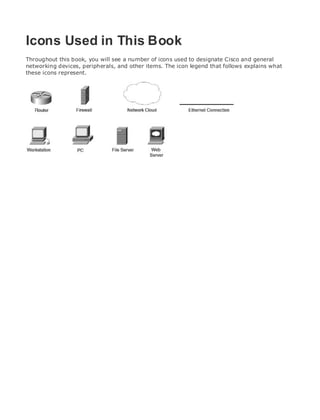
![• Table of Contents
• Index
Web Security Field Guide
BySteve Kalman
Publisher: Cisco Press
Pub Date: November 08, 2002
ISBN: 1-58705-092-7
Pages: 608
Hands-on techniques for securing Windows(r) servers, browsers, and network communications.
Create effective security policies and establish rules for operating in and maintaining a
security- conscious environment
Learn how to harden Windows multi-user platforms, including NT, 2000, and XP
Understand secure installation options for Windows web servers and how to enhance
security on existing web and FTP server installations
Improve security at the end user's workstation, including web browsers, desktops, and
laptops
Evaluate the pros and cons of installing a certificate server and becoming your own
Certification Authority
Learn the Cisco PIX Firewall and Cisco IOS Firewall architecture and how to apply Cisco
standard and extended access lists
Discover ways to test the current state of security and keep it up to date
Learn to engage end users as part of the overall network security solution
While the Internet has transformed and improved the way we do business, this vast network and
its associated technologies have opened the door to an increasing number of security threats.
The challenge for successful, public web sites is to encourage access to the site while eliminating
undesirable or malicious traffic and to provide sufficient levels of security without constraining
performance or scalability. The more reliant organizations become on the Internet to perform
daily jobs or conduct transactions, the greater the impact a breach of network security has. Just
as Cisco Systems has been an innovator in using the Internet to conduct business, so too is it a
market leader in the development and sale of products and technologies that protect data
traveling across the Internet. Yet a network security solution is only as strong as its weakest
link. Network attacks can occur at any point, including the network connection, the firewall, the
web server, or the client. Hardening the defenses at all these points is key to creating an
effective, all-encompassing network security solution.
Chapter 1. Essential Information for Web
Security Administrators
This chapter covers the following topics:
Two Internetworking Models
Headers
Shims
Above the Transport Layer
Two things are almost certainly true about the vast majority of readers of this book:
You know most of the information in this chapter.
You need to brush up on a few things or, possibly, learn about them for the first time.
You will most likely either skip or skim most of the material here.
Other chapters, however, assume that you know these fundamentals. If you find that a section
assumes knowledge that you don't have, such as how Secure Sockets Layer (SSL) works
(Chapter 9, "Becoming a Certification Authority [CA]") or what a SYN-Flood is (Chapter 10,
"Firewalls"), this is the place to get the details.](https://image.slidesharecdn.com/96973-250223224149-94749931/85/Web-Security-Field-Guide-1st-Edition-Steve-Kalman-25-320.jpg)
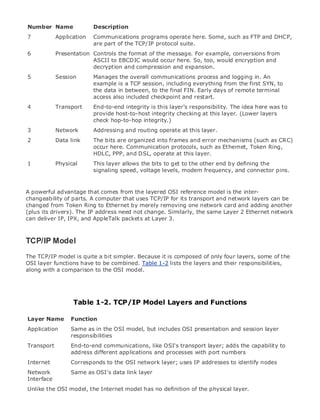
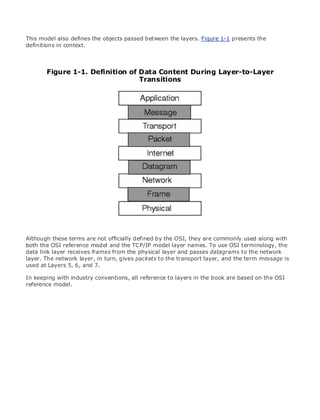
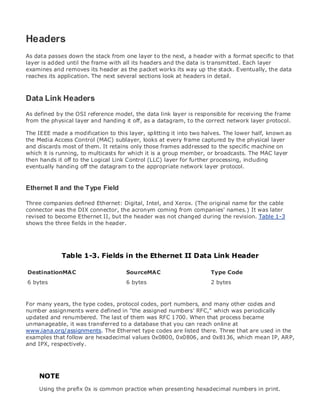
![• Table of Contents
• Index
Web Security Field Guide
BySteve Kalman
Publisher: Cisco Press
Pub Date: November 08, 2002
ISBN: 1-58705-092-7
Pages: 608
Hands-on techniques for securing Windows(r) servers, browsers, and network communications.
Create effective security policies and establish rules for operating in and maintaining a
security- conscious environment
Learn how to harden Windows multi-user platforms, including NT, 2000, and XP
Understand secure installation options for Windows web servers and how to enhance
security on existing web and FTP server installations
Improve security at the end user's workstation, including web browsers, desktops, and
laptops
Evaluate the pros and cons of installing a certificate server and becoming your own
Certification Authority
Learn the Cisco PIX Firewall and Cisco IOS Firewall architecture and how to apply Cisco
standard and extended access lists
Discover ways to test the current state of security and keep it up to date
Learn to engage end users as part of the overall network security solution
While the Internet has transformed and improved the way we do business, this vast network and
its associated technologies have opened the door to an increasing number of security threats.
The challenge for successful, public web sites is to encourage access to the site while eliminating
undesirable or malicious traffic and to provide sufficient levels of security without constraining
performance or scalability. The more reliant organizations become on the Internet to perform
daily jobs or conduct transactions, the greater the impact a breach of network security has. Just
as Cisco Systems has been an innovator in using the Internet to conduct business, so too is it a
market leader in the development and sale of products and technologies that protect data
traveling across the Internet. Yet a network security solution is only as strong as its weakest
link. Network attacks can occur at any point, including the network connection, the firewall, the
web server, or the client. Hardening the defenses at all these points is key to creating an
effective, all-encompassing network security solution.
When a frame arrives, the data link header is examined and removed, and the resulting
datagram is handed off to the proper network layer process. If, for example, the type code were
0x0800, IP would get it. Similarly, type 0x0806 frames would go to ARP, and type 0x8136
frames would go to IPX. Scores of defined numbers exist, but most of them are assigned to
companies that no longer exist and are unused.
NOTE
Other protocols, such as IBM Token Ring and Datapoint Arcnet, had their own ways of
passing data higher up the stack. Neither protocol had numbers listed in the assigned
numbers' RFCs.
IEEE 802 Working Group
The IEEE 802 working group (formed in February 1980) took on the task of standardizing
network communications. To that end, they subdivided into several subgroups, each with a
specific responsibility. Table 1-4 lists the original subgroups.
Table 1-4. Initial 802 Working Groups
IEEE Number Responsibility
802.1 Administration
802.2[1] Logical Link Control
802.3[2] CSMA/CD access (Ethernet)
802.4 Token Passing Bus
802.5 Token Passing Ring
[1] ANSI developed the standard for FDDI. It is also a MAC sublayer definition, expecting an 802.2 LLC to
support it.
[2] Modern Ethernet cards are capable of handling Ethernet II and 802.3 Ethernet concurrently. Windows
systems default to sending Ethernet II and listening for either, but can be configured to use one or the other
exclusively. The only trick is that both sender and receiver must agree.
IEEE 802.3, .4, and .5 all define the MAC portion of the data link header. Both the format and
size vary based on the particular access method. However, all versions feed into a standard
802.2 LLC header.
NOTE](https://image.slidesharecdn.com/96973-250223224149-94749931/85/Web-Security-Field-Guide-1st-Edition-Steve-Kalman-30-320.jpg)