Making and
taking notes
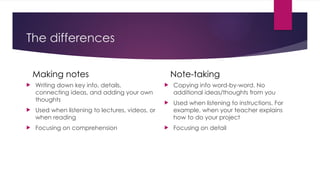
The differences
Making notes
 Writing down key info, details,
connecting ideas, and adding your own
thoughts
 Used when listening to lectures, videos, or
when reading
 Focusing on comprehension
Note-taking
 Copying info word-by-word. No
additional ideas/thoughts from you
 Used when listening to instructions. For
example, when your teacher explains
how to do your project
 Focusing on detail
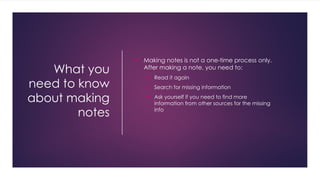
What you
need to know
about making
notes
 Making notes is not a one-time process only.
After making a note, you need to:
 Read it again
 Search for missing information
 Ask yourself if you need to find more
information from other sources for the missing
info
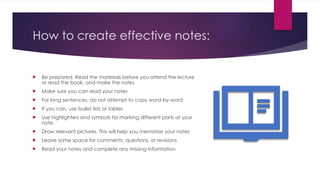
How to create effective notes:
 Be prepared. Read the materials before you attend the lecture
or read the book, and make the notes
 Make sure you can read your notes
 For long sentences, do not attempt to copy word-by-word
 If you can, use bullet lists or tables
 Use highlighters and symbols for marking different parts of your
note
 Draw relevant pictures. This will help you memorize your notes
 Leave some space for comments, questions, or revisions
 Read your notes and complete any missing information

Web of documents – processed by humans.pptx

  • 1.
  • 2.
    The differences Making notes Writing down key info, details, connecting ideas, and adding your own thoughts  Used when listening to lectures, videos, or when reading  Focusing on comprehension Note-taking  Copying info word-by-word. No additional ideas/thoughts from you  Used when listening to instructions. For example, when your teacher explains how to do your project  Focusing on detail
  • 3.
    What you need toknow about making notes  Making notes is not a one-time process only. After making a note, you need to:  Read it again  Search for missing information  Ask yourself if you need to find more information from other sources for the missing info
  • 4.
    How to createeffective notes:  Be prepared. Read the materials before you attend the lecture or read the book, and make the notes  Make sure you can read your notes  For long sentences, do not attempt to copy word-by-word  If you can, use bullet lists or tables  Use highlighters and symbols for marking different parts of your note  Draw relevant pictures. This will help you memorize your notes  Leave some space for comments, questions, or revisions  Read your notes and complete any missing information