






SESSION TITLE
Presenter’s Name
Web Development
Trends for 2016
Matt Zimmermann
Senior Web Developer / Development Standards Architect, Miva, Inc.
Evolution of Web
Design Trends
Site Link: http://www.fabianburghardt.de/webolution/
Current Trends
What To Expect
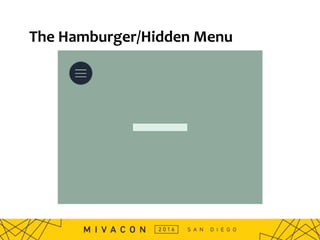
The Hamburger/Hidden Menu
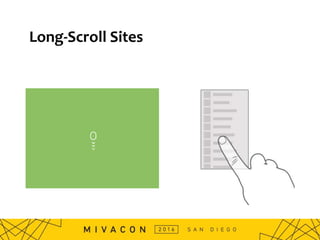
Long-Scroll Sites
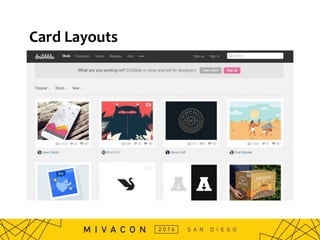
Card Layouts
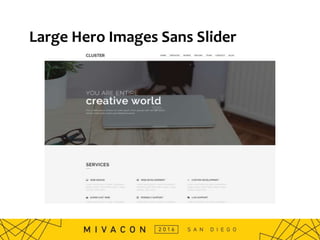
Large Hero Images Sans Slider
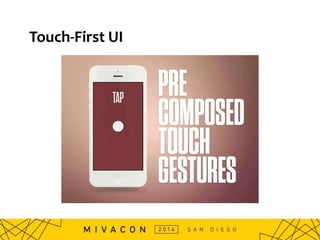
Touch-First UI
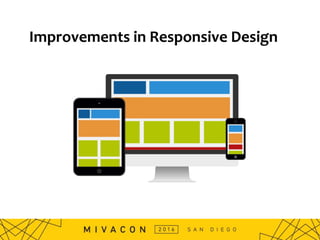
Improvements in Responsive Design
A Return to the “Three-Click” Rule
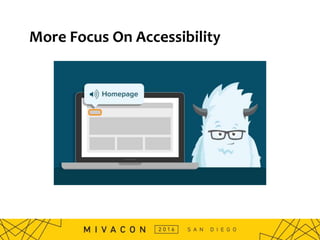
More Focus On Accessibility
Rich Animation
The Future
Quicker Page Loads
Focus on Typography
Smoother In-Page Interactions/Micro
Experiences
Quicker Adoption "New" or "Cutting-Edge"
Technologies
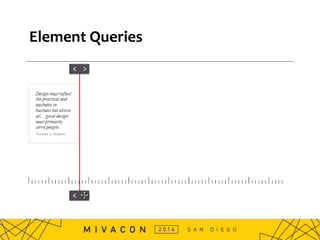
Element Queries
SESSION TITLE
Presenter’s Name
Matt ZimmermannSenior Web Developer / Development Standards Architect, Miva, Inc.
Follow me: @mivamatt
@influxweb
Slides: https://speakerdeck.com/mattz
http://www.slideshare.net/MattZimmermann
Image Credits
Slide 3: http://theodysseyonline.com/
Slide 7: https://codyhouse.co/
Slide 8: http://dribble.com and http//www.microsoft.com
Slide 9: http://dribble.com
Slide 10: http://www.webdesignerdepot.com/
Slide 11: http://designmodo.com
Slide 12: http://www.uxpin.com/
Slide 13: http://pandawhale.com
Slide 14: http://zurb.com
Slide 15: https://dribbble.com/eodsgn
Slide 18: https://escss.blogspot.com/

Web Development Trends 2016

Editor's Notes

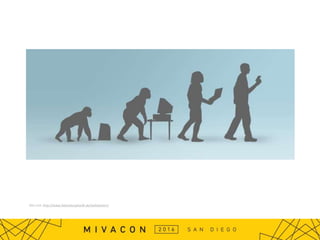
  • #4 Early 1990s: Text-based layout. Single-column. Coded in basic HTML Mid 1990s: Tables became the “go to” element for page layout. Frames became popular for separating navigation from content. Late 1990s: Animated GIFs are all the rage. Flash becomes the new “thing” and CSS starts to show up. Early 2000s: Stylesheets take hold allowing for more unified layouts. IE5 is the first browser to achieve 99%+ support for CSS1. Positioning of DIVs becomes the new add-on for table based layout. Full Flash sites show up more. JavaScript makes it entrance. Mid 2000s: Sites narrowed and navigation became horizontal and higher up on the page. Late 2000s: Developers are overwhelmed with all the choice and sites are constantly “under construction”. Early 2010s: Websites start to become more semantic. JavaScript is no longer a novelty to have on a site. Mid 2010s: The advent of the mobile web and responsive design. One-page sites are popularized. Flat and material design rears its head. Full-screen background videos, parallax, and the hamburger menu.
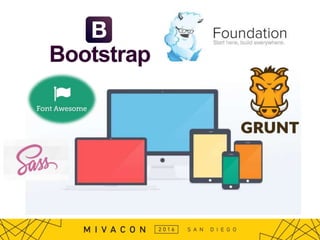
  • #5 Responsive Web Design Content-focused Design Use of Icons over Text Semi-Flat Design and Subtle Color Palettes Reliance on Frameworks Product Tools and Pre-Processors
  • #7 The Proliferations of UI Patterns The Hamburger/Hidden Menu Long-Scroll Sites Card Layouts Large Hero Images Sans Slider Touch-First UI Improvements in RWD A return to the “three-click” rule More focus on accessibility Rich animation
  • #17 Quicker Page Loads Focus on Typography Smoother In-Page Interactions/Micro Experiences Quicker Adoption "New" or "Cutting-Edge" Technologies Element Queries