WEARABLE COMPUTER
UNDER THE GUIDENCE OF:
T.BHAVANI
ASST PROFFESER
SRI INDU INSTITUTE OF
ENGINEERING AND TECHNOLOGY
PRESENTED BY:
M.CHETHANA
19X31A0485
CONTENTS
 INTRODUCTION
 AIM OF WEARABLE COMPUTER
 HISTORY
 EVOLUTION
 OPERATIONAL DETAILS
 HOW WEARABLE COMPUTER WORKS
 INTERACTION BETWEEN USER AND COMPUTER
 FEATURES
 ADVANTAGES
 DISADVANTAGES
 APPLICATIONS
 CONCLUSION
INTRODUCTION
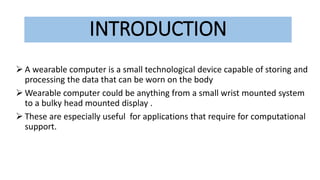
 A wearable computer is a small technological device capable of storing and
processing the data that can be worn on the body
 Wearable computer could be anything from a small wrist mounted system
to a bulky head mounted display .
 These are especially useful for applications that require for computational
support.
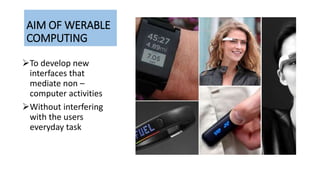
AIM OF WERABLE
COMPUTING
To develop new
interfaces that
mediate non –
computer activities
Without interfering
with the users
everyday task
HISTORY
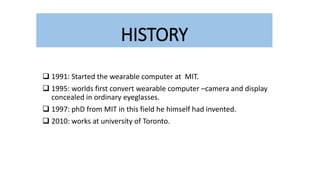
 1991: Started the wearable computer at MIT.
 1995: worlds first convert wearable computer –camera and display
concealed in ordinary eyeglasses.
 1997: phD from MIT in this field he himself had invented.
 2010: works at university of Toronto.
EVALUTION
OPERATIONAL DETAILS
Software:
The commonly used operating system on a wearable
computer is the wos (wear comp os).
Redhat and gnu Linux can be run in close coordination as
operating system too.
 Hardware:
• Display
• Keyboard
• Hard drive
HOW WEARABLE COMPUTER
WORKS
 Some wearable computers use “keyers” and trackballs as input
device.
 Many try o use more intuitive means of input like gesture, speech
recognition and context awareness.
 The output may be presented through displays,lights,sound.
INTERACTION BETWEEN THE USER AND THE
COMPUTER
There are three operational modes of interaction between the
human and computer.
• constancy
• Augmentation
• mediation
CONSTANCY
The computer runs continuously, and is always ready to interact with
the user.
The signal flow from human to computer and computer to human,
runs continuously to provide a constant user-interface.
AUGMENTATION
 Wearable computing is based on the notion that computing is not the
primary task.
 The assumption of wearable computing is that the user will be doing
something else at the same time as doing the computing.
 Thus the computer should serve to augment the intellect,or augment the
senses.
MEDIATION
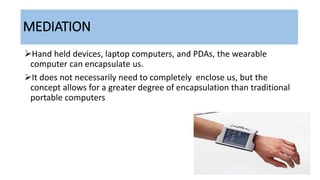
Hand held devices, laptop computers, and PDAs, the wearable
computer can encapsulate us.
It does not necessarily need to completely enclose us, but the
concept allows for a greater degree of encapsulation than traditional
portable computers
FEATURES
 Consistency:
There is always constant interaction between the computer
and the user and hence there is no need to turn the device on or off.
 Multi-tasking:
wearable computer provides computational support even
when the users hands, voice, eyes or attention is actively engaged with
the physical environment.
 Mobility:
These computers must go where the wearer goes. They are
always on and their wearer can access them anytime.
WEARABLE COMPUTER NETWORKING
GENERAL REQUIREMENTS
 Short-ranged
 Simple in design
 Low power consumption
 Security
 Self configuration
SECURITY REQUIREMENTS
• Privacy
• Data confidentiality
• Data integrity
• Availability
• Acess control
ADVANTAGES
 Portability
 Hands free use
 Comfortable
 Quick to access
 fashionable
DISADVANTAGES
 Equipment can be heavy
 Expensive
 Can cause irritation in heat
 Side effects such as heat
 Some wearable computer can consists lot of wiring
APPLICATIONS
• Augmented memory
• Face recognition
• Finger tracking
• Wearable computer in a wrist watch
• Wearable computer in shoe
WEARABLE COMPUTER DEVICES
CONCLUSION
• Whatever area wearable computer technology is applied to you can
see that it will improve the quality of life and make day –to- day life
less complicated.
THANK YOU

WEARABLE COMPUTER.pptx

  • 1.
    WEARABLE COMPUTER UNDER THEGUIDENCE OF: T.BHAVANI ASST PROFFESER SRI INDU INSTITUTE OF ENGINEERING AND TECHNOLOGY PRESENTED BY: M.CHETHANA 19X31A0485
  • 2.
    CONTENTS  INTRODUCTION  AIMOF WEARABLE COMPUTER  HISTORY  EVOLUTION  OPERATIONAL DETAILS  HOW WEARABLE COMPUTER WORKS  INTERACTION BETWEEN USER AND COMPUTER  FEATURES  ADVANTAGES  DISADVANTAGES  APPLICATIONS  CONCLUSION
  • 3.
    INTRODUCTION  A wearablecomputer is a small technological device capable of storing and processing the data that can be worn on the body  Wearable computer could be anything from a small wrist mounted system to a bulky head mounted display .  These are especially useful for applications that require for computational support.
  • 4.
    AIM OF WERABLE COMPUTING Todevelop new interfaces that mediate non – computer activities Without interfering with the users everyday task
  • 5.
    HISTORY  1991: Startedthe wearable computer at MIT.  1995: worlds first convert wearable computer –camera and display concealed in ordinary eyeglasses.  1997: phD from MIT in this field he himself had invented.  2010: works at university of Toronto.
  • 6.
  • 7.
    OPERATIONAL DETAILS Software: The commonlyused operating system on a wearable computer is the wos (wear comp os). Redhat and gnu Linux can be run in close coordination as operating system too.  Hardware: • Display • Keyboard • Hard drive
  • 8.
    HOW WEARABLE COMPUTER WORKS Some wearable computers use “keyers” and trackballs as input device.  Many try o use more intuitive means of input like gesture, speech recognition and context awareness.  The output may be presented through displays,lights,sound.
  • 9.
    INTERACTION BETWEEN THEUSER AND THE COMPUTER There are three operational modes of interaction between the human and computer. • constancy • Augmentation • mediation
  • 10.
    CONSTANCY The computer runscontinuously, and is always ready to interact with the user. The signal flow from human to computer and computer to human, runs continuously to provide a constant user-interface.
  • 11.
    AUGMENTATION  Wearable computingis based on the notion that computing is not the primary task.  The assumption of wearable computing is that the user will be doing something else at the same time as doing the computing.  Thus the computer should serve to augment the intellect,or augment the senses.
  • 12.
    MEDIATION Hand held devices,laptop computers, and PDAs, the wearable computer can encapsulate us. It does not necessarily need to completely enclose us, but the concept allows for a greater degree of encapsulation than traditional portable computers
  • 13.
    FEATURES  Consistency: There isalways constant interaction between the computer and the user and hence there is no need to turn the device on or off.  Multi-tasking: wearable computer provides computational support even when the users hands, voice, eyes or attention is actively engaged with the physical environment.  Mobility: These computers must go where the wearer goes. They are always on and their wearer can access them anytime.
  • 14.
    WEARABLE COMPUTER NETWORKING GENERALREQUIREMENTS  Short-ranged  Simple in design  Low power consumption  Security  Self configuration SECURITY REQUIREMENTS • Privacy • Data confidentiality • Data integrity • Availability • Acess control
  • 15.
    ADVANTAGES  Portability  Handsfree use  Comfortable  Quick to access  fashionable
  • 16.
    DISADVANTAGES  Equipment canbe heavy  Expensive  Can cause irritation in heat  Side effects such as heat  Some wearable computer can consists lot of wiring
  • 17.
    APPLICATIONS • Augmented memory •Face recognition • Finger tracking • Wearable computer in a wrist watch • Wearable computer in shoe
  • 18.
  • 19.
    CONCLUSION • Whatever areawearable computer technology is applied to you can see that it will improve the quality of life and make day –to- day life less complicated.
  • 20.