WAVE ENERGY
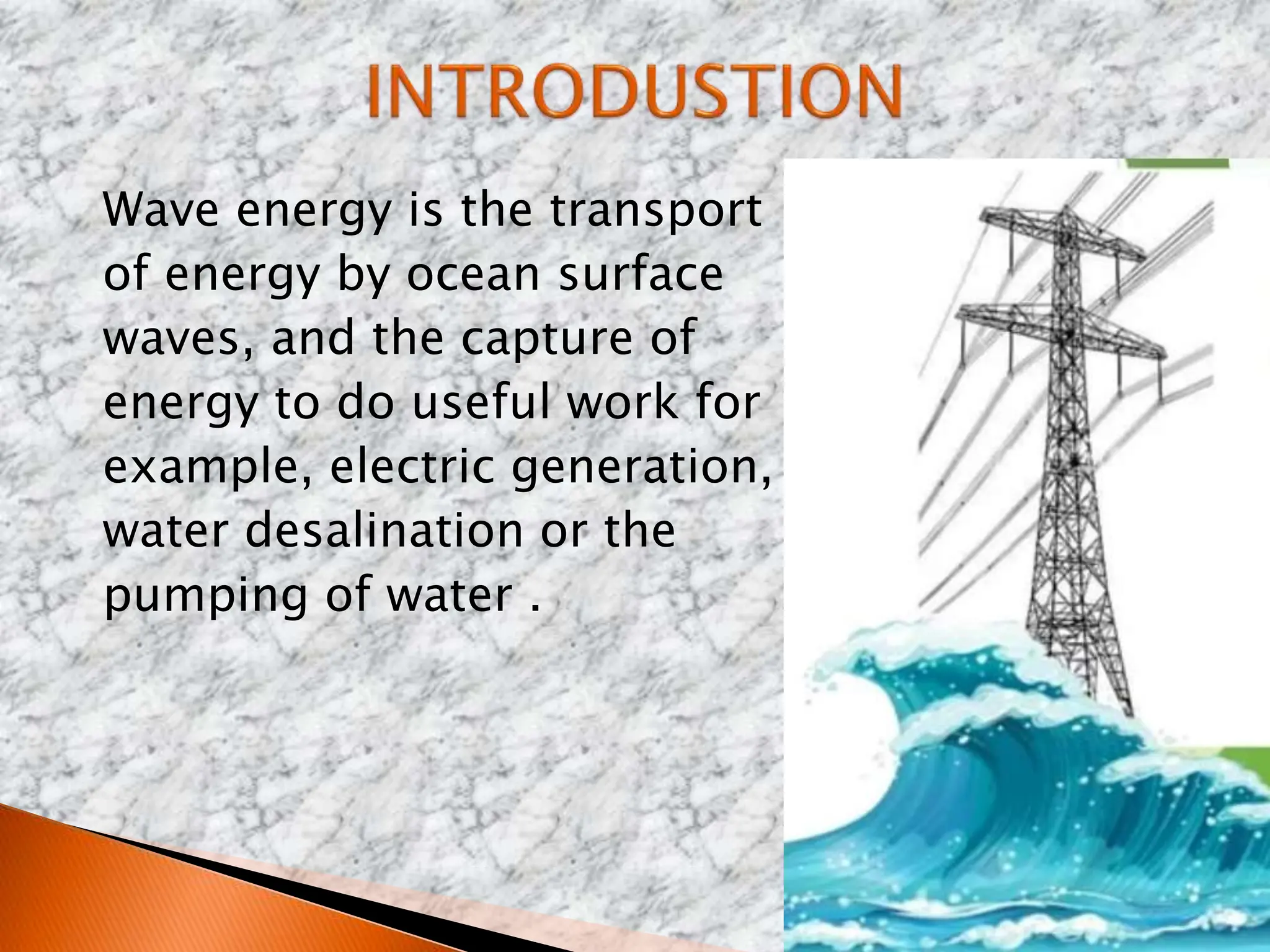
Wave energy is the transport
of energy by ocean surface
waves, and the capture of
energy to do useful work for
example, electric generation,
water desalination or the
pumping of water .
 The first known patent to use energy from
ocean waves dates back to 1799 and was
filed in Paris by Girard and his son.
 An early application of wave power was a
device constructed around 1910.
 Modern scientific pursuit of wave energy was
pioneered by Yoshio Masuda’s experiments in
the 1940s.
 In the 1980s, a few first-generation
prototypes were tested at sea.
 In 2008, the first experimental wave farm was
opened in portugal.
 Wave energy converters (WECs) are machines,
devices or methods used to exploit wave
power and convert it to electrical power.
 Firstly, wave energy is transformed to energy
in working fluids (working fluids are different
due to the type of wave energy converter),
then this energy is converted to mechanical
energy using a motor or a turbine.
 Finally, this mechanical energy rotates a
generator to produce electrical energy.
1) Oscillating Water Column (OWC) :- They
convert the energy of the waves into air
pressure.
2) Oscillating Body :- They turn the oscillating
height of the oceans surface into
mechanical energy.
3) Overtopping :- They convert the energy of
the waves into potential energy.
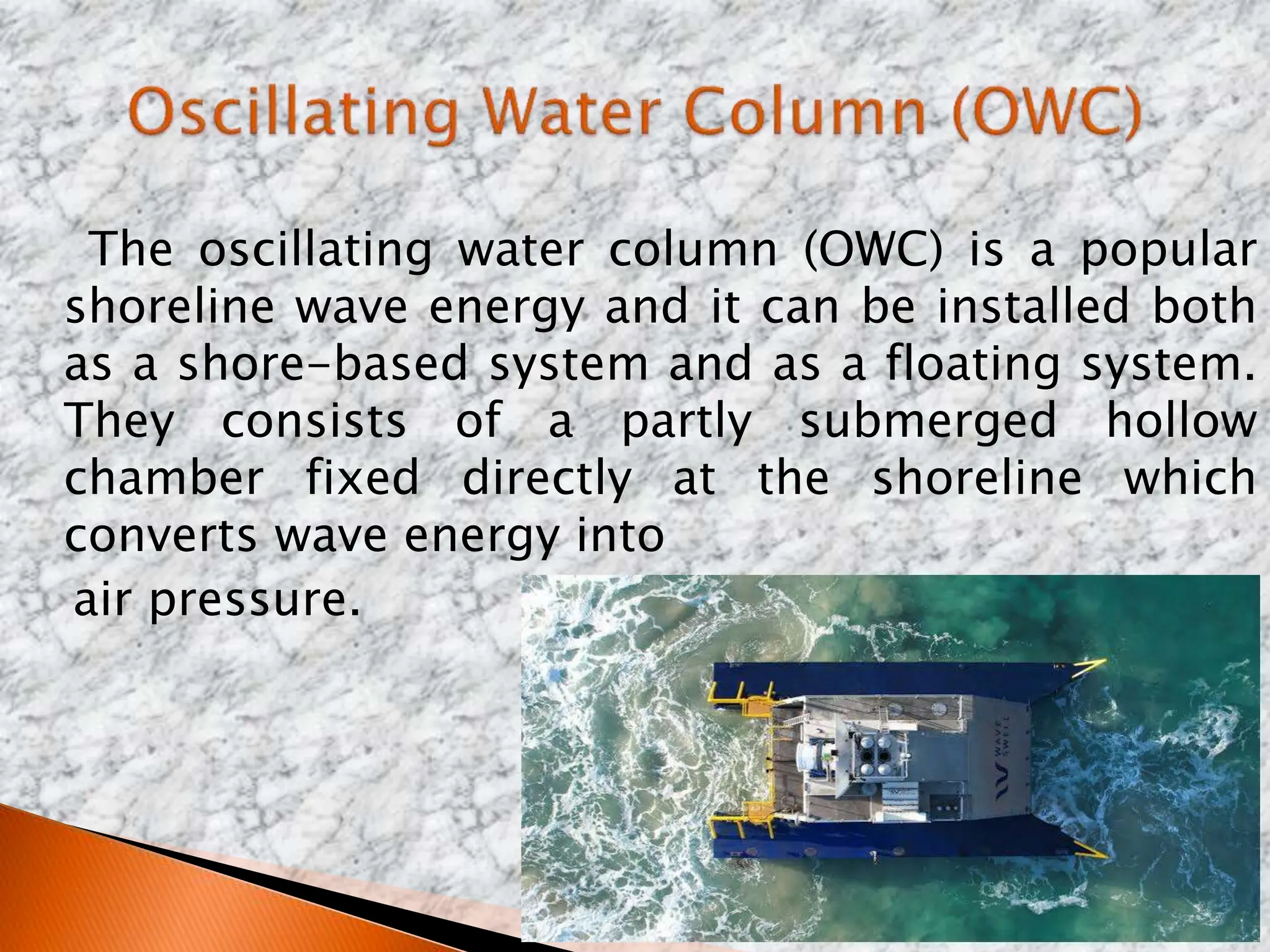
The oscillating water column (OWC) is a popular
shoreline wave energy and it can be installed both
as a shore-based system and as a floating system.
They consists of a partly submerged hollow
chamber fixed directly at the shoreline which
converts wave energy into
air pressure.
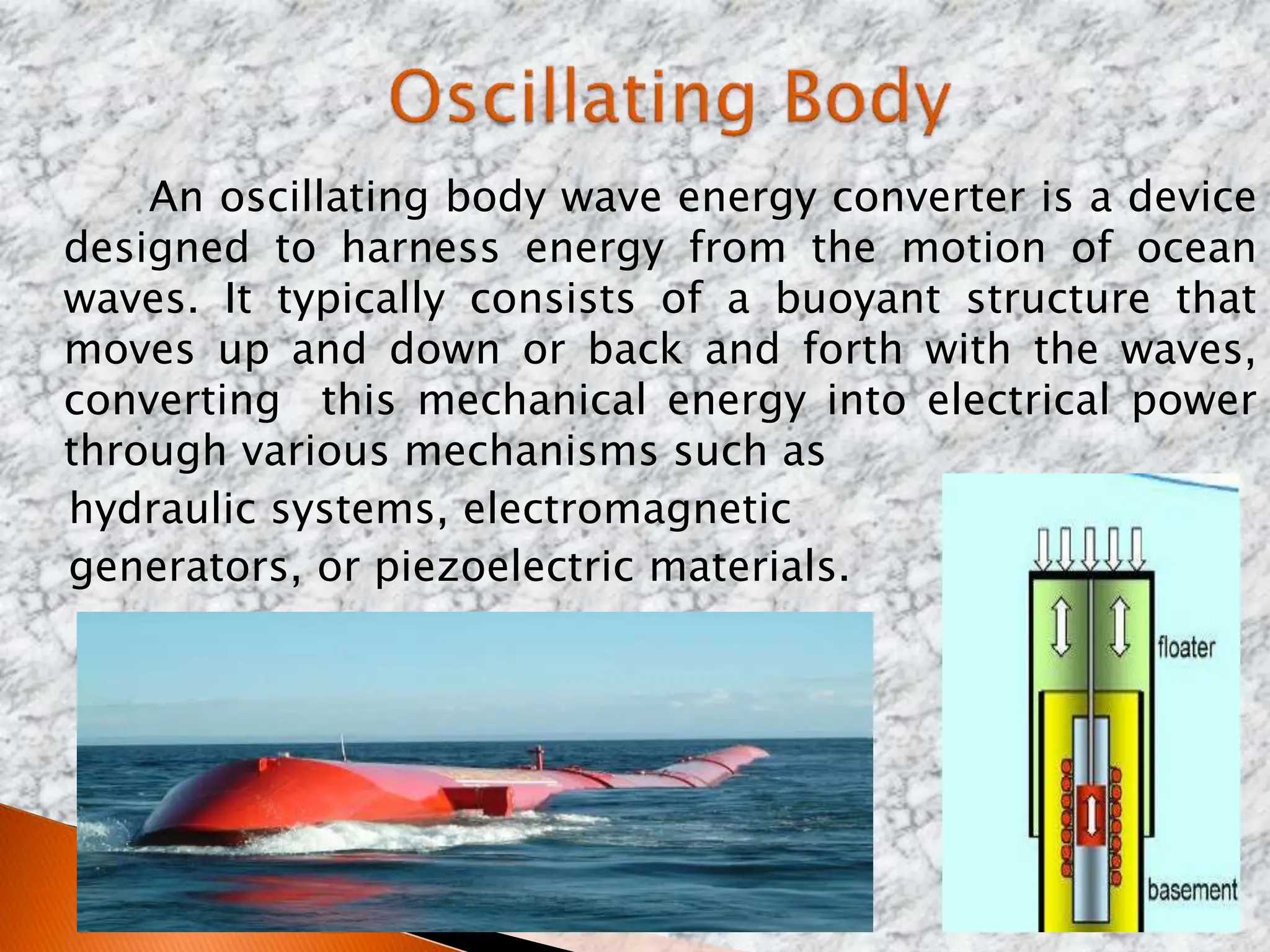
An oscillating body wave energy converter is a device
designed to harness energy from the motion of ocean
waves. It typically consists of a buoyant structure that
moves up and down or back and forth with the waves,
converting this mechanical energy into electrical power
through various mechanisms such as
hydraulic systems, electromagnetic
generators, or piezoelectric materials.
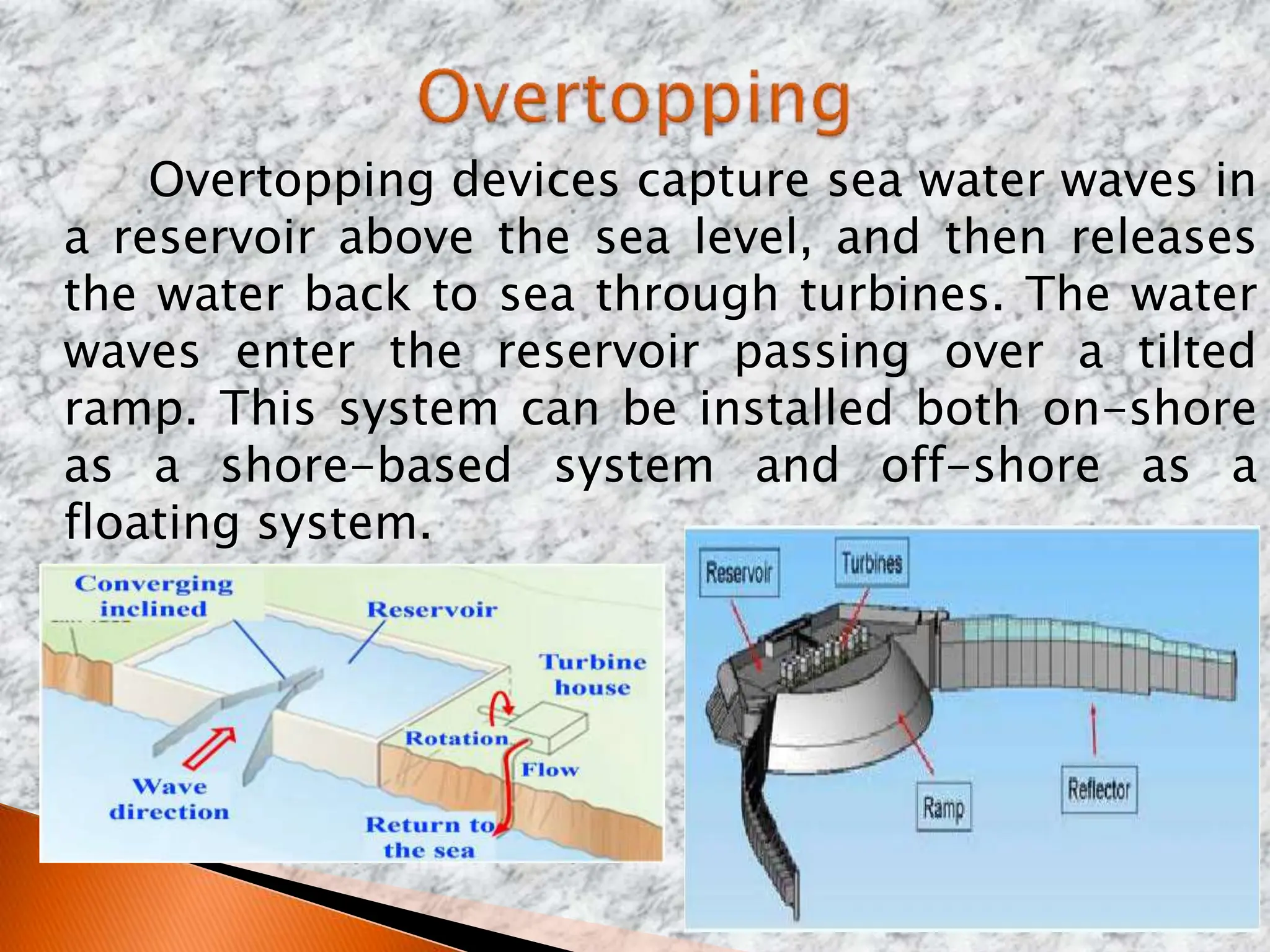
Overtopping devices capture sea water waves in
a reservoir above the sea level, and then releases
the water back to sea through turbines. The water
waves enter the reservoir passing over a tilted
ramp. This system can be installed both on-shore
as a shore-based system and off-shore as a
floating system.
 Renewable: The best thing about wave energy is
that will never run out. Unlike fossil fuels, which
are running out. The waves flow back from the
shore, but they always return.
 Environmental friendly: Also creating power from
waves creates no harmful byproducts such as
gas, waste and pollution.
 The energy is free-no fuel needed no waste
produced.
 Not expensive to operate and maintain.
 Can produce a great deal of energy.
 It is a reliable source.
 Suitable to Certain Locations: The biggest disadvantage
to getting your energy from the waves is location. Only
power plants and towns near the ocean will benefit
directly from it.
 Effect of marine Ecosystem: As clean as wave energy is,
it still creates hazards for some of the animals near it.
 Depends on the waves-sometimes you’ll get loads of
energy, sometimes almost nothing.
 Needs a suitable site, where waves are consistently
strong.
 Weak performance in rough weather.
 Noisy and maintenance effects.
THANK
YOU

WAVE ENERGY presentation physics projects

  • 1.
  • 2.
    Wave energy isthe transport of energy by ocean surface waves, and the capture of energy to do useful work for example, electric generation, water desalination or the pumping of water .
  • 3.
     The firstknown patent to use energy from ocean waves dates back to 1799 and was filed in Paris by Girard and his son.  An early application of wave power was a device constructed around 1910.  Modern scientific pursuit of wave energy was pioneered by Yoshio Masuda’s experiments in the 1940s.  In the 1980s, a few first-generation prototypes were tested at sea.  In 2008, the first experimental wave farm was opened in portugal.
  • 4.
     Wave energyconverters (WECs) are machines, devices or methods used to exploit wave power and convert it to electrical power.  Firstly, wave energy is transformed to energy in working fluids (working fluids are different due to the type of wave energy converter), then this energy is converted to mechanical energy using a motor or a turbine.  Finally, this mechanical energy rotates a generator to produce electrical energy.
  • 5.
    1) Oscillating WaterColumn (OWC) :- They convert the energy of the waves into air pressure. 2) Oscillating Body :- They turn the oscillating height of the oceans surface into mechanical energy. 3) Overtopping :- They convert the energy of the waves into potential energy.
  • 6.
    The oscillating watercolumn (OWC) is a popular shoreline wave energy and it can be installed both as a shore-based system and as a floating system. They consists of a partly submerged hollow chamber fixed directly at the shoreline which converts wave energy into air pressure.
  • 7.
    An oscillating bodywave energy converter is a device designed to harness energy from the motion of ocean waves. It typically consists of a buoyant structure that moves up and down or back and forth with the waves, converting this mechanical energy into electrical power through various mechanisms such as hydraulic systems, electromagnetic generators, or piezoelectric materials.
  • 8.
    Overtopping devices capturesea water waves in a reservoir above the sea level, and then releases the water back to sea through turbines. The water waves enter the reservoir passing over a tilted ramp. This system can be installed both on-shore as a shore-based system and off-shore as a floating system.
  • 9.
     Renewable: Thebest thing about wave energy is that will never run out. Unlike fossil fuels, which are running out. The waves flow back from the shore, but they always return.  Environmental friendly: Also creating power from waves creates no harmful byproducts such as gas, waste and pollution.  The energy is free-no fuel needed no waste produced.  Not expensive to operate and maintain.  Can produce a great deal of energy.  It is a reliable source.
  • 10.
     Suitable toCertain Locations: The biggest disadvantage to getting your energy from the waves is location. Only power plants and towns near the ocean will benefit directly from it.  Effect of marine Ecosystem: As clean as wave energy is, it still creates hazards for some of the animals near it.  Depends on the waves-sometimes you’ll get loads of energy, sometimes almost nothing.  Needs a suitable site, where waves are consistently strong.  Weak performance in rough weather.  Noisy and maintenance effects.
  • 11.