Water Soluble Vitamins
Susan Algert
Water Soluble Vitamins
Thiamin Pantothenic Acid
Riboflavin Biotin
Niacin Vitamin C
Vitamin B-6
Folate
Vitamin B-12
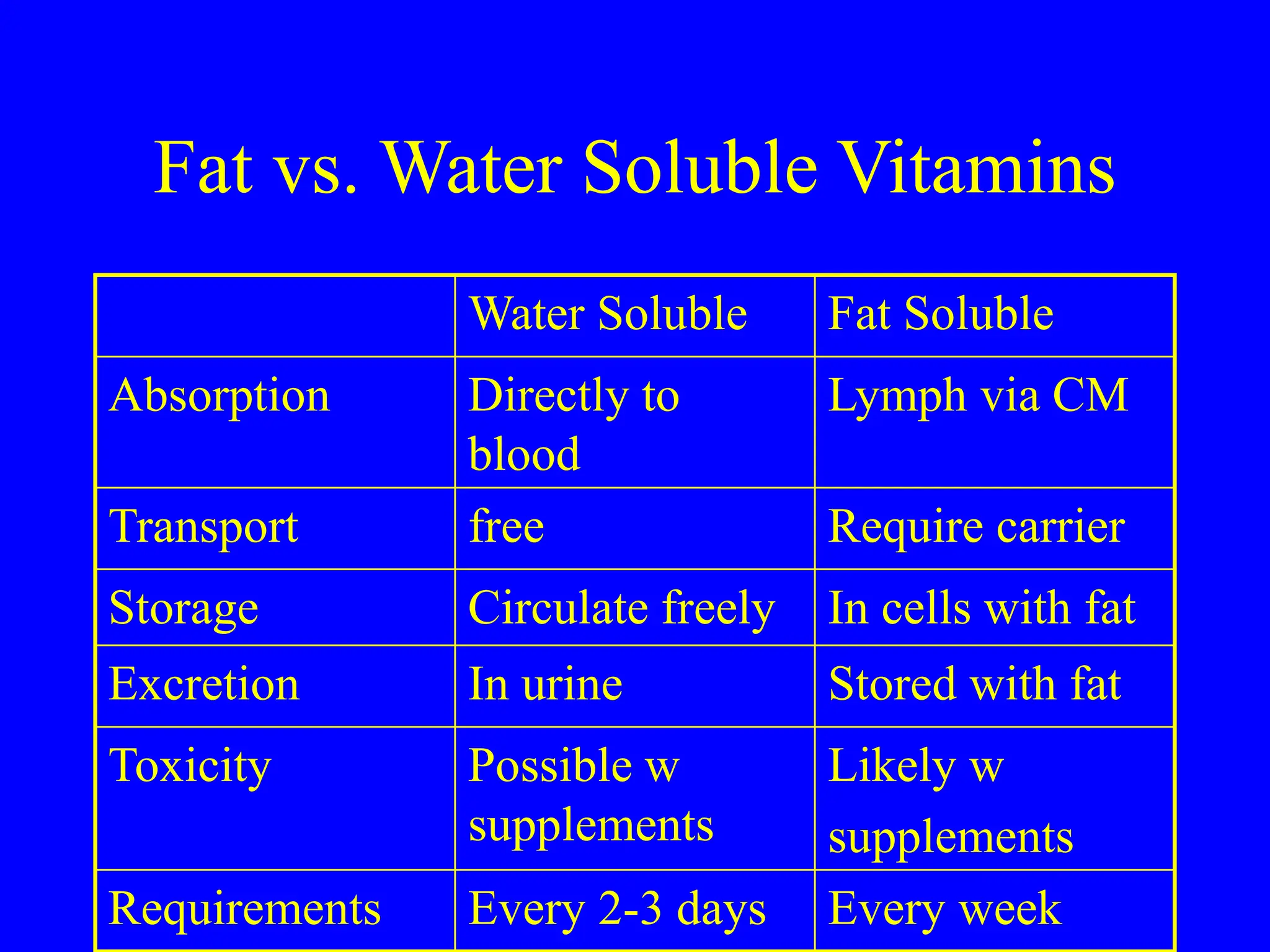
Fat vs. Water Soluble Vitamins
Water Soluble Fat Soluble
Absorption Directly to
blood
Lymph via CM
Transport free Require carrier
Storage Circulate freely In cells with fat
Excretion In urine Stored with fat
Toxicity Possible w
supplements
Likely w
supplements
Requirements Every 2-3 days Every week
Water soluble vitamins
• Susceptible to heat
• Kidney removes and excretes excess
• Vitamin C, thiamin and riboflavin are
especially susceptible to heat and alkilinity
• Hydrophilic and water will leach them from
vegetables
• Preferred methods are steaming, stir-fry and
microwave
B vitamins act as co-enzymes
Thiamin
• Sulfur containing and nitrogen containing
rings attached to carbon atoms
• Part of nerve cell membranes—synthesize
and regulate neurotransmitters
• Functions in energy metabolism—vitamin
portion of TPP; plays role in
decarboxylation and helps form
Acetyl Co A from pyruvate
Thiamin
• Dietary Recommendation
RDA for adult men is 1.2 mg for women is 1.1
mg per day
Higher needs in pregnancy; most diets with
variety and adequate energy supply ample
thiamin
Thiamin
• Deficiency
• Heavy alcohol consumption with
inadequate food consumption ; alcohol
interferes with absorption (Wernicke-
Korsakoff syndrome); poor and elderly at
risk for not eating sufficient energy
Thiamin Deficiency/Toxicities
• Beri Beri
• Impaired muscle contractions
• Impaired cardiac function, edema and
muscle twitches
• Decreased neurological function and
memory loss
Thiamin food sources
• Pork
• Whole and enriched grains
• Fortified cereals
• Most animal foods contain little
thiamin
Riboflavin
• Involved in energy metabolism; part of two
co-enzymes, FMN and FAD
• Participate in citric acid cycle and beta
oxidation and electron transport
• Remove ammonia during deamination of
some amino acids
• Associated with antioxidant glutathione
peroxidase
Dietary Recommendations for
Riboflavin
• RDA is 1.1 mg for women and 1.3 mg for
men per day
• Pregnancy and lactation increase energy
needs and need for riboflavin
Food Sources
• Most plant and animal foods
• Milk and milk drinks and yogurt supply
about 15% in the American diet
• Fortified cereals, bread and bread products
contribute about 10%
• One of four vitamins added to enriched
products
Deficiency/Toxicity
• Deficiencies are rare although some people
may take in marginal amounts
• Drug and alcohol users and restricted
caloric intake
• Ariboflavinosis
• Toxicity– not observed
Niacin (Nicotinic Acid)
• Made from tryptophan; essential nutrient if
protein intake is inadequate
• 60 mg tryptophan converts to 1 mg niacin
• RDA is 14-16 NE/day for adults
• NE include preformed and niacin derived
from tryptophan
Functions of Niacin
• NAD and NADP play key role in
oxidation-reduction reactions
• Helps convert pyruvate to lactate
• Coenzyme component that
participates in over 200 metabolic
reactions
Food Sources
• Preformed niacin from meat, poultry fish
and enriched or whole grain products
• Beef and processed meats are substantial
contributors in U.S. diet
• Stable when heated
• Tryptophan found in protein rich animal
foods
Niacin deficiency
• Pellagra
• Epidemic in southwest in early 1900’s as
corn became staple; niacin is bound by
protein
• Deficiencies found in southeast if subsisting
on diet of corn, molasses and salt pork
• International health issue
Medicinal uses of niacin
• Lowers blood levels of LDL cholesterol
• Raises HDL cholesterol
• Doses of 1,300 mg to 3,000 mg per day
• Side effects include liver abnormalities
• UL for niacin is 35 mgms per day
• Taken only under medical supervision
Biotin
• Function critical in energy metabolism ;
TCA cycle and gluconeogenesis
• Bound to enzymes as a co-factor and
requirement is small
• No RDA; AI is 30 micrograms/day
• Deficiency rare and toxicity not seen
Pantothenic Acid
• Component of Co enzyme A; involved in
energy metabolism
• No RDA; AI is 5 mg/day
• Deficiency is rare (dermatitis, hair loss,
depression)
• Toxicity is rare
Vitamin B-6
• Forms include pyridoxal, pyridoxine, and
pyridoxamine and phosphorylated forms
• Functions include support of over 100
different enzyme reactions including :
transfer of amino group, carboxyl group or
water
Enzymes support protein metabolism, blood
cell synthesis, CHO metabolism,
neurotransmitter synthesis
Dietary Recommendations and
Sources
• RDA is 1-3 mg/day; TUL =100 mg/day
• Deficiency symptoms include weakness,
insomnia, depression, irritability
• Sources include fortified cereals, meat, fish,
poultry, starchy vegetables and noncitrus
fruits
• Heat sensitive; most people get enough
B6 Toxicity and Medicinal Use
• Megadoses of up to 2,000 mg/day can cause
irreversible nerve damage
• Large doses used to treat PMS or in stress
formulas
• UL is 100 mg/day
• High doses taken only under medical
supervision
Folate
• Converts vitamin B-12 to coenzyme form
• Supports DNA synthesis and cell replication
and growth
• Along with B12 and B6, may decrease risk
for heart disease
• Tetrahydrofolic acid (THFA) is coenzyme
with five active forms
Dietary Recommendations and
Deficiency
• RDA is 400ug/day (is it most prevalent
vitamin deficiency?)
• TUL is 1000 ug/day
• Deficiency causes macrocytic anemia, NTD
• Toxicity masks vitamin B12 deficiency
• Dietary folate equivalents= higher
bioavailability of supplemental folate vs.
folate in foods
Folate in foods
• Fortified ready to eat cereals
• Dark green leafy vegetables
• Asparagus
• Broccoli
• Orange juice
• Wheat germ
• Legumes
Vitamin B-12-Cyanocobalamin
• Cobalamin or cobalt containing compounds
• Transfers methyl group from folate
coenzyme THFA to make active form; B12
deficiency leads to folate deficiency
• Dietary recommendations 2.4 ugm/day for
men and women
• Atrophic gastritis decreases bioavailability
in adults over 51
Vitamin B-12 Absorption
• R-protein
• pancreatic enzymes
• Intrinsic factor
• Bacteria in the stomach
• Gastric acid production
B12 in the diet
• RDA is 2.4 ugm per day; B12 not present in
plant foods
• Animals store excess B12 in tissues
• Mixed foods with animal protein contribute
most B12
• B12 deficiency usually occurs due to
impaired absorption
• Vegans at risk
Deficiency disease is pernicious
anemia
• Megaloblasts and macrocytes rather than
normal red blood cells
• Brain abnormalities and spinal cord
degeneration which can be lethal
• Pernicious anemia attacks parietal cells and
diminishes intrinsic factor and stomach acid
Functions of Vitamin C
• Antioxidant—donates electron minimizing
free radical damage; Recycles oxidized
vitamin E for reuse
• Collagen synthesis
• Stabilizes reduced form of folate enzyme
• Enhances absorption of non-heme iron
• Helps synthesize carnitine
• Proper functioning of immune system
Vitamin C deficiency/toxicity
• Scurvy
• Breakdown gums and joints
• Bone pain, diarrhea, fractures, fatigue
• UL is 2,000 mg per day
• Can possibly enhance oxidation when
consumed in high doses without other
antioxidants
Dietary Recommendations
• RDA is 90 mg for men and 75 mg for
women per day
• Smokers require +35 mg per day
• Food sources include potatoes, citrus fruits,
broccoli, leafy greens
• Highly vulnerable to heat and oxidation
Vitamin like compounds
• Choline
• Inositol
• Carnitine
• Lipoic acid

Water soluble vitamins, types sources and functions

  • 1.
  • 2.
    Water Soluble Vitamins ThiaminPantothenic Acid Riboflavin Biotin Niacin Vitamin C Vitamin B-6 Folate Vitamin B-12
  • 3.
    Fat vs. WaterSoluble Vitamins Water Soluble Fat Soluble Absorption Directly to blood Lymph via CM Transport free Require carrier Storage Circulate freely In cells with fat Excretion In urine Stored with fat Toxicity Possible w supplements Likely w supplements Requirements Every 2-3 days Every week
  • 4.
    Water soluble vitamins •Susceptible to heat • Kidney removes and excretes excess • Vitamin C, thiamin and riboflavin are especially susceptible to heat and alkilinity • Hydrophilic and water will leach them from vegetables • Preferred methods are steaming, stir-fry and microwave
  • 5.
    B vitamins actas co-enzymes
  • 6.
    Thiamin • Sulfur containingand nitrogen containing rings attached to carbon atoms • Part of nerve cell membranes—synthesize and regulate neurotransmitters • Functions in energy metabolism—vitamin portion of TPP; plays role in decarboxylation and helps form Acetyl Co A from pyruvate
  • 7.
    Thiamin • Dietary Recommendation RDAfor adult men is 1.2 mg for women is 1.1 mg per day Higher needs in pregnancy; most diets with variety and adequate energy supply ample thiamin
  • 8.
    Thiamin • Deficiency • Heavyalcohol consumption with inadequate food consumption ; alcohol interferes with absorption (Wernicke- Korsakoff syndrome); poor and elderly at risk for not eating sufficient energy
  • 9.
    Thiamin Deficiency/Toxicities • BeriBeri • Impaired muscle contractions • Impaired cardiac function, edema and muscle twitches • Decreased neurological function and memory loss
  • 10.
    Thiamin food sources •Pork • Whole and enriched grains • Fortified cereals • Most animal foods contain little thiamin
  • 11.
    Riboflavin • Involved inenergy metabolism; part of two co-enzymes, FMN and FAD • Participate in citric acid cycle and beta oxidation and electron transport • Remove ammonia during deamination of some amino acids • Associated with antioxidant glutathione peroxidase
  • 12.
    Dietary Recommendations for Riboflavin •RDA is 1.1 mg for women and 1.3 mg for men per day • Pregnancy and lactation increase energy needs and need for riboflavin
  • 13.
    Food Sources • Mostplant and animal foods • Milk and milk drinks and yogurt supply about 15% in the American diet • Fortified cereals, bread and bread products contribute about 10% • One of four vitamins added to enriched products
  • 14.
    Deficiency/Toxicity • Deficiencies arerare although some people may take in marginal amounts • Drug and alcohol users and restricted caloric intake • Ariboflavinosis • Toxicity– not observed
  • 15.
    Niacin (Nicotinic Acid) •Made from tryptophan; essential nutrient if protein intake is inadequate • 60 mg tryptophan converts to 1 mg niacin • RDA is 14-16 NE/day for adults • NE include preformed and niacin derived from tryptophan
  • 16.
    Functions of Niacin •NAD and NADP play key role in oxidation-reduction reactions • Helps convert pyruvate to lactate • Coenzyme component that participates in over 200 metabolic reactions
  • 17.
    Food Sources • Preformedniacin from meat, poultry fish and enriched or whole grain products • Beef and processed meats are substantial contributors in U.S. diet • Stable when heated • Tryptophan found in protein rich animal foods
  • 18.
    Niacin deficiency • Pellagra •Epidemic in southwest in early 1900’s as corn became staple; niacin is bound by protein • Deficiencies found in southeast if subsisting on diet of corn, molasses and salt pork • International health issue
  • 19.
    Medicinal uses ofniacin • Lowers blood levels of LDL cholesterol • Raises HDL cholesterol • Doses of 1,300 mg to 3,000 mg per day • Side effects include liver abnormalities • UL for niacin is 35 mgms per day • Taken only under medical supervision
  • 20.
    Biotin • Function criticalin energy metabolism ; TCA cycle and gluconeogenesis • Bound to enzymes as a co-factor and requirement is small • No RDA; AI is 30 micrograms/day • Deficiency rare and toxicity not seen
  • 21.
    Pantothenic Acid • Componentof Co enzyme A; involved in energy metabolism • No RDA; AI is 5 mg/day • Deficiency is rare (dermatitis, hair loss, depression) • Toxicity is rare
  • 22.
    Vitamin B-6 • Formsinclude pyridoxal, pyridoxine, and pyridoxamine and phosphorylated forms • Functions include support of over 100 different enzyme reactions including : transfer of amino group, carboxyl group or water Enzymes support protein metabolism, blood cell synthesis, CHO metabolism, neurotransmitter synthesis
  • 23.
    Dietary Recommendations and Sources •RDA is 1-3 mg/day; TUL =100 mg/day • Deficiency symptoms include weakness, insomnia, depression, irritability • Sources include fortified cereals, meat, fish, poultry, starchy vegetables and noncitrus fruits • Heat sensitive; most people get enough
  • 24.
    B6 Toxicity andMedicinal Use • Megadoses of up to 2,000 mg/day can cause irreversible nerve damage • Large doses used to treat PMS or in stress formulas • UL is 100 mg/day • High doses taken only under medical supervision
  • 25.
    Folate • Converts vitaminB-12 to coenzyme form • Supports DNA synthesis and cell replication and growth • Along with B12 and B6, may decrease risk for heart disease • Tetrahydrofolic acid (THFA) is coenzyme with five active forms
  • 26.
    Dietary Recommendations and Deficiency •RDA is 400ug/day (is it most prevalent vitamin deficiency?) • TUL is 1000 ug/day • Deficiency causes macrocytic anemia, NTD • Toxicity masks vitamin B12 deficiency • Dietary folate equivalents= higher bioavailability of supplemental folate vs. folate in foods
  • 27.
    Folate in foods •Fortified ready to eat cereals • Dark green leafy vegetables • Asparagus • Broccoli • Orange juice • Wheat germ • Legumes
  • 28.
    Vitamin B-12-Cyanocobalamin • Cobalaminor cobalt containing compounds • Transfers methyl group from folate coenzyme THFA to make active form; B12 deficiency leads to folate deficiency • Dietary recommendations 2.4 ugm/day for men and women • Atrophic gastritis decreases bioavailability in adults over 51
  • 29.
    Vitamin B-12 Absorption •R-protein • pancreatic enzymes • Intrinsic factor • Bacteria in the stomach • Gastric acid production
  • 30.
    B12 in thediet • RDA is 2.4 ugm per day; B12 not present in plant foods • Animals store excess B12 in tissues • Mixed foods with animal protein contribute most B12 • B12 deficiency usually occurs due to impaired absorption • Vegans at risk
  • 31.
    Deficiency disease ispernicious anemia • Megaloblasts and macrocytes rather than normal red blood cells • Brain abnormalities and spinal cord degeneration which can be lethal • Pernicious anemia attacks parietal cells and diminishes intrinsic factor and stomach acid
  • 32.
    Functions of VitaminC • Antioxidant—donates electron minimizing free radical damage; Recycles oxidized vitamin E for reuse • Collagen synthesis • Stabilizes reduced form of folate enzyme • Enhances absorption of non-heme iron • Helps synthesize carnitine • Proper functioning of immune system
  • 33.
    Vitamin C deficiency/toxicity •Scurvy • Breakdown gums and joints • Bone pain, diarrhea, fractures, fatigue • UL is 2,000 mg per day • Can possibly enhance oxidation when consumed in high doses without other antioxidants
  • 34.
    Dietary Recommendations • RDAis 90 mg for men and 75 mg for women per day • Smokers require +35 mg per day • Food sources include potatoes, citrus fruits, broccoli, leafy greens • Highly vulnerable to heat and oxidation
  • 35.
    Vitamin like compounds •Choline • Inositol • Carnitine • Lipoic acid