Waste and AbuseWaste and Abuse
In AnaesthesiologyIn Anaesthesiology
Dr. Samir A. El-KafrawyDr. Samir A. El-Kafrawy
MD, Anaesthesiology &Pain ReliefMD, Anaesthesiology &Pain Relief
ElSahe lte aching Ho spital, Cairo ,ElSahe lte aching Ho spital, Cairo ,
Eg yptEg ypt
• Actually in anaesthetic practice we mayActually in anaesthetic practice we may
have many waste and abuse forms ashave many waste and abuse forms as
waste ofwaste of time, efforttime, effort andand costcost, which will, which will
be reflected directly on the medical servicebe reflected directly on the medical service
quality.quality.
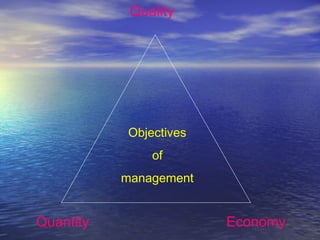
• As we know, the objectives of medicalAs we know, the objectives of medical
management in the perioperative periodmanagement in the perioperative period
areare threefoldthreefold::
Quality
EconomyQuantity
Objectives
of
management
• Because most anaesthesia isBecause most anaesthesia is
administered in operating rooms (OR),administered in operating rooms (OR),
inefficiencies related to insufficient orinefficiencies related to insufficient or
excessive staffing, inaccurate allocation ofexcessive staffing, inaccurate allocation of
OR time, and sub-optimal patientOR time, and sub-optimal patient
scheduling contribute to unnecessaryscheduling contribute to unnecessary
perioperative costs, reduced anesthesiaperioperative costs, reduced anesthesia
group profits, economically disadvantagedgroup profits, economically disadvantaged
hospitals, working late unnecessarily, andhospitals, working late unnecessarily, and
daily frustration.daily frustration.
Some definitions:Some definitions:
• StaffingStaffing and OR allocationand OR allocation are synonymous:are synonymous:
They are the process of calculating the numberThey are the process of calculating the number
of OR teams that must be available at each timeof OR teams that must be available at each time
during the week.during the week.
• AnAn elective caseelective case is one for which the patientsis one for which the patients
can wait at least three days for surgery withoutcan wait at least three days for surgery without
sustaining additional morbidity.sustaining additional morbidity.
• Regularly scheduled hoursRegularly scheduled hours are the hours that anare the hours that an
OR team member plans on working when not onOR team member plans on working when not on
call (e.g., 7 AM to 3 PM).call (e.g., 7 AM to 3 PM).
• Surgical serviceSurgical service refers to a group ofrefers to a group of
surgeons who share allocated OR time. Asurgeons who share allocated OR time. A
surgeon can represent a surgical service.surgeon can represent a surgical service.
But, usually, services consist of more thanBut, usually, services consist of more than
one surgeon.one surgeon.
• Allocated OR timeAllocated OR time is an interval of ORis an interval of OR
time with a specific start and end time on atime with a specific start and end time on a
specified day of the week that is assignedspecified day of the week that is assigned
by the facility to a surgical service forby the facility to a surgical service for
scheduling cases.scheduling cases.
Some Definitions
• Block timeBlock time is a categoryis a category of allocated ORof allocated OR
time.time. Facilities expect that no case will beFacilities expect that no case will be
scheduled to block time unless it canscheduled to block time unless it can
reasonable be expected to be finishedreasonable be expected to be finished
before the ending time of the block.before the ending time of the block.
Whereas all block time is allocated ORWhereas all block time is allocated OR
time, not all allocated OR time is blocktime, not all allocated OR time is block
time.time.
• Case durationCase duration is defined as the time fromis defined as the time from
when a patient enters an ORwhen a patient enters an OR until he oruntil he or
she leaves the OR.she leaves the OR.
Some Definitions (Cont.(
• Turnover timeTurnover time is the time from when one patientis the time from when one patient
exits an ORexits an OR until another patient enters theuntil another patient enters the
same OR on the same day. Turnover timessame OR on the same day. Turnover times
include cleanup times and set up times, but notinclude cleanup times and set up times, but not
scheduled delays between cases.scheduled delays between cases.
• Under-utilized OR timeUnder-utilized OR time is the difference betweenis the difference between
allocated OR time and the total hours of electiveallocated OR time and the total hours of elective
cases including turnover times performed duringcases including turnover times performed during
the allocatedthe allocated OROR timetime..
• Over-utilizedOver-utilized hourshours are the hours that ORs runare the hours that ORs run
longer than the regularly scheduled hours.longer than the regularly scheduled hours.
Some Definitions (Cont.(
• Inefficiency of use of OR timeInefficiency of use of OR time equals theequals the
sum of two products: hours of under-sum of two products: hours of under-
utilized OR time multiplied by the cost perutilized OR time multiplied by the cost per
hour of under-utilized OR time and hourshour of under-utilized OR time and hours
of over-utilized OR time multiplied by theof over-utilized OR time multiplied by the
cost per hour of over-utilized OR time.cost per hour of over-utilized OR time.
• OROR efficiencyefficiency is a theoreticalis a theoretical
construct that is maximized when theconstruct that is maximized when the
inefficiency of use of OR time has beeninefficiency of use of OR time has been
minimized.minimized.
Some Definitions (Cont.(
Common problems identified in mostCommon problems identified in most
ORs include:ORs include:
• Inaccurate booking/scheduling.Inaccurate booking/scheduling.
• Unrealistic schedules.Unrealistic schedules.
• Last minute changesLast minute changes
(cancellation/additions).(cancellation/additions).
• Inappropriate staffing.Inappropriate staffing.
• Delayed starts.Delayed starts.
• Long turnaround times.Long turnaround times.
• Equipment delays.Equipment delays.
• Unhappy patients/surgeons/staff.Unhappy patients/surgeons/staff.
To create efficiency in OR we must:To create efficiency in OR we must:
1.1. Generate an accurate, realistic schedule.Generate an accurate, realistic schedule.
2.2. Effectively administrate the schedule onEffectively administrate the schedule on
day of surgery.day of surgery.
))A): Creating a Realistic Elective ScheduleA): Creating a Realistic Elective Schedule
• Block elective schedulingBlock elective scheduling
• Allocation of BlocksAllocation of Blocks
• Block Release TimeBlock Release Time
• An accurate schedule must list accurate andAn accurate schedule must list accurate and
realistic start time andrealistic start time and
• Scheduling requires a knowledgeable ORScheduling requires a knowledgeable OR
scheduler and scheduling softwarescheduler and scheduling software
• Accurate scheduling requires listing of correctAccurate scheduling requires listing of correct
and complete procedure; sides to be operatedand complete procedure; sides to be operated
upon; primary and secondary surgeon (if any);upon; primary and secondary surgeon (if any);
additional procedures (stents, xadditional procedures (stents, x­­-rays, etc.);-rays, etc.);
special equipment required; PCA, epiduralspecial equipment required; PCA, epidural
analgesia; ICU admission.analgesia; ICU admission.
))B) Running an Efficient Schedule on DayB) Running an Efficient Schedule on Day
of Surgeryof Surgery
• Remember one dictum:Remember one dictum: protect theprotect the
elective schedule.elective schedule. A carefully structuredA carefully structured
OR list can be easily disrupted by add-OR list can be easily disrupted by add-
ons, emergencies and cancellationsons, emergencies and cancellations
• Any emergency goes to the first availableAny emergency goes to the first available
room whereas and elective add-on caseroom whereas and elective add-on case
goes at the end of the schedule.goes at the end of the schedule.
On-Time StartsOn-Time Starts
• The patients should have been givenThe patients should have been given
appropriate time for arrival the night before.appropriate time for arrival the night before.
• ““One-stop check in.One-stop check in.”” The patient admissionThe patient admission
should be completely processed in one place byshould be completely processed in one place by
the nurse or physician assistant. Avoid patientthe nurse or physician assistant. Avoid patient
and paperwork transfers.and paperwork transfers.
• Recruit nurses from the PACU to facilitateRecruit nurses from the PACU to facilitate
admission of first cases.admission of first cases.
• Bring the patient directly to the OR. BypassBring the patient directly to the OR. Bypass
holding area. The holding area is good forholding area. The holding area is good for
subsequent cases or placement of epidurals forsubsequent cases or placement of epidurals for
pain. For most cases, arterial lines and CVPs,pain. For most cases, arterial lines and CVPs,
etc., can be placed in the OR while the urinaryetc., can be placed in the OR while the urinary
catheter is inserted and operative site iscatheter is inserted and operative site is
prepared (i.e., promote working simultaneouslyprepared (i.e., promote working simultaneously
to improve efficiency).to improve efficiency).
Short Turnaround Times:Short Turnaround Times:
• Turnaround time (TAT) should be kept at theTurnaround time (TAT) should be kept at the
minimum. It is suggested that TAT for inpatientminimum. It is suggested that TAT for inpatient
ORs should be 30 minutes or less while TAT forORs should be 30 minutes or less while TAT for
ambulatory centers be 15 minutes or less. Forambulatory centers be 15 minutes or less. For
minor eases it could be 5-10 minutes. Tominor eases it could be 5-10 minutes. To
minimize the TAT, patient preparation for theminimize the TAT, patient preparation for the
following case must begin in the preoperativefollowing case must begin in the preoperative
holding area. Instrument trays can be preparedholding area. Instrument trays can be prepared
and ready outside the room to be opened duringand ready outside the room to be opened during
the turnaround time. Delays in turnaround mustthe turnaround time. Delays in turnaround must
be examined and the causative factorsbe examined and the causative factors
remedied.remedied.
Decrease Case Times:Decrease Case Times:
• Longer than acceptable case times mayLonger than acceptable case times may
be the result of slow induction ofbe the result of slow induction of
anesthesia, long patient preparation time,anesthesia, long patient preparation time,
slow surgery (slow surgeon, attendingslow surgery (slow surgeon, attending
surgeon not present for long sections ofsurgeon not present for long sections of
the case, too much teaching)the case, too much teaching), delayed, delayed
emergence from anesthesia, and lack ofemergence from anesthesia, and lack of
available PACU bedsavailable PACU beds
Avoid ORs on Hold:Avoid ORs on Hold:
• Usual reasons include non-availability ofUsual reasons include non-availability of
surgeons, anesthesiologists, nurses,surgeons, anesthesiologists, nurses,
equipment, or PACU beds. The number ofequipment, or PACU beds. The number of
ICU beds or step down units will affect theICU beds or step down units will affect the
availability of PACU beds.availability of PACU beds.
Decrease purposeless efforts of theDecrease purposeless efforts of the
team:team:
• One of our major problems in the lessOne of our major problems in the less
developed countries is the lack ofdeveloped countries is the lack of
assistances, nurses and skilledassistances, nurses and skilled
paramedical staffs. This may contribute toparamedical staffs. This may contribute to
the excessive effort must be done by thethe excessive effort must be done by the
operating surgeon and anesthetist aimingoperating surgeon and anesthetist aiming
to find out an instrument/drug or to maketo find out an instrument/drug or to make
the operative theater optimal for thethe operative theater optimal for the
surgery; a rule must be done by others.surgery; a rule must be done by others.
Spiritual aspects:Spiritual aspects:
• any disappointing between members of theany disappointing between members of the
team must be reflected upon the quality ofteam must be reflected upon the quality of
work delivered by the whole team.work delivered by the whole team.
• Environmental factors as unpleasantEnvironmental factors as unpleasant
ambient temperature, bad odours and muchambient temperature, bad odours and much
noise must be contributing factors.noise must be contributing factors.
Waste of drugsWaste of drugs
In fact, the previously discussed waste andIn fact, the previously discussed waste and
abuse in the time of the perioperative periodabuse in the time of the perioperative period
is reflected upon the drug consumption in ais reflected upon the drug consumption in a
way or another.way or another.
This means ,This means ,
more lengthy operation = more drugmore lengthy operation = more drug
consumption.consumption.
Other possible factors:Other possible factors:
• The use of a wrong drug for a specificThe use of a wrong drug for a specific
purpose.purpose.
• The use of a specific drug in aThe use of a specific drug in a
purposeless way.purposeless way.
• Ignorance about the accurate doses ofIgnorance about the accurate doses of
drugs.drugs.
• Careless handling of drugs.Careless handling of drugs.
• Fixed pharmaceutical packages of theFixed pharmaceutical packages of the
drugs.drugs.
Drug AbuseDrug Abuse
Definition of drug abuse: is the continuedDefinition of drug abuse: is the continued
use of a drug despite negativeuse of a drug despite negative
consequences.consequences.
Why anesthetistsWhy anesthetists??
• Easy access toEasy access to ““potentpotent”” drugs particularlydrugs particularly
opioids.opioids.
• Highly addictive potential of agents which we areHighly addictive potential of agents which we are
in contact with particularly fentanyl/sufentanil.in contact with particularly fentanyl/sufentanil.
• Diversion of these agents is relativelyDiversion of these agents is relatively ““simplesimple””
since only small doses will initially provide ansince only small doses will initially provide an
effect desired by the abuser.effect desired by the abuser.
• Curiosity about patients experience with theseCuriosity about patients experience with these
substances.substances.
• Control oriented personalityControl oriented personality
Signs and symptomsSigns and symptoms
• The pathognomonic sign is self administration ofThe pathognomonic sign is self administration of
drugs.drugs.
• Desire to work alone.Desire to work alone.
• Refuse lunch relieve or breaks.Refuse lunch relieve or breaks.
• Frequently relieves others.Frequently relieves others.
• Volunteers for extra cases/call.Volunteers for extra cases/call.
• Patients pain needs in the PACU are out ofPatients pain needs in the PACU are out of
proportion to narcotic record.proportion to narcotic record.
• Weight loss.Weight loss.
• Frequent bathroom breaks.Frequent bathroom breaks.
Successful reentry requires the following:Successful reentry requires the following:
• Recovering physician must have completed anRecovering physician must have completed an
effective, structured treatment program thateffective, structured treatment program that
includes involvement of family or significantincludes involvement of family or significant
others.others.
• Well motivated, honest, minimal denial with aWell motivated, honest, minimal denial with a
good recovery program.good recovery program.
• Returning to a supportive environment for self-Returning to a supportive environment for self-
esteem and career.esteem and career.
• Re-entry agreement implemented before startingRe-entry agreement implemented before starting
work.work.
In conclusionIn conclusion::
 We can develop a system for theWe can develop a system for the
perioperative period that utilizes theperioperative period that utilizes the
expertise of surgeons,expertise of surgeons,
anaesthesiologists and internists toanaesthesiologists and internists to
deliver high quality, cost conscious anddeliver high quality, cost conscious and
efficient medical service.efficient medical service.
 Quality of care is like a good wine; it isQuality of care is like a good wine; it is
impossible to measure but easy to recognizeimpossible to measure but easy to recognize..
Waste and abuse in anesthesia

Waste and abuse in anesthesia

  • 2.
    Waste and AbuseWasteand Abuse In AnaesthesiologyIn Anaesthesiology Dr. Samir A. El-KafrawyDr. Samir A. El-Kafrawy MD, Anaesthesiology &Pain ReliefMD, Anaesthesiology &Pain Relief ElSahe lte aching Ho spital, Cairo ,ElSahe lte aching Ho spital, Cairo , Eg yptEg ypt
  • 3.
    • Actually inanaesthetic practice we mayActually in anaesthetic practice we may have many waste and abuse forms ashave many waste and abuse forms as waste ofwaste of time, efforttime, effort andand costcost, which will, which will be reflected directly on the medical servicebe reflected directly on the medical service quality.quality. • As we know, the objectives of medicalAs we know, the objectives of medical management in the perioperative periodmanagement in the perioperative period areare threefoldthreefold::
  • 4.
  • 5.
    • Because mostanaesthesia isBecause most anaesthesia is administered in operating rooms (OR),administered in operating rooms (OR), inefficiencies related to insufficient orinefficiencies related to insufficient or excessive staffing, inaccurate allocation ofexcessive staffing, inaccurate allocation of OR time, and sub-optimal patientOR time, and sub-optimal patient scheduling contribute to unnecessaryscheduling contribute to unnecessary perioperative costs, reduced anesthesiaperioperative costs, reduced anesthesia group profits, economically disadvantagedgroup profits, economically disadvantaged hospitals, working late unnecessarily, andhospitals, working late unnecessarily, and daily frustration.daily frustration.
  • 6.
    Some definitions:Some definitions: •StaffingStaffing and OR allocationand OR allocation are synonymous:are synonymous: They are the process of calculating the numberThey are the process of calculating the number of OR teams that must be available at each timeof OR teams that must be available at each time during the week.during the week. • AnAn elective caseelective case is one for which the patientsis one for which the patients can wait at least three days for surgery withoutcan wait at least three days for surgery without sustaining additional morbidity.sustaining additional morbidity. • Regularly scheduled hoursRegularly scheduled hours are the hours that anare the hours that an OR team member plans on working when not onOR team member plans on working when not on call (e.g., 7 AM to 3 PM).call (e.g., 7 AM to 3 PM).
  • 7.
    • Surgical serviceSurgicalservice refers to a group ofrefers to a group of surgeons who share allocated OR time. Asurgeons who share allocated OR time. A surgeon can represent a surgical service.surgeon can represent a surgical service. But, usually, services consist of more thanBut, usually, services consist of more than one surgeon.one surgeon. • Allocated OR timeAllocated OR time is an interval of ORis an interval of OR time with a specific start and end time on atime with a specific start and end time on a specified day of the week that is assignedspecified day of the week that is assigned by the facility to a surgical service forby the facility to a surgical service for scheduling cases.scheduling cases. Some Definitions
  • 8.
    • Block timeBlocktime is a categoryis a category of allocated ORof allocated OR time.time. Facilities expect that no case will beFacilities expect that no case will be scheduled to block time unless it canscheduled to block time unless it can reasonable be expected to be finishedreasonable be expected to be finished before the ending time of the block.before the ending time of the block. Whereas all block time is allocated ORWhereas all block time is allocated OR time, not all allocated OR time is blocktime, not all allocated OR time is block time.time. • Case durationCase duration is defined as the time fromis defined as the time from when a patient enters an ORwhen a patient enters an OR until he oruntil he or she leaves the OR.she leaves the OR. Some Definitions (Cont.(
  • 9.
    • Turnover timeTurnovertime is the time from when one patientis the time from when one patient exits an ORexits an OR until another patient enters theuntil another patient enters the same OR on the same day. Turnover timessame OR on the same day. Turnover times include cleanup times and set up times, but notinclude cleanup times and set up times, but not scheduled delays between cases.scheduled delays between cases. • Under-utilized OR timeUnder-utilized OR time is the difference betweenis the difference between allocated OR time and the total hours of electiveallocated OR time and the total hours of elective cases including turnover times performed duringcases including turnover times performed during the allocatedthe allocated OROR timetime.. • Over-utilizedOver-utilized hourshours are the hours that ORs runare the hours that ORs run longer than the regularly scheduled hours.longer than the regularly scheduled hours. Some Definitions (Cont.(
  • 10.
    • Inefficiency ofuse of OR timeInefficiency of use of OR time equals theequals the sum of two products: hours of under-sum of two products: hours of under- utilized OR time multiplied by the cost perutilized OR time multiplied by the cost per hour of under-utilized OR time and hourshour of under-utilized OR time and hours of over-utilized OR time multiplied by theof over-utilized OR time multiplied by the cost per hour of over-utilized OR time.cost per hour of over-utilized OR time. • OROR efficiencyefficiency is a theoreticalis a theoretical construct that is maximized when theconstruct that is maximized when the inefficiency of use of OR time has beeninefficiency of use of OR time has been minimized.minimized. Some Definitions (Cont.(
  • 11.
    Common problems identifiedin mostCommon problems identified in most ORs include:ORs include: • Inaccurate booking/scheduling.Inaccurate booking/scheduling. • Unrealistic schedules.Unrealistic schedules. • Last minute changesLast minute changes (cancellation/additions).(cancellation/additions). • Inappropriate staffing.Inappropriate staffing. • Delayed starts.Delayed starts. • Long turnaround times.Long turnaround times. • Equipment delays.Equipment delays. • Unhappy patients/surgeons/staff.Unhappy patients/surgeons/staff.
  • 12.
    To create efficiencyin OR we must:To create efficiency in OR we must: 1.1. Generate an accurate, realistic schedule.Generate an accurate, realistic schedule. 2.2. Effectively administrate the schedule onEffectively administrate the schedule on day of surgery.day of surgery.
  • 13.
    ))A): Creating aRealistic Elective ScheduleA): Creating a Realistic Elective Schedule • Block elective schedulingBlock elective scheduling • Allocation of BlocksAllocation of Blocks • Block Release TimeBlock Release Time • An accurate schedule must list accurate andAn accurate schedule must list accurate and realistic start time andrealistic start time and • Scheduling requires a knowledgeable ORScheduling requires a knowledgeable OR scheduler and scheduling softwarescheduler and scheduling software • Accurate scheduling requires listing of correctAccurate scheduling requires listing of correct and complete procedure; sides to be operatedand complete procedure; sides to be operated upon; primary and secondary surgeon (if any);upon; primary and secondary surgeon (if any); additional procedures (stents, xadditional procedures (stents, x­­-rays, etc.);-rays, etc.); special equipment required; PCA, epiduralspecial equipment required; PCA, epidural analgesia; ICU admission.analgesia; ICU admission.
  • 14.
    ))B) Running anEfficient Schedule on DayB) Running an Efficient Schedule on Day of Surgeryof Surgery • Remember one dictum:Remember one dictum: protect theprotect the elective schedule.elective schedule. A carefully structuredA carefully structured OR list can be easily disrupted by add-OR list can be easily disrupted by add- ons, emergencies and cancellationsons, emergencies and cancellations • Any emergency goes to the first availableAny emergency goes to the first available room whereas and elective add-on caseroom whereas and elective add-on case goes at the end of the schedule.goes at the end of the schedule.
  • 15.
    On-Time StartsOn-Time Starts •The patients should have been givenThe patients should have been given appropriate time for arrival the night before.appropriate time for arrival the night before. • ““One-stop check in.One-stop check in.”” The patient admissionThe patient admission should be completely processed in one place byshould be completely processed in one place by the nurse or physician assistant. Avoid patientthe nurse or physician assistant. Avoid patient and paperwork transfers.and paperwork transfers. • Recruit nurses from the PACU to facilitateRecruit nurses from the PACU to facilitate admission of first cases.admission of first cases. • Bring the patient directly to the OR. BypassBring the patient directly to the OR. Bypass holding area. The holding area is good forholding area. The holding area is good for subsequent cases or placement of epidurals forsubsequent cases or placement of epidurals for pain. For most cases, arterial lines and CVPs,pain. For most cases, arterial lines and CVPs, etc., can be placed in the OR while the urinaryetc., can be placed in the OR while the urinary catheter is inserted and operative site iscatheter is inserted and operative site is prepared (i.e., promote working simultaneouslyprepared (i.e., promote working simultaneously to improve efficiency).to improve efficiency).
  • 16.
    Short Turnaround Times:ShortTurnaround Times: • Turnaround time (TAT) should be kept at theTurnaround time (TAT) should be kept at the minimum. It is suggested that TAT for inpatientminimum. It is suggested that TAT for inpatient ORs should be 30 minutes or less while TAT forORs should be 30 minutes or less while TAT for ambulatory centers be 15 minutes or less. Forambulatory centers be 15 minutes or less. For minor eases it could be 5-10 minutes. Tominor eases it could be 5-10 minutes. To minimize the TAT, patient preparation for theminimize the TAT, patient preparation for the following case must begin in the preoperativefollowing case must begin in the preoperative holding area. Instrument trays can be preparedholding area. Instrument trays can be prepared and ready outside the room to be opened duringand ready outside the room to be opened during the turnaround time. Delays in turnaround mustthe turnaround time. Delays in turnaround must be examined and the causative factorsbe examined and the causative factors remedied.remedied.
  • 17.
    Decrease Case Times:DecreaseCase Times: • Longer than acceptable case times mayLonger than acceptable case times may be the result of slow induction ofbe the result of slow induction of anesthesia, long patient preparation time,anesthesia, long patient preparation time, slow surgery (slow surgeon, attendingslow surgery (slow surgeon, attending surgeon not present for long sections ofsurgeon not present for long sections of the case, too much teaching)the case, too much teaching), delayed, delayed emergence from anesthesia, and lack ofemergence from anesthesia, and lack of available PACU bedsavailable PACU beds
  • 18.
    Avoid ORs onHold:Avoid ORs on Hold: • Usual reasons include non-availability ofUsual reasons include non-availability of surgeons, anesthesiologists, nurses,surgeons, anesthesiologists, nurses, equipment, or PACU beds. The number ofequipment, or PACU beds. The number of ICU beds or step down units will affect theICU beds or step down units will affect the availability of PACU beds.availability of PACU beds.
  • 19.
    Decrease purposeless effortsof theDecrease purposeless efforts of the team:team: • One of our major problems in the lessOne of our major problems in the less developed countries is the lack ofdeveloped countries is the lack of assistances, nurses and skilledassistances, nurses and skilled paramedical staffs. This may contribute toparamedical staffs. This may contribute to the excessive effort must be done by thethe excessive effort must be done by the operating surgeon and anesthetist aimingoperating surgeon and anesthetist aiming to find out an instrument/drug or to maketo find out an instrument/drug or to make the operative theater optimal for thethe operative theater optimal for the surgery; a rule must be done by others.surgery; a rule must be done by others.
  • 20.
    Spiritual aspects:Spiritual aspects: •any disappointing between members of theany disappointing between members of the team must be reflected upon the quality ofteam must be reflected upon the quality of work delivered by the whole team.work delivered by the whole team. • Environmental factors as unpleasantEnvironmental factors as unpleasant ambient temperature, bad odours and muchambient temperature, bad odours and much noise must be contributing factors.noise must be contributing factors.
  • 21.
    Waste of drugsWasteof drugs In fact, the previously discussed waste andIn fact, the previously discussed waste and abuse in the time of the perioperative periodabuse in the time of the perioperative period is reflected upon the drug consumption in ais reflected upon the drug consumption in a way or another.way or another. This means ,This means , more lengthy operation = more drugmore lengthy operation = more drug consumption.consumption.
  • 22.
    Other possible factors:Otherpossible factors: • The use of a wrong drug for a specificThe use of a wrong drug for a specific purpose.purpose. • The use of a specific drug in aThe use of a specific drug in a purposeless way.purposeless way. • Ignorance about the accurate doses ofIgnorance about the accurate doses of drugs.drugs. • Careless handling of drugs.Careless handling of drugs. • Fixed pharmaceutical packages of theFixed pharmaceutical packages of the drugs.drugs.
  • 23.
    Drug AbuseDrug Abuse Definitionof drug abuse: is the continuedDefinition of drug abuse: is the continued use of a drug despite negativeuse of a drug despite negative consequences.consequences.
  • 24.
    Why anesthetistsWhy anesthetists?? •Easy access toEasy access to ““potentpotent”” drugs particularlydrugs particularly opioids.opioids. • Highly addictive potential of agents which we areHighly addictive potential of agents which we are in contact with particularly fentanyl/sufentanil.in contact with particularly fentanyl/sufentanil. • Diversion of these agents is relativelyDiversion of these agents is relatively ““simplesimple”” since only small doses will initially provide ansince only small doses will initially provide an effect desired by the abuser.effect desired by the abuser. • Curiosity about patients experience with theseCuriosity about patients experience with these substances.substances. • Control oriented personalityControl oriented personality
  • 25.
    Signs and symptomsSignsand symptoms • The pathognomonic sign is self administration ofThe pathognomonic sign is self administration of drugs.drugs. • Desire to work alone.Desire to work alone. • Refuse lunch relieve or breaks.Refuse lunch relieve or breaks. • Frequently relieves others.Frequently relieves others. • Volunteers for extra cases/call.Volunteers for extra cases/call. • Patients pain needs in the PACU are out ofPatients pain needs in the PACU are out of proportion to narcotic record.proportion to narcotic record. • Weight loss.Weight loss. • Frequent bathroom breaks.Frequent bathroom breaks.
  • 26.
    Successful reentry requiresthe following:Successful reentry requires the following: • Recovering physician must have completed anRecovering physician must have completed an effective, structured treatment program thateffective, structured treatment program that includes involvement of family or significantincludes involvement of family or significant others.others. • Well motivated, honest, minimal denial with aWell motivated, honest, minimal denial with a good recovery program.good recovery program. • Returning to a supportive environment for self-Returning to a supportive environment for self- esteem and career.esteem and career. • Re-entry agreement implemented before startingRe-entry agreement implemented before starting work.work.
  • 27.
    In conclusionIn conclusion:: We can develop a system for theWe can develop a system for the perioperative period that utilizes theperioperative period that utilizes the expertise of surgeons,expertise of surgeons, anaesthesiologists and internists toanaesthesiologists and internists to deliver high quality, cost conscious anddeliver high quality, cost conscious and efficient medical service.efficient medical service.  Quality of care is like a good wine; it isQuality of care is like a good wine; it is impossible to measure but easy to recognizeimpossible to measure but easy to recognize..