WAGES AND SALARY
ADMINISTRATION
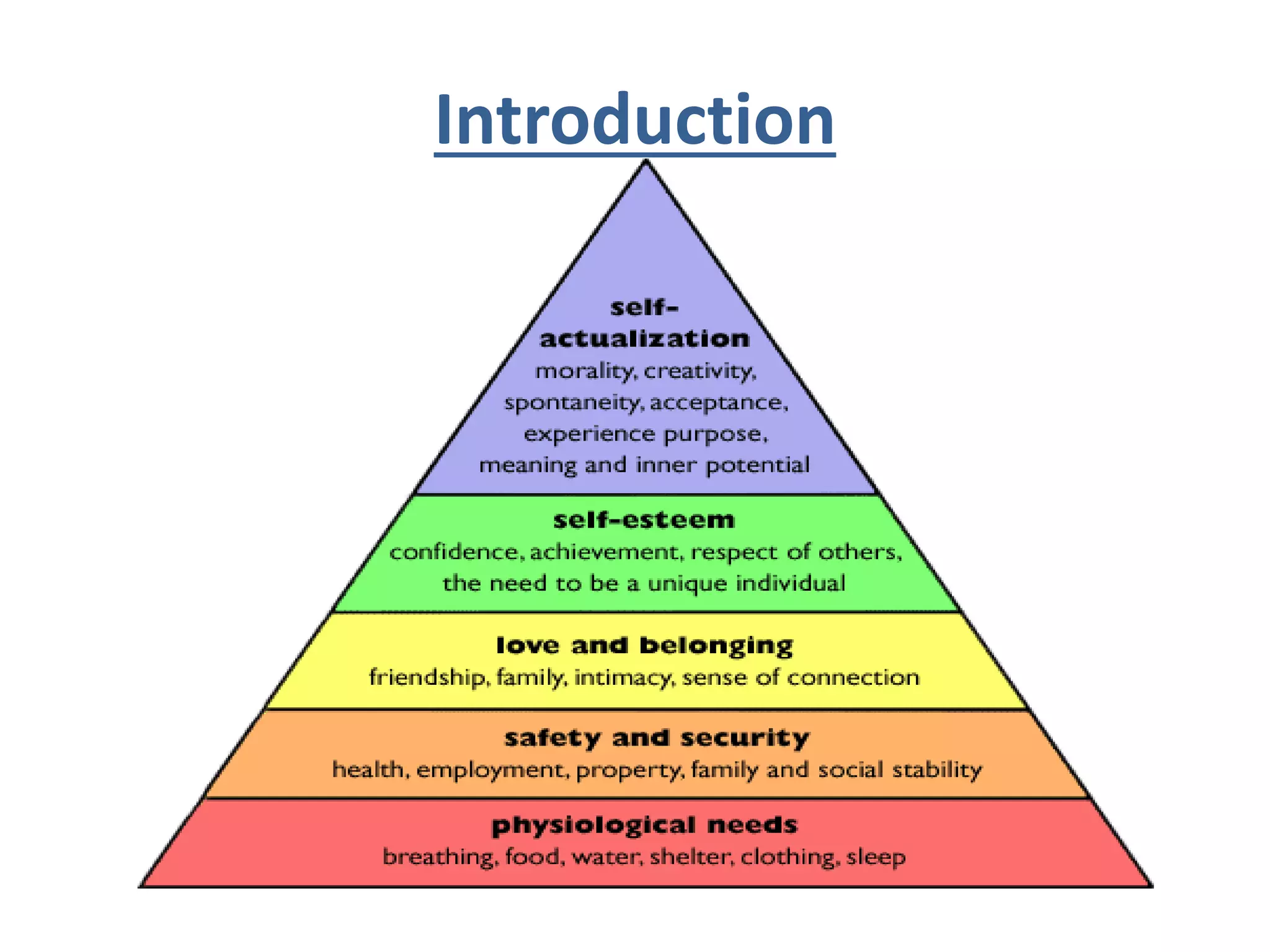
Introduction
Development of A Pay System
Review of Job Description
Conduct Job Evaluation
Pay Structure
Gather Wage Survey Information
Administer Individual Pay
Adjustments
Monitor & Upgrade Pay System
Factors Affecting Wage / Salary Levels
• Remuneration in comparable industries
• Firm’s ability to pay
• Relating to price index
• Productivity
• Cost of Living
• Union Pressures & Strategies
• Government Legislations
WAGES & SALARY ADMINISTRATION
DEFINITION WAGES & SALARY
• Base wages and salaries are defined as the
hourly, weekly and monthly pay that employees
receive for their work in an Organization.
• Can term it as compensation management.
• Thus, Wage & Salary Administration is the group
of activities involved in the development,
implementation& maintenance of a pay system.
Difference in Wages, Salary &
Compensation Terms
WAGES
Paid to BLUE Collared
On Daily, weekly, Monthly
Can be measured in terms
of money
SALARY
Paid to WHITE collared
Employees
Paid at specified Intervals
Paid to Employees whose
contribution cannot be
measured
COMPENSATION
Comparative Form
All Basic , gross amount ,
allowances + Benefits
Principles Governing Compensation
Administration
Maintaining Equity
Maintaining Competitiveness
Matching Employee Expectations
Reinforcing positive employee behavior
Eliminating any discrepancy
Optimization of management and employee
interests
Maintaining good IR and harmony
Purpose of Wage & Salary
Attracting talented resources
Retaining and motivating employees
Financial Management
Legal Requirements
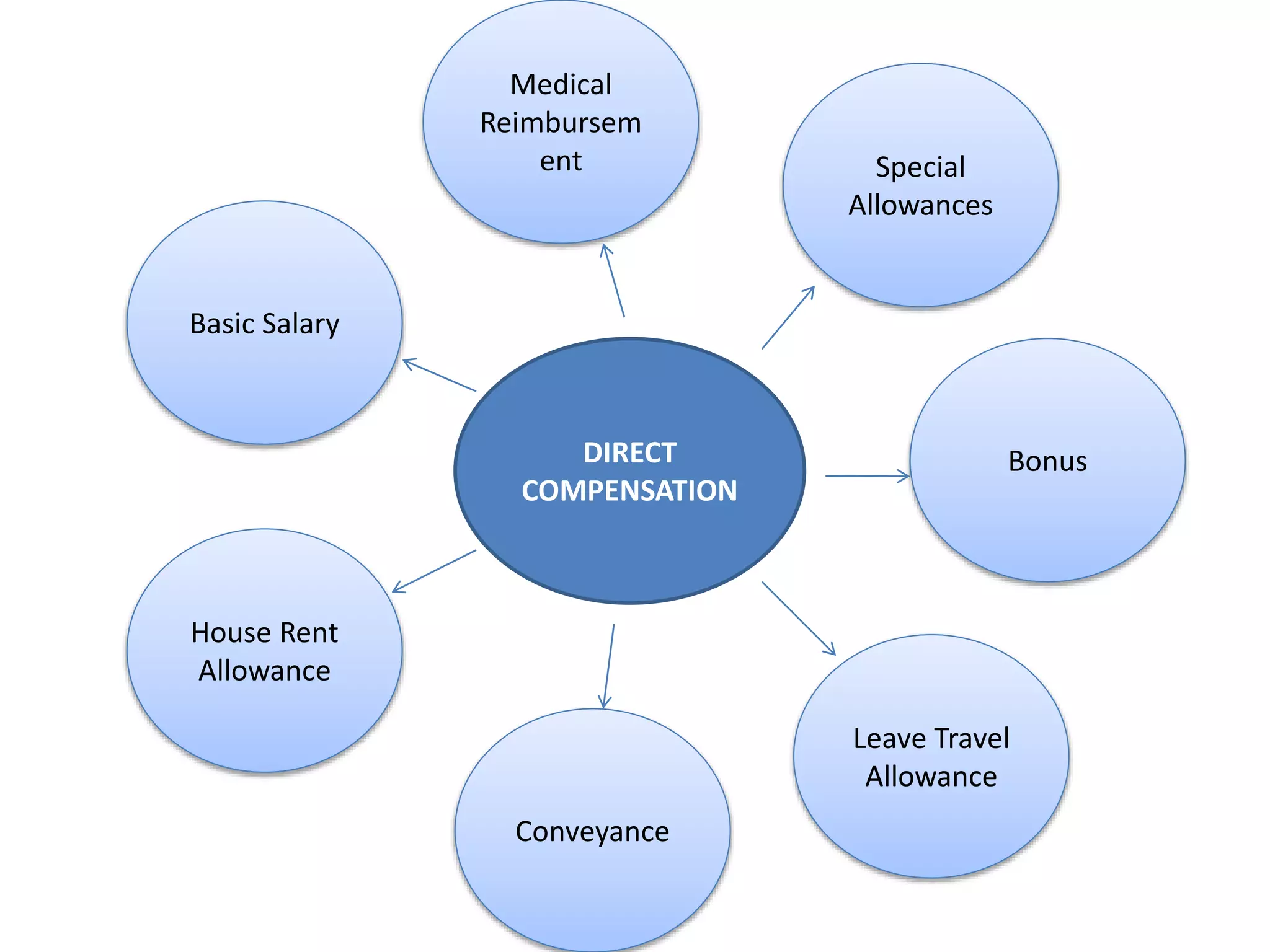
DIRECT
COMPENSATION
House Rent
Allowance
Conveyance
Leave Travel
Allowance
Bonus
Special
Allowances
Medical
Reimbursem
ent
Basic Salary
INDIRECT
COMPENSATION
Holiday
Homes Retirement
Benefits
Leave Travel
Insurance
Hospitalizati
on
Overtime
Allowance
Flexible
Timings
Leave Policy
Types of Incentive Plans
• SHORT TERM PLANS:
Halsey Plan, Rowan, Barth, Point Rating System,
Progressive Bonus
• LONG TERM PLANS:
Annual Bonus, Profit Sharing
Direct Compensation
(Base Pay, Incentives)
Indirect
(Benefits)
TOTAL
COMPENSATION
Concepts of Different Wages
MINIMUM WAGES:
Minimum amount of remuneration paid to workes.
Under Minimum Wages Act 1948.
FAIR WAGES:
Workers performing work of equal skills, difficulty or unpleasantness
should receive equal or fair wages
Match the prevailing wage rates
LIVING WAGES:
Living wages should enable the male earner to provide for himself and his
family, not only the bare essentials of food, clothing and shelter, but also a
measure of frugal comfort including:
Education for the children , Protection against ill-health ,Requirements of
essential social needs , A Measure of insurance against the more
important misfortunes including old age
Wage Boards / Pay Commissions
Wage Policies are formulated by following
Institutions in India
1. Collective Bargaining & Adjudication
2. Wage Boards
3. Pay Commissions
Reports & Documentation
• Salary and Payroll
Processing
Statutory Payroll Reports
Leave Management
Employee Self Service
Payroll Reconciliation Tools
Reimbursements & Loans
Payroll Processors &
Outsourcers
Arrears & final settlement
Head count summary
• Payroll Journal Voucher
Payslips (print / PDF / email
/ online)
Salary Statements
Dynamic report writer tool
PF & ESI reports (monthly,
annual)
Monthly Profession Tax
reports
Income tax statement
Form 16 PDFs
Quarterly eTDS filing (Form
24Q)
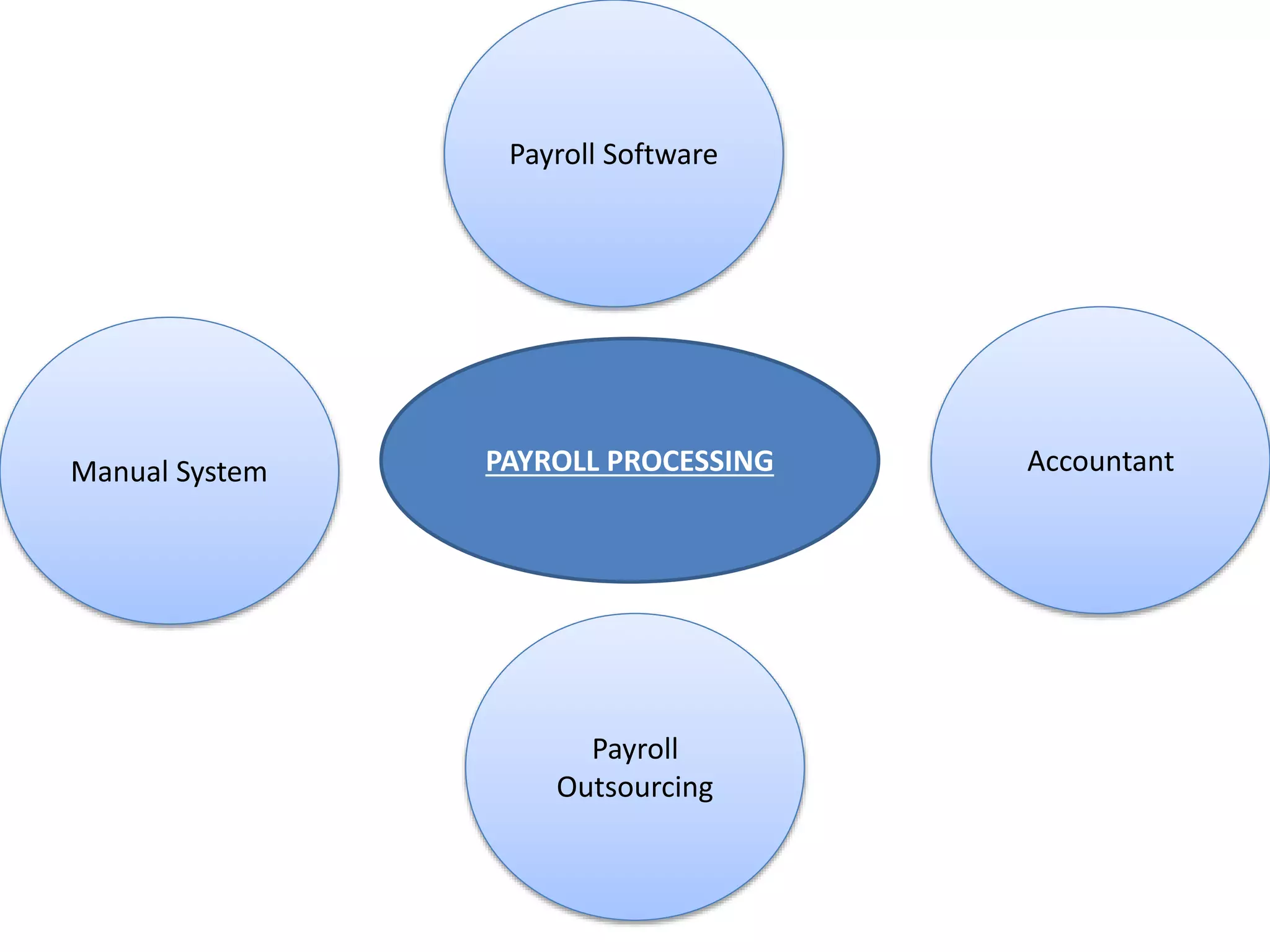
PAYROLL PROCESSING
Payroll
Outsourcing
Payroll Software
Manual System Accountant
Evolution of Strategic Compensation
Traditional
Compensation
System
Change in Compensation
System
Modern
Compensation
Systems
Trainings
• This program focuses on building a broad understanding of
compensation, and covers:
• HR’s role in compensation
• Components of total compensation
• Laws and regulations affecting compensation programs
• Independent contractors
• Indirect compensation (benefits) programs
• Legally required programs
• Who Should Attend?
This fundamental program is designed for HR practitioners
just entering the field, established HR employees with little
or no formal training, other employees who have
responsibilities that fall under the HR umbrella, and
business owners and managers without HR departments.
Conclusion
• Compensation is a hot potato for the Human Resource
Department. The motivation level of the employees to
great extent lies in monetary rewards. In the current state
of affairs it is indispensable to restructure the pay models.
Similar to changes bought about in the other departments
the HR should also emphasize on restructuring the costs so
as to bring the variable cost close to zilch.
• The major challenges what manager’s face today is
retention of the man power and the major cause of it is
that they are paid better in the other organizations.

Wages and salary administration

  • 1.
  • 2.
  • 3.
    Development of APay System Review of Job Description Conduct Job Evaluation Pay Structure Gather Wage Survey Information Administer Individual Pay Adjustments Monitor & Upgrade Pay System
  • 5.
    Factors Affecting Wage/ Salary Levels • Remuneration in comparable industries • Firm’s ability to pay • Relating to price index • Productivity • Cost of Living • Union Pressures & Strategies • Government Legislations
  • 6.
    WAGES & SALARYADMINISTRATION DEFINITION WAGES & SALARY • Base wages and salaries are defined as the hourly, weekly and monthly pay that employees receive for their work in an Organization. • Can term it as compensation management. • Thus, Wage & Salary Administration is the group of activities involved in the development, implementation& maintenance of a pay system.
  • 7.
    Difference in Wages,Salary & Compensation Terms WAGES Paid to BLUE Collared On Daily, weekly, Monthly Can be measured in terms of money SALARY Paid to WHITE collared Employees Paid at specified Intervals Paid to Employees whose contribution cannot be measured COMPENSATION Comparative Form All Basic , gross amount , allowances + Benefits
  • 8.
    Principles Governing Compensation Administration MaintainingEquity Maintaining Competitiveness Matching Employee Expectations Reinforcing positive employee behavior Eliminating any discrepancy Optimization of management and employee interests Maintaining good IR and harmony
  • 9.
    Purpose of Wage& Salary Attracting talented resources Retaining and motivating employees Financial Management Legal Requirements
  • 10.
  • 11.
  • 12.
    Types of IncentivePlans • SHORT TERM PLANS: Halsey Plan, Rowan, Barth, Point Rating System, Progressive Bonus • LONG TERM PLANS: Annual Bonus, Profit Sharing Direct Compensation (Base Pay, Incentives) Indirect (Benefits) TOTAL COMPENSATION
  • 13.
    Concepts of DifferentWages MINIMUM WAGES: Minimum amount of remuneration paid to workes. Under Minimum Wages Act 1948. FAIR WAGES: Workers performing work of equal skills, difficulty or unpleasantness should receive equal or fair wages Match the prevailing wage rates LIVING WAGES: Living wages should enable the male earner to provide for himself and his family, not only the bare essentials of food, clothing and shelter, but also a measure of frugal comfort including: Education for the children , Protection against ill-health ,Requirements of essential social needs , A Measure of insurance against the more important misfortunes including old age
  • 14.
    Wage Boards /Pay Commissions Wage Policies are formulated by following Institutions in India 1. Collective Bargaining & Adjudication 2. Wage Boards 3. Pay Commissions
  • 15.
    Reports & Documentation •Salary and Payroll Processing Statutory Payroll Reports Leave Management Employee Self Service Payroll Reconciliation Tools Reimbursements & Loans Payroll Processors & Outsourcers Arrears & final settlement Head count summary • Payroll Journal Voucher Payslips (print / PDF / email / online) Salary Statements Dynamic report writer tool PF & ESI reports (monthly, annual) Monthly Profession Tax reports Income tax statement Form 16 PDFs Quarterly eTDS filing (Form 24Q)
  • 16.
  • 17.
    Evolution of StrategicCompensation Traditional Compensation System Change in Compensation System Modern Compensation Systems
  • 18.
    Trainings • This programfocuses on building a broad understanding of compensation, and covers: • HR’s role in compensation • Components of total compensation • Laws and regulations affecting compensation programs • Independent contractors • Indirect compensation (benefits) programs • Legally required programs • Who Should Attend? This fundamental program is designed for HR practitioners just entering the field, established HR employees with little or no formal training, other employees who have responsibilities that fall under the HR umbrella, and business owners and managers without HR departments.
  • 19.
    Conclusion • Compensation isa hot potato for the Human Resource Department. The motivation level of the employees to great extent lies in monetary rewards. In the current state of affairs it is indispensable to restructure the pay models. Similar to changes bought about in the other departments the HR should also emphasize on restructuring the costs so as to bring the variable cost close to zilch. • The major challenges what manager’s face today is retention of the man power and the major cause of it is that they are paid better in the other organizations.