Wage, Importance and
Fair Wages
What is a Wage?


A wage is remuneration paid by an employer to an employee.

It may be calculated as a fixed task based amount, or at an
hourly rate, or based on an easily measured quantity of work
done. It is contrasted with salaried work, which is based on a
fixed time period.
Importance of Wage


 One of the most important aspects of a job for most
  workers is the wage it pays. Wages allow workers to make
  a living from their labor.

 also provide incentives to be productive and loyal to an
  employer

 In a broader sense, the wages workers earn fuel of the
  economy.
Importance of Wage

    • Income

    • Retention

    • Spending Power

    • Taxes
Types of Wages


 The main types of wages are:

      1. Subsistence wage
      2. Minimum wage
      3. Fair Wage
      4. Living Wage
Subsistence Wage


Minimum Wage
Fair Wage


Living Wage
How to Calculate Wages


 Know how the wage is calculated

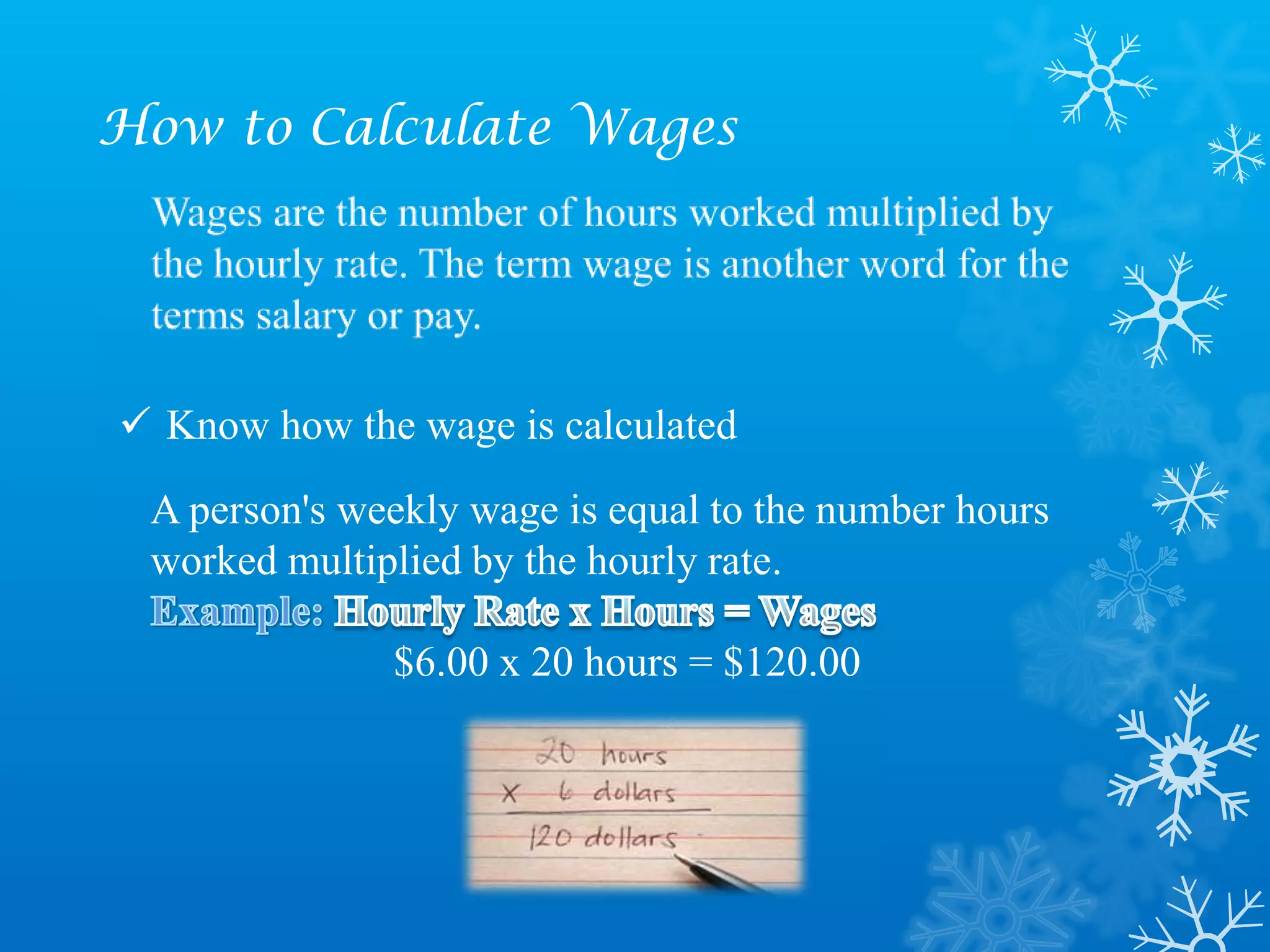
 A person's weekly wage is equal to the number hours
 worked multiplied by the hourly rate.

              $6.00 x 20 hours = $120.00
How to Calculate Wages

 Estimate a person's annual wages by multiplying the number
  of hours worked in a week by 50 weeks
  It is easier and usually more accurate to use 50 weeks
  instead of 52 weeks. This will account for any unpaid
  vacations and absences. A person who regularly works 40
  hours a week works 2,000 hours in a year.


       Hours x 50 weeks = 2,000 hours
How to Calculate Wages
  To estimate annual wages, use the hours worked in a
   year and multiply that by the hourly rate:

  It’s the last step to finish wages calculation.

            :

            2,000 x $6.00 = $12,000.00
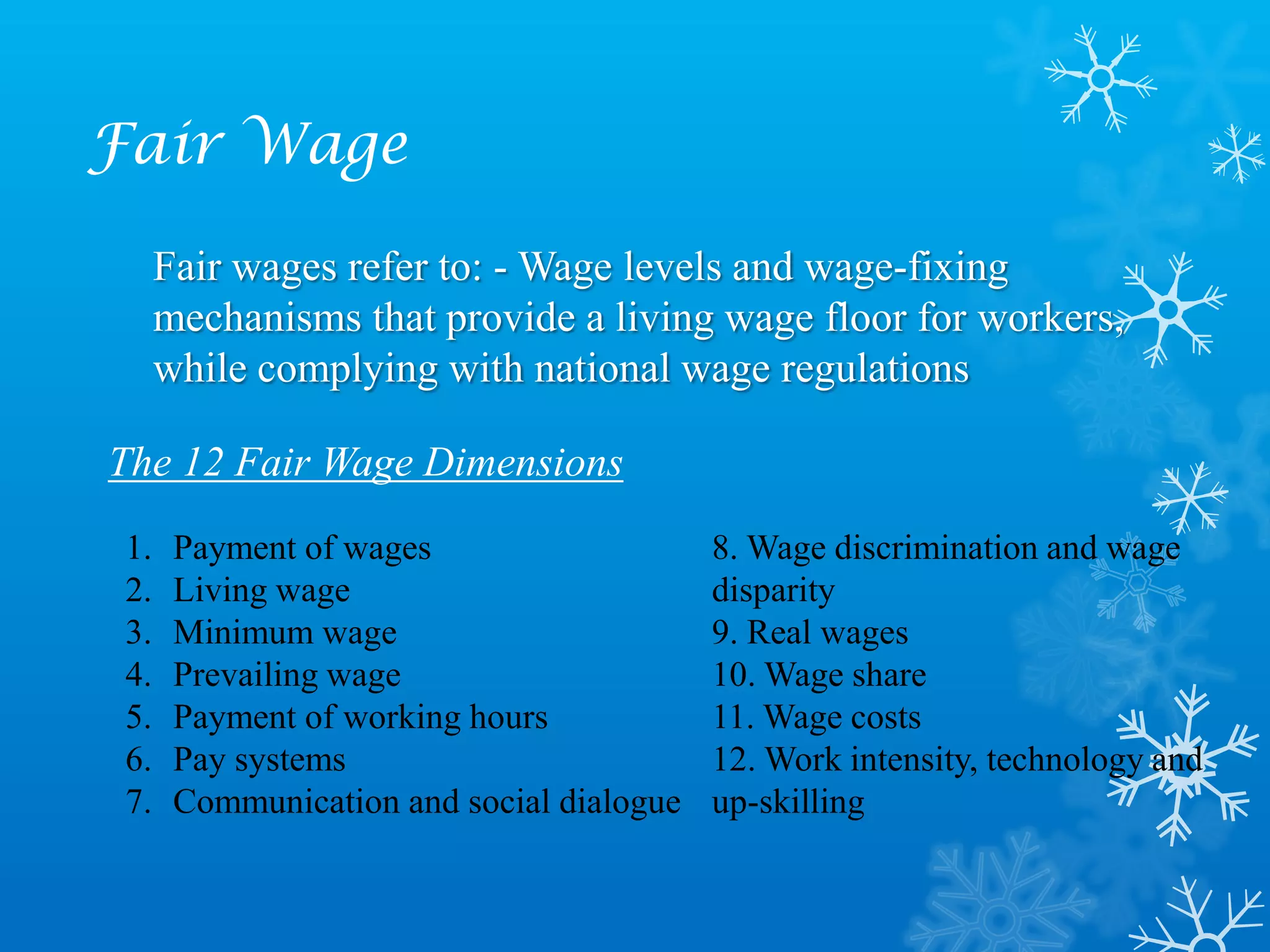
Fair Wage

      Fair wages refer to: - Wage levels and wage-fixing
      mechanisms that provide a living wage floor for workers,
      while complying with national wage regulations

The 12 Fair Wage Dimensions
 1.    Payment of wages                    8. Wage discrimination and wage
 2.    Living wage                         disparity
 3.    Minimum wage                        9. Real wages
 4.    Prevailing wage                     10. Wage share
 5.    Payment of working hours            11. Wage costs
 6.    Pay systems                         12. Work intensity, technology and
 7.    Communication and social dialogue   up-skilling
ANY QUESTION...???
Thank You

Wage, importance and Fair Wages

  • 1.
  • 2.
    What is aWage? A wage is remuneration paid by an employer to an employee. It may be calculated as a fixed task based amount, or at an hourly rate, or based on an easily measured quantity of work done. It is contrasted with salaried work, which is based on a fixed time period.
  • 3.
    Importance of Wage One of the most important aspects of a job for most workers is the wage it pays. Wages allow workers to make a living from their labor.  also provide incentives to be productive and loyal to an employer  In a broader sense, the wages workers earn fuel of the economy.
  • 4.
    Importance of Wage • Income • Retention • Spending Power • Taxes
  • 5.
    Types of Wages The main types of wages are: 1. Subsistence wage 2. Minimum wage 3. Fair Wage 4. Living Wage
  • 6.
  • 7.
  • 8.
    How to CalculateWages  Know how the wage is calculated A person's weekly wage is equal to the number hours worked multiplied by the hourly rate. $6.00 x 20 hours = $120.00
  • 9.
    How to CalculateWages  Estimate a person's annual wages by multiplying the number of hours worked in a week by 50 weeks It is easier and usually more accurate to use 50 weeks instead of 52 weeks. This will account for any unpaid vacations and absences. A person who regularly works 40 hours a week works 2,000 hours in a year. Hours x 50 weeks = 2,000 hours
  • 10.
    How to CalculateWages  To estimate annual wages, use the hours worked in a year and multiply that by the hourly rate: It’s the last step to finish wages calculation. : 2,000 x $6.00 = $12,000.00
  • 11.
    Fair Wage Fair wages refer to: - Wage levels and wage-fixing mechanisms that provide a living wage floor for workers, while complying with national wage regulations The 12 Fair Wage Dimensions 1. Payment of wages 8. Wage discrimination and wage 2. Living wage disparity 3. Minimum wage 9. Real wages 4. Prevailing wage 10. Wage share 5. Payment of working hours 11. Wage costs 6. Pay systems 12. Work intensity, technology and 7. Communication and social dialogue up-skilling
  • 12.
  • 13.