WEEK 6-7
Conducting a Feasibility Study
and Crafting a Business Plan
Week 6: conducting a Feasinility Study and Crafting a Business Plan
Module Learning Outcomes:
By the end of this module, a student is able to:
1. Understand the elements of Feasibility Study
2. Determine how attractive an industry is overall as a home for a new
business.
3. Identify the possible niches a small business can occupy
profitability.
Topics Covered
• Definition of Feasibility Study
• Five Forces Model
• Financial Feasibility Study
• Business Plan
• Business and Marketing Strategy
The process of determining
whether an entrepreneur’s
idea is a viable foundation for
creating a successful business
Financial Feasibility
Industry and
Market Feasibility
Product or
Service Feasibility
.
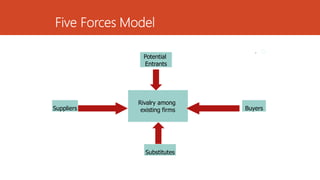
Rivalry among
existing firms
Suppliers Buyers
Potential
Entrants
Substitutes
Threat of new entrants
Bargaining
Power of
suppliers
Bargaining
Power of
buyers
❑ Number of competitors is large or few
(less than 5)
Competitors are not similar in size or
capability
The industry is growing at a fast pace
The opportunity to sell a differentiated
product or service is present
❑ Many suppliers sell a
commodity product to the
companies in it
Substitute products are
available for the items suppliers
provide
Companies in the industry find
it eas to switch from one
supplier to another
The items suppliers provide
account for a relatively small
portion of the cost of finished
❑ Switching costs to competitors is high
Number of buyers is large
Customers demand differentiated products
Customers find it difficult to gather
info on suppliers costs etc
The items account for a relatively small portion
of the customers’ finished products
❑ Advantages of economic scale are not
present
Capital requirements to enter are low
Cost advantages are not related to
company size
Buyers are brand-loyal
Governments do not restrict entry
❑ Quality substitute products are
not readily available
Prices of substitute products are not
lower
Buyers’ cost of switching to
substitute products is high
❑ Are customers wiling to purchase our goods
and services?
Can we provide the product or service to our
customers at a profit?
i
❑ Prototypes: an original, functional model of a
new product that entrepreneurs can put into
the hands of potential customers so they can
see it, test it and use it
In-home trials: a research technique that
involves sending researchers into customers’
homes to observe them as they use the
company’s product or service
❑ Capital
Requirement
s
Estimated
Earnings
Returnon
Investment
A written summary of an entrepreneur’s
proposed business venture, its
operational and financial details, its
marketing opportunities and strategy,
and its managers’ skills and abilities
❑ Guides an entrepreneur
Attracts lenders and investors Reality
Test
Competitive Test
Value Test
Represents/reflects its creator
❑ Title Page and Contents
Executive Summary
Vision and Mission Statement
Company History
Business and Industry Profile
Business Strategy
Description of the Firm’s Product or Service
Marketing Strategy
Competitor Analysis
Description of Management Team
Plan of Operation
Pro Forma Financial Statements
The Loan or Investment Proposal
❑ Capital
Capacity
Collateral
Character
Conditions
❑ The company’s business
model and basis for
competitive edge
The company’s target markets and
the benefits its product or service
will provide
The qualification of the
founders and/or key
employees
❑ Overview of industry or market
segment
Existing or anticipated profitability of the
industry
Company’s general business goals
Company’s immediate objectives
❑ How to gain competitive edge
How to achieve the goals and
objectives
Methods to satisfy KSFs of the
industry
❑ Overview of how customers will use it
Any patents, trademarks or copyright
Honest comparison with competition
Feature (descriptive fact about a product or
service) vs Benefit (what a customer gains from
the product or service)
Description of production process, strategic
raw materials, sources, costs.
❑ Defining the target market
Who? Where? How many? Why?
Proving that a profitable market exists
Showing customer interest
Documenting market claims
❑ Advertising
Market Size and trend
Location
Pricing
Distribution
❑ Qualifications of those with
at least 20% ownership
Resumes
How to avoid primary reasons
for business failures
Statements
❑ Monthly for 3 years by quarter
3 sets: pessimistic, most likely,
optimistic
Statement of assumptions
❑ Purpose of financing
Amount requested
Plans for repayment/exit strategy
Timetable for implementation
Evaluation of risks
:
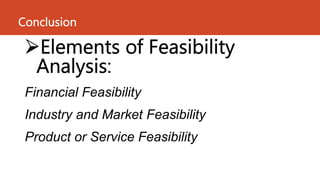
Financial Feasibility
Industry and Market Feasibility
Product or Service Feasibility
END

W6-7 Conducting a Feasibility Analysis.pdf

  • 1.
    WEEK 6-7 Conducting aFeasibility Study and Crafting a Business Plan
  • 2.
    Week 6: conductinga Feasinility Study and Crafting a Business Plan Module Learning Outcomes: By the end of this module, a student is able to: 1. Understand the elements of Feasibility Study 2. Determine how attractive an industry is overall as a home for a new business. 3. Identify the possible niches a small business can occupy profitability.
  • 3.
    Topics Covered • Definitionof Feasibility Study • Five Forces Model • Financial Feasibility Study • Business Plan • Business and Marketing Strategy
  • 4.
    The process ofdetermining whether an entrepreneur’s idea is a viable foundation for creating a successful business
  • 5.
    Financial Feasibility Industry and MarketFeasibility Product or Service Feasibility
  • 6.
    . Rivalry among existing firms SuppliersBuyers Potential Entrants Substitutes Threat of new entrants Bargaining Power of suppliers Bargaining Power of buyers
  • 7.
    ❑ Number ofcompetitors is large or few (less than 5) Competitors are not similar in size or capability The industry is growing at a fast pace The opportunity to sell a differentiated product or service is present
  • 8.
    ❑ Many supplierssell a commodity product to the companies in it Substitute products are available for the items suppliers provide Companies in the industry find it eas to switch from one supplier to another The items suppliers provide account for a relatively small portion of the cost of finished
  • 9.
    ❑ Switching coststo competitors is high Number of buyers is large Customers demand differentiated products Customers find it difficult to gather info on suppliers costs etc The items account for a relatively small portion of the customers’ finished products
  • 10.
    ❑ Advantages ofeconomic scale are not present Capital requirements to enter are low Cost advantages are not related to company size Buyers are brand-loyal Governments do not restrict entry
  • 11.
    ❑ Quality substituteproducts are not readily available Prices of substitute products are not lower Buyers’ cost of switching to substitute products is high
  • 12.
    ❑ Are customerswiling to purchase our goods and services? Can we provide the product or service to our customers at a profit?
  • 13.
  • 14.
    ❑ Prototypes: anoriginal, functional model of a new product that entrepreneurs can put into the hands of potential customers so they can see it, test it and use it In-home trials: a research technique that involves sending researchers into customers’ homes to observe them as they use the company’s product or service
  • 15.
  • 16.
    A written summaryof an entrepreneur’s proposed business venture, its operational and financial details, its marketing opportunities and strategy, and its managers’ skills and abilities
  • 17.
    ❑ Guides anentrepreneur Attracts lenders and investors Reality Test Competitive Test Value Test Represents/reflects its creator
  • 18.
    ❑ Title Pageand Contents Executive Summary Vision and Mission Statement Company History Business and Industry Profile Business Strategy Description of the Firm’s Product or Service Marketing Strategy Competitor Analysis Description of Management Team Plan of Operation Pro Forma Financial Statements The Loan or Investment Proposal
  • 19.
  • 20.
    ❑ The company’sbusiness model and basis for competitive edge The company’s target markets and the benefits its product or service will provide The qualification of the founders and/or key employees
  • 21.
    ❑ Overview ofindustry or market segment Existing or anticipated profitability of the industry Company’s general business goals Company’s immediate objectives
  • 22.
    ❑ How togain competitive edge How to achieve the goals and objectives Methods to satisfy KSFs of the industry
  • 23.
    ❑ Overview ofhow customers will use it Any patents, trademarks or copyright Honest comparison with competition Feature (descriptive fact about a product or service) vs Benefit (what a customer gains from the product or service) Description of production process, strategic raw materials, sources, costs.
  • 24.
    ❑ Defining thetarget market Who? Where? How many? Why? Proving that a profitable market exists Showing customer interest Documenting market claims
  • 25.
    ❑ Advertising Market Sizeand trend Location Pricing Distribution
  • 27.
    ❑ Qualifications ofthose with at least 20% ownership Resumes How to avoid primary reasons for business failures
  • 28.
    Statements ❑ Monthly for3 years by quarter 3 sets: pessimistic, most likely, optimistic Statement of assumptions
  • 29.
    ❑ Purpose offinancing Amount requested Plans for repayment/exit strategy Timetable for implementation Evaluation of risks
  • 30.
    : Financial Feasibility Industry andMarket Feasibility Product or Service Feasibility
  • 31.