Proxies vs. VPN
What’s the difference?
Do I need to use VPN or proxy?
• You live in, or are visiting, a country that
engages in Internet censorship or
monitoring of content.
• You don’t want your ISP log, monitor, or
control what you do online.
• You want to hide your IP address so you
can protect your identity and location.
Do I need to use VPN or proxy?
• You don’t want search engines, such as
Google and etc ,recording and storing
every Internet search you perform…
• You use the Internet at hotels or other
shared hospitality or public networks.
Proxy Servers
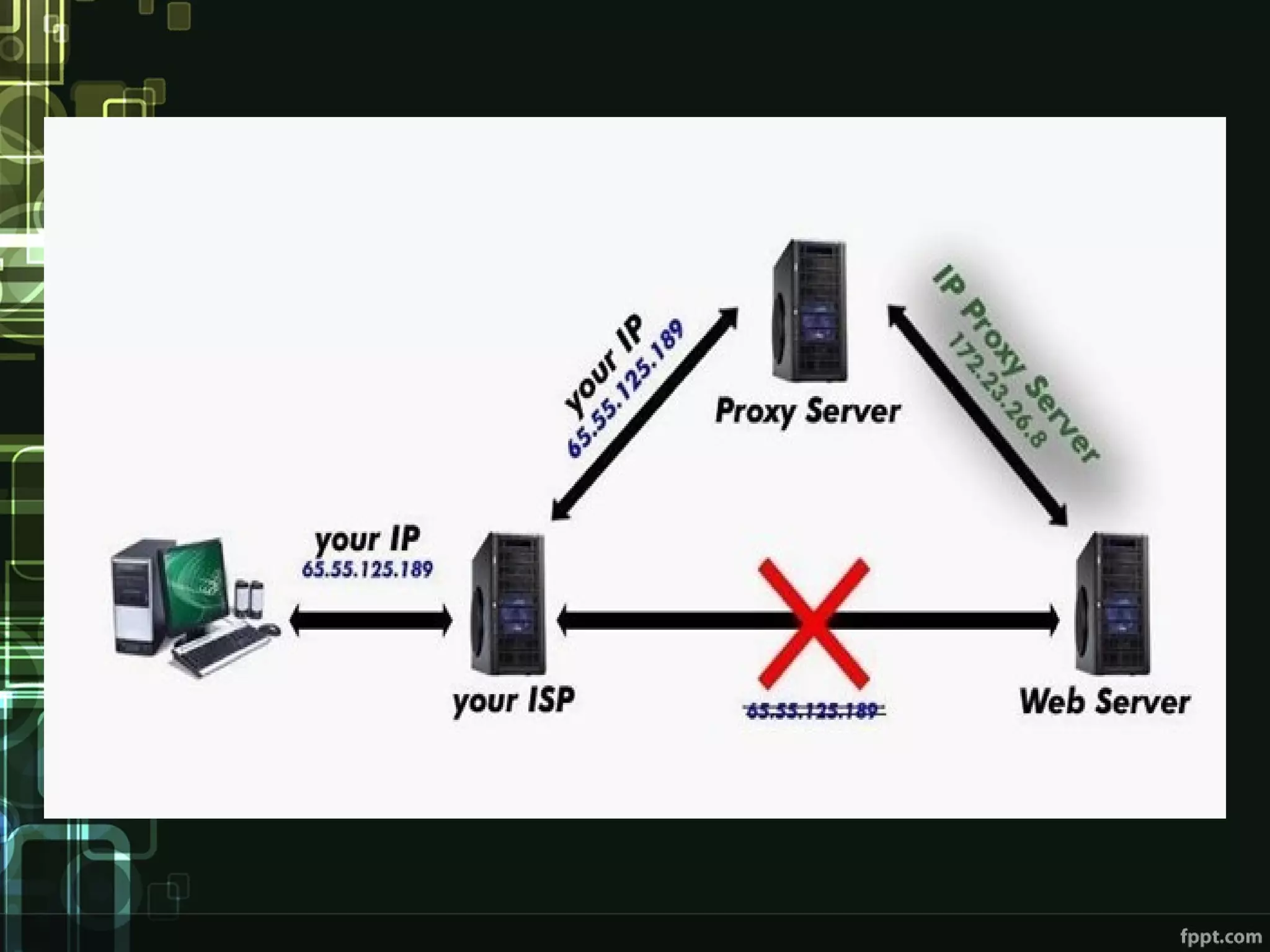
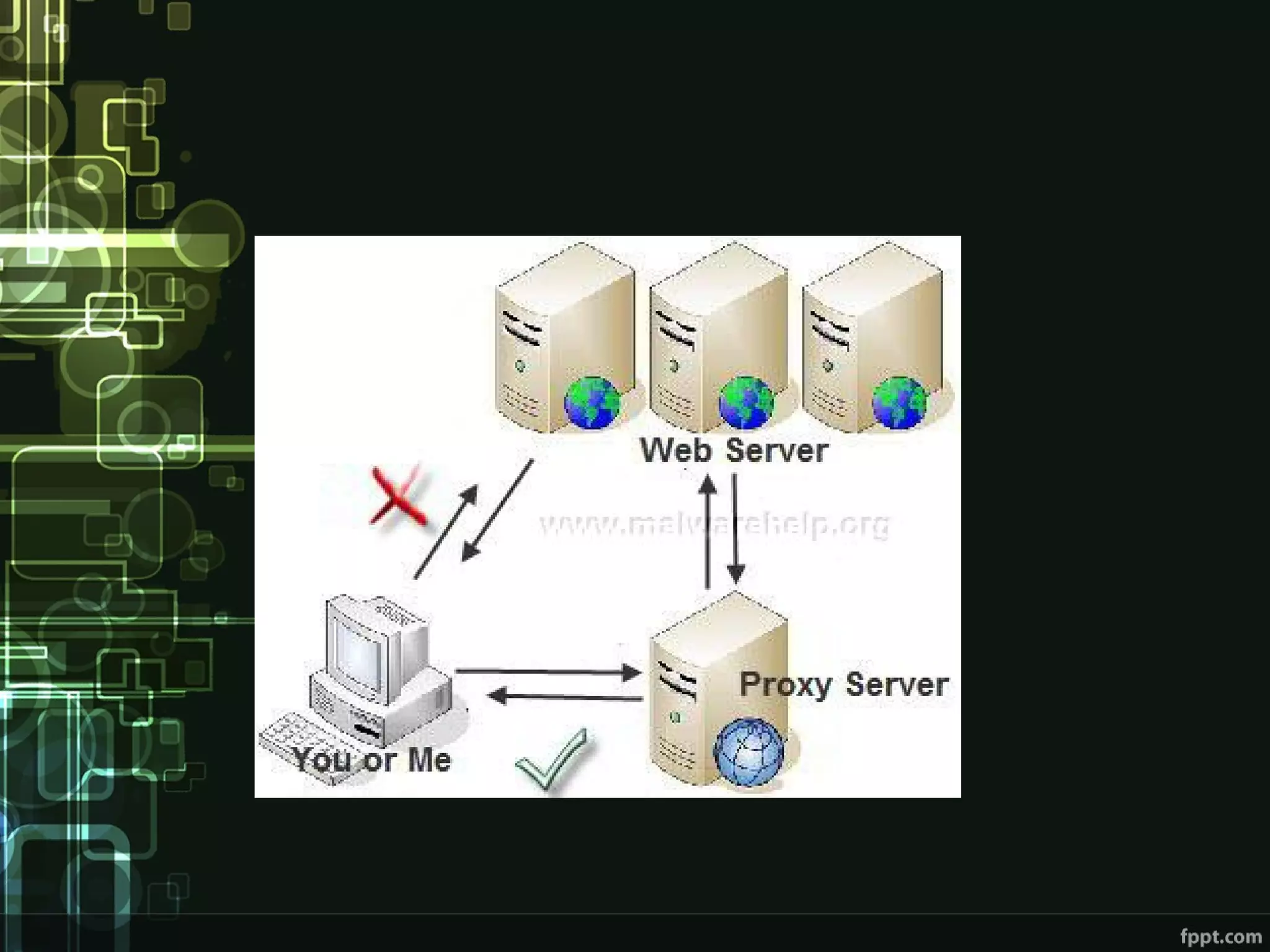
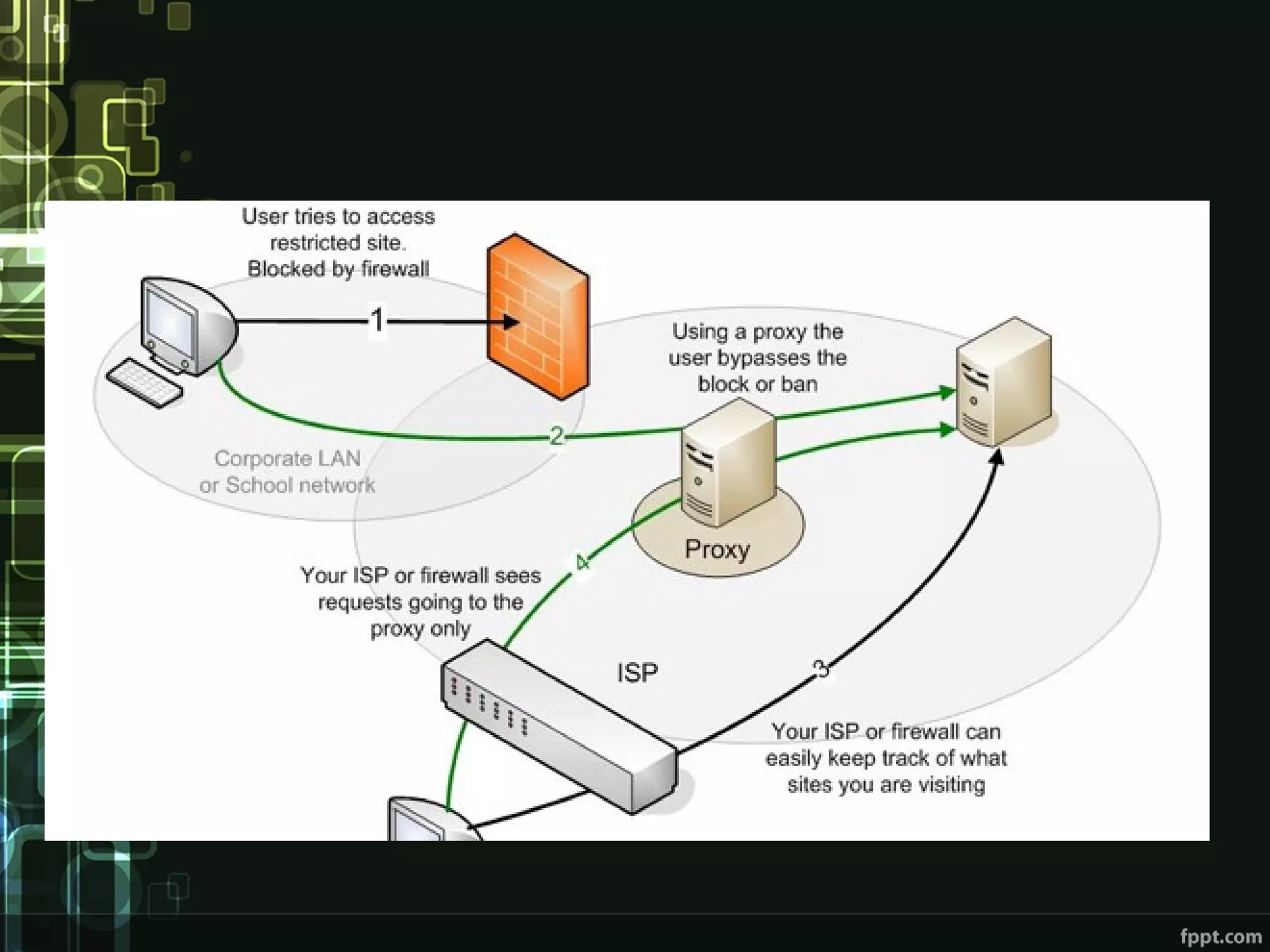
A proxy server is a computer that acts as
an intermediary between your computer
and the internet.
Unlike VPN servers, proxy servers do not
have to devote resources to encrypting all
traffic that passes through them!
Proxies types
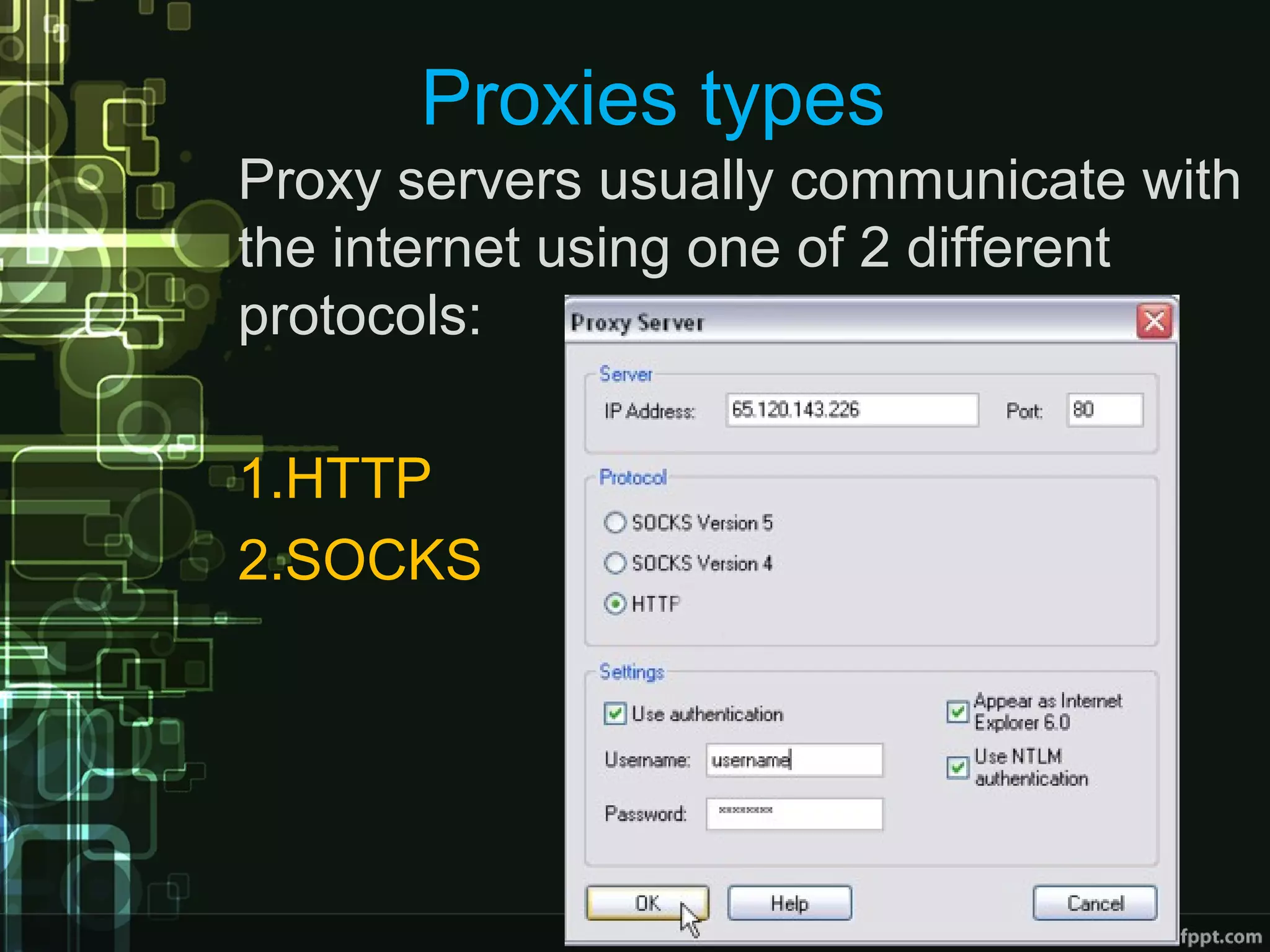
Proxy servers usually communicate with
the internet using one of 2 different
protocols:
1.HTTP
2.SOCKS
HTTP Proxy Servers
The HTTP protocol is designed to
interpret traffic at the HTTP level.
because all it is doing is handling HTTP
requests, it is faster than either Socks
proxies or VPN servers.
Advantages
1. Cheap (and often free)
2. Will hide your IP from basic checks,
and is therefore ok for accessing some
geo-restricted websites and for
account creation
Disadvantages
1. Only useful for accessing websites
2. Clever use of Flash or JavaScript
allows many websites to detect your
true IP
3. HTTP traffic is not encrypted, so
government surveillance systems and
your ISP can see what you are doing
SOCKS Proxy Servers
SOCKS servers do not interpret network
traffic at all, which makes them much more
flexible, but because they are usually
handling more traffic, usually slower.
Advantages
Can handle any kind of internet traffic
(including torrents POP3,SMTP)
Disadvantages
1. Slower than HTTP
2. Each piece of software ( BitTorrent client)
must be configured individually
3. Same security issues as HTTP
VPN
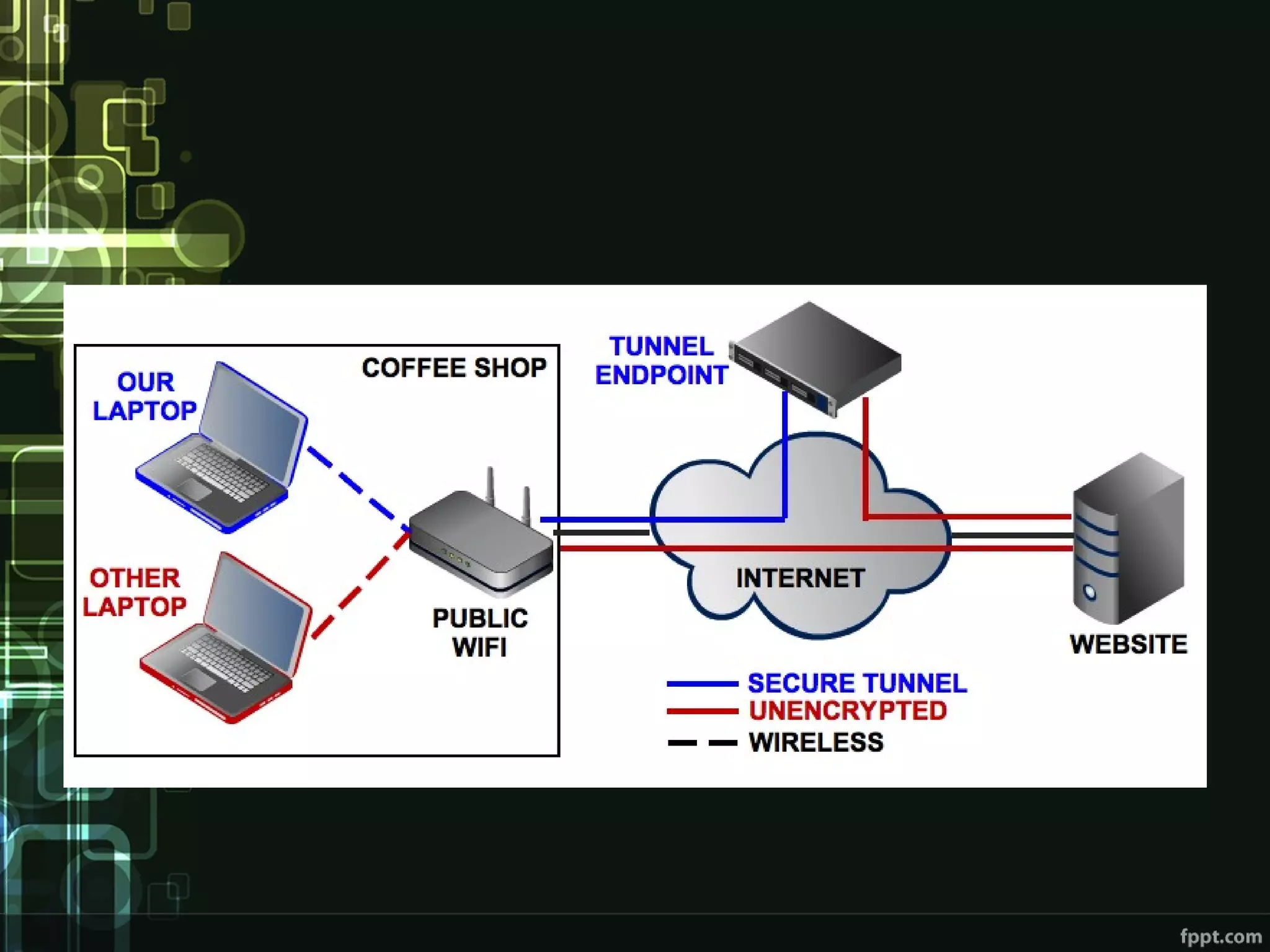
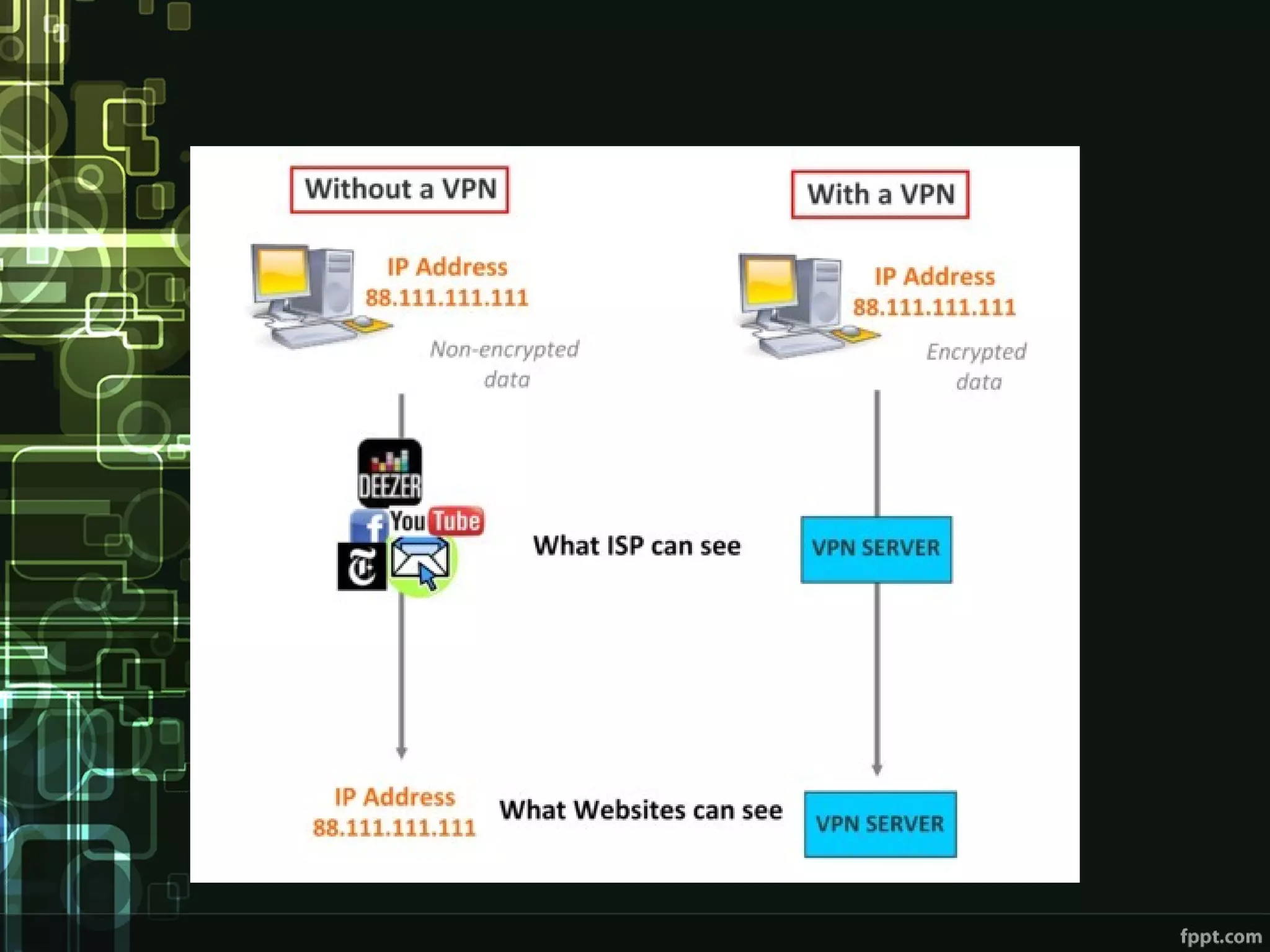
Virtual Private Networks create an
encrypted ‘tunnel’ between your
computer and the host server.
your activities, IP addresses you have
visited etc. are all completely hidden from
them behind a minimum of 128-bit
encryption.
VPN
However, the VPN server can see what
you get up to on-line, which is why we feel
it vital that a good VPN provider to keeps
no logs.
All internet activity, no matter which
program you use, is now safely routed
through the VPN.
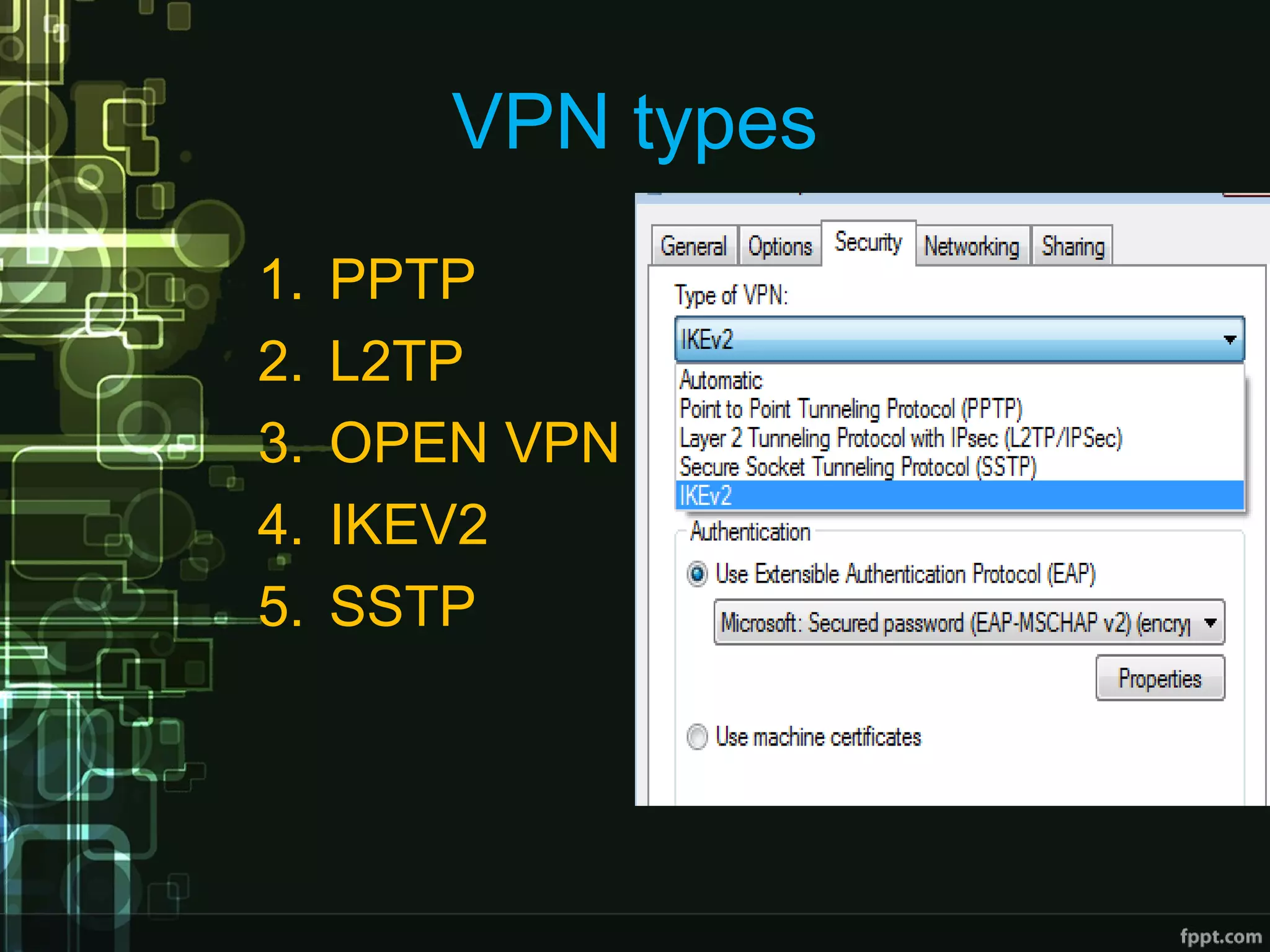
VPN types
1. PPTP
2. L2TP
3. OPEN VPN
4. IKEV2
5. SSTP
1. PPTP:very insecure, Fast, Very easy to set
up
2. L2TP:Secure,Easy to set up,Slower than
OpenVPN
3. OpenVPN:Very secure, Open sourcewide
range of encryption algorithms, Needs third
party software
4. IKEV2:Faster than PPTP and L2TP,Very
secure – supports AES 128, AES 192, AES
256.
Not supported on many platforms
Advantages
1. Internet activity cannot be spied on by
ISPs or governments
2. High levels of encryption (128-bit to
2048-bit)
3. All internet activity masked
Disadvantages
1. More expensive than proxies
2. Can be a bit slow during peak times
3. If VPN provider keeps logs then these
may be obtained by the authorities
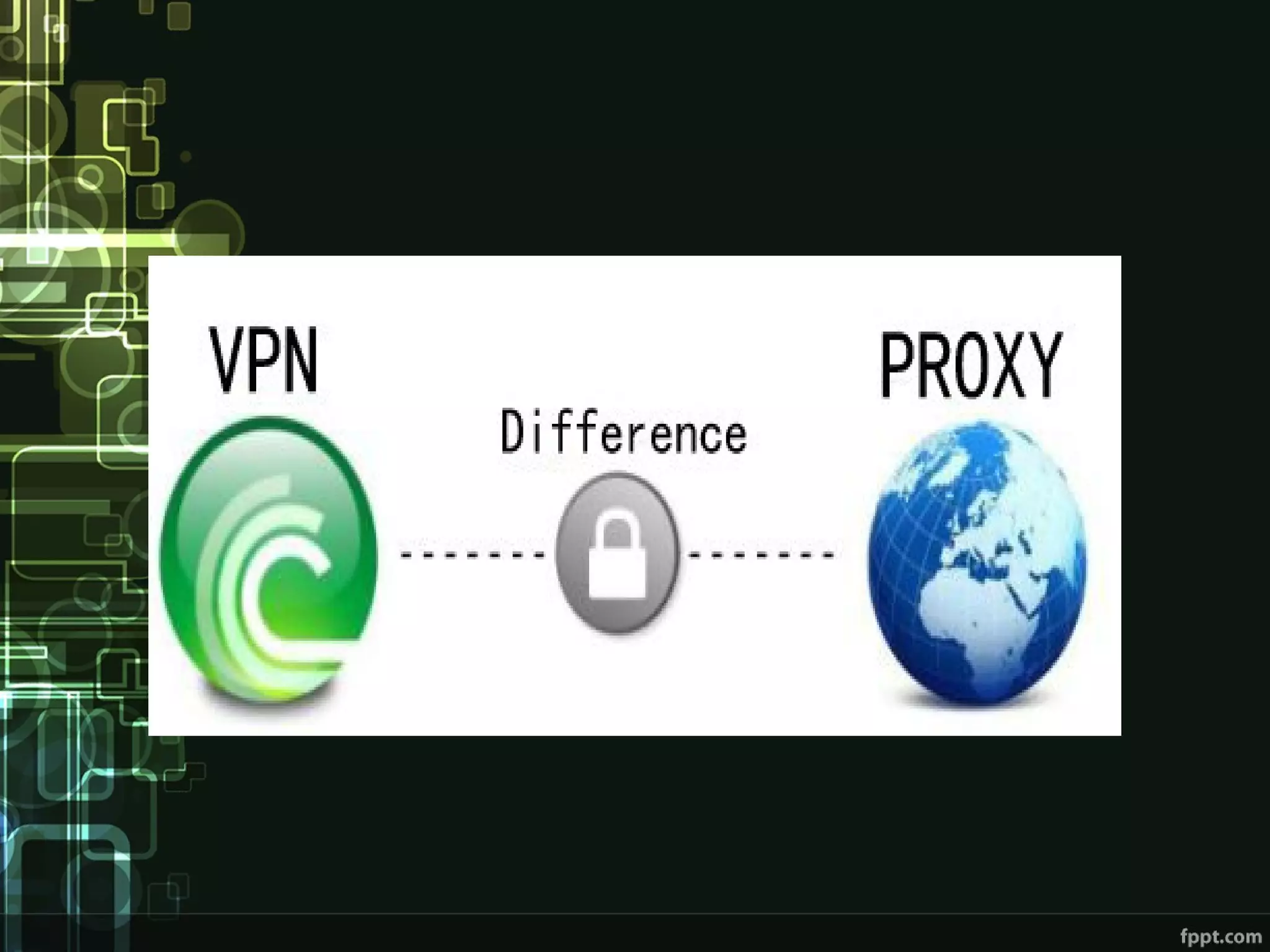
VPN OR PROXY!?
Conclusion
VPN is superior in almost every way to
proxies. It provides vastly improved online
anonymity, and protects your entire on-line
life.
The only real reason for choosing a proxy
service is over VPN is price, which we
understand is a real factor for many
Nothing in this world is ever
absolutely 100% secure, so
be careful!
References
• https://www.witopia.net/support/why/
• http://lifehacker.com/5940565/why-you-should
• https://www.bestvpn.com/blog/4085/proxies-vs

VPN vs. PROXY

  • 1.
    Proxies vs. VPN What’sthe difference?
  • 3.
    Do I needto use VPN or proxy? • You live in, or are visiting, a country that engages in Internet censorship or monitoring of content. • You don’t want your ISP log, monitor, or control what you do online. • You want to hide your IP address so you can protect your identity and location.
  • 4.
    Do I needto use VPN or proxy? • You don’t want search engines, such as Google and etc ,recording and storing every Internet search you perform… • You use the Internet at hotels or other shared hospitality or public networks.
  • 5.
    Proxy Servers A proxyserver is a computer that acts as an intermediary between your computer and the internet. Unlike VPN servers, proxy servers do not have to devote resources to encrypting all traffic that passes through them!
  • 7.
    Proxies types Proxy serversusually communicate with the internet using one of 2 different protocols: 1.HTTP 2.SOCKS
  • 9.
    HTTP Proxy Servers TheHTTP protocol is designed to interpret traffic at the HTTP level. because all it is doing is handling HTTP requests, it is faster than either Socks proxies or VPN servers.
  • 10.
    Advantages 1. Cheap (andoften free) 2. Will hide your IP from basic checks, and is therefore ok for accessing some geo-restricted websites and for account creation
  • 11.
    Disadvantages 1. Only usefulfor accessing websites 2. Clever use of Flash or JavaScript allows many websites to detect your true IP 3. HTTP traffic is not encrypted, so government surveillance systems and your ISP can see what you are doing
  • 13.
    SOCKS Proxy Servers SOCKSservers do not interpret network traffic at all, which makes them much more flexible, but because they are usually handling more traffic, usually slower.
  • 14.
    Advantages Can handle anykind of internet traffic (including torrents POP3,SMTP)
  • 15.
    Disadvantages 1. Slower thanHTTP 2. Each piece of software ( BitTorrent client) must be configured individually 3. Same security issues as HTTP
  • 17.
    VPN Virtual Private Networkscreate an encrypted ‘tunnel’ between your computer and the host server. your activities, IP addresses you have visited etc. are all completely hidden from them behind a minimum of 128-bit encryption.
  • 19.
    VPN However, the VPNserver can see what you get up to on-line, which is why we feel it vital that a good VPN provider to keeps no logs. All internet activity, no matter which program you use, is now safely routed through the VPN.
  • 22.
    VPN types 1. PPTP 2.L2TP 3. OPEN VPN 4. IKEV2 5. SSTP
  • 24.
    1. PPTP:very insecure,Fast, Very easy to set up 2. L2TP:Secure,Easy to set up,Slower than OpenVPN 3. OpenVPN:Very secure, Open sourcewide range of encryption algorithms, Needs third party software
  • 25.
    4. IKEV2:Faster thanPPTP and L2TP,Very secure – supports AES 128, AES 192, AES 256. Not supported on many platforms
  • 27.
    Advantages 1. Internet activitycannot be spied on by ISPs or governments 2. High levels of encryption (128-bit to 2048-bit) 3. All internet activity masked
  • 28.
    Disadvantages 1. More expensivethan proxies 2. Can be a bit slow during peak times 3. If VPN provider keeps logs then these may be obtained by the authorities
  • 29.
  • 30.
    Conclusion VPN is superiorin almost every way to proxies. It provides vastly improved online anonymity, and protects your entire on-line life. The only real reason for choosing a proxy service is over VPN is price, which we understand is a real factor for many
  • 31.
    Nothing in thisworld is ever absolutely 100% secure, so be careful!
  • 32.