By sadia malik
 Speech is the vocalized form of human communication”
 Speech includes:
 Articulation
How we make speech sounds using the mouth, lips, and tongue.
For example, we need to be able to say the “r” sound to say
"rabbit" instead of "wabbit.”
 Voice
How we use our vocal folds and breath to make sounds. Our
voice can be loud or soft or high- or low-pitched. We can hurt our
voice by talking too much, yelling, or coughing a lot.
 Fluency
This is the rhythm of our speech. We sometimes repeat sounds or
pause while talking. People who do this a lot may stutter.
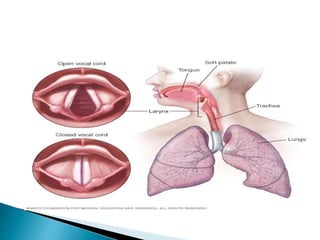
 Speech is produced by bringing air from the lungs to
the larynx (respiration), where the vocal folds may be
held open to allow the air to pass through or may
vibrate to make a sound (phonation).
 The airflow from the lungs is then shaped by the
articulators in the mouth and nose (articulation).
 Speech production is the joint effort of these systems;
respiratory, phonatory and articulatory/resonatory.
 Hoarseness is defined as roughness of voice
resulting from variations of periodicity and/or
intensity of consecutive sound waves.
 For production of normal voice, vocal cords
should:
 Be able to approximate properly with each
other.
 Have a proper size and stiffness.
 Have an ability to vibrate regularly in
response to air column.
 vocal cord paralysis
 Tumor
 Cords may not be able to vibrate properly in
the presence of congestion, submucosal
hemorrhages, nodule or a polyp.
 History. Mode of onset and duration of
illness, patient’s occupation, habits and
associated complaints are important and
would often help to elucidate the cause.
 Any hoarseness persisting for more than 3
weeks deserves examination of larynx.
 Indirect laryngoscopy.
 Many of the local laryngeal causes can be
diagnosed.
 Examination of neck, chest, cardiovascular
and neurological system would help to find
cause for laryngeal paralysis
 Here voice is produced by ventricular folds
(false cords) which have taken over the
function of true cords. Voice is rough, low-
pitched and unpleasant.
 Functional type of ventricular dysphonia
occurs in normal larynx.
 Here cause is psychogenic.
 In this type, voice begins normally but soon
becomes rough when false cords usurp the
function of true cords.
 Diagnosis is made on indirect laryngoscopy;
 the false cords are seen to approximate
partially or completely and obscure the view
of true cords. on phonation.
 Ventricular dysphonia secondary to laryngeal
disorders is difficult to treat but the
functional type can be helped through voice
therapy and psychological counselling
 Normally, childhood voice has a higher pitch.
 When the larynx matures at puberty, vocal
cords lengthen and the voice changes to one
of lower pitch.
 This is a feature exclusive to males.
 Failure of this change leads to persistence of
childhood high-pitched voice and is called
puberphonia.
 Treatment is training the body to produce
low-pitched voice.
 Pressing the thyroid prominence in a
backward and downward direction relaxes the
overstretched cords and low tone voice can
be produced
 Dysphonia can be divided into three types:
adductor, abductor and mixed.
 The adductor muscles of larynx go into
spasm causing vocal cords to go into
adduction.
 Voice becomes strained or strangled, and
phonation is interrupted in between leading
to voice breaks.
 .
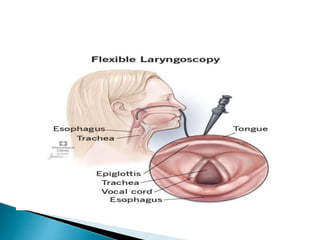
 Flexible fibreoptic laryngoscopy
 is useful during which patient’s speech,
sustained phonation and respiratory activities
are studied.
 Patient may have tremors of larynx, palate
and pharynx
 Treatment consists of botulinum toxin
injections in the thyroarytenoid muscle on
one or both sides to relieve spasm.
 Percutaneous electromyography (EMG)
guided route through cricothyroid space is
preferred.
 Voice therapy is useful to improve voice and
the duration of benefit.
 Voice therapy alone without injection does
not help much
 It is due to spasms of posterior cricoarytenoid
muscle (the only abductor) and thus keeping
the glottis open.
 Patient gets a breathy voice or breathy
breaks in voice.
 The condition is gradually progressive and
the symptoms get aggravated during periods
of stress or when patient uses telephone.
 Speech therapy should be combined with
injection treatment as speech therapy alone
may not be effective.
 MIXED DYSPHONIA
 It is more complex, both the adductor and
abductor function may be affected.
 HYPONASALITY (RHINOLALIA CLAUSA)
 It is lack of nasal resonance for words which
are resonated in the nasal cavity, e.g. m, n,
ng.
 It is due to blockage of the nose or
nasopharynx
 HYPERNASALITY (RHINOLALIA APERTA)
 It is seen when certain words which have
little nasal resonance are resonated through
nose.
 The defect is in failure of the nasopharynx to
cut off from oropharynx or abnormal
communication between the oral and nasal
cavities.
 It is a disorder of fluency of speech and
consists of hesitation to start, repetitions,
prolongations or blocks in the flow of speech.
 When well-established, a stutterer may
develop secondary mannerisms such as facial
grimacing, eye blink and abnormal head
movements.
 Normally, most of the children have
dysfluency of speech between 2 and 4 years.
 If too much attention is given or child
reprimanded by parents and peers, this
behavior pattern may become fixed and child
may develop into an adult stutterer..
 Stuttering can be prevented by proper
education of the parents, not to overreact to
child’s dysfluency in early stages of speech
development.
 Treatment of an established stutterer is
speech therapy and psychotherapy to
improve his image as a speaker and reduce
his fear of dysfluency

voice dis orders lec.pptx

  • 1.
  • 2.
     Speech isthe vocalized form of human communication”  Speech includes:  Articulation How we make speech sounds using the mouth, lips, and tongue. For example, we need to be able to say the “r” sound to say "rabbit" instead of "wabbit.”  Voice How we use our vocal folds and breath to make sounds. Our voice can be loud or soft or high- or low-pitched. We can hurt our voice by talking too much, yelling, or coughing a lot.  Fluency This is the rhythm of our speech. We sometimes repeat sounds or pause while talking. People who do this a lot may stutter.
  • 4.
     Speech isproduced by bringing air from the lungs to the larynx (respiration), where the vocal folds may be held open to allow the air to pass through or may vibrate to make a sound (phonation).  The airflow from the lungs is then shaped by the articulators in the mouth and nose (articulation).  Speech production is the joint effort of these systems; respiratory, phonatory and articulatory/resonatory.
  • 5.
     Hoarseness isdefined as roughness of voice resulting from variations of periodicity and/or intensity of consecutive sound waves.  For production of normal voice, vocal cords should:  Be able to approximate properly with each other.  Have a proper size and stiffness.  Have an ability to vibrate regularly in response to air column.
  • 6.
     vocal cordparalysis  Tumor  Cords may not be able to vibrate properly in the presence of congestion, submucosal hemorrhages, nodule or a polyp.
  • 7.
     History. Modeof onset and duration of illness, patient’s occupation, habits and associated complaints are important and would often help to elucidate the cause.  Any hoarseness persisting for more than 3 weeks deserves examination of larynx.
  • 8.
     Indirect laryngoscopy. Many of the local laryngeal causes can be diagnosed.  Examination of neck, chest, cardiovascular and neurological system would help to find cause for laryngeal paralysis
  • 9.
     Here voiceis produced by ventricular folds (false cords) which have taken over the function of true cords. Voice is rough, low- pitched and unpleasant.
  • 10.
     Functional typeof ventricular dysphonia occurs in normal larynx.  Here cause is psychogenic.  In this type, voice begins normally but soon becomes rough when false cords usurp the function of true cords.
  • 11.
     Diagnosis ismade on indirect laryngoscopy;  the false cords are seen to approximate partially or completely and obscure the view of true cords. on phonation.  Ventricular dysphonia secondary to laryngeal disorders is difficult to treat but the functional type can be helped through voice therapy and psychological counselling
  • 12.
     Normally, childhoodvoice has a higher pitch.  When the larynx matures at puberty, vocal cords lengthen and the voice changes to one of lower pitch.  This is a feature exclusive to males.  Failure of this change leads to persistence of childhood high-pitched voice and is called puberphonia.
  • 13.
     Treatment istraining the body to produce low-pitched voice.  Pressing the thyroid prominence in a backward and downward direction relaxes the overstretched cords and low tone voice can be produced
  • 14.
     Dysphonia canbe divided into three types: adductor, abductor and mixed.
  • 15.
     The adductormuscles of larynx go into spasm causing vocal cords to go into adduction.  Voice becomes strained or strangled, and phonation is interrupted in between leading to voice breaks.  .
  • 16.
     Flexible fibreopticlaryngoscopy  is useful during which patient’s speech, sustained phonation and respiratory activities are studied.  Patient may have tremors of larynx, palate and pharynx
  • 17.
     Treatment consistsof botulinum toxin injections in the thyroarytenoid muscle on one or both sides to relieve spasm.  Percutaneous electromyography (EMG) guided route through cricothyroid space is preferred.  Voice therapy is useful to improve voice and the duration of benefit.  Voice therapy alone without injection does not help much
  • 19.
     It isdue to spasms of posterior cricoarytenoid muscle (the only abductor) and thus keeping the glottis open.  Patient gets a breathy voice or breathy breaks in voice.  The condition is gradually progressive and the symptoms get aggravated during periods of stress or when patient uses telephone.
  • 20.
     Speech therapyshould be combined with injection treatment as speech therapy alone may not be effective.  MIXED DYSPHONIA  It is more complex, both the adductor and abductor function may be affected.
  • 21.
     HYPONASALITY (RHINOLALIACLAUSA)  It is lack of nasal resonance for words which are resonated in the nasal cavity, e.g. m, n, ng.  It is due to blockage of the nose or nasopharynx
  • 22.
     HYPERNASALITY (RHINOLALIAAPERTA)  It is seen when certain words which have little nasal resonance are resonated through nose.  The defect is in failure of the nasopharynx to cut off from oropharynx or abnormal communication between the oral and nasal cavities.
  • 23.
     It isa disorder of fluency of speech and consists of hesitation to start, repetitions, prolongations or blocks in the flow of speech.  When well-established, a stutterer may develop secondary mannerisms such as facial grimacing, eye blink and abnormal head movements.
  • 24.
     Normally, mostof the children have dysfluency of speech between 2 and 4 years.  If too much attention is given or child reprimanded by parents and peers, this behavior pattern may become fixed and child may develop into an adult stutterer..
  • 25.
     Stuttering canbe prevented by proper education of the parents, not to overreact to child’s dysfluency in early stages of speech development.  Treatment of an established stutterer is speech therapy and psychotherapy to improve his image as a speaker and reduce his fear of dysfluency