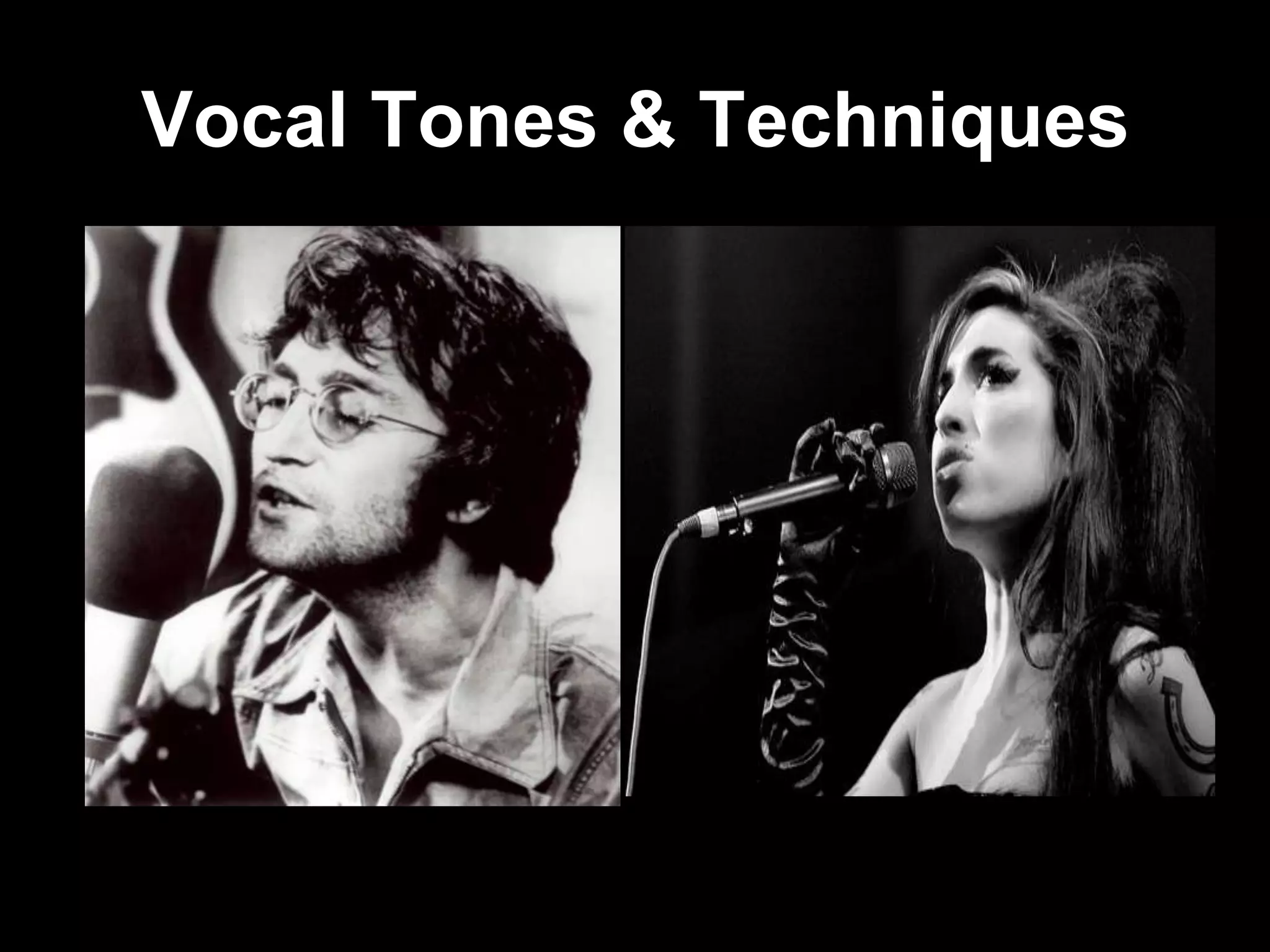
Vocal Tones & Techniques
Thin FoldThis is a light whispery vocal tone suited to your mid-high vocal range.It is the voice you are more likely to use when casually singing along to a CD/radioIt is low volume and bright in timbreThe sound seems to come from the throat with no abdomen stressIt is more likely to be used in studio performance or intimate performance
Thick FoldSuited to mid/low vocal rangeIt has a richer tone with more resonanceYou need to use abdomen and vocal muscles to produce soundsIt is closer in timbre to your full speaking voiceIt is more likely to produce vibrato
TwangImitate a child’s ‘nanana’ voiceSing a song using this toneThere will be slight muscular stress around top lip/nostrilsThe vocal sound will seem to resonate in the nasal passageIt especially emphasises singing in American accents or with an ‘attitude’Listen to:   Hank Williams /Bob Dylan                             		Cyndi Lauper / MadonnaJohn Lennon / Liam Gallagher
AspirateExpel breath slowly using  ‘hah’ soundCombine the breath with an “Ah” musical note.Sing a song with your hand in front of your mouth. You should feel your breath on your hand.There should be a slight sexy whisper quality to your vocal tones. Listen to Marilyn Monroe’s ‘Happy Birthday Mr President’ or Norah Jones
Belt QualityYour full, most powerful voice Imagine you are shouting ‘hey!’ across a noisy bar.Now use this voice to sing the ‘Hey hey hey’ from ‘Satisfaction’ by The Rolling StonesThere will be muscular stress in your neck and abdomenThere may be a slight ‘growl’ to your vocal toneListen to:    Aretha Franklin’s 		“Freedoms” in ‘Think’     Bruce Springsteen’s 	‘Born in the USA’	Bono			‘Beautiful Day’  (chorus)	Freddie Mercury		‘Don’t Stop Me Now’ (2nd verse)
Head Voice/FalsettoSimilar in tone to Thin Fold voice but used for your upper vocal range. Naturally adds aspirate qualities to the tone.The voice most likely to be lost when suffering with a cold!Listen to Smokey Robinson / Bee Gees More likely to be used sparingly by female singers to just emphasise key words:Whitney Houston / Mariah Carey / Alanis Morissette
GrowlThe classic blues/rock voice actually constricts the vocal chords to create a ‘raspy’ quality.Imitate a dog growling. Now try singing with some of the same vocal quality......Or make the slight friction noise you use to clear your throat, sing using this noise....There will be tension/pain at the back of your throat. You are deliberately damaging your voice if over used. Keep well hydrated in the hours leading up to performance.Tom Waits / Rod Stewart / Janis Joplin / Tina Turner
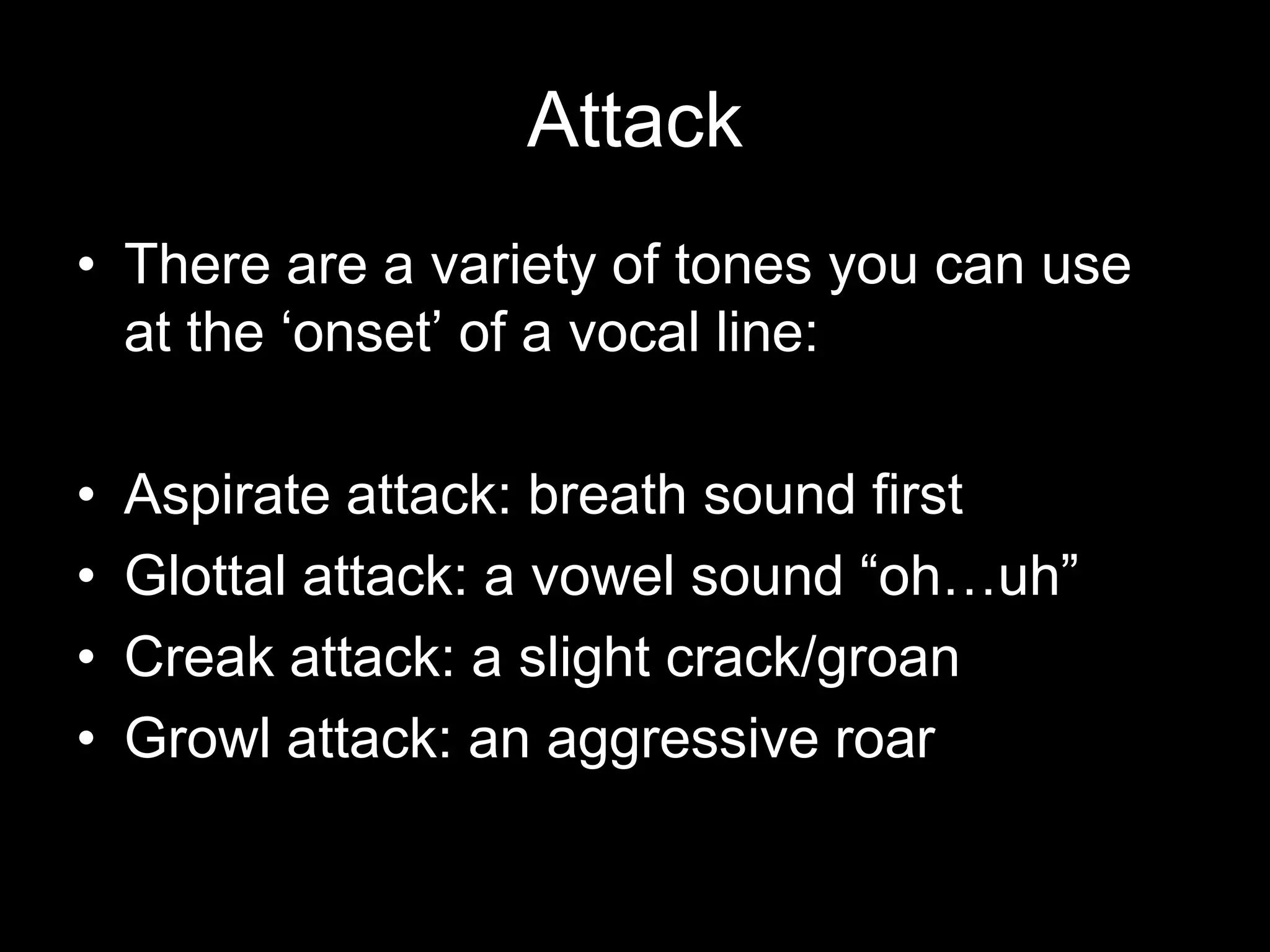
AttackThere are a variety of tones you can use at the ‘onset’ of a vocal line:Aspirate attack: breath sound firstGlottal attack: a vowel sound “oh…uh”Creak attack: a slight crack/groan Growl attack: an aggressive roar
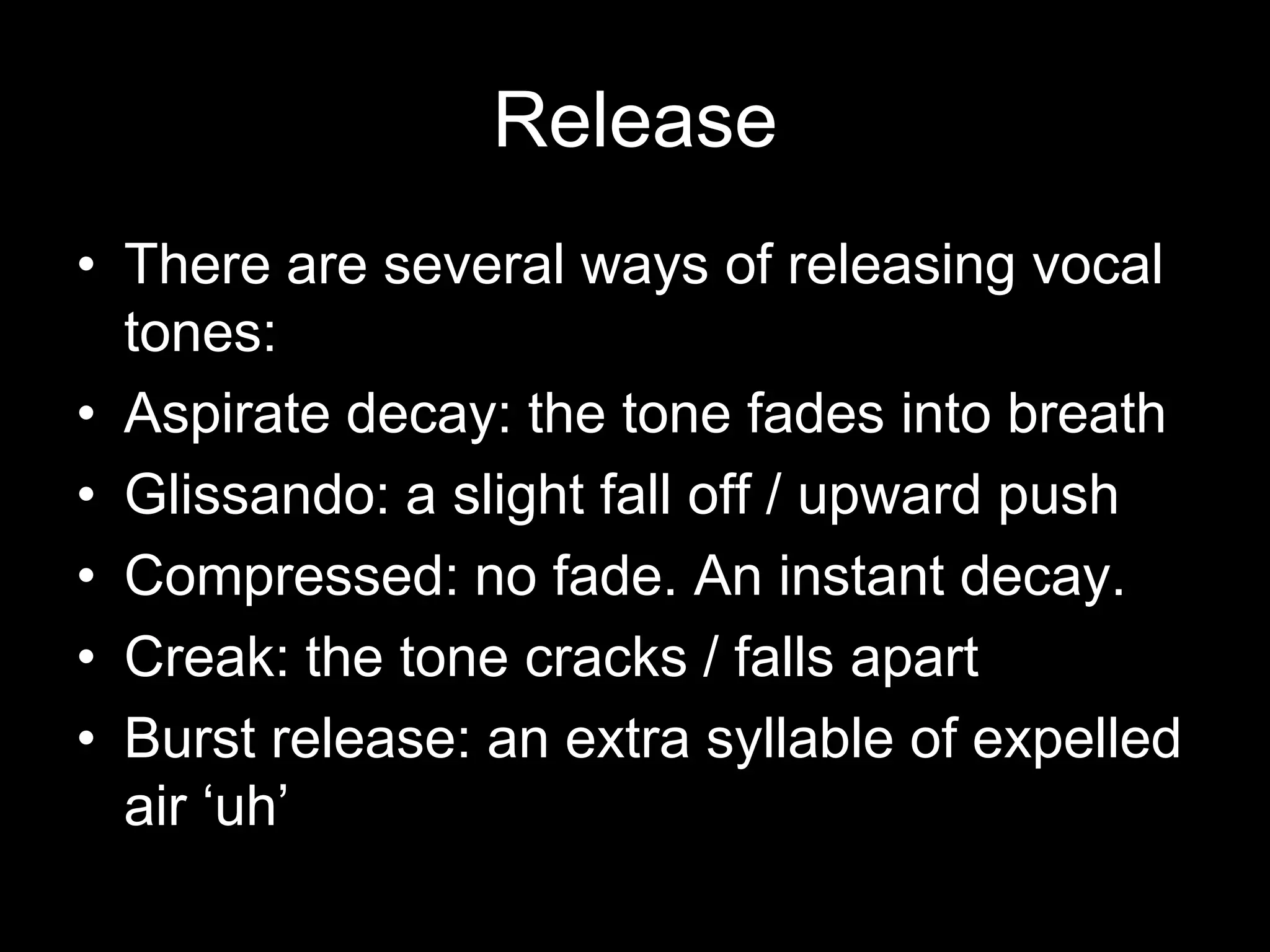
ReleaseThere are several ways of releasing vocal tones:Aspirate decay: the tone fades into breathGlissando: a slight fall off / upward pushCompressed: no fade. An instant decay.Creak: the tone cracks / falls apart Burst release: an extra syllable of expelled air ‘uh’
Source‘Popular Singing’			Donna Soto-Morettini            Central School Speech & Drama                                  LIPA

Vocal tones and Techniques

  • 1.
    Vocal Tones &Techniques
  • 2.
    Thin FoldThis isa light whispery vocal tone suited to your mid-high vocal range.It is the voice you are more likely to use when casually singing along to a CD/radioIt is low volume and bright in timbreThe sound seems to come from the throat with no abdomen stressIt is more likely to be used in studio performance or intimate performance
  • 3.
    Thick FoldSuited tomid/low vocal rangeIt has a richer tone with more resonanceYou need to use abdomen and vocal muscles to produce soundsIt is closer in timbre to your full speaking voiceIt is more likely to produce vibrato
  • 4.
    TwangImitate a child’s‘nanana’ voiceSing a song using this toneThere will be slight muscular stress around top lip/nostrilsThe vocal sound will seem to resonate in the nasal passageIt especially emphasises singing in American accents or with an ‘attitude’Listen to: Hank Williams /Bob Dylan Cyndi Lauper / MadonnaJohn Lennon / Liam Gallagher
  • 5.
    AspirateExpel breath slowlyusing ‘hah’ soundCombine the breath with an “Ah” musical note.Sing a song with your hand in front of your mouth. You should feel your breath on your hand.There should be a slight sexy whisper quality to your vocal tones. Listen to Marilyn Monroe’s ‘Happy Birthday Mr President’ or Norah Jones
  • 6.
    Belt QualityYour full,most powerful voice Imagine you are shouting ‘hey!’ across a noisy bar.Now use this voice to sing the ‘Hey hey hey’ from ‘Satisfaction’ by The Rolling StonesThere will be muscular stress in your neck and abdomenThere may be a slight ‘growl’ to your vocal toneListen to: Aretha Franklin’s “Freedoms” in ‘Think’ Bruce Springsteen’s ‘Born in the USA’ Bono ‘Beautiful Day’ (chorus) Freddie Mercury ‘Don’t Stop Me Now’ (2nd verse)
  • 7.
    Head Voice/FalsettoSimilar intone to Thin Fold voice but used for your upper vocal range. Naturally adds aspirate qualities to the tone.The voice most likely to be lost when suffering with a cold!Listen to Smokey Robinson / Bee Gees More likely to be used sparingly by female singers to just emphasise key words:Whitney Houston / Mariah Carey / Alanis Morissette
  • 8.
    GrowlThe classic blues/rockvoice actually constricts the vocal chords to create a ‘raspy’ quality.Imitate a dog growling. Now try singing with some of the same vocal quality......Or make the slight friction noise you use to clear your throat, sing using this noise....There will be tension/pain at the back of your throat. You are deliberately damaging your voice if over used. Keep well hydrated in the hours leading up to performance.Tom Waits / Rod Stewart / Janis Joplin / Tina Turner
  • 9.
    AttackThere are avariety of tones you can use at the ‘onset’ of a vocal line:Aspirate attack: breath sound firstGlottal attack: a vowel sound “oh…uh”Creak attack: a slight crack/groan Growl attack: an aggressive roar
  • 10.
    ReleaseThere are severalways of releasing vocal tones:Aspirate decay: the tone fades into breathGlissando: a slight fall off / upward pushCompressed: no fade. An instant decay.Creak: the tone cracks / falls apart Burst release: an extra syllable of expelled air ‘uh’
  • 11.
    Source‘Popular Singing’ Donna Soto-Morettini Central School Speech & Drama LIPA