Singing Tips
YOU CAN LEARN TO SING BETTER!
5 Important Parts To Better Singing:
 Breathing
 Posture
 Muscle Control
 Avoiding Tension
 Practice
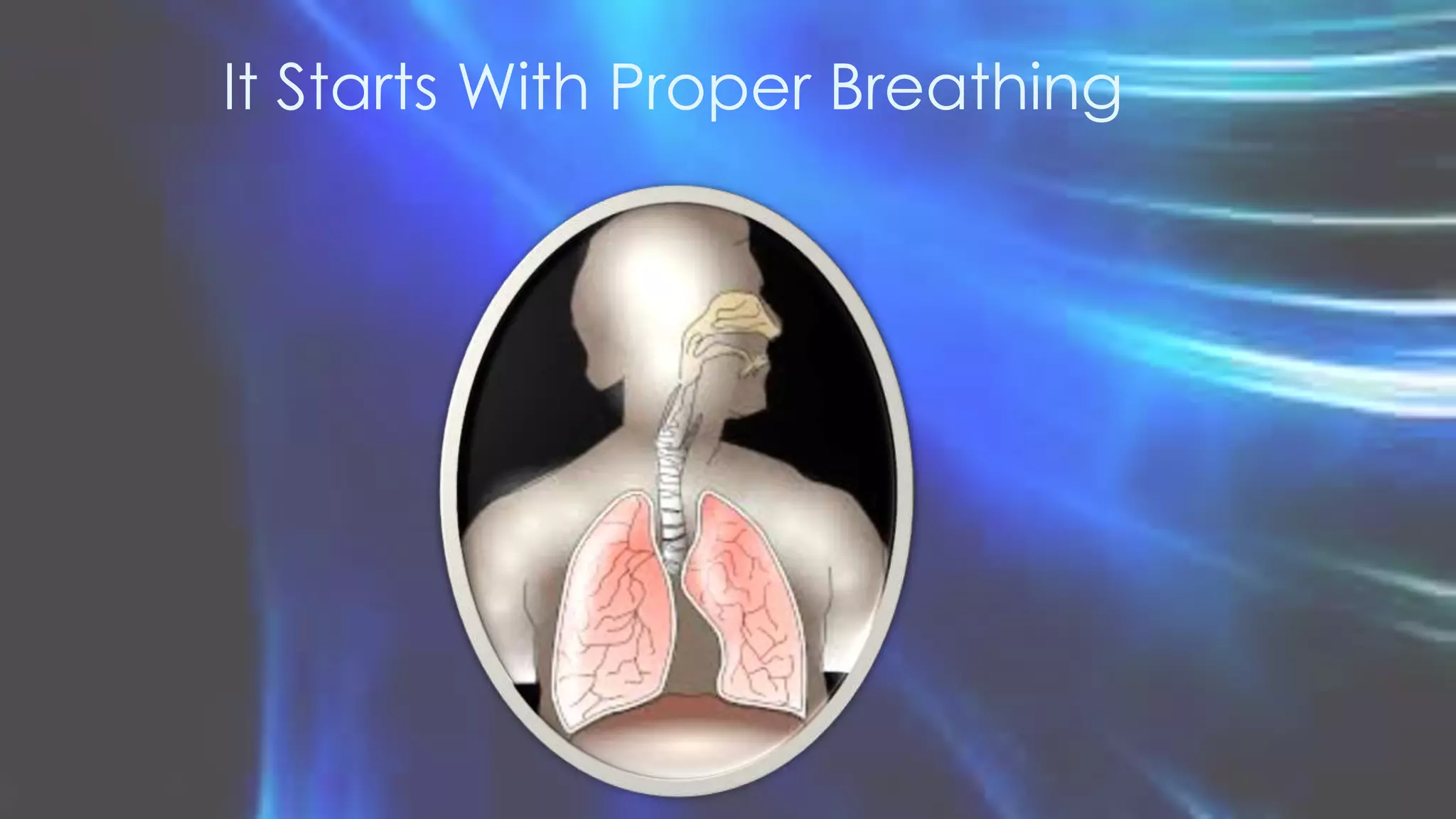
It Starts With Proper Breathing
Our Breathing Is
Normally Quite
Shallow – With The
Exception OF
Exercise
And Of Course -
SINGING!
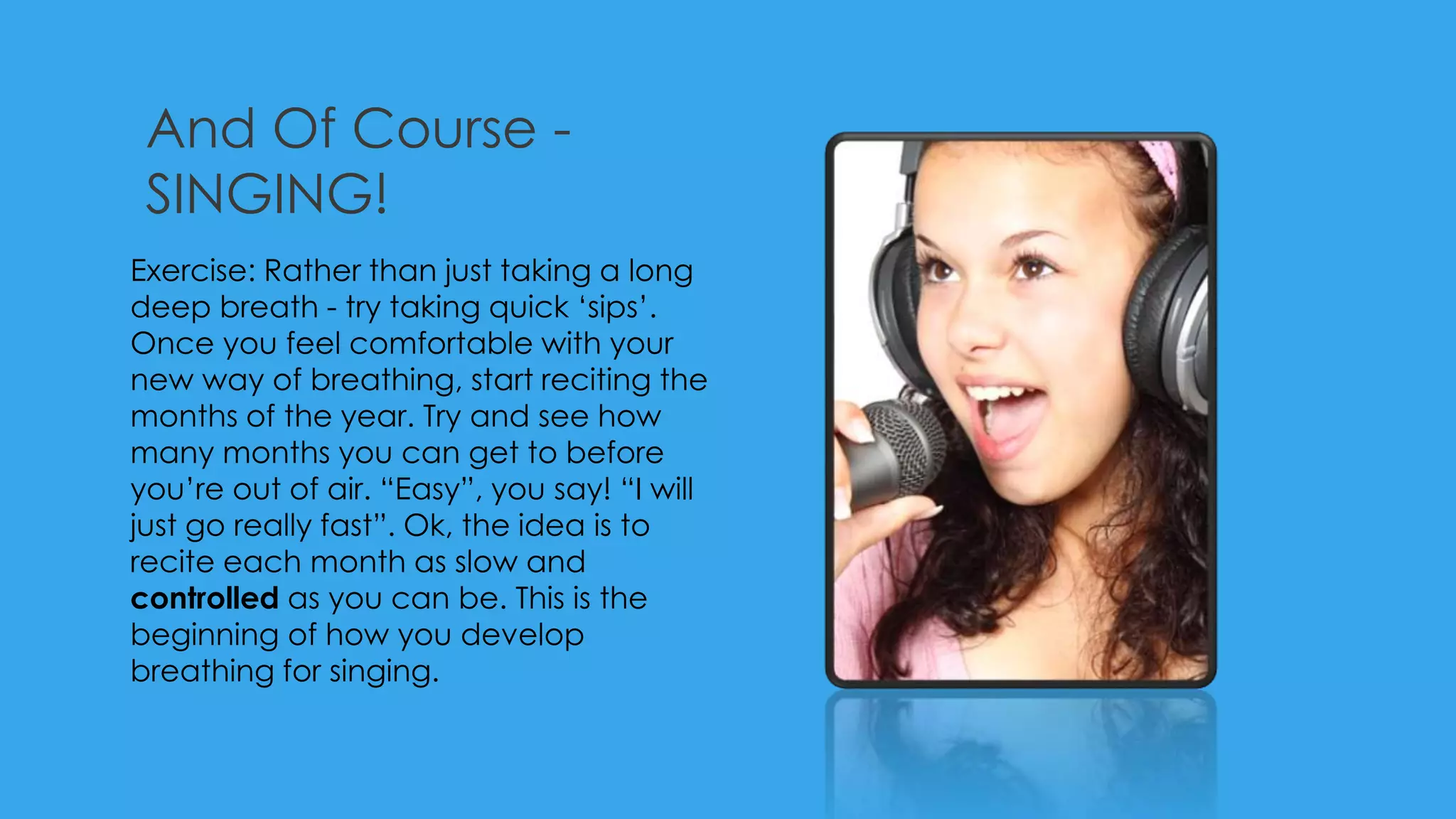
Exercise: Rather than just taking a long
deep breath - try taking quick ‘sips’.
Once you feel comfortable with your
new way of breathing, start reciting the
months of the year. Try and see how
many months you can get to before
you’re out of air. “Easy”, you say! “I will
just go really fast”. Ok, the idea is to
recite each month as slow and
controlled as you can be. This is the
beginning of how you develop
breathing for singing.
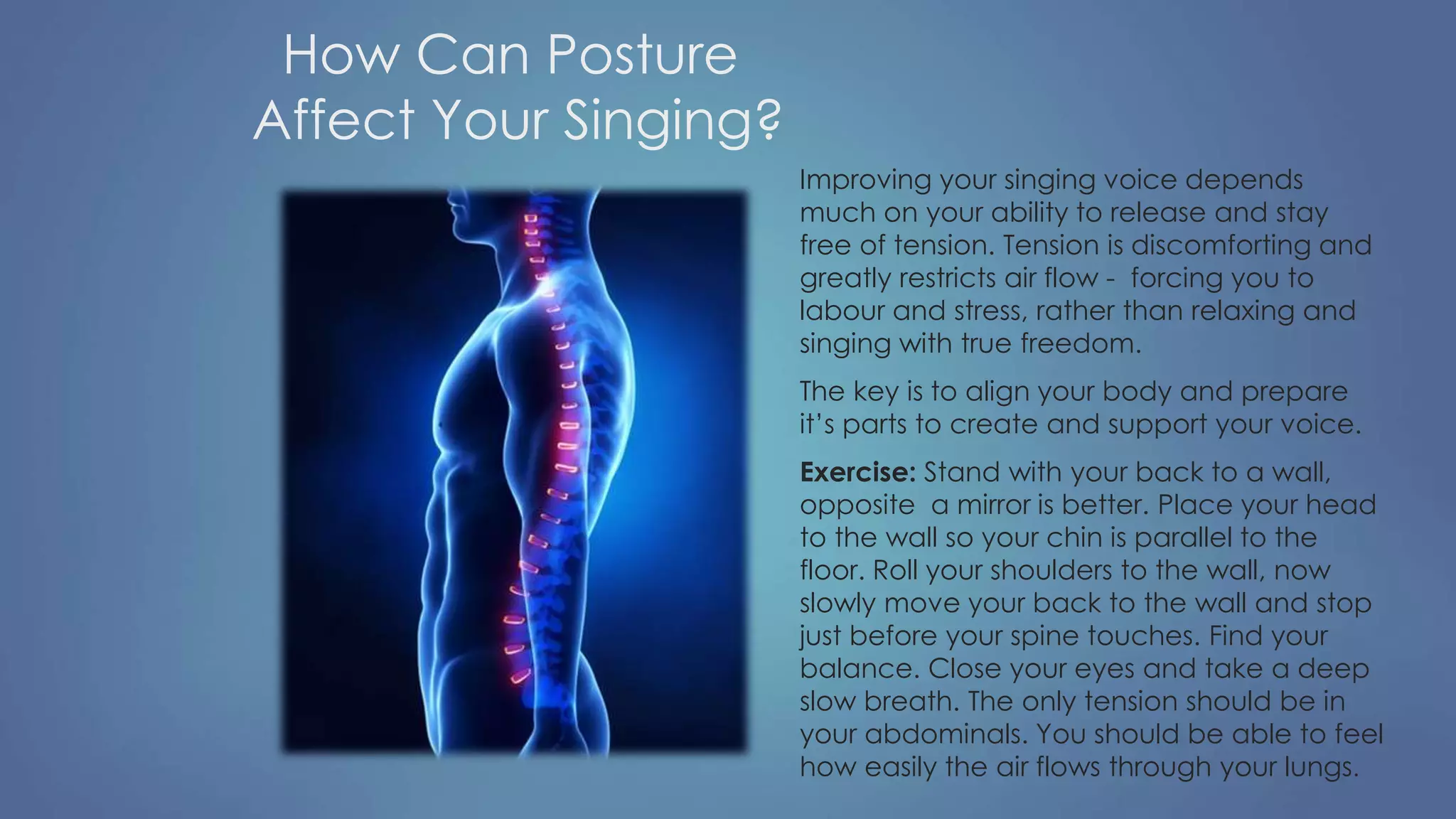
How Can Posture
Affect Your Singing?
Improving your singing voice depends
much on your ability to release and stay
free of tension. Tension is discomforting and
greatly restricts air flow - forcing you to
labour and stress, rather than relaxing and
singing with true freedom.
The key is to align your body and prepare
it’s parts to create and support your voice.
Exercise: Stand with your back to a wall,
opposite a mirror is better. Place your head
to the wall so your chin is parallel to the
floor. Roll your shoulders to the wall, now
slowly move your back to the wall and stop
just before your spine touches. Find your
balance. Close your eyes and take a deep
slow breath. The only tension should be in
your abdominals. You should be able to feel
how easily the air flows through your lungs.
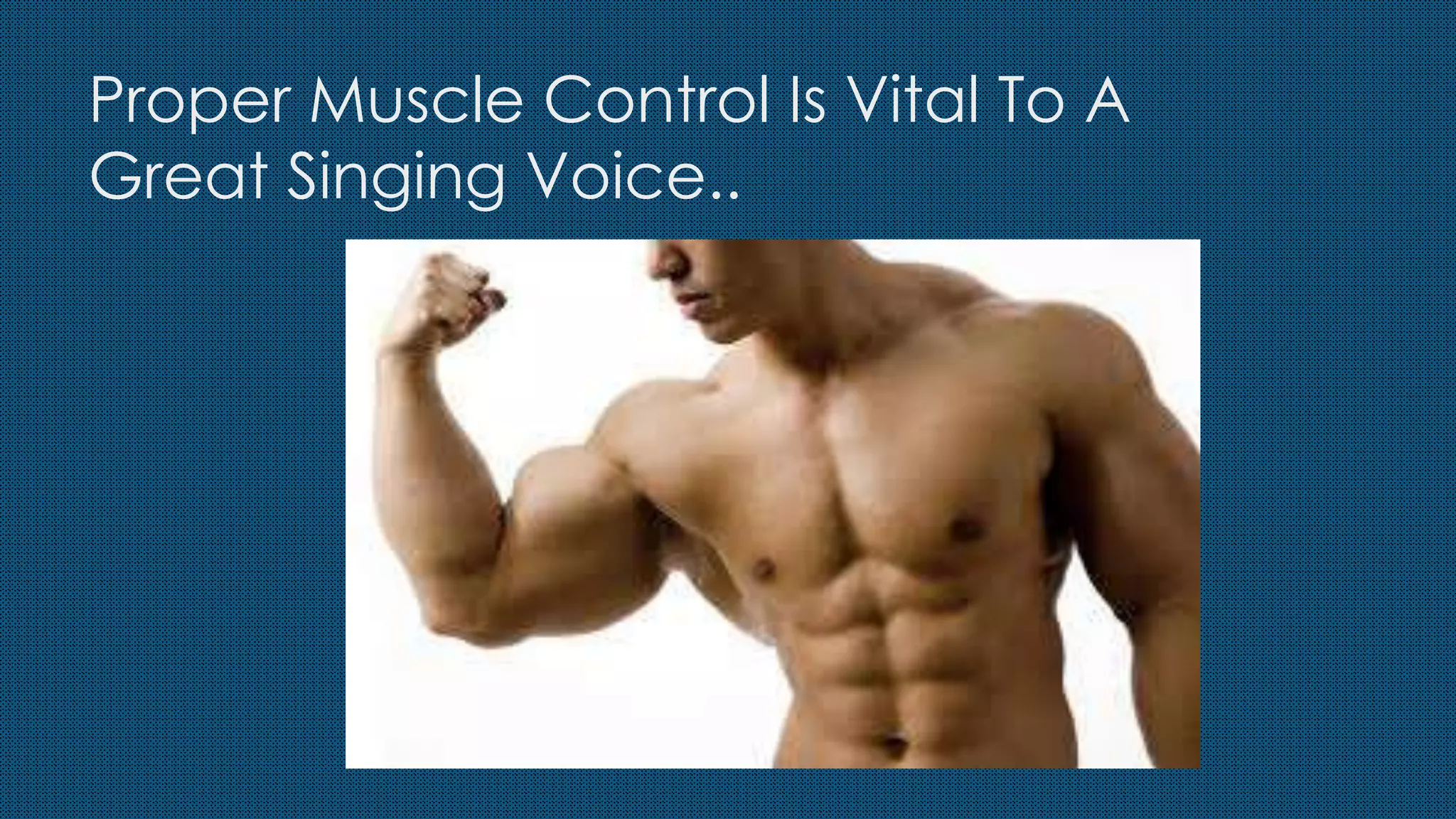
Proper Muscle Control Is Vital To A
Great Singing Voice..
Muscles In Your Head, Neck, Abs,
And Especially..
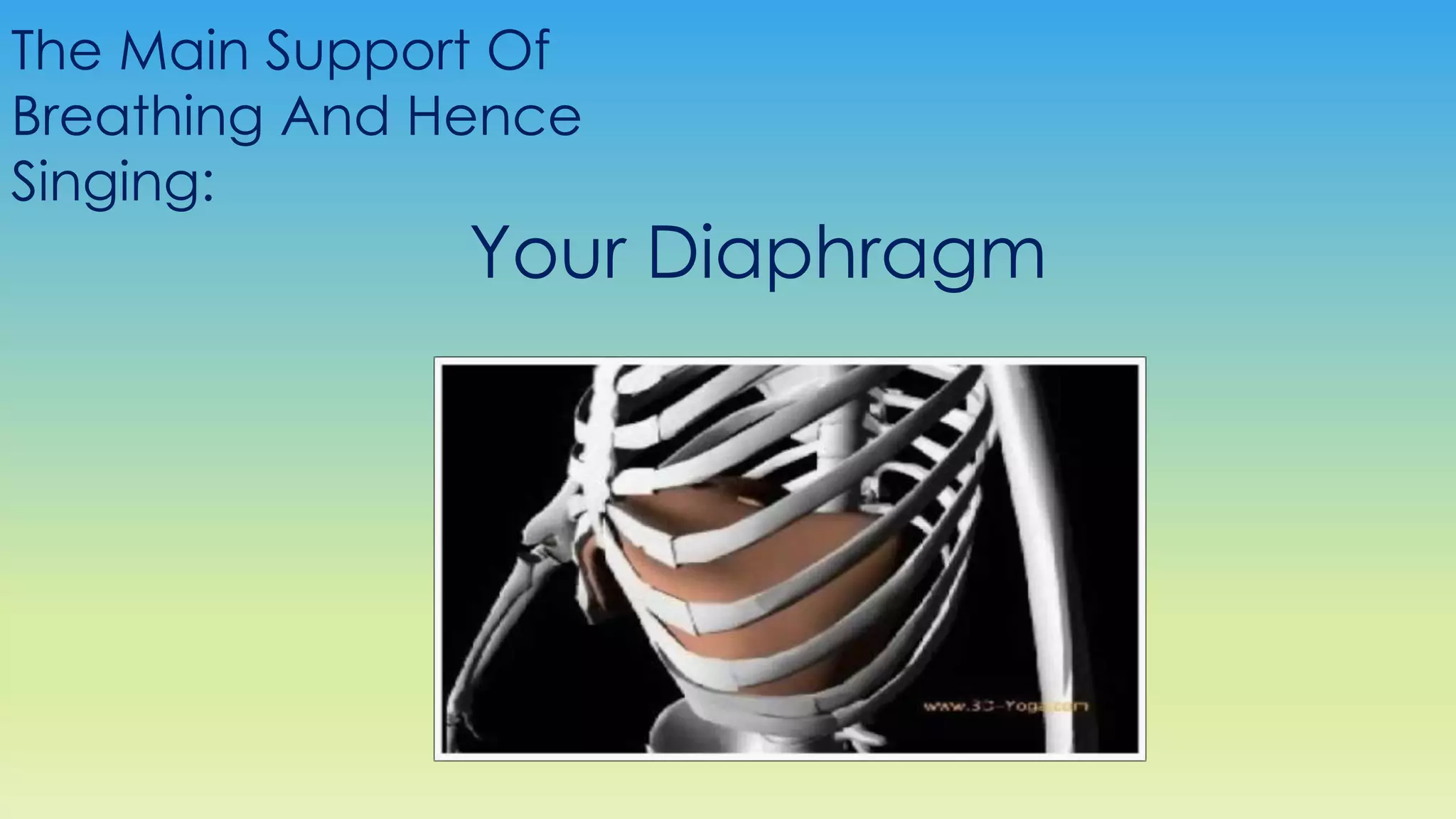
Your Diaphragm
The Main Support Of
Breathing And Hence
Singing:
Learning To Use Your Diaphragm
Properly Will Enable You To:
 Hold Your Notes Longer
 Create A Better Tone Quality
 Project Your Voice Better
It’s about being able to resist the air as
you exhale from your lungs in a
controlled way.
Try holding your index finger
roughly an inch from your lips
and breathe out very slowly,
while trying to notice the
movement of your diaphragm
as you exhale. This will be the
same amount of breath you
take when you singing.
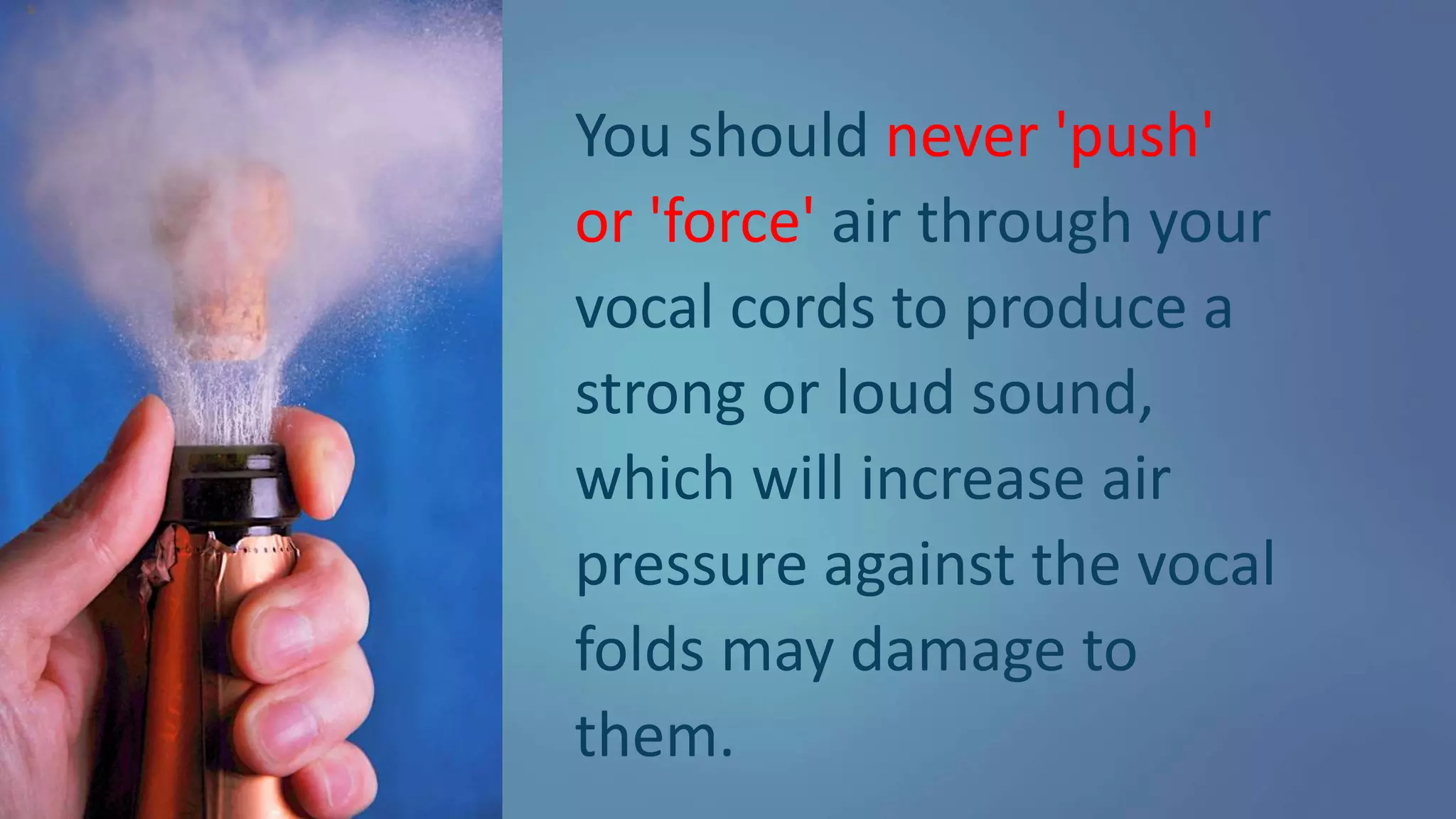
You should never 'push'
or 'force' air through your
vocal cords to produce a
strong or loud sound,
which will increase air
pressure against the vocal
folds and may cause
damage to them.
Avoiding Tension Is Crucial
Always Stretch It Out As Part
Your Vocal Warm Up
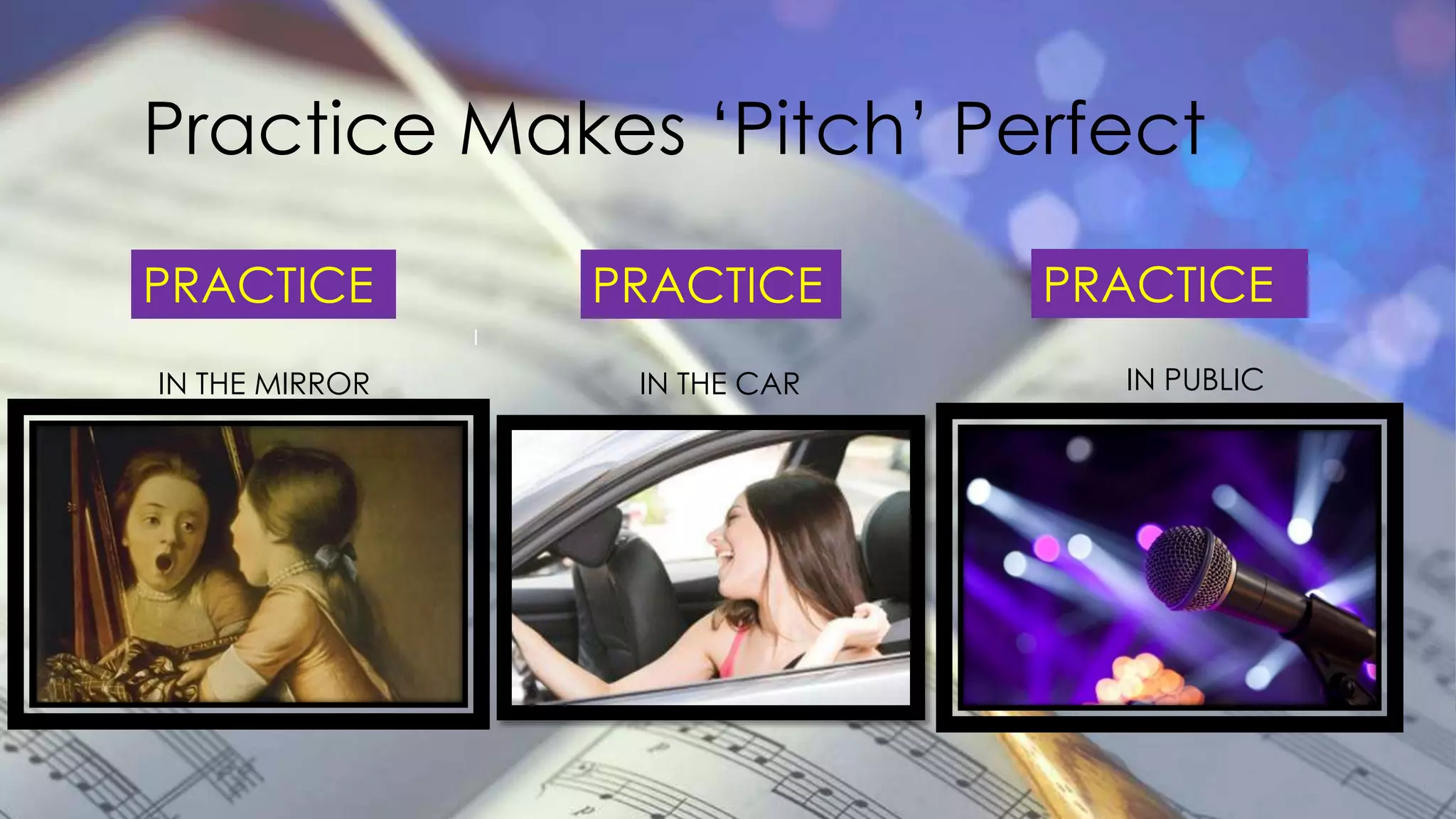
Practice Makes ‘Pitch’ Perfect
PRACTICE
IN THE MIRROR
PRACTICE
I
IN THE CAR
PRACTICE
IN PUBLIC
To Learn More Free
Singing Tips
Please Visit:
WWW.VOCALTIPS.NET

Singing Tips

  • 1.
    Singing Tips YOU CANLEARN TO SING BETTER!
  • 2.
    5 Important PartsTo Better Singing:  Breathing  Posture  Muscle Control  Avoiding Tension  Practice
  • 3.
    It Starts WithProper Breathing
  • 4.
    Our Breathing Is NormallyQuite Shallow – With The Exception OF Exercise
  • 5.
    And Of Course- SINGING! Exercise: Rather than just taking a long deep breath - try taking quick ‘sips’. Once you feel comfortable with your new way of breathing, start reciting the months of the year. Try and see how many months you can get to before you’re out of air. “Easy”, you say! “I will just go really fast”. Ok, the idea is to recite each month as slow and controlled as you can be. This is the beginning of how you develop breathing for singing.
  • 6.
    How Can Posture AffectYour Singing? Improving your singing voice depends much on your ability to release and stay free of tension. Tension is discomforting and greatly restricts air flow - forcing you to labour and stress, rather than relaxing and singing with true freedom. The key is to align your body and prepare it’s parts to create and support your voice. Exercise: Stand with your back to a wall, opposite a mirror is better. Place your head to the wall so your chin is parallel to the floor. Roll your shoulders to the wall, now slowly move your back to the wall and stop just before your spine touches. Find your balance. Close your eyes and take a deep slow breath. The only tension should be in your abdominals. You should be able to feel how easily the air flows through your lungs.
  • 7.
    Proper Muscle ControlIs Vital To A Great Singing Voice..
  • 8.
    Muscles In YourHead, Neck, Abs, And Especially..
  • 9.
    Your Diaphragm The MainSupport Of Breathing And Hence Singing:
  • 10.
    Learning To UseYour Diaphragm Properly Will Enable You To:  Hold Your Notes Longer  Create A Better Tone Quality  Project Your Voice Better It’s about being able to resist the air as you exhale from your lungs in a controlled way.
  • 11.
    Try holding yourindex finger roughly an inch from your lips and breathe out very slowly, while trying to notice the movement of your diaphragm as you exhale. This will be the same amount of breath you take when you singing.
  • 12.
    You should never'push' or 'force' air through your vocal cords to produce a strong or loud sound, which will increase air pressure against the vocal folds and may cause damage to them.
  • 13.
  • 14.
    Always Stretch ItOut As Part Your Vocal Warm Up
  • 15.
    Practice Makes ‘Pitch’Perfect PRACTICE IN THE MIRROR PRACTICE I IN THE CAR PRACTICE IN PUBLIC
  • 16.
    To Learn MoreFree Singing Tips Please Visit: WWW.VOCALTIPS.NET