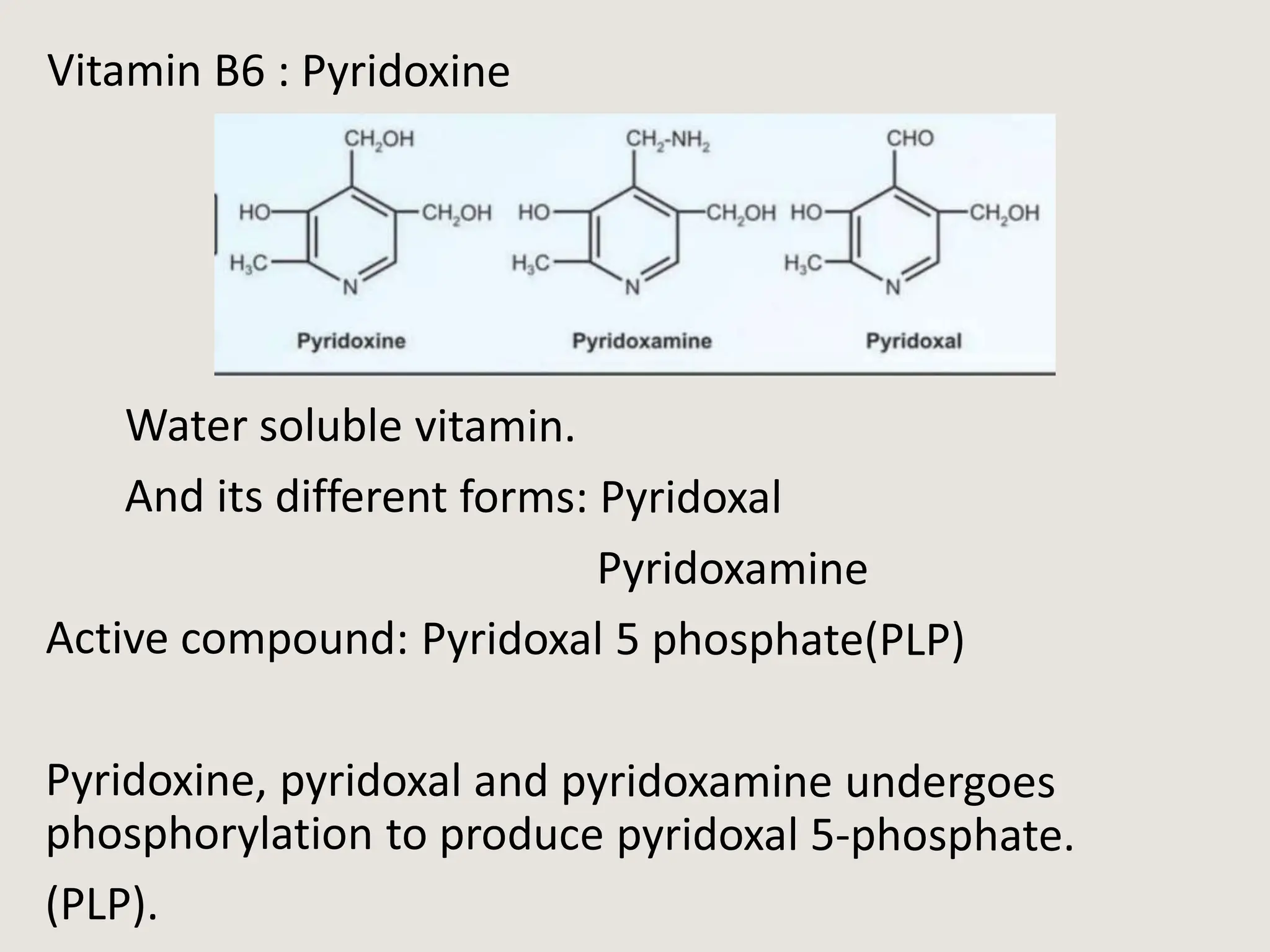
Vitamin B6 deficiency
Rithikha Sri 114
Rohankumar 115
Source:
• Plants contain Vitamin B6 in pyridoxine form.
• Animals contain in form of PLP and Pyridoxamine
phosphate.
• Rich sources are:
Legumes
Nuts
Wheat bran
Meat, Fish
Fruits and Vegetables.
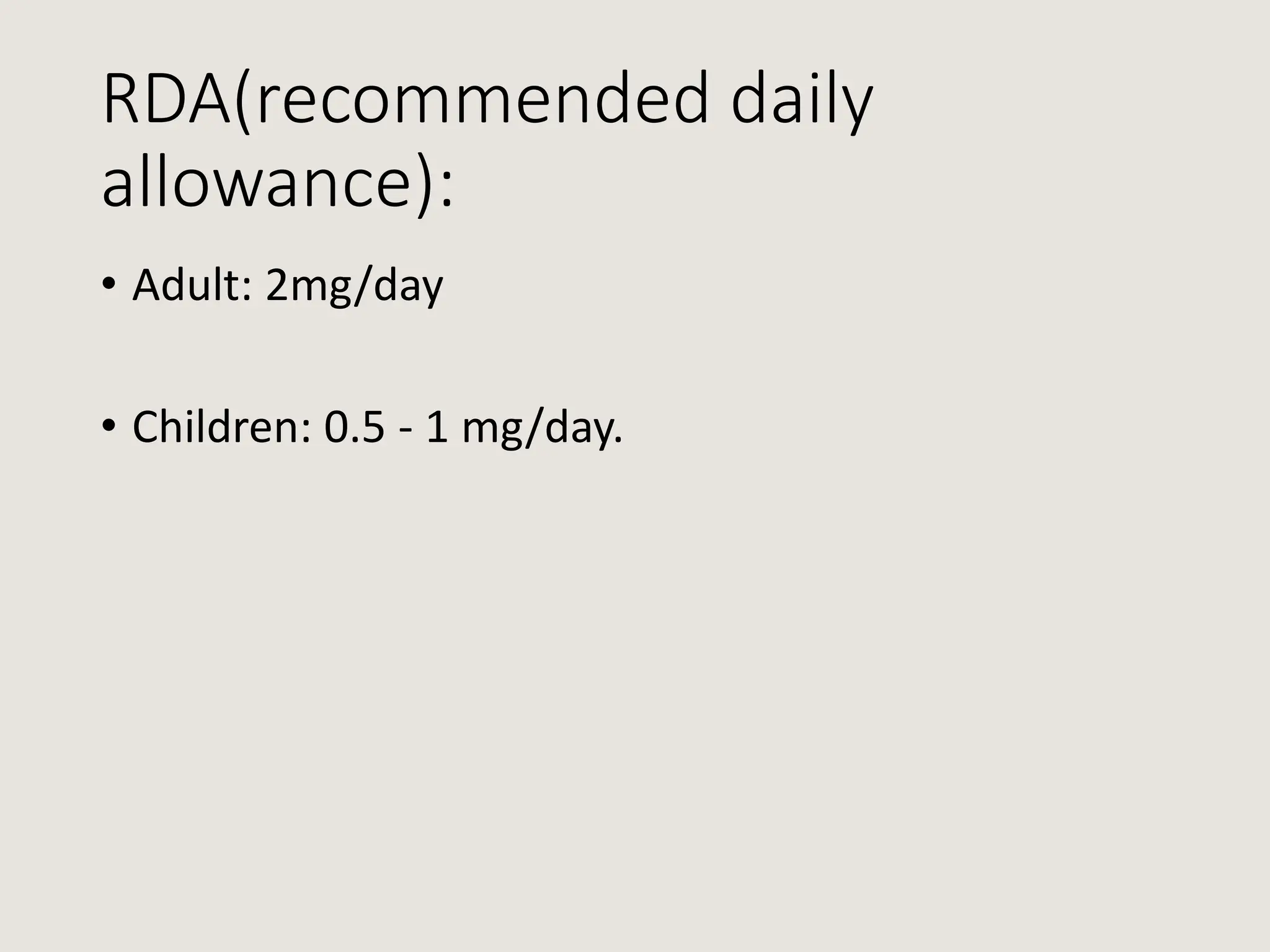
RDA(recommended daily
allowance):
• Adult: 2mg/day
• Children: 0.5 - 1 mg/day.
Biochemical functions:
PLP is the co-factor for more than 100 enzymes involved in
metabolism of amino acids.
Nutrient metabolism: Gluconeogenesis, Glycogenolysis
Carbohydrate, Homocysteine, lipid
Metabolism.
Hemoglobin synthesis: Synthesis of porphyrin
Neurological Functioning: Neurotransmitter synthesis
Immune function: Interleukin - 2 production.
• Vitamin B6 :
Absorption occurs in small
Intestine(jejunum)
⬇️
Metabolized to active form
In Liver
⬇️
Excreted in Urine.
Deficiency:
Vitamin B6 deficiency is rare but can be influenced
by certain drugs like isoniazid
penicillamine,cycloserine and L-dopa.
They can act as chemical antagonist to pyridoxine.
Clinical features:
Laboratory diagnosis:
Through Serum pyridoxal phosphate.
Low Plasma PLP value: <20nmol/L.
Treatment:
• 50 mg/day is given for deficiency
• For deficiency related medication
Use : higher dose of 100 - 200 mg/day given.
Toxicity:
safe upper limit: 100mg/day.
If toxicity occurs, It may cause
Sensory neuropathy
Photosensitivity
Dermatitis in some cases.
Reference:
1. Davidson essentials of medicine.
2. Harrison principle of internal medicine.
Thank you!

vitamin b6 biochemistry metabolism presentation

  • 1.
    Vitamin B6 deficiency RithikhaSri 114 Rohankumar 115
  • 3.
    Source: • Plants containVitamin B6 in pyridoxine form. • Animals contain in form of PLP and Pyridoxamine phosphate. • Rich sources are: Legumes Nuts Wheat bran Meat, Fish Fruits and Vegetables.
  • 4.
    RDA(recommended daily allowance): • Adult:2mg/day • Children: 0.5 - 1 mg/day.
  • 5.
    Biochemical functions: PLP isthe co-factor for more than 100 enzymes involved in metabolism of amino acids. Nutrient metabolism: Gluconeogenesis, Glycogenolysis Carbohydrate, Homocysteine, lipid Metabolism. Hemoglobin synthesis: Synthesis of porphyrin Neurological Functioning: Neurotransmitter synthesis Immune function: Interleukin - 2 production.
  • 6.
    • Vitamin B6: Absorption occurs in small Intestine(jejunum) ⬇️ Metabolized to active form In Liver ⬇️ Excreted in Urine.
  • 7.
    Deficiency: Vitamin B6 deficiencyis rare but can be influenced by certain drugs like isoniazid penicillamine,cycloserine and L-dopa. They can act as chemical antagonist to pyridoxine.
  • 8.
  • 9.
    Laboratory diagnosis: Through Serumpyridoxal phosphate. Low Plasma PLP value: <20nmol/L.
  • 10.
    Treatment: • 50 mg/dayis given for deficiency • For deficiency related medication Use : higher dose of 100 - 200 mg/day given. Toxicity: safe upper limit: 100mg/day. If toxicity occurs, It may cause Sensory neuropathy Photosensitivity Dermatitis in some cases.
  • 11.
    Reference: 1. Davidson essentialsof medicine. 2. Harrison principle of internal medicine.
  • 12.