BURDEN AND TYPES OF MEDICAL ERRORS
YOUR HEALTH CARE MAY KILL YOU
-By Medical Errors
Patient safety is a serious global public health concern.
There is a 1 in a million chance of a person being harmed
while travelling by plane.
In comparison, there is a 1 in 300 chance of a patient being
harmed during health care.
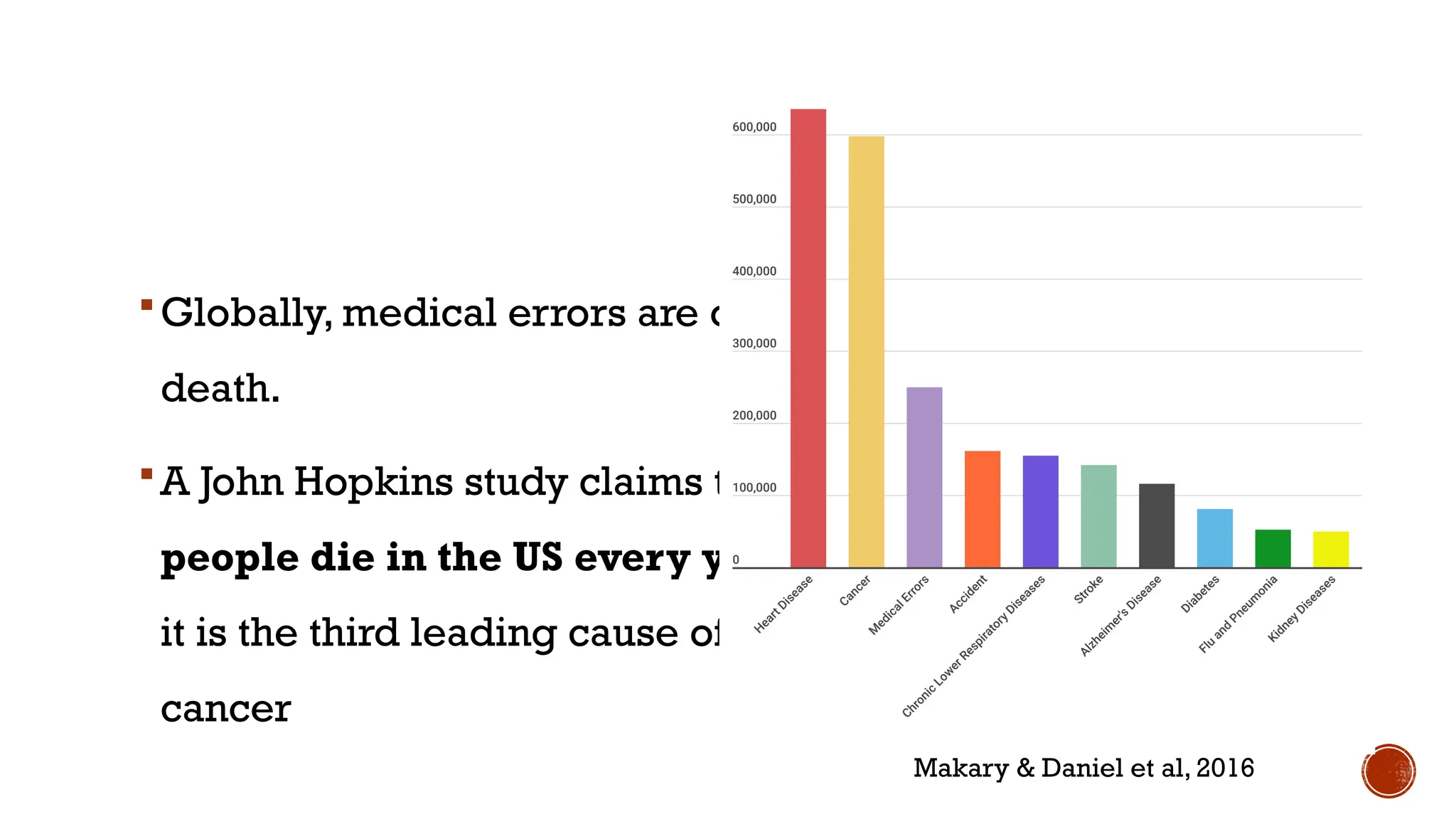
Globally, medical errors are one of the leading causes of
death.
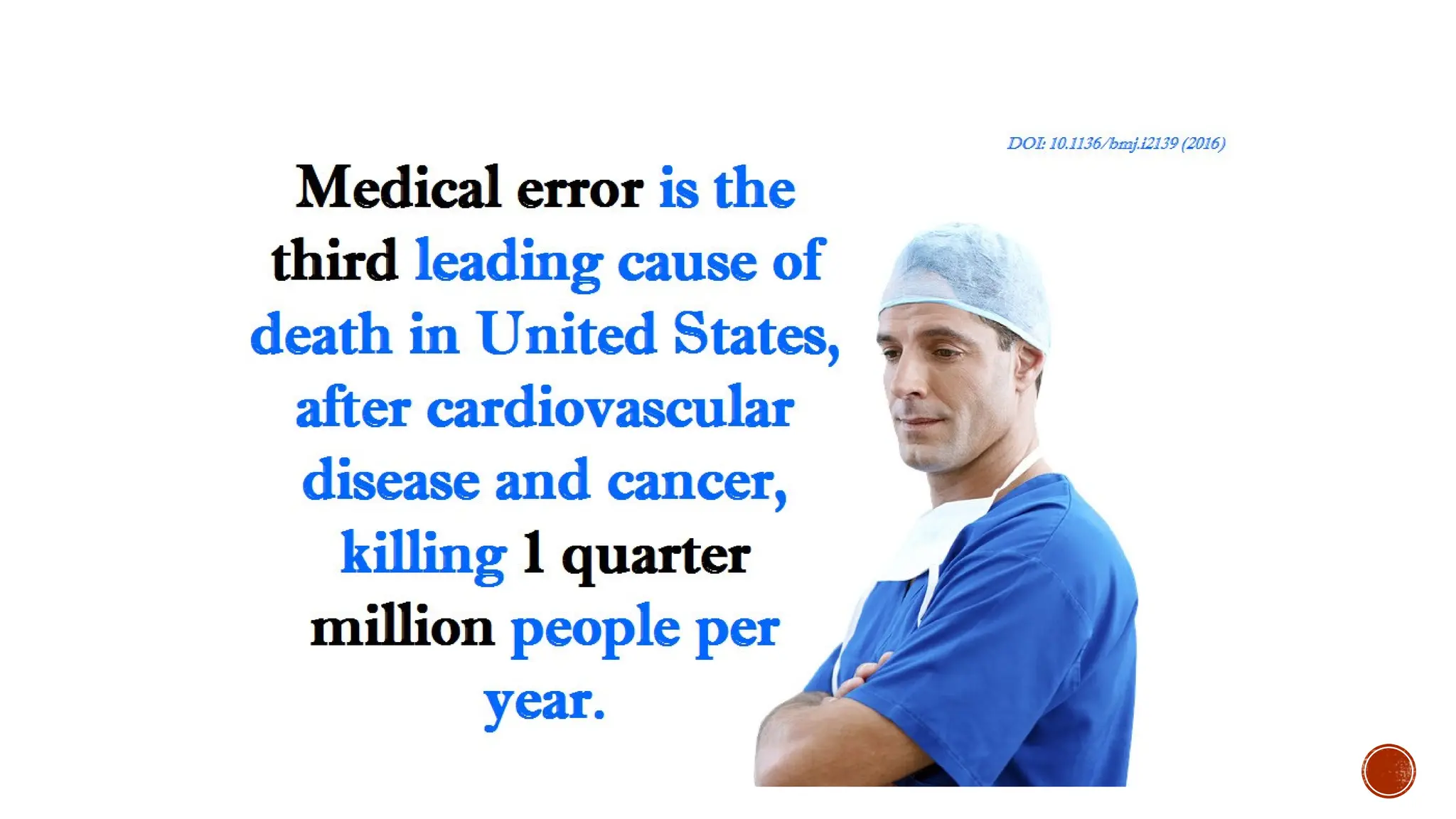
A John Hopkins study claims that more than 2,50,000
people die in the US every year from medical errors, and
it is the third leading cause of death after heart disease and
cancer
Makary & Daniel et al, 2016
 Based on extrapolated data from various studies in the year 2020-
 of 35,416,020 hospitalizations, medical errors cause 251,454 deaths
per year.
 This translated to 9.5% of all deaths per year.
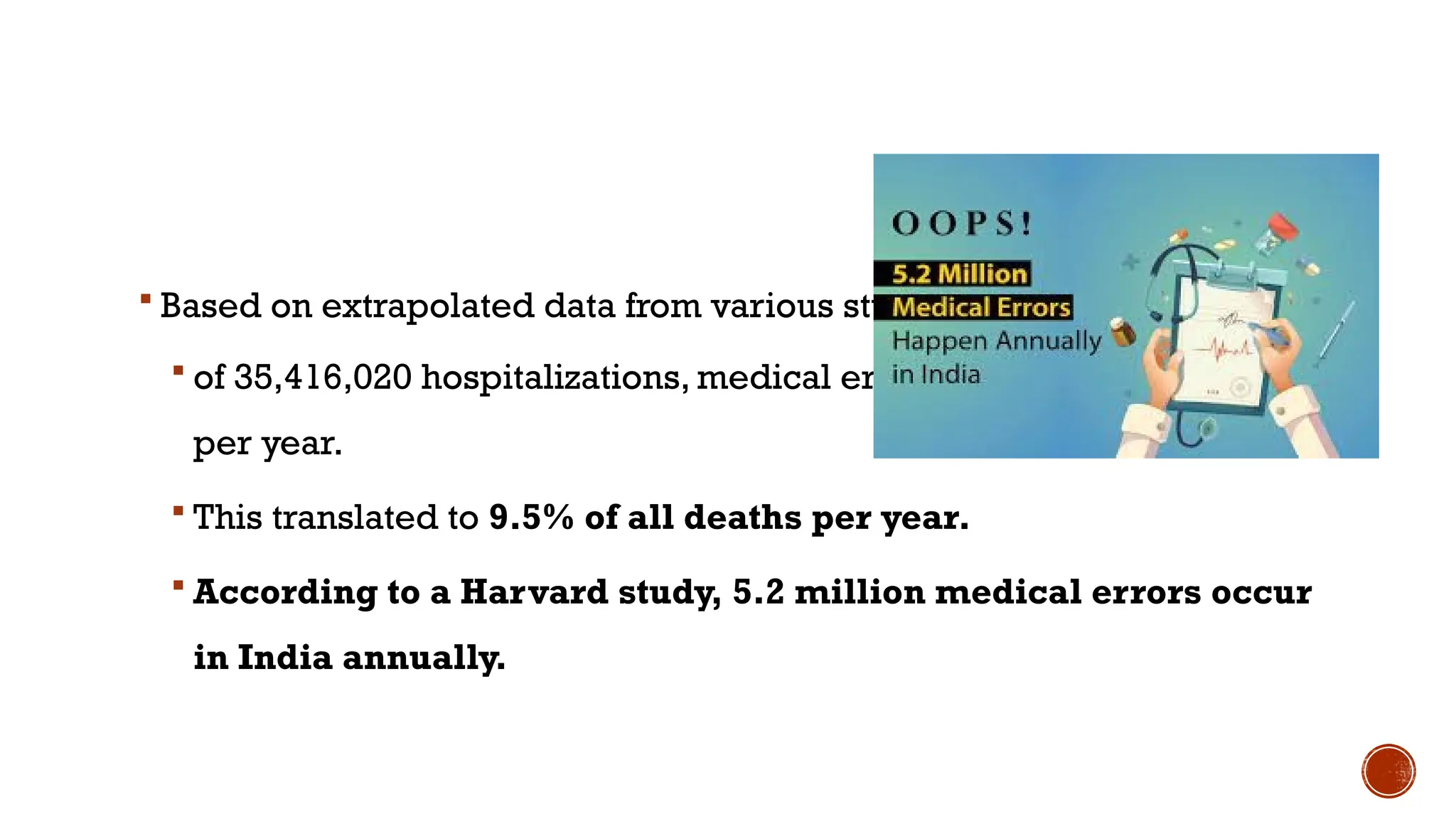
 According to a Harvard study, 5.2 million medical errors occur
in India annually.
SENTINEL EVENTS
An unexpected occurrence involving death or
serious physical, psychological injury.
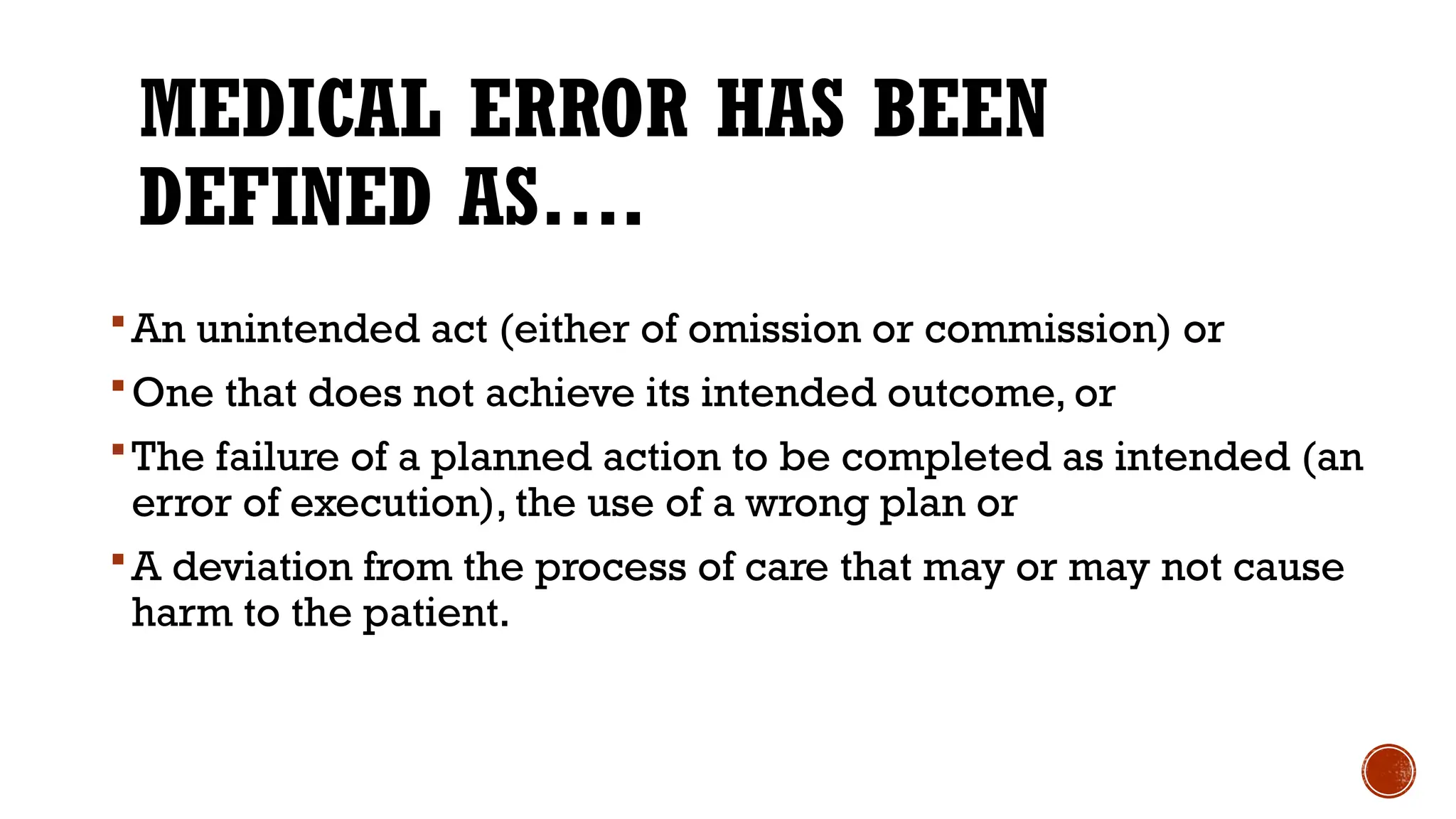
MEDICAL ERROR HAS BEEN
DEFINED AS….
An unintended act (either of omission or commission) or
One that does not achieve its intended outcome, or
The failure of a planned action to be completed as intended (an
error of execution), the use of a wrong plan or
A deviation from the process of care that may or may not cause
harm to the patient.
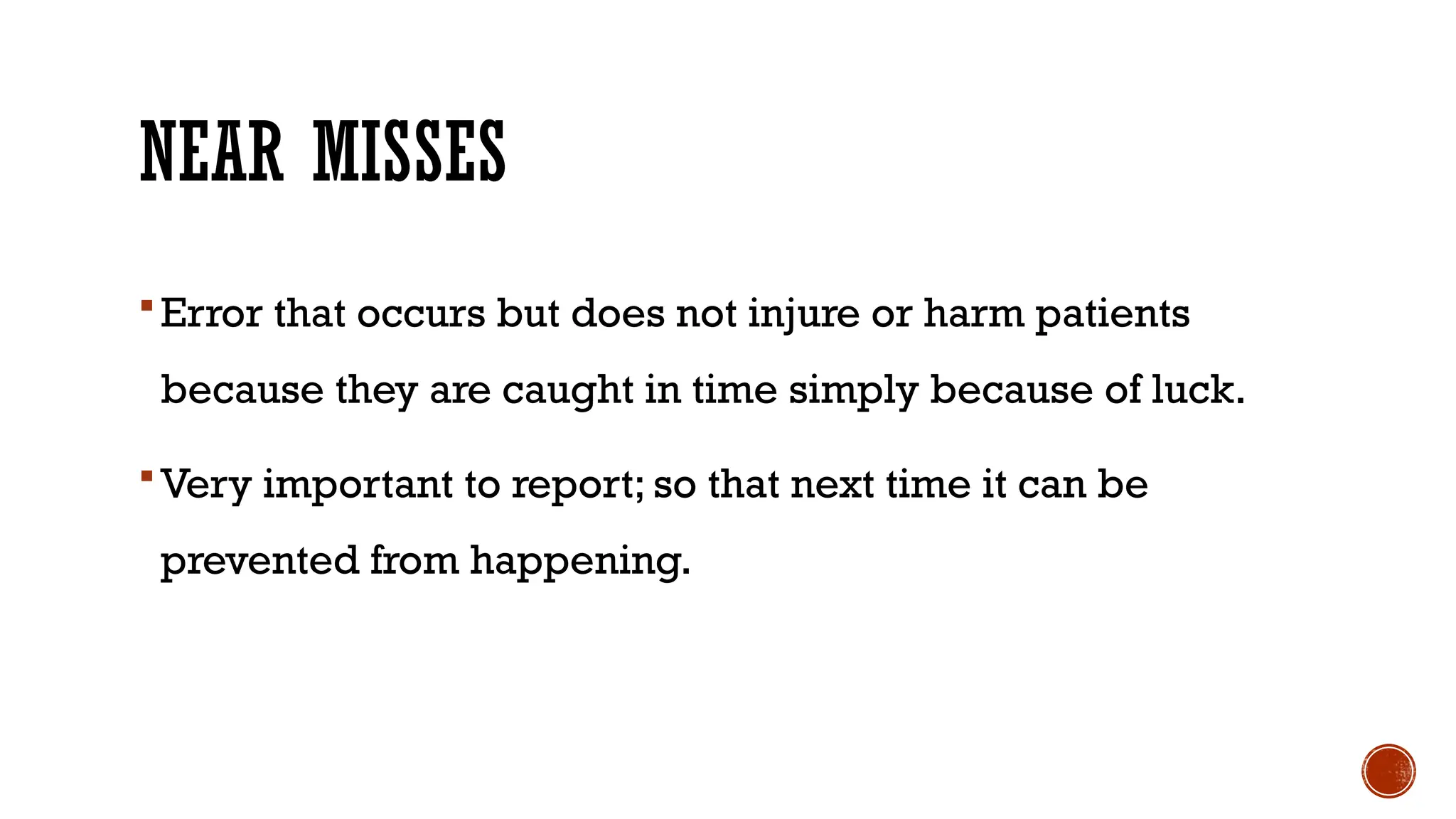
NEAR MISSES
Error that occurs but does not injure or harm patients
because they are caught in time simply because of luck.
Very important to report; so that next time it can be
prevented from happening.
Burden of Medical errors.pptx Aetcom medical errors

Burden of Medical errors.pptx Aetcom medical errors

  • 1.
    BURDEN AND TYPESOF MEDICAL ERRORS
  • 2.
    YOUR HEALTH CAREMAY KILL YOU -By Medical Errors
  • 3.
    Patient safety isa serious global public health concern. There is a 1 in a million chance of a person being harmed while travelling by plane. In comparison, there is a 1 in 300 chance of a patient being harmed during health care.
  • 5.
    Globally, medical errorsare one of the leading causes of death. A John Hopkins study claims that more than 2,50,000 people die in the US every year from medical errors, and it is the third leading cause of death after heart disease and cancer Makary & Daniel et al, 2016
  • 6.
     Based onextrapolated data from various studies in the year 2020-  of 35,416,020 hospitalizations, medical errors cause 251,454 deaths per year.  This translated to 9.5% of all deaths per year.  According to a Harvard study, 5.2 million medical errors occur in India annually.
  • 8.
    SENTINEL EVENTS An unexpectedoccurrence involving death or serious physical, psychological injury.
  • 9.
    MEDICAL ERROR HASBEEN DEFINED AS…. An unintended act (either of omission or commission) or One that does not achieve its intended outcome, or The failure of a planned action to be completed as intended (an error of execution), the use of a wrong plan or A deviation from the process of care that may or may not cause harm to the patient.
  • 11.
    NEAR MISSES Error thatoccurs but does not injure or harm patients because they are caught in time simply because of luck. Very important to report; so that next time it can be prevented from happening.

Editor's Notes

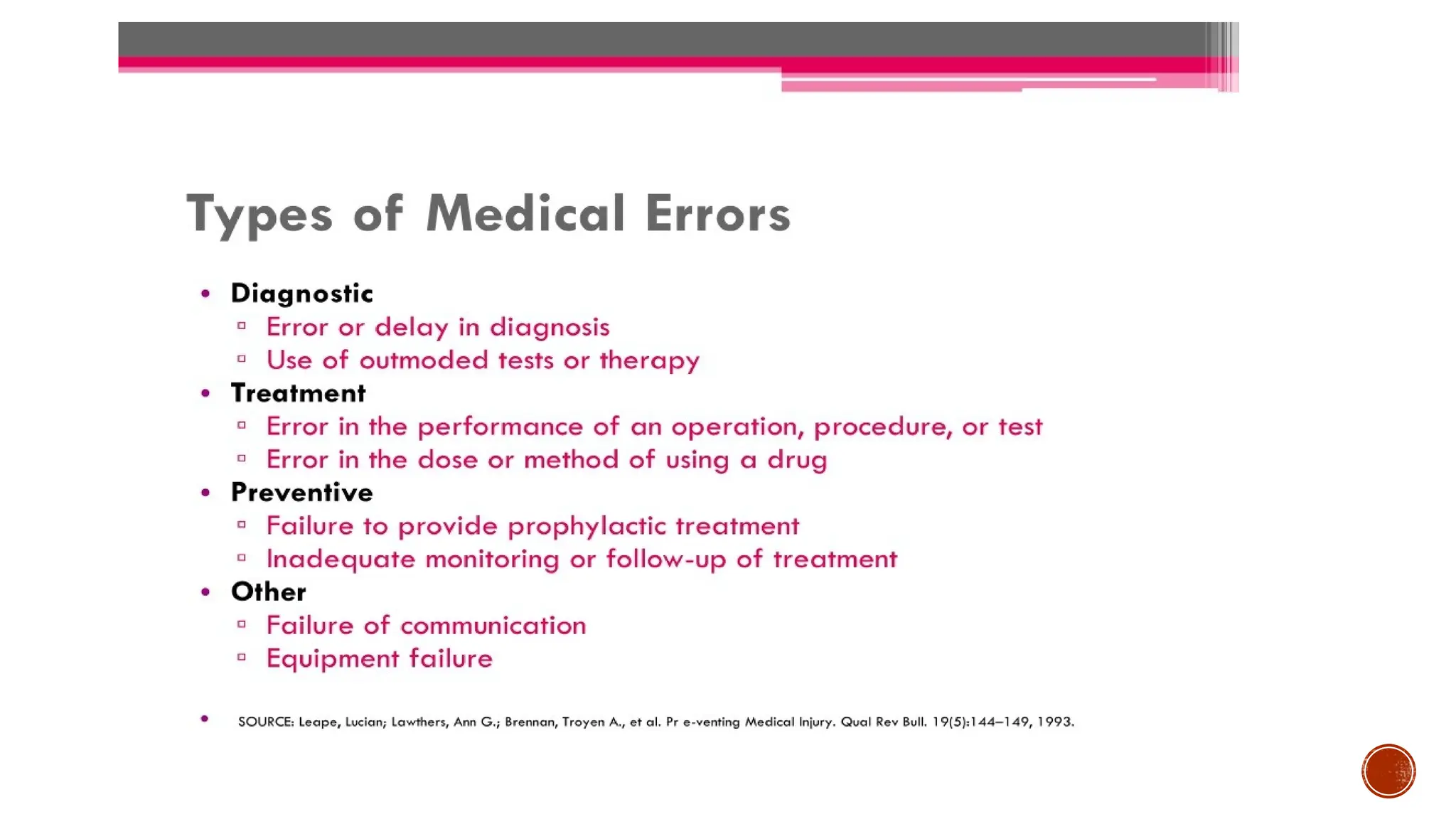
  • #10 Diagnostic errors: Outmoded or outdated diagnostic tests are used; not of any value Failure to act on the tests results, delay in starting of antibiotic treatment if AST results overlooked Preventive: Overlooking some risk factors (e.g. breast cancer) which may lead to cancer later on. Failure to do preventive actions