BEFORE
KNOW THYSELF
UNDERSTAND THE INVESTOR
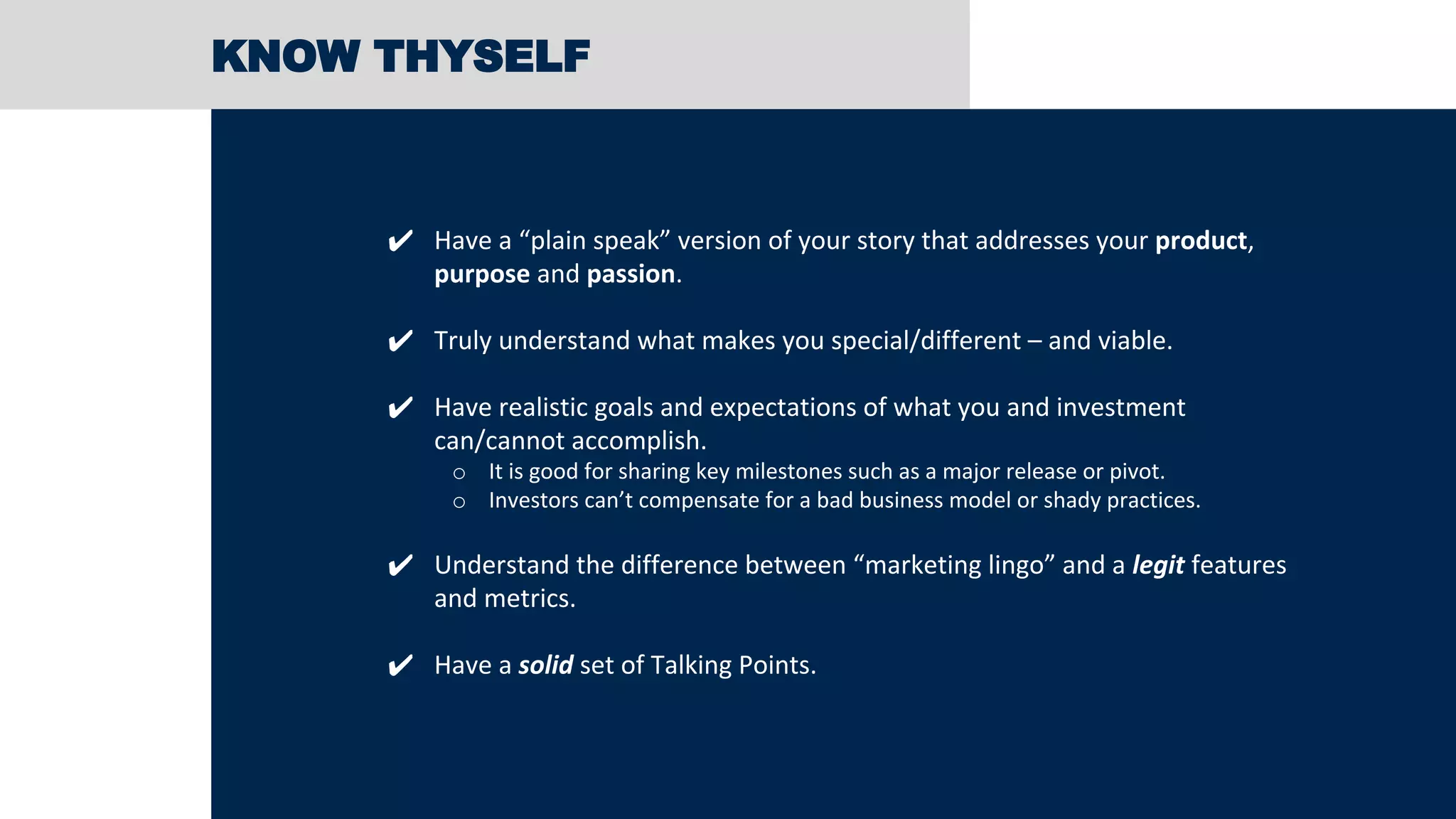
KNOW THYSELF
✔ Have a “plain speak” version of your story that addresses your product,
purpose and passion.
✔ Truly understand what makes you special/different – and viable.
✔ Have realistic goals and expectations of what you and investment
can/cannot accomplish.
o It is good for sharing key milestones such as a major release or pivot.
o Investors can’t compensate for a bad business model or shady practices.
✔ Understand the difference between “marketing lingo” and a legit features
and metrics.
✔ Have a solid set of Talking Points.
UNDERSTAND THE INVESTOR
• Most investors aren’t your enemy, but they’re not your friend either.
• Seek investors that align with your audience (some are general, while others
have a niche).
• Credible investors feel obligated to explore alternatives (or why you may/may
not succeed).
• There’s often a bias toward conflict and negative outcomes (disruption),
meaning “good” stories are harder to get across the goal line.
• Understand they work under deadlines of their own, shoestring staff and a ton
of pressure.
• Research who you intend to pitch and have a good handle of their personal
interests.
DURING
WHAT TO DO
• Approach with legit investment opportunity,
starting with a great “why” or “team.”
• Know your Talking Points very well.
• Be concise and speak clearly.
• Stay true to your vision, values and goals.
• Use transitions to pivot away from negatives.
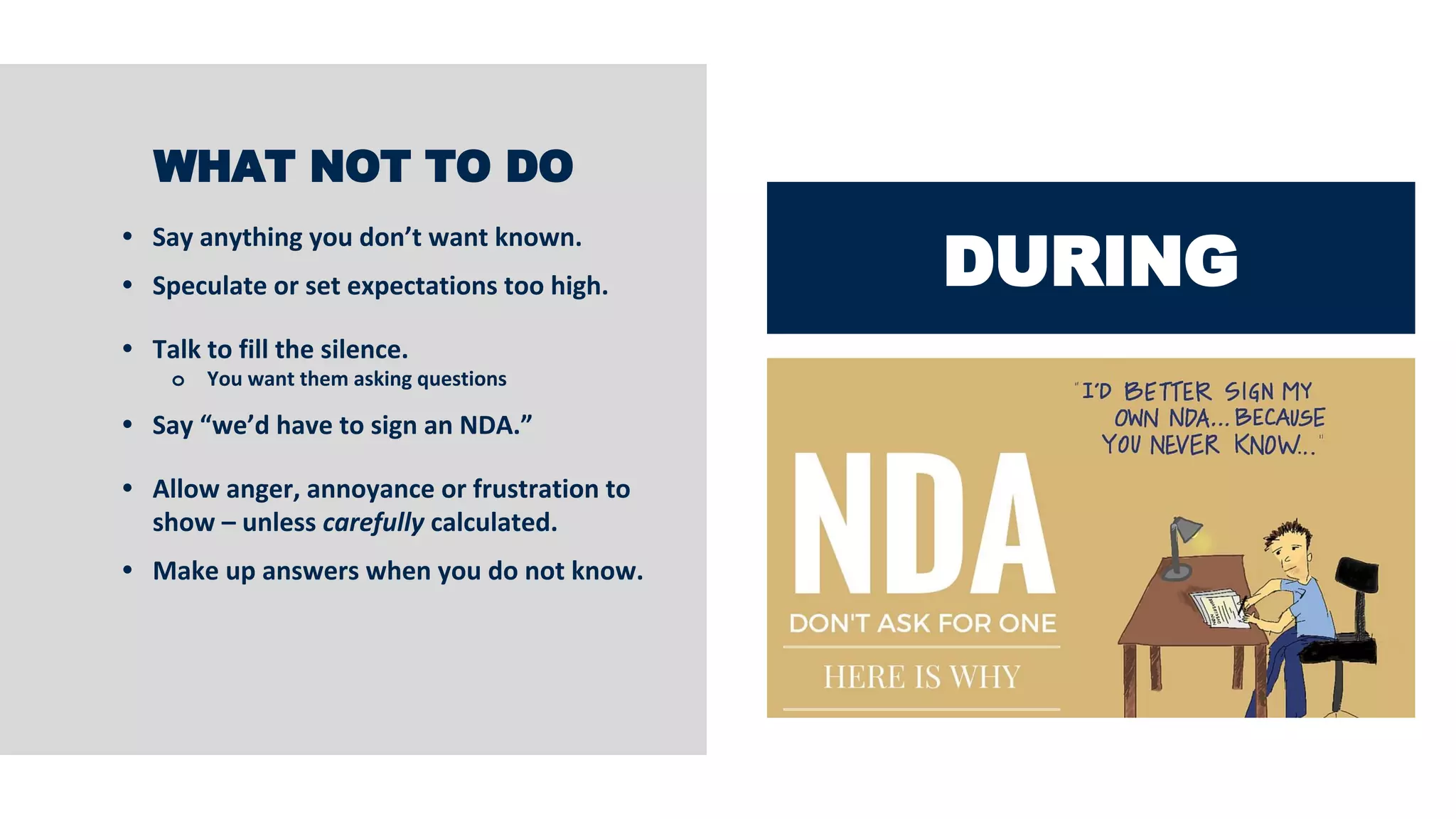
DURING
WHAT NOT TO DO
• Say anything you don’t want known.
• Speculate or set expectations too high.
• Talk to fill the silence.
o You want them asking questions
• Say “we’d have to sign an NDA.”
• Allow anger, annoyance or frustration to
show – unless carefully calculated.
• Make up answers when you do not know.
Think of your responses more like a game of chess than checkers.
It’s a their job to ask you anything they want.
It’s your obligation to answer in a way that’s best for the organization.
DURING
IF TOO MUCH TO REMEMBER, THEN FOCUS ON THIS...
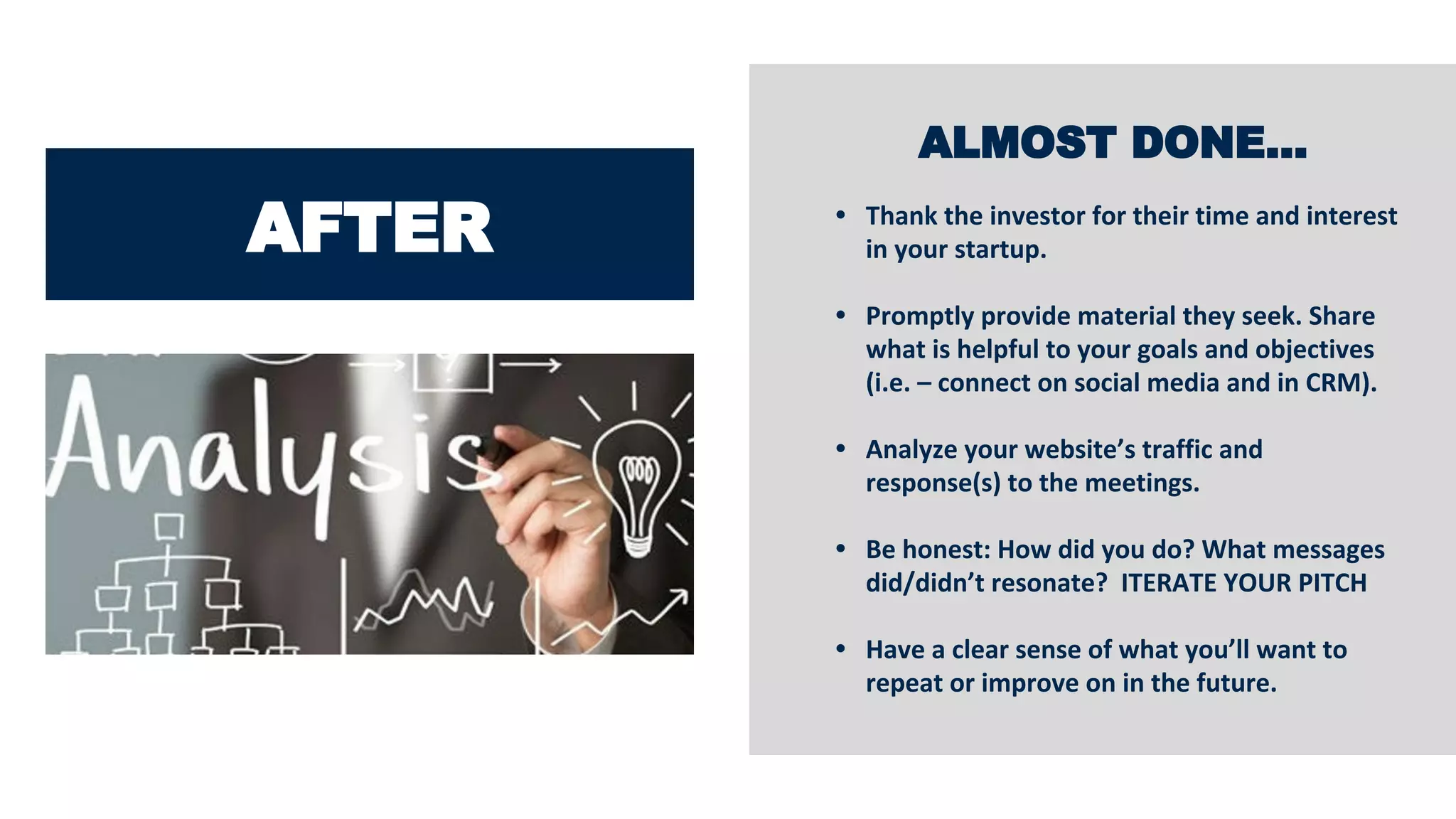
AFTER
ALMOST DONE…
• Thank the investor for their time and interest
in your startup.
• Promptly provide material they seek. Share
what is helpful to your goals and objectives
(i.e. – connect on social media and in CRM).
• Analyze your website’s traffic and
response(s) to the meetings.
• Be honest: How did you do? What messages
did/didn’t resonate? ITERATE YOUR PITCH
• Have a clear sense of what you’ll want to
repeat or improve on in the future.
PR TIPS FOR
START-UPS
Before, During and After
You Approach the Media
The SAME slides but
teaching how to talk with
journalists
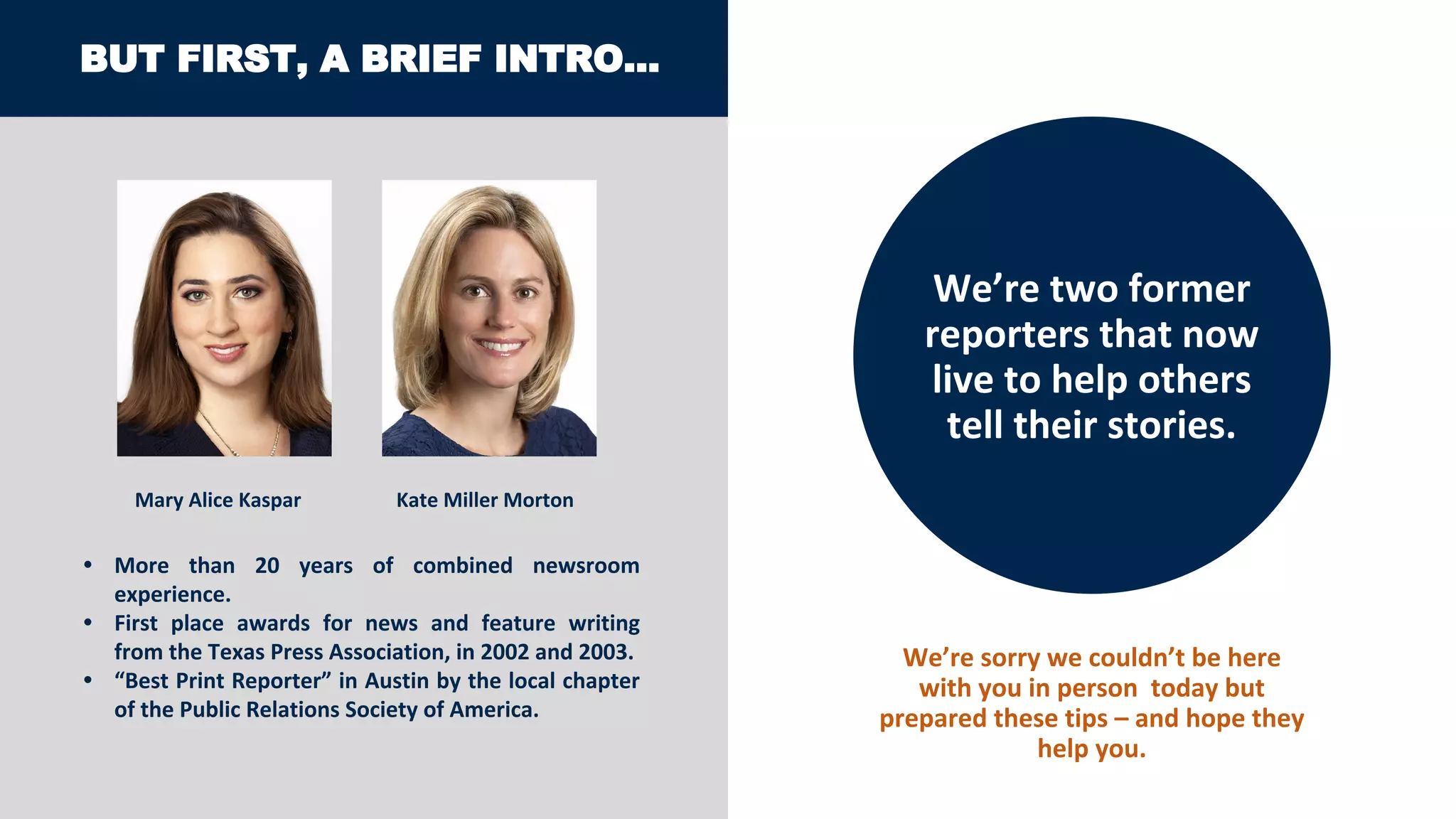
BUT FIRST, A BRIEF INTRO…
We’re two former
reporters that now
live to help others
tell their stories.
Mary Alice Kaspar Kate Miller Morton
• More than 20 years of combined newsroom
experience.
• First place awards for news and feature writing
from the Texas Press Association, in 2002 and 2003.
• “Best Print Reporter” in Austin by the local chapter
of the Public Relations Society of America.
We’re sorry we couldn’t be here
with you in person today but
prepared these tips – and hope they
help you.
Mary Alice Kaspar
Cell: (512) 963-1096
Email: mak@compass-com.com
Kate Miller Morton
Cell: (512) 922-6277
Email: kate@compass-com.comTHANK YOU
Please reach out if we can be of further assistance. www.Compass-Com.com
How to get in touch:
BEFORE
KNOW THYSELF
UNDERSTAND THE MEDIA
KNOW THYSELF
✔ Have a “plain speak” version of your story that addresses your product,
purpose and passion.
✔ Truly understand what makes you special/different – and viable.
✔ Have realistic goals and expectations of what coverage can/cannot
accomplish.
o It is good for sharing key milestones such as getting funding or a landing a key
customer.
o Even “positive” press can’t compensate for a bad business model or shady practices.
✔ Understand the difference between “marketing lingo” and a legit news peg.
✔ Have a solid set of Talking Points.
UNDERSTAND THE MEDIA
• Most reporters aren’t your enemy, but they’re not your friend either.
• Seek stories that appeal to their audience (some are general, while others
have a niche).
• Credible outlets feel obligated to report “both sides” (or why you may/may not
succeed).
• There’s often a bias toward conflict and negative news, meaning “good” news
stories are harder to get across the goal line.
• Understand they work under tight deadlines, shoestring staff and a ton of
pressure.
• Research who you intend to pitch and have a good handle of their reporting
style.
DURING
WHAT TO DO
• Approach with legit news, starting with a
great “peg” or “hook.”
• Know your Talking Points very well.
• Be concise and speak clearly.
• Repeat, repeat, repeat. Unless it’s live TV, no
one will know.
• Stay true to your vision, values and goals.
• Use transitions to pivot away from negatives.
DURING
WHAT NOT TO DO
• Say anything you don’t want reported.
• Speculate or set expectations too high.
o What you say can be used against you in the
future.
• Talk to fill the silence.
o Instead, ask “is there anything else?”
• Say “no comment.”
o It’s better to pivot.
• Allow anger, annoyance or frustration to
show – unless carefully calculated.
• Make up answers when you do not know.
Think of your responses more like a game of chess than checkers.
It’s a reporter’s job to ask you anything they want.
It’s your obligation to answer in a way that’s best for the organization.
DURING
IF THE REST IS TOO MUCH TO REMEMBER, THEN FOCUS ON THIS...
AFTER
ALMOST DONE…
• Thank the reporter for their time and
interest in your news.
• Review all coverage. Share what is helpful to
your goals and objectives (i.e. – on your
website and social media).
• Analyze your website’s traffic and targeted
audience(s) response to the coverage.
• Be honest: How did you do? Spokesperson
stay on point? What messages did/didn’t
resonate?
• Have a clear sense of what you’ll want to
repeat or improve on in the future.
Every organization knows WHAT they
do: their products or services.
Some organizations know HOW they do
it. This sets them apart from
competition and makes them special.
Few organizations know WHY they do it.
Why is not about making money; that’s
the result. It’s a purpose or cause, a
belief which is the reason the
organization exists.
Google’s mission
To organize the world’s information and
make it universally accessible and useful
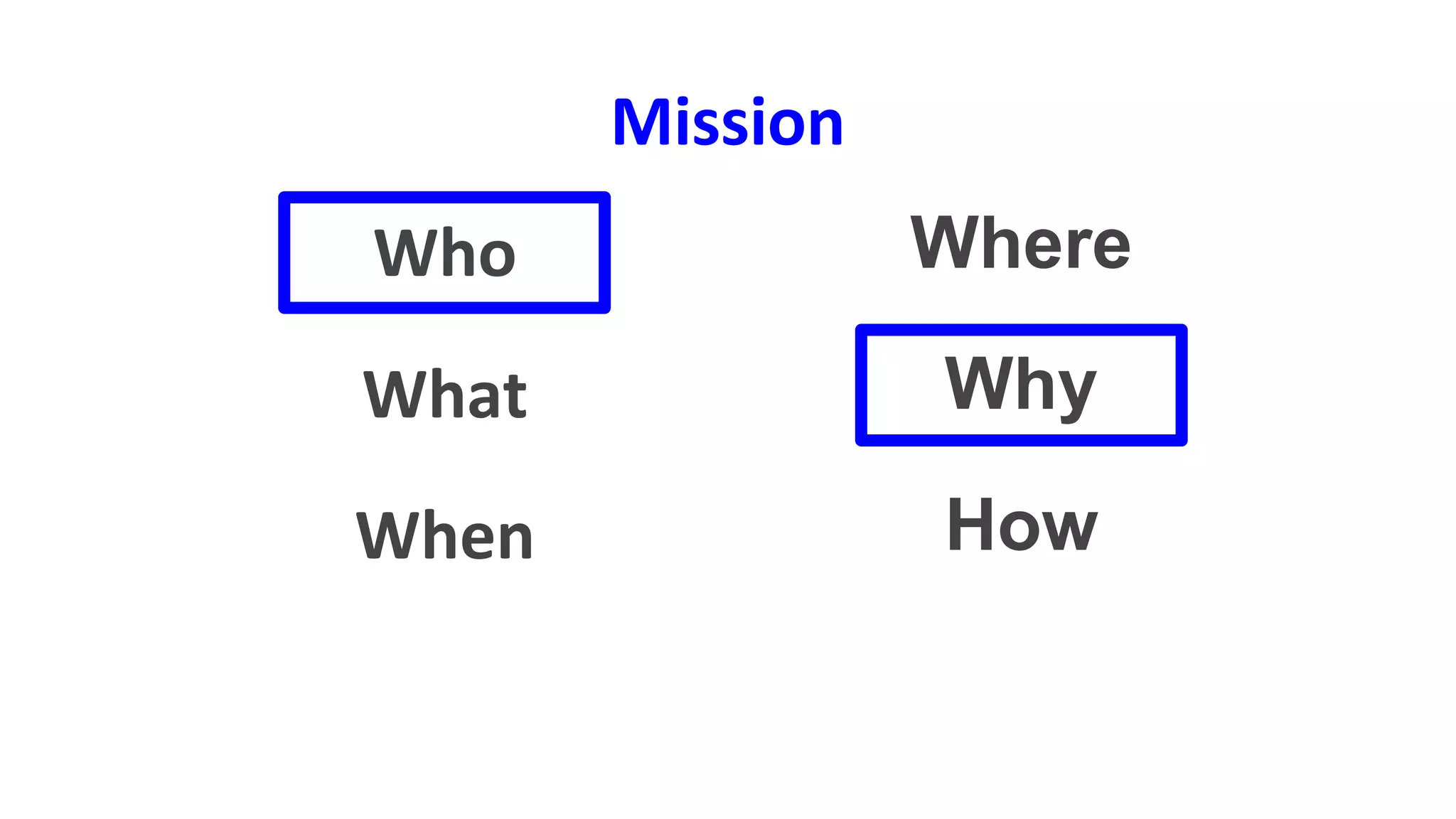
Who
What
When
Where
Why
How
Who
What
When
Where
Why
How
Mission
Who
What
When
Where
Why
How
Vision
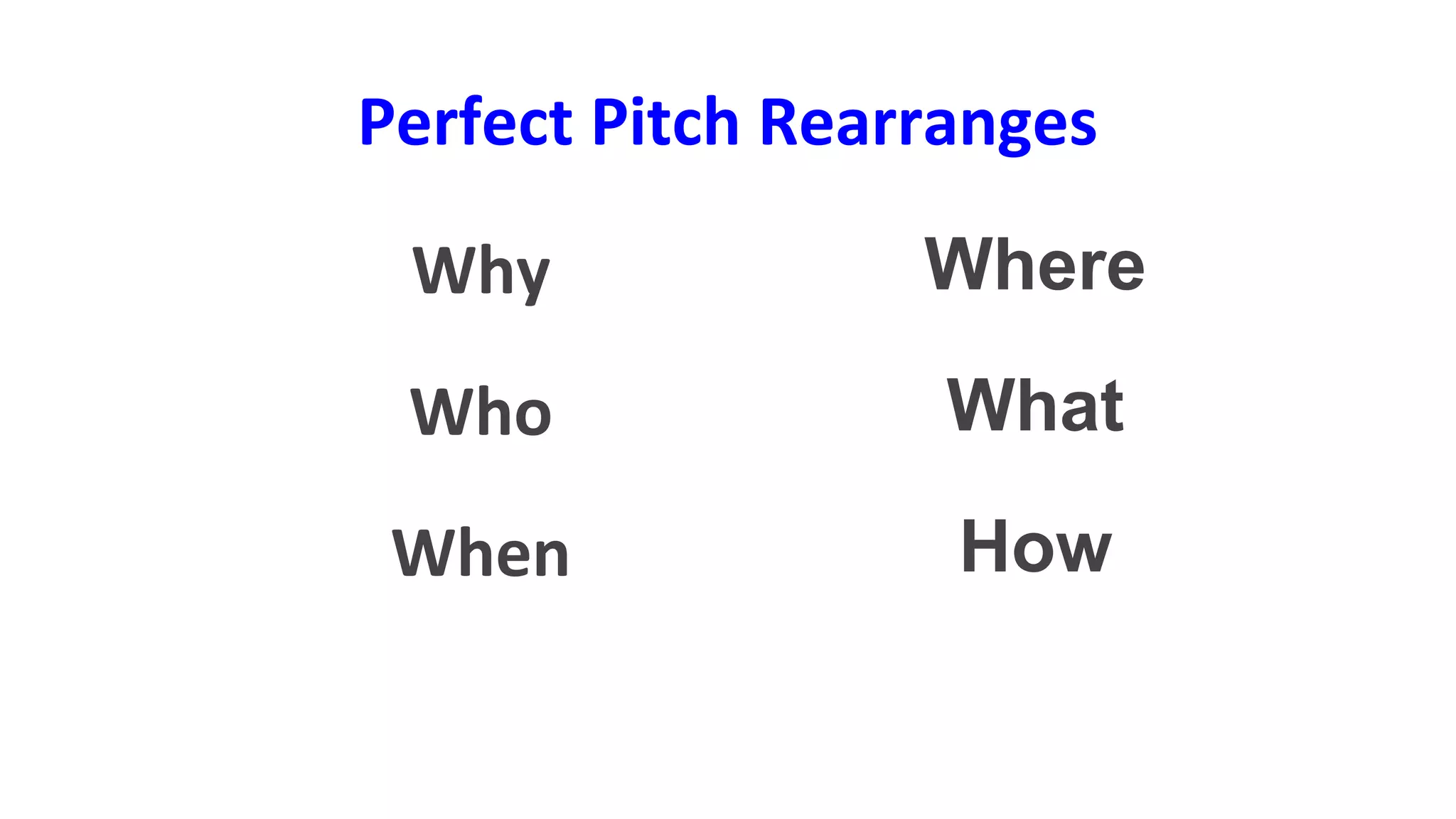
Why
Who
When
Where
What
How
Perfect Pitch Rearranges
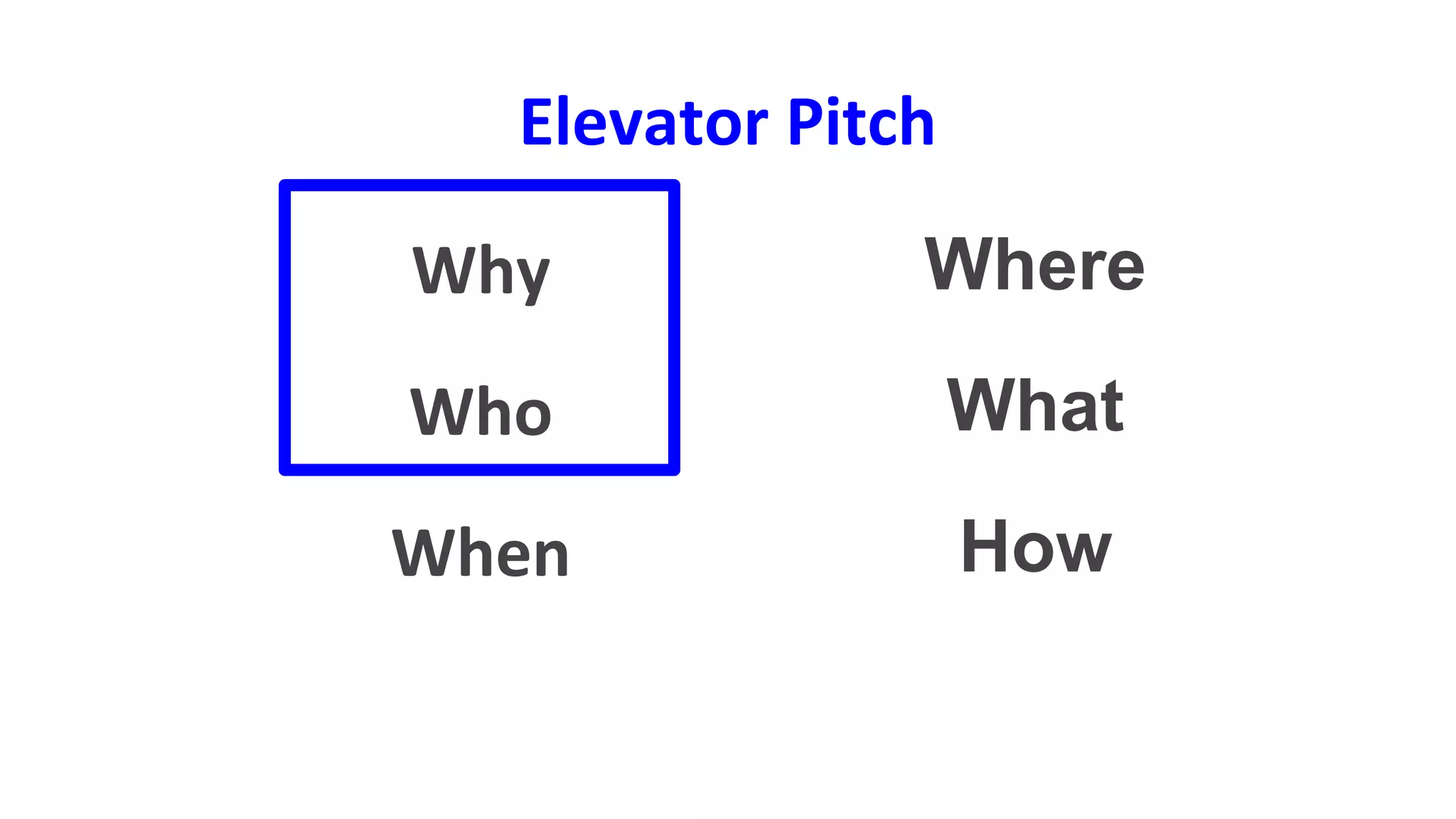
Why
Who
When
Where
What
How
Elevator Pitch
Why
Who
When
Where
What
How
Two Minutes
Why Who When
Mission
Who Where When
Vision

Vision / Mission and Validation

  • 1.
  • 2.
    KNOW THYSELF ✔ Havea “plain speak” version of your story that addresses your product, purpose and passion. ✔ Truly understand what makes you special/different – and viable. ✔ Have realistic goals and expectations of what you and investment can/cannot accomplish. o It is good for sharing key milestones such as a major release or pivot. o Investors can’t compensate for a bad business model or shady practices. ✔ Understand the difference between “marketing lingo” and a legit features and metrics. ✔ Have a solid set of Talking Points.
  • 3.
    UNDERSTAND THE INVESTOR •Most investors aren’t your enemy, but they’re not your friend either. • Seek investors that align with your audience (some are general, while others have a niche). • Credible investors feel obligated to explore alternatives (or why you may/may not succeed). • There’s often a bias toward conflict and negative outcomes (disruption), meaning “good” stories are harder to get across the goal line. • Understand they work under deadlines of their own, shoestring staff and a ton of pressure. • Research who you intend to pitch and have a good handle of their personal interests.
  • 4.
    DURING WHAT TO DO •Approach with legit investment opportunity, starting with a great “why” or “team.” • Know your Talking Points very well. • Be concise and speak clearly. • Stay true to your vision, values and goals. • Use transitions to pivot away from negatives.
  • 5.
    DURING WHAT NOT TODO • Say anything you don’t want known. • Speculate or set expectations too high. • Talk to fill the silence. o You want them asking questions • Say “we’d have to sign an NDA.” • Allow anger, annoyance or frustration to show – unless carefully calculated. • Make up answers when you do not know.
  • 6.
    Think of yourresponses more like a game of chess than checkers. It’s a their job to ask you anything they want. It’s your obligation to answer in a way that’s best for the organization. DURING IF TOO MUCH TO REMEMBER, THEN FOCUS ON THIS...
  • 7.
    AFTER ALMOST DONE… • Thankthe investor for their time and interest in your startup. • Promptly provide material they seek. Share what is helpful to your goals and objectives (i.e. – connect on social media and in CRM). • Analyze your website’s traffic and response(s) to the meetings. • Be honest: How did you do? What messages did/didn’t resonate? ITERATE YOUR PITCH • Have a clear sense of what you’ll want to repeat or improve on in the future.
  • 8.
    PR TIPS FOR START-UPS Before,During and After You Approach the Media
  • 9.
    The SAME slidesbut teaching how to talk with journalists
  • 10.
    BUT FIRST, ABRIEF INTRO… We’re two former reporters that now live to help others tell their stories. Mary Alice Kaspar Kate Miller Morton • More than 20 years of combined newsroom experience. • First place awards for news and feature writing from the Texas Press Association, in 2002 and 2003. • “Best Print Reporter” in Austin by the local chapter of the Public Relations Society of America. We’re sorry we couldn’t be here with you in person today but prepared these tips – and hope they help you.
  • 11.
    Mary Alice Kaspar Cell:(512) 963-1096 Email: mak@compass-com.com Kate Miller Morton Cell: (512) 922-6277 Email: kate@compass-com.comTHANK YOU Please reach out if we can be of further assistance. www.Compass-Com.com How to get in touch:
  • 12.
  • 13.
    KNOW THYSELF ✔ Havea “plain speak” version of your story that addresses your product, purpose and passion. ✔ Truly understand what makes you special/different – and viable. ✔ Have realistic goals and expectations of what coverage can/cannot accomplish. o It is good for sharing key milestones such as getting funding or a landing a key customer. o Even “positive” press can’t compensate for a bad business model or shady practices. ✔ Understand the difference between “marketing lingo” and a legit news peg. ✔ Have a solid set of Talking Points.
  • 14.
    UNDERSTAND THE MEDIA •Most reporters aren’t your enemy, but they’re not your friend either. • Seek stories that appeal to their audience (some are general, while others have a niche). • Credible outlets feel obligated to report “both sides” (or why you may/may not succeed). • There’s often a bias toward conflict and negative news, meaning “good” news stories are harder to get across the goal line. • Understand they work under tight deadlines, shoestring staff and a ton of pressure. • Research who you intend to pitch and have a good handle of their reporting style.
  • 15.
    DURING WHAT TO DO •Approach with legit news, starting with a great “peg” or “hook.” • Know your Talking Points very well. • Be concise and speak clearly. • Repeat, repeat, repeat. Unless it’s live TV, no one will know. • Stay true to your vision, values and goals. • Use transitions to pivot away from negatives.
  • 16.
    DURING WHAT NOT TODO • Say anything you don’t want reported. • Speculate or set expectations too high. o What you say can be used against you in the future. • Talk to fill the silence. o Instead, ask “is there anything else?” • Say “no comment.” o It’s better to pivot. • Allow anger, annoyance or frustration to show – unless carefully calculated. • Make up answers when you do not know.
  • 17.
    Think of yourresponses more like a game of chess than checkers. It’s a reporter’s job to ask you anything they want. It’s your obligation to answer in a way that’s best for the organization. DURING IF THE REST IS TOO MUCH TO REMEMBER, THEN FOCUS ON THIS...
  • 18.
    AFTER ALMOST DONE… • Thankthe reporter for their time and interest in your news. • Review all coverage. Share what is helpful to your goals and objectives (i.e. – on your website and social media). • Analyze your website’s traffic and targeted audience(s) response to the coverage. • Be honest: How did you do? Spokesperson stay on point? What messages did/didn’t resonate? • Have a clear sense of what you’ll want to repeat or improve on in the future.
  • 21.
    Every organization knowsWHAT they do: their products or services. Some organizations know HOW they do it. This sets them apart from competition and makes them special. Few organizations know WHY they do it. Why is not about making money; that’s the result. It’s a purpose or cause, a belief which is the reason the organization exists.
  • 24.
    Google’s mission To organizethe world’s information and make it universally accessible and useful
  • 25.
  • 26.
  • 27.
  • 28.
  • 29.
  • 30.
  • 31.
    Why Who When Mission WhoWhere When Vision