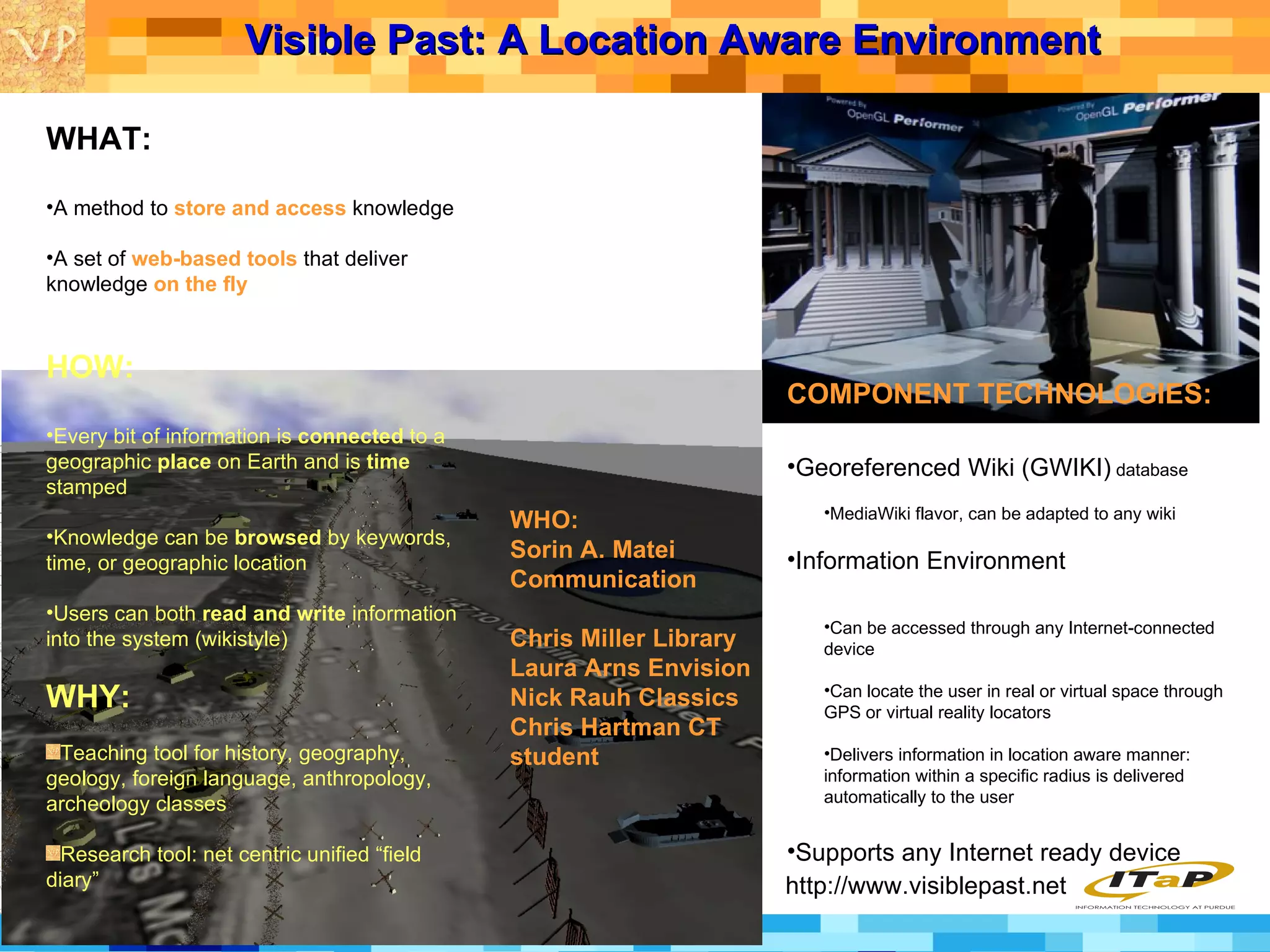
Visible Past: A Location Aware Environment   http://www.visiblepast.net WHAT: A method to  store and access  knowledge A set of  web-based tools  that deliver knowledge  on the fly HOW: Every bit of information is  connected  to a geographic  place  on Earth and is  time  stamped Knowledge can be  browsed  by keywords, time, or geographic location Users can both  read and write  information into the system (wikistyle) WHY: Teaching tool for history, geography, geology, foreign language, anthropology, archeology classes Research tool: net centric unified “field diary” COMPONENT TECHNOLOGIES: Georeferenced Wiki (GWIKI)  database  MediaWiki flavor, can be adapted to any wiki Information Environment Can be accessed through any Internet-connected device Can locate the user in real or virtual space through GPS or virtual reality locators Delivers information in location aware manner: information within a specific radius is delivered automatically to the user Supports any Internet ready device WHO: Sorin A. Matei Communication Chris Miller Library Laura Arns Envision Nick Rauh Classics Chris Hartman CT student
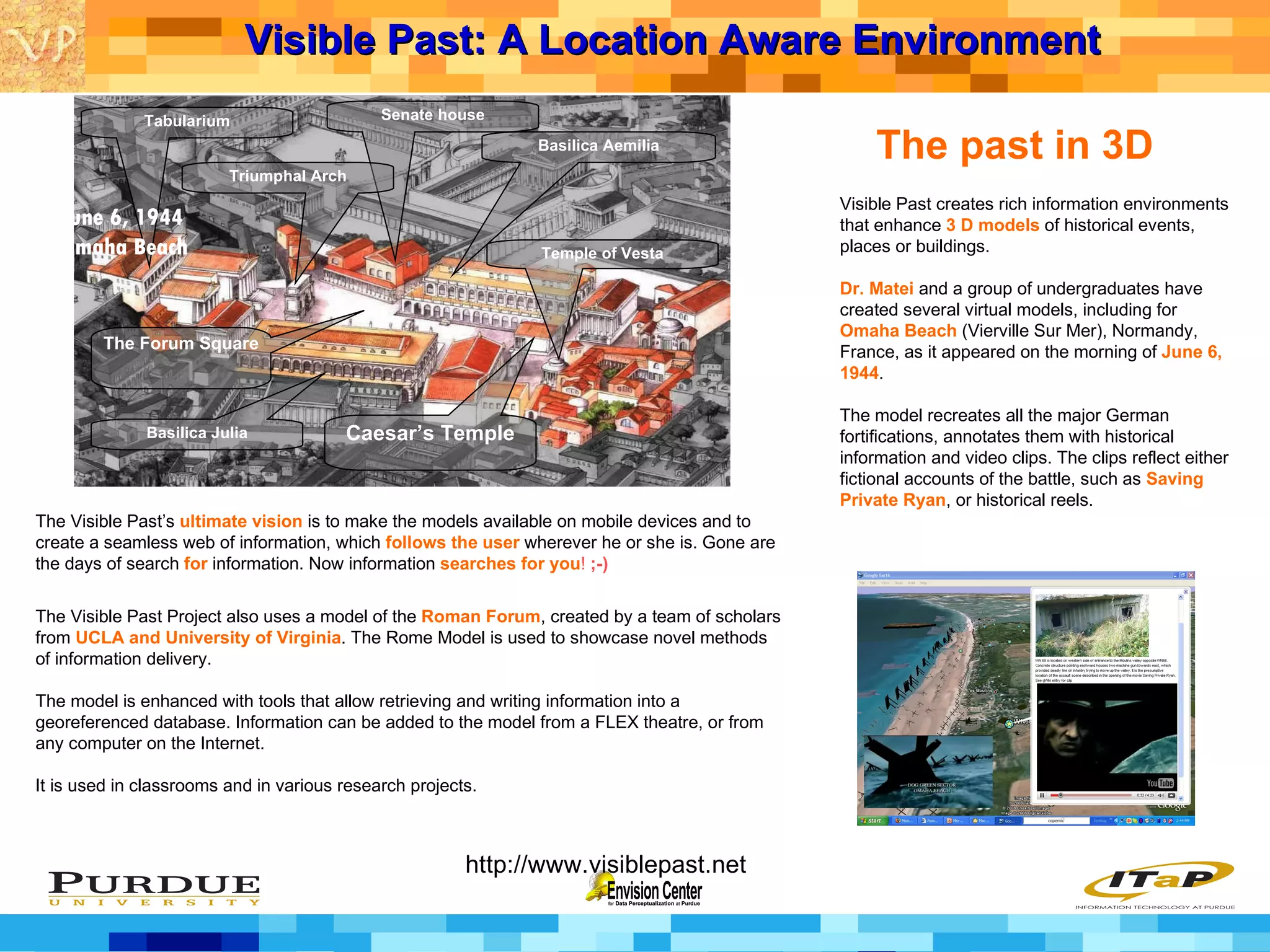
The past in 3D Visible Past creates rich information environments that enhance  3 D models  of historical events, places or buildings.  Dr. Matei  and a group of undergraduates have created several virtual models, including for  Omaha Beach  (Vierville Sur Mer), Normandy, France, as it appeared on the morning of  June 6, 1944 . The model recreates all the major German fortifications, annotates them with historical information and video clips. The clips reflect either fictional accounts of the battle, such as  Saving Private Ryan , or historical reels.  The Visible Past Project also uses a model of the  Roman Forum , created by a team of scholars from  UCLA and University of Virginia . The Rome Model is used to showcase novel methods of information delivery.  The model is enhanced with tools that allow retrieving and writing information into a georeferenced database. Information can be added to the model from a FLEX theatre, or from any computer on the Internet. It is used in classrooms and in various research projects. The Visible Past’s  ultimate vision  is to make the models available on mobile devices and to create a seamless web of information, which  follows the user  wherever he or she is. Gone are the days of search  for  information. Now information  searches for you !  ;-) Visible Past: A Location Aware Environment   http://www.visiblepast.net June 6, 1944 Omaha Beach Basilica Aemilia Tabularium Basilica Julia Caesar’s Temple Senate house The Forum Square Triumphal Arch Temple of Vesta

Visible Past

  • 1.
    Visible Past: ALocation Aware Environment http://www.visiblepast.net WHAT: A method to store and access knowledge A set of web-based tools that deliver knowledge on the fly HOW: Every bit of information is connected to a geographic place on Earth and is time stamped Knowledge can be browsed by keywords, time, or geographic location Users can both read and write information into the system (wikistyle) WHY: Teaching tool for history, geography, geology, foreign language, anthropology, archeology classes Research tool: net centric unified “field diary” COMPONENT TECHNOLOGIES: Georeferenced Wiki (GWIKI) database MediaWiki flavor, can be adapted to any wiki Information Environment Can be accessed through any Internet-connected device Can locate the user in real or virtual space through GPS or virtual reality locators Delivers information in location aware manner: information within a specific radius is delivered automatically to the user Supports any Internet ready device WHO: Sorin A. Matei Communication Chris Miller Library Laura Arns Envision Nick Rauh Classics Chris Hartman CT student
  • 2.
    The past in3D Visible Past creates rich information environments that enhance 3 D models of historical events, places or buildings. Dr. Matei and a group of undergraduates have created several virtual models, including for Omaha Beach (Vierville Sur Mer), Normandy, France, as it appeared on the morning of June 6, 1944 . The model recreates all the major German fortifications, annotates them with historical information and video clips. The clips reflect either fictional accounts of the battle, such as Saving Private Ryan , or historical reels. The Visible Past Project also uses a model of the Roman Forum , created by a team of scholars from UCLA and University of Virginia . The Rome Model is used to showcase novel methods of information delivery. The model is enhanced with tools that allow retrieving and writing information into a georeferenced database. Information can be added to the model from a FLEX theatre, or from any computer on the Internet. It is used in classrooms and in various research projects. The Visible Past’s ultimate vision is to make the models available on mobile devices and to create a seamless web of information, which follows the user wherever he or she is. Gone are the days of search for information. Now information searches for you ! ;-) Visible Past: A Location Aware Environment http://www.visiblepast.net June 6, 1944 Omaha Beach Basilica Aemilia Tabularium Basilica Julia Caesar’s Temple Senate house The Forum Square Triumphal Arch Temple of Vesta