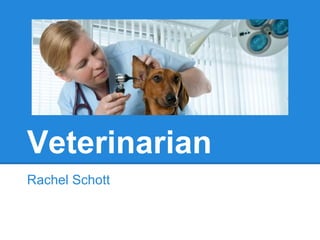
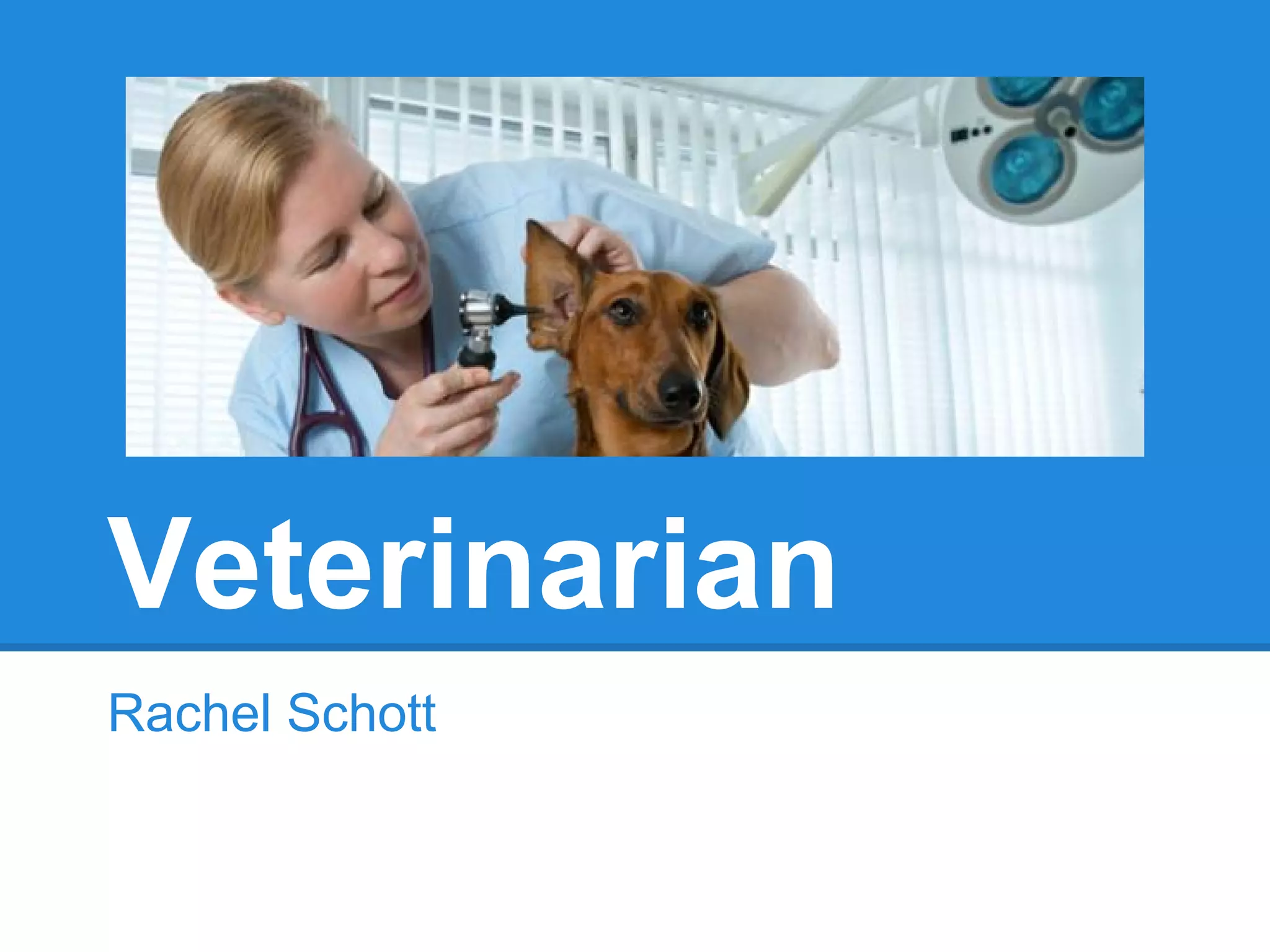
Veterinarian
Rachel Schott
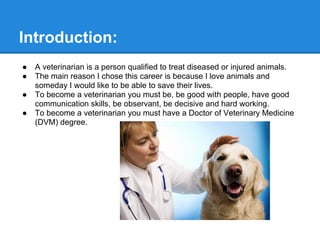
● A veterinarian is a person qualified to treat diseased or injured animals.
● The main reason I chose this career is because I love animals and
someday I would like to be able to save their lives.
● To become a veterinarian you must be, be good with people, have good
communication skills, be observant, be decisive and hard working.
● To become a veterinarian you must have a Doctor of Veterinary Medicine
(DVM) degree.
Introduction:
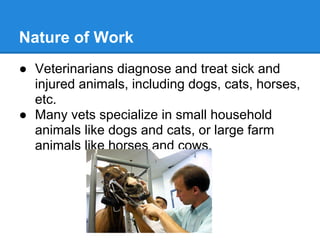
● Veterinarians diagnose and treat sick and
injured animals, including dogs, cats, horses,
etc.
● Many vets specialize in small household
animals like dogs and cats, or large farm
animals like horses and cows.
Nature of Work
Working Conditions
● Small Animal Vets:
○ Usually work in private places such as in an office or
in treatment rooms.
○ Usually work indoors.
● Large Animal Vets:
○ Usually work in mobile clinics.
○ Usually work outdoors.
Training, Qualifications, and
Advancement
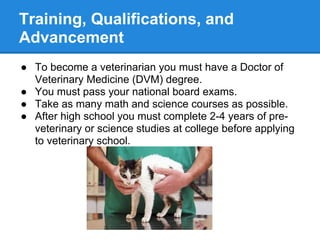
● To become a veterinarian you must have a Doctor of
Veterinary Medicine (DVM) degree.
● You must pass your national board exams.
● Take as many math and science courses as possible.
● After high school you must complete 2-4 years of pre-
veterinary or science studies at college before applying
to veterinary school.
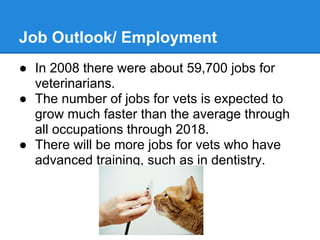
Job Outlook/ Employment
● In 2008 there were about 59,700 jobs for
veterinarians.
● The number of jobs for vets is expected to
grow much faster than the average through
all occupations through 2018.
● There will be more jobs for vets who have
advanced training, such as in dentistry.
Earnings
● $50,000 to $145,000 a year.
● The median is about $82,000 a year.
● Vets who work with big animals often earn
more than those who work with small
animals.
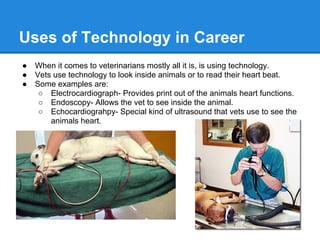
Uses of Technology in Career
● When it comes to veterinarians mostly all it is, is using technology.
● Vets use technology to look inside animals or to read their heart beat.
● Some examples are:
○ Electrocardiograph- Provides print out of the animals heart functions.
○ Endoscopy- Allows the vet to see inside the animal.
○ Echocardiograhpy- Special kind of ultrasound that vets use to see the
animals heart.
Summary
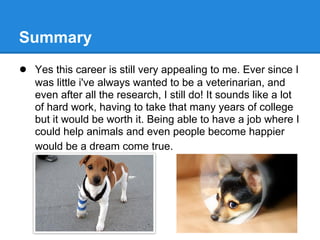
● Yes this career is still very appealing to me. Ever since I
was little i've always wanted to be a veterinarian, and
even after all the research, I still do! It sounds like a lot
of hard work, having to take that many years of college
but it would be worth it. Being able to have a job where I
could help animals and even people become happier
would be a dream come true.
Works Cited
● http://www.bls.gov/k12/nature04.htm
● http://public.careercruising.com/us/en
● http://www.therichest.org/salary/veterinarian/
● http://www.boardwalkanimalclinic.com/custom_content/c_185923_services.html
● http://www.militarytimesedge.com/education/college-news/ed_veterinarian_shortage_032309/
● http://www.jobshadow.com/interview-with-a-veterinarian/
● http://money.usnews.com/money/careers/slideshows/job-outlook-for-best-careers-2010/2

Veterinary slideshow (presentation of career)

  • 1.
  • 2.
    ● A veterinarianis a person qualified to treat diseased or injured animals. ● The main reason I chose this career is because I love animals and someday I would like to be able to save their lives. ● To become a veterinarian you must be, be good with people, have good communication skills, be observant, be decisive and hard working. ● To become a veterinarian you must have a Doctor of Veterinary Medicine (DVM) degree. Introduction:
  • 3.
    ● Veterinarians diagnoseand treat sick and injured animals, including dogs, cats, horses, etc. ● Many vets specialize in small household animals like dogs and cats, or large farm animals like horses and cows. Nature of Work
  • 4.
    Working Conditions ● SmallAnimal Vets: ○ Usually work in private places such as in an office or in treatment rooms. ○ Usually work indoors. ● Large Animal Vets: ○ Usually work in mobile clinics. ○ Usually work outdoors.
  • 5.
    Training, Qualifications, and Advancement ●To become a veterinarian you must have a Doctor of Veterinary Medicine (DVM) degree. ● You must pass your national board exams. ● Take as many math and science courses as possible. ● After high school you must complete 2-4 years of pre- veterinary or science studies at college before applying to veterinary school.
  • 6.
    Job Outlook/ Employment ●In 2008 there were about 59,700 jobs for veterinarians. ● The number of jobs for vets is expected to grow much faster than the average through all occupations through 2018. ● There will be more jobs for vets who have advanced training, such as in dentistry.
  • 7.
    Earnings ● $50,000 to$145,000 a year. ● The median is about $82,000 a year. ● Vets who work with big animals often earn more than those who work with small animals.
  • 8.
    Uses of Technologyin Career ● When it comes to veterinarians mostly all it is, is using technology. ● Vets use technology to look inside animals or to read their heart beat. ● Some examples are: ○ Electrocardiograph- Provides print out of the animals heart functions. ○ Endoscopy- Allows the vet to see inside the animal. ○ Echocardiograhpy- Special kind of ultrasound that vets use to see the animals heart.
  • 9.
    Summary ● Yes thiscareer is still very appealing to me. Ever since I was little i've always wanted to be a veterinarian, and even after all the research, I still do! It sounds like a lot of hard work, having to take that many years of college but it would be worth it. Being able to have a job where I could help animals and even people become happier would be a dream come true.
  • 10.
    Works Cited ● http://www.bls.gov/k12/nature04.htm ●http://public.careercruising.com/us/en ● http://www.therichest.org/salary/veterinarian/ ● http://www.boardwalkanimalclinic.com/custom_content/c_185923_services.html ● http://www.militarytimesedge.com/education/college-news/ed_veterinarian_shortage_032309/ ● http://www.jobshadow.com/interview-with-a-veterinarian/ ● http://money.usnews.com/money/careers/slideshows/job-outlook-for-best-careers-2010/2