1
Venmo and Social Payments 1
Venmo was founded by two students at the University of Pennsylvania, Andrew Kortina and
Iqram Magdon-Ismail, who started working on a mobile payment prototype in 2007. After two
years of development, they figured out a way to allow users to transfer money to each other via
text messaging (SMS) on a phone. In 2009, with the help of angel investors, they launched the
mobile payment service. In the executive summary of their business plan, the founders wrote:
“The shift to mobile payments requires a service that captures the subtle gestures involved in
everyday cash exchanges. Venmo transactions are personal, with SMS notes that make payments
feel like conversations. Venmo's medium for maintaining these social nuances along with the
ability to make payments allows Venmo to take the stress out of exchanging money.”2
Only five months after its public launch3, Venmo was bought for $26.2 million by Braintree, a
major payment processing service with customers such as Uber and Airbnb. Initially,
transactions from all sources were completely free on Venmo. However, because it was losing
money on credit card transactions, Venmo decided to start charging for credit card transactions
and kept debit card and bank account-based transactions free to help grow the business. In 2013,
Braintree, including Venmo, was acquired by PayPal for $800 million. By January of 2016,
Venmo had reached $16 billion in transfer payments.4
"Venmo is the beloved way," says Dan Schulman, CEO of PayPal, "that millennials manage and
move their money." Given the 141% YOY increase in Venmo’s user base5, it is not surprising
that he expects to see “more change in the financial service industry in the next 5 years than we
have in the last 30 years, and that is going to be driven by technology, explosion of mobile, and
the digitization of money.”6 But what should Schulman do to ensure Venmo’s continued growth
in the highly competitive mobile payments industry?
Mobile Payments
Payments through mobile devices have taken the world by storm. Sometimes referred to as
mobile money or the mobile wallet, these digital payments are made in place of cash, checks, or
credit cards.7 To give a flavor of what the global landscape looks like for mobile payments,
below is a snapshot of key players in a range of markets.
Global players
In China, Alibaba's Alipay dominates. In China's strictly regulated banking market, payment
systems from Internet companies such as Alibaba offer customers more choice and flexibility
1 This ‘live case’ was developed by Professor Jonathon Cummings (Fuqua School of Business,Duke University)
with the invaluable help of Arjun Rattan and Tiffany Chen. As with other cases,it is intended to stimulate class
discussion ratherthan to illustrate effective or ineffective management practices.
2 http://kortina.net/essays/origins-of-venmo/
3 http://www.investopedia.com/articles/personal-finance/010715/venmo-its-business-model-and-competition.asp
4 http://www.investopedia.com/articles/personal-finance/010715/venmo-its-business-model-and-competition.asp
5 http://video.cnbc.com/gallery/?video=3000537822;
6 http://marketrealist.com/2016/07/drives-paypals-active-customers-accounts/
7 https://en.wikipedia.org/wiki/Mobile_payment
2
than traditional banks. With more than 120 million active users, Alipay is one of the few wallets
that has truly escalated its presence. Additionally, Alipay's ambitions are not limited to China.
Alipay recently announced plans for expanding the company to markets in Europe and India.8
Also in China is Tencent's WeChat Pay. The apps integrated payment platform has also been
extended, now offering its digital wallet proposition within a lifestyle engagement experience.
Primarily a social message platform, WeChat extended its services to payments in early 2014.
WeChat enables services that include hailing a taxi, ordering food, buying movie tickets, and
checking in for a flight. WeChat has also expanded outside of China and is now available in 20
countries, launching the first non-Chinese WeChat Wallet in South Africa in 2015.
In Europe, CheBanca's developed its WoW app in 2014. WoW allows smartphone payments,
including those for bills, taxi and parking fares, and enables users to load a prepaid card by using
an account at CheBanka, an Italian bank set forth by the Mediobanca Group. In Finland,
InVenture (a private equity firm that invests in tech startup companies) has also started
competing in the mobile payment space.9
In Africa, M-PESA continues to lead the continent in mobile money transfer payments, offering
mobile phone-based money transfer, financing, and micro-financing services to 20 million
people. It has revolutionized the way Kenya and Tanzania have conducted business since 2007
and has operations in Afghanistan, South Africa, India, Romania, and Albania.10 Within five
years, M-PESA proved formidable in the mobile payment market, and in 2013, experienced
explosive growth, when a staggering 43 percent of Kenya’s GDP flowed through its platform
and completed over 237 million person-to-person transactions.11
In the United States, the explosion of mobile payments and smartphone usage has led to multiple
opportunities across the US payments landscape. From initiating bank transfers online to paying
merchants in a few clicks, users in the market are accustomed to speed, convenience, and
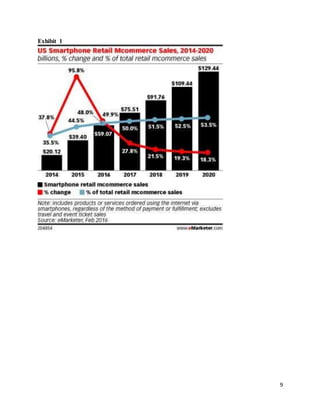
security. The growth of mobile commerce sales attests to the growing popularity of mobile
channels (see Exhibit 1). An exploration of the e-commerce landscape also reveals that
Smartphones’ share of total retail sales will be more than double 2014’s while mobile commerce
will account for a third of US retail e-commerce sales.12
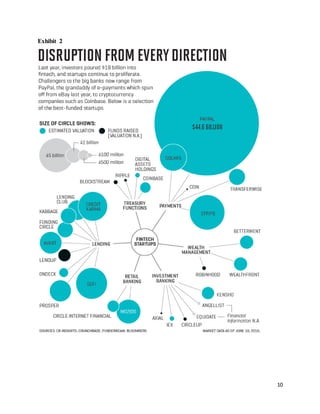
As a leader in the US payments industry (see Exhibit 2), PayPal has an interesting history. Back
in 1999, Confinity founders Peter Thiel, Max Levchin and Luke Nosek launched PayPal – a
radical technology allowing money to be transferred digitally. At the time, more and more
Americans were using the Internet to purchase goods and services, but a customer was required
to give his or her credit card number, or even more inconvenient, mail a physical check to
complete the transaction. This represented a major roadblock in the growth of the e-commerce
market. The fees charged by credit card companies made small transactions unfeasible, and a
8 http://www.cnbc.com/2016/04/05/alipay-to-launch-in-europe-as-alibaba-steps-up-payments-game.html
9 http://www.mintel.com/blog/finance-market-news/money2020-day-1-everyone-wants-a-piece-of-the-payments-pie
10 http://www.businessdailyafrica.com/Corporate-News/Vodafone-launches-M-Pesa-Ghana/539550-3031242-
xehcwiz/index.html
11 http://www.forbes.com/sites/danielrunde/2015/08/12/m-pesa-and-the-rise-of-the-global-mobile-money-market/
12 https://www.statista.com/statistics/276636/smartphones-us-retail-m-commerce-sales/
3
substantial portion of the market – those that couldn’t qualify for a credit card – couldn’t
participate13.
In 2000, after merging with X.com – one of Elon Musk’s early start-ups – Confinity began
partnering with another relatively new firm – eBay. The e-commerce site was taking off, and the
potential synergies that existed were apparent to leaders from both companies14. Confinity
needed an established customer base to roll out its product, and eBay was desperate to find a way
for its customers to easily transfer currency for the purchase of goods on their site. Confinity
soon changed its official name to PayPal, and in 2002, with 13 million members and revenues of
$105 million, the firm went public at a valuation of $777 million. Only a few months after the
IPO, eBay abandoned its efforts to create a proprietary online payment system and acquired
PayPal for $1.5 billion. In July 2015, after more than a decade of tremendous growth, PayPal
spun off from eBay and now operates as an independent firm15 valued at $49 billion.16
US trends in mobile and smartphone usage
With PayPal leading the charge in payments, it should come as no surprise that it sees a bright
future in mobile and smartphone devices. Smartphones have become a de facto part of our daily
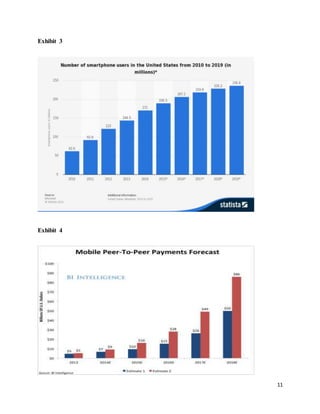
lives; smartphone users in the US (see Exhibit 3) in 2019 are predicted to be approximately 75%
of the forecasted US population17; a very high penetration rate that exemplifies the ubiquity of
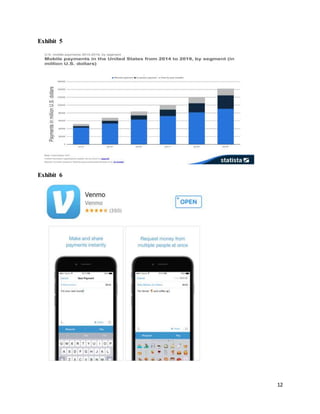
smartphones. When coupled with the expected rise in mobile peer-to-peer payment transactions
(see Exhibit 4), we can expect that the market will continue to grow.
US retailers are experiencing an increase in mobile payments (see Exhibit 5).18 The acceptance
of mobile payments by retailers indicates that they recognize the rise in mobile payments as
accompanying growth within the consumer-shopping market. This market, forecasted to expand
within the next 2-5 years, offers payment providers a chance to grow their market size as mobile
payments rapidly increase in just a few short years.19
Factoring in that the number of smartphone users will increase in the next five years, the growth
environment for the mobile payments space is very promising. Both mobile banking and digital
wallets are heavily demanded by global consumers as payment apps are ranked high among the
most downloaded financial apps across the various app stores.20 Though the payment apps
typically require two-factor authentication, there are still concerns about the potential for fraud
given that the money transfer does not occur immediately.21
13 http://www.economist.com/node/977614?zid=291&ah=906e69ad01d2ee51960100b7fa502595
14 http://www.economist.com/node/1227965?zid=291&ah=906e69ad01d2ee51960100b7fa502595
15 http://www.wsj.com/articles/ebay-revenue-rises-as-earnings-top-expectations-1437048364
16 https://www.google.com/finance?q=NASDAQ:PYPL
17 Calculations based on US population estimates of 312 million: ttps://www.gwu.edu/~forcpgm/Ortman.pdf
18 http://www.statista.com/statistics/244312/mobile-payment-usage-methods-in-the-us/
19 Ibid.
20 Ibid.
21 http://time.com/money/4036511/venmo-more-check-than-cash/
4
Decoupling of financial services
A key trend across the financial services domain over the last few years has been the unbundling
of service offerings traditionally provided as part of a package. A notable instance is the advent
of nonbank debit cards, such as the Sun Trust prepaid MasterCard.
Traditionally, users could make bank transfers to other users only if they transferred funds from
their checking or savings accounts through their bank interfaces to the traditional banking
payments network. However, innovations such as digital wallets allowed users to make payments
from the same bank accounts but without having to go through their bank interfaces.
Furthermore, the ability to link credit cards to digital wallets enabled users to draw on credit
while transacting online, both with merchants and other users. Users can now also have account
balances with other payments providers, for example, by using a digital wallet balance as
opposed to relying only on their bank accounts’ balances for making payments. In general, this
decoupling has negatively impacted banks because they lose transaction fees when users bypass
them to transact online using digital wallets.
Social payments
People are social, and they connect across online platforms based on a simple yet powerful
premise; people want to know what their friends are doing, and they want to tell their friends
what they are doing. Users now have the ability to share photos with friends, their views on the
latest trending topics with strangers, or restaurant or movie reviews with the world. The more
they can connect with the people around them the more they value online platforms.
Social payments can be thought of as being at the intersection of social media and payments.
Whether it is a payment made to friends for a night out on the town, a visit to the mall, or
hanging out at the newest coffee bistro, users can have a record of the experience, reminisce on it
(“comments”) while making or receiving the payment, and even “like” other users’ experiences.
A uniquely different way of engaging with the world, it allows users to transact with friends and
provide their network another way of knowing what they are doing.
Venmo’s model
Venmo makes the process of social payments easy, including the ability to pay your friends
directly as well as to share your expenses with friends (e.g., transactions that users make are
published for their friends to see unless the feature is turned off22). From startup to mobile
payment giant, Venmo quickly evolved from text-messaging payments into an app payment
system that involves social media features.
Venmo offers convenient access to a mobile-based app payment system. Individuals are not
charged for the core service of sending or receiving money; rather they are charged a 3% fee if
the payment is from a credit card23. Using a Venmo account balance, bank account, or debit card
22 https://help.venmo.com/hc/en-us/articles/210413717-How-do-I-keep-my-payment-activity-private-
23 https://help.venmo.com/hc/en-us/articles/210413677-How-do-I-add-a-credit-debit-card-
5
is free. Also, users can still make a payment despite having insufficient funds in their Venmo
account, as the shortfall is sourced from the linked primary funding source (e.g., bank account,
credit card, or debit card). The power of Venmo is the focus on creating a peer-to-peer network
which is based on convenience and socializing the payments process. Consequently, across teens
and college campuses, Venmo’s popularity has skyrocketed.
Technology development
Venmo has incorporated technology in a way that attracts app users, for example, its simple user
interface24 (see Exhibit 6): users link up debit cards, find friends, and are ready to go. Four clicks
– including opening the app – are usually all that are required to send or receive a payment from
users’ Venmo contacts. The simplicity of Venmo is predicated on a complex ecosystem of
technologies at the backend. As slate.com puts it, “Intertwined, a few straightforward, yet
powerful technologies offer mobile payment users much more than what appears to be a simple
blue app emblazoned with lone white ‘V.’“ 25
For Venmo to process any transaction, it needs another business with the technology to securely
complete financial transactions made on its app platform. In comes Braintree (its original parent
company), to assist in connecting its app users to one another, thus paving the road toward
dominating the mobile payment market.26 Braintree provided Venmo the ability to create a
method for processing payments made with outside retailers in the form of “Venmo Touch.”27
The importance of the touch technology, in which paying for a service or good is a few taps
away, is its ability to make its platform as user-friendly as possible. With “Venmo Touch,”
Venmo users can pay inside other apps using the “Pay with Venmo” option, similar to using a
PayPal button for making payments on a retailer’s website.
As Venmo experimented with launching its touch technology in other apps, it required software
that allowed merchants to authenticate their app users as well. By extension, this software had to
forge a connection between Venmo, everyday consumers, and its partnering merchants. The
solution was SDKs (software development kits). Venmo’s SDKs (with help from Braintree’s
money processing expertise) worked in conjunction to bridge the gap between third-party
merchants, iOS and Android operating systems, and Venmo users as they select the “Pay with
Venmo” option at checkout.28 Once a merchant has acquired the SDK, it has many payment
options to choose from to customize its particular needs, according to the type of business, from
a range of unique paying experiences on its mobile app.
The SDKs allow Venmo multiple options for integrating with third-parties who have a mobile
app presence:
24 http://www.bluefountainmedia.com/blog/best-mobile-app-designs-our-10-favorite-user-interfaces/
25 http://www.slate.com/articles/technology/future_tense/2013/08/venmo_review_the_w
26 https://www.braintreepayments.com/payment-methods/accept-venmo
27 https://www.braintreepayments.com/payment-methods/accept-venmo
28 https://developer.venmo.com/
6
● Splitwise uses Venmo's simple integration SDK on iOS and Android to let friends split
expenses with a couple of taps.29
● Similarly, Dasher Messenger uses Venmo's deep integration to enable seamless payments
between friends in the middle of an SMS conversation.30
● Papa John's uses its integration with Venmo to help its customers “split pizzas like pros.”
Venmo explains Papa John’s payment process to future partners who want to consider how
they could work with Venmo: “Once you buy pizza and snacks for the crew, you can connect
to Venmo, select your friends, and request money from them as you checkout.” 31
Venmo Competitors
Despite the success of Venmo in the mobile payments industry, there are a number of
competitors (including its own parent company, PayPal!). Competitors in the US market include
Google Wallet, Square Cash, Popmoney, SnapCash (SnapChat), Facebook Messenger,
ApplePay, and Samsung Pay. As an illustration of the similarities and differences in mobile
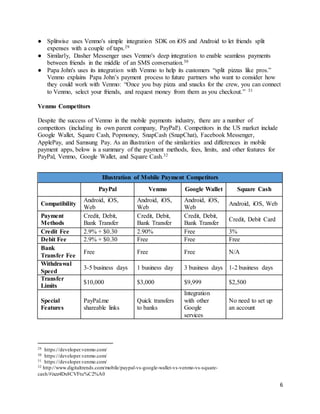
payment apps, below is a summary of the payment methods, fees, limits, and other features for
PayPal, Venmo, Google Wallet, and Square Cash.32
Illustration of Mobile Payment Competitors
PayPal Venmo Google Wallet Square Cash
Compatibility
Android, iOS,
Web
Android, iOS,
Web
Android, iOS,
Web
Android, iOS, Web
Payment
Methods
Credit, Debit,
Bank Transfer
Credit, Debit,
Bank Transfer
Credit, Debit,
Bank Transfer
Credit, Debit Card
Credit Fee 2.9% + $0.30 2.90% Free 3%
Debit Fee 2.9% + $0.30 Free Free Free
Bank
Transfer Fee
Free Free Free N/A
Withdrawal
Speed
3-5 business days 1 business day 3 business days 1-2 business days
Transfer
Limits
$10,000 $3,000 $9,999 $2,500
Special
Features
PayPal.me
shareable links
Quick transfers
to banks
Integration
with other
Google
services
No need to set up
an account
29 https://developer.venmo.com/
30 https://developer.venmo.com/
31 https://developer.venmo.com/
32 http://www.digitaltrends.com/mobile/paypal-vs-google-wallet-vs-venmo-vs-square-
cash/#ixzz4Dx8CVFtu%C2%A0
7
What’s next
To realize the potential value that Venmo could contribute to PayPal’s existing revenue and to
fend off competitors, Venmo must look to continue growing. One of the key ways that Venmo
could grow is to leverage its “Pay with Venmo” technology to form partnerships with other apps
and merchants. Because Venmo only makes a small amount of money when its app users make
payments with credit cards, this approach would increase the volume of Venmo’s payments
(Option A). Another way that Venmo could grow is to take advantage of the social feed that lets
users know what their friends are doing (and buying). This social data is particularly valuable to
marketers, and thus Venmo could monetize the social feed (Option B).
Option A – “Pay with Venmo” partners
On July 26, 2016, Venmo moved the “Pay with Venmo” feature out of beta, which enabled
customers to conduct transactions and share the bill on partner apps.33 Venmo signed on
Munchery, Gametime, Parking Panda, Hop, Dolly, Priv, Wish, Poshmark, and Boxed apps as
their first partners. Venmo could seek to expand beyond its current partnerships by looking for
additional co-branding opportunities to grow its user base and thus charge merchants for
providing payment services (2.9% of the transaction amount for processing payment plus 30
cents per transaction)34.
One of the key incentives for merchants to partner with Venmo and use the "Pay with Venmo"
option is its social aspect, which allows the merchant to "ride the ripple" of social media, thereby
increasing their business’s exposure when customers share or split their purchases. When
merchants offer “Pay with Venmo,” their company’s brand is promoted not only from the
sharing of transactions among other like-minded consumers (their peers) on social media but also
as a result of Venmo’s partnering with other apps.
“Pay with Venmo” offers customers an easy checkout experience in a few taps, which will
eliminate merchants’ fear that a complicated checkout process will alienate potential customers.
Venmo's merchants also have the opportunity to maintain their custom checkout flow's
appearance. This further encourages merchants to partner with Venmo because most businesses
desire to keep control over their user interface and have their brand be front and center. Thus,
future partners need not be concerned with losing their presence if they offer “Pay with Venmo”
as a checkout option to consumers.
However, it is unclear if there are switching costs for partners to drop Venmo for other mobile
payment services in the future. Furthermore, an increase in the user base for Venmo depends on
the number of potential customers that partners can bring to their apps. Thus, the success of this
option also depends on the success of their partners.
33 http://www.pymnts.com/news/payment-methods/2016/paypal-venmo-check-splitting-merchant-partners/
34 http://fortune.com/2016/01/27/venmo-business/
8
Option B – Monetizing the social feed
According to CEO Dan Schulman, "Venmo users open the app four or five times a week. But
they only do transactions a couple of times a week," he said. "It's because everyone is looking at
the feed to see, 'What did you buy?' 'What icons did you put on your feed?' 'Why did you go and
buy that?' The secret sauce on Venmo is one, the ease of use, and two, that it's tied into your
social network. So that payments becomes a sharing experience."35 Venmo can explore a few
ways to leverage its social feed, for example, by offering location-based advertising services to
merchants and delivering ads and promotions in the social feed. Thus, Venmo could monetize
the social feed through advertising opportunities.
Imagine that you are using your smartphone and standing in front of a restaurant. If you’re using
an app that incorporates location-based advertising, the advertiser will come to know when you
are standing in front of the restaurant and push a relevant ad (promotion, coupon, etc.) into your
Venmo app. This ad can be for the restaurant you are standing in front of, or it can even be for
the competition down the street. 36 In addition, Venmo will be able to leverage both friend and
user visited locations data to send ads/promotions. For example, you are standing outside a
restaurant and Venmo, based on your friends’ location history (or Venmo memo location
identifier), will send an ad/promotion to your phone. This increases your chances of using the
promotion because now you know your friends went there also. For example, Alcohol brand
Campari America targeted drinkers aged 21-34 while they were in areas with lots of bars and
restaurants, offering them a $5 discount with ride-sharing service Lyft when they ‘checked in’.37
Venmo could also start displaying ads on the social feed itself. For example, while going through
the social feed, based on your payment history and keywords around payment type, Venmo
could provide you with promotional offers, including links to merchant sites and coupons. These
promotions could be passive, dependent on users scrolling through the social feed, or active,
through push notifications if a particular set of contacts have mentioned a merchant in their
venmo payment note.
However, in order to capitalize on the value of the social feed, Venmo would need to develop
ways to effectively sell this information to marketers. This could include developing data
analytic capabilities as well as software that tracks where users (and their friends) are making
payments.
35 http://www.businessinsider.com/venmo-social-feed-is-its-secret-sauce-2015-12
36 https://econsultancy.com/blog/67418-what-is-location-based-advertising-why-is-it
37 Ibid.
9
Exhibit 1
10
Exhibit 2
11
Exhibit 3
Exhibit 4
12
Exhibit 5
Exhibit 6

Venmo_Live_Case_2016 copy

  • 1.
    1 Venmo and SocialPayments 1 Venmo was founded by two students at the University of Pennsylvania, Andrew Kortina and Iqram Magdon-Ismail, who started working on a mobile payment prototype in 2007. After two years of development, they figured out a way to allow users to transfer money to each other via text messaging (SMS) on a phone. In 2009, with the help of angel investors, they launched the mobile payment service. In the executive summary of their business plan, the founders wrote: “The shift to mobile payments requires a service that captures the subtle gestures involved in everyday cash exchanges. Venmo transactions are personal, with SMS notes that make payments feel like conversations. Venmo's medium for maintaining these social nuances along with the ability to make payments allows Venmo to take the stress out of exchanging money.”2 Only five months after its public launch3, Venmo was bought for $26.2 million by Braintree, a major payment processing service with customers such as Uber and Airbnb. Initially, transactions from all sources were completely free on Venmo. However, because it was losing money on credit card transactions, Venmo decided to start charging for credit card transactions and kept debit card and bank account-based transactions free to help grow the business. In 2013, Braintree, including Venmo, was acquired by PayPal for $800 million. By January of 2016, Venmo had reached $16 billion in transfer payments.4 "Venmo is the beloved way," says Dan Schulman, CEO of PayPal, "that millennials manage and move their money." Given the 141% YOY increase in Venmo’s user base5, it is not surprising that he expects to see “more change in the financial service industry in the next 5 years than we have in the last 30 years, and that is going to be driven by technology, explosion of mobile, and the digitization of money.”6 But what should Schulman do to ensure Venmo’s continued growth in the highly competitive mobile payments industry? Mobile Payments Payments through mobile devices have taken the world by storm. Sometimes referred to as mobile money or the mobile wallet, these digital payments are made in place of cash, checks, or credit cards.7 To give a flavor of what the global landscape looks like for mobile payments, below is a snapshot of key players in a range of markets. Global players In China, Alibaba's Alipay dominates. In China's strictly regulated banking market, payment systems from Internet companies such as Alibaba offer customers more choice and flexibility 1 This ‘live case’ was developed by Professor Jonathon Cummings (Fuqua School of Business,Duke University) with the invaluable help of Arjun Rattan and Tiffany Chen. As with other cases,it is intended to stimulate class discussion ratherthan to illustrate effective or ineffective management practices. 2 http://kortina.net/essays/origins-of-venmo/ 3 http://www.investopedia.com/articles/personal-finance/010715/venmo-its-business-model-and-competition.asp 4 http://www.investopedia.com/articles/personal-finance/010715/venmo-its-business-model-and-competition.asp 5 http://video.cnbc.com/gallery/?video=3000537822; 6 http://marketrealist.com/2016/07/drives-paypals-active-customers-accounts/ 7 https://en.wikipedia.org/wiki/Mobile_payment
  • 2.
    2 than traditional banks.With more than 120 million active users, Alipay is one of the few wallets that has truly escalated its presence. Additionally, Alipay's ambitions are not limited to China. Alipay recently announced plans for expanding the company to markets in Europe and India.8 Also in China is Tencent's WeChat Pay. The apps integrated payment platform has also been extended, now offering its digital wallet proposition within a lifestyle engagement experience. Primarily a social message platform, WeChat extended its services to payments in early 2014. WeChat enables services that include hailing a taxi, ordering food, buying movie tickets, and checking in for a flight. WeChat has also expanded outside of China and is now available in 20 countries, launching the first non-Chinese WeChat Wallet in South Africa in 2015. In Europe, CheBanca's developed its WoW app in 2014. WoW allows smartphone payments, including those for bills, taxi and parking fares, and enables users to load a prepaid card by using an account at CheBanka, an Italian bank set forth by the Mediobanca Group. In Finland, InVenture (a private equity firm that invests in tech startup companies) has also started competing in the mobile payment space.9 In Africa, M-PESA continues to lead the continent in mobile money transfer payments, offering mobile phone-based money transfer, financing, and micro-financing services to 20 million people. It has revolutionized the way Kenya and Tanzania have conducted business since 2007 and has operations in Afghanistan, South Africa, India, Romania, and Albania.10 Within five years, M-PESA proved formidable in the mobile payment market, and in 2013, experienced explosive growth, when a staggering 43 percent of Kenya’s GDP flowed through its platform and completed over 237 million person-to-person transactions.11 In the United States, the explosion of mobile payments and smartphone usage has led to multiple opportunities across the US payments landscape. From initiating bank transfers online to paying merchants in a few clicks, users in the market are accustomed to speed, convenience, and security. The growth of mobile commerce sales attests to the growing popularity of mobile channels (see Exhibit 1). An exploration of the e-commerce landscape also reveals that Smartphones’ share of total retail sales will be more than double 2014’s while mobile commerce will account for a third of US retail e-commerce sales.12 As a leader in the US payments industry (see Exhibit 2), PayPal has an interesting history. Back in 1999, Confinity founders Peter Thiel, Max Levchin and Luke Nosek launched PayPal – a radical technology allowing money to be transferred digitally. At the time, more and more Americans were using the Internet to purchase goods and services, but a customer was required to give his or her credit card number, or even more inconvenient, mail a physical check to complete the transaction. This represented a major roadblock in the growth of the e-commerce market. The fees charged by credit card companies made small transactions unfeasible, and a 8 http://www.cnbc.com/2016/04/05/alipay-to-launch-in-europe-as-alibaba-steps-up-payments-game.html 9 http://www.mintel.com/blog/finance-market-news/money2020-day-1-everyone-wants-a-piece-of-the-payments-pie 10 http://www.businessdailyafrica.com/Corporate-News/Vodafone-launches-M-Pesa-Ghana/539550-3031242- xehcwiz/index.html 11 http://www.forbes.com/sites/danielrunde/2015/08/12/m-pesa-and-the-rise-of-the-global-mobile-money-market/ 12 https://www.statista.com/statistics/276636/smartphones-us-retail-m-commerce-sales/
  • 3.
    3 substantial portion ofthe market – those that couldn’t qualify for a credit card – couldn’t participate13. In 2000, after merging with X.com – one of Elon Musk’s early start-ups – Confinity began partnering with another relatively new firm – eBay. The e-commerce site was taking off, and the potential synergies that existed were apparent to leaders from both companies14. Confinity needed an established customer base to roll out its product, and eBay was desperate to find a way for its customers to easily transfer currency for the purchase of goods on their site. Confinity soon changed its official name to PayPal, and in 2002, with 13 million members and revenues of $105 million, the firm went public at a valuation of $777 million. Only a few months after the IPO, eBay abandoned its efforts to create a proprietary online payment system and acquired PayPal for $1.5 billion. In July 2015, after more than a decade of tremendous growth, PayPal spun off from eBay and now operates as an independent firm15 valued at $49 billion.16 US trends in mobile and smartphone usage With PayPal leading the charge in payments, it should come as no surprise that it sees a bright future in mobile and smartphone devices. Smartphones have become a de facto part of our daily lives; smartphone users in the US (see Exhibit 3) in 2019 are predicted to be approximately 75% of the forecasted US population17; a very high penetration rate that exemplifies the ubiquity of smartphones. When coupled with the expected rise in mobile peer-to-peer payment transactions (see Exhibit 4), we can expect that the market will continue to grow. US retailers are experiencing an increase in mobile payments (see Exhibit 5).18 The acceptance of mobile payments by retailers indicates that they recognize the rise in mobile payments as accompanying growth within the consumer-shopping market. This market, forecasted to expand within the next 2-5 years, offers payment providers a chance to grow their market size as mobile payments rapidly increase in just a few short years.19 Factoring in that the number of smartphone users will increase in the next five years, the growth environment for the mobile payments space is very promising. Both mobile banking and digital wallets are heavily demanded by global consumers as payment apps are ranked high among the most downloaded financial apps across the various app stores.20 Though the payment apps typically require two-factor authentication, there are still concerns about the potential for fraud given that the money transfer does not occur immediately.21 13 http://www.economist.com/node/977614?zid=291&ah=906e69ad01d2ee51960100b7fa502595 14 http://www.economist.com/node/1227965?zid=291&ah=906e69ad01d2ee51960100b7fa502595 15 http://www.wsj.com/articles/ebay-revenue-rises-as-earnings-top-expectations-1437048364 16 https://www.google.com/finance?q=NASDAQ:PYPL 17 Calculations based on US population estimates of 312 million: ttps://www.gwu.edu/~forcpgm/Ortman.pdf 18 http://www.statista.com/statistics/244312/mobile-payment-usage-methods-in-the-us/ 19 Ibid. 20 Ibid. 21 http://time.com/money/4036511/venmo-more-check-than-cash/
  • 4.
    4 Decoupling of financialservices A key trend across the financial services domain over the last few years has been the unbundling of service offerings traditionally provided as part of a package. A notable instance is the advent of nonbank debit cards, such as the Sun Trust prepaid MasterCard. Traditionally, users could make bank transfers to other users only if they transferred funds from their checking or savings accounts through their bank interfaces to the traditional banking payments network. However, innovations such as digital wallets allowed users to make payments from the same bank accounts but without having to go through their bank interfaces. Furthermore, the ability to link credit cards to digital wallets enabled users to draw on credit while transacting online, both with merchants and other users. Users can now also have account balances with other payments providers, for example, by using a digital wallet balance as opposed to relying only on their bank accounts’ balances for making payments. In general, this decoupling has negatively impacted banks because they lose transaction fees when users bypass them to transact online using digital wallets. Social payments People are social, and they connect across online platforms based on a simple yet powerful premise; people want to know what their friends are doing, and they want to tell their friends what they are doing. Users now have the ability to share photos with friends, their views on the latest trending topics with strangers, or restaurant or movie reviews with the world. The more they can connect with the people around them the more they value online platforms. Social payments can be thought of as being at the intersection of social media and payments. Whether it is a payment made to friends for a night out on the town, a visit to the mall, or hanging out at the newest coffee bistro, users can have a record of the experience, reminisce on it (“comments”) while making or receiving the payment, and even “like” other users’ experiences. A uniquely different way of engaging with the world, it allows users to transact with friends and provide their network another way of knowing what they are doing. Venmo’s model Venmo makes the process of social payments easy, including the ability to pay your friends directly as well as to share your expenses with friends (e.g., transactions that users make are published for their friends to see unless the feature is turned off22). From startup to mobile payment giant, Venmo quickly evolved from text-messaging payments into an app payment system that involves social media features. Venmo offers convenient access to a mobile-based app payment system. Individuals are not charged for the core service of sending or receiving money; rather they are charged a 3% fee if the payment is from a credit card23. Using a Venmo account balance, bank account, or debit card 22 https://help.venmo.com/hc/en-us/articles/210413717-How-do-I-keep-my-payment-activity-private- 23 https://help.venmo.com/hc/en-us/articles/210413677-How-do-I-add-a-credit-debit-card-
  • 5.
    5 is free. Also,users can still make a payment despite having insufficient funds in their Venmo account, as the shortfall is sourced from the linked primary funding source (e.g., bank account, credit card, or debit card). The power of Venmo is the focus on creating a peer-to-peer network which is based on convenience and socializing the payments process. Consequently, across teens and college campuses, Venmo’s popularity has skyrocketed. Technology development Venmo has incorporated technology in a way that attracts app users, for example, its simple user interface24 (see Exhibit 6): users link up debit cards, find friends, and are ready to go. Four clicks – including opening the app – are usually all that are required to send or receive a payment from users’ Venmo contacts. The simplicity of Venmo is predicated on a complex ecosystem of technologies at the backend. As slate.com puts it, “Intertwined, a few straightforward, yet powerful technologies offer mobile payment users much more than what appears to be a simple blue app emblazoned with lone white ‘V.’“ 25 For Venmo to process any transaction, it needs another business with the technology to securely complete financial transactions made on its app platform. In comes Braintree (its original parent company), to assist in connecting its app users to one another, thus paving the road toward dominating the mobile payment market.26 Braintree provided Venmo the ability to create a method for processing payments made with outside retailers in the form of “Venmo Touch.”27 The importance of the touch technology, in which paying for a service or good is a few taps away, is its ability to make its platform as user-friendly as possible. With “Venmo Touch,” Venmo users can pay inside other apps using the “Pay with Venmo” option, similar to using a PayPal button for making payments on a retailer’s website. As Venmo experimented with launching its touch technology in other apps, it required software that allowed merchants to authenticate their app users as well. By extension, this software had to forge a connection between Venmo, everyday consumers, and its partnering merchants. The solution was SDKs (software development kits). Venmo’s SDKs (with help from Braintree’s money processing expertise) worked in conjunction to bridge the gap between third-party merchants, iOS and Android operating systems, and Venmo users as they select the “Pay with Venmo” option at checkout.28 Once a merchant has acquired the SDK, it has many payment options to choose from to customize its particular needs, according to the type of business, from a range of unique paying experiences on its mobile app. The SDKs allow Venmo multiple options for integrating with third-parties who have a mobile app presence: 24 http://www.bluefountainmedia.com/blog/best-mobile-app-designs-our-10-favorite-user-interfaces/ 25 http://www.slate.com/articles/technology/future_tense/2013/08/venmo_review_the_w 26 https://www.braintreepayments.com/payment-methods/accept-venmo 27 https://www.braintreepayments.com/payment-methods/accept-venmo 28 https://developer.venmo.com/
  • 6.
    6 ● Splitwise usesVenmo's simple integration SDK on iOS and Android to let friends split expenses with a couple of taps.29 ● Similarly, Dasher Messenger uses Venmo's deep integration to enable seamless payments between friends in the middle of an SMS conversation.30 ● Papa John's uses its integration with Venmo to help its customers “split pizzas like pros.” Venmo explains Papa John’s payment process to future partners who want to consider how they could work with Venmo: “Once you buy pizza and snacks for the crew, you can connect to Venmo, select your friends, and request money from them as you checkout.” 31 Venmo Competitors Despite the success of Venmo in the mobile payments industry, there are a number of competitors (including its own parent company, PayPal!). Competitors in the US market include Google Wallet, Square Cash, Popmoney, SnapCash (SnapChat), Facebook Messenger, ApplePay, and Samsung Pay. As an illustration of the similarities and differences in mobile payment apps, below is a summary of the payment methods, fees, limits, and other features for PayPal, Venmo, Google Wallet, and Square Cash.32 Illustration of Mobile Payment Competitors PayPal Venmo Google Wallet Square Cash Compatibility Android, iOS, Web Android, iOS, Web Android, iOS, Web Android, iOS, Web Payment Methods Credit, Debit, Bank Transfer Credit, Debit, Bank Transfer Credit, Debit, Bank Transfer Credit, Debit Card Credit Fee 2.9% + $0.30 2.90% Free 3% Debit Fee 2.9% + $0.30 Free Free Free Bank Transfer Fee Free Free Free N/A Withdrawal Speed 3-5 business days 1 business day 3 business days 1-2 business days Transfer Limits $10,000 $3,000 $9,999 $2,500 Special Features PayPal.me shareable links Quick transfers to banks Integration with other Google services No need to set up an account 29 https://developer.venmo.com/ 30 https://developer.venmo.com/ 31 https://developer.venmo.com/ 32 http://www.digitaltrends.com/mobile/paypal-vs-google-wallet-vs-venmo-vs-square- cash/#ixzz4Dx8CVFtu%C2%A0
  • 7.
    7 What’s next To realizethe potential value that Venmo could contribute to PayPal’s existing revenue and to fend off competitors, Venmo must look to continue growing. One of the key ways that Venmo could grow is to leverage its “Pay with Venmo” technology to form partnerships with other apps and merchants. Because Venmo only makes a small amount of money when its app users make payments with credit cards, this approach would increase the volume of Venmo’s payments (Option A). Another way that Venmo could grow is to take advantage of the social feed that lets users know what their friends are doing (and buying). This social data is particularly valuable to marketers, and thus Venmo could monetize the social feed (Option B). Option A – “Pay with Venmo” partners On July 26, 2016, Venmo moved the “Pay with Venmo” feature out of beta, which enabled customers to conduct transactions and share the bill on partner apps.33 Venmo signed on Munchery, Gametime, Parking Panda, Hop, Dolly, Priv, Wish, Poshmark, and Boxed apps as their first partners. Venmo could seek to expand beyond its current partnerships by looking for additional co-branding opportunities to grow its user base and thus charge merchants for providing payment services (2.9% of the transaction amount for processing payment plus 30 cents per transaction)34. One of the key incentives for merchants to partner with Venmo and use the "Pay with Venmo" option is its social aspect, which allows the merchant to "ride the ripple" of social media, thereby increasing their business’s exposure when customers share or split their purchases. When merchants offer “Pay with Venmo,” their company’s brand is promoted not only from the sharing of transactions among other like-minded consumers (their peers) on social media but also as a result of Venmo’s partnering with other apps. “Pay with Venmo” offers customers an easy checkout experience in a few taps, which will eliminate merchants’ fear that a complicated checkout process will alienate potential customers. Venmo's merchants also have the opportunity to maintain their custom checkout flow's appearance. This further encourages merchants to partner with Venmo because most businesses desire to keep control over their user interface and have their brand be front and center. Thus, future partners need not be concerned with losing their presence if they offer “Pay with Venmo” as a checkout option to consumers. However, it is unclear if there are switching costs for partners to drop Venmo for other mobile payment services in the future. Furthermore, an increase in the user base for Venmo depends on the number of potential customers that partners can bring to their apps. Thus, the success of this option also depends on the success of their partners. 33 http://www.pymnts.com/news/payment-methods/2016/paypal-venmo-check-splitting-merchant-partners/ 34 http://fortune.com/2016/01/27/venmo-business/
  • 8.
    8 Option B –Monetizing the social feed According to CEO Dan Schulman, "Venmo users open the app four or five times a week. But they only do transactions a couple of times a week," he said. "It's because everyone is looking at the feed to see, 'What did you buy?' 'What icons did you put on your feed?' 'Why did you go and buy that?' The secret sauce on Venmo is one, the ease of use, and two, that it's tied into your social network. So that payments becomes a sharing experience."35 Venmo can explore a few ways to leverage its social feed, for example, by offering location-based advertising services to merchants and delivering ads and promotions in the social feed. Thus, Venmo could monetize the social feed through advertising opportunities. Imagine that you are using your smartphone and standing in front of a restaurant. If you’re using an app that incorporates location-based advertising, the advertiser will come to know when you are standing in front of the restaurant and push a relevant ad (promotion, coupon, etc.) into your Venmo app. This ad can be for the restaurant you are standing in front of, or it can even be for the competition down the street. 36 In addition, Venmo will be able to leverage both friend and user visited locations data to send ads/promotions. For example, you are standing outside a restaurant and Venmo, based on your friends’ location history (or Venmo memo location identifier), will send an ad/promotion to your phone. This increases your chances of using the promotion because now you know your friends went there also. For example, Alcohol brand Campari America targeted drinkers aged 21-34 while they were in areas with lots of bars and restaurants, offering them a $5 discount with ride-sharing service Lyft when they ‘checked in’.37 Venmo could also start displaying ads on the social feed itself. For example, while going through the social feed, based on your payment history and keywords around payment type, Venmo could provide you with promotional offers, including links to merchant sites and coupons. These promotions could be passive, dependent on users scrolling through the social feed, or active, through push notifications if a particular set of contacts have mentioned a merchant in their venmo payment note. However, in order to capitalize on the value of the social feed, Venmo would need to develop ways to effectively sell this information to marketers. This could include developing data analytic capabilities as well as software that tracks where users (and their friends) are making payments. 35 http://www.businessinsider.com/venmo-social-feed-is-its-secret-sauce-2015-12 36 https://econsultancy.com/blog/67418-what-is-location-based-advertising-why-is-it 37 Ibid.
  • 9.
  • 10.
  • 11.
  • 12.