VECTOR BORNE DISEASES
Dr. Sridhar Mitpellywar,
Dist.Malaria Officer & PO-Vector
Borne Diseases, Adilabad.
1
National Centre for Vector
borne disease control -
NCVBDC
2
Most Common Prevalent
VBD’s in India are
3
Malaria
Dengue
Chikungunya
Japanese Encephalitis
Filariasis
Zika (Recently)
4
Etiology
Malaria
5
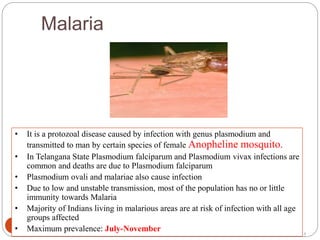
• It is a protozoal disease caused by infection with genus plasmodium and
transmitted to man by certain species of female Anopheline mosquito.
• In Telangana State Plasmodium falciparum and Plasmodium vivax infections are
common and deaths are due to Plasmodium falciparum
• Plasmodium ovali and malariae also cause infection
• Due to low and unstable transmission, most of the population has no or little
immunity towards Malaria
• Majority of Indians living in malarious areas are at risk of infection with all age
groups affected
• Maximum prevalence: July-November
5
Dengue
6
 Dengue is a mosquito-transmitted
(Aedes aegypti ) virus and the leading
cause of arthropod-borne viral disease
in the world. It is also known as
breakbone fever
 Dengue fever is caused by any of four
distinct serotypes (DENV 1-4) of single-
stranded RNA viruses of the
genus Flavivirus.
Chikungunya
7
• Chikungunya is a mosquito-borne viral
disease caused by the chikungunya
virus (CHIKV), an RNA virus in the
alphavirus genus of the family
Togaviridae.
• Chikungunya virus is transmitted by
mosquitoes, most commonly Aedes
(Stegomyia) aegypti and Aedes
(Stegomyia) albopictus, which can also
transmit dengue and Zika viruses.
These mosquitoes bite primarily during
Japanese
encephalitis
8
 Japanese encephalitis virus JEV is the
most important cause of viral
encephalitis in Asia. It is a mosquito-
borne(Culex ) flavivirus, and belongs to
the same genus as dengue, yellow fever
and West Nile viruses.
 Last JE Case detected in Adilabad was
on 16.01.2024 from KGBV-
Sanjaynagar,Adilabad
 In Uttar Pradesh, there were 47,509
Filaria
9
 Filariasis is a parasitic disease caused
by an infection with roundworms of
the Filarioidea type.These are spread by
blood-feeding insects such as black
flies and Mosquitoes. They belong to the
group of diseases called helminthiases.
10
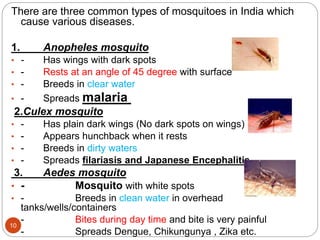
There are three common types of mosquitoes in India which
cause various diseases.
1. Anopheles mosquito
• - Has wings with dark spots
• - Rests at an angle of 45 degree with surface
• - Breeds in clear water
• - Spreads malaria
2.Culex mosquito
• - Has plain dark wings (No dark spots on wings)
• - Appears hunchback when it rests
• - Breeds in dirty waters
• - Spreads filariasis and Japanese Encephalitis
3. Aedes mosquito
• - Mosquito with white spots
• - Breeds in clean water in overhead
tanks/wells/containers
• - Bites during day time and bite is very painful
• - Spreads Dengue, Chikungunya , Zika etc.
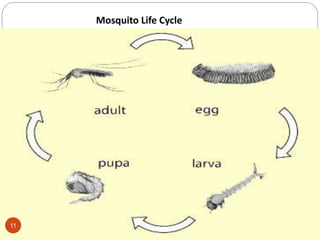
Mosquito Life Cycle
11
Diagnosis
12
13
• Peripheral blood smear examination
• RDT kits
• Targets of blood smear collection
• Active surveilance
– Carried out by multi purpose worker through
domiciliary visit. Worker should know about the total
population. Target – 10 BS per 1000 population
• Passive surveillance
• Carried out by accredited social health
activist(ASHA), subcentres, PHCs, and Malaria
clinics where the patient comes for diagnosis and
treatment
Malaria
13
Degnue
/Chikungunya
14
 Rapid Kit Method
 Mac ELISA
available at Sentinel Site Hospital, RIMS,
Adilabad only.
15
Prevention & Control of
Vector Borne Diseases
Line Departments has to lend hand in
decreasing VBD’s
16
1. Panchayathraj Dept
2. Rural Water Supply Dept
3. ICDS
4. Social Welfare Dept
5. Education Dept
6. DRDA/IKP
7.Tribal Welfare Dept
8. B.C. Welfare Officer Dept
9.Municipal Dept
10. Public Relations Officer
11. Fisheries Dept
Prevention of VBD’s
17
1.Source reduction measures
2. Anti Larval Operations
(ALO)
3. Anti Adult Mosquito
measures
4. Awareness Activities
Source reduction measures
18
1.Dry Day activities
2.Elimination of Breeding places
• Land filling
• Regular removal of drains to avoid stagnation
of water.
• Improvement of general sanitation like regular
removal of garbage, timely deweeding etc.
• Steps to avoid water leakage, not to create breeding
places.
• Regular cleaning of surrounding areas of bore wells.
• Proper maintenance of tap and bore well platforms.
• Ensure adequate drinking water supplies regularly to
avoid water storage.
Anti Larval Operations
(ALO)
19
1.Dry day activities
2.Chemical Control
 Temephos / Diflubenzeron Spray on breeding sources (
Fresh Water) with weekly interval.
*Dilution
Temephos 5 ml in 10 L water, Diflubenzeron 25% WP 10gm in 10 L water.
 Dropping of Oil Balls on stagnant water
3. Biological Control
Release of Gambusia fish in breeding sources
Anti Adult Mosquito
measures
20
1. Spraying
 Indoor Residual Spray
Alpha Cypermethrin 5% WP (ACM) 250g in 20L water should be
sprayed on walls and roof.
 Pyrethrum spray 1:19 ratio with Diesel/Kerosene can be
sprayed in the air in a closed room for knock down effect of
vector mosquitoes.
2. Fogging
Malathion Chemical mixed in 1:19 ratio with Diesel can be used
3. LLIN’s ( Long Lasting Insecticidal Net’s)
4. Mosquito repellents
Awareness Activities
21
 Create awareness among Public regarding vector borne
diseases, their Prevention & Control operations.
 Inform Public regarding mosquito breeding sources, personal
protection methods and risk areas.
 Procure and distribute IEC material such as Pamphlets,
Posters, Flash cards etc.
 Village Health and Sanitation Committee must involve
 Organize IEC activities in Villages through Students,
Teachers, Wardens and other staff members.
 Wide publicity is to be given regarding mosquito borne
diseases burden and importance of Anti Malaria and Anti
Dengue months and Friday dry day Programme
 Organize health melas, special sanitation drives,
convergence meetings.
Control Activities
22
• Pin Point Activities:
1. Medical Camp
2. Sample Collection to detect remaining cases
3. Dry Day Activities
4. Spraying Activities in and around 50 houses
5. Wide spread awareness activities.
* Pin point activities to be carried out with in 24
hours of detection of confirmed case.
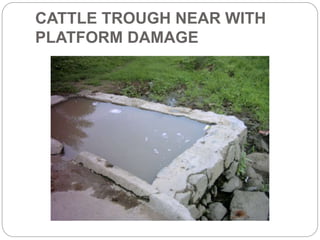
CATTLE TROUGH NEAR WITH
PLATFORM DAMAGE
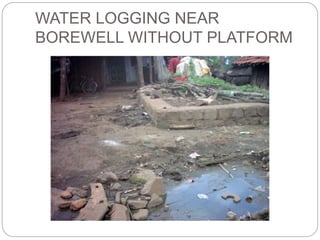
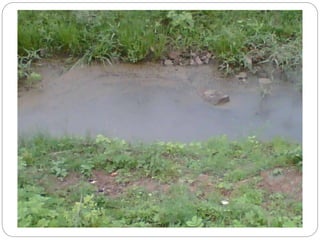
WATER LOGGING NEAR
BOREWELL WITHOUT PLATFORM
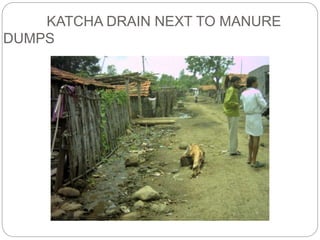
KATCHA DRAIN NEXT TO MANURE
DUMPS
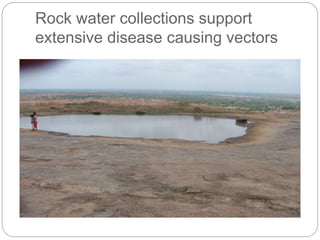
Rock water collections support
extensive disease causing vectors
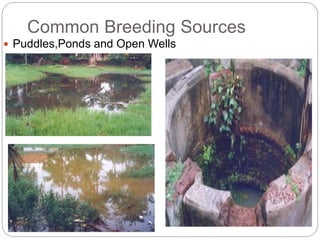
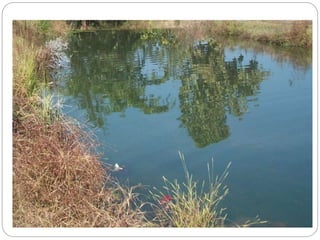
Common Breeding Sources
 Puddles,Ponds and Open Wells
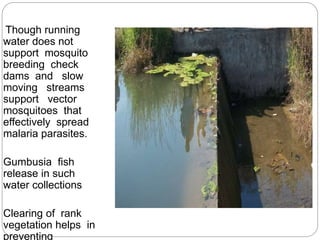
Though running
water does not
support mosquito
breeding check
dams and slow
moving streams
support vector
mosquitoes that
effectively spread
malaria parasites.
Gumbusia fish
release in such
water collections
Clearing of rank
vegetation helps in
preventing
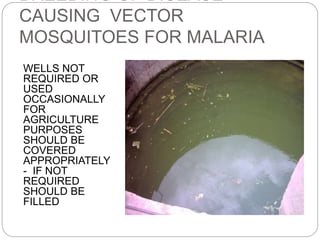
BREEDING OF DISEASE
CAUSING VECTOR
MOSQUITOES FOR MALARIA
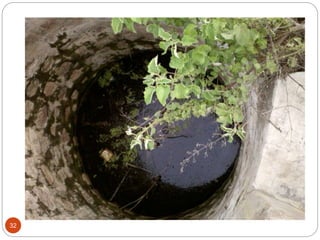
WELLS NOT
REQUIRED OR
USED
OCCASIONALLY
FOR
AGRICULTURE
PURPOSES
SHOULD BE
COVERED
APPROPRIATELY
- IF NOT
REQUIRED
SHOULD BE
FILLED
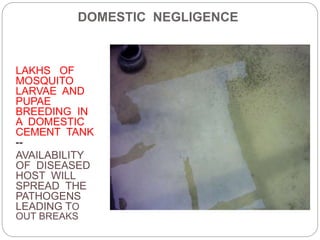
DOMESTIC NEGLIGENCE
LAKHS OF
MOSQUITO
LARVAE AND
PUPAE
BREEDING IN
A DOMESTIC
CEMENT TANK
--
AVAILABILITY
OF DISEASED
HOST WILL
SPREAD THE
PATHOGENS
LEADING TO
OUT BREAKS
WATER LOGGING AROUND
PUBLIC TAP
DENGUE
VECTORS
WERE
FOUND
BREEDING
IN THE
STAGNATED
WATER
32
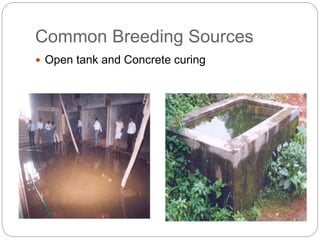
Common Breeding Sources
 Open tank and Concrete curing
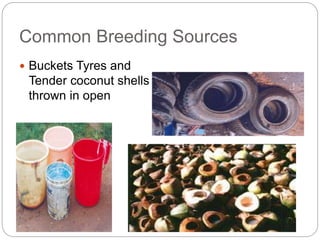
Common Breeding Sources
 Buckets Tyres and
Tender coconut shells
thrown in open
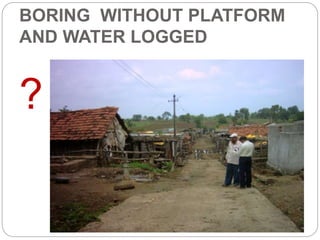
BORING WITHOUT PLATFORM
AND WATER LOGGED
?
TOO MUCH OF WATER TOO LITTLE CARE
TWO LARGE WELLS
ONE LARGE TROUGH
WATER LOGGED LOW
LAYING AREA
DAMAGED
PLATFORMS AND
WATER LOGGED
SURROUNDINGS
40
THANK YOU

Vector born diseases convergence meeting

  • 1.
    VECTOR BORNE DISEASES Dr.Sridhar Mitpellywar, Dist.Malaria Officer & PO-Vector Borne Diseases, Adilabad. 1
  • 2.
    National Centre forVector borne disease control - NCVBDC 2
  • 3.
    Most Common Prevalent VBD’sin India are 3 Malaria Dengue Chikungunya Japanese Encephalitis Filariasis Zika (Recently)
  • 4.
  • 5.
    Malaria 5 • It isa protozoal disease caused by infection with genus plasmodium and transmitted to man by certain species of female Anopheline mosquito. • In Telangana State Plasmodium falciparum and Plasmodium vivax infections are common and deaths are due to Plasmodium falciparum • Plasmodium ovali and malariae also cause infection • Due to low and unstable transmission, most of the population has no or little immunity towards Malaria • Majority of Indians living in malarious areas are at risk of infection with all age groups affected • Maximum prevalence: July-November 5
  • 6.
    Dengue 6  Dengue isa mosquito-transmitted (Aedes aegypti ) virus and the leading cause of arthropod-borne viral disease in the world. It is also known as breakbone fever  Dengue fever is caused by any of four distinct serotypes (DENV 1-4) of single- stranded RNA viruses of the genus Flavivirus.
  • 7.
    Chikungunya 7 • Chikungunya isa mosquito-borne viral disease caused by the chikungunya virus (CHIKV), an RNA virus in the alphavirus genus of the family Togaviridae. • Chikungunya virus is transmitted by mosquitoes, most commonly Aedes (Stegomyia) aegypti and Aedes (Stegomyia) albopictus, which can also transmit dengue and Zika viruses. These mosquitoes bite primarily during
  • 8.
    Japanese encephalitis 8  Japanese encephalitisvirus JEV is the most important cause of viral encephalitis in Asia. It is a mosquito- borne(Culex ) flavivirus, and belongs to the same genus as dengue, yellow fever and West Nile viruses.  Last JE Case detected in Adilabad was on 16.01.2024 from KGBV- Sanjaynagar,Adilabad  In Uttar Pradesh, there were 47,509
  • 9.
    Filaria 9  Filariasis isa parasitic disease caused by an infection with roundworms of the Filarioidea type.These are spread by blood-feeding insects such as black flies and Mosquitoes. They belong to the group of diseases called helminthiases.
  • 10.
    10 There are threecommon types of mosquitoes in India which cause various diseases. 1. Anopheles mosquito • - Has wings with dark spots • - Rests at an angle of 45 degree with surface • - Breeds in clear water • - Spreads malaria 2.Culex mosquito • - Has plain dark wings (No dark spots on wings) • - Appears hunchback when it rests • - Breeds in dirty waters • - Spreads filariasis and Japanese Encephalitis 3. Aedes mosquito • - Mosquito with white spots • - Breeds in clean water in overhead tanks/wells/containers • - Bites during day time and bite is very painful • - Spreads Dengue, Chikungunya , Zika etc.
  • 11.
  • 12.
  • 13.
    13 • Peripheral bloodsmear examination • RDT kits • Targets of blood smear collection • Active surveilance – Carried out by multi purpose worker through domiciliary visit. Worker should know about the total population. Target – 10 BS per 1000 population • Passive surveillance • Carried out by accredited social health activist(ASHA), subcentres, PHCs, and Malaria clinics where the patient comes for diagnosis and treatment Malaria 13
  • 14.
    Degnue /Chikungunya 14  Rapid KitMethod  Mac ELISA available at Sentinel Site Hospital, RIMS, Adilabad only.
  • 15.
    15 Prevention & Controlof Vector Borne Diseases
  • 16.
    Line Departments hasto lend hand in decreasing VBD’s 16 1. Panchayathraj Dept 2. Rural Water Supply Dept 3. ICDS 4. Social Welfare Dept 5. Education Dept 6. DRDA/IKP 7.Tribal Welfare Dept 8. B.C. Welfare Officer Dept 9.Municipal Dept 10. Public Relations Officer 11. Fisheries Dept
  • 17.
    Prevention of VBD’s 17 1.Sourcereduction measures 2. Anti Larval Operations (ALO) 3. Anti Adult Mosquito measures 4. Awareness Activities
  • 18.
    Source reduction measures 18 1.DryDay activities 2.Elimination of Breeding places • Land filling • Regular removal of drains to avoid stagnation of water. • Improvement of general sanitation like regular removal of garbage, timely deweeding etc. • Steps to avoid water leakage, not to create breeding places. • Regular cleaning of surrounding areas of bore wells. • Proper maintenance of tap and bore well platforms. • Ensure adequate drinking water supplies regularly to avoid water storage.
  • 19.
    Anti Larval Operations (ALO) 19 1.Dryday activities 2.Chemical Control  Temephos / Diflubenzeron Spray on breeding sources ( Fresh Water) with weekly interval. *Dilution Temephos 5 ml in 10 L water, Diflubenzeron 25% WP 10gm in 10 L water.  Dropping of Oil Balls on stagnant water 3. Biological Control Release of Gambusia fish in breeding sources
  • 20.
    Anti Adult Mosquito measures 20 1.Spraying  Indoor Residual Spray Alpha Cypermethrin 5% WP (ACM) 250g in 20L water should be sprayed on walls and roof.  Pyrethrum spray 1:19 ratio with Diesel/Kerosene can be sprayed in the air in a closed room for knock down effect of vector mosquitoes. 2. Fogging Malathion Chemical mixed in 1:19 ratio with Diesel can be used 3. LLIN’s ( Long Lasting Insecticidal Net’s) 4. Mosquito repellents
  • 21.
    Awareness Activities 21  Createawareness among Public regarding vector borne diseases, their Prevention & Control operations.  Inform Public regarding mosquito breeding sources, personal protection methods and risk areas.  Procure and distribute IEC material such as Pamphlets, Posters, Flash cards etc.  Village Health and Sanitation Committee must involve  Organize IEC activities in Villages through Students, Teachers, Wardens and other staff members.  Wide publicity is to be given regarding mosquito borne diseases burden and importance of Anti Malaria and Anti Dengue months and Friday dry day Programme  Organize health melas, special sanitation drives, convergence meetings.
  • 22.
    Control Activities 22 • PinPoint Activities: 1. Medical Camp 2. Sample Collection to detect remaining cases 3. Dry Day Activities 4. Spraying Activities in and around 50 houses 5. Wide spread awareness activities. * Pin point activities to be carried out with in 24 hours of detection of confirmed case.
  • 23.
    CATTLE TROUGH NEARWITH PLATFORM DAMAGE
  • 24.
  • 25.
    KATCHA DRAIN NEXTTO MANURE DUMPS
  • 26.
    Rock water collectionssupport extensive disease causing vectors
  • 27.
    Common Breeding Sources Puddles,Ponds and Open Wells
  • 28.
    Though running water doesnot support mosquito breeding check dams and slow moving streams support vector mosquitoes that effectively spread malaria parasites. Gumbusia fish release in such water collections Clearing of rank vegetation helps in preventing
  • 29.
    BREEDING OF DISEASE CAUSINGVECTOR MOSQUITOES FOR MALARIA WELLS NOT REQUIRED OR USED OCCASIONALLY FOR AGRICULTURE PURPOSES SHOULD BE COVERED APPROPRIATELY - IF NOT REQUIRED SHOULD BE FILLED
  • 30.
    DOMESTIC NEGLIGENCE LAKHS OF MOSQUITO LARVAEAND PUPAE BREEDING IN A DOMESTIC CEMENT TANK -- AVAILABILITY OF DISEASED HOST WILL SPREAD THE PATHOGENS LEADING TO OUT BREAKS
  • 31.
    WATER LOGGING AROUND PUBLICTAP DENGUE VECTORS WERE FOUND BREEDING IN THE STAGNATED WATER
  • 32.
  • 36.
    Common Breeding Sources Open tank and Concrete curing
  • 37.
    Common Breeding Sources Buckets Tyres and Tender coconut shells thrown in open
  • 38.
  • 39.
    TOO MUCH OFWATER TOO LITTLE CARE TWO LARGE WELLS ONE LARGE TROUGH WATER LOGGED LOW LAYING AREA DAMAGED PLATFORMS AND WATER LOGGED SURROUNDINGS
  • 40.