Faculty of Education

Thinking about
university
Vanessa Grafi
Manager Student Services
Faculty of Education

17 October 2013

1
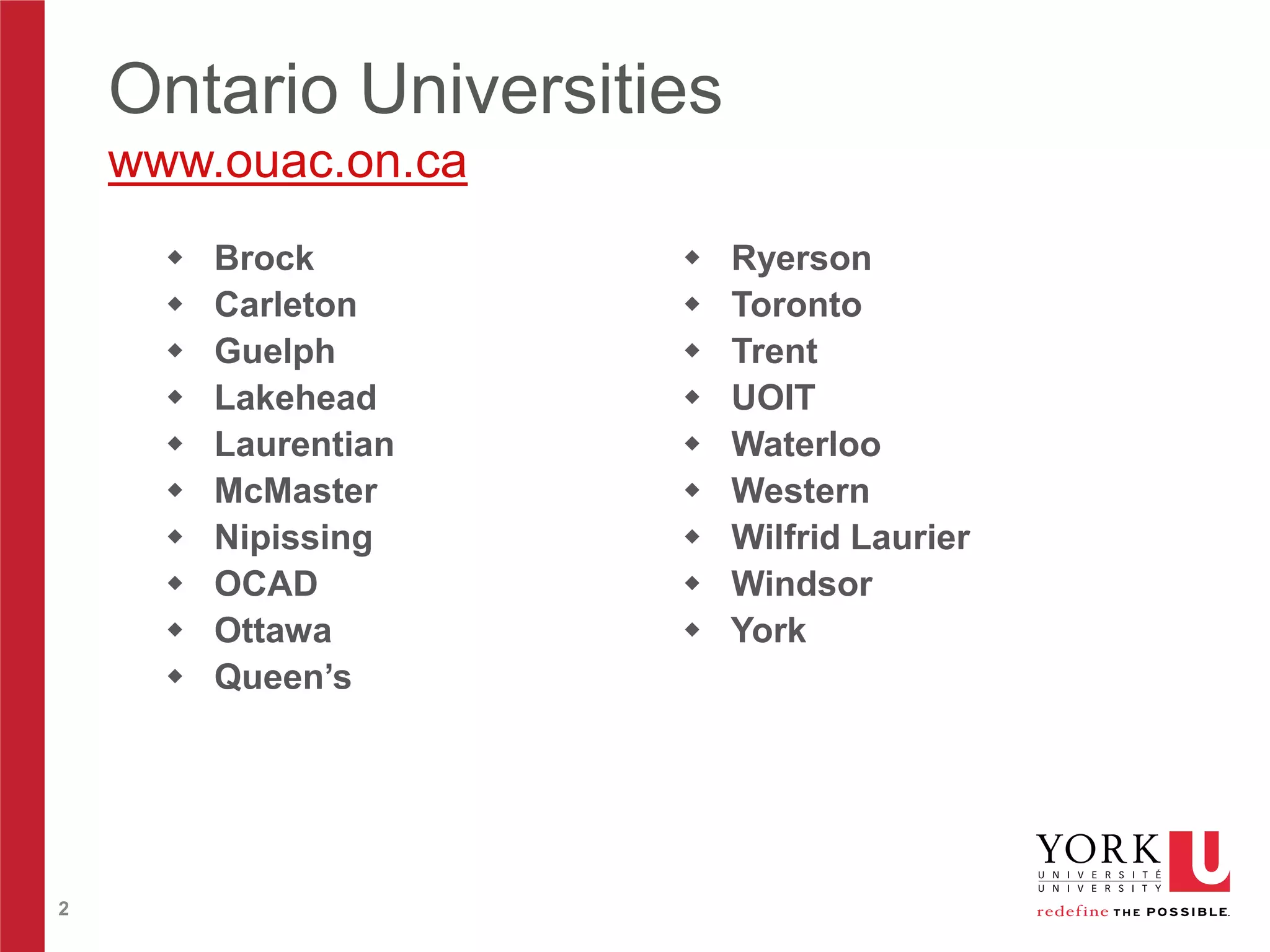
Ontario Universities
www.ouac.on.ca











2

Brock
Carleton
Guelph
Lakehead
Laurentian
McMaster
Nipissing
OCAD
Ottawa
Queen’s











Ryerson
Toronto
Trent
UOIT
Waterloo
Western
Wilfrid Laurier
Windsor
York
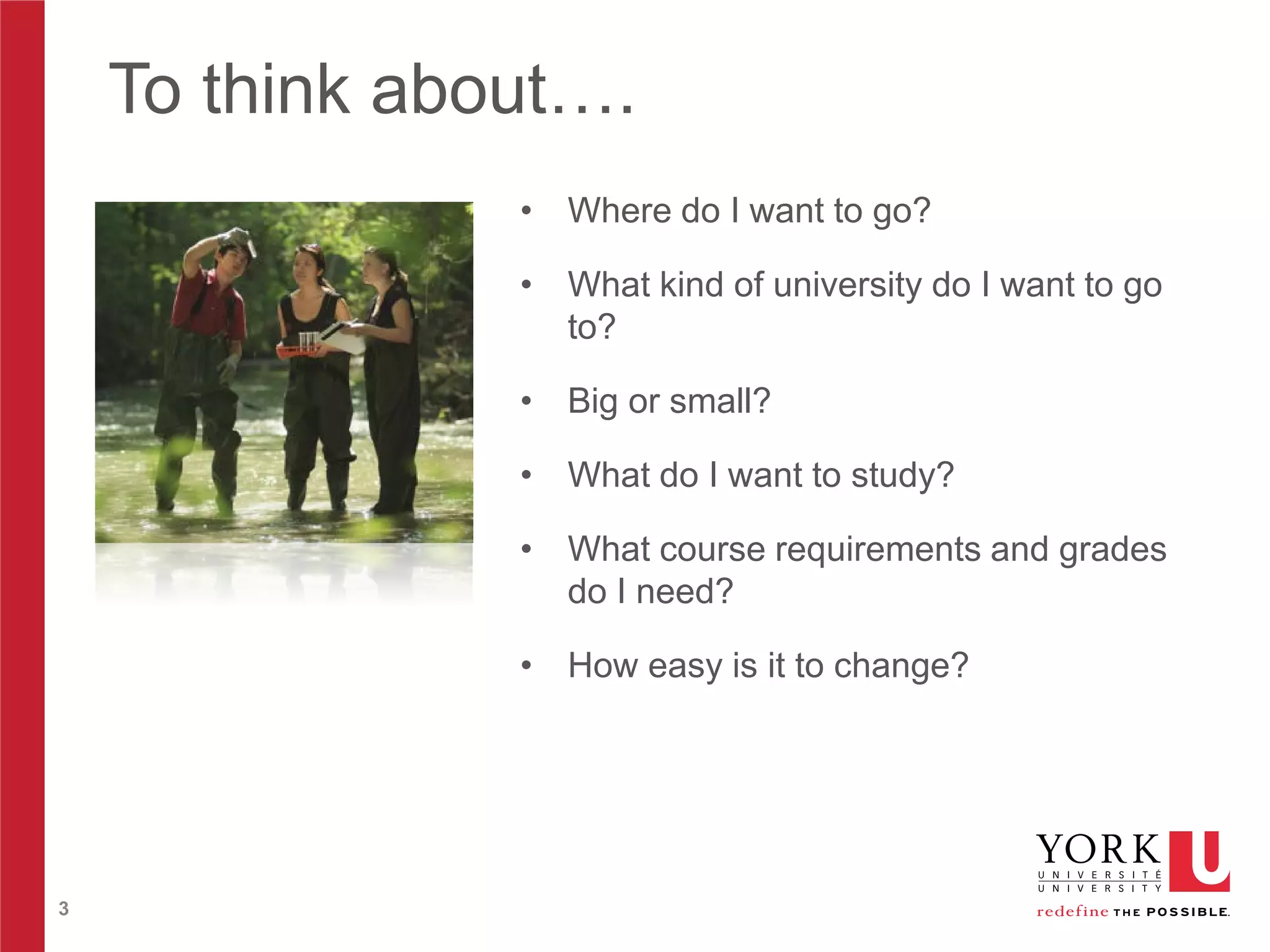
To think about….
• Where do I want to go?
• What kind of university do I want to go
to?
• Big or small?
• What do I want to study?
• What course requirements and grades
do I need?
• How easy is it to change?

3
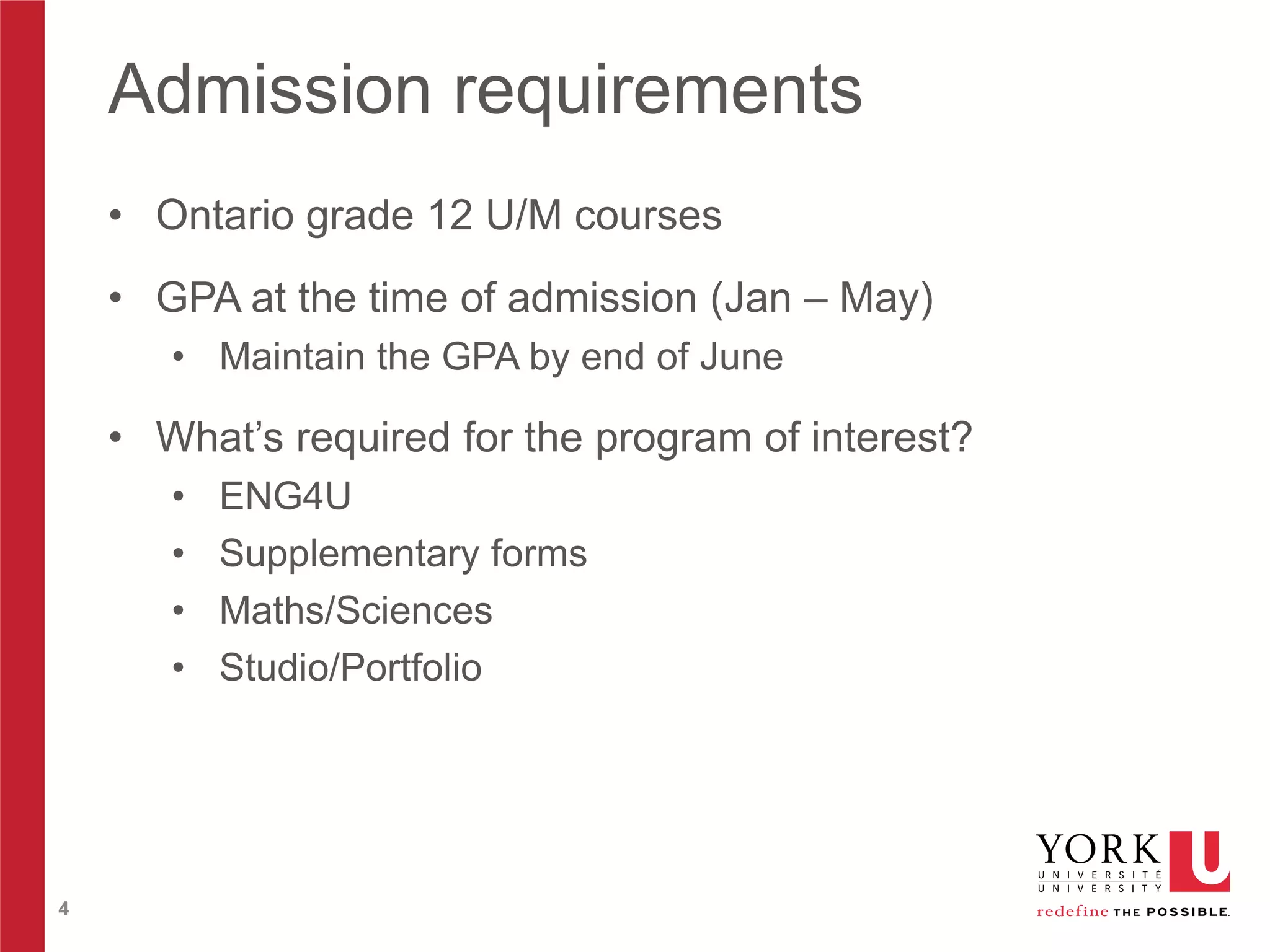
Admission requirements
• Ontario grade 12 U/M courses
• GPA at the time of admission (Jan – May)
• Maintain the GPA by end of June

• What’s required for the program of interest?
•
•
•
•

4

ENG4U
Supplementary forms
Maths/Sciences
Studio/Portfolio
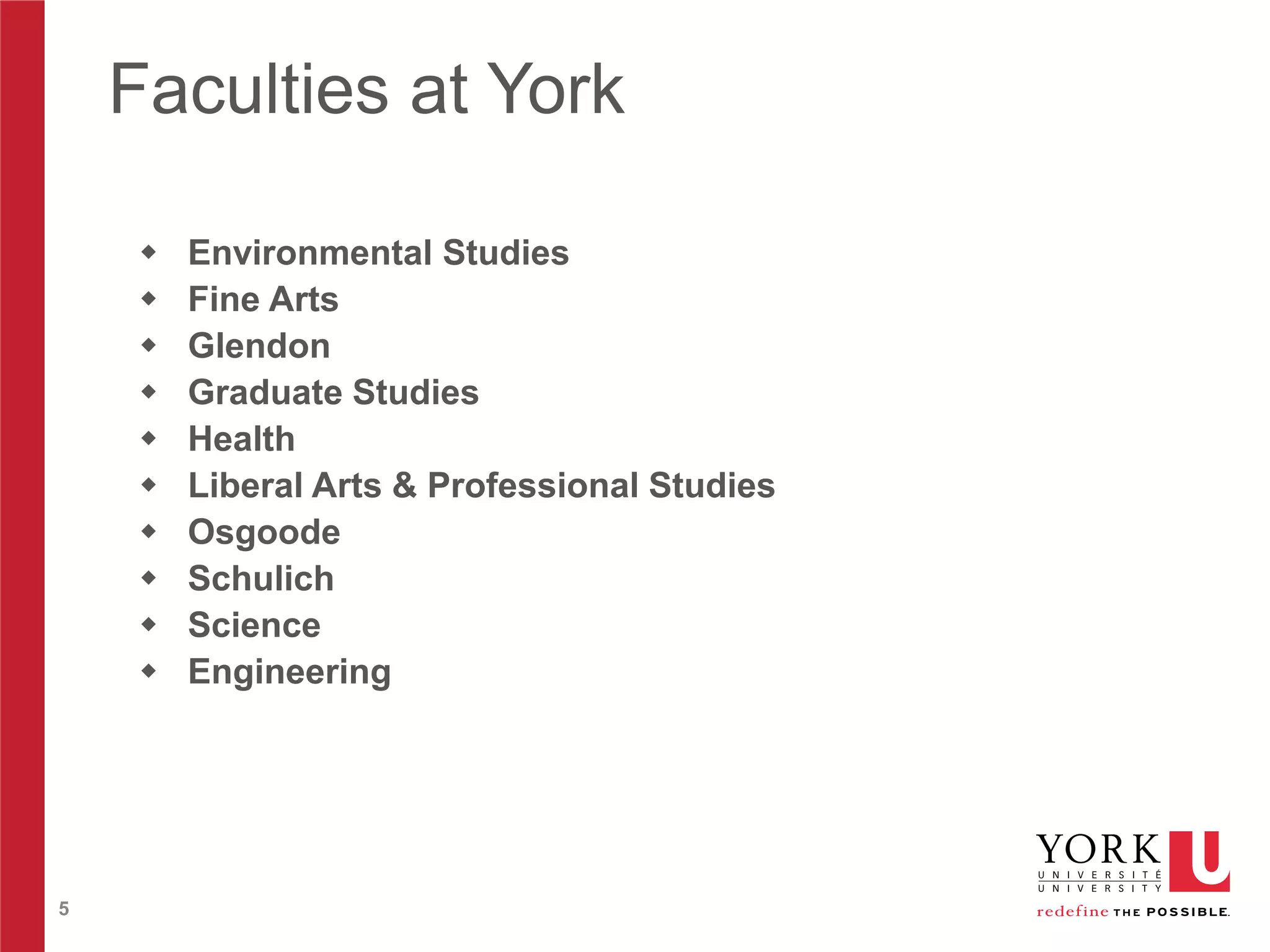
Faculties at York











5

Environmental Studies
Fine Arts
Glendon
Graduate Studies
Health
Liberal Arts & Professional Studies
Osgoode
Schulich
Science
Engineering
What to study?
Exploring My Options for future careers
Career Options by Programs of Study The discipline you study
doesn't determine what you will do after graduation. Your degree is just one of the many
important assets you bring to your future career. Taking a look at some potential career
paths for your program of study can be helpful for giving you ideas that you may not
have considered otherwise.

Occupational Clusters refers to groupings of careers that are similar based
on required skills, knowledge, duties, education and working environments. Career
exploration is often facilitated by identifying occupational clusters of interest.

Making Connections with others is an important aspects of your career and
future post secondary development

Learning About Myself is the most important element in finding a program
and future career that’s right for you.
Career Centre at York U. http://www.yorku.ca/careers/students.htm
6
So you want to become a Doctor?
Students in their last year of high school find themselves asking that big question “What
do I want to do/be and where do I study it”. The traditional professions are sought out
but once entering university the narrow door becomes very wide.
A student should choose a program based on their academic goals and career plans. If
plans change, it is easy to change from one program to another.
Programs at university with the pre-req courses for Medical School:
Biology
Chemistry
Kinesiology and Health Science (BA or BSc)
Psychology (BA or BSc)
Bachelor of Arts programs can also be an option!
Admission: Strong Math/Science from grade 12, including ENG4U.
All science students take common first- and sometimes second-year courses. It is in the
third and fourth years that the programs begin to differentiate.
Applications to medical schools are after 3rd yr of university
7
Occupational Clusters
Careers in Medicine & Health
The medical and health sector may be thought of as those careers that are dedicated to
illness prevention and health maintenance.
Occupational Clusters within this this sector may include:
•
•
•
•
•
•
•

Counseling and Mental Health
Medicine (Doctor, Nurses, Pharmacists, Dietician, Medical Technicians)
Rehabilitation
Health Management and Administration
Teaching
Research
Post degree – Masters

Research may focus on the study of factors that contribute to a healthy lifestyle, or
examine the efficacy of treatment options for optimal care. Occupations in the medical
and health sector may be of interest to individuals who desire to work with people, those
concerned with maintaining their physical fitness and wellness, those dedicated to
assisting others in need, those curious about medical and scientific advancements, and
those who may wish to manage and/or support professionals
committed to medical care
8
Making Connections
•
•

Hang out with friends

•

Be a good neighbour

•

Online Community

•

Join a club or team

•

Volunteer Work

•

Get involved in an activity

•

Become a leader

•

Participate in an Internship

•

9

Identify Networks

Get a job
Learning About Self
•

Understand the program of study and future career

•

Attend school workshops and/or fairs
•

•

Read about the importance of self in career exploration
•

•

10

Both public and private resources

Take a Career Test
•

•

Career Exploration books

Research the fields and occupations
•

•

High school, community, church

Online tools available

Talk to a Guidance/Career Counsellor
Questions?

11

Vanessa Grafi - University Perspective Powerpoint Presentation

  • 1.
    Faculty of Education Thinkingabout university Vanessa Grafi Manager Student Services Faculty of Education 17 October 2013 1
  • 2.
  • 3.
    To think about…. •Where do I want to go? • What kind of university do I want to go to? • Big or small? • What do I want to study? • What course requirements and grades do I need? • How easy is it to change? 3
  • 4.
    Admission requirements • Ontariograde 12 U/M courses • GPA at the time of admission (Jan – May) • Maintain the GPA by end of June • What’s required for the program of interest? • • • • 4 ENG4U Supplementary forms Maths/Sciences Studio/Portfolio
  • 5.
    Faculties at York           5 EnvironmentalStudies Fine Arts Glendon Graduate Studies Health Liberal Arts & Professional Studies Osgoode Schulich Science Engineering
  • 6.
    What to study? ExploringMy Options for future careers Career Options by Programs of Study The discipline you study doesn't determine what you will do after graduation. Your degree is just one of the many important assets you bring to your future career. Taking a look at some potential career paths for your program of study can be helpful for giving you ideas that you may not have considered otherwise. Occupational Clusters refers to groupings of careers that are similar based on required skills, knowledge, duties, education and working environments. Career exploration is often facilitated by identifying occupational clusters of interest. Making Connections with others is an important aspects of your career and future post secondary development Learning About Myself is the most important element in finding a program and future career that’s right for you. Career Centre at York U. http://www.yorku.ca/careers/students.htm 6
  • 7.
    So you wantto become a Doctor? Students in their last year of high school find themselves asking that big question “What do I want to do/be and where do I study it”. The traditional professions are sought out but once entering university the narrow door becomes very wide. A student should choose a program based on their academic goals and career plans. If plans change, it is easy to change from one program to another. Programs at university with the pre-req courses for Medical School: Biology Chemistry Kinesiology and Health Science (BA or BSc) Psychology (BA or BSc) Bachelor of Arts programs can also be an option! Admission: Strong Math/Science from grade 12, including ENG4U. All science students take common first- and sometimes second-year courses. It is in the third and fourth years that the programs begin to differentiate. Applications to medical schools are after 3rd yr of university 7
  • 8.
    Occupational Clusters Careers inMedicine & Health The medical and health sector may be thought of as those careers that are dedicated to illness prevention and health maintenance. Occupational Clusters within this this sector may include: • • • • • • • Counseling and Mental Health Medicine (Doctor, Nurses, Pharmacists, Dietician, Medical Technicians) Rehabilitation Health Management and Administration Teaching Research Post degree – Masters Research may focus on the study of factors that contribute to a healthy lifestyle, or examine the efficacy of treatment options for optimal care. Occupations in the medical and health sector may be of interest to individuals who desire to work with people, those concerned with maintaining their physical fitness and wellness, those dedicated to assisting others in need, those curious about medical and scientific advancements, and those who may wish to manage and/or support professionals committed to medical care 8
  • 9.
    Making Connections • • Hang outwith friends • Be a good neighbour • Online Community • Join a club or team • Volunteer Work • Get involved in an activity • Become a leader • Participate in an Internship • 9 Identify Networks Get a job
  • 10.
    Learning About Self • Understandthe program of study and future career • Attend school workshops and/or fairs • • Read about the importance of self in career exploration • • 10 Both public and private resources Take a Career Test • • Career Exploration books Research the fields and occupations • • High school, community, church Online tools available Talk to a Guidance/Career Counsellor
  • 11.