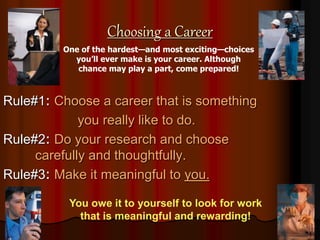
Choosing a Career
Rule#1: Choose a career that is something
you really like to do.
Rule#2: Do your research and choose
carefully and thoughtfully.
Rule#3: Make it meaningful to you.
One of the hardest—and most exciting—choices
you’ll ever make is your career. Although
chance may play a part, come prepared!
You owe it to yourself to look for work
that is meaningful and rewarding!
Choose Career Options That Match Your Values
 Knowing what you value most will help you refine
your career search and choice:
 Helping others
 Prestige
 High income
 Flexible work hours
 Establish and align values, career choice, and
career goals for motivation.
Surviving in a Fast Economy
 You will always have some control over your
career.
 You must accept risks and plan for the future to
advance your career.
 A college degree does not guarantee employment.
 A commitment to lifelong learning will help keep
you employable.
Factors to Consider
Do:
 explore a number of
careers and majors
 get involved
 Get advice from people in
your target occupation
 follow your passion
 Dare to try something
new
Don’t:
 focus on a major just to
get a career out of it
 select a major just
because it is “cool” or
seems to promise
prestige
 let someone else push
you into a job
 Assume that you have it
all figured out
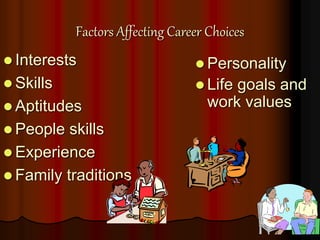
Factors Affecting Career Choices
 Interests
 Skills
 Aptitudes
 People skills
 Experience
 Family traditions
 Personality
 Life goals and
work values
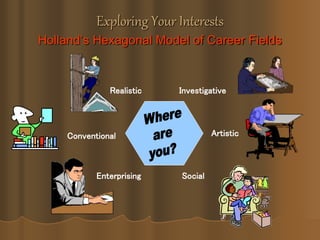
Exploring Your Interests
Holland’s Hexagonal Model of Career Fields
Investigative
Artistic
Social
Realistic
Conventional
Enterprising
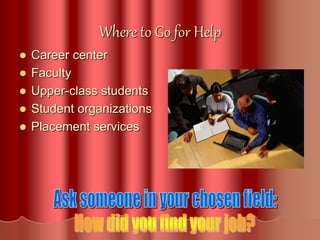
Where to Go for Help
 Career center
 Faculty
 Upper-class students
 Student organizations
 Placement services
Become Knowledgeable
About Careers
 Explore the Occupational Outlook Handbook at
http://www.bls.gov/oco/
 Research several careers, not just one
 Browse the Careers section of a local bookstore
 See a career counselor
 Scope out Internet resources
 Network--many people love to talk about
their jobs!
Explore the Occupational Outlook Handbook
http://www.bls.gov/oco/
 Keep up with the occupational outlook
for various fields.
 Get to know which ones are adding jobs
and which ones are losing them.
 The Occupational Outlook Handbook is
an excellent source, and is updated
every two years.
 Good news! Over the next few years,
jobs requiring college degrees will be
the fastest-growing and highest paying.
What to Look for in a
Career
 Major career field target
 Preferred type of work
 Income requirements
 Geographical requirements
 Special needs
 Industry preferences
 Stress level
 Level of interaction with other
people
 Indoor vs. outdoor
 Amount of independence
 Balance between creative and
conventional tasks
 The type of people you would
interact with
 Physical requirements
 Local/national/international
organization
 Benefits and perks
 Advancement opportunities
 A good boss
 Training
 Industry outlook
 Reputation of the firm in the
industry
Select Several Careers,
Not Just One
 It’s a good idea to have several careers in mind
rather than just one in your first year of college.
 Approximately 60% of students change their
major at some point during their college career.
 It pays to be knowledgeable about more than
just one career field. The average graduate
changes their job seven times in their life.
 It also pays to develop a wide variety of general
skills, particular those related to communication.
Network
 Check with people you know about career
information.
 Networking can lead to meeting someone
who may be able to answer your questions
about a specific career or company.
 It is an effective way to learn about the type
of training necessary for a particular
position, what it took to get into the field, and
the positive and negative aspects of the
work.
 More and more professionals are active on
online networks such as LinkedIn.com and
Doostang.com. Some professionals even
use Facebook to get in touch with others in
their field…as well as research potential
candidates.
 Assess Your Skills
 Academic Strengths
 Reading, Writing, Speaking, and Listening
 Math
 Creative Thinking
 Problem Solving and Decision Making
 Personal Qualities
 Self-Esteem, Self-Management, Responsibility
 People Skills
 Social, Negotiation, Leadership, Teamwork
See a Career Counselor
 The career counselors at your college
are trained professionals who can help
you
 discover your strengths and
weaknesses
 evaluate your values and goals
 sort through what type of career you
want
 They will not tell you what to do, they
will simply help identify what factors
may lead to successful and interesting
career options.
Questions for Academic Advisors
 What classes should I take this term and next?
 What sequence of classes should I take?
 Am I taking too many difficult classes in one term?
 What electives do you
recommend?
 What career
 opportunities
are there if I study
mainly _____?
Getting Experience
 Volunteer or service learning
 Study abroad
 Internships/co-ops
 On-campus employment
 Student projects/competitions
 Research
 On-the-job training
 Apprenticeships
Research the Job
 Identify the skills and experience
necessary to perform the job you
want.
 Determine the general requirements of
the job.
 Learn about the day-to-day tasks and
responsibilities.
 Research the company and employer.
 Determine the company’s philosophy.
 The more you know about the job, the
stronger the candidate you will
become.
How big
will my
office be?
Explore Relevant Part-Time and Summer Jobs
 Students benefit when their jobs are on
campus.
 Investigate if there exists a part-time job in
the department of your major.
 Advanced planning will help you obtain a
summer job with a company related to your
field.
 If you can’t find a related job, you can still
demonstrate work-related skills and a work
ethic that will impress prospective
employers.
Internet Career Journey
Activity 13.2 --Web Resources
Occupational Outlook Handbook
11_Careers_new.ppt
Career Resource Center
http://www.careers.org/
Job Hunt
http://www.job-hunt.org
The Catapult on Job Web
http://www.job-hunt.org/
The Riley Guide: Employment
Opportunities and Job
Resources on the Internet
www.rileyguide.com
Monster.com
http://www.monster.com/
Quintessential Careers
http://www.quintcareers.com/index.html

Careers.ppt

  • 1.
    Choosing a Career Rule#1:Choose a career that is something you really like to do. Rule#2: Do your research and choose carefully and thoughtfully. Rule#3: Make it meaningful to you. One of the hardest—and most exciting—choices you’ll ever make is your career. Although chance may play a part, come prepared! You owe it to yourself to look for work that is meaningful and rewarding!
  • 2.
    Choose Career OptionsThat Match Your Values  Knowing what you value most will help you refine your career search and choice:  Helping others  Prestige  High income  Flexible work hours  Establish and align values, career choice, and career goals for motivation.
  • 3.
    Surviving in aFast Economy  You will always have some control over your career.  You must accept risks and plan for the future to advance your career.  A college degree does not guarantee employment.  A commitment to lifelong learning will help keep you employable.
  • 4.
    Factors to Consider Do: explore a number of careers and majors  get involved  Get advice from people in your target occupation  follow your passion  Dare to try something new Don’t:  focus on a major just to get a career out of it  select a major just because it is “cool” or seems to promise prestige  let someone else push you into a job  Assume that you have it all figured out
  • 5.
    Factors Affecting CareerChoices  Interests  Skills  Aptitudes  People skills  Experience  Family traditions  Personality  Life goals and work values
  • 6.
    Exploring Your Interests Holland’sHexagonal Model of Career Fields Investigative Artistic Social Realistic Conventional Enterprising
  • 7.
    Where to Gofor Help  Career center  Faculty  Upper-class students  Student organizations  Placement services
  • 8.
    Become Knowledgeable About Careers Explore the Occupational Outlook Handbook at http://www.bls.gov/oco/  Research several careers, not just one  Browse the Careers section of a local bookstore  See a career counselor  Scope out Internet resources  Network--many people love to talk about their jobs!
  • 9.
    Explore the OccupationalOutlook Handbook http://www.bls.gov/oco/  Keep up with the occupational outlook for various fields.  Get to know which ones are adding jobs and which ones are losing them.  The Occupational Outlook Handbook is an excellent source, and is updated every two years.  Good news! Over the next few years, jobs requiring college degrees will be the fastest-growing and highest paying.
  • 10.
    What to Lookfor in a Career  Major career field target  Preferred type of work  Income requirements  Geographical requirements  Special needs  Industry preferences  Stress level  Level of interaction with other people  Indoor vs. outdoor  Amount of independence  Balance between creative and conventional tasks  The type of people you would interact with  Physical requirements  Local/national/international organization  Benefits and perks  Advancement opportunities  A good boss  Training  Industry outlook  Reputation of the firm in the industry
  • 11.
    Select Several Careers, NotJust One  It’s a good idea to have several careers in mind rather than just one in your first year of college.  Approximately 60% of students change their major at some point during their college career.  It pays to be knowledgeable about more than just one career field. The average graduate changes their job seven times in their life.  It also pays to develop a wide variety of general skills, particular those related to communication.
  • 12.
    Network  Check withpeople you know about career information.  Networking can lead to meeting someone who may be able to answer your questions about a specific career or company.  It is an effective way to learn about the type of training necessary for a particular position, what it took to get into the field, and the positive and negative aspects of the work.  More and more professionals are active on online networks such as LinkedIn.com and Doostang.com. Some professionals even use Facebook to get in touch with others in their field…as well as research potential candidates.
  • 13.
     Assess YourSkills  Academic Strengths  Reading, Writing, Speaking, and Listening  Math  Creative Thinking  Problem Solving and Decision Making  Personal Qualities  Self-Esteem, Self-Management, Responsibility  People Skills  Social, Negotiation, Leadership, Teamwork
  • 14.
    See a CareerCounselor  The career counselors at your college are trained professionals who can help you  discover your strengths and weaknesses  evaluate your values and goals  sort through what type of career you want  They will not tell you what to do, they will simply help identify what factors may lead to successful and interesting career options.
  • 15.
    Questions for AcademicAdvisors  What classes should I take this term and next?  What sequence of classes should I take?  Am I taking too many difficult classes in one term?  What electives do you recommend?  What career  opportunities are there if I study mainly _____?
  • 16.
    Getting Experience  Volunteeror service learning  Study abroad  Internships/co-ops  On-campus employment  Student projects/competitions  Research  On-the-job training  Apprenticeships
  • 17.
    Research the Job Identify the skills and experience necessary to perform the job you want.  Determine the general requirements of the job.  Learn about the day-to-day tasks and responsibilities.  Research the company and employer.  Determine the company’s philosophy.  The more you know about the job, the stronger the candidate you will become. How big will my office be?
  • 18.
    Explore Relevant Part-Timeand Summer Jobs  Students benefit when their jobs are on campus.  Investigate if there exists a part-time job in the department of your major.  Advanced planning will help you obtain a summer job with a company related to your field.  If you can’t find a related job, you can still demonstrate work-related skills and a work ethic that will impress prospective employers.
  • 19.
    Internet Career Journey Activity13.2 --Web Resources Occupational Outlook Handbook 11_Careers_new.ppt Career Resource Center http://www.careers.org/ Job Hunt http://www.job-hunt.org The Catapult on Job Web http://www.job-hunt.org/ The Riley Guide: Employment Opportunities and Job Resources on the Internet www.rileyguide.com Monster.com http://www.monster.com/ Quintessential Careers http://www.quintcareers.com/index.html