1
Vision
Changes
. You may notice vision changes
with aging.
. Many changes are common and
can often be corrected.
. As you get older, you are at
higher risk of age-related eye
diseases and conditions.
Get Your Eyes
Examined
. Everyone aged 50 or older should
have a comprehensive dilated eye
exam.
. Your eye care professional can tell
you how frequently you need to
have one.
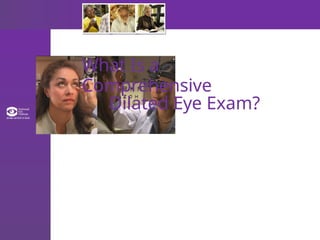
What Is a
Comprehensive
Dilated Eye Exam?
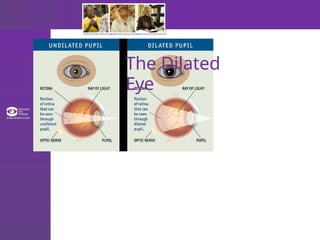
The Dilated
Eye
Eye Diseases and
Conditions
. Age-related macular degeneration
(AMD)
. Cataract
. Diabetic eye disease
. Glaucoma
. Dry eye
. Low vision
Age-Related
Macular
Degeneration
(AMD)
. What is it?
. Common among people aged 60 or older.
. Can damage the macula, which is needed
for sharp, detailed central vision.
(continued from previous
slide)
. Who is at higher risk?
. The greatest risk factor is age.
. Other risk factors
• Smoking.
• Family history.
• Obesity.
• Race. Caucasians are more likely to lose
vision from AMD.
Age-Related
Macular
Degeneration
(AMD)
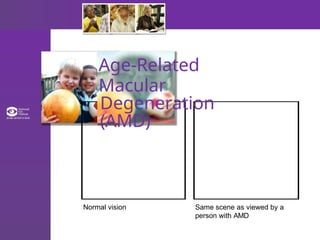
Normal vision Same scene as viewed by a
person with AMD
AMD
. Symptoms
. No pain.
. Blurred vision.
. Drusen (can only be seen by an eye care
professional).
(continued from previous
slide)
. Treatment options
. Age-Related Eye Disease Study (AREDS)
special vitamins/minerals supplement
formulation.
. Laser surgery.
. Eye injections.
. Photodynamic therapy.
AMD
. What can you do?
. Eat a healthy diet
. Don’t smoke, or stop smoking
. Maintain normal blood pressure
. Maintain a healthy weight
. Exercise
Cataract
. What is it?
. Clouding of the eye’s lens that causes loss
of vision.
(continued from previous
slide)
. Who is at higher risk?
. Most cataract are related to aging
. Other risk factors
• Diabetes
• Smoking
• Exposure to sunlight
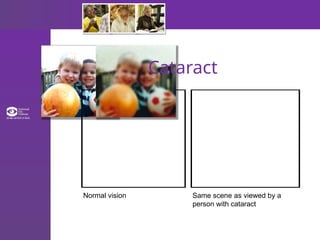
Cataract
Normal vision Same scene as viewed by a
person with cataract
Cataract
. Symptoms
. Cloudy or blurred vision.
. Colors that may not appear as bright as
they once did.
. Glare.
. Poor night vision.
(continued from previous
slide)
. Treatment options
. Glasses
. Better lighting
. Surgery
Cataract
. What can you do?
. Eat a healthy diet.
. Wear sunglasses and a brimmed hat
when outdoors.
. Don’t smoke.
Diabetic Eye
Disease
. What is it?
. A group of eye problems associated with
diabetes.
. Diabetic retinopathy is a leading cause of
vision loss and blindness.
(continued from previous
slide)
. Who is at higher risk?
. People with diabetes.
. The longer someone has diabetes,
the more likely it is he or she will get
diabetic retinopathy.
Diabetic
Retinopathy
Normal vision Same scene as viewed by a
person with diabetic retinopathy
Diabetic Eye
Disease
. Symptoms
. No early warning signs or symptoms
. Early detection and timely treatment
can reduce the risk of vision loss.
. Treatment options
. Laser treatment
. Surgery
Diabetic Eye
Disease
. What can you do?
. Control your ABCs - A1C, blood pressure,
and cholesterol.
. Ta ke your medications as directed.
. Maintain a healthy weight.
. Exercise.
. Don’t smoke.
. Have a dilated eye exam at least once a
year.
Glaucoma
. What is it?
. A group of eye diseases that can damage
the optic nerve in the eye.
. Glaucoma can develop in one or both
eyes.
. Primary open-angle glaucoma is the
most common form.
(continued from previous
slide)
. Who is at higher risk?
. African Americans over age 40.
. Everyone over the age of 60, especially
Mexican Americans.
. People with a family history of glaucoma.
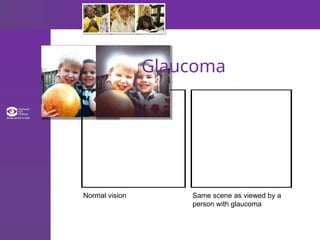
Glaucoma
Normal vision Same scene as viewed by a
person with glaucoma
Glaucoma
. Symptoms
. No early warning signs or symptoms
. No pain
. Loss of side vision
. Treatment options
. Medications, usually eye drops
. Laser or conventional surgery
Glaucoma
. What can you do?
. People at higher risk should get a
comprehensive dilated eye exam every
one to two years or as instructed by your
eye care professional.
Dry Eye
. What is it?
. The eye does not produce tears properly.
. Tears evaporate too quickly.
. Inflammation of the surface of the eye
may occur along with dry eye.
(continued from previous
slide)
. Who is at higher risk?
. Women often experience dry eye more
than men.
. Dry eye can occur at any age.
. Older adults frequently experience
dryness of the eyes.
Dry Eye
. Symptoms
. Stinging or burning of the eye.
. Feeling as if sand or grit is in the eye.
. Episodes of excess tears following dry
eye periods.
. A stringy discharge from the eye.
. Pain and redness of the eye.
. Episodes of blurred vision.
(continued from previous
slide)
. Symptoms
. Heavy eyelids.
. Decreased tearing or inability to shed
tears when crying.
. Uncomfortable contact lenses.
. Decreased tolerance to any activity that
requires prolonged visual attention.
. Eye fatigue.
(continued from previous
slide)
. Treatment options
. Using artificial tears, prescription eye
drops, gels, gel inserts, and ointments.
. Wearing glasses or sunglasses.
. Getting punctal plugs.
Dry Eye
. What can you do?
. Use an air cleaner to filter dust
. Avoid dry conditions
. Use lubricating eye drops
. Visit an eye care professional
Low Vision
. What is it?
. A visual impairment that is not corrected
by standard eyeglasses, contact lenses,
medication, or surgery.
. It interferes with the ability to perform
everyday activities.
(continued from previous
slide)
. Who is at higher risk?
. People with eye disease.
. Some people develop vision loss after
eye injuries or from birth defects.
Low Vision
. Treatment options
. Vision rehabilitation.
. What can you do?
. See a specialist in low vision.
. Talk to your eye care professional about
vision rehabilitation.
. Use low vision devices.
Clinical Trials
. Talk to your eye care professional
about participating in a clinical
trial.
. To learn more about clinical trials,
visit www.nei.nih.gov
Review
. As you age, you are at higher risk of
age-related eye diseases and
conditions.
. Have a comprehensive dilated eye
exam to detect eye diseases in their
early stages.
. Questions?
Where To Get More
Information
National Eye Institute
(NEI)
For more information,
visit
www.nei.nih.gov/aginge
ye
Or call NEI at 301-496-
5248

VandAToolkit_Mod2_Powerpoint_508.pptx Human anatomy

  • 1.
  • 2.
    Vision Changes . You maynotice vision changes with aging. . Many changes are common and can often be corrected. . As you get older, you are at higher risk of age-related eye diseases and conditions.
  • 3.
    Get Your Eyes Examined .Everyone aged 50 or older should have a comprehensive dilated eye exam. . Your eye care professional can tell you how frequently you need to have one.
  • 4.
  • 5.
  • 6.
    Eye Diseases and Conditions .Age-related macular degeneration (AMD) . Cataract . Diabetic eye disease . Glaucoma . Dry eye . Low vision
  • 7.
    Age-Related Macular Degeneration (AMD) . What isit? . Common among people aged 60 or older. . Can damage the macula, which is needed for sharp, detailed central vision.
  • 8.
    (continued from previous slide) .Who is at higher risk? . The greatest risk factor is age. . Other risk factors • Smoking. • Family history. • Obesity. • Race. Caucasians are more likely to lose vision from AMD.
  • 9.
  • 10.
    AMD . Symptoms . Nopain. . Blurred vision. . Drusen (can only be seen by an eye care professional).
  • 11.
    (continued from previous slide) .Treatment options . Age-Related Eye Disease Study (AREDS) special vitamins/minerals supplement formulation. . Laser surgery. . Eye injections. . Photodynamic therapy.
  • 12.
    AMD . What canyou do? . Eat a healthy diet . Don’t smoke, or stop smoking . Maintain normal blood pressure . Maintain a healthy weight . Exercise
  • 13.
    Cataract . What isit? . Clouding of the eye’s lens that causes loss of vision.
  • 14.
    (continued from previous slide) .Who is at higher risk? . Most cataract are related to aging . Other risk factors • Diabetes • Smoking • Exposure to sunlight
  • 15.
    Cataract Normal vision Samescene as viewed by a person with cataract
  • 16.
    Cataract . Symptoms . Cloudyor blurred vision. . Colors that may not appear as bright as they once did. . Glare. . Poor night vision.
  • 17.
    (continued from previous slide) .Treatment options . Glasses . Better lighting . Surgery
  • 18.
    Cataract . What canyou do? . Eat a healthy diet. . Wear sunglasses and a brimmed hat when outdoors. . Don’t smoke.
  • 19.
    Diabetic Eye Disease . Whatis it? . A group of eye problems associated with diabetes. . Diabetic retinopathy is a leading cause of vision loss and blindness.
  • 20.
    (continued from previous slide) .Who is at higher risk? . People with diabetes. . The longer someone has diabetes, the more likely it is he or she will get diabetic retinopathy.
  • 21.
    Diabetic Retinopathy Normal vision Samescene as viewed by a person with diabetic retinopathy
  • 22.
    Diabetic Eye Disease . Symptoms .No early warning signs or symptoms . Early detection and timely treatment can reduce the risk of vision loss. . Treatment options . Laser treatment . Surgery
  • 23.
    Diabetic Eye Disease . Whatcan you do? . Control your ABCs - A1C, blood pressure, and cholesterol. . Ta ke your medications as directed. . Maintain a healthy weight. . Exercise. . Don’t smoke. . Have a dilated eye exam at least once a year.
  • 24.
    Glaucoma . What isit? . A group of eye diseases that can damage the optic nerve in the eye. . Glaucoma can develop in one or both eyes. . Primary open-angle glaucoma is the most common form.
  • 25.
    (continued from previous slide) .Who is at higher risk? . African Americans over age 40. . Everyone over the age of 60, especially Mexican Americans. . People with a family history of glaucoma.
  • 26.
    Glaucoma Normal vision Samescene as viewed by a person with glaucoma
  • 27.
    Glaucoma . Symptoms . Noearly warning signs or symptoms . No pain . Loss of side vision . Treatment options . Medications, usually eye drops . Laser or conventional surgery
  • 28.
    Glaucoma . What canyou do? . People at higher risk should get a comprehensive dilated eye exam every one to two years or as instructed by your eye care professional.
  • 29.
    Dry Eye . Whatis it? . The eye does not produce tears properly. . Tears evaporate too quickly. . Inflammation of the surface of the eye may occur along with dry eye.
  • 30.
    (continued from previous slide) .Who is at higher risk? . Women often experience dry eye more than men. . Dry eye can occur at any age. . Older adults frequently experience dryness of the eyes.
  • 31.
    Dry Eye . Symptoms .Stinging or burning of the eye. . Feeling as if sand or grit is in the eye. . Episodes of excess tears following dry eye periods. . A stringy discharge from the eye. . Pain and redness of the eye. . Episodes of blurred vision.
  • 32.
    (continued from previous slide) .Symptoms . Heavy eyelids. . Decreased tearing or inability to shed tears when crying. . Uncomfortable contact lenses. . Decreased tolerance to any activity that requires prolonged visual attention. . Eye fatigue.
  • 33.
    (continued from previous slide) .Treatment options . Using artificial tears, prescription eye drops, gels, gel inserts, and ointments. . Wearing glasses or sunglasses. . Getting punctal plugs.
  • 34.
    Dry Eye . Whatcan you do? . Use an air cleaner to filter dust . Avoid dry conditions . Use lubricating eye drops . Visit an eye care professional
  • 35.
    Low Vision . Whatis it? . A visual impairment that is not corrected by standard eyeglasses, contact lenses, medication, or surgery. . It interferes with the ability to perform everyday activities.
  • 36.
    (continued from previous slide) .Who is at higher risk? . People with eye disease. . Some people develop vision loss after eye injuries or from birth defects.
  • 37.
    Low Vision . Treatmentoptions . Vision rehabilitation. . What can you do? . See a specialist in low vision. . Talk to your eye care professional about vision rehabilitation. . Use low vision devices.
  • 38.
    Clinical Trials . Talkto your eye care professional about participating in a clinical trial. . To learn more about clinical trials, visit www.nei.nih.gov
  • 39.
    Review . As youage, you are at higher risk of age-related eye diseases and conditions. . Have a comprehensive dilated eye exam to detect eye diseases in their early stages. . Questions?
  • 40.
    Where To GetMore Information National Eye Institute (NEI) For more information, visit www.nei.nih.gov/aginge ye Or call NEI at 301-496- 5248