VACCINE PREVENTABLE
DISEASE
Presented by
Bomter yinyo
MSC. nursing 1st
year
Presented to
Mr. Muthu kumaran
HOD of CHN
ACN
THIS PRESENTATION WILL COVER
1)INTRODUCTION OF VPN
2)VACCINE
3)TYPES OF VACCINE
4)VACCINE PREVENTABLE DISEASE.
5)IMMUNITION SCHEDULE
6)ROLE OF NURSE
INTRODUCTION
Vaccination against childhood communicable diseases through the
Expanded Program on Immunization (EPI) is one of the most cost-effective
public health interventions available.
- By reducing mortality and morbidity, vaccination can contribute
substantially to achieving the global health goals.
- The epidemiology and burden of vaccine- preventable diseases vary by
country and region partly because of differences in vaccine uptake.
DEFINITION
Vaccine preventable disease :
Vaccine-preventable diseases are infectious diseases that can be prevented by
vaccines. These diseases are caused by bacteria, viruses, or other microorganisms
that can be spread through various routes, such as:
- Airborne transmission (e.g., measles, influenza)
- Direct contact (e.g., HPV, hepatitis B)
- Contaminated food and water (e.g., typhoid, cholera)
- Vector-borne transmission (e.g., yellow fever, Japanese encephalitis)
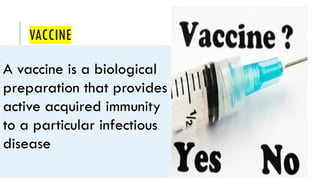
VACCINE
A vaccine is a biological
preparation that provides
active acquired immunity
to a particular infectious
disease
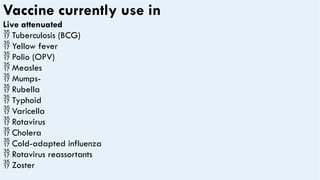
Vaccine currently use in
Live attenuated
 Tuberculosis (BCG)
 Yellow fever
 Polio (OPV)
 Measles
 Mumps-
 Rubella
 Typhoid
 Varicella
 Rotavirus
 Cholera
 Cold-adapted influenza
 Rotavirus reassortants
 Zoster
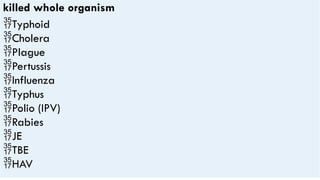
killed whole organism
Typhoid
Cholera
Plague
Pertussis
Influenza
Typhus
Polio (IPV)
Rabies
JE
TBE
HAV
COVID-19
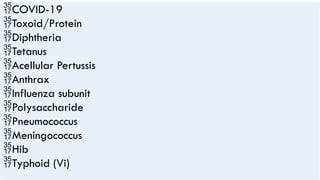
Toxoid/Protein
Diphtheria
Tetanus
Acellular Pertussis
Anthrax
Influenza subunit
Polysaccharide
Pneumococcus
Meningococcus
Hib
Typhoid (Vi)
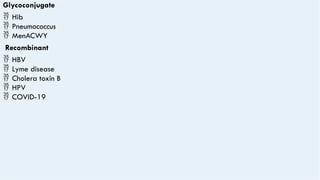
Glycoconjugate
 Hib
 Pneumococcus
 MenACWY
Recombinant
 HBV
 Lyme disease
 Cholera toxin B
 HPV
 COVID-19
Objectives :
1. Prevent illness and death: Reduce the incidence and mortality of
VPDs.
2. Reduce disease transmission: Interrupt the transmission of VPDs in
communities.
3. Protect vulnerable populations: Safeguard high-risk groups, such as
young children, older adults, and those with compromised immune systems.
4. Support herd immunity: Maintain high vaccination coverage to prevent
outbreaks and protect those who cannot receive vaccines.
5.Enhance vaccine access and equity: Ensure that vaccines are available
and accessible to all individuals, regardless of socioeconomic status or
geographic location.
Improve vaccine safety and efficacy: Continuously monitor and evaluate
vaccine safety and efficacy to maintain public trust and confidence.
7.Support vaccine education and awareness: Educate healthcare
professionals, policymakers, and the general public about the importance
of vaccines and vaccine-preventable diseases.
Some of the vaccine preventable disease discussed in this presentation are as
follows:
1) Diphtheria
2) Pertussis ( whooping cough )
3) Tetanus
4) Poliomyelitis
DIPHTHERIA
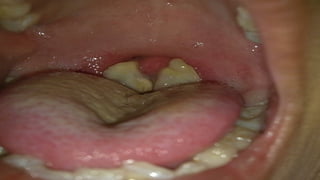
Caused by the bacterium Corynebacterium diphtheriae.
 Bacterium produces a toxin that can harm or destroy human
body tissues and organs.
 Commonly affects the throat and sometimes the tonsils.
 Diphtheria affects people of all ages, but most often it strikes
unimmunized children.
 In temperate climates, diphtheria tends to occur during
the colder months.
MODE OF TRANSMISSION
TRANSMISSION
 Person to person through close physical and
respiratory contact.
SIGN AND SYMPTOMS
The early symptoms are sore throat, loss of appetite and slight fever.
 Within two to three days, a bluish-white or grey membrane forms in
the throat and on the tonsils.
 This membrane sticks to the soft palate of the throat and can bleed.
 If there is bleeding, the membrane may become greyish-green or
black.
 The patient may either recover at this point or develop severe
weakness and die within six to 10 days.
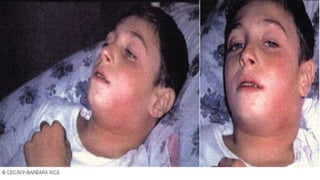
 Patients with severe diphtheria do not develop a high fever but may
develop a swollen neck and obstructed airway.
COMPLICATION
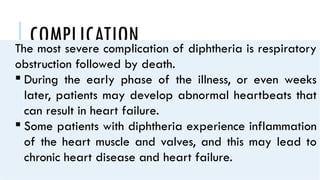
The most severe complication of diphtheria is respiratory
obstruction followed by death.
 During the early phase of the illness, or even weeks
later, patients may develop abnormal heartbeats that
can result in heart failure.
 Some patients with diphtheria experience inflammation
of the heart muscle and valves, and this may lead to
chronic heart disease and heart failure.
DIAGNOSTIC AND TREATMENT
 To confirm the diagnosis, health workers should obtain throat
cultures from suspected cases.
 However, treatment should begin urgently without waiting for
culture results.
 Children who develop diphtheria should be given diphtheria
antitoxin and such antibiotics as erythromycin or penicillin.
 They should be isolated to avoid exposing others to the
disease.
PREVENTION
Maintain a high level of immunization in the community.
 Pentavalent (DPT+ Hep.B + Hib) vaccine or DPT vaccine can be
given.
 They must be stored between +2 °C and +8 °C without being
frozen.
 Pentavalent vaccine is freeze-sensitive.
If freezing is suspected, the "Shake Test" should be performed to
determine whether a vial is safe to use.
 Diphtheria-containing vaccines are administered 0.5 ml doses given
intramuscularly in the anterolateral (outer) thigh in infants and in the
deltoid muscle (upper arm) of older children and adults.
PERTUSSIS

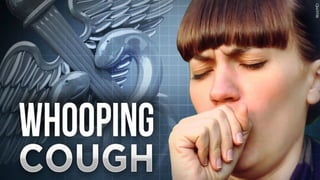
Pertussis, or whooping cough, is a disease of the
respiratory tract caused by Bordetella pertussis bacteria
that live in the mouth, nose and throat. Because it is highly
communicable and affects unimmunized infants in
particular, pertussis remains a public health concern
globally, including in countries where vaccination
coverage is high.
TRANSMISSION
 Direct contact: Touching or shaking hands with an infected
person.
 Droplet transmission: Inhaling respiratory droplets
containing the bacteria, which are released when an
infected person talks, coughs, sneezes.
 Airborne transmission: Inhaling the bacteria, which can
survive in the air for short periods.
 Contaminated surfaces: Touching surfaces contaminated
with the bacteria and then touching one's face.
SIGN AND SYMPTOMS
About 10 days after infection, symptoms similar to a common cold
appear runny nose watery eyes, sneezing, fever and a mild cough.
 The cough worsens to many rapid bursts.
 At the end of these bursts, the typical patient takes in air with a high-
pitched whoop.
 Children may turn blue because they do not get enough oxygen during
a long burst of coughing.
 Vomiting and exhaustion often follow the coughing attacks, which are
particularly frequent at night.
COMPLICATION
Pneumonia is the main complication of pertussis - it has
been found to occur in about 6% of cases.
 The risk of pneumonia in infants under six months of age
can be up to four times higher than that in older children.
 Children may experience complications, such as
convulsions and seizures, due to fever or reduced oxygen
supply to the brain during bursts of coughing.
TREATMENT
Treatment with an antibiotic, usually
erythromycin, may reduce the severity of the
illness.
 Because the medication kills bacteria in the
nose and throat, antibiotics also reduce the
ability of infected people to spread
pertussis to others.
TETANUS
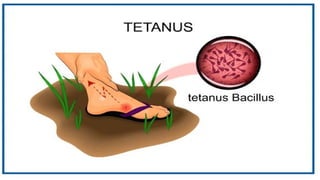
Tetanus is caused by the bacterium Clostridium tetani, which is present
in soil everywhere.
 Infection with this bacterium occurs when soil enters a wound or cut.
 Toxin released by the bacterium causes severe painful muscle spasms
that can lead to death.
TETANUS
 Neonatal tetanus (in newborns) and maternal tetanus (in mothers) is
TRANSMISION
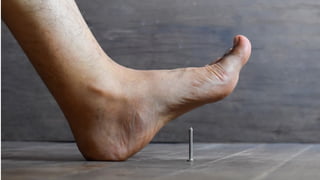
The bacterium can enter a wound or cut from items such as dirty nails,
knives, tools, wood splinters, dirty tools used during childbirth, or deep
puncture wounds from animal bites. It grows well in deep wounds, burns
and crush injuries.
 In newborn babies, infection can occur where unsafe and unsterile
delivery practices are common.
 Infants and children may also contract tetanus when dirty tools are
used for circumcision, scarification and skin piercing, and when dirt,
charcoal or other unclean substances are rubbed into a wound.
 The disease does not transmit person to person.
SIGN AND SYMPTOMS
 In children and adults, muscular stiffness in the jaw (trismus or
lock-jaw) is a common first sign of tetanus. This is followed by
stiffness in the neck, abdomen , back, difficulty swallowing,
muscle spasms, sweating and fever
 Newborns with tetanus are normal at birth but stop feeding
at three to 28 days of age. They then become stiff and
severe muscle spasms occur.
COMPLICATION
 When muscles used in breathing are affected,
respiratory failure and death can occur.
 Pneumonia is also common. Fractures of the spine or
other bones may occur as a result of muscle spasms and
convulsions.
 Long-term neurologic impairment has been described
in survivors of neonatal tetanus
TREATMENT
Tetanus at any age is a medical
emergency best managed in a referral
hospital. Anti-tetanus immunoglobulins,
antibiotics, wound care and supportive
measures are needed.
PREVENTION
 Tetanus toxoid-containing (TTCV) vaccine protects against
tetanus. Infants and children may receive combination
vaccines, such as DPT , pentavalent .
(DPT +HepB+Hib) or TD.
 Neonatal tetanus can be prevented by immunizing women of
reproductive age with tetanus toxoid, either during or before
pregnancy. Clean delivery procedures are needed even when
the mother has been immunized. Clean umbilical cord care for
the newborn is equally important.
POLIOMYELITIS
Poliomyelitis, or polio, is a highly infectious disease caused
by poliovirus types 1, 2 or 3. These are also called wild
polioviruses (WPVs) since they are the naturally occurring
types that circulate and infect people.
POLIOMYELI TIS
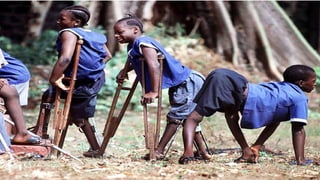
• Polio mainly affects children of less than five years of
age. One in 200 infections causes irreversible
TRANSMISION
 Poliovirus spreads by the faecal-to-oral route.
 In areas with poor sanitation, it is thought to more
commonly enter the body through the mouth when
people eat food or drink water that is contaminated
with faeces.
 The majority of infected people do not show
symptoms but can still spread the disease.
SIGN AND SYMPTOMS
 Approximately 25% of those infected develop a minor
illness, usually with fever, headache and sore throat.
 Paralysis occurs in approximately 1% of those infected.
 Death occurs in approximately 5-10% of
those paralysed.
TREATMENT
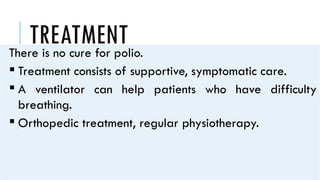
There is no cure for polio.
 Treatment consists of supportive, symptomatic care.
 A ventilator can help patients who have difficulty
breathing.
 Orthopedic treatment, regular physiotherapy.
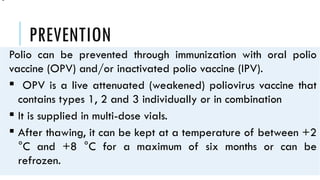
PREVENTION
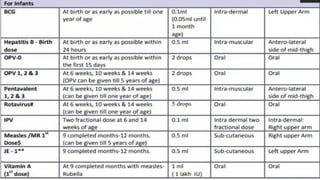
Polio can be prevented through immunization with oral polio
vaccine (OPV) and/or inactivated polio vaccine (IPV).
 OPV is a live attenuated (weakened) poliovirus vaccine that
contains types 1, 2 and 3 individually or in combination
 It is supplied in multi-dose vials.
 After thawing, it can be kept at a temperature of between +2
°C and +8 °C for a maximum of six months or can be
refrozen.
•
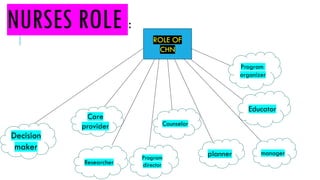
NURSES ROLE :
ROLE OF
CHN
Educator
Care
provider
Researcher
Counselor
manager
Decision
maker
planner
Program
director
Program
organizer
Vaccine preventable disease.pptxXXXXXXXX

Vaccine preventable disease.pptxXXXXXXXX

  • 1.
    VACCINE PREVENTABLE DISEASE Presented by Bomteryinyo MSC. nursing 1st year Presented to Mr. Muthu kumaran HOD of CHN ACN
  • 2.
    THIS PRESENTATION WILLCOVER 1)INTRODUCTION OF VPN 2)VACCINE 3)TYPES OF VACCINE 4)VACCINE PREVENTABLE DISEASE. 5)IMMUNITION SCHEDULE 6)ROLE OF NURSE
  • 3.
    INTRODUCTION Vaccination against childhoodcommunicable diseases through the Expanded Program on Immunization (EPI) is one of the most cost-effective public health interventions available. - By reducing mortality and morbidity, vaccination can contribute substantially to achieving the global health goals. - The epidemiology and burden of vaccine- preventable diseases vary by country and region partly because of differences in vaccine uptake.
  • 4.
    DEFINITION Vaccine preventable disease: Vaccine-preventable diseases are infectious diseases that can be prevented by vaccines. These diseases are caused by bacteria, viruses, or other microorganisms that can be spread through various routes, such as: - Airborne transmission (e.g., measles, influenza) - Direct contact (e.g., HPV, hepatitis B) - Contaminated food and water (e.g., typhoid, cholera) - Vector-borne transmission (e.g., yellow fever, Japanese encephalitis)
  • 6.
    VACCINE A vaccine isa biological preparation that provides active acquired immunity to a particular infectious disease
  • 7.
    Vaccine currently usein Live attenuated  Tuberculosis (BCG)  Yellow fever  Polio (OPV)  Measles  Mumps-  Rubella  Typhoid  Varicella  Rotavirus  Cholera  Cold-adapted influenza  Rotavirus reassortants  Zoster
  • 8.
  • 9.
  • 10.
    Glycoconjugate  Hib  Pneumococcus MenACWY Recombinant  HBV  Lyme disease  Cholera toxin B  HPV  COVID-19
  • 12.
    Objectives : 1. Preventillness and death: Reduce the incidence and mortality of VPDs. 2. Reduce disease transmission: Interrupt the transmission of VPDs in communities. 3. Protect vulnerable populations: Safeguard high-risk groups, such as young children, older adults, and those with compromised immune systems. 4. Support herd immunity: Maintain high vaccination coverage to prevent outbreaks and protect those who cannot receive vaccines. 5.Enhance vaccine access and equity: Ensure that vaccines are available and accessible to all individuals, regardless of socioeconomic status or geographic location.
  • 13.
    Improve vaccine safetyand efficacy: Continuously monitor and evaluate vaccine safety and efficacy to maintain public trust and confidence. 7.Support vaccine education and awareness: Educate healthcare professionals, policymakers, and the general public about the importance of vaccines and vaccine-preventable diseases. Some of the vaccine preventable disease discussed in this presentation are as follows: 1) Diphtheria 2) Pertussis ( whooping cough ) 3) Tetanus 4) Poliomyelitis
  • 15.
    DIPHTHERIA Caused by thebacterium Corynebacterium diphtheriae.  Bacterium produces a toxin that can harm or destroy human body tissues and organs.  Commonly affects the throat and sometimes the tonsils.  Diphtheria affects people of all ages, but most often it strikes unimmunized children.  In temperate climates, diphtheria tends to occur during the colder months.
  • 18.
  • 19.
    TRANSMISSION  Person toperson through close physical and respiratory contact.
  • 21.
    SIGN AND SYMPTOMS Theearly symptoms are sore throat, loss of appetite and slight fever.  Within two to three days, a bluish-white or grey membrane forms in the throat and on the tonsils.  This membrane sticks to the soft palate of the throat and can bleed.  If there is bleeding, the membrane may become greyish-green or black.  The patient may either recover at this point or develop severe weakness and die within six to 10 days.  Patients with severe diphtheria do not develop a high fever but may develop a swollen neck and obstructed airway.
  • 23.
    COMPLICATION The most severecomplication of diphtheria is respiratory obstruction followed by death.  During the early phase of the illness, or even weeks later, patients may develop abnormal heartbeats that can result in heart failure.  Some patients with diphtheria experience inflammation of the heart muscle and valves, and this may lead to chronic heart disease and heart failure.
  • 25.
    DIAGNOSTIC AND TREATMENT To confirm the diagnosis, health workers should obtain throat cultures from suspected cases.  However, treatment should begin urgently without waiting for culture results.  Children who develop diphtheria should be given diphtheria antitoxin and such antibiotics as erythromycin or penicillin.  They should be isolated to avoid exposing others to the disease.
  • 27.
    PREVENTION Maintain a highlevel of immunization in the community.  Pentavalent (DPT+ Hep.B + Hib) vaccine or DPT vaccine can be given.  They must be stored between +2 °C and +8 °C without being frozen.  Pentavalent vaccine is freeze-sensitive. If freezing is suspected, the "Shake Test" should be performed to determine whether a vial is safe to use.  Diphtheria-containing vaccines are administered 0.5 ml doses given intramuscularly in the anterolateral (outer) thigh in infants and in the deltoid muscle (upper arm) of older children and adults.
  • 29.
    PERTUSSIS  Pertussis, or whoopingcough, is a disease of the respiratory tract caused by Bordetella pertussis bacteria that live in the mouth, nose and throat. Because it is highly communicable and affects unimmunized infants in particular, pertussis remains a public health concern globally, including in countries where vaccination coverage is high.
  • 31.
    TRANSMISSION  Direct contact:Touching or shaking hands with an infected person.  Droplet transmission: Inhaling respiratory droplets containing the bacteria, which are released when an infected person talks, coughs, sneezes.  Airborne transmission: Inhaling the bacteria, which can survive in the air for short periods.  Contaminated surfaces: Touching surfaces contaminated with the bacteria and then touching one's face.
  • 32.
    SIGN AND SYMPTOMS About10 days after infection, symptoms similar to a common cold appear runny nose watery eyes, sneezing, fever and a mild cough.  The cough worsens to many rapid bursts.  At the end of these bursts, the typical patient takes in air with a high- pitched whoop.  Children may turn blue because they do not get enough oxygen during a long burst of coughing.  Vomiting and exhaustion often follow the coughing attacks, which are particularly frequent at night.
  • 34.
    COMPLICATION Pneumonia is themain complication of pertussis - it has been found to occur in about 6% of cases.  The risk of pneumonia in infants under six months of age can be up to four times higher than that in older children.  Children may experience complications, such as convulsions and seizures, due to fever or reduced oxygen supply to the brain during bursts of coughing.
  • 35.
    TREATMENT Treatment with anantibiotic, usually erythromycin, may reduce the severity of the illness.  Because the medication kills bacteria in the nose and throat, antibiotics also reduce the ability of infected people to spread pertussis to others.
  • 37.
    TETANUS Tetanus is causedby the bacterium Clostridium tetani, which is present in soil everywhere.  Infection with this bacterium occurs when soil enters a wound or cut.  Toxin released by the bacterium causes severe painful muscle spasms that can lead to death. TETANUS  Neonatal tetanus (in newborns) and maternal tetanus (in mothers) is
  • 39.
    TRANSMISION The bacterium canenter a wound or cut from items such as dirty nails, knives, tools, wood splinters, dirty tools used during childbirth, or deep puncture wounds from animal bites. It grows well in deep wounds, burns and crush injuries.  In newborn babies, infection can occur where unsafe and unsterile delivery practices are common.  Infants and children may also contract tetanus when dirty tools are used for circumcision, scarification and skin piercing, and when dirt, charcoal or other unclean substances are rubbed into a wound.  The disease does not transmit person to person.
  • 41.
    SIGN AND SYMPTOMS In children and adults, muscular stiffness in the jaw (trismus or lock-jaw) is a common first sign of tetanus. This is followed by stiffness in the neck, abdomen , back, difficulty swallowing, muscle spasms, sweating and fever  Newborns with tetanus are normal at birth but stop feeding at three to 28 days of age. They then become stiff and severe muscle spasms occur.
  • 43.
    COMPLICATION  When musclesused in breathing are affected, respiratory failure and death can occur.  Pneumonia is also common. Fractures of the spine or other bones may occur as a result of muscle spasms and convulsions.  Long-term neurologic impairment has been described in survivors of neonatal tetanus
  • 44.
    TREATMENT Tetanus at anyage is a medical emergency best managed in a referral hospital. Anti-tetanus immunoglobulins, antibiotics, wound care and supportive measures are needed.
  • 46.
    PREVENTION  Tetanus toxoid-containing(TTCV) vaccine protects against tetanus. Infants and children may receive combination vaccines, such as DPT , pentavalent . (DPT +HepB+Hib) or TD.  Neonatal tetanus can be prevented by immunizing women of reproductive age with tetanus toxoid, either during or before pregnancy. Clean delivery procedures are needed even when the mother has been immunized. Clean umbilical cord care for the newborn is equally important.
  • 48.
    POLIOMYELITIS Poliomyelitis, or polio,is a highly infectious disease caused by poliovirus types 1, 2 or 3. These are also called wild polioviruses (WPVs) since they are the naturally occurring types that circulate and infect people. POLIOMYELI TIS • Polio mainly affects children of less than five years of age. One in 200 infections causes irreversible
  • 50.
    TRANSMISION  Poliovirus spreadsby the faecal-to-oral route.  In areas with poor sanitation, it is thought to more commonly enter the body through the mouth when people eat food or drink water that is contaminated with faeces.  The majority of infected people do not show symptoms but can still spread the disease.
  • 51.
    SIGN AND SYMPTOMS Approximately 25% of those infected develop a minor illness, usually with fever, headache and sore throat.  Paralysis occurs in approximately 1% of those infected.  Death occurs in approximately 5-10% of those paralysed.
  • 52.
    TREATMENT There is nocure for polio.  Treatment consists of supportive, symptomatic care.  A ventilator can help patients who have difficulty breathing.  Orthopedic treatment, regular physiotherapy.
  • 54.
    PREVENTION Polio can beprevented through immunization with oral polio vaccine (OPV) and/or inactivated polio vaccine (IPV).  OPV is a live attenuated (weakened) poliovirus vaccine that contains types 1, 2 and 3 individually or in combination  It is supplied in multi-dose vials.  After thawing, it can be kept at a temperature of between +2 °C and +8 °C for a maximum of six months or can be refrozen. •
  • 57.
    NURSES ROLE : ROLEOF CHN Educator Care provider Researcher Counselor manager Decision maker planner Program director Program organizer