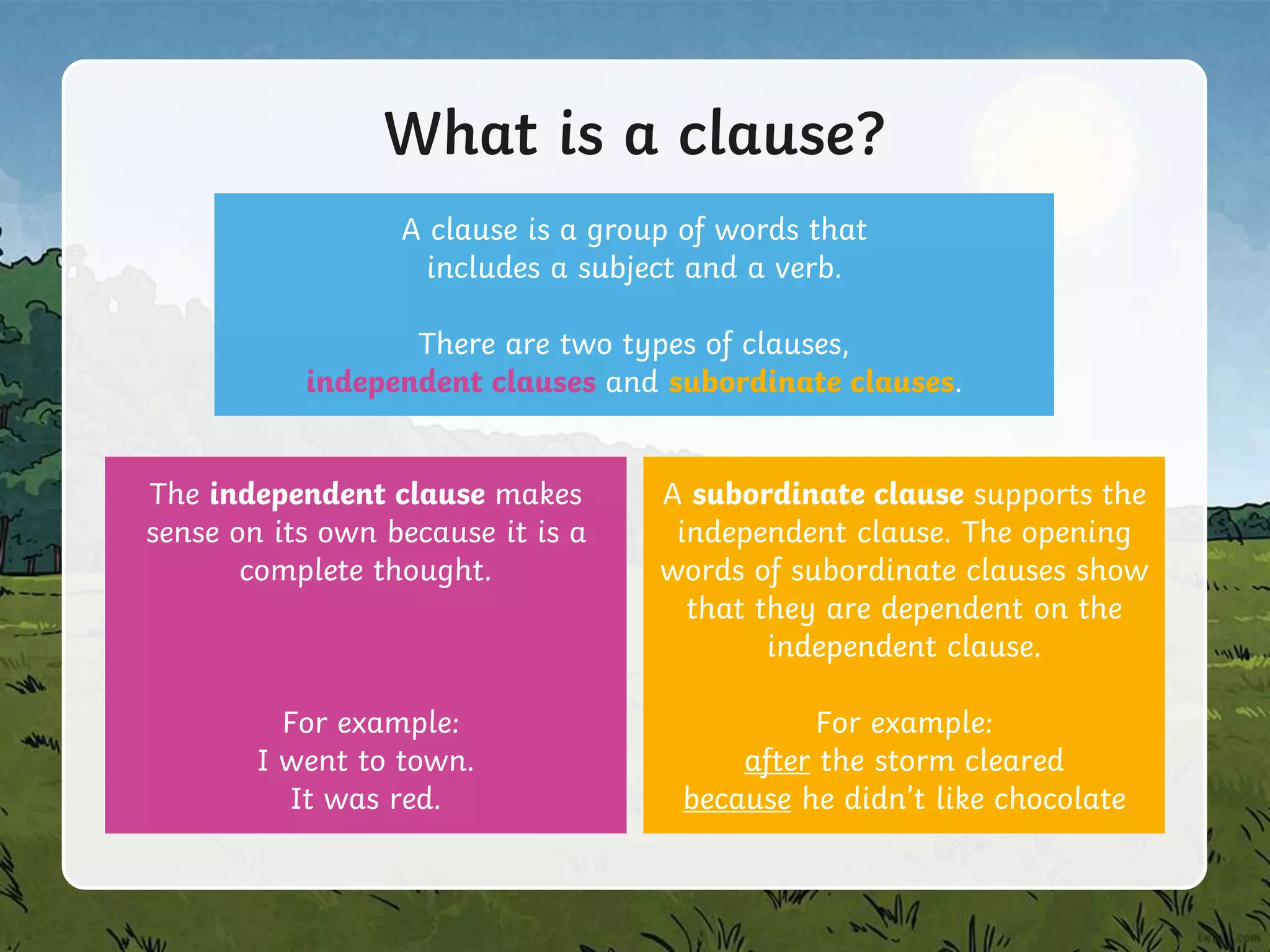
A clause is a group of words that
includes a subject and a verb.
There are two types of clauses,
independent clauses and subordinate clauses.
What is a clause?
The independent clause makes
sense on its own because it is a
complete thought.
For example:
I went to town.
It was red.
A subordinate clause supports the
independent clause. The opening
words of subordinate clauses show
that they are dependent on the
independent clause.
For example:
after the storm cleared
because he didn’t like chocolate
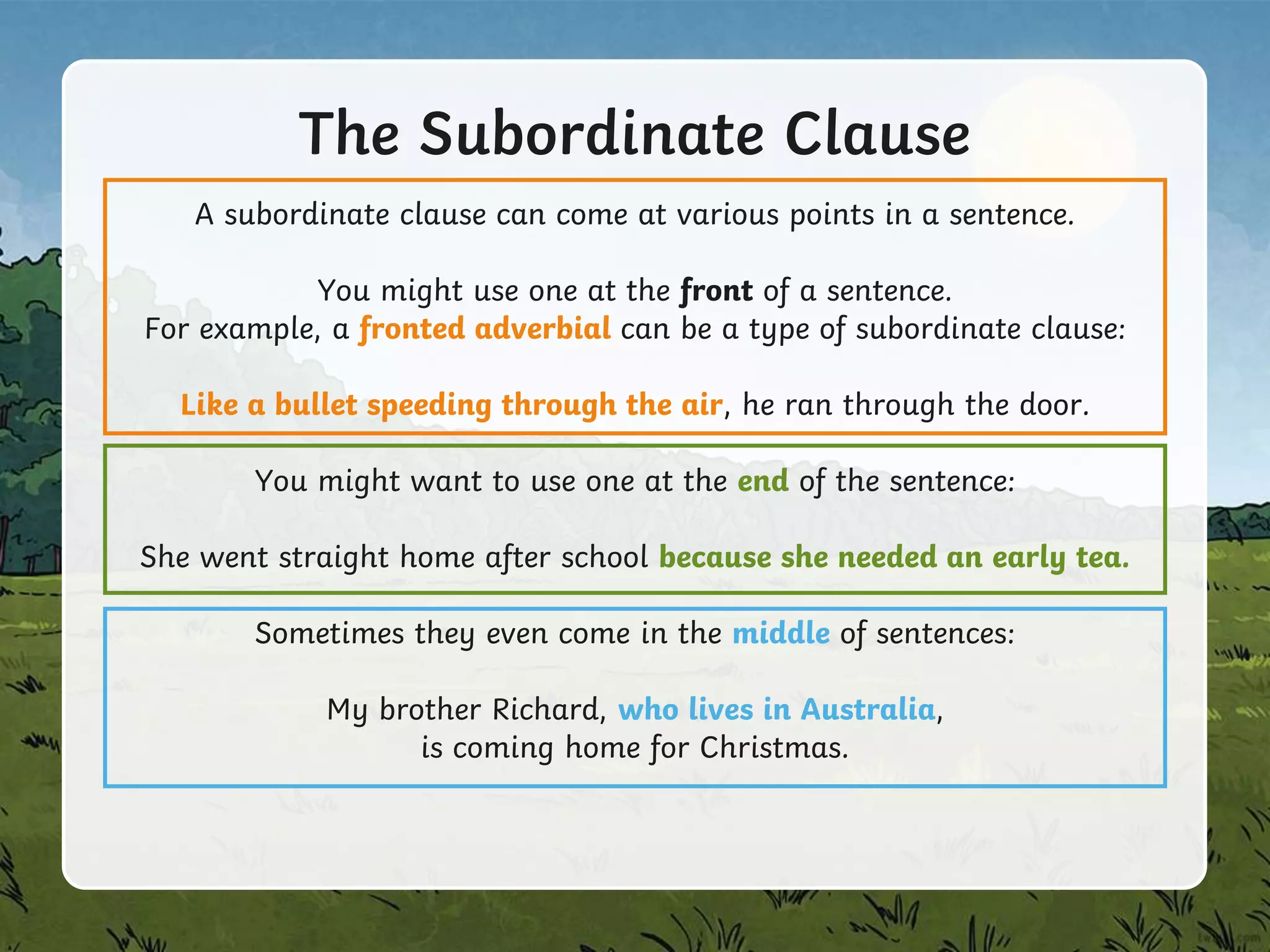
The Subordinate Clause
A subordinate clause can come at various points in a sentence.
You might use one at the front of a sentence.
For example, a fronted adverbial can be a type of subordinate clause:
Like a bullet speeding through the air, he ran through the door.
You might want to use one at the end of the sentence:
She went straight home after school because she needed an early tea.
Sometimes they even come in the middle of sentences:
My brother Richard, who lives in Australia,
is coming home for Christmas.
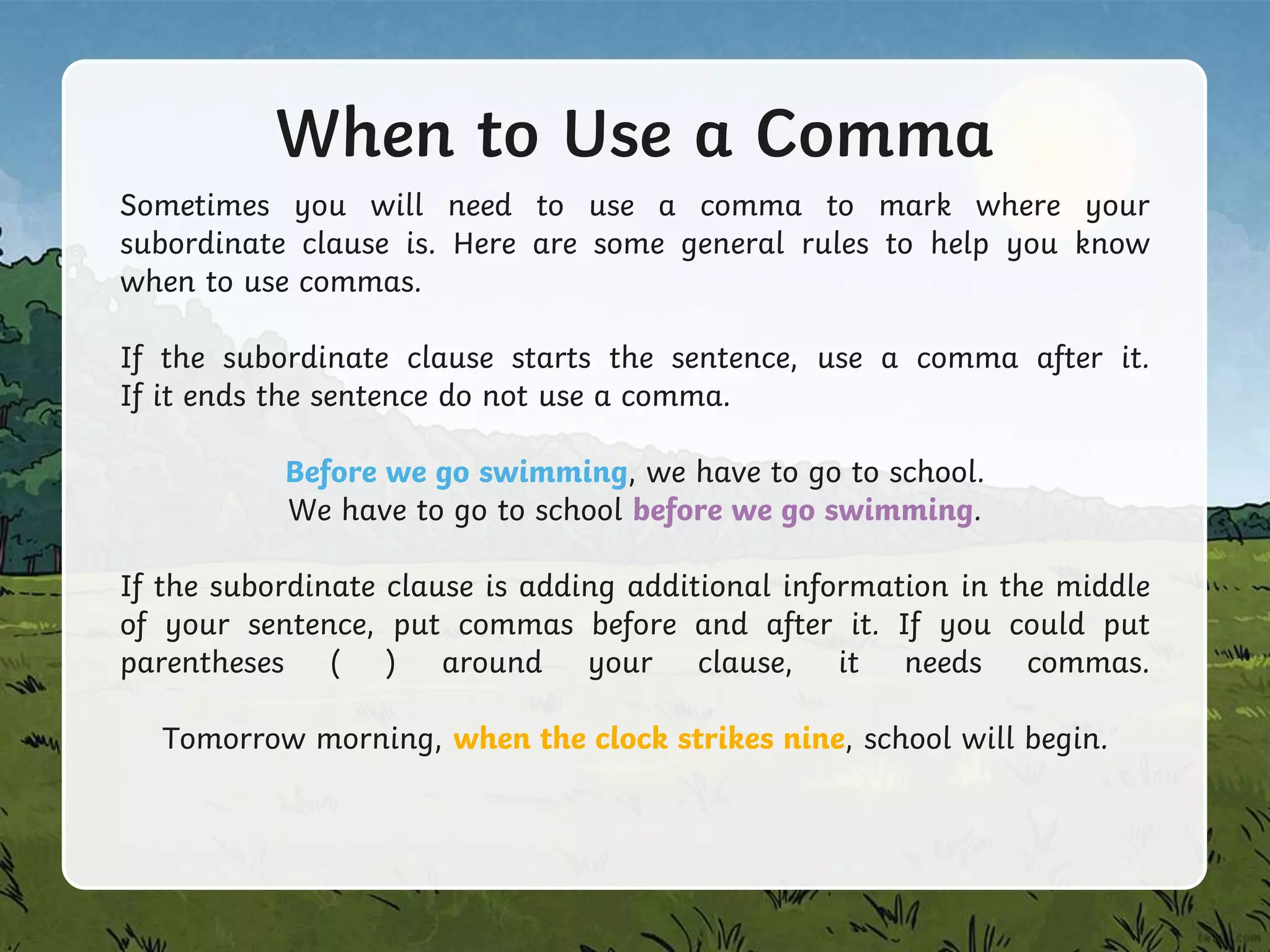
When to Use a Comma
Sometimes you will need to use a comma to mark where your
subordinate clause is. Here are some general rules to help you know
when to use commas.
If the subordinate clause starts the sentence, use a comma after it.
If it ends the sentence do not use a comma.
Before we go swimming, we have to go to school.
We have to go to school before we go swimming.
If the subordinate clause is adding additional information in the middle
of your sentence, put commas before and after it. If you could put
parentheses ( ) around your clause, it needs commas.
Tomorrow morning, when the clock strikes nine, school will begin.
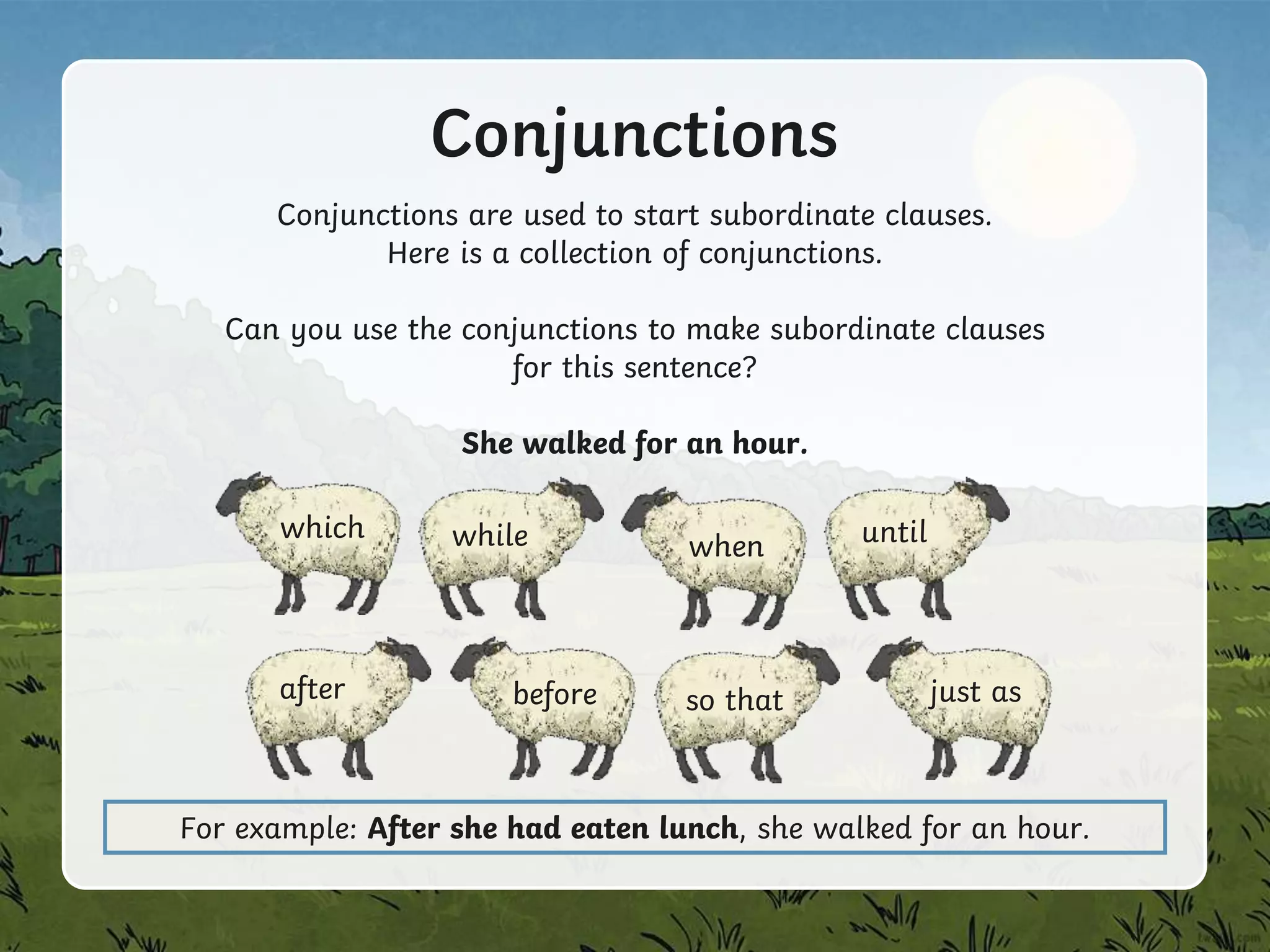
Conjunctions
Conjunctions are used to start subordinate clauses.
Here is a collection of conjunctions.
Can you use the conjunctions to make subordinate clauses
for this sentence?
She walked for an hour.
which while when until
after before so that just as
For example: After she had eaten lunch, she walked for an hour.
using-subordinate-clauses-teaching-powerpoint-_ver_1.ppt

using-subordinate-clauses-teaching-powerpoint-_ver_1.ppt

  • 2.
    A clause isa group of words that includes a subject and a verb. There are two types of clauses, independent clauses and subordinate clauses. What is a clause? The independent clause makes sense on its own because it is a complete thought. For example: I went to town. It was red. A subordinate clause supports the independent clause. The opening words of subordinate clauses show that they are dependent on the independent clause. For example: after the storm cleared because he didn’t like chocolate
  • 3.
    The Subordinate Clause Asubordinate clause can come at various points in a sentence. You might use one at the front of a sentence. For example, a fronted adverbial can be a type of subordinate clause: Like a bullet speeding through the air, he ran through the door. You might want to use one at the end of the sentence: She went straight home after school because she needed an early tea. Sometimes they even come in the middle of sentences: My brother Richard, who lives in Australia, is coming home for Christmas.
  • 4.
    When to Usea Comma Sometimes you will need to use a comma to mark where your subordinate clause is. Here are some general rules to help you know when to use commas. If the subordinate clause starts the sentence, use a comma after it. If it ends the sentence do not use a comma. Before we go swimming, we have to go to school. We have to go to school before we go swimming. If the subordinate clause is adding additional information in the middle of your sentence, put commas before and after it. If you could put parentheses ( ) around your clause, it needs commas. Tomorrow morning, when the clock strikes nine, school will begin.
  • 5.
    Conjunctions Conjunctions are usedto start subordinate clauses. Here is a collection of conjunctions. Can you use the conjunctions to make subordinate clauses for this sentence? She walked for an hour. which while when until after before so that just as For example: After she had eaten lunch, she walked for an hour.