Using language to
communicate
Language
 Language is a communication tool used by everyone in their
daily life as a means to convey information and arguments to
others.
Communication
 It is defined as the process by which people share ideas, experience,
knowledge and feelings through the transmission of symbolic messages.
 The means of communication are usually:
 Spoken
 Written
 Pictures
 Symbols
Sender/Encodes Receiver/Decodes
Message
Feedback
Oral Communication
 Oral communication expresses ideas through the spoken
word.
 Oral communication is the process in which messages or
information is exchanged or communicated within the sender
and receiver through the word of mouth.
 Oral communication we can take as verbal communication.
Principles of Successful Oral Communication
 Preparation: Before communicating orally the speaker should take
preparation both physically are mental.
 Planning: Organized plan is a must for effective oral communication. The
speaker should take a proper plan for delivering speech.
 Simplicity: The speaker should use simple understandable words in oral
communication. It should be easy and simple.
 Natural voice: The speakers must not fluctuate at the time of oral
communication. On the other hand, the artificial voice must be avoided.
 Avoiding emotions: At the time of oral discussion, excessive emotions
can divert a speaker from main subject. So, the speaker should be
about emotion. The speech must be emotionless.
Principles of Successful Oral Communication
 Clear pronunciation: Clear pronunciation of message sender in the main
factor or oral communication. If it is not clear, the goal of the message
may not be achieved.
 Precision: Precision is needed to make oral communication effective. The
meaning of the words must be specific.
Principles of Successful Oral Communication
Principles of Successful Oral
Communication
 Legality: The speaker’s speech should be legal and logical at the time of
oral communication.
 Vocabulary: Words bear different meanings to different people in
different situations. In oral communication, a speaker should use the most
familiar words to the receiver of the message to avoid any confusion in
the meaning of the words.
Non-Verbal Communication in speech
 Non-Verbal communication occurs without using any oral or
written words.
 Instead of written or oral words it relies on non-verbal cues
like physical movements, task , colors, signs etc. to express
your content of speech.
Types of Non-Verbal Communication
 There are many different types of non-verbal communication are:
 Facial Expressions.
 Body Movements.
 Posture
 Eye Contact.
 Psychological changes.
 Para-language
Facial Expression
 It expresses types of emotions or feeling such as love,
interest, sorrow, anger, confusion, enthusiasm, fear,
uncertainty and hatred.
 Can also be occasion based just like funeral facial expression
can be sorrow, sad or grief.
Body Movements
 Body movements can convey meaning and messages.
 Here body movements can be hand gesture, shaking head,
moving in front of audience.
 Politician giving speech using hand gestures.
Posture:
 How you stand or sit, whether your arm are closed or open or
crossed.
 Like speaker resting his arm on dice and standing straight.
 Example Army chief.
Eye Contact:
 It is an important channel of communication helps regulate
the flow of communication.
 It increase speaker credibility.
 It often determines the level of trust and interest.
Psychological changes
 for example, you may sweat or blink more when you are
nervous and your heart rate is like to increase.
 Example on funeral you may get nervous during speech.
Para-language
 Aspects of Voice parts from speech.
 Tone
 Pitch
 Rhythm
 Loudness
 Example: Bachelor’s party
Visual Communication
 When communication occurs by using any visual aids is
known as visual communication.
 Conveying of ideas or message in form which can be seen.
 The communication that occurs through printed pictures,
poster, slide, chart, diagrams etc.
 Types of visual aid we can use in in our speech:
 Objects
 Models
 Graphs
 Maps
 Photographs
 Audio and video
Objects
 This instance is use when you talking about some object.
 Objects such as bike helmet speech on bike safety.
Graphs & Charts
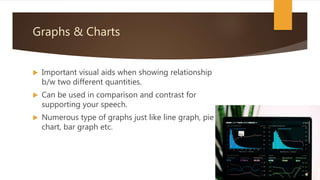
 Important visual aids when showing relationship
b/w two different quantities.
 Can be used in comparison and contrast for
supporting your speech.
 Numerous type of graphs just like line graph, pie
chart, bar graph etc.
Map
 In a geography speech, map will be most useful item to use.
 It is simple to understand and can be use to clear your points.
 Example Map showing geographical location of Asian
Countries.
Photographs
 Main advantage is they ae great tools of explaining points.
 For example in giving talk about slums.
Audio and Video
 A large amount of digitized audio and video is now available
to include.
 One can select 10-30 second video or may be depend on
topic.
 It helps audience to gain more about speech of topic.
Using language to communicate

Using language to communicate

  • 1.
  • 2.
    Language  Language isa communication tool used by everyone in their daily life as a means to convey information and arguments to others.
  • 3.
    Communication  It isdefined as the process by which people share ideas, experience, knowledge and feelings through the transmission of symbolic messages.  The means of communication are usually:  Spoken  Written  Pictures  Symbols
  • 4.
  • 5.
    Oral Communication  Oralcommunication expresses ideas through the spoken word.  Oral communication is the process in which messages or information is exchanged or communicated within the sender and receiver through the word of mouth.  Oral communication we can take as verbal communication.
  • 6.
    Principles of SuccessfulOral Communication  Preparation: Before communicating orally the speaker should take preparation both physically are mental.  Planning: Organized plan is a must for effective oral communication. The speaker should take a proper plan for delivering speech.  Simplicity: The speaker should use simple understandable words in oral communication. It should be easy and simple.
  • 7.
     Natural voice:The speakers must not fluctuate at the time of oral communication. On the other hand, the artificial voice must be avoided.  Avoiding emotions: At the time of oral discussion, excessive emotions can divert a speaker from main subject. So, the speaker should be about emotion. The speech must be emotionless. Principles of Successful Oral Communication
  • 8.
     Clear pronunciation:Clear pronunciation of message sender in the main factor or oral communication. If it is not clear, the goal of the message may not be achieved.  Precision: Precision is needed to make oral communication effective. The meaning of the words must be specific. Principles of Successful Oral Communication
  • 9.
    Principles of SuccessfulOral Communication  Legality: The speaker’s speech should be legal and logical at the time of oral communication.  Vocabulary: Words bear different meanings to different people in different situations. In oral communication, a speaker should use the most familiar words to the receiver of the message to avoid any confusion in the meaning of the words.
  • 10.
    Non-Verbal Communication inspeech  Non-Verbal communication occurs without using any oral or written words.  Instead of written or oral words it relies on non-verbal cues like physical movements, task , colors, signs etc. to express your content of speech.
  • 11.
    Types of Non-VerbalCommunication  There are many different types of non-verbal communication are:  Facial Expressions.  Body Movements.  Posture  Eye Contact.  Psychological changes.  Para-language
  • 12.
    Facial Expression  Itexpresses types of emotions or feeling such as love, interest, sorrow, anger, confusion, enthusiasm, fear, uncertainty and hatred.  Can also be occasion based just like funeral facial expression can be sorrow, sad or grief.
  • 13.
    Body Movements  Bodymovements can convey meaning and messages.  Here body movements can be hand gesture, shaking head, moving in front of audience.  Politician giving speech using hand gestures.
  • 14.
    Posture:  How youstand or sit, whether your arm are closed or open or crossed.  Like speaker resting his arm on dice and standing straight.  Example Army chief.
  • 15.
    Eye Contact:  Itis an important channel of communication helps regulate the flow of communication.  It increase speaker credibility.  It often determines the level of trust and interest.
  • 16.
    Psychological changes  forexample, you may sweat or blink more when you are nervous and your heart rate is like to increase.  Example on funeral you may get nervous during speech.
  • 17.
    Para-language  Aspects ofVoice parts from speech.  Tone  Pitch  Rhythm  Loudness  Example: Bachelor’s party
  • 18.
    Visual Communication  Whencommunication occurs by using any visual aids is known as visual communication.  Conveying of ideas or message in form which can be seen.  The communication that occurs through printed pictures, poster, slide, chart, diagrams etc.
  • 19.
     Types ofvisual aid we can use in in our speech:  Objects  Models  Graphs  Maps  Photographs  Audio and video
  • 20.
    Objects  This instanceis use when you talking about some object.  Objects such as bike helmet speech on bike safety.
  • 21.
    Graphs & Charts Important visual aids when showing relationship b/w two different quantities.  Can be used in comparison and contrast for supporting your speech.  Numerous type of graphs just like line graph, pie chart, bar graph etc.
  • 22.
    Map  In ageography speech, map will be most useful item to use.  It is simple to understand and can be use to clear your points.  Example Map showing geographical location of Asian Countries.
  • 23.
    Photographs  Main advantageis they ae great tools of explaining points.  For example in giving talk about slums.
  • 24.
    Audio and Video A large amount of digitized audio and video is now available to include.  One can select 10-30 second video or may be depend on topic.  It helps audience to gain more about speech of topic.